Shades of the past ... .
Jennifer Ross and I met yesterday with two members of the Richmond city council. We made our presentation on the proposal we're honing for a hearing before that body in mid-June. The reviews were mixed, I think. They seemed to be persuaded by our enthusiasm, but underwhelmed by what they saw as our lack of awareness about the difficulties we would surely be facing in this financial and political climate.
To date we've met with the original city manager who has since retired in a surprise move (for health reasons). Since that time we've met with his replacement -- one of his assistant city managers who has since been replaced by another interim city manager who has already announced his intention of leaving in August. On Monday of this week we met with the man who was recently named as head of the Division of Parks and Recreation -- but who will replace the assistant-assistant interim city manager who is leaving to complete his doctorate after a trip to Paris in August! (Got all that?)
In addition, the present city council that has numbered 9 (by charter) will be reduced by 2 due to a sudden move caused by political pressure from the State to do so. That means that -- with 5 of the 9 up for re-election -- and the 5-7 other wannabees challenging them for the seats being vacated -- only three will be voted in. It will be a fiercely fought struggle for power in a city in complete chaos!
The city is facing a 35 million dollar budget deficit that has caused the lay-offs of 200 members of city staff. The climate is hostile and growing meaner by the day.
Into this miserable civic mess leaps Betty Soskin and Jennifer Ross of About Face Consulting, seeking to take over the management of the Civic Center Auditorium -- a facility that the redevelopment agency is looking at as a possible means for raising much-needed revenue. We're pushing arts & culture in a time when others are thinking World Wide Wrestling and indoor flea market - five days a week! This is literally what is being considered. You might call this pushing the river.
Back to 1978:
I'm situated in a crime-ridden poverty-stricken community with the powers that be telling me day after day that change would be impossible. "We cannot insure either your life or your property." And, "...we need neighborhoods like this so that when crimes happen in other parts of town, we know where to pick up the culprit." "Give up. Shut this down." And, from my friends on campus, "...how can you possibly expect to change what decades -- centuries -- has wrought?" From Bill, "Betty, significant social change is only measurable in decades; and sometimes centuries. Your idealistic attempts at chasing the sirens and trying to disarm the bad folks simply cannot happen on the timespan you've chosen for yourself." My response, "I know that social change takes decades to produce, but if you didn't have the Fannylou Hamers and the Rosa Parkses, and yes, the Betty Soskins out there -- in the short term -- chasing the sirens and disarming the bad guys -- there would be no social change for you social scientist types to measure!" As you can see, there are times when a mere doctorate is simply no match for ghetto logic (grin).
It took 7 years and pushing the project past the point of no return through 3 administrations, but in that 7th year it happened. On the 3000 block of Sacramento Street in South Berkeley, on the block that was the site of 1 quarter of the city's homicides in 1978, there now stands 41 units of attractive market rate housing and a community room for the tenants. The whore houses and "shooting galleries" are gone, but so is the Larks Club, Q Martin's barbershop, Jimmy Wiggins' dry cleaners, the pool hall and -- saddest of all -- the home that Q built years before with his own hands. All were bought out and all in the name of progress. Those who were property owners with legitimate claims were relocated and paid adequately for their homes. We discovered in the process that many of the homes and shanties on that block (on the residential side of Stanton Street) were occupied by squatters. The old house immediately across the street and that housed much of the illegal activity, had been long ago taken over by drug dealers who dared the rightful owners to try to collect rent. Those legal owners wanting to return were promised occupancy in the new homes, if they wished. In all, the city poured 8 and a half million dollars into that project, a signficant amount in terms of the times.
But that's how the story ended. The 7-year process leading to that end was anything if not problem-ridden. It wasn't a cake walk, but there were as many rewards as disasters, and many true friends made along the way. Many of those most heavily impacted by change were also those who participated in the achieving of it. This was the miracle that few suspected could be; the willingness of the few to sublimate their own needs to the welfare of the many. That is the soul of community, and being witness to this has served me well. In a place where need was so great and where there was so little to be shared, there exists nonetheless a quality of selflessness that cuts across everything. I'd seen little of this phenomenon either in suburban living or within the ivied walls of the university. Being a "Have not" breeds its own kind of awareness of the need to share. This was where I first began to understand that respect is learned through being respected, and rarely otherwise. I learned that love sanitizes the other side of the apple shared.
Once I laboriously learned what it was through my work at city hall, I was able to form and maintain a Housing Development Corporation through which the Byron Rumford Homes were created. The Corporation was made up of community people who learned the process right along with me, and together, we were able to bring that project into being -- from the clearing of the site, the choosing of the architect and developers, to the grand-opening a year later.
Back to 2004:
Yesterday we learned from the two council members we met with that the union's position was going to be a roadblock that we may not be able to overcome. After all, SIEU and 790 had just been severely pink-slipped and had taken a heavy hit with the workforce now having suffered two rounds in the layoffs over the past month -- with another coming soon.
Today we sat with our friends at the East Bay Center for the Performing Arts -- a 35 year-old institution that has seen recent 50% cuts in both its budget (down from an annual budget of 2 million to one) and a 50% cut in staff. It was all we could do to hold their attention as Jennifer slogged through our proposal. We were seeking their support in our effort to begin to bring together the arts elements now existing in the community -- under the roof of the convention center and its related facilities. The message seems to be "it can't be done." "The economic climate is too weak at this time."
I figure it's gonna take a bit more than my 500 ft. strategy to pull this off, maybe 650 ft. (given the gradual upgrade of my personal power over the years), but a look back at that other impossible dream gives me hope. Now I'm needing to give Jennifer a call and try to revive her spirits. after all, she didn't share the experience of the Byron Rumford Homes miracle. She isn't aware yet that "can't" is simply one more four letter word.
Oh to be fifty again!
Friday, May 21, 2004
Thursday, May 20, 2004

that I felt in any way capable of what I was embarking on, be it known that doubt plagued every step. I remember standing in the middle of that store on that first morning, quaking in fear and starting with each new street noise. Had no idea where this would take me or whether I was in any way up to the task -- but I did know that long years before -- in 1945 -- I'd stood behind the counter in a makeshift work space in a converted garage with a cigar box for my receipts and orange crates to hold the stock and that we'd survived. That was only some 100 feet away in the duplex next door. This building had been constructed in 1964 and was luxurious in comparison to those days. What could I do now with a real display cases for inventory, a commercial cash register that gave receipts and a custom-built counter to stand behind? In those days I'd served our customers through a window cut in the wall of the garage. This was a huge step up from the early days (1945). All that was missing was my youth and sense of daring. The neighborhood at that time was safe and the clientele easy to please. The prognosis should be far better under these circumstances, despite the awfulness that lay just outside the front door in the form of the drug trade. Others managed to cope with it; could I? Could I be tough enough?
After all, the people in this community lived on welfare for the most part and coped with uncertainty to a degree that I could only guess at. When night came, I climbed into my late model Toyota and headed back through the campus and into the hills to look down on the romantic lights of the city while eating quiche and sipping white wine! These families stayed behind in this fear and longing with the sounds of gunshots ringing throughout many a night. There was no respite for them. I was only a daytime warrior with a pass if I needed one. How well I could keep my eyes on the prize and tenaciously hold on to my purpose would determine whether I could make this work.
Among the social and political groups that I belonged to, was ABC (can't recall what those letters stand for). It suffices to say that there were two very active political groups in Berkeley at that time. Both would be considered liberal with one a bit farther Left than the other. I knew of no conversative activists within the city limits. ABC was the more conservative and was the one led by Ms. Carol Sibley, dear friend of Bill's and mine, and co-sponsor of the busing plan that brought school integration to Berkeley. Carol was a community leader by anyone's standards. Her co-sponsor on the busing plan was Bill's best friend from their days in Washington, Leonard Duhl, of the School of Public Health at the University.
During that time I was working hard to bring whatever influence I could from the Hills to the Flatlands and to the South Berkeley community where I now spent my days. It was to Carol that I turned for help with my growing conflict with the tenant from my second floor offices. I was more and more certain that he might be involved in less than legal activities. My fear of him was growing with each day. A female member of his staff had come downstairs to speak with me in private only that week, and confirmed my suspicions. I also knew of his strong city hall connections.
Carol listened intently and then said, "...I understand, Betty, I'll invite my friend Shirley to lunch with the two of us to talk about this -- before the week is over." Her friend was a member of the Berkeley City Council, and had recently announced her intention of running for mayor in the upcoming election. This should be most helpful.
As promised, within a few days the three of us met over a fine lunch in Carol's luxurious Japanese-style custom-designed home just north of the campus -- (dining on Imari, of course) -- and I told my tale of woe to her friend. She was silent for a moment and then said, "... Frank Davis is a leader in that community, and can deliver the vote down there. I see no reason to do anything to block his efforts." I was shocked! I'd been very candid in my plea to her. I was literally living in fear and desperately needed her help. She simply said "no." This man was her key to the black vote, or so she believed.
It was in the hours that followed that political Betty Reid Soskin was born. I drove back to South Berkeley, angry and hurt. I drove up and down Sacramento Street noticing the many Shirley Dean signs in the windows of every little business along the way. Drove back to downtown Berkeley to the headquarters of her rival in the mayor's race, Gus Newport, and picked up as many signs as I could carry. Returned to South Berkeley and started at one end of my six block small business community -- walked into each business, introduced myself to the proprietor, and asked permission to place a Newport sign in his/her window. Each in turn granted permission. I had soon covered the neighborhood with those signs certain that I'd done the job well. I was a woman on a mission.
The next morning as I was driving to work, it was clear that things had changed. Every single sign had been removed and in its place was a large Shirley Dean poster. Frank Davis had moved in and taken over. He'd staked his territory and I was no part of it. This was his declaration of turf.
When questioned (and I did walk the streets again, asking what had happened) there were signs of intimidation everywhere. People were apologetic, but clearly wanted no part of a fight over a political issues in which few felt they had any claim.
I returned to the Newport headquarters for more signs. Came back to my building with a newly purchased heavy duty stapling gun and plastered signs everywhere that I could reach -- in the windows, on the stairwell, across the front and on the sides of the building. I was a veritable Newport signboard! Mine was the only location in all of that community where Gus's signs were posted. Since this was a black community and Gus was African American while Ms. Dean was white, the undercurrent of intrigue was almost palpable. It was no accident that not one single sign was removed from my building during this battle of wits. The guys on the street were clearly watching over me. My tenant had to walk through that phalanx of Newport signs to reach his upstairs office. It was war!
A few weeks later when the elections were held, my candidate won with a strong majority, and the precinct where we had stood our ground gave him a great victory. It was also true that where I lived high in the hills, Dean signs were everywhere. The Newport signs on our home fence were rare in our neighborhood, so the huge victory citywide came as a surprise.
This was the beginning of my association with city hall. It was only a short time in Gus's term of office before the city received a HUD grant to do 61 units of scattered site low-income homes and I was named by the mayor to serve on the committee to select those sites. From that -- from my attorney, Don Jelinek, who was elected to the city council in the same election cycle -- I accepted a position as legislative aide, working part time at city hall. It was in that role that I began to learn how things get done in cities, for the purposes of designing my strategies for South Berkeley. I worked with him for two terms and accomplished a great deal with his help. This meant splitting my days between our store and city hall. I'd inherited two employees and the off-and-on-when-he-was-sober help from Rick, so it was possible to do both. The store was able to support only three small salaries, but since I wasn't dependent upon the shop for my support, it worked out reasonably well. It required an outside job to support my business. We'd never have made it without that effort. I also needed my outside social connections in order to do the job of community organizing that must be done if my agenda was to be carried out at all. I had a business to support and an environment to dramatically change -- if this was going to work. This I could not expect Bill to participate in.
The store was all there was left of the estate that Mel and I had intended to create for our children. He'd given 35 years of his life to the effort, and was no longer able to contribute. He'd actually lost most of it over time and I found it was up to me to try to reconstruct as much our family assets as was possible in the years I had left. This situation was a carryover from my first marriage. I was fortunate to have married someone who understood this driving need and who was willing to allow me the time to do that. To ask more of him would have been beyond reason. This responsibility was mine alone.
The demands placed upon our marriage began to threaten its stability. Bill made several trips to India that I was unable to join him in. He went as far as Ladahk, on the Tibetan border at one point - and I didn't. We had less and less to share as time wore on. There were events and journeys that drew him away that I either couldn't or wouldn't participate in with him. I suffered from emotional and physical fatigue much of the time and was distracted by a world that he neither understood nor wanted to share. He'd married me -- not my family or my former life. He had never been a father, so was barely able to connect with my sons except in a very formal manner. There was rarely need to since they were now off on their own. I missed them. Dorian was living at St. Vincents, a fine boarding school in Santa Barbara. I missed her. My parents were aging and I was their caretaker, their lifeline, as I was Mel's. I loved them all. The marriage was beginning to unravel -- but it would be years yet until the end would come. We worked valiantly to keep it alive. He became more and more deeply invested in Tibetan Buddhist studies as I became more and more African-American identified and absorbed in the business of creating social change.
Transitions are painful, but they're also the places where growth occurs and where life becomes more precious... .
Wednesday, May 19, 2004
Knowing so little about the day-to-day running of a small business,
the work of re-creating Reid's Records proved to be more difficult than I'd ever imagined. The simple act of slinking out of my car (head down, chin on chest, quaking in fear) used up much of my energy. At that time the building had not been secured with safety bars, and -- after parking around the corner -- cringing past the drug dealers who inhabited my corner whatever the hour, I'd check the door for break-ins to assure myself that no one was inside waiting for me. It happened often enough to become the routine for opening up each morning. But if that was true, it was also true that Fred would stop by a few minutes after I arrived (watching for me from his window) to say good morning and to check to see if everything was alright.
Fred was veteran of Pearl Harbor. He'd served as a cook in the navy and was wounded in the bombing. But in subsequent years he'd become a victim of cheap wine and toxic wine coolers. He was always sober in the morning and progressed to a total stupor during the course of the day. I believed that he'd served as a lookout for Mel in the same way over many years and that was now one of the perks I inherited.
At first it was a bother, but over the first few weeks I discovered the man beneath the scruffy appearance and foul smells. He lived alone in a little outbuilding with no electricity, a crude shelter in the backyard of the house next door -- just beyond the fence. I'd notice him from time to time with an old broom sweeping off the sidewalk in front of my store, neatly gathering the debris into a concocted dustpan of some sort and depositing the trash in the dumpster behind the shop. He asked for nothing but a good morning smile each day. He also was eagle-eyed and would come in to report on any suspicious goings-on within eyesight. I learned to rely on his watchful concern as the weeks wore on and as I began to learn where to place trust. One morning -- after a heavy rain -- Fred turned up with a ratty old doormat, laid it at the front door with, "...Ms. Betty, this you gonna need so that folks don't track up yo' flows."
There was "Q" Martin, a barber who had a very interesting arrangement across the street from our shop and in the next block north of us. He owned a lot that ran from Sacramento Street to Stanton, just behind his little barbershop. The block was only as wide as one house and yard and fronted on the broad expanse of Sacramento Street. "Q's" shop was on the commercial street side -- and behind it stood a small structure that connected to the rear of his barbershop and opened onto his backyard. In time I learned that this was a gambling place that was frequented by the local men from around the general area. The pool hall was next door to his barbershop. Between the two structures -- most of the older men in the community would gather to socialize and place bets on sporting events, I later learned. I was also pretty sure that the police were very much aware, and quietly ignored it as a legitimate activity for this community, a difference in values as dictated from outside.
Q and his wife had raised a family of 12. In order to manage that, he'd earned a barber's license and ran a pretty efficient barbershop. I learned from one of the other men that he'd spent his nights for many years pouring over manuals that allowed him to single-handedly build the home they shared -- board by board and brick by brick. Each spring he would drive his truck to their old home in Arkansas where his extended family owned a farm. There he would butcher a cow or a hog, pack it in ice for the drive back to the Bay Area to freeze for winter. He made the trip twice a year, once in summer/fall to harvest and preserve fruits and vegetables that would feed the family throughout the year. This was an enormously resourceful man, and someone I learned to deeply respect and admire. It was my guess that, like many others in the neighborhood -- he'd come to the West during the war to work in the shipyards. When I met him he was in his sixties, I suspect. In time I learned that he'd once served time in prison for a crime of some sort -- but by the time that was revealed to me, I'd come to believe that any black man with such family obligations could hardly get through life without breaking one law or another, so it held no relevance for me. I'm sure that he'd taught himself to read, and eventually learned well enough to master those manuals and to build a home that met all of the codes required for construction. The community proved to be peopled by so many stories of wonderful inventive creative stubbornly resourceful people, and I found my place among them quite comfortably over time. It was only a case of finding the common denominators, something I'd become pretty good at. Those common denominators were far different from those I'd had to search out on campus, but in many ways the process was the same.
I learned some lessons in ghetto living that almost brought my grand experiment to an end. For instance, I could not get any insurance company to insure the building. I was told by agents that -- if I could lift the building up and move it six blocks in either direction -- they would write a policy. As it turned out, I was situated in a cauldron of illegal activity, and too high a risk. No glass insurance. No theft or property could be underwritten. Fire insurance was a condition of the mortgage so that was the only coverage possible, and only because it was secured by the credit union that held the mortgage for their protection, and not mine. It only covered the balance owed on the loan. I was on my own.
I installed iron security bars on every window (after frequent break-ins) and at one point realized that I had more money in bars than I had in inventory. In that, I had a lot in common with the other little struggling businesses on the street.
Knowing little about the current market in music, I gradually re-built the stock by using a simple formula. I would allow the clientele to create the inventory. I began to keep a list. When I received 3 requests for any item, I would buy 5 at wholesale. Later the formula grew to 5 requests, order 10, etc. There was a One-Stop distributor in Emeryville that Mel had dealt with for many years and who was willing to work with me toward the recovery; a godsend to this amateur entrepreneur. He allowed me to buy in small lots as I re-built the business. I made the trip to Music People, Inc., every day in order to keep current. There was an indebtedness of over $15,000 on his books, and at the rate I was recovering -- we'd be lucky to get ourselves into the next century! But Elliott did have faith in my ability to handle things, and for that I was grateful. It was clear after a few months that the character of the store was changing -- maybe had changed radically over time -- and was fast-becoming a black gospel shop with a potentially large clientele in a growing field of music. Interesting development for a non-believer, right?
Gradually the Rhythm & Blues and Jazz were replaced by this entirely new and exciting form of African American music -- a specialty that had not yet been discovered by white music stores. I may have been the only one in the field who realized that jazz had not disappeared, but had returned to the choir lofts and was blazing away in new dress. The music was wonderful and was beginning to infuse all of popular music in the way that black music had always done. It brought the black church community into my store and introduced me to every African/American preacher from Monterey to Sacramento. Today it is hard to tell the difference between contemporary black gospel and white. The mega-churches in the South have crossed over musically in ways that are unheard of in other areas of the country. I had the field pretty much to myself for several years, enough time to have been able to rebuild the store back to its original level of success, but not before lots of anguish had to be lived through.
The second floor of the building held a beauty shop that was operated by a woman who'd been a tenant for many years, though we'd never met. She managed it and -- as in her the arrangement with Mel -- paid to me a percentage of her profits. She employed a number of other operators who paid rentals on their chairs. Her contributions supported the rest of my efforts in the beginning. I was such a novice, but pretended to be nothing else so everyone gave me the space to grow and learn, Rita most of all. Learned recently of her death, and that her beloved grand-daughter had been murdered by a stranger who shot her when she opened her front door.
There was also a male tenant who ran a program funded by CDGB funds from the city -- employment and training -- and was someone I had little or no trust in and who later proved to be a significant challenge. He presented my first experience at staging an eviction. His power was derived from a member of the city council "downtown" and was strong. He was known to "deliver" this community at election time. I feared him. I believed that his was the voice that pretty much controlled "The Street," and he was literally operating under my roof. Establishing "turf" was going to be dependent upon how well I could handle this situation. I was sure that I was being watched by the community. Q and the others "had my back" so to speak. Their quiet presence gave me strength to face the challenges.
The answer was to try to create a Merchant's Association made up of the little marginal businesses on that six block stretch; barber and beauty shops ("Q" Martin and Rita the beautician), the pool hall, a few liquor stores, dry cleaners (Jimmy Wiggins), two little grocery store operators, a real estate salesman, etc. They met for the first time in our upstairs offices one evening. It was fascinating. I learned immediately that these men were all armed. In fact, Q told me that he was concerned about my safety and offered to get me a "piece" to stash behind my counter! I was apparently the only person in the room without a gun. I also learned that they universally believed that vice was a necessary element in the black community, and that once cleaned up, no one could survive. Keeping my eyebrows properly aligned without having them bob up and down crazily was not easy to manage. This was a world I knew nothing about. Needless to say, I declined his offer.
It was clear to me at that first meeting that these men represented a thin slice of the community; that slice that edged on the street itself, and that just one house back -- all around -- lived the women and children and families of churchgoers who had an entirely different agenda. To do anything to strengthen the voice of these merchants would do a serious disservice to the rest of the community. We met only once more, then disbanded. But these men had made me one of them. I was a trusted member of the group. I've never known whether or not their trust was being extended through their allegiance to Mel or whether it was mine, alone. Walking lightly and remaining trustworthy in their eyes would become more and more important as time passed. I was entering a phase where heightened sensitivity would be critical to my ability to hang in. I needed them in order to survive. I needed to learn some of the skills of the streets that were second nature to most. And, as strange as it may be, there were several of these guys that I liked immensely, and trusted instinctively. We had developed a mutual respect that would serve me well in the years ahead. I was going to need them to help change the environment of the community. Without their buy-in, it would be impossible.
This was a long way from life as I'd known it; from the East Oakland of my childhood, from early Berkeley, from suburban middle-class life in Walnut Creek, and most of all, like my life among the intellectual pacesetters of the university world. This would erase most of my temporary truths, and would become the canvas upon which to paint an entirely new view of the world.
It was almost impossible to know whether I was taking a giant step forward of backward in time or simply caught on the cusp of I knew not what ... .
the work of re-creating Reid's Records proved to be more difficult than I'd ever imagined. The simple act of slinking out of my car (head down, chin on chest, quaking in fear) used up much of my energy. At that time the building had not been secured with safety bars, and -- after parking around the corner -- cringing past the drug dealers who inhabited my corner whatever the hour, I'd check the door for break-ins to assure myself that no one was inside waiting for me. It happened often enough to become the routine for opening up each morning. But if that was true, it was also true that Fred would stop by a few minutes after I arrived (watching for me from his window) to say good morning and to check to see if everything was alright.
Fred was veteran of Pearl Harbor. He'd served as a cook in the navy and was wounded in the bombing. But in subsequent years he'd become a victim of cheap wine and toxic wine coolers. He was always sober in the morning and progressed to a total stupor during the course of the day. I believed that he'd served as a lookout for Mel in the same way over many years and that was now one of the perks I inherited.
At first it was a bother, but over the first few weeks I discovered the man beneath the scruffy appearance and foul smells. He lived alone in a little outbuilding with no electricity, a crude shelter in the backyard of the house next door -- just beyond the fence. I'd notice him from time to time with an old broom sweeping off the sidewalk in front of my store, neatly gathering the debris into a concocted dustpan of some sort and depositing the trash in the dumpster behind the shop. He asked for nothing but a good morning smile each day. He also was eagle-eyed and would come in to report on any suspicious goings-on within eyesight. I learned to rely on his watchful concern as the weeks wore on and as I began to learn where to place trust. One morning -- after a heavy rain -- Fred turned up with a ratty old doormat, laid it at the front door with, "...Ms. Betty, this you gonna need so that folks don't track up yo' flows."
There was "Q" Martin, a barber who had a very interesting arrangement across the street from our shop and in the next block north of us. He owned a lot that ran from Sacramento Street to Stanton, just behind his little barbershop. The block was only as wide as one house and yard and fronted on the broad expanse of Sacramento Street. "Q's" shop was on the commercial street side -- and behind it stood a small structure that connected to the rear of his barbershop and opened onto his backyard. In time I learned that this was a gambling place that was frequented by the local men from around the general area. The pool hall was next door to his barbershop. Between the two structures -- most of the older men in the community would gather to socialize and place bets on sporting events, I later learned. I was also pretty sure that the police were very much aware, and quietly ignored it as a legitimate activity for this community, a difference in values as dictated from outside.
Q and his wife had raised a family of 12. In order to manage that, he'd earned a barber's license and ran a pretty efficient barbershop. I learned from one of the other men that he'd spent his nights for many years pouring over manuals that allowed him to single-handedly build the home they shared -- board by board and brick by brick. Each spring he would drive his truck to their old home in Arkansas where his extended family owned a farm. There he would butcher a cow or a hog, pack it in ice for the drive back to the Bay Area to freeze for winter. He made the trip twice a year, once in summer/fall to harvest and preserve fruits and vegetables that would feed the family throughout the year. This was an enormously resourceful man, and someone I learned to deeply respect and admire. It was my guess that, like many others in the neighborhood -- he'd come to the West during the war to work in the shipyards. When I met him he was in his sixties, I suspect. In time I learned that he'd once served time in prison for a crime of some sort -- but by the time that was revealed to me, I'd come to believe that any black man with such family obligations could hardly get through life without breaking one law or another, so it held no relevance for me. I'm sure that he'd taught himself to read, and eventually learned well enough to master those manuals and to build a home that met all of the codes required for construction. The community proved to be peopled by so many stories of wonderful inventive creative stubbornly resourceful people, and I found my place among them quite comfortably over time. It was only a case of finding the common denominators, something I'd become pretty good at. Those common denominators were far different from those I'd had to search out on campus, but in many ways the process was the same.
I learned some lessons in ghetto living that almost brought my grand experiment to an end. For instance, I could not get any insurance company to insure the building. I was told by agents that -- if I could lift the building up and move it six blocks in either direction -- they would write a policy. As it turned out, I was situated in a cauldron of illegal activity, and too high a risk. No glass insurance. No theft or property could be underwritten. Fire insurance was a condition of the mortgage so that was the only coverage possible, and only because it was secured by the credit union that held the mortgage for their protection, and not mine. It only covered the balance owed on the loan. I was on my own.
I installed iron security bars on every window (after frequent break-ins) and at one point realized that I had more money in bars than I had in inventory. In that, I had a lot in common with the other little struggling businesses on the street.
Knowing little about the current market in music, I gradually re-built the stock by using a simple formula. I would allow the clientele to create the inventory. I began to keep a list. When I received 3 requests for any item, I would buy 5 at wholesale. Later the formula grew to 5 requests, order 10, etc. There was a One-Stop distributor in Emeryville that Mel had dealt with for many years and who was willing to work with me toward the recovery; a godsend to this amateur entrepreneur. He allowed me to buy in small lots as I re-built the business. I made the trip to Music People, Inc., every day in order to keep current. There was an indebtedness of over $15,000 on his books, and at the rate I was recovering -- we'd be lucky to get ourselves into the next century! But Elliott did have faith in my ability to handle things, and for that I was grateful. It was clear after a few months that the character of the store was changing -- maybe had changed radically over time -- and was fast-becoming a black gospel shop with a potentially large clientele in a growing field of music. Interesting development for a non-believer, right?
Gradually the Rhythm & Blues and Jazz were replaced by this entirely new and exciting form of African American music -- a specialty that had not yet been discovered by white music stores. I may have been the only one in the field who realized that jazz had not disappeared, but had returned to the choir lofts and was blazing away in new dress. The music was wonderful and was beginning to infuse all of popular music in the way that black music had always done. It brought the black church community into my store and introduced me to every African/American preacher from Monterey to Sacramento. Today it is hard to tell the difference between contemporary black gospel and white. The mega-churches in the South have crossed over musically in ways that are unheard of in other areas of the country. I had the field pretty much to myself for several years, enough time to have been able to rebuild the store back to its original level of success, but not before lots of anguish had to be lived through.
The second floor of the building held a beauty shop that was operated by a woman who'd been a tenant for many years, though we'd never met. She managed it and -- as in her the arrangement with Mel -- paid to me a percentage of her profits. She employed a number of other operators who paid rentals on their chairs. Her contributions supported the rest of my efforts in the beginning. I was such a novice, but pretended to be nothing else so everyone gave me the space to grow and learn, Rita most of all. Learned recently of her death, and that her beloved grand-daughter had been murdered by a stranger who shot her when she opened her front door.
There was also a male tenant who ran a program funded by CDGB funds from the city -- employment and training -- and was someone I had little or no trust in and who later proved to be a significant challenge. He presented my first experience at staging an eviction. His power was derived from a member of the city council "downtown" and was strong. He was known to "deliver" this community at election time. I feared him. I believed that his was the voice that pretty much controlled "The Street," and he was literally operating under my roof. Establishing "turf" was going to be dependent upon how well I could handle this situation. I was sure that I was being watched by the community. Q and the others "had my back" so to speak. Their quiet presence gave me strength to face the challenges.
The answer was to try to create a Merchant's Association made up of the little marginal businesses on that six block stretch; barber and beauty shops ("Q" Martin and Rita the beautician), the pool hall, a few liquor stores, dry cleaners (Jimmy Wiggins), two little grocery store operators, a real estate salesman, etc. They met for the first time in our upstairs offices one evening. It was fascinating. I learned immediately that these men were all armed. In fact, Q told me that he was concerned about my safety and offered to get me a "piece" to stash behind my counter! I was apparently the only person in the room without a gun. I also learned that they universally believed that vice was a necessary element in the black community, and that once cleaned up, no one could survive. Keeping my eyebrows properly aligned without having them bob up and down crazily was not easy to manage. This was a world I knew nothing about. Needless to say, I declined his offer.
It was clear to me at that first meeting that these men represented a thin slice of the community; that slice that edged on the street itself, and that just one house back -- all around -- lived the women and children and families of churchgoers who had an entirely different agenda. To do anything to strengthen the voice of these merchants would do a serious disservice to the rest of the community. We met only once more, then disbanded. But these men had made me one of them. I was a trusted member of the group. I've never known whether or not their trust was being extended through their allegiance to Mel or whether it was mine, alone. Walking lightly and remaining trustworthy in their eyes would become more and more important as time passed. I was entering a phase where heightened sensitivity would be critical to my ability to hang in. I needed them in order to survive. I needed to learn some of the skills of the streets that were second nature to most. And, as strange as it may be, there were several of these guys that I liked immensely, and trusted instinctively. We had developed a mutual respect that would serve me well in the years ahead. I was going to need them to help change the environment of the community. Without their buy-in, it would be impossible.
This was a long way from life as I'd known it; from the East Oakland of my childhood, from early Berkeley, from suburban middle-class life in Walnut Creek, and most of all, like my life among the intellectual pacesetters of the university world. This would erase most of my temporary truths, and would become the canvas upon which to paint an entirely new view of the world.
It was almost impossible to know whether I was taking a giant step forward of backward in time or simply caught on the cusp of I knew not what ... .
Tuesday, May 18, 2004
More meetings with city officials re the Convention Center ...
To date, all have been male -- a clear disadvantage for two women of color. We tend to be seen as glorified house maids -- regardless of credentials -- and that could prove to be a problem. Jennifer is clearly a trained professional in the field of arts and culture administration as well as theater management. I'm pretty impressive myself, but a generalist, with a long but unfocused resume. Makes me self-conscious in interviews. My experience is long and varied, touching upon so many aspects of life that it's difficult to capture all that and put it into "25 words or less." Nonetheless, we have completed another round of obstacles and have the go-ahead now from two city managers. That doesn't remove the financial instability I'm dealing with, but it helps to know that at some point my bills will be paid and that total collapse may not come until the fall... .
Back to 1978:
In those first few days of assessment I made several interesting observations. There was some inherited goodwill that would help me through the months ahead while I sorted things out. There were some paradoxes that would have to be dealt with -- a layering of life that had only just begun to unfold for me.
The drive from my home high atop the Berkeley hills and through the university campus to South Berkeley created a kind of culture shock day after day. I was beginning to live in two totally different worlds, full time. While on a given evening I would have gathered before our hearth the likes of the Episcopal Bishop of Northern California, Kim Meyer; his Archdeacon, John Weaver; Tarthang Tulku, Rinpoche of Padma Ling; Dr. Leonard Duhl of the U.C. Dept. of Public Health; Gay Gaer Luce of SAGE; Carol Sibley the godmother of the school busing program of the city -- I would the next morning drive to the other end of town to a world that was to these leaders the stuff of pure sociological speculation, like a Third World country.
I once found myself in a friendly dinner debate with the city manager of Rome who was visiting the Bay Area and our home. He and Bill were extolling the virtues of regional government. I was standing alone against these giants, arguing energetically. In time they couldn't compete with my every-day-living-in-the-midst-of-the-inner-city logic. It angered me to hear them defending the right of whites to abandon core cities to develop the suburbs then to suggest usurping political power as well. This had largely been caused by the removal of services and financial resources that whites took with them as they fled. Remember, I'd just left their world and knew them well. I was the anomaly.
For the first time, due to an expanding Black population, it was possible to elect minority candidates to run those cities. However, we were forced to do it with dwindling resources and deteriorating governing structures. White Flight and increasing poverty had decimated all systems. Due to an involvement in national black caucus activities, I'd met mayors and other public officials from Gary, Indiana; Cleveland, Ohio; and our own Berkeley. This was not new for me. How dare these men presume to now try to defend the move to subsume those same struggling and abandoned inner cities into regional governments? They wished to now complete the transference of power totally? It was a heated debate. A growing sophistication about racial matters played a huge role in helping to re-establish my racial identity.
In this new world of contrasts, my "difference" played a positive role. My brown skin had become an asset in a curious way. Bill encouraged my active participation in all such debates with a glint of pride in his eye. He seemed to delight in my verbal skills and willingness to stand alone on principle. That evening of our good-natured argument established that their advanced degrees were simply no match for my living day-to-day in that dichotomy. I was literally driving in and out of those worlds, experiencing culture shock each day, and finding it both exhilarating and frightening each time. Eventually it became abundantly clear to me that those worlds would meet only marginally in our lifetimes, if at all. The distance between was far too great. The river too wide. The bridge too weak to trust. I would move between them as long as I could, but it was clear early-on that a choice would have to be made at some point. This was the new arena for growth and I embraced it. Bill, quite wisely, accepted that this must be lived through, whatever the outcome.
After pillow talks far into long and often troubled nights, Bill and I eventually knew that it was necessary that I develop a clear sense of what could be accomplished by restoring the business and what could not. It would never be financially profitable. It hadn't been for a very long time. If my plan was to end up in the Fortune 500, this would surely not be the place to make my stand. However, if I could rehabilitate it enough to amplify my voice toward social change in a community that desperately needed it, this may be just the place to do so. As a faculty wife (and a trophy wife at that) living in the hills of Berkeley, flirting with academia and the heady life of the jet setters, I didn't mean much. I felt decorative, but relatively powerless. But -- as that "little Black woman storekeeper down on Sacramento Street" in a liberal city wallowing in white guilt -- well, this just might be peculiarly well-suited as a venue for social change. After all, the echoes of the Civil Rights Movement of the Sixties were still being heard and making possible the monumental social adjustments that would rumble through all other minority groups in the decades to come.
I've often said that when I was young idealist, visions of changing the world lurked in the back of my fertile mind. As I matured as a young wife and mother -- active in the defense of myself and my family -- there were dreams of changing the State. On Sacramento Street I had to become enough of a realist to know that I had to settle for no more than 500 feet! And I did. Within those limits, over about 7 years, I looked out from behind the counter through the iron bars that promised protection, at just about that distance. I proudly claimed territory. This would be mine to shape; drug dealers, prostitutes, floating crap games, local crime bosses, social policy, and all.
It was possible to bring all of the experience of the preceding years to bear on what happened there over the time. How rewarding it was. Every minute of every seemingly-unrelated day of my life rose to serve in the rehabilitation of my 500 feet. The concentration of effort paid off handsomely. The fears and pain, the disillusionment from time to time -- all grist for the mill. Nothing was wasted, not one minute.
The book that would guide my efforts had not been written. Maybe this is it.
We'll see.
To date, all have been male -- a clear disadvantage for two women of color. We tend to be seen as glorified house maids -- regardless of credentials -- and that could prove to be a problem. Jennifer is clearly a trained professional in the field of arts and culture administration as well as theater management. I'm pretty impressive myself, but a generalist, with a long but unfocused resume. Makes me self-conscious in interviews. My experience is long and varied, touching upon so many aspects of life that it's difficult to capture all that and put it into "25 words or less." Nonetheless, we have completed another round of obstacles and have the go-ahead now from two city managers. That doesn't remove the financial instability I'm dealing with, but it helps to know that at some point my bills will be paid and that total collapse may not come until the fall... .
Back to 1978:
In those first few days of assessment I made several interesting observations. There was some inherited goodwill that would help me through the months ahead while I sorted things out. There were some paradoxes that would have to be dealt with -- a layering of life that had only just begun to unfold for me.
The drive from my home high atop the Berkeley hills and through the university campus to South Berkeley created a kind of culture shock day after day. I was beginning to live in two totally different worlds, full time. While on a given evening I would have gathered before our hearth the likes of the Episcopal Bishop of Northern California, Kim Meyer; his Archdeacon, John Weaver; Tarthang Tulku, Rinpoche of Padma Ling; Dr. Leonard Duhl of the U.C. Dept. of Public Health; Gay Gaer Luce of SAGE; Carol Sibley the godmother of the school busing program of the city -- I would the next morning drive to the other end of town to a world that was to these leaders the stuff of pure sociological speculation, like a Third World country.
I once found myself in a friendly dinner debate with the city manager of Rome who was visiting the Bay Area and our home. He and Bill were extolling the virtues of regional government. I was standing alone against these giants, arguing energetically. In time they couldn't compete with my every-day-living-in-the-midst-of-the-inner-city logic. It angered me to hear them defending the right of whites to abandon core cities to develop the suburbs then to suggest usurping political power as well. This had largely been caused by the removal of services and financial resources that whites took with them as they fled. Remember, I'd just left their world and knew them well. I was the anomaly.
For the first time, due to an expanding Black population, it was possible to elect minority candidates to run those cities. However, we were forced to do it with dwindling resources and deteriorating governing structures. White Flight and increasing poverty had decimated all systems. Due to an involvement in national black caucus activities, I'd met mayors and other public officials from Gary, Indiana; Cleveland, Ohio; and our own Berkeley. This was not new for me. How dare these men presume to now try to defend the move to subsume those same struggling and abandoned inner cities into regional governments? They wished to now complete the transference of power totally? It was a heated debate. A growing sophistication about racial matters played a huge role in helping to re-establish my racial identity.
In this new world of contrasts, my "difference" played a positive role. My brown skin had become an asset in a curious way. Bill encouraged my active participation in all such debates with a glint of pride in his eye. He seemed to delight in my verbal skills and willingness to stand alone on principle. That evening of our good-natured argument established that their advanced degrees were simply no match for my living day-to-day in that dichotomy. I was literally driving in and out of those worlds, experiencing culture shock each day, and finding it both exhilarating and frightening each time. Eventually it became abundantly clear to me that those worlds would meet only marginally in our lifetimes, if at all. The distance between was far too great. The river too wide. The bridge too weak to trust. I would move between them as long as I could, but it was clear early-on that a choice would have to be made at some point. This was the new arena for growth and I embraced it. Bill, quite wisely, accepted that this must be lived through, whatever the outcome.
After pillow talks far into long and often troubled nights, Bill and I eventually knew that it was necessary that I develop a clear sense of what could be accomplished by restoring the business and what could not. It would never be financially profitable. It hadn't been for a very long time. If my plan was to end up in the Fortune 500, this would surely not be the place to make my stand. However, if I could rehabilitate it enough to amplify my voice toward social change in a community that desperately needed it, this may be just the place to do so. As a faculty wife (and a trophy wife at that) living in the hills of Berkeley, flirting with academia and the heady life of the jet setters, I didn't mean much. I felt decorative, but relatively powerless. But -- as that "little Black woman storekeeper down on Sacramento Street" in a liberal city wallowing in white guilt -- well, this just might be peculiarly well-suited as a venue for social change. After all, the echoes of the Civil Rights Movement of the Sixties were still being heard and making possible the monumental social adjustments that would rumble through all other minority groups in the decades to come.
I've often said that when I was young idealist, visions of changing the world lurked in the back of my fertile mind. As I matured as a young wife and mother -- active in the defense of myself and my family -- there were dreams of changing the State. On Sacramento Street I had to become enough of a realist to know that I had to settle for no more than 500 feet! And I did. Within those limits, over about 7 years, I looked out from behind the counter through the iron bars that promised protection, at just about that distance. I proudly claimed territory. This would be mine to shape; drug dealers, prostitutes, floating crap games, local crime bosses, social policy, and all.
It was possible to bring all of the experience of the preceding years to bear on what happened there over the time. How rewarding it was. Every minute of every seemingly-unrelated day of my life rose to serve in the rehabilitation of my 500 feet. The concentration of effort paid off handsomely. The fears and pain, the disillusionment from time to time -- all grist for the mill. Nothing was wasted, not one minute.
The book that would guide my efforts had not been written. Maybe this is it.
We'll see.
Saturday, May 15, 2004
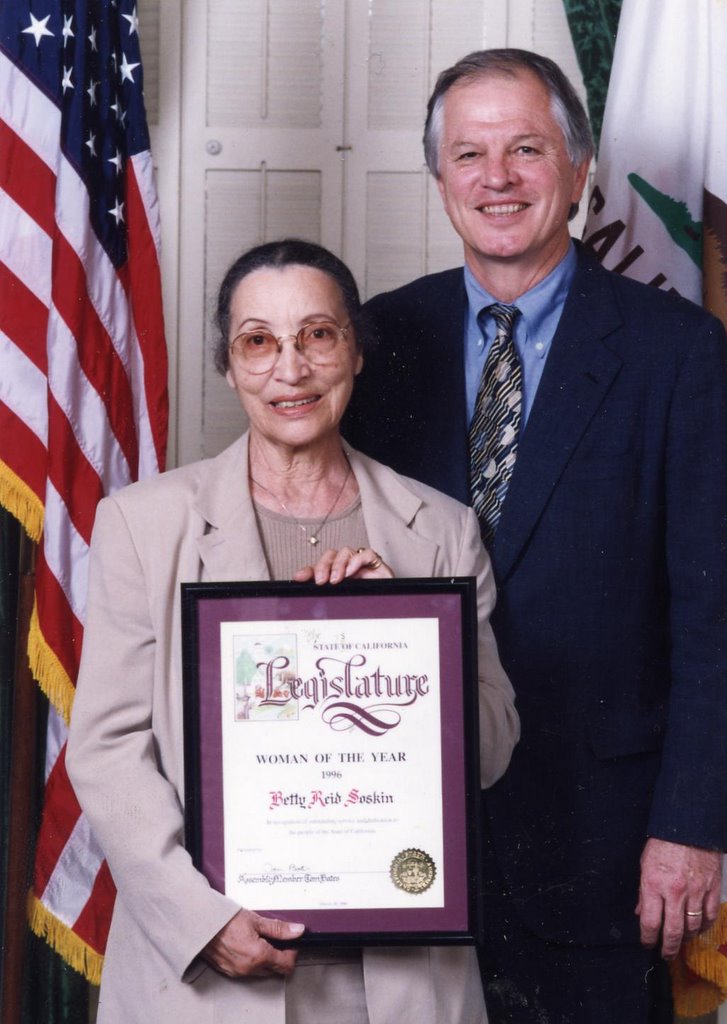
It was the day following Mel's disastrous collapse ...
into what was to be his new immediate future in a nursing home. I was still employed at the university in what was now "our" research project, but had Bill's permission to opt out for however long it might take to handle this family emergency. The project was coming to an end, anyway. We were entering into the evaluation phase shortly thereafter. Nonetheless, I was leaving prematurely -- but at the time had no idea where this would all lead.
Some context:
The home that Bill and I had created was situated on Grizzly Peak Boulevard, the topmost ridge in the city. At about 1500 ft., it ran along the edges of Tilden Park, and overlooked the entire Bay Area, the cities below, both bridges, Treasure Island, and on a clear day the distant Farallons... In order to reach home we drove from the old fraternity house that housed Project Community -- on the northern edge of the campus on Hearst Street, south past the Memorial Stadium and through Strawberry Canyon to the scenic narrow road that leads to Lawrence Science Museum. There we'd routinely stop on clear evenings to watch the sun drop into the Pacific behind the Golden Gate bridge. On foggy days, we were often above the fog bank and could look down upon its churnings as it drifted through the Gate far below. The drive through the campus often seemed unlikely, temporary, so far beyond my expectations for what my life would be -- that there was little surprise when it all began to change as the Flatlands re-claimed me and drew me back into the next phase of life. Those ten years were mind-bending and rich and growth-producing in ways that I so appreciate, still. My indebtedness to Bill and of the expansion that took place in my psyche in those years is inestimable.
In the days immediately following the crisis of Mel's tragic life, I found myself driving into South Berkeley into what was now a crime-ridden and poverty-stricken community. It was time to try to assess next moves. It was clear that there was little carryover from those early days when I'd been the principal player with Rick in his playpen beside those orange crates we'd started with, while Mel worked elsewhere. That was gone. The experience was now buried beneath years of child-rearing and suburban living, political activities and the beginnings of university life. Besides all that, I was terrified of the environment in which I now found myself. African American life at this level was as alien to me as suburban life had been some years before. The stories learned from Rick rocked my entire being. What had become normal in the life of the store was beyond my wildest and most fearsome dreams. The billboards along the street almost universally featured liquor ads. There were 12 places where one could purchase alcohol within a six block stretch. There were street corner "offices" manned by young black males who guarded them fiercely. Across the street from our business stood an old house that was obviously being used for prostitution -- and our windows looked out on those activities constantly. There was a camper that parked across the street and that served as a floating gambling operation. On that first day I noticed a huge billboard -- situated on the lot beside that house. It ironically advertised cigarette papers!
Since Sacramento Street was under total reconstruction due to the removal of the Santa Fe Railroad tracks and the undergrounding of utilities, on that first day of my return I was faced with sawhorse barriers that prevented entry onto the street. All concrete had been removed so that there were open trenches bordering the street and dirt up to the entrance of all buildings. No one could enter the area except on foot. This state existed for 18 months, killing all commercial life on the street over that period. Small wonder that Mel had collapsed under the weight of it all. Given the state of his finances, the city's revitalization program must have been the last blow to any thought of recovery.
Inside the building -- on closer inspection -- I discovered small scales and tiny little plastic bags in the display cases (whose use my naive brain didn't yet understand), a backroom where black-light posters (suggestive) were on display, some questionable articles whose use I was only later to determine. It was clear in only a brief moment that Mel's business had dropped to the level of the life on the streets after many years of relative success. It was all very frightening, and I found myself almost immobilized in those first few visits, unable to comprehend the situation in which I now found myself. Listening for every sound that might be a gunshot, or, shouts that might indicate that fights were being staged just beyond our entrance. Every hair became a nerve ending!
In addition, I noticed for the first time a sign posted on the door that declared the intention of the holder of the mortgage on our building to foreclose for lack of payments. That 6000 sq. ft. two-story building, constructed in 1964, was the source of pride for Mel and my sons -- and it was gone. Having faced the loss of our home to the Internal Revenue Service months before, this was the final blow. My children's legacy -- that once consisted of several buildings along that street -- had vanished into the vacuum formed by Mel's downward slide into a devastating gambling addiction. He'd not paid on the mortgage for several years. It was over. But was it?
During that first week, while packing merchandise that I judged might be redeemable and that might reduce a portion of the indebtedness now having to be faced -- a strange thing was happening. There were customers who were climbing over the barriers to get in -- knocking on the doors to make purchases. They'd come in -- often help me to find something they were seeking, would express their genuine concern for Mr. Reid, and wish me the best. There were many such people, some neighbors whom I didn't know, but some were coming from great distances to make purchases of mostly gospel music records and tapes.
It was clear that life here was being experienced at several levels. What was scary and threatening to me was simply a different reality to those for whom this was normal. My priorities had shifted dramatically over the years. I was in great need of a reality check, and to understand this world, I was going to have to withdraw from the other. The implications for my marriage were obvious, but that would unfold as it must -- over time.
By the end of the first week I'd made a decision. This little business had taken on a life of its own. That life was only marginally related to Mel or to me. It had -- over many years -- become an institution in that community and in the Bay Area, and maybe deserved a second look. With Bill's help and counsel, I started to make calls to the distributors -- explaining that the business had collapsed and that -- though I was certainly aware of the indebtedness -- wasn't it also true that popular music had a shelf life and that most of the merchandise on our shelves was of questionable value now? Would it make any sense for me to return it to them for credit, or, in light of the tragic events of Mel's life (he was well-liked despite all), would it not make more sense for them to give me six months to try to revitalize the business? Surprise, surprise! There was a universal acceptance of my proposition and with a gift of $10,000 from Bill to satisfy the demands of the foreclosure, I was going to become a Sacramento Street merchant, and a black merchant at that.
This proved to be the start of the end of life among those brilliant intellectuals of the period and the beginnings of a challenge that would in later years lead to being named "Woman of the Year" before the legislature of the State of California (1995).
Amazing!
Photo: Taken with Assemblyman Tom Bates, 14th Assembly District on the day of the honors.
Odd times ... .
These monumental life changes I'm experiencing at the moment are having a definite effect upon the way I'm moving through time. Having so many years experience under me at this point has the effect of lending a quality of familiarity to almost everything that happens. There are some anomalies that pop up now and then and that cause me to suddenly and inexplicably act out in unexpected ways. The only consistency is in the fact that those moves -- though out of character -- seem natural, and guided by some equivalent of an internal GPS (Global Positioning System).
Case in point: Went to bed last night feeling lonely. Unusual for me. Though I've enjoyed a lifetime of warm friendships of a well-peopled world, I've also learned to deeply value being alone. Reading and writing and listening deep in the sheer wonder of being alive was a lesson learned long ago when I was a young mother living in suburbia as an "enemy alien." It happened during the summer of the disorienting breakdown that threatened to destroy me but failed in the effort.
It was an extremely hot mid-summer evening. It must have been after nine o'clock, but the temperature was still in the high eighties. The kids were in bed, except for Rick who was busy with one or another of his projects some distance away in his downstairs bedroom. I was sitting out on the sundeck that overlooked a large swimming pool just beyond the treetop of a huge black walnut tree that hugged the railing on the east side of the house. I'd sat on the floor leaning against a huge plate-glass window -- absently strumming my guitar while waiting for a brilliantly bright full moon to clear the branches on its arc across the sky. All I could see was the great light it cast. The tree was still hiding it from full view, but its promise was exciting as anything I could imagine. The anticipation of "The Show" shortened my breath and sharpened my awareness.
Then the magic! As I watched it emerge into full view, a Luna moth flew ever-so-lightly to the top of the tree and lit upon a leaf silhouetted against the velvet black sky! There was that instant of ephiphany -- a moment when the light of the moon (serving as background to the now luminous moth!) ignited its wings as if lit from within, and there we were; the moon, the moth, and me...equal components in this planetary drama of meaning! We were in perfect balance in the universe. It was a feeling I had only that one moment in my life. I can close my eyes and bring it back -- whole -- as needed, and have many times since. Realization that I was one-third of that improbable triad -- creating this incredible moment in eternity, was stunning! It remains permanently etched into my brain.
In a rush I knew that this was the moment in time when being alone was the essential element in my drama. Had there been even one other person present -- by the time I'd said, "Look!" it would have passed. I'd probably never have known it had occurred. How many other such events have I missed while engaging in idle conversation? I was riveted into the experience, and every brain cell knew it. Zen? Don't know. I did know that I was(am) as necessary to the experience as was that tiny moth, or gigantic luminous moon... .
Thought of that last night, and allowed a feeling into consciousness that is usually re-directed into perpetual busyness. How long has it been since I fell asleep with head buried in the hollow of the shoulder of a lover? Did the atypical thing then (guided by that internal GPS), logged on to Yahoo Personals and created a profile! Not sure I'm looking for anyone (seriously), but it might be interesting to be "found." Can't imagine being married again, or yielding my independence to any other human being, but I can imagine drowzing off with my head in the hollow of his shoulder, truly... .
Could be that the writings of yesterday were disturbing to me. The state of the world has me fearful of watching the news, and I'm a CSPAN junkie. My growing mistrust of leadership, local, state, and national, allows no sanctuary. Having experienced the world of politics over many years has demystified those processes and left me intimately aware of the human imperfections of so many who seek to lead us. My treasured sense of independence is slowly being eroded by forces that are far beyond my control -- and maybe always were. Having in my memory bank pictures of life lived in harmony with another makes for a quiet hunger that mere friendships and rewarding work simply may not have the capacity to any longer satisfy. I don't really know.
In the light of day I wonder why on earth I would have ever yielded to this fleeting sense of need? However, I trust myself enough to know that giving in to natural urges has always led me well. Quite simply, I may have needed to create that profile for myself more than I need a response from another temporarily lonely stranger. Perhaps by so doing I've proven to myself, again, that I am human enough to admit my needfulness and can now add the element of idle anticipation to provide a distraction from a deeply troubling immediate future... .
This morning it feels like an adventurous thing to have done, and I regret nothing!
These monumental life changes I'm experiencing at the moment are having a definite effect upon the way I'm moving through time. Having so many years experience under me at this point has the effect of lending a quality of familiarity to almost everything that happens. There are some anomalies that pop up now and then and that cause me to suddenly and inexplicably act out in unexpected ways. The only consistency is in the fact that those moves -- though out of character -- seem natural, and guided by some equivalent of an internal GPS (Global Positioning System).
Case in point: Went to bed last night feeling lonely. Unusual for me. Though I've enjoyed a lifetime of warm friendships of a well-peopled world, I've also learned to deeply value being alone. Reading and writing and listening deep in the sheer wonder of being alive was a lesson learned long ago when I was a young mother living in suburbia as an "enemy alien." It happened during the summer of the disorienting breakdown that threatened to destroy me but failed in the effort.
It was an extremely hot mid-summer evening. It must have been after nine o'clock, but the temperature was still in the high eighties. The kids were in bed, except for Rick who was busy with one or another of his projects some distance away in his downstairs bedroom. I was sitting out on the sundeck that overlooked a large swimming pool just beyond the treetop of a huge black walnut tree that hugged the railing on the east side of the house. I'd sat on the floor leaning against a huge plate-glass window -- absently strumming my guitar while waiting for a brilliantly bright full moon to clear the branches on its arc across the sky. All I could see was the great light it cast. The tree was still hiding it from full view, but its promise was exciting as anything I could imagine. The anticipation of "The Show" shortened my breath and sharpened my awareness.
Then the magic! As I watched it emerge into full view, a Luna moth flew ever-so-lightly to the top of the tree and lit upon a leaf silhouetted against the velvet black sky! There was that instant of ephiphany -- a moment when the light of the moon (serving as background to the now luminous moth!) ignited its wings as if lit from within, and there we were; the moon, the moth, and me...equal components in this planetary drama of meaning! We were in perfect balance in the universe. It was a feeling I had only that one moment in my life. I can close my eyes and bring it back -- whole -- as needed, and have many times since. Realization that I was one-third of that improbable triad -- creating this incredible moment in eternity, was stunning! It remains permanently etched into my brain.
In a rush I knew that this was the moment in time when being alone was the essential element in my drama. Had there been even one other person present -- by the time I'd said, "Look!" it would have passed. I'd probably never have known it had occurred. How many other such events have I missed while engaging in idle conversation? I was riveted into the experience, and every brain cell knew it. Zen? Don't know. I did know that I was(am) as necessary to the experience as was that tiny moth, or gigantic luminous moon... .
Thought of that last night, and allowed a feeling into consciousness that is usually re-directed into perpetual busyness. How long has it been since I fell asleep with head buried in the hollow of the shoulder of a lover? Did the atypical thing then (guided by that internal GPS), logged on to Yahoo Personals and created a profile! Not sure I'm looking for anyone (seriously), but it might be interesting to be "found." Can't imagine being married again, or yielding my independence to any other human being, but I can imagine drowzing off with my head in the hollow of his shoulder, truly... .
Could be that the writings of yesterday were disturbing to me. The state of the world has me fearful of watching the news, and I'm a CSPAN junkie. My growing mistrust of leadership, local, state, and national, allows no sanctuary. Having experienced the world of politics over many years has demystified those processes and left me intimately aware of the human imperfections of so many who seek to lead us. My treasured sense of independence is slowly being eroded by forces that are far beyond my control -- and maybe always were. Having in my memory bank pictures of life lived in harmony with another makes for a quiet hunger that mere friendships and rewarding work simply may not have the capacity to any longer satisfy. I don't really know.
In the light of day I wonder why on earth I would have ever yielded to this fleeting sense of need? However, I trust myself enough to know that giving in to natural urges has always led me well. Quite simply, I may have needed to create that profile for myself more than I need a response from another temporarily lonely stranger. Perhaps by so doing I've proven to myself, again, that I am human enough to admit my needfulness and can now add the element of idle anticipation to provide a distraction from a deeply troubling immediate future... .
This morning it feels like an adventurous thing to have done, and I regret nothing!
Friday, May 14, 2004
Today started badly.
First call (just after eight o'clock) came from my mortgage company informing me that my last check had been returned. Scary. Even with everything working at top speed, our proposal for the Convention Center management won't be acted upon until mid-June, probably. The fiscal year will begin on July 1st, and it will take time for our contract to be acted upon.
As of today I will begin to live on my credit cards, something I've never done before -- nor has it been required of me. Fortunately, my credit is fine and -- having lived past the age of acquisition -- I have all of the creature comforts needed to survive fairly well without too much difficulty. My wants are modest and lifestyle easy to maintain. Wisely, I've invested in mutual funds that were intended for my retirement (if ever that happens), so all is not lost. My safety net is a modestly constructed, but if and when I feel the need, I can liquidate. It was not always that way. There is a familiarity to this feeling of financial insecurity. I've certainly lived it before, but not for a very long time.
Back to the Seventies:
It was a quiet day at Project Community. By now I was married to Bill and living the new and fascinating life of a faculty wife at the university. The old world had melted away. Walnut Creek had faded into the past, and adjusting to the intellectual richness presented by this new environment was all-consuming. It was soon destined to change irrevokably, but of that I was unaware. I'd had enough time to feel some regret about having dropped out of the lives of most of my family and friends -- two tiers, both those of my childhood, and those of the most recent quarter century of suburban life, but there was little time to give that too much thought, until this day:
It was Rick on the phone. "Mom, Dad is lying on the floor in the back office (of the store) unconscious. I can't rouse him! Please come!" Dropping everything, including the phone, I dashed for the parking lot and drove recklessly to our South Berkeley store. I'd instructed Rick to call an ambulance immediately, so I knew that Mel was being cared for. It was my son who drew me to where he was. I knew that Rick was fragile, and an alcoholic. Of course I was wrong. He'd ridden in the ambulance with his father, and I arrived distraught and frustrated to a place I'd not seen for years. The street and this once quiet blue-collar neighborhood had changed dramatically. Our store reflected the downward spiral that had occurred in the six or seven block area that made up the black community.
I walked around the shop for a few minutes, trying to re-orient myself to this business Mel and I had founded many years before finding little to connect with.
But this was surely not the time for remembering. I needed to go to the hospital to fulfill whatever role it was that former wives fulfill at such times, when you're caught up in the need to respond to a parental role -- one abandoned long ago. For Rick and my other sons, I instinctively knew that my current marital status would have to be set aside. It was "family" time. Dad was critically ill. Wherever the fault lay for the disintegration of our clan, family is what we had to be now; and we were.
Upon arriving at Herrick Hospital, I learned that Mel was in a diabetic coma (I knew nothing of his diabetes) and that he would have to have his left leg amputed at the knee in order to save his life. He'd apparently ignored his condition for years, had continued managing the business -- with Rick's help -- despite failing eyesight and no medical attention.
It was even more dire than this. He'd also been suffering a major mental depression for ages with no one aware of it. His need to fight the street had taken its toll. The streets were filled with those plying the drug trade. Prostitution was not only visible but blatant with little police control. When he'd complained at city hall that little was being done to protect the community he'd been told by the department, "...when things happen in other parts of town, we usually know where to pick up the perpetrators." This community was being used as a containment basin for the rest of the city.
This was 1978, and the year prior, 25% of the homicides that occurred in the city happened within the block upon which our building stood. According to Rick, the store had been broken into on a 3-month regular schedule. Mel by that time no longer lived away from the store, but had been sleeping on an old mattress in a back office with a rifle within easy reach. His life and business reflected the life on the streets. He'd become a lost soul. This good man who'd given his all for me and the kids in the early years was gone. In his place was this desparate soul who was no more than a shadow of the man I'd married long ago.
The discoveries of that morning changed my life for all time, and started a new cycle that came with its own set of learnings, values, and demands, some in direct conflict with the sophisticated and erudite life of the university culture. That morning ushered in life of a dramatically different kind, a life that introduced me to the underbelly of urban existence at a time when I was wonderfully prepared for what I was to find. I was psychologically ready to take full advantage of it, and did.
It was that evening that my husband Bill and I stood at Mel's hospital bed in ICU waiting for him to recover to find his left leg missing. This was to be their first meeting. Bill was at his professional best. He'd brought all of his psychologist self to the forefront while setting aside his Betty's husband self. It was a delicate moment for us all, but we survived it. It was good to have our sons witness this coming together beyond boundaries. It opened the door for the re-establishment of the friendship I'd shared with Mel, and in the days that followed to take him for his medical appointments, see to his care as we moved him into a retirement home after surgery, arrange for services and even handle his day-to-day shopping for most of the rest of his life.
The next step was dealing with the state of the business we'd created so long ago, and of discovering the depths of the disintegration of the assets we'd worked so hard to create for our children.
That would have to wait until tomorrow ... .
First call (just after eight o'clock) came from my mortgage company informing me that my last check had been returned. Scary. Even with everything working at top speed, our proposal for the Convention Center management won't be acted upon until mid-June, probably. The fiscal year will begin on July 1st, and it will take time for our contract to be acted upon.
As of today I will begin to live on my credit cards, something I've never done before -- nor has it been required of me. Fortunately, my credit is fine and -- having lived past the age of acquisition -- I have all of the creature comforts needed to survive fairly well without too much difficulty. My wants are modest and lifestyle easy to maintain. Wisely, I've invested in mutual funds that were intended for my retirement (if ever that happens), so all is not lost. My safety net is a modestly constructed, but if and when I feel the need, I can liquidate. It was not always that way. There is a familiarity to this feeling of financial insecurity. I've certainly lived it before, but not for a very long time.
Back to the Seventies:
It was a quiet day at Project Community. By now I was married to Bill and living the new and fascinating life of a faculty wife at the university. The old world had melted away. Walnut Creek had faded into the past, and adjusting to the intellectual richness presented by this new environment was all-consuming. It was soon destined to change irrevokably, but of that I was unaware. I'd had enough time to feel some regret about having dropped out of the lives of most of my family and friends -- two tiers, both those of my childhood, and those of the most recent quarter century of suburban life, but there was little time to give that too much thought, until this day:
It was Rick on the phone. "Mom, Dad is lying on the floor in the back office (of the store) unconscious. I can't rouse him! Please come!" Dropping everything, including the phone, I dashed for the parking lot and drove recklessly to our South Berkeley store. I'd instructed Rick to call an ambulance immediately, so I knew that Mel was being cared for. It was my son who drew me to where he was. I knew that Rick was fragile, and an alcoholic. Of course I was wrong. He'd ridden in the ambulance with his father, and I arrived distraught and frustrated to a place I'd not seen for years. The street and this once quiet blue-collar neighborhood had changed dramatically. Our store reflected the downward spiral that had occurred in the six or seven block area that made up the black community.
I walked around the shop for a few minutes, trying to re-orient myself to this business Mel and I had founded many years before finding little to connect with.
But this was surely not the time for remembering. I needed to go to the hospital to fulfill whatever role it was that former wives fulfill at such times, when you're caught up in the need to respond to a parental role -- one abandoned long ago. For Rick and my other sons, I instinctively knew that my current marital status would have to be set aside. It was "family" time. Dad was critically ill. Wherever the fault lay for the disintegration of our clan, family is what we had to be now; and we were.
Upon arriving at Herrick Hospital, I learned that Mel was in a diabetic coma (I knew nothing of his diabetes) and that he would have to have his left leg amputed at the knee in order to save his life. He'd apparently ignored his condition for years, had continued managing the business -- with Rick's help -- despite failing eyesight and no medical attention.
It was even more dire than this. He'd also been suffering a major mental depression for ages with no one aware of it. His need to fight the street had taken its toll. The streets were filled with those plying the drug trade. Prostitution was not only visible but blatant with little police control. When he'd complained at city hall that little was being done to protect the community he'd been told by the department, "...when things happen in other parts of town, we usually know where to pick up the perpetrators." This community was being used as a containment basin for the rest of the city.
This was 1978, and the year prior, 25% of the homicides that occurred in the city happened within the block upon which our building stood. According to Rick, the store had been broken into on a 3-month regular schedule. Mel by that time no longer lived away from the store, but had been sleeping on an old mattress in a back office with a rifle within easy reach. His life and business reflected the life on the streets. He'd become a lost soul. This good man who'd given his all for me and the kids in the early years was gone. In his place was this desparate soul who was no more than a shadow of the man I'd married long ago.
The discoveries of that morning changed my life for all time, and started a new cycle that came with its own set of learnings, values, and demands, some in direct conflict with the sophisticated and erudite life of the university culture. That morning ushered in life of a dramatically different kind, a life that introduced me to the underbelly of urban existence at a time when I was wonderfully prepared for what I was to find. I was psychologically ready to take full advantage of it, and did.
It was that evening that my husband Bill and I stood at Mel's hospital bed in ICU waiting for him to recover to find his left leg missing. This was to be their first meeting. Bill was at his professional best. He'd brought all of his psychologist self to the forefront while setting aside his Betty's husband self. It was a delicate moment for us all, but we survived it. It was good to have our sons witness this coming together beyond boundaries. It opened the door for the re-establishment of the friendship I'd shared with Mel, and in the days that followed to take him for his medical appointments, see to his care as we moved him into a retirement home after surgery, arrange for services and even handle his day-to-day shopping for most of the rest of his life.
The next step was dealing with the state of the business we'd created so long ago, and of discovering the depths of the disintegration of the assets we'd worked so hard to create for our children.
That would have to wait until tomorrow ... .
Thursday, May 13, 2004
It's been days since I last wrote ...
So much time has elapsed that I hardly know where to begin... .
Perhaps we'll just pick up with today:
Proposal for management of the Richmond Convention Center is moving even more quickly than I'd ever imagined. We're finding enthusiasm everywhere we turn, and offers of assistance are plentiful. The auditorium is in great shape, seats about 3500 in theater arrangements on the main floor, with six side conference rooms to work with as well. It's a gem of a public facility that has been terribly under-utilized for years.
Jennifer and I did a complete tour of the facility two days ago and today took some events promoters in to see it. They were enthusiastic about the place and it appears that we may have a buy-in. Lots of agreements to negotiate, and scenarios to explore, but I'm optimistic about the directions we seem to be headed in.
Our next meeting with the city manager is scheduled for next Monday at which time we'll refine the plans and continue to build the budget. So much for business.
Am continually close to being nauseated (actually) at the state of the world and the awfulness coming out of Iraq. Though there is a part of me that simply can't understand how anyone could expect that WAR has the capacity to be anything other than inhumane. Expecting there to be rules of engagement that make killing fair and compassionate in one case and animalistic and insane in another bears no logic for me. I suspect that this might be a fundamental male/female difference, but I'm no longer sure of that. It all points to a level of insanity that is frightening to consider even for an instant. If I allow my mind to go there, the nausea begins and I become lost and distraught.
Have been reading some of the conspiracy theories on the Internet and doing something I've rarely done before; I'm passing things along in the hope that -- whether believable or not to me -- they may cast more doubt upon the intentions of our administration and help to bring down the presidency. It's beginning to feel less important to me to get them to respond to my(our) petitions and pleas than to make an attempt to chip away at those who believe in the rightness of their purpose. Bush's polling has dropped below 50% now, and that is the first sign of hope in a long time. That means that his base may be crumbling. If we can't effect him(them!) perhaps we can effect that base of true believers. William Kristol sounded far less supportive this week, and some of the other pundits have begun to admit that the wheels are coming off the wagon. It's too early to tell, but just maybe... .
Meanwhile, I'll keep searching out powerfully-written columns online and sending them to my more conservative friends. Preaching to the choir accomplishes little.
Dorian is doing well. Other than having her bicycle sitting in front of the fireplace right in the middle of the livingroom, the rest is falling into place. We've staked out private parts of our small condo, and that works out pretty well. I'm fighting hard to allow her to be independent, but must admit to slipping into my mother place more often than I'd like. We may never really live apart again, though that is the intention. I really must admit that knowing that she's safe in these dreadful times is a comfort. In an emergency I'd be frantic, and we're living in a time of a constant need for vigilance. Falling to sleep at night knowing that she's safe on the blue futon on the livingroom floor with her two cats gives me a sense of peace. The disadvantages are less easily defined these days, and are beginning to be far outweighed by something I'd almost forgotten still lives in me. Being protective of my child is a parental mandate that continues to operate and took little to re-energize.
So much time has elapsed that I hardly know where to begin... .
Perhaps we'll just pick up with today:
Proposal for management of the Richmond Convention Center is moving even more quickly than I'd ever imagined. We're finding enthusiasm everywhere we turn, and offers of assistance are plentiful. The auditorium is in great shape, seats about 3500 in theater arrangements on the main floor, with six side conference rooms to work with as well. It's a gem of a public facility that has been terribly under-utilized for years.
Jennifer and I did a complete tour of the facility two days ago and today took some events promoters in to see it. They were enthusiastic about the place and it appears that we may have a buy-in. Lots of agreements to negotiate, and scenarios to explore, but I'm optimistic about the directions we seem to be headed in.
Our next meeting with the city manager is scheduled for next Monday at which time we'll refine the plans and continue to build the budget. So much for business.
Am continually close to being nauseated (actually) at the state of the world and the awfulness coming out of Iraq. Though there is a part of me that simply can't understand how anyone could expect that WAR has the capacity to be anything other than inhumane. Expecting there to be rules of engagement that make killing fair and compassionate in one case and animalistic and insane in another bears no logic for me. I suspect that this might be a fundamental male/female difference, but I'm no longer sure of that. It all points to a level of insanity that is frightening to consider even for an instant. If I allow my mind to go there, the nausea begins and I become lost and distraught.
Have been reading some of the conspiracy theories on the Internet and doing something I've rarely done before; I'm passing things along in the hope that -- whether believable or not to me -- they may cast more doubt upon the intentions of our administration and help to bring down the presidency. It's beginning to feel less important to me to get them to respond to my(our) petitions and pleas than to make an attempt to chip away at those who believe in the rightness of their purpose. Bush's polling has dropped below 50% now, and that is the first sign of hope in a long time. That means that his base may be crumbling. If we can't effect him(them!) perhaps we can effect that base of true believers. William Kristol sounded far less supportive this week, and some of the other pundits have begun to admit that the wheels are coming off the wagon. It's too early to tell, but just maybe... .
Meanwhile, I'll keep searching out powerfully-written columns online and sending them to my more conservative friends. Preaching to the choir accomplishes little.
Dorian is doing well. Other than having her bicycle sitting in front of the fireplace right in the middle of the livingroom, the rest is falling into place. We've staked out private parts of our small condo, and that works out pretty well. I'm fighting hard to allow her to be independent, but must admit to slipping into my mother place more often than I'd like. We may never really live apart again, though that is the intention. I really must admit that knowing that she's safe in these dreadful times is a comfort. In an emergency I'd be frantic, and we're living in a time of a constant need for vigilance. Falling to sleep at night knowing that she's safe on the blue futon on the livingroom floor with her two cats gives me a sense of peace. The disadvantages are less easily defined these days, and are beginning to be far outweighed by something I'd almost forgotten still lives in me. Being protective of my child is a parental mandate that continues to operate and took little to re-energize.
Thursday, May 06, 2004
Am experiencing a growing concern ...
about my growing inability to cope with the day-to-day headlines and growing hysteria around the Middle East. I tend to use this journal as an escape from the fear that is beginning to make my breathing shallow and my attention span determined by how quickly I can flip the remote between horrors.
A few minutes ago I sat here to begin to catch up with myself and to try to recapture some of the biographical themes that I found in that Bancroft Library video. It is not to be.
Phone rang and it was a long distance call from Rev. Paul Sawyer, UU minister of long acquaintance and with whom I've worked on many occasions. He's been pastoring the UU church in Pasadena, I believe, for the past 15 or so years, having been associated before that time with the Fellowship of Unitarian-Universalists in Berkeley. It was through Paul that I met and associated with, if only peripherally, with author Ken Kesey et al many years ago. We shared the experience at Asilomar that Tom Wolfe wrote about in the Electric Acid Koolaid Test. Paul is seeking a post at Starr King School for the Ministry (of the Graduate Theological Union) and called to ask for a letter of reference. Glad to oblige.
That call started a train of thought that has blocked out all else over the past hour.
Me: "What are you doing these dreadful days, Paul?"
Paul: "Trying to pull together some kind of response to the happenings in Iraq, but such outrage really demands more than the usual actions such as letters to the ... signing petitions ... etc., but it may well be time to take to the streets (again!)."
Me: "Isn't it wonderful, what MoveOn is accomplishing by way of unifying the voices of the electorate?"
Paul: "Yes, but it isn't enough."
Me: "But, of course I know that. But it's a beginning place, isn't it?"
Paul: "Of course it is, but with Kerry doing the predictable campaign waltz of shifting to the Center when he should be solidifying his base on the Left is tragic and may just lose the momentum he gathered during the primaries."
Me: "But what do we do...?"
And that's where I've been since we cradled the phones.
We probably need a controlled and peaceful revolution like that of the Sixties. That brought us Civil Rights as well as a withdrawal from Vietnam and brought down a corrupt presidency. Why should we be hesitant to use the streets now? The threat to our existence on the planet is greater than in all of history. The total destruction of the world may be at hand. Orwell's 1984 was an accurate predicter of the present -- with the signs leading up to his "future" well-marked. Whatever are we waiting for? The rest of the world is now under the empirical control of our nation -- for good or evil. Should the current trends prevail, we may be doomed -- taking everyone else with us. That means your children, my children, and theirs. How can we not act? Why do I feel this paralysis? What savior are we non-believers waiting for?
I've now lived long enough to have seen the rate of change accellerate from generations measured in half-century cycles to today when they're measured by five years or less. That increases the sensitivity factor so much that -- as with MoveOn -- the effects are almost instantly measurable. We have new organizing tools and a new generation of thinkers and activists to use them. This world is not the one I thought we were creating, but somewhere in the mix that world must still exist. Paul Sawyer, Aron Gilmartin, and millions of others -- together -- bending in the direction of constructive change helped to give that world life. The counteracting forces have all but obliterated the humane governance we worked hard to produce. It may not be too late to salvage something of worth from those efforts.
Paul has a boat moored at the Berkeley Marina and will be coming north in July with his Susan. If the world is still whole, we'll spend time together and try to blow on the embers of the past in hope of finding some new pathways for the future. We've lots of friends in common and some are still around, probably as frightened and immobilized as we. Wonder what would happen if we came together to provide some moral guidance to those new to social action as we knew it? We may have passed the torch, but was it well lit?
Kesey died a year or so ago. Would love to have had the chance to sit with those two again. I've met a number of original thinkers over my lifetime, and these two may top that list. It will be great to see Paul again.
Now back to the Great Escape known as Fleshing Out The Proposal for the Convention Center. Meeting Jennifer for a two hour session this afternoon and I'm late. The world will just have to take care of itself until I get back. And, yes, I realize that I'm avoiding the radio or television and have been for days. Have lost my status as a news junkie, a sure symptom of my paralyzing and growing fear of knowing. The feeling of helplessness grows in direct proportion to the exposure to the media.
November can't come too soon!
about my growing inability to cope with the day-to-day headlines and growing hysteria around the Middle East. I tend to use this journal as an escape from the fear that is beginning to make my breathing shallow and my attention span determined by how quickly I can flip the remote between horrors.
A few minutes ago I sat here to begin to catch up with myself and to try to recapture some of the biographical themes that I found in that Bancroft Library video. It is not to be.
Phone rang and it was a long distance call from Rev. Paul Sawyer, UU minister of long acquaintance and with whom I've worked on many occasions. He's been pastoring the UU church in Pasadena, I believe, for the past 15 or so years, having been associated before that time with the Fellowship of Unitarian-Universalists in Berkeley. It was through Paul that I met and associated with, if only peripherally, with author Ken Kesey et al many years ago. We shared the experience at Asilomar that Tom Wolfe wrote about in the Electric Acid Koolaid Test. Paul is seeking a post at Starr King School for the Ministry (of the Graduate Theological Union) and called to ask for a letter of reference. Glad to oblige.
That call started a train of thought that has blocked out all else over the past hour.
Me: "What are you doing these dreadful days, Paul?"
Paul: "Trying to pull together some kind of response to the happenings in Iraq, but such outrage really demands more than the usual actions such as letters to the ... signing petitions ... etc., but it may well be time to take to the streets (again!)."
Me: "Isn't it wonderful, what MoveOn is accomplishing by way of unifying the voices of the electorate?"
Paul: "Yes, but it isn't enough."
Me: "But, of course I know that. But it's a beginning place, isn't it?"
Paul: "Of course it is, but with Kerry doing the predictable campaign waltz of shifting to the Center when he should be solidifying his base on the Left is tragic and may just lose the momentum he gathered during the primaries."
Me: "But what do we do...?"
And that's where I've been since we cradled the phones.
We probably need a controlled and peaceful revolution like that of the Sixties. That brought us Civil Rights as well as a withdrawal from Vietnam and brought down a corrupt presidency. Why should we be hesitant to use the streets now? The threat to our existence on the planet is greater than in all of history. The total destruction of the world may be at hand. Orwell's 1984 was an accurate predicter of the present -- with the signs leading up to his "future" well-marked. Whatever are we waiting for? The rest of the world is now under the empirical control of our nation -- for good or evil. Should the current trends prevail, we may be doomed -- taking everyone else with us. That means your children, my children, and theirs. How can we not act? Why do I feel this paralysis? What savior are we non-believers waiting for?
I've now lived long enough to have seen the rate of change accellerate from generations measured in half-century cycles to today when they're measured by five years or less. That increases the sensitivity factor so much that -- as with MoveOn -- the effects are almost instantly measurable. We have new organizing tools and a new generation of thinkers and activists to use them. This world is not the one I thought we were creating, but somewhere in the mix that world must still exist. Paul Sawyer, Aron Gilmartin, and millions of others -- together -- bending in the direction of constructive change helped to give that world life. The counteracting forces have all but obliterated the humane governance we worked hard to produce. It may not be too late to salvage something of worth from those efforts.
Paul has a boat moored at the Berkeley Marina and will be coming north in July with his Susan. If the world is still whole, we'll spend time together and try to blow on the embers of the past in hope of finding some new pathways for the future. We've lots of friends in common and some are still around, probably as frightened and immobilized as we. Wonder what would happen if we came together to provide some moral guidance to those new to social action as we knew it? We may have passed the torch, but was it well lit?
Kesey died a year or so ago. Would love to have had the chance to sit with those two again. I've met a number of original thinkers over my lifetime, and these two may top that list. It will be great to see Paul again.
Now back to the Great Escape known as Fleshing Out The Proposal for the Convention Center. Meeting Jennifer for a two hour session this afternoon and I'm late. The world will just have to take care of itself until I get back. And, yes, I realize that I'm avoiding the radio or television and have been for days. Have lost my status as a news junkie, a sure symptom of my paralyzing and growing fear of knowing. The feeling of helplessness grows in direct proportion to the exposure to the media.
November can't come too soon!

Monday, May 03, 2004
Jennifer and I met with City Manager Leveron Bryant this morning ...
to discuss the possibility of our taking over the management of the Convention Center in the downtown civic center. For a long time I've been wanting to find my place in the world of arts & culture in a really productive way. The need it great and the opportunity presented by this budget crisis is unprecedented.
Like many inner cities throughout the nation, Richmond has an abandoned core of historic buildings that have been empty and rotting away for 30 years. They're owned by the Redevelopment Agency and border on the most poverty-stricken area of the city. It is also probably 80-90% African-American with a Latino in-migration creeping into view.
The area is not unlike Port Washington where a crime and drug-infested area has been razed and reconfigured as an Arts & Entertainment district with the arts used as an economic engine for positive change. There is significant interest among funders in the area to work with us to create our own version of that model.
Wrote a paper describing the vision that I've been carrying around in my head for the past several years and passed it along to targeted movers and shakers in the city -- so much so that I'm now hearing pieces of it pop up from the mouths of others who have no idea of the genesis, but have bought into the dream. That's exciting!
Both Jennifer and I are members of the Arts Commission and she's also now a member of the Contra Costa County Arts Commission as well. We've been lobbying and schmoozin' with anyone we thought we could light a fire under and it's finally blossomed into reality after more than year of priming the pump.
I believe that my best and most convincing argument has been this, "...can you imagine what it has cost this city to allow this entire district of historic buildings to lie fallow for all these years? Has anyone taken the time to total up the losses in taxes and fear and poor image? If we could put a dollar figure on that, I can't imagine how the city can afford NOT to do what I'm asking."
Thirty years ago the redevelopment agency saw fit to leave the center of the city (civic center, etc.) and build a brand new shopping mall on the absolute edge of the border that abuts the city of Pinole. In so doing, it left behind only tiny marginal businesses and a few county and federal buildings. The downtown therefore dies at five o'clock and weekends, leaving the community with little life. Meanwhile, Pinole developed ITS shopping center just across the freeway on the same border leaving Richmond's mall to slowly die, robbing the general fund of sales taxes with which to fund city services.
My interest in this and and my work with the new national park are related. That shoreline park is a mere two miles from the historic (and abandoned) downtown. To now begin the process of developing that area as an Arts & Entertainment district will allow the city to draw tourists into the heart of the city from the shoreline, bringing their sales tax change with them.
I see art galleries, jazz clubs, blues houses, shops, cafes, restaurants, etc., with the Convention Center as the beginning piece. There is in this district the 38 year-old East Bay Center for the Performing Arts (on whose board I've served for years), the marvelous full service Richmond Arts Center (ceramic, painting, jewelry, textile studios plus exhibit spaces), plus NIAD -- the National Institute for Artists with Disabilities. Those are the building blocks upon which we will begin to flesh out the vision. The Richmond civic television station is also located in the convention center, and there is a huge public square (lawned) in front of those buildings upon which outdoor festivals and artist vendors can exhibit and sell their wares.
The Rosie Memorial National Park is a 10-year project. Ours will take at least that long, so all I can do is lay down the initial tiles in this mosaic and leave the full development to Jennifer and whoever we can train to pick up the reins later on. I'm probably good for another year or two, but that's enough time to pass the torch and see that it's properly lit.
Our meeting with the city manager was wonderful! We have the go-ahead to proceed with the final plans. Jennifer and I will be working over the next few weeks to flesh out the proposal that we presented to him and to pull together a realistic budget for the city council to pass on. However, we have the original buy-in from the manager and will work now on the PowerPoint presentation for the Council's budget workshop in about 30-45 days from now -- with his total support.
Incidentally, Jennifer and I are now partners in a consulting firm called, "About Face Consulting." She's phenomenal. We have complementary skills. She's closer to the age of my late eldest son than to me, and that's wonderful. I get lots of energy from her incredibly facile mind and she is able and more than willing to absorb what she can from my years of experience. We're one strong team, and I'm looking forward to the next two or three years of learning. Our primary love is the performing arts and she's had lots of experience to draw from.
Life keeps unfolding ...
Wish me luck!
to discuss the possibility of our taking over the management of the Convention Center in the downtown civic center. For a long time I've been wanting to find my place in the world of arts & culture in a really productive way. The need it great and the opportunity presented by this budget crisis is unprecedented.
Like many inner cities throughout the nation, Richmond has an abandoned core of historic buildings that have been empty and rotting away for 30 years. They're owned by the Redevelopment Agency and border on the most poverty-stricken area of the city. It is also probably 80-90% African-American with a Latino in-migration creeping into view.
The area is not unlike Port Washington where a crime and drug-infested area has been razed and reconfigured as an Arts & Entertainment district with the arts used as an economic engine for positive change. There is significant interest among funders in the area to work with us to create our own version of that model.
Wrote a paper describing the vision that I've been carrying around in my head for the past several years and passed it along to targeted movers and shakers in the city -- so much so that I'm now hearing pieces of it pop up from the mouths of others who have no idea of the genesis, but have bought into the dream. That's exciting!
Both Jennifer and I are members of the Arts Commission and she's also now a member of the Contra Costa County Arts Commission as well. We've been lobbying and schmoozin' with anyone we thought we could light a fire under and it's finally blossomed into reality after more than year of priming the pump.
I believe that my best and most convincing argument has been this, "...can you imagine what it has cost this city to allow this entire district of historic buildings to lie fallow for all these years? Has anyone taken the time to total up the losses in taxes and fear and poor image? If we could put a dollar figure on that, I can't imagine how the city can afford NOT to do what I'm asking."
Thirty years ago the redevelopment agency saw fit to leave the center of the city (civic center, etc.) and build a brand new shopping mall on the absolute edge of the border that abuts the city of Pinole. In so doing, it left behind only tiny marginal businesses and a few county and federal buildings. The downtown therefore dies at five o'clock and weekends, leaving the community with little life. Meanwhile, Pinole developed ITS shopping center just across the freeway on the same border leaving Richmond's mall to slowly die, robbing the general fund of sales taxes with which to fund city services.
My interest in this and and my work with the new national park are related. That shoreline park is a mere two miles from the historic (and abandoned) downtown. To now begin the process of developing that area as an Arts & Entertainment district will allow the city to draw tourists into the heart of the city from the shoreline, bringing their sales tax change with them.
I see art galleries, jazz clubs, blues houses, shops, cafes, restaurants, etc., with the Convention Center as the beginning piece. There is in this district the 38 year-old East Bay Center for the Performing Arts (on whose board I've served for years), the marvelous full service Richmond Arts Center (ceramic, painting, jewelry, textile studios plus exhibit spaces), plus NIAD -- the National Institute for Artists with Disabilities. Those are the building blocks upon which we will begin to flesh out the vision. The Richmond civic television station is also located in the convention center, and there is a huge public square (lawned) in front of those buildings upon which outdoor festivals and artist vendors can exhibit and sell their wares.
The Rosie Memorial National Park is a 10-year project. Ours will take at least that long, so all I can do is lay down the initial tiles in this mosaic and leave the full development to Jennifer and whoever we can train to pick up the reins later on. I'm probably good for another year or two, but that's enough time to pass the torch and see that it's properly lit.
Our meeting with the city manager was wonderful! We have the go-ahead to proceed with the final plans. Jennifer and I will be working over the next few weeks to flesh out the proposal that we presented to him and to pull together a realistic budget for the city council to pass on. However, we have the original buy-in from the manager and will work now on the PowerPoint presentation for the Council's budget workshop in about 30-45 days from now -- with his total support.
Incidentally, Jennifer and I are now partners in a consulting firm called, "About Face Consulting." She's phenomenal. We have complementary skills. She's closer to the age of my late eldest son than to me, and that's wonderful. I get lots of energy from her incredibly facile mind and she is able and more than willing to absorb what she can from my years of experience. We're one strong team, and I'm looking forward to the next two or three years of learning. Our primary love is the performing arts and she's had lots of experience to draw from.
Life keeps unfolding ...
Wish me luck!
Saturday, May 01, 2004
Followup letter from United State Department of Interior...,
National Park Service, with additional information on the Ken Burns documentary:
"...After searching through our files, we selected you for an interview with a PBS film company that has contact us because you live near one of the communities that this film company hopes to focus upon in this exciting documentary called "The War".
This documentary will be five part series about American life during the war -- focusing on four communities and the lives of ordinary people. The film will be completed and will air on PBS in 2006.
As we discussed and as you agreed to, your name, phone number and story were given to the producer, Lynn Novick of Florentine Films (A Ken Burns Film Company), however, there is no guarantee that you will receive a call from her. The communities that were originallly requested by the film company included: Waterbury, CT, Luverne, MN; Mobile, AL; and Sacramento, CA. We insisted that Richmond should be included."
So -- I'm not even sure that I'll be around to see this epic -- and, if I am, that it will matter a hell of a lot! But once committed ... .
Completed Dorian's move and closed down her Oakland apartment today. It's been a real challenge and we seem to have simply transferred the clutter from her place to mine. My apartment -- a place of pride for me -- is now crowded with far more than the space can accommodate comfortably. I'm already feeling pinched! Must be careful to mask such feelings. She's extremely perceptive and picks up subtle signals, especially negative ones. When she begins to get testy and irritable I've learned to look to myself for clues. That suggests that a high level of sensitivity must be maintained at all times. Nothing is more exhausting!
National Park Service, with additional information on the Ken Burns documentary:
"...After searching through our files, we selected you for an interview with a PBS film company that has contact us because you live near one of the communities that this film company hopes to focus upon in this exciting documentary called "The War".
This documentary will be five part series about American life during the war -- focusing on four communities and the lives of ordinary people. The film will be completed and will air on PBS in 2006.
As we discussed and as you agreed to, your name, phone number and story were given to the producer, Lynn Novick of Florentine Films (A Ken Burns Film Company), however, there is no guarantee that you will receive a call from her. The communities that were originallly requested by the film company included: Waterbury, CT, Luverne, MN; Mobile, AL; and Sacramento, CA. We insisted that Richmond should be included."
So -- I'm not even sure that I'll be around to see this epic -- and, if I am, that it will matter a hell of a lot! But once committed ... .
Completed Dorian's move and closed down her Oakland apartment today. It's been a real challenge and we seem to have simply transferred the clutter from her place to mine. My apartment -- a place of pride for me -- is now crowded with far more than the space can accommodate comfortably. I'm already feeling pinched! Must be careful to mask such feelings. She's extremely perceptive and picks up subtle signals, especially negative ones. When she begins to get testy and irritable I've learned to look to myself for clues. That suggests that a high level of sensitivity must be maintained at all times. Nothing is more exhausting!
Wednesday, April 28, 2004

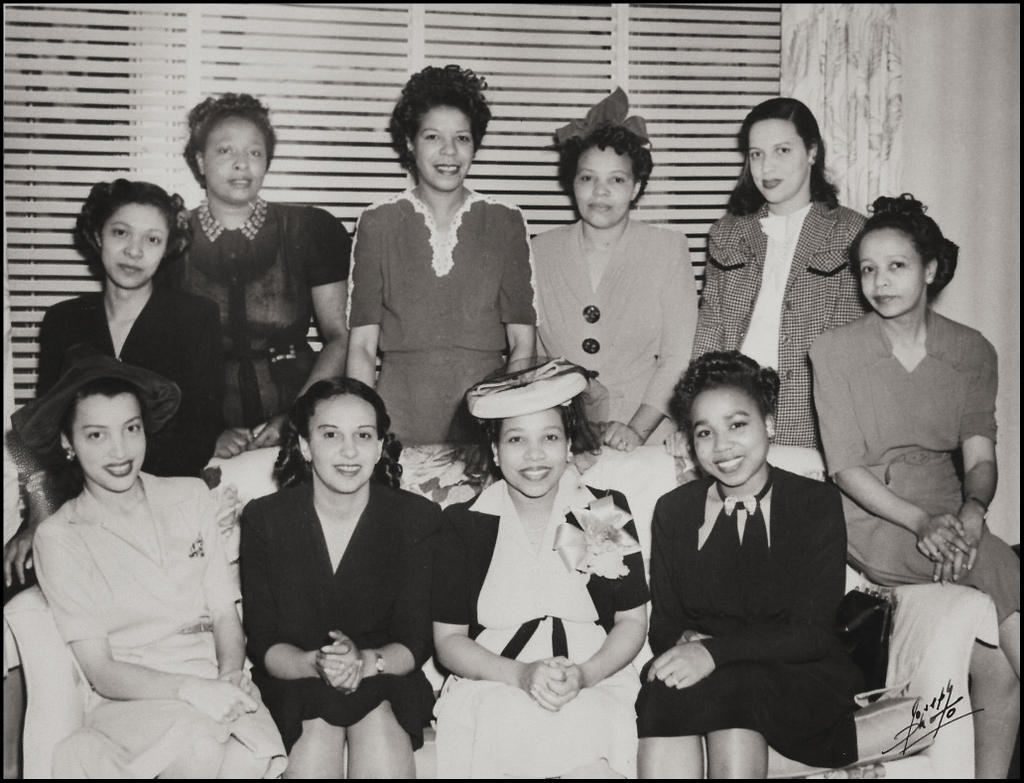
Am beginning to feel a bit uncomfortable ...
about the attention that I'm receiving these days. Like a bit of a fraud. It's not that I'm particularly humble or coy, but that the outcome appears to be aimed at moving me onto the sidelines of national life while I'm still in the middle of mine! Well, if not the middle -- at least the top quarter.
This morning -- only a few days after that invitation to the White House -- comes a consolation prize of sorts; "...PBS' Ken Burns is working on a television special on Rosies of World War II -- and we'd like to have you as one of those interviewed. She continued, "...they've asked for some women from the Sacramento area, actually, but we've told them that Richmond is the center of Rosie-dom, so we're compiling a list of interviewees for them and it must be in today's mail. Please say yes!"
Saying no to the White House carried with it a feeling of a bit of daring (waiting for a better class of tenant), but I love Ken Burns documentaries and will be delighted to be a part of it -- even for a few minutes. Loved "Jazz" and "Baseball" and "The Civil War" is a masterpiece. This also gives me a real reason to start watching that oral history video from the Bancroft Library. What they need may be accessible without actually going through another interview. Somewhere on that tape may be precisely what they need.
My reluctance to become a central figure in the tales of Rosie comes back to the fact that my role was a bit less than glorious. If I'd ever worn a hardhat or wielded a welding torch, I might feel better about being front and center in these retrospectives. In my little file clerk's role in that Jim Crow union office -- out of the sight of either the ships or the shipyards -- it feels less than legimate. I surely didn't feel any particularly strong feelings of patriotism or that I was saving the world. Those women who were actually on board those merchant ships, crawling into those unreachable nooks and crannies to do their work surely must have a very different response to the accumulating honors we're beginning to experience now. The fact that we're again at war (have we ever not been?), the patriotism is heightened for many.
My guess is that I'm being called because I'm one of the women in my age group who is not either on life supports or suffering from Alzheimers! If only people realized just how many of us are still out there -- still in the trenches -- plowing the fields of life. The fact that I'm African American probably fills another gap in their coverage. That I'm fairly articulate and still productive helps ... but whatever reason ... I don't feel anymore legitimate as an honoree as I believe the current occupant of the White House is in his assumed role as president. The difference seems to be that I know it, and his arrogance may prevent him from seeing the truth.
There may be enough reason to say yes to being a part of that history -- if I can deal with it within the context of the times; honestly. That bright and capable young black women were prevented from full employment even under union sponsorship was a fact of life. That all African Americans who worked out of those Jim Crow union halls were designated as "trainees." That word was on every file card -- after each name. This insured that no black person would ever reach journeyman status and would not be in competition for jobs at war's end. This was the Forties. Change would not come for another two decades. This, after all, may be a very important part of the history that we must not re-live.
Maybe this Ken Burns piece -- if I can bring honesty to my few minutes of it -- can be a vehicle for another look at the period and reinforce the changes that must be held to if we are to continue to survive as a nation. A chance to re-visit yesterday's ethos with the accumulated lessons of the Civil Rights movement that followed ... And -- before we continue to export our conditional "democracy" to other places on the planet.
Yes.
C'mon Ken Burns!
Photo: The office staff at the time that I was employed as a clerk in Boilermakers A-36. I'm on the far left, front row. The occasion was a baby shower for the Marguerite Roles, wife of Mahlon Roles, Secretary-Treasurer of our auxiliary. Zola Adams, Christine White; that's my late sister, Marjorie Charbonnet Brooms far right, back row. The others I can no longer can identify. (Circa 1943-44)
Sunday, April 25, 2004
Received a large official-looking package in the mails yesterday ...
from The Bancroft Library of the university. Hadn't gathered in the mail until late this (Sunday) morning. In the large manila mailing packet was a thick transcript -- about one-and-a-half inches thick -- fastened together by a huge black metal clip. There was also a videotape with a label that read:
Betty Reid Soskin
Interviewed November 7 & 11, 2002 by Nadine Wilmot
Regional Oral History Office
The Bancroft Library
NARRATOR COPY
Recalled then that this was a part of the project the university was conducting for their own purposes and that I'd rather enjoyed the process at the time. Meanwhile -- given my lifestyle -- a lot of life has been lived since two years ago and I'd completely forgotten about it. This was one of several such interviews I've participated in over the past few years. In fact, I didn't realize at the time that they would send a transcript to me at some point. The accompanying letter asked if I would read it and make minor corrections (things that were deemed inaudible or obvious misspellings) but:
"...The transcript is intended to be a reasonable record of the conversations, and for this reason, urge our interviewees not to formalize the transcript as if it were a written autobiography. A few fumbled words, an aside, a lapse in memory--all these serve to remind the reader that this was an informal interview. The informality adds to the readability and liveliness of the transcripts and presents a more human picture of the interviewee than a more formal written document would.
The transcript will be the draft on which we base our final version. If you have any changes, we ask that you notify us within one month of the receipt of this letter. If we do not hear from you by then, we will prepare the final print and web transcript from our draft. We cannot make minor or aesthetic changes to the video, though we could remove sections should you decide they should not be made public."
Final copies of the transcript and video will be deposited in The Bancroft Library, the Richmond Public Library and with the National Park Service...".
Spent the last few hours scanning the transcript and doing the three-hole-punch duties so that the entire document could be placed in a binder for easier access. Can just imagine what a tragedy it would be if I dropped that mess of papers? For some reason they're not numbered.
All-in-all, considering how much life I've lived since "November 7th & 11th of 2002," the entire event had fled from memory. It read well though there were glaring misspellings of names and places. Felt some embarrassment at just how many times I said "yeah" instead of "yes" and made a solemn vow to correct that immediately!
The best thing was that -- though I've yet to watch the video from which the transcript is taken -- I liked that woman. Felt no embarrassment. What a nice surprise, though it shouldn't have been. Learned a long time ago the trick of watching myself being myself and being fairly forgiving in the process. Perfection has never been a goal. Truth, now, is another matter -- and principle -- ad nauseum, as you can see by the events in my recent past.
Decided to spend the next several days resisting the temptation to retype the whole thing (wiping out all those "yeahs"), but will follow the instructions and forego that urge. Will do the corrections they've asked for on their original draft and return it to the Bancroft for the completion of their project.
Also, I'll wait a few days before viewing the video -- for a time when Dorian is away at NIAD and I have the apartment to myself. Not sure just why, but that may be a more penetrating experience. There are about two hours of taping to view -- and that's a huge amount of "Betty" to sit through. May watch it in small pieces over time.
Just recalled that -- at a recent NPS planning session -- a number of historians from the Bancroft were present. I know now why I was greeted in the way that I was, with real deference and warmth. These men were familiar with the contents of this work. They knew all about me before I walked into that room. At the time, I'd totally forgotten about these interviews.
Oh, just remembered that my father's videotaped interviews are tucked away somewhere in my apartment. I have about four hours of his life--done in the early 80s by the Public Health Department at U.C. Berkeley, too. Future genealogists in the family will have a treasure trove of archival material to work with. As one of several family history researchers, I see this as such a gift!
from The Bancroft Library of the university. Hadn't gathered in the mail until late this (Sunday) morning. In the large manila mailing packet was a thick transcript -- about one-and-a-half inches thick -- fastened together by a huge black metal clip. There was also a videotape with a label that read:
Betty Reid Soskin
Interviewed November 7 & 11, 2002 by Nadine Wilmot
Regional Oral History Office
The Bancroft Library
NARRATOR COPY
Recalled then that this was a part of the project the university was conducting for their own purposes and that I'd rather enjoyed the process at the time. Meanwhile -- given my lifestyle -- a lot of life has been lived since two years ago and I'd completely forgotten about it. This was one of several such interviews I've participated in over the past few years. In fact, I didn't realize at the time that they would send a transcript to me at some point. The accompanying letter asked if I would read it and make minor corrections (things that were deemed inaudible or obvious misspellings) but:
"...The transcript is intended to be a reasonable record of the conversations, and for this reason, urge our interviewees not to formalize the transcript as if it were a written autobiography. A few fumbled words, an aside, a lapse in memory--all these serve to remind the reader that this was an informal interview. The informality adds to the readability and liveliness of the transcripts and presents a more human picture of the interviewee than a more formal written document would.
The transcript will be the draft on which we base our final version. If you have any changes, we ask that you notify us within one month of the receipt of this letter. If we do not hear from you by then, we will prepare the final print and web transcript from our draft. We cannot make minor or aesthetic changes to the video, though we could remove sections should you decide they should not be made public."
Final copies of the transcript and video will be deposited in The Bancroft Library, the Richmond Public Library and with the National Park Service...".
Spent the last few hours scanning the transcript and doing the three-hole-punch duties so that the entire document could be placed in a binder for easier access. Can just imagine what a tragedy it would be if I dropped that mess of papers? For some reason they're not numbered.
All-in-all, considering how much life I've lived since "November 7th & 11th of 2002," the entire event had fled from memory. It read well though there were glaring misspellings of names and places. Felt some embarrassment at just how many times I said "yeah" instead of "yes" and made a solemn vow to correct that immediately!
The best thing was that -- though I've yet to watch the video from which the transcript is taken -- I liked that woman. Felt no embarrassment. What a nice surprise, though it shouldn't have been. Learned a long time ago the trick of watching myself being myself and being fairly forgiving in the process. Perfection has never been a goal. Truth, now, is another matter -- and principle -- ad nauseum, as you can see by the events in my recent past.
Decided to spend the next several days resisting the temptation to retype the whole thing (wiping out all those "yeahs"), but will follow the instructions and forego that urge. Will do the corrections they've asked for on their original draft and return it to the Bancroft for the completion of their project.
Also, I'll wait a few days before viewing the video -- for a time when Dorian is away at NIAD and I have the apartment to myself. Not sure just why, but that may be a more penetrating experience. There are about two hours of taping to view -- and that's a huge amount of "Betty" to sit through. May watch it in small pieces over time.
Just recalled that -- at a recent NPS planning session -- a number of historians from the Bancroft were present. I know now why I was greeted in the way that I was, with real deference and warmth. These men were familiar with the contents of this work. They knew all about me before I walked into that room. At the time, I'd totally forgotten about these interviews.
Oh, just remembered that my father's videotaped interviews are tucked away somewhere in my apartment. I have about four hours of his life--done in the early 80s by the Public Health Department at U.C. Berkeley, too. Future genealogists in the family will have a treasure trove of archival material to work with. As one of several family history researchers, I see this as such a gift!
 Decided against taking part in the great Women's march in San Francisco today.
Dorian seems worn out from participation in yesterday's Special Olympics Basketball Tournament at Cal. She played in just two games (losing both). That involved a very long day of crowd activities. That's always stressful for her. Her day started at 6:30 yesterday morning -- she went full steam all day. I picked up a teary mess of an athlete at 5:15 in the evening. Her team had placed fourth and had therefore not received a medal. Having been participating from childhood in these games -- when there was a medal for everybody simply for participating -- to a time when the awarding is governed by whether or not one wins, she just isn't prepared. We "normal" folks just don't get it, do we?
Puts me in mind of our very Special Olympics when she was a resident at The Cedars in Marin County. What a time that was for us both. The participants were about equally divided between the handicapped (both mental and physical) and volunteers and supporters (mostly teens wearing special tee shirts) who stood at the starting and finishing lines urging the athletes on. It was a completely loving and supportive environment.
Saw a miracle that day that forever colored my attitudes about competitive sports, but before I tell you about that -- let me tell you about one little girl -- maybe ten or eleven. She looked tired and teary. I walked over and asked a volunteer if I could help. The answer was a kindly but firm, "no, thank you." She then explained to me that the child had somehow run and won first place in the wrong race only a short time before -- she was not the right age -- and therefore her win could not be counted. The staff was asking that she run again, this time with the proper age group. This time, being tired from the first run, she could not possibly win. The rule book won out over common sense. Were I in the position of having a voice, I would have simply had her time transferred to the proper race. These athletes would never have known the difference, and it was no one else's business, after all.
The miracle I speak of was an example of heroism worthy of mention in the history book of sports.
There was a 50-Yard Dash about to be run. I was sitting in the stands at the high school. In the row above me sat Trevor Thomas of KQED-TV, the local PBS channel. He had a camera crew on the field and was connected to them by remote. I assumed (later) that he'd surely seen what I'd witnessed. It was that extraordinary, to me.
There were three young teen volunteers below at the starting line with three athletes. There was a little girl about ten or eleven -- tall and rangy for her age, another slightly rounded little girl about the same age -- short and stocky and a bit lumbersome in her movements. The third child was a little boy of maybe 7-8. All three were obviously mentally-retarded with Downs syndrome clearly present in the little boy. The rest is hard to describe since it all happened almost simultaneously:
The three young volunteers send their charges off with a loving shove and shouts of "Go!"The starting gun sounds!
The three children dash off -- each at a different pace.
The tallest little girl is far ahead of the others -- quite obviously the winner, but...
Little boy falls and screams out, less in pain than in frustration ...
He's pounding the ground with his little fists!
Tall little girl stops still in her tracks as she hears his cry, inches from the tape ...
There is a loud gasp in the stands as we "normal" people saw her -- only a few feet from victory --
stop dead!
She turns to run back ...
picks up the little boy and brushes him off...
totally ignoring the roar of the crowd ...
She'd done the human thing.
She'd answered a human cry of pain.
In the stands there was confusion and the buzz of conversation ... as we adjusted.
She'd lost.
I drove home to Walnut Creek feeling that I'd witnessed something terribly important. I felt elated. Upon reaching the house I immediately called everyone I could reach to tell them to watch "NewsRoom" that night to see my "miracle." I just knew that Trevor Thomas had seen the same event and that his cameramen on the field surely must have picked it up. But he hadn't. It was missing from the news that night. There was coverage of the games, but that coverage consisted of children standing on a set of graduated boxes receiving medals from grownup volunteers. The Special Olympics was quite new and newsworthy. They were the local dignitaries awarding the "winners" with ribbons -- for 1st place, 2nd place, 3rd place. Everyone was a winner, except that lovely little girl who'd gone back to pick up a fallen competitor. She was missing.

Wonder to this day how often we award those ribbons for the wrong things?
The next year, with this experience under my belt, I attended the Special Olympics Track & Field Statewide games at Cal. There were two volunteer coaches sitting nearby in the stands. I listened as they chatted about the special challenges of working with this population. At the time we were watching the lineup for the 100-Yard Dash below. "You have to teach them to watch the lines on their lane when they're running. If they catch sight of the runners on either side, they begin to run alongside." Here it was again. It is simply unnatural to compete below a certain intellectual level, I suppose. Have no idea if this is supported by the research, but I would guess that it might well be. For this population, running alongside was sufficient reason to participate. Originally, ribbons were awarded to everyone simply for pariticipating. This is apparently no longer true -- as we elevate the Special Olympics Game competitors to more "normal" status.
Years later, while watching the San Francisco Bay to Breakers marathon on the tube, I found myself laughing at all those "normal" folks having the time of their lives "running alongside," and in weird and wonderful costumes at that! How lovely it was to see those thousands of runners in Boston and in New York doing the same thing every spring.
Met the mother of that little boy of the Marin track meet some years later. She was in an audience when I was singing. I was telling the story (as I often did between songs) about that life-changing event when I heard someone laugh. She identified herself to me when the concert was over. She, too, had the same reaction that I'd had and also felt very much alone until now. She, too, had watched Trevor Thomas on NewsRoom that evening -- believing that he'd witnessed what she'd seen. Though it was years after the fact, we were both close to tears as we embraced as old friends ... so grateful to be confirmed in this shared miracle. It was so wonderful to discover that someone else had noticed. We were not alone.
Dorian is quieter today. She talks basketball talk these days and understands free throws and penalties and double-dribbling and fouls and interference -- and has been moved over many years to some familiarity with the rules of the game. In taking on the values of the field, the arena, the court, I wonder what she's given up? And, what we've all given up on the way to becoming more "normally" competitive"?
Friday, April 23, 2004
Looks like these dzi beads are working their magic, maybe ...

Yesterday brought an official invitation from the National Park Service to attend a White House reception honoring Rosie's of World War II. What an honor that would have been! It seems that each of the representatives who sponsored the legislation that created the national park is inviting one woman from his/her congressional district. I would be the guest of Rep. George Miller. However -- after the initial feeling of euphoria at being chosen -- the cold water of principle washed over and I heard myself saying, "No, thank you." No hesitancy. You may find this foolish (and perhaps it is), but seeing the present occupant ousted consumes much of my time these days. The hypocrisy would be more than I can live with. Baking cookies for a MoveOn bake sale to help to send him back to Crawford, Texas, one day and appearing shaking hands with him a month later is a bit much.
Felt the same way a few months ago when the call came inviting me to participate with others in a press conference with V-President's wife, Lynne Cheney. It was a photo op and I would have been used to provide local color. She was here on her book tour. I knew that there would be many women who would be thrilled at the chance to greet her. I would hardly be missed. It was easy to simply say "no, thank you," and move on.
This is different. It turned into just one more reason to feel furious at Mr. Bush. I've never forgiven him and his minions for the Florida debacle, and see him as an interloper in "our" White House. His face on my television screen is enough to send me probing between the sofa cushions for the remote! Now his occupancy robs this relatively ordinary citizen of her one chance at a White House visit, and as a honoree, at that!
I surely won't be missed. Few even know that I exist in the world. It isn't as though I wielded a welding torch in The Good War, because my role was that of a lowly clerk in a Jim Crow union hall. How ironic is that? Simply by chance, history has proven that my status of the time was a tragic social wrong. Just another example of low expectations that's still crippling African Americans in the work place. How ironic that my status in the world -- driven by a lifetime of serendipity -- would have resulted in being an invited guest of the White House! That may have been enough to justify an exceptance, but would have required a greater sense of humor than I can muster up in these horrendous days of war and the threatened total destruction of the world.
Despite some fairly significant contributions to the body politic -- at a lowly level, of course -- being so honored in that setting might have been about as appropriate as George Bush's appointment to be "First Tenant!"
There has to be some Republican Bush-ian Rosie who would be thrilled beyond all reason to be so honored. Now she'll have the opportunity to go to the party. If only they'd waited until after Inauguration Day in January so that I could have done it without compromising principle!
This, of course, is that rare thrill to be lived only once. But I've said that so many times in my life. Somehow life keeps topping itself despite all ... who knows? Maybe I'll be asked to accompany President Aristide on his return to Haiti, or, ... whatever. I'll just keep some blank lines on my dance card and see what happens.
Meanwhile, I'll give my dzi beads an extra caress and get back to the work at hand, moving Dorian and getting prepared to gather with other women at Dolores Park in San Francisco tomorrow. This is, after all, the time of (hopefully) huge demonstrations for the womens' movement, nationally. See you at the barricades!
Yesterday brought an official invitation from the National Park Service to attend a White House reception honoring Rosie's of World War II. What an honor that would have been! It seems that each of the representatives who sponsored the legislation that created the national park is inviting one woman from his/her congressional district. I would be the guest of Rep. George Miller. However -- after the initial feeling of euphoria at being chosen -- the cold water of principle washed over and I heard myself saying, "No, thank you." No hesitancy. You may find this foolish (and perhaps it is), but seeing the present occupant ousted consumes much of my time these days. The hypocrisy would be more than I can live with. Baking cookies for a MoveOn bake sale to help to send him back to Crawford, Texas, one day and appearing shaking hands with him a month later is a bit much.
Felt the same way a few months ago when the call came inviting me to participate with others in a press conference with V-President's wife, Lynne Cheney. It was a photo op and I would have been used to provide local color. She was here on her book tour. I knew that there would be many women who would be thrilled at the chance to greet her. I would hardly be missed. It was easy to simply say "no, thank you," and move on.
This is different. It turned into just one more reason to feel furious at Mr. Bush. I've never forgiven him and his minions for the Florida debacle, and see him as an interloper in "our" White House. His face on my television screen is enough to send me probing between the sofa cushions for the remote! Now his occupancy robs this relatively ordinary citizen of her one chance at a White House visit, and as a honoree, at that!
I surely won't be missed. Few even know that I exist in the world. It isn't as though I wielded a welding torch in The Good War, because my role was that of a lowly clerk in a Jim Crow union hall. How ironic is that? Simply by chance, history has proven that my status of the time was a tragic social wrong. Just another example of low expectations that's still crippling African Americans in the work place. How ironic that my status in the world -- driven by a lifetime of serendipity -- would have resulted in being an invited guest of the White House! That may have been enough to justify an exceptance, but would have required a greater sense of humor than I can muster up in these horrendous days of war and the threatened total destruction of the world.
Despite some fairly significant contributions to the body politic -- at a lowly level, of course -- being so honored in that setting might have been about as appropriate as George Bush's appointment to be "First Tenant!"
There has to be some Republican Bush-ian Rosie who would be thrilled beyond all reason to be so honored. Now she'll have the opportunity to go to the party. If only they'd waited until after Inauguration Day in January so that I could have done it without compromising principle!
This, of course, is that rare thrill to be lived only once. But I've said that so many times in my life. Somehow life keeps topping itself despite all ... who knows? Maybe I'll be asked to accompany President Aristide on his return to Haiti, or, ... whatever. I'll just keep some blank lines on my dance card and see what happens.
Meanwhile, I'll give my dzi beads an extra caress and get back to the work at hand, moving Dorian and getting prepared to gather with other women at Dolores Park in San Francisco tomorrow. This is, after all, the time of (hopefully) huge demonstrations for the womens' movement, nationally. See you at the barricades!
Subscribe to:
Posts (Atom)