Advantages of growing older; one leaves the age of acquisition behind.
While checking out eBay this morning (the first steps at de-mystifying the process) I found myself momentarily caught up in click-shopping. Had no idea there were so many things in the world that I know longer want or need. Somehow over the past few years, I reached a place where there was simply nothing left to want that's buyable, that is. Except for the occasional purchase of something to feed my soul, like a piece of art or some cut flowers -- tickets to a play or dance concert, or the upgrading of my Mac from time to time -- having money holds little meaning now.
Then why on earth do I continue to have this need to be employed? Why is it so difficult to simply call myself retired and get on with it? Why do I equate independence with an adequate bank account? Of course, I do need to provide for Dorian as well as myself -- but that shouldn't take much - and I surely would hate to have to begin to think about senior housing, or, "assisted" living. I'm still far too capable and healthy and involved in life to want to separate myself off into that kind of isolation until it's absolutely necessary.
It may have to do with a wish to continue to be the bank of last resort for my kids. There's little else that I can provide for them now. And, given the state of the economy, they'll never have the advantages that Mel and I enjoyed as young parents. The total economy is skewed in favor of the elderly -- with little provided for the generation that follows. Poor planning, that.
I wonder why my generation functions as though it's the last? I wonder if it's related in any way to religious beliefs that have predicted Armegeddon since I was a child? How short-sighted. How else do we read current denial of global warming? How else are we to understand the abandonment of international treaties? It is as though my generation has every intention of using up all the remaining resources -- leaving every man, woman, and child a national indebtedness of $25,000 each. What with "The Rapture" about to arrive, who'll need to pay it anyway? How did it come to this?
There must be others who've also grown past the "age of acquisition," and who are as frightened at the state of this nation as I... If this new awareness is, indeed, a natural part of the aging process, then I cannot be alone. It suggests that the prevailing attitude as exhibited by the current administration is an aberration that rises not from my generation, but from the one that followed.
Since the engine that pulls capitalism is fed primarily by the acquisitiveness of young families (first homes, appliances, vacations, education, children's needs, cars and sports equipment), would it not be smart to see to those needs first and foremost?
Perhaps -- if I were an economist -- I'd better understand that I'm being simplistic. However, most truths that have withstood time for me have proven to be elegantly simple. There may be just the seed of such a truth here. I'm a bit too wise to believe that I've solved the problem (smile).
Now it's time to work on those fingertip callouses a bit. Nope, haven't clipped those nails yet. It may take a few more days to know whether I'm committed to the Muse. But I did make a trip to Tupper & Reed Music store in downtown Berkeley yesterday to pick up a jazz guitar book that looks promising. Even recognizing that there isn't enough time for mastery, I just might reach a reasonable level of mediocrity on my instrument. When I got to the counter to pay for my purchase the young woman asked if I wanted the teacher's discount(?). I said, "no." She obviously couldn't imagine that I was buying this for myself(!).
Just blasted another stereotype!
Friday, October 15, 2004

Tuesday, October 12, 2004
Received a quickie invitation (Sunday morning)
to have dinner with friends at the home of a woman who is slowly growing into the inner circle of my life of good friends. She's coordinating the city's arts programming. We became acquainted during the brief period when I served on the Arts Commission.
Jennifer called early in the day to say that Michelle had invited us to share an impromptu supper with her family, and that a few other friends might be there as well.
It was a do nothing evening with only Dorian to commune with, and she was busily working on a new bedspread. Her crocheted coverlets are piling up now, with each new and colorful piece begging for distribution. I've about decided to let her sell them on eBay, as soon as I can figure out just how one does that. I need to photograph them (beautiful!), and advertise online -- to see where that goes. I have the label created, "Global Warming" by Dorian Leon Reid. How's that?
We attended a reception in the rotunda of the Oakland City Hall last night. Dorian has a painting on exhibit that was getting some notice. She's now sold four pieces at NIAD over the past few months (okay, one was to her mother), with one of her large quilt-sized collages currently under consideration by a potential buyer.
But let's get back to Sunday evening:
It was very casual with the small group gathered randomly, some with wine or a dish to share, and all with warmth and "life!" There was music from somewhere, and I saw a young man enter with a guitar in hand and knew that there would be more than food and fellowship shared. There was.
When it seems right -- when the mood struck -- he brought it out and began to play his original compositions. Started with a blues and followed with art songs that sounded free-flowing, free-form, and possibly improvised on the spot. Fun!
For the first time in years, I asked to have turn, to recite the lyrics of a song written long ago, and did so while he strummed in the background. It woke the artist, and felt right. The words still rang true, and the emotions expressed still current. It was a moment I'll treasure.
Yesterday, before sitting down at my computer, I poked my old Martin out from its hiding place in the back of the closet; remembered seeing a packet of new strings somewhere ... found them in the bottom of a drawer, and went about the business of changing the much-corroded ones for new and resonant ones. Fingers quickly remembered the process -- stored in muscle memory, I'm sure. This was step one.
Fingernails on my left hand must be clipped close (what a sacrifice, since they are such a nice length and I've been nursing them along with diet supplements of collagen) and new callouses need to build up on my fingertips in order to press the chords ... it I take this detour... .
Still, I tuned up and gingerly started to send the signals from mind to fingers and the strings responded accordingly, and -- before tucking my beloved guitar away in its old hidingplace, I held it for awhile just remembering the times we'd shared. Ask any musician -- one's instrument becomes imbued with human attributes along the way, and ties between you are binding for life. And, by no stretch of the imagination would I consider myself a "musician." An artist, surely, but in an ill-defined way. A lyricist, a writer, a poet, maybe. A guitarist, never, but I've always sensed the potential -- if ever I applied myself to the effort to de-mystify the symbols and learn to stop being dependent upon a supersensitive "ear" that dictates where fingers need to be placed instead of the notes and chord symbols on the sheet. There was never a problem replicating the sounds in my head with the instrument in my arms. It made for great freedom in creating songs, but completely destroyed any ability to master the instrument.
My oh so sensitive therapist told me years ago -- when I wondered about the source of the songs that poured so effortlessly out of somewhere within -- "forget the lessons. Go with what your heart says. Those who create do so to make the map for others to follow. You must not limit the scope of the creative process by adherence to rules." Made sense of a sort, but said nothing about the frustration one experiences when the muse can't be evoked, and there is not the box of "tools" into which to dive at such moments. That may have worked for the likes of Jackson Pollock, but I'd have much preferred to emulate the artistry of a YoYo Ma who has such mastery that he can throw away "the book" and improvise with total freedom. Too late for that. Not enough time for "mastery," but the music may still be in my head and heart, and may still be accessible if... .
That was yesterday. Today I've toyed with the idea of clipping my nails. It's only a short step before the beginning of the building of the callouses on fingertips of left hand, an hour or so at a time - while those voices are being re-awakened ... .
Maybe the source of the music is still hidden somewhere behind my eyes. After that brief trip back in time on Sunday, sitting with other creative artists listening to their young souls, I may be ready to unwrap my own. Maybe a few more evenings with others with active muses will do the trick. Good reasons for creating some Sunday Salons where that can happen -- house-to-house? At the library? Community centers?
Maybe... .
And wouldn't you know that the "community organizer" part of my brain would enter just about now? Just in time to get in the way of the creative process, too (grin!)
to have dinner with friends at the home of a woman who is slowly growing into the inner circle of my life of good friends. She's coordinating the city's arts programming. We became acquainted during the brief period when I served on the Arts Commission.
Jennifer called early in the day to say that Michelle had invited us to share an impromptu supper with her family, and that a few other friends might be there as well.
It was a do nothing evening with only Dorian to commune with, and she was busily working on a new bedspread. Her crocheted coverlets are piling up now, with each new and colorful piece begging for distribution. I've about decided to let her sell them on eBay, as soon as I can figure out just how one does that. I need to photograph them (beautiful!), and advertise online -- to see where that goes. I have the label created, "Global Warming" by Dorian Leon Reid. How's that?
We attended a reception in the rotunda of the Oakland City Hall last night. Dorian has a painting on exhibit that was getting some notice. She's now sold four pieces at NIAD over the past few months (okay, one was to her mother), with one of her large quilt-sized collages currently under consideration by a potential buyer.
But let's get back to Sunday evening:
It was very casual with the small group gathered randomly, some with wine or a dish to share, and all with warmth and "life!" There was music from somewhere, and I saw a young man enter with a guitar in hand and knew that there would be more than food and fellowship shared. There was.
When it seems right -- when the mood struck -- he brought it out and began to play his original compositions. Started with a blues and followed with art songs that sounded free-flowing, free-form, and possibly improvised on the spot. Fun!
For the first time in years, I asked to have turn, to recite the lyrics of a song written long ago, and did so while he strummed in the background. It woke the artist, and felt right. The words still rang true, and the emotions expressed still current. It was a moment I'll treasure.
Yesterday, before sitting down at my computer, I poked my old Martin out from its hiding place in the back of the closet; remembered seeing a packet of new strings somewhere ... found them in the bottom of a drawer, and went about the business of changing the much-corroded ones for new and resonant ones. Fingers quickly remembered the process -- stored in muscle memory, I'm sure. This was step one.
Fingernails on my left hand must be clipped close (what a sacrifice, since they are such a nice length and I've been nursing them along with diet supplements of collagen) and new callouses need to build up on my fingertips in order to press the chords ... it I take this detour... .
Still, I tuned up and gingerly started to send the signals from mind to fingers and the strings responded accordingly, and -- before tucking my beloved guitar away in its old hidingplace, I held it for awhile just remembering the times we'd shared. Ask any musician -- one's instrument becomes imbued with human attributes along the way, and ties between you are binding for life. And, by no stretch of the imagination would I consider myself a "musician." An artist, surely, but in an ill-defined way. A lyricist, a writer, a poet, maybe. A guitarist, never, but I've always sensed the potential -- if ever I applied myself to the effort to de-mystify the symbols and learn to stop being dependent upon a supersensitive "ear" that dictates where fingers need to be placed instead of the notes and chord symbols on the sheet. There was never a problem replicating the sounds in my head with the instrument in my arms. It made for great freedom in creating songs, but completely destroyed any ability to master the instrument.
My oh so sensitive therapist told me years ago -- when I wondered about the source of the songs that poured so effortlessly out of somewhere within -- "forget the lessons. Go with what your heart says. Those who create do so to make the map for others to follow. You must not limit the scope of the creative process by adherence to rules." Made sense of a sort, but said nothing about the frustration one experiences when the muse can't be evoked, and there is not the box of "tools" into which to dive at such moments. That may have worked for the likes of Jackson Pollock, but I'd have much preferred to emulate the artistry of a YoYo Ma who has such mastery that he can throw away "the book" and improvise with total freedom. Too late for that. Not enough time for "mastery," but the music may still be in my head and heart, and may still be accessible if... .
That was yesterday. Today I've toyed with the idea of clipping my nails. It's only a short step before the beginning of the building of the callouses on fingertips of left hand, an hour or so at a time - while those voices are being re-awakened ... .
Maybe the source of the music is still hidden somewhere behind my eyes. After that brief trip back in time on Sunday, sitting with other creative artists listening to their young souls, I may be ready to unwrap my own. Maybe a few more evenings with others with active muses will do the trick. Good reasons for creating some Sunday Salons where that can happen -- house-to-house? At the library? Community centers?
Maybe... .
And wouldn't you know that the "community organizer" part of my brain would enter just about now? Just in time to get in the way of the creative process, too (grin!)
Saturday, October 09, 2004
Completed the 4-piece series ...
on African-Americans in the Second World War and the Richmond Centennial Year, to begin running next week in the Post Newspapers and The Globe. Most of it was posted here -- and then allowed to grow into whatever it wanted to be. I believe it was fairly informative yet uncompromising, though I suppose the readers will make that judgement.
A kind of soft quiet has set in now that I've acknowledged Rick's death and (again) made my peace with it. Usually I begin to feel his recurring presence in late August and September. This time the insistent awareness waited until October to reappear. Either I've begun to let him go, or, the hyper-sensitivity to his persistent presence in my life has been replaced with something different. Perhaps it is he who has let me go. For whatever reason, life is settling down again, and sleep comes more easily.
Strange that my parents and the others whom I've loved and lost have left no such searing sense of desolation. It just may be that with Mel and Bill and my parents I had no sense of guilt, or, the sense that in some way I'd contributed to the loss of this interrupted life. Maybe that's it. Perhaps that's what's being worked through ... maybe.
But to return to my articles:
You've read most of my notes here. I'll combine those notes with materials upon which the articles are based, and deliver one each to the director of the Richmond Art Center, one to the head of the Richmond Main Street Initiative, and will drop a binder off at the History Museum in old downtown. I'm hoping to engender some excitement around the Centennial in each of these places so that the ideas will begin to grow organically from several places simultaneously so that they will soon begin to move out into mainstream thought without any feeling of where it all started or who is responsible. Learned long ago that -- if you don't care about who gets the credit, much can be accomplished.
Sent an email to the National Park Service office last night, so that -- should there be any discomfort over my writings -- they're prepared. I could write more freely as a private citizen than if I'd stayed on after my 60 day stint. Though I'm not particularly concerned that I've crossed any lines of propriety. My views were always direct and clearly stated while I was under contract to them. There are no surprises in the essays.
Besides, the writing helped me to work through much of the leftover pain of those times, and allowed it to be transformed into something usable. I can only hope that in doing so, I will have stirred the ashes of longheld frustrations of others and cleared the way for peace.
There has been little response from the managing editor, but since the essays were written with the understanding that they would be carried locally in The Globe, and that I've since learned that they will be carried in three Post Newspapers (Berkeley, Oakland, and Richmond) as the front page feature over the next few weeks, it's pretty exciting. These papers are distributed principally to an African-American readership.
I seem to be slipping into a kind of summation period. Signs of the aging process? Maybe that's how it will be in this decade. In the next (if I'm still around) I'll probably be writing recommendations!
Spare us, O Lord... . (grin)
on African-Americans in the Second World War and the Richmond Centennial Year, to begin running next week in the Post Newspapers and The Globe. Most of it was posted here -- and then allowed to grow into whatever it wanted to be. I believe it was fairly informative yet uncompromising, though I suppose the readers will make that judgement.
A kind of soft quiet has set in now that I've acknowledged Rick's death and (again) made my peace with it. Usually I begin to feel his recurring presence in late August and September. This time the insistent awareness waited until October to reappear. Either I've begun to let him go, or, the hyper-sensitivity to his persistent presence in my life has been replaced with something different. Perhaps it is he who has let me go. For whatever reason, life is settling down again, and sleep comes more easily.
Strange that my parents and the others whom I've loved and lost have left no such searing sense of desolation. It just may be that with Mel and Bill and my parents I had no sense of guilt, or, the sense that in some way I'd contributed to the loss of this interrupted life. Maybe that's it. Perhaps that's what's being worked through ... maybe.
But to return to my articles:
You've read most of my notes here. I'll combine those notes with materials upon which the articles are based, and deliver one each to the director of the Richmond Art Center, one to the head of the Richmond Main Street Initiative, and will drop a binder off at the History Museum in old downtown. I'm hoping to engender some excitement around the Centennial in each of these places so that the ideas will begin to grow organically from several places simultaneously so that they will soon begin to move out into mainstream thought without any feeling of where it all started or who is responsible. Learned long ago that -- if you don't care about who gets the credit, much can be accomplished.
Sent an email to the National Park Service office last night, so that -- should there be any discomfort over my writings -- they're prepared. I could write more freely as a private citizen than if I'd stayed on after my 60 day stint. Though I'm not particularly concerned that I've crossed any lines of propriety. My views were always direct and clearly stated while I was under contract to them. There are no surprises in the essays.
Besides, the writing helped me to work through much of the leftover pain of those times, and allowed it to be transformed into something usable. I can only hope that in doing so, I will have stirred the ashes of longheld frustrations of others and cleared the way for peace.
There has been little response from the managing editor, but since the essays were written with the understanding that they would be carried locally in The Globe, and that I've since learned that they will be carried in three Post Newspapers (Berkeley, Oakland, and Richmond) as the front page feature over the next few weeks, it's pretty exciting. These papers are distributed principally to an African-American readership.
I seem to be slipping into a kind of summation period. Signs of the aging process? Maybe that's how it will be in this decade. In the next (if I'm still around) I'll probably be writing recommendations!
Spare us, O Lord... . (grin)
Thursday, October 07, 2004
One more piece to this strange journey:
Subject: Re: Conclusions
Date: Wed, Oct. 19, 2000 8:41 AM
From: Cbreaux
Message-id: <200001019114101.23228.0000>
After those last posts made before sleep last night, I lay in bed for a long time thinking about having shared what must seem like some pretty extreme views, and wondered how I'd feel this morning. I feel just fine. No regrets. That seems to rise from the fact that I'm convinced that there was nothing unusual about the experience and that others have had similar events in their lives -- by whatever name.
The medical report confirmed that there was nothing physical going on to account for what was being lived in those hours. Except for a rather steep drop in blood pressure prior to arrival at the hospital and in the immediate period following, there was not a single contributing factor present anywhere in the medical record to explain events.
It also became clear that this was something primitive (in the good sense of that word) that has -- for reasons unknown -- simply not been either civilized out of nor layered over in me. I'm convinced that the kind of primal connection I experienced in those hours with Rick is the stuff out of which all of the cultures of the world have fashioned religions and philosophies as a means of explaining the inexplicable. It rises out of our very humaness, and pre-dates the institutionalization of it. The ability to leap across all barriers -- time, space, age, -- is universal and not specific to any person, culture or faith. I suspect that many of the world religions have layered over such powers with ritual and ceremony to the extent that most have lost touch with what is the most human about us. I also think that in those religious practices such as meditation -- where we peel back layers to a void -- there is the greatest potential to tap into it. Adversely, the most homogenized and ritualized forms of religions may have placed it far outside the reach of many of the civilized.
I'm also beginning to believe that there is but one life -- and that we are all sharing in it. That this life force is like a great river with all drawing from it -- entering and leaving it at ramdom.
At least that's what appears true for me this morning. But that may change -- as of course it will. What will not change is the fact that the unfolding will continue until I close my eyes for the last time. But right now, in this space, in this time, I feel at one with everyone and at peace with Rick's leaving. I also am quite certain that there will be other times and other places where -- without warning -- I will find myself using information that I don't yet have, and drawing upon powers that I can barely understand but which I know with deep conviction are embedded within me.
Betty
Subject: Re: Conclusions
Date: Wed, Oct. 19, 2000 8:41 AM
From: Cbreaux
Message-id: <200001019114101.23228.0000>
After those last posts made before sleep last night, I lay in bed for a long time thinking about having shared what must seem like some pretty extreme views, and wondered how I'd feel this morning. I feel just fine. No regrets. That seems to rise from the fact that I'm convinced that there was nothing unusual about the experience and that others have had similar events in their lives -- by whatever name.
The medical report confirmed that there was nothing physical going on to account for what was being lived in those hours. Except for a rather steep drop in blood pressure prior to arrival at the hospital and in the immediate period following, there was not a single contributing factor present anywhere in the medical record to explain events.
It also became clear that this was something primitive (in the good sense of that word) that has -- for reasons unknown -- simply not been either civilized out of nor layered over in me. I'm convinced that the kind of primal connection I experienced in those hours with Rick is the stuff out of which all of the cultures of the world have fashioned religions and philosophies as a means of explaining the inexplicable. It rises out of our very humaness, and pre-dates the institutionalization of it. The ability to leap across all barriers -- time, space, age, -- is universal and not specific to any person, culture or faith. I suspect that many of the world religions have layered over such powers with ritual and ceremony to the extent that most have lost touch with what is the most human about us. I also think that in those religious practices such as meditation -- where we peel back layers to a void -- there is the greatest potential to tap into it. Adversely, the most homogenized and ritualized forms of religions may have placed it far outside the reach of many of the civilized.
I'm also beginning to believe that there is but one life -- and that we are all sharing in it. That this life force is like a great river with all drawing from it -- entering and leaving it at ramdom.
At least that's what appears true for me this morning. But that may change -- as of course it will. What will not change is the fact that the unfolding will continue until I close my eyes for the last time. But right now, in this space, in this time, I feel at one with everyone and at peace with Rick's leaving. I also am quite certain that there will be other times and other places where -- without warning -- I will find myself using information that I don't yet have, and drawing upon powers that I can barely understand but which I know with deep conviction are embedded within me.
Betty
Subject: Re: Those conclusions ...
Date: Wed, Oct. 18, 2000 4:55 PM
From: Cbreaux
No need for negotiations. Even their destination is a product of knowing. We "higher level beings" have named that instinct in order to handle it.
I thought of the trout in their upstream odyssey to the waters of their own birth to spawn -- traversing thousands of miles across rivers and streams. They know. It's built into the system.
I suspect that this "whatever it is" is something like that. The ability to leap across time and space in moments of crisis or deep trauma must be programmed into us as part of the human condition. If it is so with all other forms of animal life, why not with us? That isn't much of a stretch for me. It feels like the most natural ability in the world. Why do we fear it enough to try to erase such experiences from consciousness or to speak of them only in whispers in protected, settings, most often from a therapist's couch where anonimity is guaranteed?
My spiritual belief system needs no confirmation by a Pope, Priest, or Priestess, Rabbi, Imam, Medicine Man, Shaman, or anyone else to be true for me. I seek no congregation to affirm the powers that are mine by definition. But it is comforting to be aware of the other pilgrims who are fashioning their own philosophies too, and who might also be as awestruck by a world that produces sufficient "God-ness" without the help of pre-ordained concepts. Such prescribed religions are often far less magical and wondrous than what is at work within our own beings.
I'm guessing that this is merely a plateau created by Rick's death. In the weeks, months, and years to come I'll surely be less sure at times, but I truly believe the next time I hit this place on the upward spiral of life, it will be at a higher level than before.
Thanks to those of you who've shared like experiences. It's meant much to know that others also "know" and are willing to own the knowing.
Betty
Date: Wed, Oct. 18, 2000 4:55 PM
From: Cbreaux
No need for negotiations. Even their destination is a product of knowing. We "higher level beings" have named that instinct in order to handle it.
I thought of the trout in their upstream odyssey to the waters of their own birth to spawn -- traversing thousands of miles across rivers and streams. They know. It's built into the system.
I suspect that this "whatever it is" is something like that. The ability to leap across time and space in moments of crisis or deep trauma must be programmed into us as part of the human condition. If it is so with all other forms of animal life, why not with us? That isn't much of a stretch for me. It feels like the most natural ability in the world. Why do we fear it enough to try to erase such experiences from consciousness or to speak of them only in whispers in protected, settings, most often from a therapist's couch where anonimity is guaranteed?
My spiritual belief system needs no confirmation by a Pope, Priest, or Priestess, Rabbi, Imam, Medicine Man, Shaman, or anyone else to be true for me. I seek no congregation to affirm the powers that are mine by definition. But it is comforting to be aware of the other pilgrims who are fashioning their own philosophies too, and who might also be as awestruck by a world that produces sufficient "God-ness" without the help of pre-ordained concepts. Such prescribed religions are often far less magical and wondrous than what is at work within our own beings.
I'm guessing that this is merely a plateau created by Rick's death. In the weeks, months, and years to come I'll surely be less sure at times, but I truly believe the next time I hit this place on the upward spiral of life, it will be at a higher level than before.
Thanks to those of you who've shared like experiences. It's meant much to know that others also "know" and are willing to own the knowing.
Betty
Posted online in Seniornet:
Subject: Re: The report
Date: Tue, Oct. 17, 2000 22:50 p.m.
From: Cbreaux
Message-id: <20001018025018.10043.00000@ng-cg1.aol.com>
First let me describe the experience as I remember it:
I recall that I was in a kind of strange darkness the entire time. But I was also in a state of super-alertness at the same time, and alive to everything around me. I can recall what was said and felt at any moment. I clearly remember the placement of the IV in the ambulance and the difficulty the medic had inserting it into the back of my hand. I couldn't hold my eyes open for more than a few seconds at a time -- throughout the entire ordeal of all those painful hours. I remember the almost unbearable pain in my lower abdomen that wouldn't abate and how hard it was to lie on the gurney when I wanted to double over and couldn't ... I remember asking for something for the pain and being told that the doctor would order something soon ... recall being asked (when I first arrived in emergency what I'd eaten and answering, "I think a green peach." I did have a very hard peach with yogurt early in the evening, long before bedtime.
Now for the information on the Physician's Record form recently picked up from the hospital:
Date: 8/17/00
Vital signs: B/P 140/0, HR 68, RR 12 (handwriting unclear) and I don't know what RR stands for -- felt well yesterday. No fever, chills - mild ...(can't read - under physical examination there are several sentences that are illegible), what follows is: "color good, bp upon arrival 147/56, temp. 97.2)
Under a number of boxes all marked non-contributory (cardiac, respiratory, skin signs (dry/warm), pain (abdomen), GI - nausea, GU non-contributory. Musc/Skel - non contributory, Psych, non-contributory, Neuro "alert/age appropriate, motor - (15 in a circle). "There are no obvious abnormal soft tissue masses or calcifications identified. No evidence of free intraperitoneal air is noted. Chest appears unremarkable." (So much for test results.) On one page are the words "After eating heavy spicy meal at 10 pm became ill at midnight." Felt well yesterday. Later entry, "assigned to rm - c2 via AMR ambulance - abd pain after eating fruit."
Much of this is mumbo-jumbo to you, as it is to me. There are some anomalies that defy explanation:
1. I never eat spicy foods, especially at night. I did not that night. I remember clearly what I ate and what I said to the doctors in emergency. (Could it be what Rick ate at ten o'clock? But that's too bizarre to even consider.) How did his diagnosis turn up on my hospital record?
2. I couldn't keep my eyes open and remained in a kind of trance state for the entire time. I remember that I was seated in a chair in the reception room of the emergency section for a very long time, once the tests had been completed -- where I received an injection in my upper arm -- but that was many hours after I'd arrived at the hospital. I see by the report that it was "0645 Demoral - 50 mg and 0645 (this may be the same) Phenergan - 50 mg.
3. The nurses called a taxi at some point and I was sent home. I remember the middle eastern (Sikh?) driver and his companion. I remember that it was still dark. I remember distinctly entering the house to get the money to pay the $14.00 cab far and returning with a ten dollar bill and the rest in quarters taken from a bowl in my kitchen. I remember climbing into bed while it is still dark (I thought it was about 5:30 am or so).
Second anomaly: According to this report it was not 5:30 am, but 12:50 pm when the last entry is made in the record. It was broad daylight. The "darkness" was internal. I simply had never opened my eyes, apparently. I can explain it no other way. There is no error in this since there are ten separate entries by almost as many people -- each in different handwritings and done at different times during the long night.
There was/is nothing physically wrong with me. No explanation for the physical attack that I can understand. The trance-like state lasted at least twelve hours and wore off completely after folding into the opiates I'd been given and that put me to sleep until 8:00 on Friday moring, the 18th - leaving no trace of the "illness."
Conclusions? Lots of thoughts about this in the days since I woke up knowing precisely when Rick died. Still processing the experience but some things are clear to me. It's late now and I'm needing to get to bed soon. Will let you know more tomorrow. And, yes, it is appropriate for this Atheist/Agnostic folder since those conclusions have strong spiritual implications. Though my atheism remains intact, the sense of my "religious" underpinnings has been deepened. And, no, I see no inconsistency in that statement. It just may be another example of the conflicting truths that rule my life. There are few simple answers to complex questions. It's all in the living of it, I think.
Maybe we can talk about that ... .
Betty
Subject: Re: The report
Date: Tue, Oct. 17, 2000 22:50 p.m.
From: Cbreaux
Message-id: <20001018025018.10043.00000@ng-cg1.aol.com>
First let me describe the experience as I remember it:
I recall that I was in a kind of strange darkness the entire time. But I was also in a state of super-alertness at the same time, and alive to everything around me. I can recall what was said and felt at any moment. I clearly remember the placement of the IV in the ambulance and the difficulty the medic had inserting it into the back of my hand. I couldn't hold my eyes open for more than a few seconds at a time -- throughout the entire ordeal of all those painful hours. I remember the almost unbearable pain in my lower abdomen that wouldn't abate and how hard it was to lie on the gurney when I wanted to double over and couldn't ... I remember asking for something for the pain and being told that the doctor would order something soon ... recall being asked (when I first arrived in emergency what I'd eaten and answering, "I think a green peach." I did have a very hard peach with yogurt early in the evening, long before bedtime.
Now for the information on the Physician's Record form recently picked up from the hospital:
Date: 8/17/00
Vital signs: B/P 140/0, HR 68, RR 12 (handwriting unclear) and I don't know what RR stands for -- felt well yesterday. No fever, chills - mild ...(can't read - under physical examination there are several sentences that are illegible), what follows is: "color good, bp upon arrival 147/56, temp. 97.2)
Under a number of boxes all marked non-contributory (cardiac, respiratory, skin signs (dry/warm), pain (abdomen), GI - nausea, GU non-contributory. Musc/Skel - non contributory, Psych, non-contributory, Neuro "alert/age appropriate, motor - (15 in a circle). "There are no obvious abnormal soft tissue masses or calcifications identified. No evidence of free intraperitoneal air is noted. Chest appears unremarkable." (So much for test results.) On one page are the words "After eating heavy spicy meal at 10 pm became ill at midnight." Felt well yesterday. Later entry, "assigned to rm - c2 via AMR ambulance - abd pain after eating fruit."
Much of this is mumbo-jumbo to you, as it is to me. There are some anomalies that defy explanation:
1. I never eat spicy foods, especially at night. I did not that night. I remember clearly what I ate and what I said to the doctors in emergency. (Could it be what Rick ate at ten o'clock? But that's too bizarre to even consider.) How did his diagnosis turn up on my hospital record?
2. I couldn't keep my eyes open and remained in a kind of trance state for the entire time. I remember that I was seated in a chair in the reception room of the emergency section for a very long time, once the tests had been completed -- where I received an injection in my upper arm -- but that was many hours after I'd arrived at the hospital. I see by the report that it was "0645 Demoral - 50 mg and 0645 (this may be the same) Phenergan - 50 mg.
3. The nurses called a taxi at some point and I was sent home. I remember the middle eastern (Sikh?) driver and his companion. I remember that it was still dark. I remember distinctly entering the house to get the money to pay the $14.00 cab far and returning with a ten dollar bill and the rest in quarters taken from a bowl in my kitchen. I remember climbing into bed while it is still dark (I thought it was about 5:30 am or so).
Second anomaly: According to this report it was not 5:30 am, but 12:50 pm when the last entry is made in the record. It was broad daylight. The "darkness" was internal. I simply had never opened my eyes, apparently. I can explain it no other way. There is no error in this since there are ten separate entries by almost as many people -- each in different handwritings and done at different times during the long night.
There was/is nothing physically wrong with me. No explanation for the physical attack that I can understand. The trance-like state lasted at least twelve hours and wore off completely after folding into the opiates I'd been given and that put me to sleep until 8:00 on Friday moring, the 18th - leaving no trace of the "illness."
Conclusions? Lots of thoughts about this in the days since I woke up knowing precisely when Rick died. Still processing the experience but some things are clear to me. It's late now and I'm needing to get to bed soon. Will let you know more tomorrow. And, yes, it is appropriate for this Atheist/Agnostic folder since those conclusions have strong spiritual implications. Though my atheism remains intact, the sense of my "religious" underpinnings has been deepened. And, no, I see no inconsistency in that statement. It just may be another example of the conflicting truths that rule my life. There are few simple answers to complex questions. It's all in the living of it, I think.
Maybe we can talk about that ... .
Betty
Wednesday, October 06, 2004
This is a letter written to a dear Unitarian-Universalist minister friend,
and is followed by a description of events that ensued in the days that followed Rick's death. His body had been found in his apartment where it had lain for an estimated 3 weeks.
I've gathered the letters and posts made to my Seniornet online community of virtual "best friends" with whom I'd developed a intimate relationship over several years. I placed my notes along with their responses in my "Rick's Memorial Album" to keep me in touch with a period unlike any other in my long life. It speaks to the phenomenon given to us by the information age, and may well be the answer to world peace. This kind of caring knows no international boundaries, and may have become the greatest Super Power on the planet. The millions who marched for peace at the onset of the Iraqi invasion was not an accidental happening. In some bizarre way, it may be another piece of this new human awakening:
Subject: Letter to Yielbonzie
Date: Tue, Oct. 17, 2000
From: Cbreaux
Message-ID: 200000917233845.19591
Dear Friend:
It came to me during sleep last night.
On Wednesday, August 16th - or during the night of August 17th I suffered an attack that woke me from a sound sleep with the next several hours spent sitting before the toilet vomitting in a kind of semi-conscious state. At some point I got up and made my way to the telephone to call 911 for help. An ambulance came a few minutes later and took me to Kaiser emergency in Richmond. That must have been around 3:00 a.m. I spent the next several hours with extreme stomach pain and a continuing state of not-quite-consciousness.
I remember being wheeled into x-ray where several exposures were taken of my mid-section. The pain continued unabated. It was awful! At around 5:30 I was released to climb into a taxi that had been called by a nurse, after being injected with a strong painkiller of some sort. Taxi brought me home where I climbed into bed and didn't awaken until Friday morning, the 18th, a full 24 hours later.
I'd slept through without stirring for a full day and night, having missed the Gore closing speech before the Democratic Convention. It was this that marked the date for me so clearly.
I rose from bed on Friday feeling perfectly normal. Climbed into my car and drove to my office and then the 90 miles to Sacramento to take a mandatory training session that was on my schedule. Got back home mid-afternoon and gave no further thought to what had occurred. I spoke of it to Gail (my niece) but made no mention of it to my co-workers.
Last night in my sleep I suddenly knew. That image of myself on my bathroom floor, wracked with pain and heaving until dry - the semi-consciousness of those many hours -- that was the mirror image of Rick on his bathroom floor dying of chirrhosis! He died on Wednesday, August 17th. I am as sure of this as I am that I did not. I woke 24 hours later. He did not. He had not been seen for three weeks on September 3rd.
That would have been 3 weeks to the day of my strange malady. It's clear to me that he drew me into his death ... .
I've lived with these inexplicable periods when I seem to be using information that I do not yet have. There is a kind of strange hypersensitivy -- a knowingness. Never has it been more evident than in this instance.
I wondered if he knew that I was there? I didn't know it until it all unfolded in the night -- last night. It's almost as if it couldn't surface until I was capable of receiving it.
I've never tried to document these incidents before. They get lost because they're so hard to live with or to be validated by others. In this case, I did share the events with my niece, Gail. I called her on that Saturday -- when my work week was over and the quiet of the weekend had arrived. I said to her, "...will you be around the house today?" She asked if there was something wrong and if I needed her to come to my place. I said, "no, there is just this strangeness ...". "I just need to know where you are today." I told her then of my trip to the hospital and the rest. I then put it away until it exploded me out of a deep sleep last night.
Today I'll go to Kaiser and get the medical records of that night. I need to know that it was real and that somehow I knew and was with him.
Fondly,
Betty
(Hospital report follows, but not until my fingers settle down and typing is less erratic.)
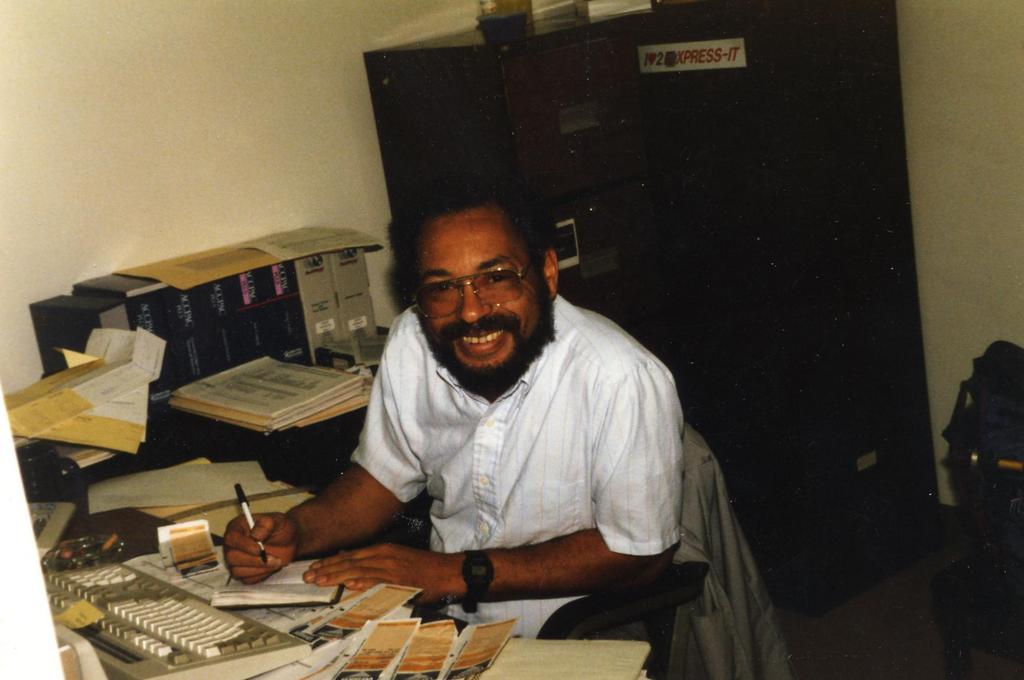
Photo: Dale Richard Reid (nee Galvin).
The anniversary of the death of my eldest son, ...
Rick, passed with little notice this time -- well almost. He died in August of 2000, and each year at about that time, I experience some gentle vibration ... something just beneath a conscious level ... it's quietly demanding of my attention at around that time ... at least until I notice and release it by so doing. This year it was easier, but the sense of loss never really leaves.
All children gradually move out of the center of one's life into their own, some more than others, and with varying distances between. David moved deeper into his own, with his children now filling all available space -- and that's as it should be. It was surely so with mine. There were periods when they were very young when I rarely even thought of my own parents, except in a distant way. The time of child-rearing is all-consuming, and leaves little room for anyone else, at least for a time.
Bob's choices took him geographically farther away as he approached adulthood, and his own growth as an artist and as a man seems to have required a different lifestyle than the one he'd lived in childhood. He's matured far more like the young people he grew up with, and tends to reflect a large part of my own rarely expressed self, the artist that I managed to hide beneath that purposeful, political, productive woman-self. In many respects, Bobby feels to me like the Betty who ran away from home to join the circus! Though I suspect that he's not been spared the pain and the suffering common to the lives of reflective people, and that he's developed the ability to transform that into his music. I hear it when I hear him sing ... .
Dorian, despite the very best attempts to achieve the best for her, will never really cut away into her own person and life. Her mental deficits make that impossible. She's surely the reason that I'll not ever really be able to climb out of my mother role and back into the woman. It may simply be my imagination, but I always felt that Bill's gift to me was that -- at fifty -- my "woman" replaced the "mother" at least for some years. Dorian was away at St. Vincent's Academy in Santa Barbara during those years, and the boys had moved into their own lives for the most part. That's all changed now. Bill died years ago, and Dorian is back at home, and Betty has regressed back into "Mom."
But it's the losing of a son that I need to talk about. To outlive one's children -- even when its predictable -- is life-altering. Nothing puts one more in touch with her own mortality; even the death of parents. It gives a warning of the randomness of the life process, and breaks faith with the belief that death is sequential, fairly. I recall my father's disbelief upon learning of the death of his dearly-loved younger brother. I can still hear his tormented cry when the call came, "It should have been ME!"
How does one, as an atheist, live through the trauma of such a loss? At least my father had his strong belief in the power of his Catholic faith. I'd honed out a personal spiritual one-of-a-kind seat-of-the-pants belief system that had to stand the test of Rick's death. It did.
But I need to catch my breath ...
Rick, passed with little notice this time -- well almost. He died in August of 2000, and each year at about that time, I experience some gentle vibration ... something just beneath a conscious level ... it's quietly demanding of my attention at around that time ... at least until I notice and release it by so doing. This year it was easier, but the sense of loss never really leaves.
All children gradually move out of the center of one's life into their own, some more than others, and with varying distances between. David moved deeper into his own, with his children now filling all available space -- and that's as it should be. It was surely so with mine. There were periods when they were very young when I rarely even thought of my own parents, except in a distant way. The time of child-rearing is all-consuming, and leaves little room for anyone else, at least for a time.
Bob's choices took him geographically farther away as he approached adulthood, and his own growth as an artist and as a man seems to have required a different lifestyle than the one he'd lived in childhood. He's matured far more like the young people he grew up with, and tends to reflect a large part of my own rarely expressed self, the artist that I managed to hide beneath that purposeful, political, productive woman-self. In many respects, Bobby feels to me like the Betty who ran away from home to join the circus! Though I suspect that he's not been spared the pain and the suffering common to the lives of reflective people, and that he's developed the ability to transform that into his music. I hear it when I hear him sing ... .
Dorian, despite the very best attempts to achieve the best for her, will never really cut away into her own person and life. Her mental deficits make that impossible. She's surely the reason that I'll not ever really be able to climb out of my mother role and back into the woman. It may simply be my imagination, but I always felt that Bill's gift to me was that -- at fifty -- my "woman" replaced the "mother" at least for some years. Dorian was away at St. Vincent's Academy in Santa Barbara during those years, and the boys had moved into their own lives for the most part. That's all changed now. Bill died years ago, and Dorian is back at home, and Betty has regressed back into "Mom."
But it's the losing of a son that I need to talk about. To outlive one's children -- even when its predictable -- is life-altering. Nothing puts one more in touch with her own mortality; even the death of parents. It gives a warning of the randomness of the life process, and breaks faith with the belief that death is sequential, fairly. I recall my father's disbelief upon learning of the death of his dearly-loved younger brother. I can still hear his tormented cry when the call came, "It should have been ME!"
How does one, as an atheist, live through the trauma of such a loss? At least my father had his strong belief in the power of his Catholic faith. I'd honed out a personal spiritual one-of-a-kind seat-of-the-pants belief system that had to stand the test of Rick's death. It did.
But I need to catch my breath ...
Sunday, September 26, 2004

of the Liberty Ship, the SS Toussaint L'Ouverture on April 4, 1944 here at the Richmond Shipyards, my mind has been racing back and re-discovering the excitement felt as a young mother lost in books when the kids were small and demanding and when escape into novels meant survival ... One of the books that held me spellbound was Kenneth Lewis Roberts' "Lydia Bailey." This served as my introduction to the Haitian Revolution. Later Roberts would draw me into his "Northwest Passage" and a lifelong fascination with the Lewis and Clarke Expedition and Sacajewea of the Shoshone (and a possible ancestor, incidentally).
But the Haitian Revolution spoke to me in a way that other wars failed to. Roberts used the times as background to his love story, but for me, at least, the background WAS the story.
It told of a Haiti ruled by Blacks and led by L'Ouverture:
The Slave Who Defeated Napoleon
by Jennifer Brainard
"...Napoleon was one of the greatest generals who ever lived. But at the end of the 18th century a self-educated slave with no military training drove Napoleon out of Haiti and led his country to independence. The remarkable leader of this slave revolt was Toussaint Breda (later called Toussaint L'Ouverture, and sometimes the “black Napoleon”). Slave revolts from this time normally ended in executions and failure – this story is the exception...."
The secondary tale was of the growing population of the Creoles (mulattos) who were the mixed-blood sons of French officers and women of color. Practice was that sons were sent at an early age to France to be educated. They were generally incorporated into the homes of their father's original French family. They returned to Haiti years later as the new elite; bright, accomplished, and sophisticated young men who eventually became numerous enough to topple the existing government. They were a challenge to Haitian-born L'Ouverture, the son of an African slave once free, and brought on the Revolution that ended his reign and his life in the dungeon of a French prison.
Daughters born of such unions were the paramours -- the equivalent of the beautiful and exotic quadroons and octoroons of the French Quarter in New Orleans, a social pattern replicated in the New World when Louisiana was a territory -- before the country was established. They were the "Geishas" of their time. Remember, we're talking here of the time of Napoleon Bonaparte's conquest of the New World in the name of France. These women were the accepted conjugal substitutions for lonely and adventurous French soldiers of fortune. This, then, is the social paradigm that describes much of early Louisiana, the new world, and my own Creole-Cajun family among many others.
If we are to accept Roberts' thesis, then the French-Haitian Revolution may actually have been far more complex than history suggests. The remnants of that Revolution persist to this day, and can be seen in our government's need to continue to challenge Black rule except when said rulers will yield to our control as in the case of the cruel and infamous Papa Doc Duvallier and his equally despotic son, Baby Doc. Interesting? Haiti has never recovered from the loss of the flamboyant and heroic leader, Toussaint L'Ouverture. He must still loom large in the history of that small and impoverished nation, and is surely an inspiration to now-deposed President Jean Bertrande Aristide and his followers if only as a reminder of those long ago heroic victories against their invaders.
How strange that a ship built in this country would be named in his honor? And, wouldn't you love to know how that came to be?
There must be some records somewhere ... .
In tracing my own family history, for instance, in the late 1700s, my father's ancestor, (French officer) Louis Charbonnet -- and family -- lived in Santo Domingo (then a part of Haiti) where he fought for the French, and returned to Louisiana as refugees in 1812. (My father, by the way -- born in 1894, bore the name, Dorson Louis Charbonnet.) My all consuming interest in Haiti is easily understood.
Even more intriguing is the biography of John James Audubon, the naturalist, and another of the names listed in the log of ship launchings. I learned some years ago that he was born in the West Indies;
(Taken from the Aubudon website.)
John James Audubon 1785-1851
The American Woodsman: Our Namesake and Inspiration

John James Audubon (1785-1851) was not the first person to attempt to paint and describe all the birds of America (Alexander Wilson has that distinction), but for half a century he was the young country’s dominant wildlife artist. His seminal Birds of America, a collection of 435 life-size prints, quickly eclipsed Wilson’s work and is still a standard against which 20th and 21st century bird artists, such as Roger Tory Peterson and David Sibley, are measured.
Although Audubon had no role in the organization that bears his name, there is a connection: George Bird Grinnell, one of the founders of the early Audubon Society in the late 1800s, was tutored by Lucy Audubon, John James’s widow. Knowing Audubon’s reputation, Grinnell chose his name as the inspiration for the organization’s earliest work to protect birds and their habitats. Today, the name Audubon remains synonymous with birds and bird conservation the world over.
Audubon was born in Santo Domingo (now Haiti), the illegitimate son of a French sea captain and plantation owner and his French mistress. Early on, he was raised by his stepmother, Mrs. Audubon, in Nantes, France, and took a lively interest in birds, nature, drawing, and music. In 1803, at the age of 18, he was sent to America, in part to escape conscription into the Emperor Napoleon’s army. He lived on the family-owned estate at Mill Grove, near Philadelphia, where he hunted, studied and drew birds, and met his wife, Lucy Bakewell. While there, he conducted the first known bird-banding experiment in North America, tying strings around the legs of Eastern Phoebes; he learned that the birds returned to the very same nesting sites each year.
Note: One might wonder about the bloodlines of his "French" mistress, given the context. The rest surely fits into Ken Roberts' scenario. Audubon's physical appearance, according to pictures I've seen, is about as ambiguous as my father's. Among my Sixties activist friends from Philadelphia, he was claimed as one of us; a "brotha". Perhaps he was ahead of his time, much like my own exquisitely-blended grandchildren for whom racial identity is not much more than a political choice.
Since the SS John James Audubon was built in Richmond -- keel laid on August 28th and launched on October 8, of 1942 -- do you suppose we can make a case for adding his name to our list? Doesn't it make you wonder how many other untold stories are out there?
In the event that some may be interested
in just which WWII ships were named in honor of African Americans of note. It may be important to tell you that the information comes from a paper by Steve Gilford, printed in a publication called "On This Day in KP History." I'm assuming that KP means Kaiser Permanente:
"...One reason "it was different here" was that there was a growing understanding in Washington and among more progressive employers such as Henry Kaiser, that the contributions of African Americans had become an important part of the war effort. Such realizations led to a government decision to provide a series of Liberty Ships named after prominent black Americans. Seventeen such ships were authorized. Contracts seem to have been carefully spread over the country in order to maximize their impact. The African Americans honored were:
Robert S. Abbott -- Robert J. Banks -- John Merrick -- George Washington Carver -- William Cox -- John H. Murphy -- Frederick Douglass -- Paul Laurence Dunbar -- Edward A. Savoy -- John Hope -- James Weldon Johnson -- Harriet Tubman -- Robert L. Vann -- James K. Walker -- Booker T. Washington -- Bert Williams -- George A. Lawson."
Unfortunately, many are unknown figures of history to me, so I suspect that the list was arrived at without a lot of black input. Either than, or at the time I was pretty far out of the loop.
I know that Robert S. Abbott was the publisher of the Chicago Defender, and George Washington Carver, Frederick Douglass, Paul Laurence Dunbar and James Weldon Johnson and Booker T. Washington were well known to me, but the rest I must admit ignorance of. Except for the great comedian, Bert Williams, that is. I'm also aware that it was Robert Abbott who was instrumental in bringing down controversial black historical figure, Marcus Garvey. So many stories, so little time ... .
If anyone reading this can shed some light on the rest of these names I would consider it a gift. I believe that John Hope was a well known educator.
Were I making such a list at the time it surely would have included Crispus Attucks; black soldier who died in battle at the beginning of the Revolutionary War, and Sojourner Truth. The rest of those I'd honor came into prominence during a later point in history.
I'm remembering now that there were some strong Marcus Garvey followers among my relatives, and sermons a-plenty on the Garvey Plan to return us all to Africa! Papa George (my grandfather) Allen and his every-Saturday-night-penny-ante partner, (great uncle) Daddy Joe Warnie were rabid on the subject, though they tended to be more mouth than action and never did get around to the recruitment office, as I recall. They'd have had to miss the black barnstormers next baseball season, and that'd nevah do! (One shudders to think of what might have happened to us all had Garvey recruited Satchel Paige!)
Thoughts of those two old rascals and their passion for Garvey brings to mind how Daddy Joe -- on one of his great days of black passion -- got out all of his two young daughter's (Ruth and Josie) blond and blue-eyed dolls and painted them dark brown! The girls were outraged! But were those tattered dolls to be re-discovered today in some old trunk -- they'd be valuable "artifacts" -- silent testimony to the fact that -- 20 years before the emergence of Malcolm X, there was Marcus Garvey, and that much was borrowed from his ill-fated movement toward racial pride, self-determination, and full racial equality. African-Americans had been lurching forward and falling back for decades before "Black is Beautiful" was fully embraced by young blacks, this writer among them.
Over the past year, under a grant awarded by the Ford Motor Company, a national campaign has brought a steady stream of artifacts and stories to the Park reception center -- there to be archived and stored for the purposes of future study. The stories have come from over 10,000 Rosies who worked in many capacities in many places. There are oral histories and letters, photographs and union cards, all being gathered to tell the story of the Home Front war effort. But theirs was a very different reality from the one we lived.
The National Park Service was created by our government to tell of the country's story through its structures -- and through the memories of its people. Nowhere in the nation was there a more fitting place through which to tell the story of WWII. But most of the structures that would have told our stories are no longer standing. We're far more dependent upon our story-telling and photo-albums; but those things we can provide for the sake of history.
*And, because in the process of doing the work of creating a defense system that saved the world from Fascism, there was a powerful subplot -- one that may have led to the eventual rise of the Civil Rights Movement two decades later. That, too, may well have started here in Richmond, moved out to the campus in Berkeley, then to the nation. We African Americans hold the key to the telling of those stories, and the Centennial presents the opportunity to gather and archive our "artifacts" and oral histories -- stories that will provide the links between generations that we may have neglected for far too long, and that just might shorten the distance between our children, our grandchildren, and ourselves, and provide them with a bridge to their own history.
Let the church say "Amen"!
(Note: *In writing this, I'm greatly influenced by the fact that I've been asked to do a 3-part series for a local newspaper having to do with the upcoming Centennial year (due Monday morning). The thought occurred to me that I'd already written it -- here, as a blog -- and that with a little editing... . If it sounds as if I'm writing to a selected audience of readers, that seems to have evolved in my attempt to do that editing. If I could just stop this deluge of memories...)
in just which WWII ships were named in honor of African Americans of note. It may be important to tell you that the information comes from a paper by Steve Gilford, printed in a publication called "On This Day in KP History." I'm assuming that KP means Kaiser Permanente:
"...One reason "it was different here" was that there was a growing understanding in Washington and among more progressive employers such as Henry Kaiser, that the contributions of African Americans had become an important part of the war effort. Such realizations led to a government decision to provide a series of Liberty Ships named after prominent black Americans. Seventeen such ships were authorized. Contracts seem to have been carefully spread over the country in order to maximize their impact. The African Americans honored were:
Robert S. Abbott -- Robert J. Banks -- John Merrick -- George Washington Carver -- William Cox -- John H. Murphy -- Frederick Douglass -- Paul Laurence Dunbar -- Edward A. Savoy -- John Hope -- James Weldon Johnson -- Harriet Tubman -- Robert L. Vann -- James K. Walker -- Booker T. Washington -- Bert Williams -- George A. Lawson."
Unfortunately, many are unknown figures of history to me, so I suspect that the list was arrived at without a lot of black input. Either than, or at the time I was pretty far out of the loop.
I know that Robert S. Abbott was the publisher of the Chicago Defender, and George Washington Carver, Frederick Douglass, Paul Laurence Dunbar and James Weldon Johnson and Booker T. Washington were well known to me, but the rest I must admit ignorance of. Except for the great comedian, Bert Williams, that is. I'm also aware that it was Robert Abbott who was instrumental in bringing down controversial black historical figure, Marcus Garvey. So many stories, so little time ... .
If anyone reading this can shed some light on the rest of these names I would consider it a gift. I believe that John Hope was a well known educator.
Were I making such a list at the time it surely would have included Crispus Attucks; black soldier who died in battle at the beginning of the Revolutionary War, and Sojourner Truth. The rest of those I'd honor came into prominence during a later point in history.
I'm remembering now that there were some strong Marcus Garvey followers among my relatives, and sermons a-plenty on the Garvey Plan to return us all to Africa! Papa George (my grandfather) Allen and his every-Saturday-night-penny-ante partner, (great uncle) Daddy Joe Warnie were rabid on the subject, though they tended to be more mouth than action and never did get around to the recruitment office, as I recall. They'd have had to miss the black barnstormers next baseball season, and that'd nevah do! (One shudders to think of what might have happened to us all had Garvey recruited Satchel Paige!)
Thoughts of those two old rascals and their passion for Garvey brings to mind how Daddy Joe -- on one of his great days of black passion -- got out all of his two young daughter's (Ruth and Josie) blond and blue-eyed dolls and painted them dark brown! The girls were outraged! But were those tattered dolls to be re-discovered today in some old trunk -- they'd be valuable "artifacts" -- silent testimony to the fact that -- 20 years before the emergence of Malcolm X, there was Marcus Garvey, and that much was borrowed from his ill-fated movement toward racial pride, self-determination, and full racial equality. African-Americans had been lurching forward and falling back for decades before "Black is Beautiful" was fully embraced by young blacks, this writer among them.
Over the past year, under a grant awarded by the Ford Motor Company, a national campaign has brought a steady stream of artifacts and stories to the Park reception center -- there to be archived and stored for the purposes of future study. The stories have come from over 10,000 Rosies who worked in many capacities in many places. There are oral histories and letters, photographs and union cards, all being gathered to tell the story of the Home Front war effort. But theirs was a very different reality from the one we lived.
The National Park Service was created by our government to tell of the country's story through its structures -- and through the memories of its people. Nowhere in the nation was there a more fitting place through which to tell the story of WWII. But most of the structures that would have told our stories are no longer standing. We're far more dependent upon our story-telling and photo-albums; but those things we can provide for the sake of history.
*And, because in the process of doing the work of creating a defense system that saved the world from Fascism, there was a powerful subplot -- one that may have led to the eventual rise of the Civil Rights Movement two decades later. That, too, may well have started here in Richmond, moved out to the campus in Berkeley, then to the nation. We African Americans hold the key to the telling of those stories, and the Centennial presents the opportunity to gather and archive our "artifacts" and oral histories -- stories that will provide the links between generations that we may have neglected for far too long, and that just might shorten the distance between our children, our grandchildren, and ourselves, and provide them with a bridge to their own history.
Let the church say "Amen"!
(Note: *In writing this, I'm greatly influenced by the fact that I've been asked to do a 3-part series for a local newspaper having to do with the upcoming Centennial year (due Monday morning). The thought occurred to me that I'd already written it -- here, as a blog -- and that with a little editing... . If it sounds as if I'm writing to a selected audience of readers, that seems to have evolved in my attempt to do that editing. If I could just stop this deluge of memories...)
Saturday, September 25, 2004
R-E-S-P-E-C-T!
and the upcoming Centennial ...
My work with the National Park Service (NPS) ended yesterday. After completing my 60-day assignment, it ended appropriately enough at a luncheon at the newly revived Port of Richmond where the AutoWarehousers (from Korea) entertained Bay Area officials and members of the industry -- along with Park personnel. The elaborate luncheon for about 200 dignitaries was simulcast to the home port in Spokane, and video-conferenced to other sites. Huge social event, and the introduction of this new industrial enterprise to the world.
The reactivated port is now the home of the 4400 brand new imported autos at any one time and that arrive on ships about 4 times each month. They're warehoused here at the port where they're prepped for shipment by rail, water, or truck throughout the country. They've brought a significant number of jobs to a city that needs them. It's an exciting operation.
Under an agreement with the National Park Service, this actively-working port co-exists with the emerging national park. Kaiser Shipyard #3 holds many of the historic landmarked park structures (the huge machine shop recently restored to historical landmarked criteria, the supply storage facility, and the slips where the 743 victory ships were launched). There is a brand new roadway that allows tourists and other park visitors to drive through to see those structures and renew the sense of the frantic 24-hour-a-day shipbuilding operations that brought women into the workforce for the first time and that contributed critically to the winning of the war against Fascism.
In addition to the restored port and waterfront, there is the continuation of the 400-mile long Bay Trail that -- when completed -- will encircle the bay for hikers, cyclers, and kayakers. The Bay Trail is incorporated into the new national park. This piece is a critical part of Richmond's 32 mile scenic shoreline, and brings us closer to completion of our part of the trail; connecting us to Alameda, Solano, and Marin county trails.
I learned so much while "running barefoot" through those studies and articles and ...
Spent lots of time being quietly enraged to discover that -- though credited with advancing racial integration by many years through his hiring policies at the shipyards -- it is also true that Henry J. brought racial segregation to the West Coast in all of its ugliness. Though by bringing the races together in Richmond's shipyards -- Kaiser may well have accellerated the move toward racial equality by a good many years -- if only as an unintended consequence of those policies.
Discovered that -- though the shipyards introduced the concept of 24-hour daycare for his workers (which enabled Rosies to enter the workforce), it is also true that those facilities were not open to African American families, who may have introduced the world to the latch-key child. And, though the federal government (HUD) hastily constructed housing on marshlands where none had been before, that housing was racially segregated, with structures built to house African Americans destroyed within 3 weeks of war's end. This in the hope that black sharecroppers would return to the south from whence they'd come. The only war housing still standing within the park boundaries are those built for white workers (Atchison and Nystrom Villages).
Being a Librarian-Technician allowed the time to spend hours reading studies produced by many historians. The collected stories and artifacts that came as a response to a national media campaign by the Ford Motor Company -- paint a fascinating picture of life in that era. I'm grateful for having had the chance to explore that. Among the lessons learned over the past 60 days:
There was some recognition by the government of the need to reward the African American workers in some significant ways. By that time the Tuskeegee Airmen; the Pearl Harbor naval hero, Dorie Miller; and the heroic tank division that fought so valiantly in Southern Europe, had earned an indisputable place in the lore of the country. In response, there were 17 victory ships named for famous black citizens. Three that were built and launched to great celebrations here in Richmond were the SS George Washington Carver, the SS Robert S. Abbott (Publisher of the Chicago Defender), and the SS John Hope (black educator). In addition there were three victory ships named for historically black colleges; the SS Fisk, the SS Xavier, and the SS Talledega.
By far the most intriguing find in the log of ships launched in Richmond in March and April of 1944, the SS Ethiopia and the SS Touissaint L'Ouverture (the latter named for the great black revolutionary leader who led Haitians against the French. What I wouldn't give to be able to unearth records of the discussions that led to these choices! When we recall that these honors were conferred at a time when segregation was still full-blown and when the country was still locked in the grip of Jim Crow, it seems miraculous that -- even then -- there were those who were trying desparately to "get it right." And, there still are.
This suggests an important rationale for the teaching of Black History to African American children. Embedded in such teachings is the invisible pride-builder of self-respect. "We, too, have heroes and I, too, can be one" comes from knowing what's gone before. I learned as a small business owner in Berkeley -- in a very low-income community -- that people learn to respect only by being respected, and that it is rarely otherwise.
Richmond was incorporated in August of 1905. This will be our Centennial year. That year begins in little more than 3 months -- and I see little preparation for what should be a monumental opportunity to share some of this history -- and to re-visit the era of the re-birth of Richmond when it grew -- almost overnight -- from a sleepy little industrial town of 20,000 to 108,000 at the beginning 1942.
Coming together in the back of my brain are some seemingly unrelated but surely connected events:
A few weeks ago we reeled from the senseless killing of a 17 year-old African American honor student, Terrance Kelly. He was only 2 days away from escaping a questionable future in a crime-ridden corner of the community. He'd received an athletic scholarship and was leaving for Oregon to enter college. The 16 year-old youngster who wielded the gun that ended Terrance's life's only defense was that he'd been "Dissed." (i.e., disrespected.) I'm not sure that any of us is aware of just how important that word has become in communities where -- since slavery, Jim Crow, (yes) and the struggles for equality in this city following WWII -- there has been so little respect to draw upon.
Due to inadequate education from revisionist textbooks that left out all references to meaningful black history until recent years and despite the efforts of a few enlightened teachers ... with little opportunity to understand the why of it, the lack thereof may have become lethal in some frightening way. "Dissing" is the word used by youth, but the feeling expressed by the word is universally recognizable ... a feeling that crosses the generations and robs us all of some immutable something that we can rarely define, that by now is buried deep in the DNA of our children, that bleeds out of our pores, restricts our vision, and profoundly limits opportunities to gain and live a lifestyle worthy of achieving it.
My work with the National Park Service has ended far too soon. I was just getting into the rhythm of it. Now I'm seriously considering ways to get this city to engage me to oversee a yearlong centennial celebration. Far fetched? Of course it is. They have no idea that they even need one, or that they need me to give it life. As has been true many times in the past, I'm running around with answers to questions that nobody is asking!
and the upcoming Centennial ...
My work with the National Park Service (NPS) ended yesterday. After completing my 60-day assignment, it ended appropriately enough at a luncheon at the newly revived Port of Richmond where the AutoWarehousers (from Korea) entertained Bay Area officials and members of the industry -- along with Park personnel. The elaborate luncheon for about 200 dignitaries was simulcast to the home port in Spokane, and video-conferenced to other sites. Huge social event, and the introduction of this new industrial enterprise to the world.
The reactivated port is now the home of the 4400 brand new imported autos at any one time and that arrive on ships about 4 times each month. They're warehoused here at the port where they're prepped for shipment by rail, water, or truck throughout the country. They've brought a significant number of jobs to a city that needs them. It's an exciting operation.
Under an agreement with the National Park Service, this actively-working port co-exists with the emerging national park. Kaiser Shipyard #3 holds many of the historic landmarked park structures (the huge machine shop recently restored to historical landmarked criteria, the supply storage facility, and the slips where the 743 victory ships were launched). There is a brand new roadway that allows tourists and other park visitors to drive through to see those structures and renew the sense of the frantic 24-hour-a-day shipbuilding operations that brought women into the workforce for the first time and that contributed critically to the winning of the war against Fascism.
In addition to the restored port and waterfront, there is the continuation of the 400-mile long Bay Trail that -- when completed -- will encircle the bay for hikers, cyclers, and kayakers. The Bay Trail is incorporated into the new national park. This piece is a critical part of Richmond's 32 mile scenic shoreline, and brings us closer to completion of our part of the trail; connecting us to Alameda, Solano, and Marin county trails.
I learned so much while "running barefoot" through those studies and articles and ...
Spent lots of time being quietly enraged to discover that -- though credited with advancing racial integration by many years through his hiring policies at the shipyards -- it is also true that Henry J. brought racial segregation to the West Coast in all of its ugliness. Though by bringing the races together in Richmond's shipyards -- Kaiser may well have accellerated the move toward racial equality by a good many years -- if only as an unintended consequence of those policies.
Discovered that -- though the shipyards introduced the concept of 24-hour daycare for his workers (which enabled Rosies to enter the workforce), it is also true that those facilities were not open to African American families, who may have introduced the world to the latch-key child. And, though the federal government (HUD) hastily constructed housing on marshlands where none had been before, that housing was racially segregated, with structures built to house African Americans destroyed within 3 weeks of war's end. This in the hope that black sharecroppers would return to the south from whence they'd come. The only war housing still standing within the park boundaries are those built for white workers (Atchison and Nystrom Villages).
Being a Librarian-Technician allowed the time to spend hours reading studies produced by many historians. The collected stories and artifacts that came as a response to a national media campaign by the Ford Motor Company -- paint a fascinating picture of life in that era. I'm grateful for having had the chance to explore that. Among the lessons learned over the past 60 days:
There was some recognition by the government of the need to reward the African American workers in some significant ways. By that time the Tuskeegee Airmen; the Pearl Harbor naval hero, Dorie Miller; and the heroic tank division that fought so valiantly in Southern Europe, had earned an indisputable place in the lore of the country. In response, there were 17 victory ships named for famous black citizens. Three that were built and launched to great celebrations here in Richmond were the SS George Washington Carver, the SS Robert S. Abbott (Publisher of the Chicago Defender), and the SS John Hope (black educator). In addition there were three victory ships named for historically black colleges; the SS Fisk, the SS Xavier, and the SS Talledega.
By far the most intriguing find in the log of ships launched in Richmond in March and April of 1944, the SS Ethiopia and the SS Touissaint L'Ouverture (the latter named for the great black revolutionary leader who led Haitians against the French. What I wouldn't give to be able to unearth records of the discussions that led to these choices! When we recall that these honors were conferred at a time when segregation was still full-blown and when the country was still locked in the grip of Jim Crow, it seems miraculous that -- even then -- there were those who were trying desparately to "get it right." And, there still are.
This suggests an important rationale for the teaching of Black History to African American children. Embedded in such teachings is the invisible pride-builder of self-respect. "We, too, have heroes and I, too, can be one" comes from knowing what's gone before. I learned as a small business owner in Berkeley -- in a very low-income community -- that people learn to respect only by being respected, and that it is rarely otherwise.
Richmond was incorporated in August of 1905. This will be our Centennial year. That year begins in little more than 3 months -- and I see little preparation for what should be a monumental opportunity to share some of this history -- and to re-visit the era of the re-birth of Richmond when it grew -- almost overnight -- from a sleepy little industrial town of 20,000 to 108,000 at the beginning 1942.
Coming together in the back of my brain are some seemingly unrelated but surely connected events:
A few weeks ago we reeled from the senseless killing of a 17 year-old African American honor student, Terrance Kelly. He was only 2 days away from escaping a questionable future in a crime-ridden corner of the community. He'd received an athletic scholarship and was leaving for Oregon to enter college. The 16 year-old youngster who wielded the gun that ended Terrance's life's only defense was that he'd been "Dissed." (i.e., disrespected.) I'm not sure that any of us is aware of just how important that word has become in communities where -- since slavery, Jim Crow, (yes) and the struggles for equality in this city following WWII -- there has been so little respect to draw upon.
Due to inadequate education from revisionist textbooks that left out all references to meaningful black history until recent years and despite the efforts of a few enlightened teachers ... with little opportunity to understand the why of it, the lack thereof may have become lethal in some frightening way. "Dissing" is the word used by youth, but the feeling expressed by the word is universally recognizable ... a feeling that crosses the generations and robs us all of some immutable something that we can rarely define, that by now is buried deep in the DNA of our children, that bleeds out of our pores, restricts our vision, and profoundly limits opportunities to gain and live a lifestyle worthy of achieving it.
My work with the National Park Service has ended far too soon. I was just getting into the rhythm of it. Now I'm seriously considering ways to get this city to engage me to oversee a yearlong centennial celebration. Far fetched? Of course it is. They have no idea that they even need one, or that they need me to give it life. As has been true many times in the past, I'm running around with answers to questions that nobody is asking!
Tuesday, September 21, 2004
Tragic Five Degrees of Separation --
Some years ago we received news from a dear cousin living in Southern California that her 21 year-old son, Billy, had died the night before in a horrible gun accident. He was serving in the navy, and while sitting on his bed in conversation with his best friend -- somehow, the gun in the hand of his buddy was discharged and Billy was killed instantly. We mourned. No charges were filed. It was a complete tragedy.
My late sister's son, Thurmon, about a year later ... was shot and killed in his own home under circumstances we never understood. No one was ever charged. His only sibling, Gail, was left alone. My sister and her husband having both died a few years earlier of natural causes. He was a 29 year-old father of three daughters.
Then, about five years ago, the 23 year-old young male cousin was driving home at around midnight on an Oakland freeway when a sniper killed him in a random act of violence. A few weeks later, and after terrorizing late night drivers, he was caught, but before that happened -- several other innocent victims had lost their lives to his rifle aimed from ambush - and all just for the hell of it! He's serving time now in prison.
This weekend was my birthday (or at least a few days prior), and toward late afternoon my son, David, and his two younger daughters arrived with five live crabs purchased in the Pacific Market in El Cerrito. He came prepared to do a crab feed; multiple cloves of garlic, a fragrant bunch of parsley, lemons, and a package of Zatarains Louisiana crab boil fixings. They spent the afternoon with Dorian and me, with David busily in the kitchen doing the honors, and Tamaya and Alayana watching videos while Dorian busily crocheted her latest colorful afghan.
Something was wrong. I could feel it. Within the hour David began to talk. "Kokee was almost killed last night, Mom."
On Saturday night, his eldest daughter -- 22 years old, and her boyfriend were leaving a sports bar in Sacramento and were stopped by two young men with a gun. There was an attempted robbery. They took her cellphone and what they could find in her wallet, and while busy with her they began to get rough. Her boyfriend took on one of the assailants screaming to her to run for the car. A gunshot rang out in the night! She ran as fast as she could -- terrified! In her telling of the story later -- after dinner (she and the other grandchildren joined us after six o'clock), she tearfully told us how she'd run frantically -- hearing footsteps running behind her -- and thinking that she was about to be shot to death (thinking that her friend lay dead). But -- just before reaching the car he overtook her. It was her friend who had survived, and she was safe for the moment.
They drove away without realizing that he'd been shot in the neck. The bullet had entered soft tissue and exited without penetrating any vital organs. He didn't know that he'd been shot until she saw the blood. She took off her t-shirt and applied pressure to the wound as he looked for the nearest hospital. It was in Davis, a few miles out of Sacramento, but they made it safely.
It was a sobering birthday party. We felt particularly close. Rhico (her younger brother) brought his girlfriend for me to meet for the first time. They're both seventeen and in love. Such beautiful and loving kids. It was all so bittersweet. The fragility of life was keenly evident to us all.
After they'd left and I was picking up the gift boxes and tissue paper and absently folding it as if I have some guarantee that we'll all be here this Christmas when much of it will be recycled. I found myself remembering Thurman, Billy, and Christian, all in their graves so young.
Ours is a loving family with little contact with the world of violence. There are no questionable lifestyles to worry over among the young. Nonetheless, how typical is it that four young people in one family will have encountered death or threat of death by gunfire? I truly don't know... .
I thought then of the NRA and of the empty arguments in defense of "The Right To Bear Arms" and it felt so hollow and so meaningless. I recalled those faces of gun advocates smugly chanting their mantra, "guns don't kill people, people kill people!"
I called Kokee earlier this evening to assure myself that she's okay, and that her young friend is recovering well. "He is in a lot of pain, but seems alright considering." She is so young. I am so frightened this night... .
Michele, my co-worker has been visiting her son-in-law for the past nine months. He's been hospitalized after suffering grave gunshot wounds. He was kept alive for weeks on a ventilator. No one knows if he'll survive, eventually, or whether he will ever walk. I'm not sure just why, but I worked all day today without mentioning Kokee's brush with death to her. Got home more tired than usual, I suppose from the effort it took to spare her the confirmation that the world has gone mad.
When did life become so cheap and good people so expendable?
Do you suppose this is in anyway related to our having been in a continuing state of war for such a long time? Or, despite studies to the contrary, does the expression of violence all around us de-sensitize the living so that death becomes no more than the ordinary state of un-being?
Some years ago we received news from a dear cousin living in Southern California that her 21 year-old son, Billy, had died the night before in a horrible gun accident. He was serving in the navy, and while sitting on his bed in conversation with his best friend -- somehow, the gun in the hand of his buddy was discharged and Billy was killed instantly. We mourned. No charges were filed. It was a complete tragedy.
My late sister's son, Thurmon, about a year later ... was shot and killed in his own home under circumstances we never understood. No one was ever charged. His only sibling, Gail, was left alone. My sister and her husband having both died a few years earlier of natural causes. He was a 29 year-old father of three daughters.
Then, about five years ago, the 23 year-old young male cousin was driving home at around midnight on an Oakland freeway when a sniper killed him in a random act of violence. A few weeks later, and after terrorizing late night drivers, he was caught, but before that happened -- several other innocent victims had lost their lives to his rifle aimed from ambush - and all just for the hell of it! He's serving time now in prison.
This weekend was my birthday (or at least a few days prior), and toward late afternoon my son, David, and his two younger daughters arrived with five live crabs purchased in the Pacific Market in El Cerrito. He came prepared to do a crab feed; multiple cloves of garlic, a fragrant bunch of parsley, lemons, and a package of Zatarains Louisiana crab boil fixings. They spent the afternoon with Dorian and me, with David busily in the kitchen doing the honors, and Tamaya and Alayana watching videos while Dorian busily crocheted her latest colorful afghan.
Something was wrong. I could feel it. Within the hour David began to talk. "Kokee was almost killed last night, Mom."
On Saturday night, his eldest daughter -- 22 years old, and her boyfriend were leaving a sports bar in Sacramento and were stopped by two young men with a gun. There was an attempted robbery. They took her cellphone and what they could find in her wallet, and while busy with her they began to get rough. Her boyfriend took on one of the assailants screaming to her to run for the car. A gunshot rang out in the night! She ran as fast as she could -- terrified! In her telling of the story later -- after dinner (she and the other grandchildren joined us after six o'clock), she tearfully told us how she'd run frantically -- hearing footsteps running behind her -- and thinking that she was about to be shot to death (thinking that her friend lay dead). But -- just before reaching the car he overtook her. It was her friend who had survived, and she was safe for the moment.
They drove away without realizing that he'd been shot in the neck. The bullet had entered soft tissue and exited without penetrating any vital organs. He didn't know that he'd been shot until she saw the blood. She took off her t-shirt and applied pressure to the wound as he looked for the nearest hospital. It was in Davis, a few miles out of Sacramento, but they made it safely.
It was a sobering birthday party. We felt particularly close. Rhico (her younger brother) brought his girlfriend for me to meet for the first time. They're both seventeen and in love. Such beautiful and loving kids. It was all so bittersweet. The fragility of life was keenly evident to us all.
After they'd left and I was picking up the gift boxes and tissue paper and absently folding it as if I have some guarantee that we'll all be here this Christmas when much of it will be recycled. I found myself remembering Thurman, Billy, and Christian, all in their graves so young.
Ours is a loving family with little contact with the world of violence. There are no questionable lifestyles to worry over among the young. Nonetheless, how typical is it that four young people in one family will have encountered death or threat of death by gunfire? I truly don't know... .
I thought then of the NRA and of the empty arguments in defense of "The Right To Bear Arms" and it felt so hollow and so meaningless. I recalled those faces of gun advocates smugly chanting their mantra, "guns don't kill people, people kill people!"
I called Kokee earlier this evening to assure myself that she's okay, and that her young friend is recovering well. "He is in a lot of pain, but seems alright considering." She is so young. I am so frightened this night... .
Michele, my co-worker has been visiting her son-in-law for the past nine months. He's been hospitalized after suffering grave gunshot wounds. He was kept alive for weeks on a ventilator. No one knows if he'll survive, eventually, or whether he will ever walk. I'm not sure just why, but I worked all day today without mentioning Kokee's brush with death to her. Got home more tired than usual, I suppose from the effort it took to spare her the confirmation that the world has gone mad.
When did life become so cheap and good people so expendable?
Do you suppose this is in anyway related to our having been in a continuing state of war for such a long time? Or, despite studies to the contrary, does the expression of violence all around us de-sensitize the living so that death becomes no more than the ordinary state of un-being?
Sunday, September 19, 2004
I must admit that lately
(since starting my last position), I've been aware of how constricted I was feeling. So much of what I've been feeling might have bled into my work day -- much was rising that I've been holding back for fear of crossing some invisible line that I've set for myself. The result is that I'm more and more aware of the anger building. I've a new appreciation for the times that I've used my computer as a way to vent, and to work through the accumulating discomfort caused by the necessary re-visiting of a painful past.
This morning I watched the author of "We Also Serve," on CSpan's Booknotes. She has written a new book about African American participation in all of the nation's wars since 1776. She spoke in her introduction about how little she'd listened to her own late father's war stories, and of how much she regrets it now. Found myself nodding with understanding at her revelations gathered from the stories of old warriors of earlier wars; WWII, Korea, Vietnam, the Gulf War, and the current occupation forces in the Middle East.
Though her book deals specifically with black veterans of the armed forces, my own experiences over the past weeks -- while being immersed in studies of the Home Front is really not much different.
She arrived at the same place that I have in some important ways. She stated during her interview that these people had fought valiantly, were passed over for advancement, were not considered full-fledged members of the fighting forces until the Korean war when integration finally was enacted and advancement was finally possible. Most worked in support service branches, and as valets and maids to officers, or served in segregated units with white commanding officers. There was a heartbreaking account of one soldier whose work consisted of burying the dead in the field. I could barely listen ... .
Those men and woman came home as broken and maimed as their white counterparts, but faced the evils of full-blown segregation upon their return, and few of the benefits enjoyed by others. So it was with the homefront workers. The firsts Medals of Honor were awarded to black heroes in 1990, several decades after WWII during which they were earned for valor.
I discovered only this week that one of the several historic sites that have been incorporated into the Rosie the Riveter/Home Front National Historical Park was the Maritime Child Development Center, a state of the art 24-hour child care center that had a staff of 30, a fulltime psychiatrist, medical staff, etc., in the first of its kind and credited to Henry J. Kaiser's dynamic leadership -- but was reserved for white children, only. And this was not in some southern state, but here in California in what has become the most progressive area of the country.
The author of "We also served" arrived at the same conclusion that has consumed me over the past weeks. I, too, believe that the African Americans still struggling for survival against all odds in this city are owed a tremendous debt. This was the heroic generation that gave all, were hated and despised, were discouraged from putting down roots in this land of promise. We were just two generations out of slavery. I know, because I am one of them.
I was spared the degradation of having lived in the South, so had a head start on progress. I cannot imagine what it was like for those who were faced with abandonment at war's end, with no chance to have meaningful work or an education. Returning to the sharecroppers life was no longer an option, but facing a future in the hostility of Jim-Crow America must have been challenging beyond imagination.
I'm finding ways to address this need to tell the stories. This city will celebrate its centennial in 2005. WWII which came mid-century is the epochal event in its life. It will afford us the opportunity to re-visit some of that history and, perhaps, approach the celebration of that earlier time armed with the wisdom gained two decades later, during the Civil Rights Revolution of the Sixties.
Perhaps the most hopeful thing I'm discovering is that -- where there are still many mountains to climb in the overcoming of racism -- the numbers of people willing to climb them, together -- has grown exponentially over the years since WWII. And, there are now a significantly large number of us working hard to "get it right."
(since starting my last position), I've been aware of how constricted I was feeling. So much of what I've been feeling might have bled into my work day -- much was rising that I've been holding back for fear of crossing some invisible line that I've set for myself. The result is that I'm more and more aware of the anger building. I've a new appreciation for the times that I've used my computer as a way to vent, and to work through the accumulating discomfort caused by the necessary re-visiting of a painful past.
This morning I watched the author of "We Also Serve," on CSpan's Booknotes. She has written a new book about African American participation in all of the nation's wars since 1776. She spoke in her introduction about how little she'd listened to her own late father's war stories, and of how much she regrets it now. Found myself nodding with understanding at her revelations gathered from the stories of old warriors of earlier wars; WWII, Korea, Vietnam, the Gulf War, and the current occupation forces in the Middle East.
Though her book deals specifically with black veterans of the armed forces, my own experiences over the past weeks -- while being immersed in studies of the Home Front is really not much different.
She arrived at the same place that I have in some important ways. She stated during her interview that these people had fought valiantly, were passed over for advancement, were not considered full-fledged members of the fighting forces until the Korean war when integration finally was enacted and advancement was finally possible. Most worked in support service branches, and as valets and maids to officers, or served in segregated units with white commanding officers. There was a heartbreaking account of one soldier whose work consisted of burying the dead in the field. I could barely listen ... .
Those men and woman came home as broken and maimed as their white counterparts, but faced the evils of full-blown segregation upon their return, and few of the benefits enjoyed by others. So it was with the homefront workers. The firsts Medals of Honor were awarded to black heroes in 1990, several decades after WWII during which they were earned for valor.
I discovered only this week that one of the several historic sites that have been incorporated into the Rosie the Riveter/Home Front National Historical Park was the Maritime Child Development Center, a state of the art 24-hour child care center that had a staff of 30, a fulltime psychiatrist, medical staff, etc., in the first of its kind and credited to Henry J. Kaiser's dynamic leadership -- but was reserved for white children, only. And this was not in some southern state, but here in California in what has become the most progressive area of the country.
The author of "We also served" arrived at the same conclusion that has consumed me over the past weeks. I, too, believe that the African Americans still struggling for survival against all odds in this city are owed a tremendous debt. This was the heroic generation that gave all, were hated and despised, were discouraged from putting down roots in this land of promise. We were just two generations out of slavery. I know, because I am one of them.
I was spared the degradation of having lived in the South, so had a head start on progress. I cannot imagine what it was like for those who were faced with abandonment at war's end, with no chance to have meaningful work or an education. Returning to the sharecroppers life was no longer an option, but facing a future in the hostility of Jim-Crow America must have been challenging beyond imagination.
I'm finding ways to address this need to tell the stories. This city will celebrate its centennial in 2005. WWII which came mid-century is the epochal event in its life. It will afford us the opportunity to re-visit some of that history and, perhaps, approach the celebration of that earlier time armed with the wisdom gained two decades later, during the Civil Rights Revolution of the Sixties.
Perhaps the most hopeful thing I'm discovering is that -- where there are still many mountains to climb in the overcoming of racism -- the numbers of people willing to climb them, together -- has grown exponentially over the years since WWII. And, there are now a significantly large number of us working hard to "get it right."
Wednesday, September 15, 2004
Caught sight of three Tibetan lamas on the street today
-- all saffron-robed and humbly sandalled. They were standing in front of the BART station, looking lost. It brought to mind a time when Bill -- a devout student of Tibetan Buddhism and involved in studies at the Padma Ling Center on the borders of the campus. He'd learned that two refugee lamas were visiting from Dharmsala and asked Tarthang Tulku, Rinpoche, if it would be possible for us to take them sight-seeing that weekend. They'd been at the center for several weeks, but had never been outside the ivied walls. Bill had learned that they would be returning to India within 24 hours.
In a rare act of trust Rinpoche agreed and we started to make plans. It was September, and the Rennaisance Faire was in full bloom across the bay in Marin. That would be a wonderful event to share with them. It was colorful and nicely-peopled, and the weather was warm and heavy with approaching autumn.
We drove to Padma Ling at around ten, and picked up our guests (who spoke no English and we spoke no Tibetan). It would be an interesting day.
Before we could take off for the countryside, Bill needed to cash a check at the local supermarket -- a huge bustling Consumer's Co-op in the center of Berkeley. I sat in the car with the two quiet and wide-eyed lamas to wait for him to return.
When I saw how excited they were at the sight of people with heavily-laden shopping carts with all kinds of wonders therein, I decided that we should not wait in the car, but take the opportunity to go inside so that they could experience this thoroughly western Saturday afternoon ritual. We did so, and the first sight my two guests encountered was just inside the doorway -- a display featuring those huge white plastic eggs that held Leggs! They pointed, and I laughed! How on earth could I ever explain what kind of bird produced these strange products, and what on earth did all that have to do with the pictures of women that shown on the cardboard display?
Thought about those dear men today, and wondered where on the planet they are now? I'm sure that they're teaching somewhere in Canada or in Switzerland where many of their brothers are now living.
As I drove on today, I was reminded of just what it as that I missed about not living in Berkeley -- those few short miles away. It's the cosmopolitan character of the city. It really HAS managed to retain that tossed salad kind of lifestyle. There's little self-conscious "pot-melting." Instead, there is a strong value placed on the recognition of differences, and that those differences are presumed to add to the whole. The differences are celebrated! I'd forgotten that, and of how easily my own "differences" slipped into the background until evoked by some cultural trigger.
I met this full-blown later in life, when I became aware of the Hip Hop generation through an exposure to those exciting young people through the Upper Room in Oakland. Rarely did I hear words like "diversity" or "multi-culturalism" during those years. These young internationalists simply assumed those goals of the generations before them had been achieved, and rather than being a hope -- they were by then simply their state of being. I have great hope for the world to be. All one has to do to see it fully formed is to spend an extended period with those now in their 20s and 30s and in the performing arts, especially among the poets.
This weekend I'll attend the Choreographers Festival in San Francisco. I'll see Robert Moses and his dance company and Robert Henry Johnson, and hear the jazz harpist, Destiny, and be reminded that the world may have already been saved -- and that the nightmare of the Middle East is just that, a nightmare from which they will rouse me if only for a few hours.
Photo: Lama Wangdor of Rewalser, India, shown here in front of the cave in which he lived and taught. He escaped from Lhasa when the Dalai Lama left the country. He brought out his mother's ceremonial garments with dzi stones sewn into the hemlines. He sent them to me as a gift years ago; gifts I treasure dearly. He came to this country years later and spent Bill's last days at bedside, then returned to Rewalser. He had a contact telephone from India some time after Bill's death -- to tell me that -- according the the Tibetan Book of the Dead -- Bill had "made it over." Such a dear friend ... .
Tuesday, September 14, 2004
Bless Berkeley!
Just about the time that I've begun to think that the entire world has gone dormant, or, that the prevailing wisdom has dropped ten notches -- I re-visit my old home and am regenerated.
Last night three women from Richmond and I drove in to the Jewish Community Center for an evening that promised to be spirit-lifting. The event was entitled: "RECLAIM DEMOCRACY: Acting for Change". After some networking over fresh pizza slices and caesar salad in the courtyard, we moved into the small auditorium to hear speeches by Ronnie Gilbert (peace activist and member of The Weavers) who read from the words of the inspirational Granny D of New Hampshire (who is running for the senate at 94), then sang a topical song for us that was recently written by Holly Near.
Oh, I should mention before going further, that Ronnie was introduced by the evening's moderator, Arlene Blum -- Berkeley climber who led the first all-woman ascent of Annapurna, and who has since led several more.
Patricia Ellsberg, who contributed to the decision to release the Pentagon papers that helped to end the Vietnam War was scheduled to appear, but cancelled with a letter that explained that she and Dan were in Washington, D.C. attending a large gathering of potential whistle blowers. "Since you believe that you won't have a job if the current administration remains in power anyway -- then do it now." Makes sense to us, right?
Then came wonderful, humble, and delightfully wide-eyed (at her success) Joan Blades, co-founder of MoveOn.org.
What an inspiration! What started as a plea for some sanity during the Clinton impeachment craziness with a single paragraph to her family and mail list of about 100, total, turned out to have a response of 100,000 in just a couple of weeks. "The rest is history," as we say. Joan announced that MoveOn has registered over 400,000 non-voting citizens in the swing states. It has raised over 2.3 million dollars online, with the average contribution being $35. Now THAT's grass roots!
Farai Chideya, founder of popandpolitics.com and author of Color of Our Future, plus her latest book, Trust, followed. Farai is a Zimbabwean-American Stanford Fellow, former White House correspondent, CNN journalist, spoke about the "100 million missing voters," those who have stopped dreaming the dream of democracy. "We must begin to dream it back into being, or democracy will surely perish." We've met before and it was great to renew and catch up.
Re-connected with a number of acquaintances from my life as a university spouse, and it felt good. I'd not seen some of these friends for almost twenty years, though it surely didn't feel that long. Another incarnation ... .
On the drive home, we got busy planning a youth candidate's night, and a Sunday Salon featuring some of the women we'd just been inspired by. This may be the way to break through what I perceive as a kind of urban isolationism that prevails in Richmond. It's peculiar and disturbing, especially in times such as this when the whole is threatened by the disunity and alienation of its parts. Berkeley and Richmond are a mere 4 miles apart in physical distance, but light years apart in political activism and a world view. Maybe that's more closely related to Berkeley's being a university town than anything else. Richmond may be far more like its nearby coastal neighbors that have yet to put down permanent roots to look beyond their own borders and their generically-scarred shopping centers.
But Richmond can be far more than that. Unlike the bordering extensions that have incorporated into townlets, it has a rich history and a colorful past. Richmond has been here for a very long time, but seems to have reached a kind of "old age" without ever going through the process of maturation. It's a strange thing ... .
But now it's morning and I'm off to re-live World War II yet another day at the National Park Service office, and that could get to be less and less satisfying when the present is so compelling and the future is so uncertain ... .
Just about the time that I've begun to think that the entire world has gone dormant, or, that the prevailing wisdom has dropped ten notches -- I re-visit my old home and am regenerated.
Last night three women from Richmond and I drove in to the Jewish Community Center for an evening that promised to be spirit-lifting. The event was entitled: "RECLAIM DEMOCRACY: Acting for Change". After some networking over fresh pizza slices and caesar salad in the courtyard, we moved into the small auditorium to hear speeches by Ronnie Gilbert (peace activist and member of The Weavers) who read from the words of the inspirational Granny D of New Hampshire (who is running for the senate at 94), then sang a topical song for us that was recently written by Holly Near.
Oh, I should mention before going further, that Ronnie was introduced by the evening's moderator, Arlene Blum -- Berkeley climber who led the first all-woman ascent of Annapurna, and who has since led several more.
Patricia Ellsberg, who contributed to the decision to release the Pentagon papers that helped to end the Vietnam War was scheduled to appear, but cancelled with a letter that explained that she and Dan were in Washington, D.C. attending a large gathering of potential whistle blowers. "Since you believe that you won't have a job if the current administration remains in power anyway -- then do it now." Makes sense to us, right?
Then came wonderful, humble, and delightfully wide-eyed (at her success) Joan Blades, co-founder of MoveOn.org.
What an inspiration! What started as a plea for some sanity during the Clinton impeachment craziness with a single paragraph to her family and mail list of about 100, total, turned out to have a response of 100,000 in just a couple of weeks. "The rest is history," as we say. Joan announced that MoveOn has registered over 400,000 non-voting citizens in the swing states. It has raised over 2.3 million dollars online, with the average contribution being $35. Now THAT's grass roots!
Farai Chideya, founder of popandpolitics.com and author of Color of Our Future, plus her latest book, Trust, followed. Farai is a Zimbabwean-American Stanford Fellow, former White House correspondent, CNN journalist, spoke about the "100 million missing voters," those who have stopped dreaming the dream of democracy. "We must begin to dream it back into being, or democracy will surely perish." We've met before and it was great to renew and catch up.
Re-connected with a number of acquaintances from my life as a university spouse, and it felt good. I'd not seen some of these friends for almost twenty years, though it surely didn't feel that long. Another incarnation ... .
On the drive home, we got busy planning a youth candidate's night, and a Sunday Salon featuring some of the women we'd just been inspired by. This may be the way to break through what I perceive as a kind of urban isolationism that prevails in Richmond. It's peculiar and disturbing, especially in times such as this when the whole is threatened by the disunity and alienation of its parts. Berkeley and Richmond are a mere 4 miles apart in physical distance, but light years apart in political activism and a world view. Maybe that's more closely related to Berkeley's being a university town than anything else. Richmond may be far more like its nearby coastal neighbors that have yet to put down permanent roots to look beyond their own borders and their generically-scarred shopping centers.
But Richmond can be far more than that. Unlike the bordering extensions that have incorporated into townlets, it has a rich history and a colorful past. Richmond has been here for a very long time, but seems to have reached a kind of "old age" without ever going through the process of maturation. It's a strange thing ... .
But now it's morning and I'm off to re-live World War II yet another day at the National Park Service office, and that could get to be less and less satisfying when the present is so compelling and the future is so uncertain ... .
Sunday, September 12, 2004
 Harry Who?
Cleaning out my files this morning I ran across this exchange and decided to share them here. This is the kind of entry that humanizes history in ways that nothing else can -- and should be shared.
For many years I've been participating in Seniornet, an online community that brought together seniors from all over the country. It was created by San Francisco's Mary Furlong, it started out as a master's thesis, I believe. In the early nineties it took on a life of its own that changed lives and deepened the meaning of friendships in unexpected ways.
In those early days, the only elders online were those who were savvy enough, and brave enough, to enter the cyberworld of the young. There were many retired professionals who'd been introduced to this brave new world through their work. There were also those who were dragged into cyberspace by their children as a way to keep us current with the accellerating rate of change lest we be lost along the way. It was also a given that we be able to afford the hardware required to enter the "Gates of Progress." I recall a post one day when a member of Seniornet announced proudly that she'd just "blown the estate on a brand new Power PC, and the kids would just have to make it on their own!"
There were some unexpected consequences that I'm sure addled almost anyone who chose to enter in to this new forum. Little did we dream of where it would take us, or that at some time in the future would rival political powers by creating this crazy and wonderful invisible though powerful new system that could challenge regimes and blunt the ability to wage wars. I truly believe that we are seeing the creation of the balancing international world power that may well rival even that of what we now refer to as "The First World."
But I digress.
Subject: Harry Who?
Date: Sat. Aug 9, 2003 1:59 PM
From: CBreaux
Msgld: <2--3-9-0165922.13940.00021116@mbs-m03.aol.com>
Yesterday I attended the American City Planners Association's annual conference in downtown Oakland, Californa. I was covering two workshops for our office -- one on "The Criminal Justice System" and the other, "Environmental Injustice." During the course of his presentation, the first presenter used an old device to involve his audience. He tossed out a purely rhetorical question, "who among you can name the most powerful union force in the State of California?" Since I was sitting close to the front of the room -- hand raised and waving -- he called on me. With all of the confidence of my impressive name tag (Field Rep for Assemblywoman Loni Hancock), and as Michael Jordan might wave others away to sink his famous air-bourne rim shot from 80 feet out -- I shouted out, "Har-ry Bridges!" Our leader looked stunned. Unknowing. So did everybody in the room. Talk about yer old lady response! I laughed at myself all the way home!
What he was fishing for was, of course, the prison guards union of the California criminal justice system. Nothing I could have said would have dated me more. Those folks didn't even know who Harry Bridges was! I'd have done better had I thought to mention Cesar Chavez! That would at least have come from a later period in history, right?
Despite my relatively youthful appearance and carefully chosen style of dress and ability to talk the talk (most of the time), my frame of reference rises right out of my personal history. Ain't a whole lot to do about that, I suppose, but laugh!
Betty
Betty of Berkeley
"Women in Progress!"
Some online reponses:
Subject: Remembering Harry Bridges: a vignette
Date: Sat, Aug 9, 2003, 3:12 PM
From: InSoMannyWords
Msgld: <20030809181231.14502.0003047@mbs-m01.aol.com>
Betty, if it's any comfort to you, I haven't forgotten Harry Bridges either, and he's vivid in my mind. I knew him slightly when he lived in the Haight-Ashbury, and I met him socially at my cousin's house, but then I met him in a professional capacity many years later (and many years ago). He made an appointment in the Kaiser-Permanente urology clinic in San Francisco. He was elderly at the time, and he kept apologizing for taking up so much time when there were others in great need of care. He was physically a tiny guy, not at all the man of muscle one would expect for the leader of the longshoremen.
Anyhow I reminded him that he was the last that should apologize for taking up time since in Kaiser-Permanente he was very much the VIP. Shortly after World War II there was a big question whether KPMG (Kaiser Permanente Medical Group) could survive as a peacetime deliverer of health care and make money as a prepay deliverer of health care. Harry brought the longshoremen in, and then it was an avalanche for other unions and organizations, but he was the first. I told him that he was a big hero to me and my partners. He thanked me, but then reminded me that his days as heroic figure were long over to the younger longshoremen who by then considered him an old fuddy-duddy, but what a guy! And like all great men, as pleasant (and as modest) as they come.
Subject: Re: Harry Who???
Date: Sat. Aug 9, 2003 4:05 PM
From: SaJanina
Msgld: <20030809190506.14539.00031179@mbs-m01.aol.com>
Betty before I got the name, I thought of him, and of his strength ....and then realized you had written his name! I knew him...he was a relative of my next door neighbor and when he would come to visit I would sit with them in the living room in awe. Those were such exciting evenings.
His daughter and I became friends ...she died about ten years ago, after him, of breast cancer that wasn't found until it was too late ...leaving an eight year old boy.
I didn't know him during the time of his great triumphs ... I only knew him in his old age ...and through my beloved neighbors. Without my neighbors I might not have known of his courage and spirit.
He was skinny and smoked like crazy. He was something else! I am so glad that you've reminded me of the kind of fighter he was ... He was an absolutely incredible man. PBS did a very fine documentary about him about five years ago..I would love to see it again ...it was beautiful
SaJanina, happy for the memories.
Subject: Re: Harry Who???
Date: Sat, Aug 9, 2003 4:50
From: CBreaux
Msgld: <20030808195056.12940.00021571@mbs-m03.aol.com
Aha! Manny, Saj! I wasn't so wrong or out of date after all; just out of context. The name Harry Bridges should be held up as heroic and well-remembered (as, obviously, he is) on the short list of strong union organizers. I'm sure that Saul Alinsky and Cesar Chavez followed closely in his footsteps, but it was Bridges who created the mold. We all had to be pretty young at the time of his reign, but we remember. That's comforting.
The humor was not lost, however, because on a scale of relevance -- I wasn't even in the ballpark in that young crowd.
Wonder how those giants would be addressing the current conditions? Wish we could revive their attitudes, if not their work. I work fairly closely with Labor (AFL-CIO, CTA, and SIEU) here in my county, and there are times when I have the sense that - for the sake of "jobs, jobs, jobs" -- many would accept a contract to manufacture guillotines! And I'm a champion of the labor movement. The prison guards are a union, the union that achieved a $20,000/year raise at a time when the state budget deficit is at 38 billion, and when we're quite literally grabbing crutches from the lame and eliminating food for guide dogs.
Where's Harry when we need him? Wonder if we could make a list of outstanding union leaders currently functioning? Surely they'll surface during this recall of our governow. I know at least two whom I'd certainly put on such a list. The State AFL-CIO leadership has taken a strong no-recall position. I'm not all that sure about the membership, though. It's hard to keep a clear sense of who the players are and of what they bring to the table, isn't it?
The Avatar who lived and worked among us as Harry Bridges so long ago surely left his mark, and those of us who still remember have created for him -- immortality.
Betty
Note: I'm wondering how much important and humanizing history is imbedded in these exchanges that are accessible only through these intimate-though-abstract online conversations among peers of our generation? I've never met SaJanina, though we've been sharing the past this way for many years. She's an artist/anthropologist and lives a portion of each year among the Maroons in Surinam. She is at other times a resident of Upstate New York. Manny is a San Francisco retired urologist and creator of crossword puzzles for the New York Times. He's since emerged into my "real life" as a friend and occasional co-participant in an inner-circle of local folks who met online years ago and now meet for lunch from time to time.
Saturday, September 11, 2004
New fears ...
While absently watching the television shows that followed Washington Week in Review last night, I was again struck by the mediocrity that has replaced so much of what once felt enlightening and worth viewing. Not only the obvious dumbing down of what we once referred to as "the arts," but these reality shows that have replaced the entire field of the performing arts is deadening. There are obviously few script writers and editors and actors now, only producers and casting agents and ad men and women -- and -- a seemingly endless stream of attractive young people willing to do almost anything before the cameras for instant fame. The degradation of young women that has been a growing phenomenon for several years now has become totally embarrassing. There has to be something between the burkha and the bikini, really! I'm so appalled by body-piercings and tattoos -- and am so sure that there will be regrets for most as the years pile on and lifestyles change.
How on earth did we come to this? Am I finally exhibiting those long-delayed symtoms of simply getting old and out of touch? Is this what I once thought of as "crochety"? Am I one of only a few who cringe with embarrassment and revulsion at the sight of Donald Trump with his cantilevered hairdo on his "You're fired!" show. And I've never actually seen it, only long enough to grab the remote and zap him into the ether. And I'd zap model Tyra Banks right along with him into celebrity oblivion!
Those screamingly rude pundits who are everywhere on the screen, on almost every channel, it seems, are equally appalling. At one time it was only Jerry Springer and Howard Whathisname that I felt such revulsion for, but now they pale by what passes as entertainment almost everywhere I look. Then there's Paris Hilton and Britney Spears (a dead-on imitation of Janet Jackson in white-face, of course, without giving credit). Are these the harbingers of lifestyle for my 6- and 8-year old granddaughters? Did my grandmother feel this way about my passions for my youth idols -- examples, Katherine Hepburn (who wore trousers, after all), ballerina Moira Shearer, and Lena Horne? (That was well before I discovered Eleanor Roosevelt and Fannylou Hamer, of course.) I don't think so. This pattern is something quite different, I believe.
Seems related to the numerous "if you don't like the face and body you were born with -- see your nearest plastic surgeon!" shows. Are you as concerned about this as I am? Have we really reached the time when -- not only do we expect to medicate ourselves into instant mood-changes, but now there's instant cosmetic surgery to change our outer shell into something more fitting -- and to whom? And we sit in our living rooms and look into the most awful surgical procedures night after night in this latest form of the living Cinderella myth; and it's considered entertainment. I'm appalled! Would I feel differently were I younger?
My late husband, Dr. William F. Soskin (formally), would be horrified to see that psychology is being practiced on television -- with the most intimate disclosures before the world by troubled parents, spouses, and children. And Dr. Phil's brash treatment protocols probably have created some answers for many over these past years, but will we ever really know at what cost? I truly don't know, but find myself picking up the remote when I find myself squirming uncomfortably during some of the more revealing sessions.
We've MacDonalized the entire urban landscape through those cookie-cutter commercial developments that now cover the earth and destroy the entire concept of individual entrepreneurship so that small family-owned shops have all but disappeared, now replaced by mega-marts that sell us our everyday needs on flatbed hand trucks! Everyday items are now packaged in such huge sizes that we're challenged for places to store the surplus, so must rent storage spaces often miles away. It's crazy! While the environmenalists encourage us to give up our cars in favor of bicycles -- the thought of bringing home that case of 24 rolls of toilet paper dictates otherwise. But it was such a good buy! At least until we add in the cost to our wallets and to the air quality when we drive to Costco to pick it up!
I'm beginning to hate franchises! The nearest small bakery shop is rarely to be found, except by driving to Berkeley. What I wouldn't give to have one close enough to pick up the aroma of hot bread through the screen door as I pass by on a cool Bay Area morning; one of life's small but nearly forgotten pleasures ... .
But now I'm off to a campaign fundraiser for an incumbent candidate I'd like to see returned to office. Maybe I can convince her to open a small bakery, or get the redevelopment agency to demand that every new housing developer add front porches to their designs, or, say "no" to WalMart's latest proposal to build a super center; or, insist that small businesses find the protections needed to co-exist with the giants -- at least until those giants pick up their flatbed hand trucks and move on to greener parking lots!
This is one of my crustier mornings... .
On second thought, given the state of the union as described above, it may not be so unthinkable -- after all -- that we'd find sitting at the helm of this grand old ship of state, a C-student anti-hero who might be far better suited to play Eddie Haskell in some new retro-styled reality show!
Maybe cream doesn't always rise to the top ... .
While absently watching the television shows that followed Washington Week in Review last night, I was again struck by the mediocrity that has replaced so much of what once felt enlightening and worth viewing. Not only the obvious dumbing down of what we once referred to as "the arts," but these reality shows that have replaced the entire field of the performing arts is deadening. There are obviously few script writers and editors and actors now, only producers and casting agents and ad men and women -- and -- a seemingly endless stream of attractive young people willing to do almost anything before the cameras for instant fame. The degradation of young women that has been a growing phenomenon for several years now has become totally embarrassing. There has to be something between the burkha and the bikini, really! I'm so appalled by body-piercings and tattoos -- and am so sure that there will be regrets for most as the years pile on and lifestyles change.
How on earth did we come to this? Am I finally exhibiting those long-delayed symtoms of simply getting old and out of touch? Is this what I once thought of as "crochety"? Am I one of only a few who cringe with embarrassment and revulsion at the sight of Donald Trump with his cantilevered hairdo on his "You're fired!" show. And I've never actually seen it, only long enough to grab the remote and zap him into the ether. And I'd zap model Tyra Banks right along with him into celebrity oblivion!
Those screamingly rude pundits who are everywhere on the screen, on almost every channel, it seems, are equally appalling. At one time it was only Jerry Springer and Howard Whathisname that I felt such revulsion for, but now they pale by what passes as entertainment almost everywhere I look. Then there's Paris Hilton and Britney Spears (a dead-on imitation of Janet Jackson in white-face, of course, without giving credit). Are these the harbingers of lifestyle for my 6- and 8-year old granddaughters? Did my grandmother feel this way about my passions for my youth idols -- examples, Katherine Hepburn (who wore trousers, after all), ballerina Moira Shearer, and Lena Horne? (That was well before I discovered Eleanor Roosevelt and Fannylou Hamer, of course.) I don't think so. This pattern is something quite different, I believe.
Seems related to the numerous "if you don't like the face and body you were born with -- see your nearest plastic surgeon!" shows. Are you as concerned about this as I am? Have we really reached the time when -- not only do we expect to medicate ourselves into instant mood-changes, but now there's instant cosmetic surgery to change our outer shell into something more fitting -- and to whom? And we sit in our living rooms and look into the most awful surgical procedures night after night in this latest form of the living Cinderella myth; and it's considered entertainment. I'm appalled! Would I feel differently were I younger?
My late husband, Dr. William F. Soskin (formally), would be horrified to see that psychology is being practiced on television -- with the most intimate disclosures before the world by troubled parents, spouses, and children. And Dr. Phil's brash treatment protocols probably have created some answers for many over these past years, but will we ever really know at what cost? I truly don't know, but find myself picking up the remote when I find myself squirming uncomfortably during some of the more revealing sessions.
We've MacDonalized the entire urban landscape through those cookie-cutter commercial developments that now cover the earth and destroy the entire concept of individual entrepreneurship so that small family-owned shops have all but disappeared, now replaced by mega-marts that sell us our everyday needs on flatbed hand trucks! Everyday items are now packaged in such huge sizes that we're challenged for places to store the surplus, so must rent storage spaces often miles away. It's crazy! While the environmenalists encourage us to give up our cars in favor of bicycles -- the thought of bringing home that case of 24 rolls of toilet paper dictates otherwise. But it was such a good buy! At least until we add in the cost to our wallets and to the air quality when we drive to Costco to pick it up!
I'm beginning to hate franchises! The nearest small bakery shop is rarely to be found, except by driving to Berkeley. What I wouldn't give to have one close enough to pick up the aroma of hot bread through the screen door as I pass by on a cool Bay Area morning; one of life's small but nearly forgotten pleasures ... .
But now I'm off to a campaign fundraiser for an incumbent candidate I'd like to see returned to office. Maybe I can convince her to open a small bakery, or get the redevelopment agency to demand that every new housing developer add front porches to their designs, or, say "no" to WalMart's latest proposal to build a super center; or, insist that small businesses find the protections needed to co-exist with the giants -- at least until those giants pick up their flatbed hand trucks and move on to greener parking lots!
This is one of my crustier mornings... .
On second thought, given the state of the union as described above, it may not be so unthinkable -- after all -- that we'd find sitting at the helm of this grand old ship of state, a C-student anti-hero who might be far better suited to play Eddie Haskell in some new retro-styled reality show!
Maybe cream doesn't always rise to the top ... .
Monday, September 06, 2004
Received this note yesterday from a sister-friend --
from another old California family who took the time to confirm some of these uneasy feelings I've been writing about. It isn't a figment of my imagination. There were others who noticed the same emotionally disfiguring events in those war years that I did. History has so romanticized that period ("The Good War" as reported by Studs Terkel and "The Greatest Generation" as told by Tom Brokaw) that my own history appears to have been erased completely. Not so. Gerri describes her own memories of Richmond and a tragic variation on the home front stories that coincides with my own.
September 4, 2004
Hi, Betty,
I've been having a debate with myself about filling out another form. I haven't sent for a packet for that reason. I would be happy to contribute some anecdotal information for your project, but I just cannot do it that way. I throw away forms or surveys I receive. :-( I guess I have a phobia. I'm sorry about it. I am really torn, because I would like to help you. I hope you will understand.
I can give you one example:
When I was in the Supply Officer's office, the man who was responsible for scheduling the trains to bring workers from the South used to come in and vent his frustrations to me. I think he felt I was the only person he could talk to honestly. He said the recruiters for the shipyards would promise anything -- pie in the sky -- a pot of gold at the end of the rainbow -- to get them to leave home and come to California. They were given no preparation for the life they would have here, and they were disillusioned at what they found on their arrival. He said they were crammed into cattle cars, under sub-human conditions, for the trip. He was very upset that no one would listen to him. He could do nothing.
That may not be the heroic story you are looking for, but it happened.
All my best, Gerri
Met this morning with the editor of a local weekly newspaper (Black). Have decided that this unwritten history is desparately in need of being included in the record of the times. She and I are going to combine efforts, add another interested cohort or two, and begin to plan what will be a series on the homefront stories of the African Americans who lived it. It will be published shortly after the elections -- when we won't be distracted by current events. Have discovered some remarkable photos of African American members of the armed forces, launchings of the SS Harriet Tubman and the SS Booker T. Washington online that are available through the Library of Congress, and downloaded some of the most interesting.
When I let myself dwell on the fact that the present black population of this city are the descendants of those heroic sharecropper "come-westers," I'm so touched. The word "toleration" comes to mind and brings up the bile to the back of my throat. These struggling under-educated and hard-working people didn't have a chance. Due to the prevailing racism, they were abandoned without the ability to climb out of the poverty as had their equally poorly-educated and hard-working white counterparts. It is ironic that -- in future years they would be blamed for their inability to move into the mainstream with little consideration of the root causes. Despite unequal status in all avenues of life; segregation in the unions and in housing and lack of education in most cases -- they nonetheless picked up the tools to help to build the ships and went to war on the back of the damned bus! Most would be consigned to be the chambermaids and cooks and valets with no opportunity to rise above their stations in life in or out of the Armed Forces. Black men fought the war in racially segregated units headed by white commanding officers. Black women stepped in to earn 35-50 cents an hour as housekeepers and babysitters so that white women could become the Rosies of the day. They would not be allowed into the war plants until 1944. None of the Aircraft plants were ever racially-integrated, though the shipyards did so with some important caveats, like working out of Jim Crow powerless union auxiliaries.
Since existing history is dominated by the white experience, I'm seeing the need to contact members of the Japanese community, the Italian-Americans whose lives were impacted uniquely, and the German immigrant community that was forced to move 100 miles from the coastline. These, too, are important homefront stories. These are American stories. It was in those years that the seeds of discontent were planted that would burst forth 15-20 years hence in the greatest social revolution of the century -- the days of Dr. King and Malcolm X, the Kennedys and Fanny Lou Hamer and the Mississippi Freedom Party.
I have to keep reminding myself of just how recent in time all that was. And -- that the first African American school teacher hired in the state of California, U.C. Berkeley-educated Mrs. Ida Jackson, wasn't hired until 1944!
The Rosie story is being well covered after years of neglect, and that's just fine, I think. These stories well worth the re-telling. But the truth is that that heroic generation of African Americans should not be tolerated but celebrated! These were extraordinary human beings, and their children and grandchildren should be made aware of their dedication to the cause of freedoms they would not, themselves, enjoy for 15-20 more years, and in many cases are still dreams unfulfilled.
Maybe through this new national park we can begin to confront our history in ways that are transformative and life-sustaining. I've sat in with my friend, Donna, a historian who has worked for many years with the Rosie Memorial and the oral history project of the Bancroft Library of the university. It was Donna who headed up the project that did my oral history and those of members of each of the Japanese, Italian, German and Italian communities. I've attended presentations by the Japanese seniors who many years ago created the many plant nurseries that still stand in some areas of North Richmond. Japanese-Americans who were interned in relocation camps during those years. I heard their stories at a recent presentation, and wondered at how much I'd missed in my concern over my own perceived inequities. One had the feeling in listening that day, that most had suffered in silence, and that maybe -- through this new opportunity -- that conversation, too, can be opened to outsiders.
The catharsis might be wonderful for us all. Perhaps it could not have happened until now. Maybe we're ready to revisit those times, bolstered by the experience of the Sixties, Seventies, the Vietnam War, and current tragic misadventures in far off lands.
This is a tall order. I'm with the National Park Service for a very limited time -- an emergency hire -- that will end mid-month. But that's no reason to not start the process, right? Someone else can pick it up and move it across the board later on. In a way, that may describe all of life. Taking care of your leg of the journey as well as you can, trusting that another will pick up the strings when you drop them ... .
In reading back for corrections, I noticed that I've rarely said "we" in referring to the African American population of the time. Wondered about that until I realized that -- I'm sure that I've been waiting all these years for ALL those strangers who invaded MY state to go home. My WE is that population that existed before World War II, up to December 7th. Gerri (white) would have been a part of my world, though we'd hardly have known it then. She was a Junior Leaguer, living for the most part in the most affluent part of the East Bay (in Piedmont), while I lived in the flatlands in a blue collar community (integrated) of other rag-tag "Amurricans." But I suspect that we'd have found a way to bridge the gaps between -- given another generation of uninterrupted progress in human relations. My "we" was made up of those sturdy black pioneers who preceded the two world wars by many years -- more closely related to the Civil War, actually. That's changed since the Civil Rights struggles of the Sixties, and my "we" has become broadened to include a host of cultures and peoples, and for that I'm grateful. Having re-invented myself decade by decade, my "we" now seems to encompass the entire planet!
I've come full circle, I think. My Black pride fuels my efforts these days, and for that I'm grateful. Living off my black edge is where the richness is for me. Wish I could explain that better. Maybe someday the words will come.
from another old California family who took the time to confirm some of these uneasy feelings I've been writing about. It isn't a figment of my imagination. There were others who noticed the same emotionally disfiguring events in those war years that I did. History has so romanticized that period ("The Good War" as reported by Studs Terkel and "The Greatest Generation" as told by Tom Brokaw) that my own history appears to have been erased completely. Not so. Gerri describes her own memories of Richmond and a tragic variation on the home front stories that coincides with my own.
September 4, 2004
Hi, Betty,
I've been having a debate with myself about filling out another form. I haven't sent for a packet for that reason. I would be happy to contribute some anecdotal information for your project, but I just cannot do it that way. I throw away forms or surveys I receive. :-( I guess I have a phobia. I'm sorry about it. I am really torn, because I would like to help you. I hope you will understand.
I can give you one example:
When I was in the Supply Officer's office, the man who was responsible for scheduling the trains to bring workers from the South used to come in and vent his frustrations to me. I think he felt I was the only person he could talk to honestly. He said the recruiters for the shipyards would promise anything -- pie in the sky -- a pot of gold at the end of the rainbow -- to get them to leave home and come to California. They were given no preparation for the life they would have here, and they were disillusioned at what they found on their arrival. He said they were crammed into cattle cars, under sub-human conditions, for the trip. He was very upset that no one would listen to him. He could do nothing.
That may not be the heroic story you are looking for, but it happened.
All my best, Gerri
Met this morning with the editor of a local weekly newspaper (Black). Have decided that this unwritten history is desparately in need of being included in the record of the times. She and I are going to combine efforts, add another interested cohort or two, and begin to plan what will be a series on the homefront stories of the African Americans who lived it. It will be published shortly after the elections -- when we won't be distracted by current events. Have discovered some remarkable photos of African American members of the armed forces, launchings of the SS Harriet Tubman and the SS Booker T. Washington online that are available through the Library of Congress, and downloaded some of the most interesting.
When I let myself dwell on the fact that the present black population of this city are the descendants of those heroic sharecropper "come-westers," I'm so touched. The word "toleration" comes to mind and brings up the bile to the back of my throat. These struggling under-educated and hard-working people didn't have a chance. Due to the prevailing racism, they were abandoned without the ability to climb out of the poverty as had their equally poorly-educated and hard-working white counterparts. It is ironic that -- in future years they would be blamed for their inability to move into the mainstream with little consideration of the root causes. Despite unequal status in all avenues of life; segregation in the unions and in housing and lack of education in most cases -- they nonetheless picked up the tools to help to build the ships and went to war on the back of the damned bus! Most would be consigned to be the chambermaids and cooks and valets with no opportunity to rise above their stations in life in or out of the Armed Forces. Black men fought the war in racially segregated units headed by white commanding officers. Black women stepped in to earn 35-50 cents an hour as housekeepers and babysitters so that white women could become the Rosies of the day. They would not be allowed into the war plants until 1944. None of the Aircraft plants were ever racially-integrated, though the shipyards did so with some important caveats, like working out of Jim Crow powerless union auxiliaries.
Since existing history is dominated by the white experience, I'm seeing the need to contact members of the Japanese community, the Italian-Americans whose lives were impacted uniquely, and the German immigrant community that was forced to move 100 miles from the coastline. These, too, are important homefront stories. These are American stories. It was in those years that the seeds of discontent were planted that would burst forth 15-20 years hence in the greatest social revolution of the century -- the days of Dr. King and Malcolm X, the Kennedys and Fanny Lou Hamer and the Mississippi Freedom Party.
I have to keep reminding myself of just how recent in time all that was. And -- that the first African American school teacher hired in the state of California, U.C. Berkeley-educated Mrs. Ida Jackson, wasn't hired until 1944!
The Rosie story is being well covered after years of neglect, and that's just fine, I think. These stories well worth the re-telling. But the truth is that that heroic generation of African Americans should not be tolerated but celebrated! These were extraordinary human beings, and their children and grandchildren should be made aware of their dedication to the cause of freedoms they would not, themselves, enjoy for 15-20 more years, and in many cases are still dreams unfulfilled.
Maybe through this new national park we can begin to confront our history in ways that are transformative and life-sustaining. I've sat in with my friend, Donna, a historian who has worked for many years with the Rosie Memorial and the oral history project of the Bancroft Library of the university. It was Donna who headed up the project that did my oral history and those of members of each of the Japanese, Italian, German and Italian communities. I've attended presentations by the Japanese seniors who many years ago created the many plant nurseries that still stand in some areas of North Richmond. Japanese-Americans who were interned in relocation camps during those years. I heard their stories at a recent presentation, and wondered at how much I'd missed in my concern over my own perceived inequities. One had the feeling in listening that day, that most had suffered in silence, and that maybe -- through this new opportunity -- that conversation, too, can be opened to outsiders.
The catharsis might be wonderful for us all. Perhaps it could not have happened until now. Maybe we're ready to revisit those times, bolstered by the experience of the Sixties, Seventies, the Vietnam War, and current tragic misadventures in far off lands.
This is a tall order. I'm with the National Park Service for a very limited time -- an emergency hire -- that will end mid-month. But that's no reason to not start the process, right? Someone else can pick it up and move it across the board later on. In a way, that may describe all of life. Taking care of your leg of the journey as well as you can, trusting that another will pick up the strings when you drop them ... .
In reading back for corrections, I noticed that I've rarely said "we" in referring to the African American population of the time. Wondered about that until I realized that -- I'm sure that I've been waiting all these years for ALL those strangers who invaded MY state to go home. My WE is that population that existed before World War II, up to December 7th. Gerri (white) would have been a part of my world, though we'd hardly have known it then. She was a Junior Leaguer, living for the most part in the most affluent part of the East Bay (in Piedmont), while I lived in the flatlands in a blue collar community (integrated) of other rag-tag "Amurricans." But I suspect that we'd have found a way to bridge the gaps between -- given another generation of uninterrupted progress in human relations. My "we" was made up of those sturdy black pioneers who preceded the two world wars by many years -- more closely related to the Civil War, actually. That's changed since the Civil Rights struggles of the Sixties, and my "we" has become broadened to include a host of cultures and peoples, and for that I'm grateful. Having re-invented myself decade by decade, my "we" now seems to encompass the entire planet!
I've come full circle, I think. My Black pride fuels my efforts these days, and for that I'm grateful. Living off my black edge is where the richness is for me. Wish I could explain that better. Maybe someday the words will come.
Subscribe to:
Posts (Atom)