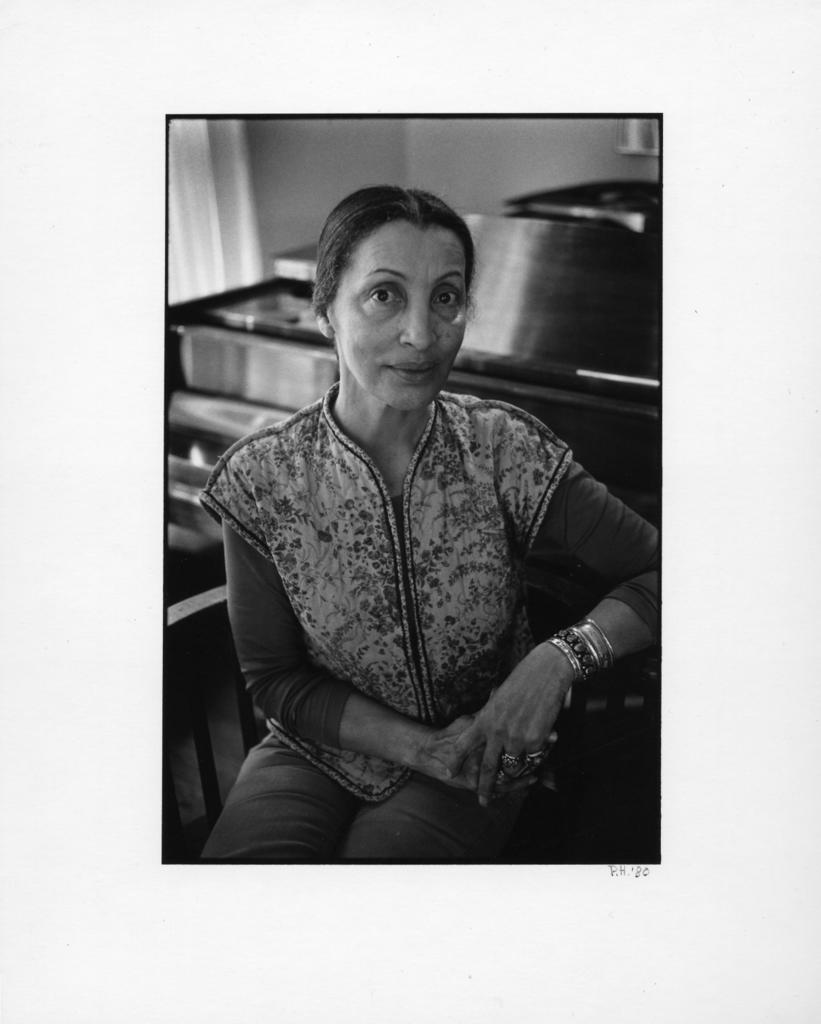
Thursday, May 19, 2005


New (old) and precious discoveries ...

Organizing my files of yellowed fragile papers is a bit like being reborn. I'm finding correspondence from many now deceased but well remembered; bits of incomplete poems jotted hastily on the backs of envelopes long ago; song lyrics that failed to give birth to music; faded newspaper clippings of feats I'd forgotten long ago but now see as the stepping stones leading to the Betty of now. All demanding that I stop and pay attention. Every scrap leading to openings into a past of all of the women that I am. What a strange, emotionally exhausting, and wonderful process ... .

For instance:

I discovered these notes of something called

Meditation

(while ironing)

The sun glows within me - the wind sings my song
the ebb and the flow of the tides mark my cycle of being
A Woman am I -- and the day of my dawning is now!

I hold deep within me the buds of the flowr's of creation
their blooms ... color all I behold!
with man I have moved throughout time 'roun this Garden of Being
A Woman am I - and the day of my dawning is now!

I've carried within me the kings, queens, and slaves of the ages
I've havened the dreams of the poets and painters and pages
I've borne, nurtured, buried the young ones destroyed by man's rages
A Woman am I -- and the day of my dawning is now!

© Betty Reid, 6/1961

The date on these notes places their origin long before the Womens' Liberation Movement became an irresistible force for change. Prophetic?

I can only imagine very young Betty standing over that ironing board on a blazingly hot day -- dreaming huge dreams of power and rebellion and starved for freedom from life with no access to the depths of herself; trying terribly hard to fulfill the expectations of marriage and motherhood. Can't remember the time of day or what caused such a sense of determination; defiance! It must have been an epiphany that heralded a major life change. If I recall correctly, this preceded the beginnings of what would later be diagnosed as a period of psychosis. In looking back through the lens imbued with the wisdom of accumulated years, I know now that this was surely an unfortunate mis-diagnosis. It did not take into account the impossibility of being sane in a world gone mad.

As a lonely young mother in a failing marriage with a troubled adolescent son struggling with gender identification; two little boys battling valiantly with racism in an all-white world of the suburbs; having to deal daily with rejection from an irrational hostile community because of skin color; and just beginning to come to terms with the growing certainty that my beautiful 3 year-old daughter was born brain damaged and would need a lifetime of constant care. I'm certain now that what was then seen as a mental breakdown was an appropriate response to an impossible set of life circumstances. The mind finds ways to protect itself from what it cannot process. Mine did it through art and music. What could have been more fitting?

That there was undeniable evidence of suicidal tendencies was troublesome, but I was able to move past that crisis and survive. I apparently used it well under the care of a sensitive and caring therapist who -- after months of reassembling my psyche, was able to broaden my understanding of what "normal" meant and to broaden the definition enough to include myself with little alteration. No small feat, that. He gave me the strength to be centered, to stand pat, and to let the world adjust to me. I suppose that I'm still doing that, even as we speak.

I know that the song was never completed since the cadence is rough though I can surely hear strains of the music in my head still, as I read the words and know where the "held" notes are that create the rhythm of the piece and make the words fit into a melodic pattern.

There are many more such works here in these boxes; some that went on to be performed, but many -- as in this one -- never rose above their existence as words scrawled passionately in pencil on fading notebook paper, or in some cases, brown paper bags - then long forgotten.

It's quite possible that in this neglected collection of papers -- moved laboriously in cardboard boxes from place to place over a long lifetime without really knowing why, or even taking the time to open the files to read through them -- are the makings of a book. It could be that mine is a life with universal themes as there are in all our lives; themes that speak meaningfully to other women from other times across many lines of separation ...

Surely there are ironing meditations in the lives of most of us -- even while the chore of ironing has virtually disappeared with the development of synthetic fabrics. Along with them may have come synthetic lives in which the variables must be erased in order to be compliant with some agreed-upon normalcy. Maybe such thoughts now come to us on the stairmaster or while waiting in the SUV in the parking lot of the soccer field -- while we wait for an insane world to adjust to us... .

Maybe ... .

Could it be?

Wednesday, May 18, 2005

So many battlefronts, so little time ...

Met last evening with two dedicated women working hard to find answers to the problem of youngsters returning from incarceration -- most coming back into environments that created their problems in the first place. Both were African American. One is a legal assistant while the other is a long time professional who works with the California Youth Authority. Both are compassionate, bright, effective people determined to take a new look at an old problem, and were inviting me to join with them in that effort. What they want to do is to create a support system for families that will enable them to help their youngsters re-adjust more effectively into home, schools, and the society; a tall order.

It's such a familiar story, and one that re-awakens cynicism each time I hear it. It's such an overwhelming social problem with such longterm systemic causes that I find it hard to stay focussed and pay attention when others raise these issues. My mind wants to opt out in self defense. After all, my own sons are now adults. My grandchildren are the responsibility of their own caring parents, and the issues are now purely academic for me, happily, except when I overdo the grandmotherly worrying thing.

There have been so many enlightening studies done over so many decades now, that one has to wonder why we haven't reacted to those findings and corrected what has to be obvious to law enforcement, the justice system, PTAs, criminal courts, judges, drug abuse clinics, social services, colleges and universities, clinical psychologists, anthropologists, etc. The files and archives of every university library and research laboratory are filled to overflowing with those study results -- all pointing directly to the inadequacies of our justice systems, racism, and lack of the ability to move into the mainstream due to unequal educational opportunities and/or job training. Just how many ways can that story be told? How many more billions of taxpayer dollars will be spent before we move to implementation of those findings? I don't believe it too much of an exaggeration to state that -- if the billions of dollars spent on studies nationwide had been used instead to implement once the causes were revealed, we might have lifted the lion's share of the neediest out of poverty and into the mainstream long ago.

There are days when I'm convinced that those studies are really meant to provide career opportunities for middleclass professionals and were never intended to bring any really significant social change to benefit the poor, the societally abused, and/or the disenfranchised. They get funded, evaluated, then shelved until displaced by a new one that essentially proves the same or similar results, ad infinitum.

For instance:

A couple of years ago in my role as field representative for Assemblywoman Loni Hancock, I attended the annual convention of African American city planners. It was fascinating. The most interesting section by far was the presentation of the results of a study done in Hennepin County, Minnesota. As is true in most heavily populated innercity communities, those imprisoned were disportionately young men of color. The assumption being, of course, that these were largely youth jailed for illegal drug offenses. Not so.

The study found that the place where young black males first encounter the justice system was through traffic court. Yes, and as often as not for relatively minor traffic violations.

Youngsters find themselves facing a fine that they can't possibly pay (maybe $60) so -- because they can't ask their already stressed parent for the money, they ignore the ticket. Next comes a doubling of the fine to $120, then to $240, then after months of fear and worry, they identify with the subculture of those outside the law, a warrant is issued and they're picked up and jailed. Incarceration then introduces them to gang life and a higher level of sophistication in street crime. The alternative is that this is the place where they opt to sell a few grams of crack to get the money and that leads to deeper involvement and, finally, to entering the underground economy feuled by illegal drug sales -- in many cases to supplement family incomes (remember the cuts in welfare benefits?), then for status in gang life, tattoos, or gold chains and proper bling. the spiraling down is tragically traceable; predictable.

As the direct result of the study findings, Hennepin County social services, police department, educators, probation officers, etc., came together to recommend addressing the problems by declaring an amnesty to declare a clean slate and new beginnings while positive alternatives were sought by all for all. They expected a few hundred to turn up and instead found themselves with a couple of thousand! It worked. The pattern was recognized and addressed with workable solutions and measurable successes. Not sure what the status of the problem is at this moment, but it's worth checking to see. Will do.

Interesting?

Wonder how many more effective programs are at work out there?


Given the changes I'm dealing with in my personal life at the moment, I can't possibly take on any major responsibility for organizing around the problems of youngsters returning from the CYA. Besides, I need to return to the work force before I go into total financial meltdown! But I will surely try to work with them at least during the first few organizing sessions -- long enough to try to feed new strategies into the mix and try to change the old conversations enough to breathe new energy into the subject. Maybe, even to spend some time on the web researching other study results that beg implementation. Surely there has been a wealth of work done in many places and under reputable institutions and/or nonprofits.

Besides, now that I'm learning to speak only in declarative sentences, I'm getting listened to more closely (grin).

We'll see.

Tuesday, May 17, 2005


Finally, movement!

With full recognition that I am simply not capable of being case manager, social worker, nurse's aide, policewoman, and returner-of-all-things-to-unsuspecting-mall-merchants -- I made that call. I've finally accepted the fact that the most important role I'll play in my daughter's life is that of superfriend. Only I can be her mother. Having to place myself in the role of disciplinarian and keeper of the checkbook is threatening to our friendship. I need to be the one she can turn to when the world runs out of patience with her. That must be protected against any assault from outside. I need to step back and allow that to be reinstated as of old. If I continue to battle with her over finances and/or anything else, I'll jeopardize our ability to maintain the kind of trust we had before she returned home last year.

Yesterday, as promised, I found the name of that nearby Senior Housing development and emailed it to Dorian's case manager. She will call and try to make arrangements for us to find a way to bypass HUD's age requirements and secure a one bedroom apartment for her. If it works, we may be ready to make the move on the first of the month. She will be less than two blocks away in a safe complex -- where she can reach out to me when and if she needs to -- and where I can give her freedom from the mounting battles over her inability to resist instant gratification.

Under the Lanterman Act funded Regional Center of the East Bay, that agency will receive her SSA check each month and dole it out to her as needed. She will have her finances managed so that her rent will be paid and her monthly obligations met automatically. She will also receive living skills training (as before) to take care of menu planning, cooking, budgeting, etc., and I can go back to more hugging and less nagging!

The state budget cutbacks had so seriously cut into her safety net, that moving her back to live with me was a necessity. She was in an unsafe situation and something had to be done. That is still true, except that where she was living some distance away without support -- she will now be within an arm's length but still protected by oversight when and if needed. She will still be picked up by First Transit (bus service) every day for the trip to and from NIAD (National Institute for Artists with Disabilities), and I can take her to her sports activities on Saturdays. Her program is 5 hours a day 5 days a week, and her life is full and relatively happy. She is doing fine work in sculpturing now, and getting kudos for her accomplishments. Her work is selling well, which benefits both her and the organization (50% split). She feels successful. Now we need to make her independent again.

We do need to get me out of her everyday existence so that she can pick up where she left off in the growing process. As I've said, she continues to grow and learn -- unlike some of those disabled from birth. At this point she's in her late teens. She will need to live to be at least 159 in order to bring her mental age to her chronological -- but we'll settle for a cool 21 any time. It would be nice if she could at least reach the mental age of abstract ability -- an impossibility -- but hoped for nonetheless.

Like so many "normal" folks, she simply cannot project into the what ifs and the supposing thats so will never be able to deal with the relationship between cause and effect. She is totally without the ability to make judgements. But hey, I run into that wall myself on occasion. That's what I'm trying to deal with at this very moment; the confusion and fear of abandonment caused by robbing her of the ability to grow into her own future -- whatever that might be, is the effect that so frightens me.

Having her enjoy a bit of distance may protect her from my unrealistic expectations of her. She must be allowed to find her own level of existence for herself. That may be something that I may never be capable of judging with any accuracy at all. That may take someone from "the world;" the world that I have such a hard time trusting with her life. The living of my own life has left little reason to trust such a world with her future.

I guess that says it all.

Sincerely,

Dorrie's mother (hoping to be superfriend again one day soon).


Photo: Dorian at 19 on her first job tending animals at the Oakland Lake Merritt Children's Zoo. She was living at one of the Clausen House program's nearby, and learning to move about in the community with some assistance and a fine network of guides from that institution. The program worked for her for many years but eventually state budget cuts eviscerated much of that support and we had to adapt to the changes.

Monday, May 16, 2005


At loose ends, and hating it ...

Life with Dorian is filled with problems that beg denial. If I think too much about them, paralysis sets in and I become immobilized. It is so at the moment.

I've still not come to terms with moving her out on her own. The past year has allowed me to see just how vulnerable she is in the world, and made it almost impossible to do those things that must be done to re-establish her interrupted independence.

Yesterday we spent the greater part of the day at the Special Olympics swim competition at Laney College. That world is such an interesting one. It is a culture all its own. Parents, volunteers (young and old), members of the Fire Department, specially-trained sports teachers and trainers who work with the disabled year round come together at these sports events in ways that are so heartening. Each athlete is trying so terribly hard to make damaged minds and bodies come together in the valiant effort to compete without envy or false pride. To watch those faces reciting the Special Olympics oath at the start of the games is to experience innocence at its most poignant. "Let me win, but if I cannot win, let me be brave in the attempt." Each believes this with every breath. It's expressed throughout the day in every way.

Dorian won 2 golds and 1 silver for the 100 in the backstroke, a second in the 50 yd freestyle, and another 1st for 50 ft. backstroke. She was jubilant! But she was equally content in the two other events where she did not place at all. She is now qualified for the state games to be held at the University of the Pacific in Stockton in early June.

Meanwhile, I really do need to deal with our housing needs.

Yesterday after returning from the games I went into the livingroom closet to find something I needed and discovered another brand new sewing machine. Not sure when it was purchased, but I do know that there is an expensive one in storage -- one with parts missing (mostly cords). She cannot sew. She cannot read. She cannot possibly use a sewing machine in any way. Her bank account is again overdrawn. She's now clever enough to toss the packaging and manuals so that it's impossible for me to return the items that she picks up impulsively. The rebellious teenager reigns at such times and I'm helpless to manage events with any wisdom.

In a way I fully understand her purchases, foolish though they may be. In her distorted mind, she has some notion that sewing machines "make things." She has no idea just how that happens, but when she popped into the hobby store to pick up more yarn, there it was -- promising so much. I'm sure that she's been watching one of the sewing shows on television and that the idea was planted there. It's like the cell phone commercials that are so hard to resist always with their promises of "more".

I also found a receipt for $89 for the purchase of more minutes for her cellular phone. The one she bought most recently (and that I didn't return) is one that has no contract attached and for which she buys minutes each month. She has only one (also retarded) friend with whom she spends endless hours in conversation every night. It's an important friendship for them both. I'm guessing that she also speaks with him during the day from her cell. I insist upon her using our Lan phone when she's at home. This means that she may be spending $200-300 a month for those minutes. She is totally out of control and the Regional Center will not give her home assistance unless she's living on her own. That means no budget counseling or restraints.

So now I will log off and make those phone calls to the Regional Center and set things in motion (again) for locating a new living arrangement that will bring with it the essential independent living services that she must have and that are beyond my power to give her with the kind of objectivity that is needed.

It is at such times as these that I seriously consider a tour of duty in the Peace Corps!

More later.

Friday, May 13, 2005

Not In Our Town ... or yours ...

Drove out into the Diablo Valley last night to attend a screening of the PBS documentary, "Not In Our Town, Part II" hosted by the local NIOT organization. It was held in suburban Concord at the community center, and drew about 70 social activists to an evening of soul-searching and introspection. Though the valley is perhaps 99% white, there is a very slowly-growing minority middleclass now in the mix. They're a long way from claiming racial diversity, but at least this tiny group of perhaps 20 socially aware suburbanites are doing their best -- still -- to sensitize their surroundings toward greater acceptance of "others."

It was in the neighboring community of Walnut Creek that my young family lived and where I was radicalized by racism years ago. Some of the dear friends in the audience last night have been actively working for positive change over the past 35 years. They still are my dearest friends. I returned last night because of the strong bonds we've shared for at least that long.

It was a strange evening.

While the original film's focus was based on anti-Semitism and racism aimed at African-Americans and a community's response to it, the central themes have seen a subtle change to focus on gender, primarily. I realized last night that -- just as the womens' movement (feminism) stepped in front of the march of Blacks toward full freedom and equality some years ago -- the same can now be said of gender politics. There were perhaps 6-7 African Americans and about the same number of Asians in last night's audience. When the discussion started after the screening -- it was clear that many of those attending (especially the youth present) were here to deal with crimes against homosexuals. The case of Newark's horrendous killing of Gwen Arejo by 3 young males appears to have attracted the greatest community response. Racial aspects were de-emphasized during the talkback, though the problems were certainly given equal attention in the film. Poignantly, an elderly Japanese man rose toward the end the discussion to speak of his internment in a relocation camp during WWII, but the subject was no longer relevant. Response to him was merely patient and polite. The country's concerns have again become "Euro-centered," and racism has now been relegated to the past as if solutions had been found long ago and mattered little now except to the extent that those issues served to jumpstart other movements.

I found myself in a strange place. I thought that my (expected) contribution would be helping to bring an urban Black perspective to the evening. Why else would I have driven from so far to be here? What happened, though, was that for the first 15 minutes of the 1 hour film I was Black. When that feeling dropped away, while watching the film, I was left with being the mother of a deeply troubled gay son now deceased. The pain of that resurfaced as if it had all happened yesterday -- to reduce me to tears at his loss and outrage at finding myself in a kind of double jeopardy. I was surprised at how powerful the grief continues to be.

We were asked by the facilitator, Hugh Vasquez, to pair up (with a stranger) to talk for two minutes -- uninterrupted -- about our personal reaction to what we'd just seen. I was chosen by a gay man (a physician?), one both proud and articulate. He spoke of his defense of a gay man who'd been returned to the community after serving time for sexual offenses. He was passionate. I was unmoved; still struggling with my own confusion and wondering if I could do this -- or even if I wanted to?

But I did. Though most of my mind was taken up by framing my response while he was making his two-minute declaration of his empathy (and it was that), I did manage to spill out some description of my confusion at trying to deal with racial bigotry and gender crimes simultaneously and how the loss of my son to both was crowding out everything else leaving me with only tears of embarrassment at the inability to crowd all that into 2 minutes even if uninterrupted. The frustration was paralyzing. This stranger reached over to drape his arms over my shoulders in an effort to comfort me as my words trailed away into nothingness... .

Then the floor was opened up so that everyone could speak their minds. The microphone was passed around as each spoke kind and thoughtful words of love and compassion for those less fortunate. Remember, these were liberals gathered in celebration of other communities that had illustrated super-sensitivity and the ability to create proper responses to the outrage of social injustice.

I wondered if I would be able to say anything sensible? After perhaps 20-25 brief comments by these good folks, I finally found my voice, signalled for the microphone and said:


"I'm Betty Reid Soskin. I'm here
out of context. I've driven from 37 miles away -- from Richmond, at the invitation of friends to join with you to view this great documentary. However, if this screening were held in my town tonight instead of here in Concord, at least 40% of this audience would be African/American, perhaps 36% would be Latino, a number of Laotian refugees, and the minority might well be White. Forty-nine percent of their children would have dropped out of highschool before the 10th grade. Most would be lower-income and many unemployed. I find myself wondering how differently the viewing of NIOT would be in such a setting? This film is directed toward the privileged, to those assumed to have the power and the will to discriminate unfairly to the detriment of others.

I've ha
d a difficult time all evening moving between my black self, my mother self, and that part of me that shares in privilege. My eldest son, gay, dark-skinned, and deeply troubled over his entire lifetime -- died a few years ago of societally- and self-inflicted wounds from physical and mental abuse and alcoholism. He suffered countless muggings. He suffered the added burden of being one in a black/white monogamous partnership that lasted for 18 tortured years. They lived with the scorn and rejection of both racists and homophobes who frowned on everything that they were. Both were filled with self-hatred that manifested in an addiction to alcohol.

Were we there, we would have been viewing this film with those who are the
victims of racial and gender bigotry with little need to self-examine their "privilege." They would be the subjects of the crimes with none of the ability to share in the largesse of attitude possible here.

Yes,
I'm totally out of context, and I'm not sure in this moment how to handle that."

In a few moments when the discussion ended, the film's producer-director told me that there was nothing she would like more than to show this film in Richmond. She asked that I speak with her partner to find just how we might arrange that. I will do that. But I'm stuck with wondering just how much interest there would be in this documentary, one so specifically designed to reduce the crime of bigotry in the communities of haves. The problems of the inner city are defensive problems; problems of the have-nots. There is a major problem of internalized hatred (the killer of my son and those like him) that is destroying young Black males in numbers that shake the community to its soul as gun violence continues to escalate on the streets of Richmond without pause or reason.

I can remember hearing someone in a very high position in the state remark that "...there is some logic in allowing these street hustlers to kill each other off without interference by the police. It saves society the costs of trials and imprisonment." It's my suspicion that there are members of the police departments who echo those feelings and act on them. That these young lives are marked by self-hatred learned at an early age from the damning attitudes of the greater society; attitudes reinforced daily in the schools, on the playgrounds, and on the streets of the inner cities of the country are of no concern. I'm ashamed to admit that I stood in stunned silence, unable to find a reasonable response to my friend's telling comment; embarrassed for him, but allowing his awful words to stand unchallenged. How many times has this happened to us all?

Maybe that's a genre of filmmaking that needs to be explored -- but that presents a different order of problem -- one every bit as destructive as the examples we saw last night on the screen of the fire-bombing of a Jewish synagogue in Sacramento, the murders of two honored and much-loved gay men in Redding, the burning of a cross on the lawn of an African-American mother in Anderson in Shasta County, and the unbelievably brutal beating death of lovely young transgendered Eddie "Gwen" Arejo in Newark.

The destruction of human lives through internalized hatred may be one of the most important unexplored issues of our times.

How on earth does one go about examining doing that through film?

Wednesday, May 11, 2005


Cleaning out the cobwebs of the mind and the bright blue plastic storage boxes ...

After writing about the Colorado Springs encampment, I recalled that a few years ago I'd read a description of the event in the Starr King Journal on the occasion of the death of Jim Stoll, a minister deeply connected with that summer's activities. After making that entry here, so much began to come up for me in relation to it that there was nothing to do but stop everything and try to locate that edition so that it could be shared here. That meant sifting through papers long packed away for "someday." Anyone who's ever gotten themselves into "trunk in the attic" mode can attest, there's no way to do that except slowly savoring every old/new discovery. Unfortunately, I've not yet run into that journal but will keep looking.

Ran across a yellowed script from "Farallon Light," the master's thesis of Charles Peterson of San Francisco State University. Here were the stills from the 30 minutes documentary and the narration with places marked for music -- written and performed by Betty Reid (before Soskin). I remembered how exciting that had been, and of how serendipitously Peterson's wife happened to be in the audience and heard me perform in a concert at Sacramento State that year. "You're singing my husband's footage," she'd said, and after some conversations with Peterson later that week, I'd made my way to the sound studions for the taping and inclusion in this prize-winning film.

That year (1971) it won prizes at the Atlanta Film Festival, another at Montreal, at the San Francisco Film Festival -- after coming in first at the university's spring festival of that year.

Spent much of the past few days trying to locate a copy of it somewhere in the world. Called SF State, the Unversity of California, Berkeley Extension Division (I'd learned that there was a copy in their catalogue at one time.

Then remembered that one day when I visited the Lawrence Science Museum with my very young granddaughter, Kokee; as we walked down the hall toward the theater -- I could (unbelievably) hear the sound of my own voice singing! We entered the dark and empty theater to see Farallon Light being shown on the large screen. It was eerie. It had been years since I'd performed the work. I knew that 6 year-old Kokee could hardly appreciate the fact that her grandmother was related to any of this in any way, so I simply sat there in the dark and marveled at this miracle. David, my youngest son and her father, was still in his teens when this was written and performed. She would not be born for many years. Yet, here we were, together at the museum high in the Berkeley hills -- sharing my music in this remarkable film. That was the only the second time that I'd seen it. The first time was the night of it's premiere at S.F. State many years before.

That brings us to today. I've still found no way to trace this lovely piece of personal history. Would love to own a copy for my children (who know nothing about it, incidentally) and theirs. As an artifact of my life and legacy it's now important to me. It came into being from the secret life of the artist, Betty, who lives only in those years of transition -- that later produced political activist Betty. She was fragile, vulnerable, and probably created art as a defense against a world far too complex and cruelly paradoxical to cope with. Art was the escape valve. I feared that any product coming from that inner place was little more than symptomatic of mental illness. Such a pity!

The important facts are: Title: "Farallon Light," from Altair Productions, San Francisco; Filmmaker Charles Peterson; music composed and performed by Betty Reid; Year of release, 1971.

Any ideas?

I'm fearful that Peterson may no longer be alive. I find no trace of any further work when I search the Internet. I do have friends in media who may be able to help me to find it, but after so much time has elapsed, I'm not sure that's any longer a possiblity.

So saying, I'm knee-deep in papers and souvenirs of my past -- with a paper shredder at my elbow and a strong intention of tossing anything that doesn't cause the hair on nape of my neck to rise!

Good thing is that lots of life has freshened while I tossed and some of the anger that was surfacing last week will be transformed by some of the truly wonderful and rich periods that were interwoven through those years. Today I feel soft and yielding -- and reasonable. But that promises to last only until the next outrage from Washington surfaces.

Now I need to call my representatives and try to do something about Bolton!

Friday, May 06, 2005

Been thinking about audacity -- and "speaking only in declarative sentences ...

and realizing that there is some need to re-state context here. There may be readers who haven't the foggiest notion that the voice being expressed here is that of a descendant of a slave great-grandmother -- the loving grandmother who raised my mother and whom I knew into my own adulthood. She, Leontine Breaux Allen, was born in 1846 and died in 1948 -- in her 102nd year. At the time of her death I was 27 years-old and the mother of 3 of what would become my family of 4 children. My mother, Lottie Allen Charbonnet, lived from 1894 until 1995, after celebrating her 101st birthday. I will celebrate my own active still productive 84 years on the planet in September of this year. We've, collectively, seen an awful lot of life. For me slavery, Jim Crow, blatant racism, are not abstractions -- but major influences in the life filled with the effects of this country's greatest unfulfilled promises. These pages may be a statement of what the costs to the spirit may have been, but I cannot be the judge of that. You must be.

But -- I do get to speak in declarative sentences!

I make no pretense at objectivity nor do I make any attempt at bending truth to serve some prescribed goals. There's no one left to impress. I've outlived all of the naysayers in my life and can speak freely without fear of retribution or loss of status in the family or in the greater society.

The experiences here have been highly colored by the events lived as a black woman in a world twisted by racism and political expediency. Having survived all of that through the powers of disassociation, I suppose, in these later years I find myself still sitting on a reservoir of justifiable anger, but with the ability to stand outside myself and witness my own process. That's come with age and no small amount of quiet self-confidence, fiercely fought for and eventually won. That's taken a long lifetime, some pain and, at times, tragic heartbreak. But as the song says, "I'm still here!"

Hopefully, there are lessons here to my progeny to add to those of our ancestors who've trodden these boards before I entered stage left in 1921. Having lived at a time bracketed by slavery, Jim Crow, the Great Depression, World War II, the smug Fifties and the turbulent Sixties of the Civil Rights revolution -- the assassinations of two Kennedys and one King, on into the Human Potential Movement of the 70-80s and beyond into the crossing into another century and the Information Age -- I get to leave my own roadmap through that wilderness into the now. I lived all of those periods as an open vessel; deeply and with passion.

No life has been identical to mine.

No other lives have been identical to anyone else's.

We're one-of-a-kind people, each with a story worth telling.

These writings are simply a record of time as I lived it, or, at least as read by the events that drew me in and shaped the world in which I move.

So saying ... she wrote on ... .


Photo: My mother, Lottie Allen Charbonnet, at the age of 95 dancing at a luau on a holiday in Hawaii. A few weeks after my father, Dorson Louis Charbonnet, died -- we sent her off-shore for the first time in her life to see the world. She'd spent many years caretaking and it was time. A niece, Victoria Balugo Jones, accompanied her on the great adventure. This was a far cry from Welcome Post Office, St. James Parish, Louisiana! She lived another 6 years. This is surely a fine example of the irrepressible Creole spirit.

Thursday, May 05, 2005

Mysterious workings of the mind ...

I'm utterly fascinated by what happens when the mind is free and unencumbered by the need to be objective or even fair. That last post reached far back into the subconscious to dredge up thoughts long-thought dead or at least consigned to the memory box marked "insignificant."

Not needing as much sleep as when I was younger, I've gotten into the habit of setting my little bedside radio to Air America and dropping off at some point without turning it off. I'm sure that my mind continues to pick up words and phrases long after real consciousness has settled on "dim." It was probably for this reason that I wasn't aware until last night that yesterday was the anniversary of the Ohio National Guard's attack on the student demonstrators at Kent State that resulted in death for several. I must surely have heard some reference to that during the night before. This would surely account for the mindset when I wrote the last entry.

The reason being that -- on the summer following that awful event in Ohio -- I (and co-incidentally, my son, Bob) spent a week at mountain campgrounds in Colorado Springs with the Intercontinental Conference of several hundred Liberal Religious Youth; a group largely sprinkled with members of the SDS. A number of those college students had been involved in the demonstrations at Kent State. Bob and I met without being aware that I'd been invited as one of five workshop leaders from the artist community. He'd arrived from the Monterey Peninsula where he'd been visiting with our mutual friend, poet, Ric Masten and his family. Ric had also been invited to lead a workshop. It was a week I'll never forget. I felt privileged then. I feel privileged still to have been included in the history being made by the youth of the time. Though I must admit to some feeling of awkwardness around my having spilled over from my own generation into that of my teenaged son. I can recall the embarrassment that I felt when we discovered one another in the crowd on that first evening. We've never really discussed it. We shared the same convictions about the anti-war movement, and had certainly collided at other times while acting upon them. Perhaps this was no different, but I wonder now in looking back.

The meeting was held at Colorado Springs because it was the site of a major speech by President Richard Nixon, and the students were planning disruptive demonstrations and acts of civil disobedience at the Air Force Academy where that speech would be delivered. We were in the thick of the Vietnam War, and protests were mounting. These student activists were battle weary from having also been in the bloody street struggles against the Chicago police -- struggles that resulted in the arrest of the Chicago 8 and the wildly theatrical trials that followed. This was the Chicago National Democratic Convention during the summer before the spring of the Kent State's tragedy.

Those stirring 'roun the campfire conversations were heavily sprinkled with references to the Illuminati, the Skull & Bones Society, the annual arcane Bohemian Grove celebrations, the Tri-lateral Commission, etc., and had not yet reached the time when the Evangelical Southern Baptist takeover of the Republican party or the domestic terrorism from the Far Right -- before the smoldering hate-inspired militia movement had come into being. This was long before Iran-Contra, the Salvadoran-Guatamalan or Nicaraguan takeovers, the assassination of Allende in Chile, or the invasion of Panama to seize Manuel Noriega, and Watergate. This was long before Timothy McVey and the bombing of the federal building in Tulsa. It was before disaffected militarily-trained young white Nazis had surfaced in numbers large enough to cause concern. And this was long before September 11th, and the changing face of terrorism to that of the middle easterner.

Yesterday's post was heavily laced with Vietnam era paranoia, admittedly. But it may be speaking to a time when the seeds were being planted for all that has followed. Perhaps it was this that my active mind was trying to weave together into some kind of logical pattern ... I don't know. I'm aware of the continuum, the clear progression from then to now.

What is clear is that nothing is wasted. Experiences long dormant continue to claim their portion of the cortex and can wreak havoc if not recognized for what they are. Sometimes they're cautionary and, at some subconscious level, move us back from the edges where danger lurks. Sometimes they distort meanings and create disembodied fear that can't be identified or related to anything or anyone with reasonable accuracy, but account for edginess and sadness that defies understanding. Strange ... .

This morning I heard a long discussion on Democracy Now about the takeover of the Republican party by the Christian Evangelical Movement. The voices were those of two members of the protestant clergy; religious conservatives who share the concerns of the rest of us about the power being wielded by the forces now controlling the legislative process. I began to realize how intertwined were my thoughts yesterday with those being expressed this morning. There is a relationship that I haven't quite figured out yet, but I will. It's all of a piece.

The return to power of the cast of characters who brought us the Central and South American undeclared wars and the Iran-Contra scandals is frightening. The coming together of the names that figured so heavily in times past with the awful events of the present is sobering. To see Watergate figures now popping up as pundits (Liddy, North, etc) is more than disconcerting; it's ludicrous! To have Wolfowitz, Negreponte, Ashcroft, Rumsfeld, now buffered by the likes of Zel Miller, Frist and DeLay et al has got to be upsetting to those of us who've lived through the previous crimes and realize that there isn't the time for us to do it all over again. To watch the effects of their work upon a nation's electorate who has either forgotten or has never known this history that we're now re-living is the most troubling of all.

The new coalitions formed for the purpose of deconstructing this government's processes and procedures -- including the Constitution and Bill of Rights -- threatens our continuing existence as a nation. They have the power to destroy the underpinnings of democracy, itself, robbing the world of one of the most successful models for governance in modern history. We now sit at the pinnacle of that power -- and its misuse is catastrophic under present leadership.

I'll probably spend lots of drive time trying to figure out the code; the mind-messages that may make sense of what's spewing from my fingertips ... matching some of what is stored in muscle memory to those wisps of thoughts that defy logic and solutions -- but that stubbornly refuse to die.

...and though I'm tempted to delete yesterday's writings, I choose rather to let it stand and try to understand it against the background of what the next few weeks will bring. I'm beginning to look for the prophetic in the mundane ... an intriguing pastime that waxes and wanes as my personal life becomes more or less complex. This involuntary re-playing of old tapes that have been archived somewhere in memory will continue to spillover into the now, I suspect. The fight to not get blindsided by them may become more and more critical as the years pile on and fears of approaching dementia begin to stir. I find myself wondering about the inevitability of that -- as do most who've lived into these advanced years.

So far that fear amounts to little more than, "...now where in hell did I leave my keys?"

As I said, it appears that little is ever wasted.


Wednesday, May 04, 2005


There it was, hiding behind that Paul Miller entry ...

The thing that's been troubling me for a very long time. It has to do with education in the abstract; what's happened to it, and of what that foretells about the future. Maybe what we have here is one of those assessments only available to those of us who've lived long enough to begin to connect the dots. Wonder if anyone will listen...? Those younger are busy creating those dots, which is as it should be, maybe.

If we really do understand that the nation's takeover began many years ago in a successful campaign that only now is unfolding in such broad strokes that few can deny its existence. If we now understand that it was a bold 30-year conspiracy with many players and hidden networks that became cross-generational and international. To this Fox Network-defiled mind, I've begun to see the Bohemian Grove gathering, the Tri-Lateral Commission, the Illuminati, and the Skull and Bones as one huge centuries-spanning conspiracy with a single common denominator -- white European descendant males! How's that for paranoia? Suddenly everything I've ever heard about such conspiratorial enterprises has melded into one giant mosiac with no international boundaries and a single goal; world domination by any means necessary.

The problem foreseen by the white elite in this country -- the singlemost powerful on the planet -- was that it was fast becoming one in which the European ruling class would be soon replaced by a society in which majority status would be lost to the "unwashed." It was only a matter of time. At least three irreversible factors were operating. Each spelled the eventual elimination of white dominance. One was the burgeoning immigration of Third World peoples flooding our shores and crossing our borders; another was dreaded mescegination, and the third was the birth of equal opportunity for non-whites in education and in the promise of access to the workplace. All threatened the continuance of white dominance. The militias and super-Christian preservationists were ham-fisted in their response to what they saw as a "white holocaust," while those in positions of unprecedented wealth and political power were clever and brilliantly manipulative with the ability to set in motion long range remedies to the threatened loss of control of the nation and, ultimately, the world. Control of the earth's resources was unquestionably the key; and for the moment, petroleum is king.

In this country, I was first aware of the assault upon public instruction under the administration of Ronald Reagan who gave the first signs by the attempt to abolish the Office of Education. Someone foresaw empowerment of the underclass as threatening to the existing political power structure. We, the people, should have seen it coming. But we felt protected by the Constitution and the Bill of Rights, didn't we, without fear that these institutional powers could ever be eroded from within. How foolishly trusting. How naive, as time would soon prove.

The Right To Life movement never targeted black or brown abortion clinics as far as I know, in fact, many black women on welfare were undergoing mandatory tubal ligations at a time when Planned Parenthood was in constant threat of outright assassinations and bombings. Those most active among the Right to Lifers were and are white males, if you'll notice. White women are being forced to carry to term those precious little lives that will be sorely needed in the struggle to continue world dominance while black and brown babies are facing lifetimes of poverty and starvation from societal negligence. White women are being seen as little more than incubators for the next generation of rulers. It's a frightening step back into history to a time when women were little more than powerless possessions in a male-dominated world of empire builders. To their credit, many women are working hard to save themselves from such a fate. The current attempts at seating anti-abortion federal judges signals a reversal of Roe v. Wade and a return to women as chattel -- or to an American version of a pschological wearing of the burkah.

It matters little how multiracial or multicultural this nation becomes, the white "majority" will continue to see power to rule as its rightful legacy, and all others as less than equal by right of inheritance from the founding slave-owner fathers. They've created God in their own image and claim rights to all that flows from their creation. It's a complete bastardization of Christianity. And -- it's a cynical misuse of teachings that should have continued to nurture peace and love in the world for at least another half-century.

Thirty years out we're seeing massive disenfranchisement of non-white voters, funneling of young non-whites into the armed forces by virtue of lack of opportunity in the country's economic system; one in 3 black or brown men living behind bars in the greatest incarceration rates in the nation's history; the closing of the doors to higher education by pricing it beyond the reach of all but the offspring of the elite, and, by deconstruction of the system of public education that insures that only the elite will be capable of ruling. Many Black and Brown youngsters are winnowed out of the system through tracking by the time they reach upper middle school. In the state of California 49% of Black and Brown students drop out by the tenth grade. Despite desparate attempts at salvation by many highly motivated teachers and administrators, they're already lost to the deadly competitive underground economy fueled by drugs, untargeted rage, resulting in senseless death on the streets. They're as often as not slain by little more than ignorance and/or lack of opportunity for anything resembling the good life.

I strongly believe that the deconstruction of the nation's public schools in favor of privatization has guaranteed that white dominance will be assured throughout most of the next 50 years, at least, unless those proverbial dots begin to come together in ways that the mainstream can see their meanings and begin to stop the cabal in its tracks. The privatization of prisons has turned them into schools for crime and people banks in which to deposit all those we've failed to educate or socialize into the mainstream.

The battle over illegal immigration at our southern borders while no attention is paid to the northern borders is clear evidence that there's a major skin color problem here. Why are not the Minute Men militias gathering along the Canadian border?

I have a sick feeling in the pit of my stomach that suggests that -- down deep -- I'm already convinced that it's too late to stop the juggernaut. There are so many fronts to be fought on simultaneously that the chance of winning back the country seems slight, indeed. Do we hit the streets to stop the war? Which war? Is there a chance in hell that joining the next march to Sacramento to challenge a corrupt governor's school budget cuts will make a difference? What about dealing with the micro? Is the macro simply too huge to take on without first creating enough man- and womanpower to assure success? And what will be the cost of waiting for some right time?

I don't have nearly enough understanding of the worldwide implications of what I seem to be culling from the almost hourly barrage of incoming news reports, but it's more and more difficult to find a local response to events that are so far beyond me. The temptation is to allow my mind to go numb and busy myself with what I can manage -- like can I really afford to continue to run my car on gasoline that's now hit $2.67/gallon? Or, why on earth did that wild-eyed young woman flee from her impending wedding? And, will West Wing and Judging Amy continue into the fall season and what on earth will happen to poor weird embattled Michael Jackson? And, will that obviously mentally-challenged young female soldier at Abu Graib really be forced to take the fall for higher ups who surely are culpable for the inhuman torture of prisoners? ...and why are there not women in the streets in protest?

Is the answer continuing to work through MoveOn and People for the American Way and reading TruthOut and Alternet, continuing to support the Southern Poverty Law Center and the ACLU? Watching for signs of other like-minded folks to link to in order to continue to mount the challenge that may turn things back on course? Do I keep drawing spiritual sustenance from those whom I continue to admire as the selfless heroes who still have the power to stop us in our tracks by their courage and derring-do? There are those stalwarts like Medea Benjamin of Code Pink, and Pacifica's Amy Goodman, attorney and political activist Van Jones; cartoonist, Aaron Magruder; Paul Miller aka DJ Spooky who is using the arts to create revolution; columnists, NY Times' Frank Rich and the Berkeley Daily Planet's Jesse Douglas Allen-Taylor whose incisive writings stir action in others? They've all learned to magnify their voices through their ability to inspire others.

Sounds pretty depressing, right? I know. It all feels so hopeless -- and my inability to watch the smirky arrogant faces of Carl Rove, George W. Bush, Rumsfeld, et al, is beginning to rob me of any sense of control. How on earth can I find any pathways toward action if I can't even bring myself to see or listen to the voices that are ruling the day? They've seized the media and rule the legislative process by blurring the lines between all avenues to power.

Perhaps the answer is to take another drive out into the wildflowers bursting into bloom along the creekbeds and leave world-saving to those better equipped to deal with it... .

Maybe I just need a shot of whatever-it-is-that-deadens pain... .

Maybe I've earned that right.

Perhaps that's the privilege of age, and has always been. Recognition that the work will never be done before it's time to leave is -- maybe -- what creates the grand design of civilization by leaving tracks to follow and then making a timely stage exit into the unknown. None of us gets to ring down the final curtain or declare the game over ...

unless ...

we've been convinced of the certainty of and the need to work diligently to fulfill a biblical prophecy known as -- "The Rapture" --, or,

can control the dropping of the next nuclear bomb
.


And when did I earn the right to speak only in declarative sentences? When I crossed the Rubicon of Old Ladydom and ...

if I can't do it now -- then when?

Tuesday, May 03, 2005

DJ Spooky AKA Paul Miller, an encore ...

Miller was the subject of an NPR interview with Michael Krasner this morning. Happened to catch it just as it was beginning and was again struck by the sheer brilliance of this young intellectual. Arrived at my destination before the program ended and sat in my car to hear it out. Discovered that he's on the faculty of the European University in Switzerland; that he has just released a new compact disc; and that he is appearing at Stanford this week, and elsewhere in San Francisco. His writings are profound and his influences about as eclectic as any I've ever known. He quotes from Robert Frost, Marcel Duchamp, Marshall McLuhan, Fifty Cent and Coltrane and the Beatles without pausing for breath. His is an amazing grasp of modern culture, and his use of metaphor is astounding.

It's been a while since I've visited his web site but I plan to do so just as soon as I figure out whether or not I'm up to understanding his use of language and the complexity of his ideas. It's not unlike those evenings of listening to Bill's friends from the university spouting emerging theories of physics or the esoterica of Tibetan Buddhist practices. I hear Miller with the same excitement that I felt then, the excitement that comes with discovery. It's not that he uses jargon or idiomatic speech. It's that there's a weakening grasp on my own language in a rapidly-changing world. His is the language of twenty years from now. Mine is from yesterday. I didn't imagine that I would ever need another.

I've not seen him picked by Charlie Rose yet up for an evening around that table, but expect to soon. This is the undisputed voice of the future.

Mark these words.

Sunday, May 01, 2005

Great tour ... next stop the Galapagos Islands ...

Beautiful day on San Francisco Bay. The Delphinus (the Dolphin) was a sleek small boat that plies the waters on guided tours of the Pacific from Alaska to the Galapagos, year round. And what wouldn't I give for that trip to the magical land of the great stone heads, monstrous sea turtles, and wildlife found nowhere else on earth? Ronn Patterson, our skipper and owner of the charter service turned out to be a fascinating man who is an expert on whales. Look him up on the net. His resume is amazing. Sitting right behind him watching him expertly cut through the waters of what turned out to be a very shallow bay (12 feet for the most part with some places no more than five) was great. The channel deepeners are at work constantly keeping the lanes open for sailing. Listening in on his conversations with other guests made me want to sign up for the next trip. Maybe I could get used to the retirement thing, if I could spend the time traveling with these folks. Maybe that's for the second half of Octogenaria.

Among the guests was Steve Gilford, historian, author, filmmaker, with a long list of fine publications about Kaiser Permanente and the work of Henry J. We'd met before when I was working with the National Park Service last winter on that brief consultancy. It was Steve who did the research that turned up the fact that Kaiser had built and launched 17 ships, nationwide, that were named for African Americans of note. Three of those were built here in Richmond, the S.S. Robert S. Abbott, publisher of the Chicago Defender; the S.S. John Hope, a nationally-known educator; and the S.S. George Washington Carver.

In a free moment last November -- while eating a bagel I happened upon a log of the Kaiser launchings in the archives. In so doing, I discovered that there were actually several more that had escaped Gilford's scrutiny. There were three named for historically black colleges -- Fisk, Talledega, and Xavier. In addition I made the most exciting discovery -- that here in Richmond, at a time when racial segregation was for me a tragic and dismal fact of life, there was a ship named for the legendary black hero, Toussaint L'Overture -- the brilliant military strategist who, at the end of the 18th century led his people in a struggle that wrested Haiti from the control of the French in a bloody revolution. He was known as the black Napoleon. Oh to have been in the room when that decision was made! And where are the archives that would hold the documentation for that decision? What an intriguing story to explore, right?

I sent Gilford the new information so that he might add it to his research. I wondered how he'd missed it, and were there others that I'd missed? Then it dawned. Just as I had no knowledge of at least half of those named on his list because they were obviously named by whites and little known among western blacks, he would not have known some of those so honored because he was not black. For him those three colleges could easily escape notice, and unless one had some familiarity with Haitian history -- L'Ouverture also might easily be overlooked.

We'd not seen one another since that exchange of emails, so the chance to chat was a wonderful gift. We had a long talk over a picnic lunch at the end of the bay tour, and I learned a lot about Henry J. Kaiser that I'd not known previously.

Someone earlier in the day had asked whether I thought that Henry J was a racist? My answer was "no." He was an industrialist charged with the building of a great fleet of ships in order to fight a cruel war that threatened us all. He was not charged with conducting a social experiment. Much of what he created in the process brought enormous social change and altered lifelong attitudes -- and probably contributed to the Civil Rights struggles of the Sixties, but that was incidental to ship-building. He needed hands -- any kinds of hands -- and there wasn't the time or the energy to change public policy or to legislate morality during the course of the war. He took many thousands of poor people from the southern states who hadn't yet shared drinking fountains, restrooms, lunch counters, or cemetary space -- brought them to Richmond by any means possible, and molded them into a virtual army of homefront workers who met the goals of turning out a completed sea-ready ship every 4-5 days, over 700 in all. Had we not been totally consumed by working around the clock in a kind of perpetual motion machine to supply the needs of the South Pacific, we might have killed each other!

I was working in that Jim Crow union hall filing cards at a time that has since been romanticized as the time when those on the home front set aside their racism for the good of the nation. Not so. There were lessons to be learned then as there are now, and only by being honest about where we've been and what we've lived can we begin to realize the promises of this nation or make democracy worthy of exportation to others. The fact that African Americans were working, fighting, and dying in defense of rights we would not realize for another 20 years must never be forgotten. That fact lifts the level of our patriotism ever higher, and places even greater demands for some expression of appreciation for debts unpaid for far too long. It was not only the Civil War that needs that conversation about reparations. There is the granting of psychological "reparations" from WWII that may hold the key to the nation's eventual gaining of racial peace and harmony. I can judge this by the close-to-the-surface anger that still rises when I remember. Most of those memories are dying now, with those who lived them. Perhaps this new park will become the repository for the entire untold story -- the story that will keep us aware of the great human drama that was lived out here and that provided the impetus for the great social movements that played out in Selma, Montgomery, at the Lincoln Memorial when Dr. King stirred the nation's conscience, and that changed history.

Maybe that fact, alone, is justification for finally accepting the designation of being a "Rosie." I'm one of the carriers of that history, and this alone may be the real reason why spending this last part of my work life with the Park Service is important. Maybe such conversations in a natural setting without microphones or portfolios are far more important than might appear on the surface.

While representing the state I'd participated in several of the planning sessions with historians, architechs, engineers, designers, and park staff from other parts of the country. This was during the earliest stages of envisioning the completed Rosie the Riveter national park and moving it toward its eventual formation. My voice (small though it may be) has already helped to shape some of the attitudinal stuff -- break the stereotypes, and less in formal pronouncements or diatribes over race relations than casually over bagels and apple danishes shared during breaks.

Maybe this is one of the ways that the world gets changed, ultimately ... in tiny increments in many places by ordinary people like me -- being what we want to see in the world.

Maybe it's a bit more than simply having known Mable Kuss.

... and I'm sure it is on my more confident days.

Thursday, April 28, 2005

Finally, a reprieve from idleness:

Okay, I know what the book says. Little ole ladies are essentially fit for little more than bridge, church socials, and the occasional book club outing. Grandmothering is supposed to be all consuming, and (for those of us still in control of our wits) social activism should be carefully assigned by the deacon and should involve little more than cookie baking with the girl scouts and/or collecting recipes for the church fundraiser. Not so. There are still a few of us stubborn old women who insist upon staying in there until a suitable replacement turns up and takes over. Some of us may be carrying around talents and abilities not so easily replicated, and in such cases, opting out simply isn't an option. Yes, I'm one of those. I knew Mable Kuss!

A couple of weeks ago there was a call from Elizabeth, Park Ranger at the Rosie the Riveter Historic National Park. She was calling to invite me to attend a social event being planned for tomorrow that would involve the volunteers from four newly-combined national parks in the area; John Muir in Martinez, Port Chicago in Concord, Eugene O'Neill's Tao House in Alamo, and Rosie the Riveter Historical National Park in Richmond.

In an interesting move after the recent retirement of the former park superintendent, the National Park Service chose to bring together under a single adminstrative staff, all four parks largely for economic reasons, I'm sure. Three of those posts most certainly require extensive educational backgrounds in curating, interpretation, and fiscal policy. The fourth will be a people position, one requiring knowledge of and experience in the social/cultural life of the area. It is called community outreach, I believe. Guess who?


On Sunday, we'd attended a concert hosted by the city of Richmond and featuring the East Bay Symphony orchestra under the baton of Maestro Michael Morgan. During the reception that followed (it was the opening event for the city's centennial year celebration), we chatted for a few minutes with the new acting park superintendent. It brought to mind the fact that -- already in motion -- were our plans to visit Tao House on Tuesday. (Do you see how my life serendipitously has these periods when I'm acting on information not yet received?)

By coincidence, Tom and I drove out to Alamo on Tuesday to visit Tao House -- for no particular reason. About a week before I'd suggested that we might enjoy this as our next field trip (we've been doing a lot of touring of interesting local historical sites of late). I'd been busily chatting as we drove.

When our family lived in the rural Diablo Valley during the period before it became heavily populated suburbs, Tao House was that lovely isolated stand-alone estate that we could see from the Danville Highway. We knew that the celebrated but reclusive author, Eugene O'Neill lived there but no one ever saw him. The O'Neill family name appeared nowhere -- but the house sat highly visible about midway up the slope on the edge of the heavily wooded Las Trampas area in the foothills. We'd heard that Erskine Caldwell (Tobacco Road and God's Little Acre) lived in Orinda (never quite sure this was true). He never turned up in our circles, either.

What we did know was that on Wayne Avenue -- in the flatlands below Tao House -- lived my husband's parents. There were fewer than a dozen sprawling one-story ranch homes, each surrounded by open lands, orchards, or truck gardens. Tom and Reba Reid kept a couple of horses and the extended family held the annual Fourth of July picnic on their grounds. We could look up and see high in the distance, Tao House.

Then there was Mabel Kuss. She was from a pioneer family whose home was halfway up the foothills and may have been the only one within walking distance of Tao House. She was also a member of the Unitarian-Universalist fellowship that we were deeply involved in. I'm certain that Mabel would have known the O'Neills and/or their daughters. Mabel was elderly (perhaps the age that I am now) at the time that I was a young wife and mother. She was a lovely woman with a serenity that I can recall still when I close my eyes.

On Tuesday when scanning the road maps in preparation for our trip to Tao House, there it was. The street leading up to that monument bears the name, Kuss Lane. I've lived long enough now so that those I knew intimately have been memorialized in the signage. No honor could be more fitting in this case. Mabel was much-loved.

Driving along in what was now completely unfamiliar territory, it was almost impossible to tell when one small town started or ended. The orchards had been replaced long ago by lovely homes and tasteful retail businesses blended carefully into the landscape. I almost drove past Wayne Avenue (The Reids had lost their home tragically in a fire years ago) and wouldn't have recognized anything, anyway. We turned up Del Amigo on our way to Tao House only to be stopped by a mechanized gate partway up the hill before we reached Mabel's old home. We could go no further as residents of the area pressed their remotes and moved past us to the access road into the main streets as we clung to the side of the road so that they might pass. Tao House now sits in a gated community. One can only visit by appointment and such visits are limited to 3-4 per day and can only be arranged for by being picked up in Danville by a park van for the trip to the site. It seemed curious that a publicly-owned national historic park monument would have such restrictions, but in some ways it seems a continuation of the legacy of reclusiveness that had shielded O'Neill's life and home from prying eyes and ears. In a small way it fit nicely the sense of mystery that was a part of Tao House.

Which brings us to yesterday when I drove out to the Rosie office on the Richmond marina after a reminder call from Elizabeth -- to pick up a detailed map telling us where we're to meet for tomorrow's bay cruise from the Berkeley Marina. In a brief chat I was able to ask her my questions about Tao House (she'd visited earlier in the day) and in the process learned that (according to Elizabeth) there were job openings under the reorganization and that my name had come up during the discussions but that staff was under the impression that I'd accepted another position and was not available. "Howard is in his office now. Do come in and see him, Betty." Which led to the conversation with the new park superintendent that ended with him saying, "...I'll send you the information packet right away, Betty."

During the conversation, it was clear that three of the new positions will require extensive education and training within the national park system, as well as experience. The fourth is something quite different. The community relations job would draw upon my experience as a field representative for the state of California over the past years; a time when I worked in almost all of the geographic areas in which these four parks are situated. In addition, I now have the experience of the two-month contract fulfilled with the park system last winter, serving in the same capacity, and for which I received the best evaluation of my entire career.

But beyond all that, I'm the only person who remembers Mable Kuss! Or, who knew Tao House when the author lived there. Or, who wrote an article on a memory of the tragic explosion of the munitions at Port Chicago for the Berkeley Daily Planet last fall. But now I need to bone up on John Muir whom I didn't know, but I can fake it. (Okay, so I'm just not quite that old!)

Tomorrow we'll take the Bay cruise with the 4-park volunteer group, and I'll get a chance to visit with the national park service staff again.

The Delphinus is described as a large, two decked, white vessel (32 guests expected), and is ordinarily chartered by small groups for trips up to Alaska. We'll tour the entire Rosie the Riveter park with a view from the water for the first time (for me), visit the Rosie Museum Collection, stop and board the Red Oak Victory (ship being lovingly restored by some who served aboard her in WWII), then back to the Berkeley Marina for a 1 o'clock lunch.

And, maybe, just maybe -- when the decisions are made and the new hiring begins (within the next few weeks, I presume) -- I'll be back in the thick of life using up and transforming old time into new.

That's as it should be, I think.

I'm beginning to believe that I've stumbled onto the formula for living that works for me. With no sense of being driven or denial of aging or awareness of diminishing power -- I quite naturally continue to bend into the winds of change, intuitively, with neither compass nor map in a kind of effortless dance -- and at times get out of sequence with events because it's all so organic.

Wouldn't it be great if I could use this whatever-it-is to read the stock market or to predict whether the country will survive the present administration through the next election cycle?


Wednesday, April 27, 2005


Arrrrggghhh!!!

Today the grim truth dawned. As certain as the fact that the planet is now firmly on the path of global warming -- I will outlive my hair! Since there is every indication that I (barring being hit by that proverbial truck) will live at least another ten or so years, that will be about 7 years longer than my hair will be with me. By the time I reach the next milestone on this road of life, I should resemble a 5'3" caramel-colored Michael Jordan; a whole lot shorter but just a tad prettier than he. Why did I not know that the hair supply is finite; that there are just so many strands to a customer?

What with the boomers coming up so fast around us now, shouldn't I be putting some money into wigmaking enterprises? Could make a killing, maybe, but I may not have the smarts to count my winnings by that time ... .

Felt an attack of terminal female vanity rising as I realized that having my crowning glory back sits right up there with my wish for world peace!

...at least that's the way it looks this morning.

But this afternoon I'll join others in a demonstration at the Federal Building in downtown Oakland; in protest of the attempt to eliminate the filibuster and to seat those appalling federal judges in the continuing drive of the Right to take over the country and the world. While there I just might look around and see how many of my contemporaries are hair-challenged and just how they're handling it.

Maybe great hats are the answer. In the immortal words of Stephen Sondheim, "...does anyone still wear a hat?"


Photo: It's occurred to me that -- it matters not at what point in which decade I've been photographed, my hair was simply caught back in a clip at the nape -- with little attempt at being fashionable. There must be a message someplace, but I'm not sure what it is. This was taken in 1974, or thereabouts.

Monday, April 25, 2005


There's an old blues song by Bobby Blue Bland ...

named, "Age ain't nuthin' but a numba." I think's that's about right. I've never been able to guess anyone's age. My mother lived to be a still flirtatious 101 and enjoyed almost every minute of it, partly because of her personality and her lifelong naivete. She was still quite lovely to look at 95, small-boned and slightly built with a feminine soft roundness; always nicely dressed with hat and gloves as she went tripping downtown on the bus every Saturday afternoon to window shop and browse the sales (especially lingerie) -- and in 3 inch heels, to boot. Having that as a model of aging while mothering a mentally-retarded daughter who is a perennial teenager really bolluxes up the works. I lose all sense of what is or is not age-appropriate. I suppose it's all in the genes and/or one's consciousness. Have never obsessed over fleeting youth; having never really felt old. Really didn't begin to notice wrinkles and age spots until the past year or so. I hate my thinning hair, but love the dusting of white just now beginning to appear around the edges of my face.

Except for the fact that my wardrobe grows less and less age appropriate, it still works. I've always loved to wear "art" and "ethnic" and such pieces rarely grow out of fashion. Almost everything in my closets has been hanging for 25-30 years. There is little change in my height and weight since high school, still 5'3" and 127 pounds dripping wet, so it's been easy to simply grow past the age of acquisition and to continue to savor beautiful purchases all with connecting memories. I have dresses from Morocco and Egypt -- batiks from Thailand, silk brocades from Japan -- mostly gifts from Bill from long ago brought back from his travels to faraway places. There are lovely garments sent from Rewalser in the Himalayas by my friend, Lama Wangdor -- a cave dweller refugee from Llasa, and all garments once belonging to his mother. He brought them out when he fled the Chinese Invasion long ago. Brought them out with precious dzi stones sewn into their seams for safe passage through the mails. My jewelry is almost all antique with stories attached that stir dreams still vibrant; a beautiful chunky widow's bracelet of silver and ivory, and pendants of coral and turquoise purchased right from the neck of a Tibetan woman Bill met in a marketplace high up in Lahdak on the edge of Tibet in 1985 or thereabouts. There is the magnificent sherpa's choker -- silver overlaying some kind of black wood, so old and well-loved that the silver is worn thin or through in some places -- enough to cause me to wonder upon whose throat it had once rested and how long ago... and had it seen Everest...?

My kids grew into being my contemporaries at around the age of thirty, I think. From then on it was a case of sharing the search for the promises of maturity; my having never identified quite what that was.

Because of a deceptively youthful appearance, the men I tended to attract over the years were almost always far younger then I. But age usually reared it's ugly head right in the middle of such potential romances upon the realization that experience counts for an awful lot, and that young men lacked the essential life experience that adds to the wholeness of a person. Now, a "younger man" for me must be over 70 in order to meet the criteria for a meaningful relationship. The man that I married (the second time) was 7 years older and more than capable of keeping me envious and ever reaching for understanding of all that he knew ... .

I suppose what makes this post relevant would be the fact that it took at least 70 years to even begin to fully understand what it was that I needed for a sense of completion, and of how much of that was physical, emotional, or even available from outside of myself.

I'll bet Susan Sontag would understand what I'm talking about. Always wanted to share a cup of tea with that lady, but now it's too late ... .

Indeed, "age ain't nuthin' but a numba," and that numba becomes less and less relevant as the years pile on.

Photo: Beautiful very old ivory widow's bracelet Bill brought back to me from one of his Himilayan trips. The necklace is made of dzi stones from Tibet -- gifts from Lama Wangdor of Rewalser, India.
Okay, so I waited so long that I got busted!

Dorian's case manager called this morning to learn just why that call had never been made. She was doing followup as all good case managers should -- but suddenly I was in tears! All of the resistance that got bottled up behind my eyes now spilled in a non-stop rush of self-pity. How could we be asked to do this again, after all these years? Hadn't I lived out this separation many years ago, and why on earth should those aches be still so fresh and renewable as if I'd sent her away for the first time only yesterday?

It was obvious that this professional understood. I owned up to having "lost" that critical phone number and that I'd done nothing about investigating the new home, and she went on as though I'd said nothing -- as if this was not a new situation at all for her -- and that we would surely grow beyond the setback. It felt better. After some questions from me and answers from her to re-acquaint me with this housing opportunity, I was back in the saddle and ready to take some notes and make the calls.

What I learned this morning may have been what touched off my attack of resistance in the first place. The group home being recommended was situated in an area of the city that I know well from my work as a state representative. It has a somewhat dark reputation for safety and was isolated. The home was one for seniors so would be less than ideal for Dorian and her level of abilities and interests. She's interested in competitive athletics and visual arts and is used to more freedoms than I'm guessing she would have in a privately-operated group home. Maybe that's what sent me into limbo ... .This time I heard the words fully and my resistant had now found a home. My reactions had been instinctive, but now I realized that they have some foundation in reality.

If we're going to think of her next home as one where she would be living with elders rather than people more in keeping with her mental age (something I guess I've tried to give her), then some re-thinking needed to occur. She's far more like an late adolescent than an elder. There has obviously been significant growth over time. At one time she was far more like a child. Haven't given that much thought until now. I have no idea how she would be affected by being suddenly tossed into the life of a senior without having had the time to grow herself through mid-life. Maybe the system is not designed in ways that can allow for an orderly progression through time for the retarded. Maybe the system has to skip necessarily over this in its need to provide the best for the many and whatever it can for the few. Something to ponder ... .

That being so, I will now make the trip to visit the recommended group home (about which I am surely unenthusiastic) for the sake of simply being able to say that I'd done so. Then -- I'll give myself some time to think hard about how to weave us through the problem presented by that last paragraph -- there's something important here for which there has been little or no preparation. But my intuition has rarely led me astray, and the burial of that phone number had some hidden meaning that will surely be revealed over the next hours, days, or weeks.

I've about decided that a group home with seniors may not be appropriate, but an apartment in a complex for seniors may be quite adequate. There's one nearby; HUD-developed and quite nice. Eligibility requires that one be 55, I believe, still a ways off for Dorrie, but there are some tenants who have younger family members living with them. The head-of-household must be at least 55, I believe. She would be less than a block away -- still within walking distance of the mall that she loves, still eligible for transportation to and from NIAD, and with no need to give up possession of her much-loved and well-cared-for (2) cats.

There is a lovely little lake just at the bottom of the hill with occasional ducks to watch. It is a favorite dumping ground for feral cats who are fed daily by benevolent cat lovers who live in that complex.

I think that I've been rescued for the moment. At least I now understand better why I was so torn, and just why I couldn't make that call.

So saying, I'm off now to visit the not-quite-right group home, and then to learn what I can about that senior housing complex just across the way from here. I'm not sure that I can get them to make the exception to the age requirement, but her case manager may be able to handle that.

There is always some logical reason why, isn't there?

Betty the Seer