Saturday, September 03, 2005


On feelings of utter outrage, sadness, ... hopelessly old and irrelevant ...

Am aware of having dropped some invisible internal control button to "dim" so that the horrendous pain of the loss of an entire culture is now occurring both inside and outside of me... Maybe Creole-Cajun life and history really does die with my generation .

The human loss is beyond comprehension. If I hear one more commentator give the body count as "147" right behind the mentions of "...bodies floating by, being abandoned in attics, left by the sides of roads and in SuperDome restrooms ...etc.," I'll scream! After all those uncounted bodies of the weak of the too young or too old or too black have been floating by now for almost a week! There are reports of rats being seen claiming the remains. The body count in the city of my ancestry and early childhood will surely rise to thousands in days to come. That is, if those who have been lost don't simply join the long list of unreported dead in the war of Iraq -- a fact that never really materializes into actual numbers.

Spent most of the past several days searching the web's survivor lists for cousins I can scarcely remember but feel deeply connected to by our common ancestry. They're so alive for me due to the countless hours spent in reconstructing that history -- from the 1500s to the present. It's gathered into two huge binders and on the walls of vintage photos that line the hallway of my apartment. Perhaps what I've collected over the years will become the family archives and the only record of this family's long tenure in the country and the world. Ours is the story of black America with all of its pain, anguish, and glory. "Up From Slavery" is a book title that I recall from my early years. Can't recall the author at the moment, but what it describes in those few words speaks volumes about where life's journey has taken the Allen/Charbonnet/Breaux clan. Katrina may have erased that record of our existence.

Not only are those ancestors who are so alive for me still, but the structures left by the builders of my family; my grandfather, Louis Charbonnet; my dad, Dorson Louis Charbonnet, and his seven brothers. I'm sure that Corpus Christi Catholic Church, designed and built by my grandfather many years ago -- and that I visited from California as a teen -- to discover it racially segregated with white New Orleanians occupying the middle pews and people who looked like me sitting on both sides. It's surely gone now in the rage of a hurricane called Katrina. And it's segregated history reduces its value to me not one iota. It is the system that was; and that may have exemplified for us a low point in our collective lives that may now be overcome because we've experienced another soul-shaking exposure of our sins. Maybe we can move now toward redemption.

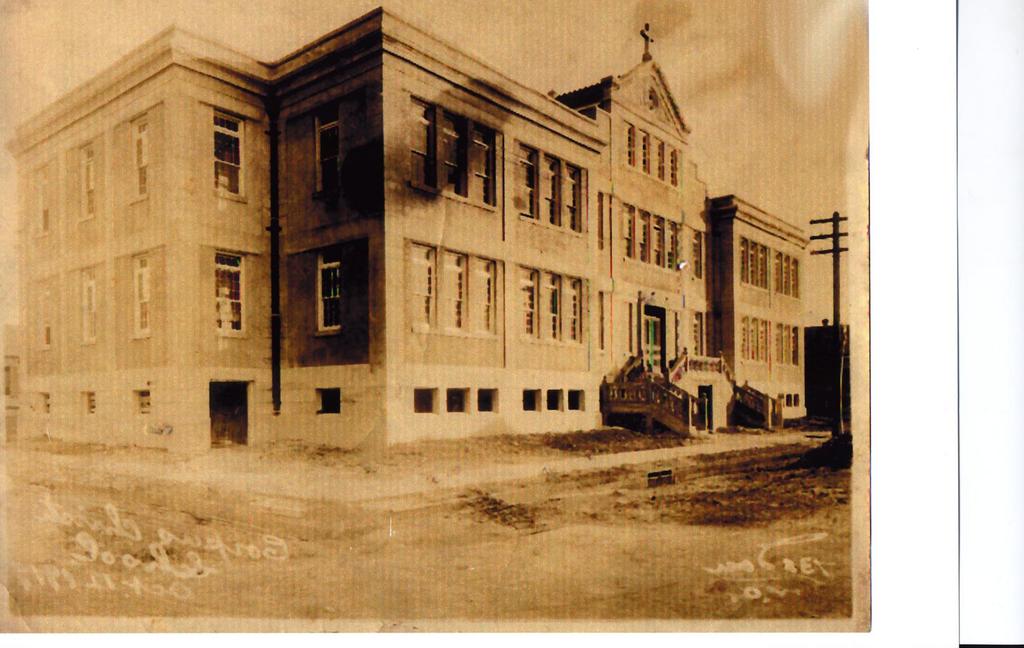
Then there were our family homes on Laperouse, Frenchman, and Touro streets -- and the Convent of the Holy Family Sisters out on Gentilly (shown in photo above). Bill and I visited that Charbonnet-designed and constructed institution the year before he died. I remember now running my hand across the cornerstone bearing my grandfather's name and the dates hoping to remember the physical impression well enough to bring back alive to my blind father upon return to the Bay Area. This was the convent that housed the first African American nuns in the nation -- the Holy Family Sisters, an order dedicated to the care and education of black children at a time when there was little else. Surely it no longer stands since it was built not far from the Lake. It is my guess that those good sisters may well have remained in place as the water rose. They may have perished in service to their people and to "The Lord." The Order was still very much together when we visited -- complete with the little draped window near the heavily secured front doors -- through which frightened young girls could slip blanketed newborns without blame or guilt, to be raised by the nuns or placed out in the parish for adoption.

Most of my family's dead are entombed in above-ground crypts in St. Louis cemetary on the edge of St. Louis Cathedral in the French Quarter. The tears come as I wonder whether their graves -- some that date from the early 1800s -- still exist ...? The French Quarter may have held. I don't really know. Nearby Canal Street and some of that area that I can recognize as the cameras panned -- appears to be intact still.

My cousin, former Louisiana state senator, Louis Charbonnet, III, and his family have been evacuated to Baton Rouge. Other family members have been evacuated to Florida, Texas, and St. Louis, MO. His senatorial district included the French Quarter. His family's mortuary, "Charbonnet-Labat" which featured jazz funerals and red bean feeds in its parking lot on Mardi Gras Day -- surely was destroyed by Katrina. It was an important cultural landmark in the city they so loved.

But what is the most disturbing is that in the course of my work -- where I'm working hard to help to expand the WWII story to include that of African Americans (the story of Rosie the Riveter is a white story) -- I'm experiencing newly-activated anger at racial segregation and economic deprivation. Watching the horrific images being spat out non-stop from our television screens by what appears to be a newly-aware press corps revives mind pictures of slavery, lynchings, Selma, fire hoses, attack dogs, etc. The only comfort I can find is in the growing conviction that the numbers of outraged citizens of all colors, sizes, social and economic levels has grown exponentially and that this may usher in -- finally -- a time of reconciliation.

I find hope in the fact that newsmen and women -- on the spot -- were suddenly seeing new awful truths and awakening to what so many of us who've lived the history have always known; that the nation is deeply-divided and must ultimately come to terms with its shameful history in order to finally move toward love and compassion that crosses barriers of race, gender, and privilege. Perhaps in the days to come, they will be able to reflect this in reports on the most powerful system of communication the world has ever known. Maybe they can hurry the healing before it's too late ... .

Do you suppose there is any possibility that this sick country can take a page from President Nelson Mandela's book -- with the help of our newly-awakened media -- and create a Truth Commission and seek reconciliation?

But then the phenomenon of Katrina heralds a new age -- one in which nature's awesome power will continue to bring the world to its knees because the greed of man blinded him to the warnings of global warming before it was too late ... .

And in that knowing place deep within -- I -- quietly -- no longer envy the young.

...unless we manage to outlive or out-gun those currently in the seats of power in this nation. I no longer rule out the possibility of armed revolution -- something I could never imagine in my worse nightmares. Almost anything is possible in these times of such horrendous loss of our institutional underpinnings.

...and we're the "Leaders of the Free World!"

Photo: Convent of the Sisters of the Holy Family, New Orleans, Louisiana.

Sunday, August 28, 2005


All tracks utilized. No runways left!

I don't think that I've ever really had any way to measure my brain capacity until now, that is. Started my new position mid-month and am finding that -- once I found myself back in full time work mode -- there was simply nothing left to draw from. I'm literally consumed by the new work and too busy 'doin' it' to stop long enough to tell about it. Writing was the last thing on my mind as I pulled off my denims and pulled on my pajamas after a quick supper each evening. It feels good.

I also found myself wondering how the new park superintendent would feel about my candor in these writings, and if I'd continue to feel the same freedom that I've enjoyed over time. That's still an unknown. But then that's not been a significant factor before -- and perhaps it won't be now. Besides, I'm enjoying the work far too much to feel any caution about what negatives might be churned up over time.

Maybe the fact that this is a limited contract and not the career move with a future that it would have been at some earlier time makes a difference. We'll see.

Whatever the problem, I left Ms. Hermione Ginglehopper hanging out there along with whoever else is reading, and that's a pity. We'd just re-established a nice relationship again, and exchanged some really meaningful private emails - and that must not be interrupted by anything. After all, this is her record of Grandma's life that's goin' on here, and I suspect that she's been working her way through the archives by now and has caught up to date.

So where are we?

Am excited about my work that involves working closely with a young woman who's moved over from the Crissy Field program at the Presidio. Together we'll create the community outreach plans for the Rosie the Riveter Homefront Historical National Park (that name is a choker!), and -- as suspected -- my earlier work experience prepares the way for this new challenge beautifully.

When I sat down to put together a list of "Important People to Contact and Why," I found that I was able to sit down with the Excel program and pull together a list of 174 such without looking up a single number except from my Palm Pilot. I also found that I knew each one well and that the rationale for including each was clear in my mind. These covered the four small cities that had been my working universe for the past 7 years, and my sense of the territory had dimmed not one iota. I can do this. I see real respect in the young faces around me, and I feel warm and appropriate to the task.

If there is a difference today, it's that I find myself expressing a sense of urgency that has come with age -- as if I must work hard over the next few months to "download" the data collected in my brain over a lifetime -- into this new work before whatever wisdom is there -- dissipates or atrophies into nothingness and is lost for all time. That leaves little time for mistakes or half-truths. I'm less apt to deal in subleties and/or nuance, but to be ever more direct in my dealings with others. That's been a growing concern for me, but seems sharper now than ever before.

I don't believe that I'm particularly confrontational or that this gets expressed negatively. I believe that I'd know if that were true. What it does mean, though, is that I'm in no way reluctant to challenge half-truths or situational ethics. But then at my age there is little to lose and much to gain by being open and real. In this changed world, even those far younger than I tend to be more candid than I recall of my own generation.

Made a fascinating discovery only this past week. It has to do with the power of language. On the web site of the National Park Service a new concept has been introduced that I find extremely exciting. It's something called "Civic Engagement," and has to do with an entirely new attitude; one that undergirds their staff and intern trainings. For instance: Wherever park sites includes places where slaves were kept or worked (old plantations; Williamsburg, Monticello, Mt. Vernon, etc.) the word used for the those who worked the fields is no longer "slaves" but "enslaved people." Such a subtle difference, but words that connote a sea change in attitude. It gives me an entirely new way to think of my ancestors.

I don't think that I've yet begun to incorporate the huge difference that has already begun to make in my sense of self and of those who came before me. Is it because the word slave describes a person and enslaved people describes a condition in which they found themselves? I'm not sure yet, but I'm wanting to locate somewhere in some archives the debates that produced the change. These must have been truly mind-shaping discussions by truly thoughtful people, and I'd love to have been a part of it.

That I'm now working with the Park Service among people with a mind toward not only preservation of but learning from history is a gift of monumental proportions. I'm so looking forward to participating in the shaping of this new park in Richmond, California, where (I truly believe) much of the groundwork was laid for the Civil Rights Revolution of the Sixties and beyond. Being old enough to see the continuum of change is an advantage few enjoy.

Life does keep unfolding ... .


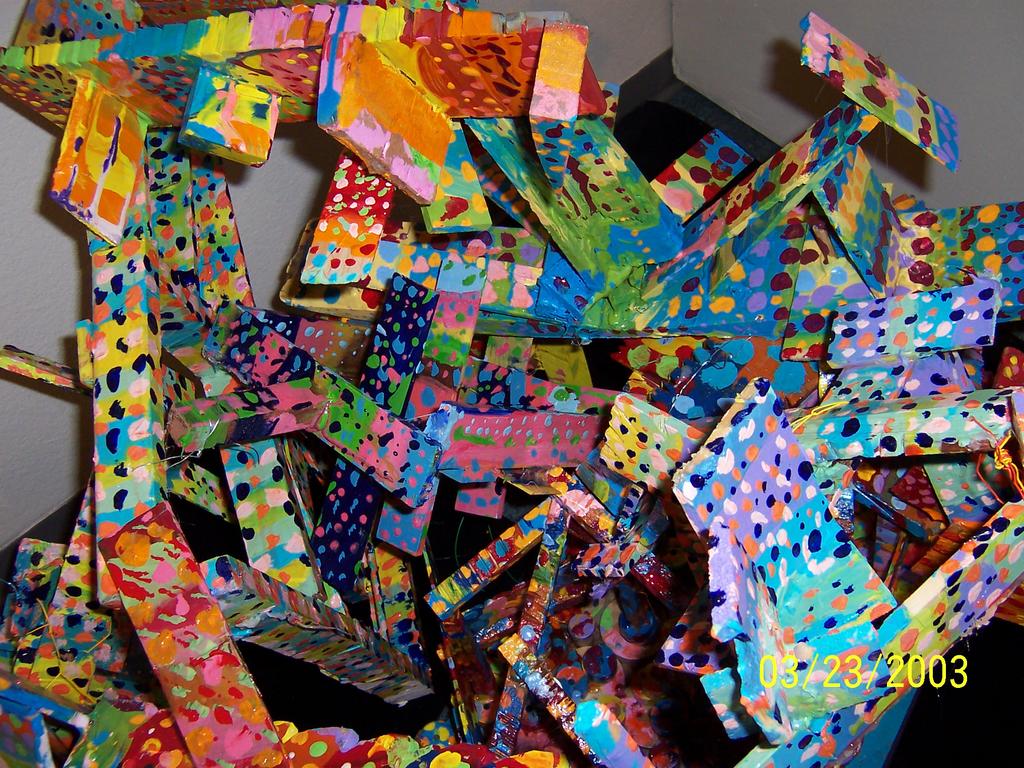
(Photo: A portion of a larger wood sculpture with tempera by Dorian Reid, NIAD artist)

Saturday, August 13, 2005

This has been a week for feeling old ...

and there's something quite appropriate about that, isn't there? The reminder from Miss Ginglehopper momentarily pulled me out of the "peer" status that I enjoy so much of the time with those far younger than I, especially in the workplace. It served as reminder that -- if I'm to remain truly centered -- I must not allow myself the illusion that the world I'm moving around in so comfortably much of the time is my own. It belongs to another generation that formed just a few decades behind me, and many decades behind the world of my grandchildren. The power is now in the hands of those in their midyears -- 40 to 65 -- and since that's the world of our president, I'm finding that leadership pretty disconcerting.

I wonder what the world looks like to a generation of twenty-somethings whose advantages have been so sharply curtailed by a nation that is obviously in decline on so many fronts? The choices open to my grandchildren are limited by a nation at war, an incomprehensible national deficit, a time of crumbling institutions, and a dizzying rate of change.

Simultaneously, it is a time of unprecedented technological achievement; the promise of the elimination of fatal diseases through stem cell research and application; and the growing public reaction to the need for reform of our justice system. And -- just possibly -- the world's growing determination to be at peace will overtake the efforts of the warmongers in her time.

Thought a lot about that in those productive moments just before sleep last night.

I'm not all that sure that we've learned a lot over the years. When I was Miss Ginglehopper's age, my world, too, was at war. We saw the dropping of the atom bomb that many saw as ending World War II and thereby saving many lives. I remember the horror that I felt for what our "civilized" nation had inflicted upon the world -- and the fear that consumed my life for many years -- fear of the day when some country would see us as the scourge upon the earth, a role we at that time assigned to Germany and Japan. Would some country one day remember the Enola Gay and the destruction of Hiroshima -- and obliterate us from the planet in retaliation for what we had done? As a person of color, I wondered why the Japanese were bombed and not the Germans? Were they expendable because they were not white, therefore less than fully-human? Was it possible to be black and not wonder? Was it likely that we who lived in a racially-segregated country would ever see it differently? I still don't know the answer to that question.

All of those questions come alive again for me as I watch the horrors of Guantanamo, Abu Graib, and the ruined lives of 2 million American prisoners (mostly of color) rotting away in a metastacized prison system, only 1% of whom are considered violent and/or incorrigible.


I find myself wondering now why (during the Sixties) I'd so gullibly assumed that racial integration would solve all of our problems. It hasn't. The list of African Americans who are now counted among the corporate and governmental elite is significant, yet I can find few among that illustrious bunch with whom I could have a reasonable conversation, or in whose opinions and policies I would find of any comfort or agreement.

And that isn't all that soured on the racial integration front. (And to think how hard I worked and marched and protested and petitioned for that cause over many years.) Something precious was lost in that process -- but I'm not sure how we might have done it all differently.

Is it possible that we placed too much emphasis on blackness and not enough on the black agenda? The list of people of all races and skin colors who worked sacrificially for the black agenda is long and filled with names of the selfless; those clearly recognized as people who were able and willing to bear the pain of our growth at a time when that was the greatest gift they could have given. It was rough at times, for us all, but we've made it. We're making up the constituency of the Progressive movements (Progressive Democratic Caucus, MoveOn.org, People for the American Way, Code Pink, NAACP, ACLU, the Urban League, etc.)

What I hadn't expected for myself is that -- as I moved ever more deeply into the political mainstream, my black identity became more and more important to me. Integration as a way to lose myself in the diversity of a changing country just didn't work. Instead, in later years (after the political and social gains had been at least partially-achieved), the African American story rose in prominence in my own life. My race may have been a problem to others, but it certainly was less and less of a problem to me. As my pride and comfort level rose with maturity, my confidence grew as well. The older I became the more solid my pride in my racial background and a family history that reaches back to a time that precedes the Revolutionary War and the establishment of the nation by at least 100 years.

I'm not sure how old one has to become, or just what experiences one needs to go through to find this place upon which I now stand so arrogantly, but I hope Miss Ginglehopper can find some shortcuts. Maybe the accelerated rate of change will work in her favor and by the time another five years has elapsed, she'll begin to find the ground just a little firmer beneath her feet.

It's at such times as this that I'd love to feel that I might hang around just long enough to see her safely launched.

... then there's always the chance that she's already taken her first steps in that process and that it won't be necessary to worry her home ... .

Photo: My very special granddaughter, Kokee Amanda Reid.

Tuesday, August 09, 2005


Finally got busted!

I've sometimes wondered how I would feel the day that my grandchildren discovered my writings. Though this has been a journal always intended as a gift to them someday when I am no longer around, there has always been the risk that one of them would happen upon these stories one day. It's happened.

Arrived home from my weekend in Mendocino to find a message among the spam that had collected that started with the words ... "was reading your blog and ..." which meant that someone was writing in response to my blog. The user name was not familiar. The signature jogged my memory and I grinned to myself as I saw but a few loving words,

" ... just ran into your blog, Grandma, and I want you to know how proud I am of you. I love you!

signed,

"Harmony Ginglehopper"

She'd found me. This was my twenty-something granddaughter. I remembered that when she was a very little girl I'd sent her a note (or a birthday card, maybe?) that was addressed to

"Miss Hermione Ginglehopper"

She was such a little girl. How on earth could she have remembered? Yet she had. And here we are a grandmother looking at 84 this year and a mature young woman in her twenties. And even these many years later, this bit of whimsey was still at work making magic. We never know what will be retained, do we? I don't believe that we ever spoke of that card or that silly little name game, but it had been tucked away in that place where children place such things -- to be brought out lo these many decades later to serve as a deep love connection that has defied time.

And these pages will serve to introduce her to a woman she's rarely been allowed to see. And she will now become a part of my story, with little fear that I will invade her privacy. I'm afraid that I know as little about her life as she's been allowed to know about mine. That's the life process, and follows the pattern that kept my mother's life a mystery to me, except for that which bled through the distance between us.

There is so little that I've lived that will hold any relevance to the world that she will grow into. The rate of change has speeded up to the point that "Miss Ginglehopper" will inherit one that I struggle very hard to read. But through it all, there may be a word or phrase here and there that may provide some landmarks that will help her better read her own.

I so love you, Sweetie! Welcome to these pages, and I sincerely hope that you'll find yourself here somewhere. You've surely been one of the souls to whom I've been speaking since these pages were started a few years ago.

Hope that I've made the case for what it means to be me ...

Maybe there will be something here that will help you to better understand just what it means to be you. Buried somewhere inside "Miss Ginglehopper" are the genes, the DNA, of the woman who lives behind my eyes; as I carry the genes, the DNA, of all of the family women who came before us both.

That's an awesome thought, isn't it?

And finally we have an instance where that overused word does not overstate the point.


(Photo: "Miss Ginglehopper" )

Thursday, August 04, 2005


Life has closed in tightly but nicely, leaving little room for telling the stories ...

The work goes well, and I'm having that wonderfully rare feeling of fulfilling a role that no one else can; a role that is truly essential to the work underway. I can't recall when this has happened before in my life ... but I'm sure it has because there's a familiar feeling about it. Being in these advanced years gives permission to speak of it unselfconsciously, without false pride but with real appreciation for the enormous privilege I've been granted to continue being of service in the creation of a national park.

I'm building a data base for the planning of the community outreach component of the park. "Rosie" has been several years in the making -- and its come a long way. There are visitors arriving almost everyday from Everywhere, USA, to take the driving tours of the park-in-progress.

The archives are steadily growing and already scholars of the period of WWII are stopping in and requesting time and space to explore the collection of papers, artifacts, oral histories, etc. There's the steady click of computers in our temporary reception center at city hall -- as young interns continue the never-ending task of data entry and followup telephone calls to Rosies throughout the country who've made contributions that require clarifying information.

But there's an important area that will begin to come alive now. It's the place where my recent work experiences come into play. The city of Richmond and the surrounding constituency area of Greater Richmond (at least 4 small cities) need to begin to buy into their roles as host communities. It won't be easy. What has been designated by Congress as an urban national park made up of those structures that best tell the story of the World War homefront war effort, has been regarded for 60 years as blight awaiting demolition and redevelopment by those who've lived and worked in their shadows. It will take many visitors over the next few years -- folks who'll arrive with reverence and enthusiasm and a sense of honor that those of us who've lived that history must "catch." There will at some time be a tipping point where their reverence will become true for us, too. I'm sure of it. And for one who spent the war working in a Jim Crow segregated union hall, that's quite a statement.

History was not necessarily kind to many who were caught in the chaotic period of economic adjustment in the years following the declaration of peace. The temporary war housing was torn down only weeks after the war ended, casting many into homelessness. Jobs disappeared for most, unceremoniously without the necessary time to find work elsewhere. Displacement was a fact of life, and the option to return to the places from which they'd come was an unreal choice. Few were willing to return to the share-cropping fields of the south, or, to the kinds of poverty they'd known in places of even less opportunity. Women, especially, were no longer willing to settle for homemaking, exclusively, and the future for them was in the place where they'd learned new skills and earned their independence. The ground had shifted under us all.

Creating ways to explore that history in these host communities -- but doing so informed by the struggles that followed in national life will be one of the exciting results of having the park created on our shores. This may describe the most interesting work of community outreach; or it can.

Despite the great work of Henry J Kaiser in creating the most powerful defense industry in history (5 shipyards here, alone); the first 24 hour-a-day childcare program in the nation; the first HMOs; and giving birth to mass production on a scale unprecedented. He was on a mission to defend the country against the Axis powers. He was in no way conducting a social experiment. He created a huge "war machine" composed of thousands of willing but unknowing hands of every size, shape, and color -- hands attached to over-aged men, under-aged boys, and eager women from everywhere. He was running an around-the-clock battle to build and supply 747 ships (before war's end) -- some completed and launched in a period of no more than five days.

The human drama being played out in these communities over the next 20 years laid the groundwork for much that followed in the ensuing years. It would erupt into the Civil Rights Movement in the Sixties, and life would never be the same for any of us.

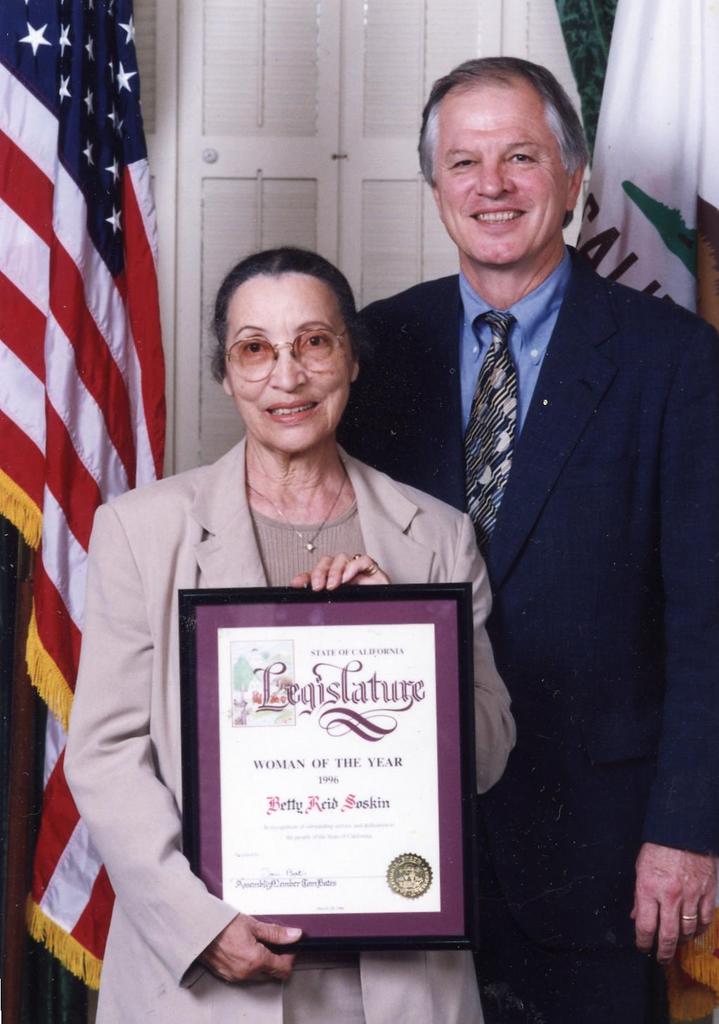
I, for one, went from the position of a lowly young clerk in that Jim Crow union hall on Barrett Avenue in those years -- to being named a "Woman of the Year" before the California State Legislature in the year 1995. That required tumultous political and social change in a part of the country that has never ceased to create many patterns of change for the rest of the country and the world to emulate.

The greatest of the untold stories may have occurred not during "The Good War," but in the years that followed -- as the direct result of our homefront experience in this rapidly-changing world.

That is surely enough upon which to begin to build the community outreach component of the Rosie The Riveter Homefront Historical National Park. Finding ways to re-open those much-needed conversations will be challenging but probably more rewarding than almost anything I can think of these days.

Nostalgia is beginning to crowd out the residual anger that's taken up space in my psyche for so long; space that I need now for other things. Perhaps that will happen for others as well.

I'd never have dreamed ... .

See what I mean?

Right photo: 1995 was a big year. Was honored by being named "Woman of the Year" for the 14th Assembly District by Assemblymember Tom Bates in ceremonies at the capitol in Sacramento.

Left photo: Office of Boilermakers A-36 (that "A" stands for auxiliary) the Jim Crow union out of which all black shipyard workers were assigned. It stood at 1600 Barrett Avenue, Richmond, California. Circa 1943.


Sunday, July 31, 2005


Transitions for both Dorian and her elderly cat, Speedy ...

Came home on Friday to a frantic call on my lan phone from Dorrie announcing through tears that Speedy was failing fast and could no longer stand and had stopped eating. It was not unexpected. Speedy had been obviously ailing for months and at the time that Dorian moved into her apartment two weeks ago, we'd acquired an 8 week-old kitten to soften the pain of the anticipated loss.

Drove over to her place to pick her up with the very frail cat lying quietly in the carrier (on a crocheted small coral-colored blanket made for her especially by Dorian). One look was enough to know that the end had come -- and that my dear daughter knew that.

She had been intending to stay with me overnight anyway, but now we would have another mission besides saving quarters by doing her laundry at Mom's. Now we would visit the vet for a final examination and possible euthanasia. And that's how it all worked out.

We drove to Berkeley on Saturday morning after finding no local veterinary clinic open on the weekend. So it was to the Animal Shelter we would go, or the SPCA might be appropriate if we could locate it. Discovered upon arrival at the shelter that they would not put the cat down without having a signed release from a vet. We found one nearby and learned that (as suspected) Speedy was hopelessly ill with liver or kidney failure with no chance of survival. However, it would cost $141 for the vet to euthanize her if they were to also handle the disposal. Having no wish to put my handicapped daughter through an extended experience of loss -- I bought the entire package and blessed my credit card in the process.

Dorian was not rushed, but sensitively allowed to sit and hold her much-loved pet until it seemed natural to leave her. I was grateful for that. She was tearful but resolute that this was the right thing to do.

We got back into the car, headed back toward Interstate 880 and suddenly noticed to the west, a sky filled with brightly-colored kites! It was Kite Festival Day on the Berkeley Marina and -- as if sent from on high -- the perfect event for this moment of deep sorrow.

We joined the heavy traffic headed for the Marina meadow, parked at the boathouse, and joined the throngs of moms and dads, babies and small children, dogs on leashes, all of the usual collection of beautiful Berkeleyans who might be expected to turn out for such an event. It was impossible to stay sad as we walked along the waterfront past the house boats and colorful sailboats moored there, took a moment or two to watch a wedding occurring in plain view on the top deck of a Red & White ferry anchored at the peer. Ahead of us high in the sky hundreds of kites of every size, shape, and color flew against a cloudless sky above the sky-reflected azure of the bay! There were all forms of fish, octopi, butterflies, birds, octagonals, geometrics, and two huge yellow cats! How fitting!

Upon arrival at the end of the long walk, we climbed a gentle mound and sat on the grass with hundreds of others to watch the kites against the sky. There were very serious adult kite fanciers with intricately-designed four-string models attached to a kind of spinner; children who had made their own at one of the tents, kites easily identified by their size (small), identical shapes, all white with pink tails; and some that resembled the huge gas-filled types common to holiday parades. From time to time there would be music on the sound system -- everything from bluegrass to Handel. It was impossible to not catch the high spirits of the day.

Several things stood out for me. The stark contrasts between the gentle character of the activity itself and the quiet in the people involved, and the headlines of "rumors of wars and more wars" I'd left behind on the car radio was startling. The "flying" was all-consuming and the "watching" serenity-producing. What a wondrous thing was this ... .

I felt that my two little granddaughters were probably somewhere in that crowd and hoped to catch sight of them at some point. But, surprisingly, there were so many little Berkeley kids of mixed-race -- little olive-skinned beauties with almond shaped eyes and waste-length dark hair -- that they would have been impossible to find. Berkeley appears to have become the mecca for such families, and for those who've given up all claims to racial superiority long ago. Here was this polyglot of humanity living in harmony together in a world at peace.

The flying kites became symbolic of so much for me -- not the least of which was the quiet comment from my mentally-disabled daughter just before we rose to begin the long walk back to the car, "... Did they do it yet, Mom? Do you think that Speedy's in kitty heaven, Mom?" In the environment of love and peacefulness that we were so much a part of in that moment, it was quite easy for this non-believing mother to say quite sincerely,

"Yes!"

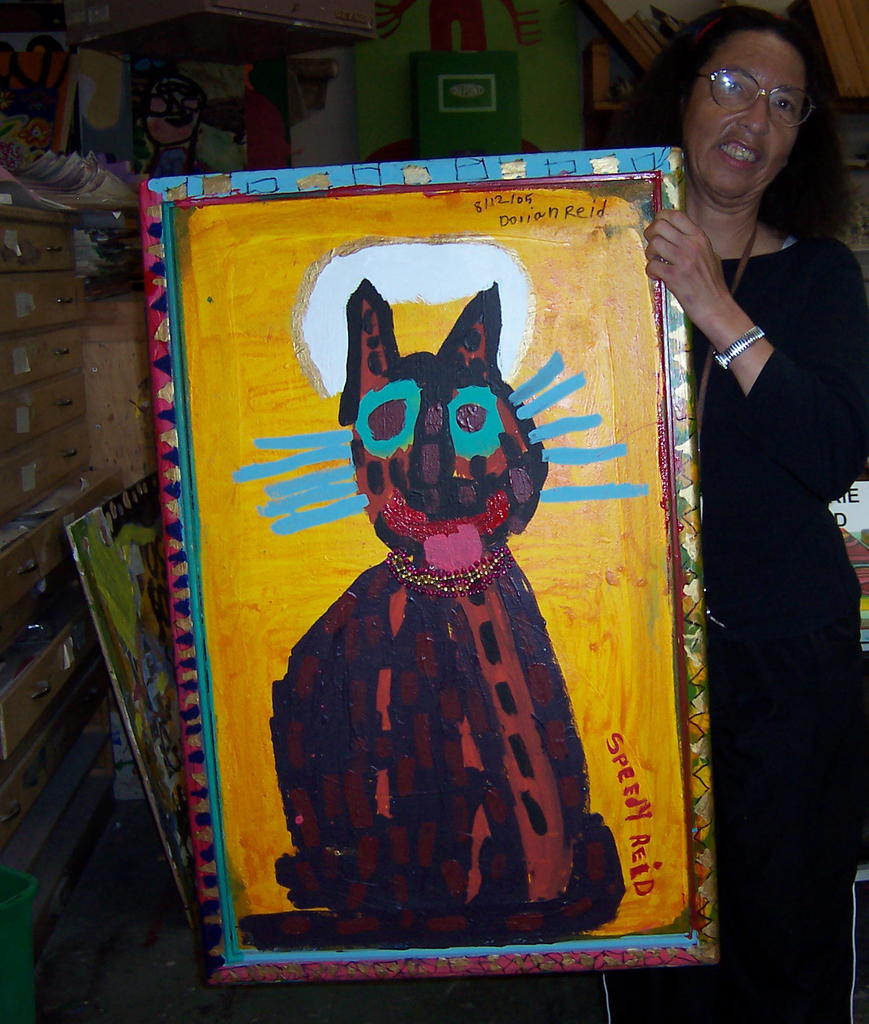
Photo: Dorrie painted this portrait of Speedy the following week -- to serve as the centerpiece for the memorial service she conducted in the courtyard of NIAD. Do notice the lovely white halo over her head; a nice touch. With Dorian, the staff and other NIAD artists paid proper tribute to the dearly departed in the noontime ceremony. I missed it since it all happened in that world in that world that she lives in where mothers can't always follow.

Thursday, July 28, 2005


Back to the Nine to Five and loving it ...

So many changes in so little time.

Dorian has moved into a group home not too far away, and is loving the renewal of her sense of independence and freedom from this too conscientious mother. The placement is working out beautifully. She's sharing a two bedroom ground floor apartment in nearby El Cerrito with a young woman who is also developmentally disabled. Upstairs lives another pair in the same fourplex, so they're in a small community that is maintained for a cluster of disabled adults with supervision by Harmony Homes, in a program I've only recently learned about. They live at scattered sites throughout the community but all participate in programs and activities especially designed to meet their needs.

Dorian is continuing her work at NIAD (National Institute for Artists with Disabilities) where she's been so very successful. Her sculptures are being featured at a reception next week at the NIAD Gallery, and she's busily anticipating the local acclaim (mostly her family) that she's begun to enjoy.

On Tuesday I started the new position with the National Park Service. I will be working closely with a lovely young woman from the west side of the Bay (the Golden Gate National Recreational Area) at the Presidio. Together we'll be planning the outreach strategies that will bring together the local communities with the Rosie the Riveter Homefront Historical National Park. She'll be working with me only two days a week, and otherwise I suppose I'll be on my own.

With the recent retirement of the park superintendent and the anticipated arrival (August 24th) of her replacement from Yosemite National Park, the program is experiencing no small amount of chaos. There is a total reorganization going on with the 4 national parks in the East Bay being combined under one superintendent (John Muir, Port Chicago, Rosie the Riveter, and Eugene O'Neill's Tao House in the Diablo Valley). My work will be at the Rosie site, only, I believe, since it is here in Richmond and in the surrounding areas of West County that my prior work experience is of greatest value.

Since my last entry over a week ago, we've completed Dorian's move, visited my dear friend in Mendocino for a long weekend at oceanside in his beautiful home 80 feet from the sea's edge. Did some retroactive sinning, and felt delightfully wicked in the process. Being with him took the sting out of what might have been a very painful separation experience. Instead of weeping, I drove my little red Beamer ("Rosinante") a little above the speed limit right through the Anderson Valley that lay in full summer splendor from the most riotous display of wildflowers that I've seen in years. The heavy rainy season paid off in blooms that lit up the fields in the way that literally demanded that one stop and look! And I did, several times.

To Tom's place from mine is a 4-and-a-half CD trip, and I timed it so that when I hit the stretch through the redwood forest that lies beyond Booneville, Hubert Laws was playing his flute -- with that incomparable rendition of "Amazing Grace" serving as the sound track for those magnificent miles through filtered sunlight -- just before Highway 128 merges into Pacific Coast Highway 1 and the ocean comes into full view for the first time! From there to historic Mendocino Village is a scant ten miles along the cliffs high above the sea, and Tom's is just a few minutes beyond ... .

Returned on Monday to find that Dorian had survived the first weekend on her own handily, and that I'd managed to actually stay "in the present in the place where my body was" with little difficulty. We visited Glass Beach and collected sea-polished bits to bring home. It was the short drive along the Mendocino headlands -- past the sunday morning strolling tourists -- to the great independent bookstore for the Sunday NY Times. Then reading in bed and occasionally looking up at the blue sky through two large skylights directly overhead that fill the bedroom with light, or stars, or a moon, or fog, or wisps of fast-moving clouds that go nicely with cups of hot tea and Frank Rich and Maureen Dowd columns.


But where on earth does one go for Bidet lessons?

I haven't the foggiest ... .

Monday, July 18, 2005

Dinner with the cast of tomorrow ... .

Earlier on Sunday -- while walking along the wharf toward the boarding area of Pier 6 -- past the tantalizing aromas of the Orient, Mexico, Japan, breads of every kind from several specialty bakeries fused with the floral scents of beautiful flowers everywhere -- my cell phone vibrated silently from my pocket. It was Rachel reminding me that tonight I'd promised to come to dinner to meet ... (then the static, the breaking-up)... and combined with the sounds of gulls squawking loudly overhead and the hum of conversations from nearby sidewalk tables -- her voice was lost. Figuring that she might hear me I just assured her that I would surely be there, around six o'clock, as promised. It sounded like something about a movie, maybe? Maybe home movies of one of their trips. But now it was time to board the ferry for the cruise 'round the Bay.

Rachel is a former co-worker, another field rep in the assembly office I'd recently left. Her husband is the Chief of Staff for Rep. Barbara Lee. He was formerly a member of Ted Kennedy's staff. A truly charming couple of youngsters that I am very fond of. About a year ago I was honored to be invited to be one of the readers at their wedding.

Despite some fatigue, I reached home in the early afternoon to find another message from Rachel on my home answering machine -- reminding me about the dinner this evening ... and, yes, I would go. I felt truly complimented by her persistence.

Arrived at their lakeside top floor apartment to find a small assortment of very interesting people, not the least of which were two beautiful young filmmakers from New York. This was the reason for the dinner. One, Shola Lynch, is a documentary filmmaker formerly of the Ken Burns team -- having worked on several of his PBS productions, "Jazz," "Baseball" The "Civil War," I believe, among others. Some time ago she'd gone off on her own to do the POV production of "Unbought, and Unbossed," the story of Shirley Chisholm, the first woman to run for the office of the presidency of the USA. That was in '72. I'd served as a McGovern delegate to the '72 Democratic Convention at Miami Beach. This evening held great promise.

Shola is here on a visit and in the process of pulling together her second individual effort -- the story of Angela Davis. She has the commitment from Prof. Davis (now on the faculty of the University of California at Santa Cruz), and will be raising funds and making the contacts to begin production on this new PBS piece. I believe that it, too, will be a POV presentation.

Around that table in the glow of candle light were Jeffrey and Rachel (staffers for Rep. Barbara Lee and Senator Don Perata), a Latino member of Lee's staff; a female professor of history and black studies at the University of California at Santa Cruz, a young public defender and his very pregnant wife who has left her teaching position at Mills College -- and is also an attorney. Then there was a public school teacher, and our two documentary filmmakers. I felt so privileged to be a witness to the future. These were the best and the brightest, and they sparkled with vitality and charm. It was easy to dismiss the earlier part of the day when I'd experienced the drop back into time that had the feeling of so little social progress and so much frustration; stagnation.

Yet, here it was. The future. In this world of late Sunday evening, among those young professionals were several "out" gays, two inter-racially mixed couples, this elderly activist lady (wise enough but surely of yesterday), and the two brilliant young New Yorkers from the new world of an expanding culture that I'm not sure those aging union Leftists are quite ready for. The world changed when we weren't looking.

I'd truly forgotten that the future can be seen right now. I knew that at one time -- especially during the Nu Upper Room days when I first was introduced to the world of Hip Hop (see earlier archives) -- that all one has to do to see how it all turned out is to step into the world of the young. I'd forgotten that. The old biases and prejudices have disappeared for the most part. In the world in that other dimension, much of the garbage has been dumped and the rules are fresh and new. Nowhere is that more evident than here in the Bay Area -- but you have to know what you're looking for and be open to the surprises that are everywhere.

I suppose it's partly the Blue States phenomenon.

We shared stories and gnoshed on the finest of cheeses and bread sticks -- drank wine from tall stemmed glasses, laughed a lot and -- eventually gathered around the table for a lovely dinner prepared by the man of the house. That, too, was refreshing. It was so unself-conscious and so "today."

Fell into bed at close to midnight last night feeling symtoms of whiplash from reacting to the the events of the day. Oddly enough, all of the irony of the morning's cruise as the only African American on board -- in the all white world of the labor movement had dropped away. In its place was the comforting feeling that in some strange way, we'd already won. The national transformation was well underway despite the most valiant efforts of the conservatives and the reactionaries and the Luddites to stop it. My generation and those immediately following on the time line will die away soon enough -- leaving this brave new world that is already formed and fully operative in its place. And I don't think it's fragile, either, but vibrant and venturesome and creating new edges for us all, if we've the stamina and the passion to take a look.

It was a glorious day -- and I'm precisely where I want to be in time and space and on the planet.

Sleep came quickly.

This morning I contacted the office of a former employer, Berkeley city councilman, Attorney Don Jelinek, who is the authority on George Jackson, the San Quentin prisoner who died in a hail of bullets in a prison yard shootout years ago. I wanted to alert Don to the fact that I'd referred Shola and that he should expect her call. Jackson figured heavily in the love, life, and times of Angela Davis and their story will now be told. Don recently completed his own book which contains much of his story. It may have been published by now. Shola Lynch will need to spend some hours with Don. This is another of those times when all the parts of my long life come together in these marvelous ways -- to connect with the lives of others and help to facilitate a very promising future.


One long day of crossing and conflicting time lines ...
Rose early in anticipation of the bay cruise -- weather mixed -- the July inversion pattern brought the usual finger of fog through the Golden Gate -- but the promise of a burn off was surely indicated. It would be a glorious day on the water.

Met my friends for the BART trip to the embarcation point at the Ferry Building (what a wondrous gathering place that is!). We were greeted by jeweler's kiosks and street musicians -- hawkers and artists all ready for the invasion of Sunday visitors. The sidewalk cafes were filled with young people fashionably careless-carefully dressed in high-priced sneakers, muscle shirts, and tans that suggested faraway places (or simply many Sunday brunches on the wharf). Sunday morning in San Francisco is probably equal to the Trevi Plaza in Italy or the boulevards in Paris. Lots of cyclists everywhere and crowds beginning to gather for the annual Walk for AIDS to Golden Gate Park six miles away.

We joined those gathered at the entrance to the pier where our ferry would launch. I would be placed among the presenters -- historians on the Bay Area union movements, the WPA and PWA contributions to its development, authorities on shipbuilding and ports. And then there was Donna Graves, historian who has contributed so much to the development of the new national park, the Rosie Memorial at the Richmond shoreline, and currently gathering oral histories for preservation. And me -- the "Reluctant Rosie." The two other Rosies cancelled at the last minute.

There would be ongoing lectures as we took close up looks at the new Oakland Bay Bridge presently under construction while those currently working on it told us what that was like; the port of Oakland, the Alameda Naval Air Station, Hunter's Point, Angel Islands, and finally, we rounded the Richmond shoreline and ports, the SS Red Oak Victory, the Ford Assembly Plant under-going restoration, and those parts of the new national park that we could identify from the water.

Learned some interesting facts, like: the Port of Oakland was able to take over port dominance from San Francisco because 1) it was the western terminus of the critical railroads, and, 2) it was able to extend the port properties enormously through the good fortune of being the dumping site for all of the soil excavated for the construction of the BART tunnels years ago. And, that the ships that now bring in cargo in 20' containers from everywhere in the world are built large enough to accommodate 8000 in a single shipment. Due to their size, they can no longer move through the Panama Canal! Kinda like the WalMart of shipping. "Giganticism" has taken over the world. It's everywhere; merging corporations, banking systems, information delivery, Costco, WalMart, and now shipping! Every time I catch the sight of that caseload of Costco's toilet tissue that fills my bedroom closet's top shelf -- I have this moment of the giggles. Some folks put their money in stocks and bonds. Mine is in toilet paper!

All-in-all, it was a good day. I spoke my piece about the ugly racial climate of the period. Was surprised to see that these untold stories were, indeed, new information for many in that audience. For some of the obvious gray-haired and balding old Leftists, there were the nods of recognition. But it was quite clear that no one aboard this 3-tiered ferryboat would have considered themselves in any way tainted by such attitudes of racial superiority. These were the Progressives, after all. These were the veterans of the Boilermakers who'd worked to build the ships of the "Good War," and the Longshoremen who live still in the shadow of Harry Bridges who ruled the S.F. Waterfront during the early years of the struggles. These were the machinists and teamsters. Our captain up at the helm was a woman, after all, a proud person in a "non-traditional" role. Surely these were not the offenders. They listened intently and applauded enthusiastically when I finished my presentation; sassy and arrogant though it may have seemed to some.

...but no one appeared to notice that I was the only African American on board. And sixty years have passed since the period of segregation that I spoke of prevailed.

Despite protests to the contrary, one might have cause to wonder just why that is ... .


Saturday, July 16, 2005

S.F. Bay Cruise with LaborFest -- big union event and a return to the "Being of the Reluctant Rosie" ...

A few weeks ago I accepted an invitation for a cruise on the Bay. I didn't realize at the time that this will involve union folks, historians, union people interested in the new national park, two other Rosies and moi. Learned of my "star" status when I ran across a flyer advertising the event.

Am having the usual mixed feelings about playing this role, but it's becoming less awkward for me -- and provides an opportunity to get folks to re-visit that period of history with the benefit of having now lived with the enlightenment provided by the social revolution of the Sixties. I've become a rather important part of the truth-telling brigade that may keep us from forgetting some important and painfully learned truths.

When will I ever have a chance, again, to spend 3 hours with members of previously segregated unions? Most of those I'll see tomorrow and interact with might have no idea of the nature of human relations in the workplace during WWII and, for some, the years following. Perhaps their unions are still not welcoming to non-whites (only more cleverly manipulated) -- and if only one or two can gain some understanding of and appreciation for a time before laws were changed and access won -- the afternoon will be worth the time taken.

Besides, I'm beginning to get a kick out of carrying this particular torch. And mostly because I find so few able or willing to express those painful truths. We do have a tendency to paper over the troubling parts of our past -- thereby risking the probability of having to relive that which we should have grown beyond long ago in some systematic way.

Am still very ambivalent about unions and the Labor Movement ... even when I have no idea what we could possibly have done without them. But the rank and file, after all, reflects all of the best and worst of the general population. It's easy to forget that in our zeal to add our voices to the Progressive power bloc, we may not be taking the necessary time required to consolidate our gains as African Americans. I sense that -- in this struggle for economic power and social equality in the time of yet another war -- something precious may be in the process of being lost.

This opportunity to raise important questions -- even when the answers remain beyond reach -- is one I shouldn't under-estimate; and I don't. Having a chance to do that on a Bay cruise on a lovely summer day is beyond expectations.

Friday, July 15, 2005

Death and the aftermath ...

I'm not sure that I have ever experienced such a long spell between entries. Not sure why that is, but this is not the best of times. So many changes to morph into some kind of undetermined future.

The events surrounding the death of Marionella churned up so much that I thought was buried forever in the past -- but, no. Despite the fact that most of those with whom I shared the early years have now passed on or are surely in no shape to wield hurts of any kind. Still, there is this corrosive quality that lingers on through the epochal events like funerals that brings one's past back in living color. It was like that. It's this intimately-connected but still distant collection of relatives who come together now only in these occasional "snapshots" provided by the need to memorialize one or the other of us whose life has now ended.

Despite triumphs over adversity and monumental problems overcome, in the chapel at St. Elizabeth-Seton Catholic church in Pleasanton on Wednesday morning all the good stuff was stripped away by the service (being conducted by our family priest of long standing -- someone I grew up with), and the vastly changed faces from my childhood of children now grown old. There I sat -- feeling all of the inadequacies I'd lived as a kid -- never quite being enough or doing enough or just not being enough like those around me. Long before I learned that it was really just fine to not fit the mold and that being different wasn't a punishable offense.

I suppose one of the reasons the loss of uncomplicated loving Marionella was so disturbing was that she was the non-judgemental open and warm kin who one never had to explain or apologize to or be anything more or less than one was. She asked only that. Her love and loyalty were unconditional. She gave so much. She's gone. Life will fold in around that fact and we will go on; of course. That's the process. Until the change comes that will take me with it... .

But now it's back to packing and storing and preparing for another huge change. Dorian is moving away, back into her own precarious life again; the life of the mentally disabled. I will busy myself with the physical parts of that and postpone the disturbing thinking parts until later on when I can give myself over to it fully. I'll then cry some and celebrate some, I'm sure. But between those extremes there will be a recurring of fears about her safety in an explosive world where innocence can be fatal to her survival. That's the big stuff. The small stuff is just where in the world can I cram all of her belongings now scattered around my condo into one small bedroom across town? If I can stay with that, I'll make it through the next few days.

Then it's back to work at the National Park Service in a week or so and back to weekend trips to Mendocino to his beautiful home at oceanside and sunsets and art shows and concerts and allowing my woman to rise above my mother -- before it's too late to bring her out again into the world.

Lots to juggle, isn't there?

But then when was there ever not ... ?

Wednesday, July 06, 2005


Revelations ... and a re-examination of a nation's twisted psyche ...

A very dear member of my family left the earth at the end of the day on the 4th of July. This was one of the dearest women I knew. The world is a poorer place without Marionella LeBeouf Cobette (an Allen-Breaux descendant).

As is more and more true in these final years, her death was a grim reminder of how much work there is still to be done before my time arrives. As one of the unofficial holders of the family history, it becomes ever so important to try hard to use the time well and to leave a legacy of truth for others to build on in years to come.

Over time I've done fairly well with researching both my maternal and paternal lines and it's all fairly neatly stored in two large binders -- with maps and photographs and artifacts that help to tell the stories.

The lineage has been traced from two who entered the country several centuries ago: My maternal ancestor, Vincent Breaux who left Loudon, France, in 1631 with an early wave of the Acadians who traveled over time to Nova Scotia, then to Maryland, and finally being permitted by the Spanish (who held Louisiana at the time) to settle in St. James Parish, Louisiana. Then there was my father's earliest traceable ancestor, Raimond Charbonnet, who started in Thiers, France, born between 1646-1649 and married to Gabrielle (Dutuel) Charbonnet. For both I've been able to document all the way up to my own parents, Dorson Louis Charbonnet and Lottie Allen Charbonnet. But all roads lead at one point to the slave curtain, 'til now impossible to penetrate.

The French Catholics have kept great records that came alive for me through church documents. There was lots of help from other researchers such as "cousins" Clarence Breaux of Louisiana who provided 26 generations along with Prof. Robert Brault (note German spelling) of Canada with whom he wrote his book on the Breaux family. There was also researcher Ken Jenkins, an architect at Louisiana State University. His wife's family, Charbonnet, intersects with mine far back in New Orleans history. Her line is white. Mine veers off in the early 1800's when there was a liaison between a white Charbonnet and a "Free Person of Color" with whom he had a lifelong relationship that produced eleven children -- one being my great great grandfather, Dorson Louis Charbonnet, Sr.

Ken Jenkins says in a letter:

"The Charbonnet story is such a great one - wish we knew enough to publish. It has the French-Indian War, French Revolution, slave revolt in Santo Domingo, War of 1812, Gone-with-the-wind Plantation, in-marriages with French - Spanish - African American - Canary Island - and American families. It has prisoners of war in Canada and the Civil War - people serving in the Creole Militia - Free People of Color - Old French Family arrogance - lost love, lost chances, lost fortunes ... Judges, Admirals, Street Car Conductors ... and hint of lost French Royalty."


But the above serves only as a prelude to the emotional time I spent yesterday afternoon. In the wake of my cousin's death I decided (finally) to try to break the barrier on slave ancestors. Where were they from? From which African tribes? To whom were they sold? Until her death in her mid-nineties, my mother's sister, Vivian, told stories about her great grandmother, Celestine, whom she remembered well. She was called "Mom" and (according to Vivian) walked along the levee with a long pole (like the herders among the Masai?). I knew that she and her daughter, Leontine, (my great grandmother) spoke only French and rarely wore shoes except on Sundays -- and that Mamma (Leontine) would bring out a tiny pipe from behind the stove every evening after everyone else was in bed in that tiny cabin on the banks of the Mississippi. Little girl Vivian would be allowed to fill it with tobacco and "tamp it down" as an honored privilege. I remember Mamma (Leontine) who lived to be 102 and died when I was 27 years old. (Her story is told on our family web site -- link provided on the left -- under California Black Pioneers.)

Revisited a site I'd not seen for a long time -- AfriGeneas -- a web site created by Vivian King Nelson et al established at the University of Mississippi to provide the tools for African American researchers to trace their ancestry. I'd tried years ago to break through the slave curtain but gave up after a time. They've now added the slave records, narratives, Freedman's Bureau, countless new archives to work through -- to what was already a very rich resource. It was those records that I spent the afternoon going through looking at slave ship manifests for clues to Celestine's early journey. I had little to go on, only the name. Church records at the Catholic Diocese at Baton Rouge had her listed as "Celestine of no last name." I'd always found that fact strangely comforting in that she must have refused to take the name of her owner. But that was only true until her marriage to (Cajun farmer) Eduoard Breaux in 1865, just after the Emancipation Proclamation was signed.

Until yesterday I'd assumed that those ship's cargoes were carrying slaves from Africa but it didn't take long to realize that this was no longer necessarily true. By the years 1800 through 1840 (the period covered in the slave records) slavery had been in effect for over 200 years. The names listed in those manifests were several generations later than the original "cargoes." What was shocking to me when I was able to internalize it -- was that a large percentage of these people were described as mulatto with brief descriptions beside their names (mostly first names, only). They are listed as tawny, yellow, black, brown, light tan, very dark brown and almost white. I was surprised at the ages given, few were over 35 with most in their late teens and early twenties. They were so young. There were many described as suckling mothers. There were also many of children of all ages.

These were not ships unloading their human cargo from across the ocean. This was slave stock being shipped as a part of interstate commerce. They were being transferred as an inheritance from some slaveowner's will to heirs living elsewhere in the South. They were simply property - chattel -- being moved around the colonies and perhaps to and from the Gulf Coast islands.

It was chilling to read on the AfriGeneas website encouraging words about the need to stick with the search despite the difficulties, "...remember that slaves were currency. Follow the money. They'll show up in wills and as capital in estate sales; in bank records. They will be traceable in the family bibles of owners." All true.

But the most shocking of all was the moment when I realized that 200 years out, the reason that there were so many mulattos listed was due to the fact that slave owners used their own sperm to boost their holdings. Is what I was seeing in those records proof that men were literally selling their own children and grandchildren? Is this the ugly secret that's so hard for this nation to face? Could this be the reason that we've not yet recovered completely from the scars of the Civil War? Two hundred years out, there was little reason to continue to import slaves since the nation's slave owners were creating their own slave stock. The utter callousness of such a practice is hard to accept, but if we're to think of slaves as currency, what other conclusion can be drawn? I would urge anyone reading this to visit those web pages and read through those descriptions for yourself. If you draw different conclusions, I would be most interested in hearing from you.

I'd read only recently in a biography on George Washington that he'd often paid his gambling debt with slaves. We're all by now familiar with the schizophrenic writings of Thomas Jefferson on the subject of black inferiority despite the liaison's both his father and he had with Sally Hemmings and her mother.

I didn't find Celestine among those listed in the ship's manifests. Not anyone by that name. Not sure where to go from here. Nor did I find the name of her owner, the Breaux. This may mean that it was not she who was brought through the Middle Passage -- but her parents, or theirs, sometime in the 1600's. As Aunt Vivian described her, she was a mulatto (one white parent). Since she was owned by a family into which she later married, it's unlikely that I will find her on the manifest of any ship.

What a way to spend Independence Day. I came away from the AfriGeneas pages feeling a singular part of it all; a descendant of slaves, slave owners, several veterans of the New Orleans Militia, of a French naval officer who fought in the Haitian Revolution, a white general and an admiral in the Civil War, and related to both the brutal shame of and the ultimate victory over slavery that my family and those like it present to the world. Indeed, "...one nation under God."

And here we are on this Independence Day, seemingly more "under God" than ever and I have absolutely no idea what to do with the obvious paradox, or just how to reconcile our cruel history and our current expressions of brutality with our professed religious beliefs; beliefs for which we are apparently willing to fight, kill, and die, but by which we will not live.

Take the time to visit those slave records and draw your own conclusions. It may be that we're ready to have this conversation, and that some resolution will come in our time.

Hoping that your's was a thoughtful holiday filled with family and friends. Ours was sad with the loss of a dear one, but well spent remembering.

Marionella LeBeouf Cobette
(1925-2005)


would have surely wished all "cousins" a blessed and loving day of celebration in her gentle way of loving unconditionally. The country and the world could use more of that.

We will miss her ... .

Photos: Left is a picture taken in 1944 by cousin Janet Duncan -- it's the site of the Allen (Breaux) Cabin in Welcome Post Office, St. James Parish, Louisiana. The cabin had burned down, accidentally some time in the Seventies. Only the land remains.

The second is a plantation map showing the Breaux Plantation among others. All front on the river and meet at the levee. Mammá's small site was left to her mother, Celestine, by Eduoard Breaux, her (Cajun) legal husband and the plantation owner. Mammá lived in that little house until her death in 1948, surrounded by her brood of children, grandchildren.


Friday, July 01, 2005

Back to the "nine to five," and timed just about right ...

The formal call came this morning announcing that paperwork is being completed and that I'm to start work (officially) on July 26th at the offices of the new National Park. Couldn't come at a more auspicious time since -- in that way my life has of converging in strange and interesting ways -- my interest in working with kids; with the environmental justice issues; the upcoming Richmond centennial events; are all providing the opportunity to help to shape this NPS monument to the history of my era. What a fine opportunity to influence change. Is anyone more blessed?

Only problem is that my very brief consideration of becoming the next Toni Morrison may have been harpooned before it ever got launched. Writing for me tends to take a back seat to acting out my principles more directly in the political arena. Maybe blogging is about as far as I can take this flair. But perhaps not. Having given the possibility considerable thought now, maybe I can do it all.

To add to this strange timeliness, all decisions about Dorian's future have been decided (one of those meetings that bunched up on Tuesday) and she will be moving into a group home on August 1st. The painful transition will probably not be that at all, but a time of excitement for us both. It was her appeal (in a fit of pique) to her case manager that brought us to the point of decision, so she has the feeling of having guided her own future -- the system responded to her wishes. She's moving away from me. She displays no signs of feeling pushed out onto her own for having failed in our ability to live together. That's important. She's just moving on because it's her wish to be out in the world again as before.

This time she won't be truly on her own, but will be in a program called Harmony Homes, a vendor of the Regional Center of the East Bay -- supported by Lanterman Funds, and an entitlement for the mentally disabled. She will share an apartment in a pleasant and safe area of El Cerrito with another young woman like herself -- in a four-plex that houses several such pairings. She will live no more than about 8 minutes away from my apartment. Harmony House staff provides oversight and training opportunities. She will continue with her 5 day-a-week arts program at NIAD and Special Olympics (year round) and is as happy as a clam to be moving into semi-independence. Her money will be managed by the Regional Center, giving her an allowance each week and saving her SSA balance in an account she cannot access without agreement by her workers. We're both in heaven!

I'll now have my own life back to do with as I will. May still need to consider marketing my condo and moving to a smaller rental somewhere, but I'll remain in Richmond for the foreseeable future.

This is all proof that there's little reason to always be pushing the river. If allowed to, life does have its way of smoothing out the rough spots if given half a chance to just lie back and drift downstream from time to time.

And the bonus is that the NPS sounds as delighted to have me return as I am at the prospect of doing so. The contract will run through to October 1st and then we'll be back to decision-making time again, but the choices will have changed and I may be far more ready to hang up my Palm Pilot than before. We'll see. Maybe that's when I become, belatedly, an author of note. Maybe that's when being restfully idle will feel more like retirement and less like simply being unemployed.

(Submitted one blog entry to an e-newspaper at the suggestion of a friend, and am waiting to see if there's interest in publishing it. That will give some idea of whether writing is in my future. Oh, and while I was at it - I also forwarded it to Weekend's All Things Considered on NPR. Maybe Scott Simon will find it of interest. Did that on a whim, and since there's an element of time sensitivity to it -- it just may die for just cause. Given the ease of communicating by Internet -- "whims" have gained new importance. I just file them under "and why not?")


Thursday, June 30, 2005


Poor Bill Cosby ... he may have stayed too long at the Fair...

Watched the Night Line interview last night of the meltdown of a man we've all admired for so long. He did his awkward rambling boorish lecture before an audience in St. Louis -- an audience of poor black folks he's been verbally chastising publicly to the embarrassment of so many. I wanted to turn off the power -- actually did mute the remote several times as I watched him in an unbelievable show of insensivity -- stupidity! He's a man out of contact with himself as well as the rest of us, I believe. I can imagine that his wife and daughters are cringing in horror at the sad spectable he's become. Unfortunately, his celebrity lends weight to his words as it lends power to the political conservatives who preach the old "pull yourselves up by your bootstraps" mantra to those poor souls without boots. I can see in my mind's eye the likes of Thomas Sowell, Clarence Thomas, Armstrong Williams, et al, rubbing their hands together in absolute glee! How tragic!

But I felt compassion for him before it ended (unexpectedly) and so wanted him to abandon the rest of his tour, one that will bring him to Detroit, Cleveland, Gary, and other innercity hot spots where he will preach to those living in the projects and on the margins of society about the virtues of coming together to confront their "sins" and "turn in their children to the authorities instead of turning a blind eye to the evils" of what he sees as "self-inflicted poverty and shame." How he could not be aware of the complexity of the issues he so blithely prescribes for is baffling. His life of relative ease and exposure to the thinking of the mental health professionals he surrounded himself with in the old Cosby show days should have produced more than the simplistic old bastard showing off his ignorance before a puzzled audience of just plain poor folks -- and a national audience that deserved more from an old and admired friend.

How I wish dear Camille Cosby could reel in her foolish husband, the old reprobate with a checkered past of his own, apply a tight gag over his foul mouth, and tie him to his rocking chair before someone does it for her!

He was the prime example of the old adage that money can't buy everything.


Photo: Newspaper pic of football great Jim Brown, Pat Meyers, comic Bill Cosby (very young Coz), Cleo Jackson, Muhammad Ali, my niece, Victoria Jones (Charbonnet-Allen-Breaux-Balugo), and above her, pro basketball player, Bill Russell.

All dressed up with nowhere to go ...

Received an eleventh hour call late on Monday evening advising that the event with the Lighthouse Charter School had to be rescheduled due to the inability of some of the out-of-staters to get flights that would bring them here in time. It was fine. New date is August 26th with a larger body of participants than before.

As it happened, I was already trying to accommodate two other commitments into the same day and the squeeze was taking its toll on my sanity. The old "feast or famine" analogy is most fitting at moments like this.

Met on Monday evening with the board of Ma'at Environmental Youth Academy -- out of which grew some rather exciting new possibilities that brings together several elements of my life.

The new national park (Rosie the Riveter), where I will be working again come July 26th is still "under construction." As you may know, the mission of the National Park Service is to tell the story of the nation through its structures. The Park does not own properties but partners with foundations, civic governments, etc., to develop its urban parks.

It was decided by those so charged with that responsibility -- that the story of World War II was best told by the Kaiser Richmond "ruins" that line the shoreline. Much of what is still standing is in one or another state of decomposition -- not by choice but through abandonment and neglect. After the war ended, those who created this powerful machine of war walked away leaving the ghosts of structures to rust away into infinity without interference.

There were originally 5 Kaiser yards in Richmond. The city's Redevelopment Agency has since totally replaced Kaiser Shipyard II with an impressive housing development (a gated community), public parks, the Bay Trail segment, plus the Rosie the Riveter Memorial. One sees a lovely marina filled with sailboats and catamarans, and rows of luxury boats moored in the marina waiting to be launched for trips to Angel Island, Sausalito, San Francisco, Emeryville, Vallejo, and the southbay. Makes for a slick brochure for the Chamber of Commerce's marketing to potential developers.

But just at the edge of that lies Kaiser Shipyard III which is still a working port surrounded by the ghosts of WWII -- the SS Red Oak Victory in the process of restoration lies against the dock; the old Ford Assembly Plant that put together tanks for shipment to the South Pacific war theater sits at the end of Harbor Way in the process of a multi-million dollar restoration; the huge cement "bunker" where all of the supplies were stored that filled the holds of ships just before sailing off into the wars; the machine shops (newly restored and serving a new purpose), the old Whirley Cranes; and the bays where the ships were built in drydock then launched with great celebrations upon completion. There are the remains of the Kaiser Field Hospital and the buildings that housed the cafeteria that fed workers round the clock and the childcare centers. It is still possible to see war housing stock left over from the period in Nystrom and Atchison Villages -- and two 24 hour-a-day childcare centers that Kaiser initiated as the first of its kind in the nation.

All of these sites have become elements in the Rosie the Riveter Homefront Historical Park -- a driving tour that covers several miles. The interim reception center at city hall holds the archives, the library of collected relevant materials for researchers, artifacts collected from Rosie's across the country as the result of a national campaign a few years ago. It has a growing collection that has brought out of old trunks and attics the personal stories of thousands of Rosies both in oral histories (videotapes) and through letters from those who lived them. It is already an active and alive park with a growing number of visitors each day. The permanent NPS Reception Center has now been funded and will eventually be housed in a large area set aside in the historic old Ford Assembly Plant building, the reception center in planning stages.

Over the past several years I participated in the sessions that designed the park and its planned building uses along with historians, architects, city planners, park superintendents, marine engineers, etc., from across the country. But at the time I was working as a field rep for a member of the state Assembly. Now I will be working directly with the NPS in an entirely new phase of the park's development. Exciting work.

But back to the present: Learned on Monday at the Ma'at board meeting that the assemblymember (my former boss) is interested in sponsoring the creation of an environmental center for young people somewhere in Richmond. She has located the funding for it, and is ready to explore possibilities. The Ma'at executive director was contacted and there is need to move on to find a location and to begin the planning.

Any one of the old Kaiser sites are the natural choices, I believe. This brings together my Ma'at Academy interests with the new position involving community liaison work between the city and the NPS -- with any leftover influence that may still be recoverable with the state. Makes for some exciting possibilities, right? These are embers worth breathing on -- maybe a small flame here or there will flare up into a brilliant new adventure. It may mean simply bringing together those who can facilitate the next steps. And -- as has been proven over and over again throughout my life -- if you don't care about who gets the credit, all things are possible. This may be another of those times when I get to make a hero or heroine of someone else.

That's one under-rated thrill that I've never known quite how to exploit. It just doesn't show up on one's resume. It's funny. In a way I'm like a bit like those who are famous for being famous. When I try to make a list of my individual accomplishments, I wind up scratching my head in wonder. Almost everything I've accomplished over a lifetime has been in achieved in coalition with others -- rarely alone. It isn't easy to get credit for teaching people to fish, is it? Besides, I've always considered it a failure in leadership if that leadership is visible. I've always loved being the wind beneath the wings... .


But maybe that doesn't really matter any more now than it did before.

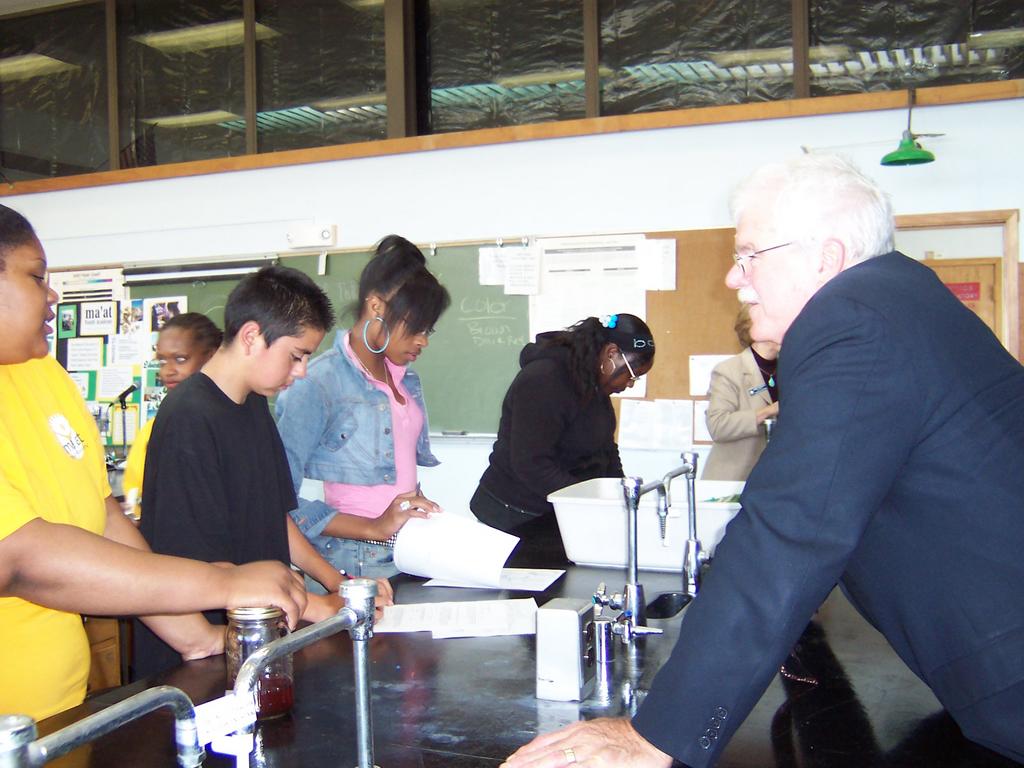
Photo: Students of Ma'at Environmental Academy conducting an experiment in urban pollution before Congressman George Miller recently. These are high school kids who are attending Contra Costa Community college full time. They were self-selected into the program then chosen from a lottery for the program that is vastly over-subscribed.

Saturday, June 25, 2005

"Betty and the Big War" -- one more time ...

Two days ago I found myself wallowing around in the past -- here at my computer -- actually reluctant to leave it (it was all so over-the-top emotionally) when the phone rang; not once, but several times. Much of the time these days -- it's relatively silent except for the frequent exchanges with Dorian. Each of the calls beckoned strongly to pull me away from the awful nostalgia but I was resistant. It seemed important that I stay with the writing until all of the pain had been used up -- with little held over for another time. That reservoir is over-flowing now that I'm allowing everything to rise to the surface that wants release. I finally answered the phone and as briefly as I could -- each time I dispatched the caller without much thought.

One was a reminder from Lighthouse Charter School about my promise to attend their workshop on Tuesday. I'll trot out the artifacts and photos of WWII vintage and read over notes from previous informal lectures from before. But, as is usually the case, I'll probably just wing it and count on the Q&A to put the meat on the bones of the talk. That's always the most interesting for me; learning about just how much information of the period has been held in the minds of those several generations removed. It's so easy to forget that these young teachers have no way of knowing the world before Jimmy Carter held the presidency, and for many Kennedy is only a mythical tragic figure of history. The first president I remember is Herbert Hoover (dimly) and Franklin Delano Roosevelt. I might as well be speaking of John Adams or Thomas Jefferson to this group!

The other call was the more important. It was from a man who identified himself as Miles Saunders of PBS-Channel KTEH of San Jose, California. He is head of a production company that is in the planning stages of a 4-part documentary series on San Francisco Bay. A major part of the Bay's story is the tremendous role it played in the staging and supplying of the arms and ships for World War II. And in that, the five Henry J. Kaiser shipyards were the big story.
"I just talked with the people at the Rosie the Riveter National Park and they referred me to you as someone who needs to be interviewed on camera for that segment," says he. My immediate response (as always) was to refer him to a real Rosie, telling him that I'd not actually worked in the shipyards at all, but was employed by the Jim Crow Boilermaker's auxiliary way over on Barrett Avenue in the center of town, and never actually saw a ship. "You'll want to talk with one of the actual Rosies. "I was actually more of a Rosie May." With that I laughed realizing that the sting of the indignation is actually beginning to quiet and it's now pretty funny. If ever there was a stereotype buster, I'm it; and I'm surely aware of it.

Instead of backing away, the caller suddenly perked up with the words, "...oh yeah. I heard about that. They didn't have racial integration then, did they?" Here was that time gap again -- where the caller's life experience was a total mismatch to my own. "I so want to talk with you, Ms. Soskin!"

I tried again, "...the Bancroft Library has done a 2-day, 4-hour videotaped oral history that may hold everything you'll need. You may want to check that out before we commit to repeating much that's already accessible in the park's archives."

Wouldn't do. "Could we arrange for me to bring my cameras and team to meet with you in late July to do a segment?"

The series will be aired nationally sometime this fall, I believe, and whatever the hell it is that they're seeking will be a part of it.

Maybe I've found a new career as the dissonant voice of WWII. The park is well aware of my stories and the untold stories of so many others -- and are obviously not loathe to sharing them. If they were, I'm certain that they'd not want any part of opening up what is another of the shameful chapters in the life of the nation's ongoing struggles with the evils of racism. I can only assume that they are complicit in the telling of the story and that -- as I'm hoping -- we all may have matured enough to have those much needed conversations, at last.

A half hour later the phone rang again, "...Hello, I'm writing a story for the Globe and was told that you might be willing to be interviewed for the Richmond Centennial series we're running in July." She sounded African American and very young -- an intern from one of the high schools? I really didn't want to refuse but also didn't feel particularly interested. "You might want to talk with Mary Head, an African American woman who actually did work on the ships here in the yards." Then a new thought, "...would you like to come on Tuesday to an informal Q&A that I'm doing for the Lighthouse School workshop? Bring your notebook and you may get your story in a much better way."

How's that for being inventive?

Friday, June 24, 2005


Screaming across the chasm ...!

I rarely awaken so tired -- as if I've been wrestling with demons throughout the night ... and in a way, I suppose, I have.

For the first time in a very long time Papa George visited me in dreams -- probably summoned by the Killen verdict in Philadelphia, Mississippi, plus the angst around the typing of that list of senators who refused to sign on to the anti-lynching resolution. Enough to stir up lots of anguish. Found myself staring at each of those I could identify as they appeared before the microphones from the floor today on CSPAN. My awareness changed the nature of the experience of viewing the debate -- and how differently their arguments began to sound to me. Here were Alexander and Lott and Grassley et al from the list, arguing the merits of amendments to a bill -- but all I could hear was their silence on lynching.

I remember Papa's stories about how -- when he was a boy in rural Louisiana -- he'd heard whispers about those luckless African Americans who'd been caught by the infamous Ku Klux Klan. That the usual result of the chase would be that the victim would be hog-tied (ankles to wrists from behind) tossed into the back of a wagon or pickup truck then set on his knees facing down -- at the edge of the levee. Then the murderers would jump on his back until the spine shattered. Only then would they toss him into the river to drown. It was chilling to the 7 year-old, Betty, standing beside him as we weeded the vegetable garden together. His younger brother, (and my great-uncle) Albert, had fled to Kansas never to return to St. James Parish. It was rumored that he'd shot and killed a Klansman in self defense and was being hunted by the Night Riders. I don't believe that Papa ever saw him again. I'm not sure that he spoke much about Albert to anyone but me. I can still see that vacant place in his eyes -- as though he were really alone-- the way grownups do when they don't expect answers. Then he'd laugh and sing another of his crazy little song snatches to dismiss the agony of memory and bring us both back to the moment and the endless pulling of the weeds... .

Those images came up again for me last night -- all mixed in with the kids killing kids on Richmond's streets -- and the three civil rights workers murdered in Mississippi 41 years ago. I remembered that, during the long search for those bodies, a number of black bodies were discovered -- bodies no one ever bothered to identify. It had never been against the law to kill blacks. The only reason that the one black member of the trio was being sought was because he'd met his death with two whites. It was only they who were killed illegally; lynched. I thought of that infamous list of 20 posted yesterday who refused to even apologize for that heinous act and by now forgotten by most of us... .

It was those deaths and Papa George's stories of the "black logs" found in the Mississippi from time to time, that created this song:


Black Log

black log driftin' down da bayou in de mawnin'
limbs a-draggin' 'gainst da willow
black log floatin' down da bayou in da mawnin'
now it's sun-up, Owl must leave you
time to fine his mossy pillow
bullfrog croakin' out his grievin' from dis strange lily pad
three-finga, twisted lily pad
noontime -- comes da rivah 'roun' de levee
Boy heah fish' fo his suppa-time
caught one! ... no, tain't nuthin' ... but a black log
black log rushin' down da rivah in de evenin'
log cain't see da evenin'
caught! -- now free... , log 'n me .. in da rivah -- no retrievin'

comes da sea now -- here's da open sea now!

Freedom!

Too late... .

(Betty Reid © 1965)
Malvina Reynolds Shroder Music Publishing Co.


Listened this morning to commentary on the Killen verdict and recalled my own reaction a day or so ago. Thought of that mean old white man hooked up to his IV and lashing out at reporters who lined up alongside the pathway he was being taken up in his wheelchair. It was a hollow victory, but my feeling was that at least there was some accountability at last for that community. Then I remembered that the system that had created and permitted such atrocities is still in place and rubber-stamped by at least 20 members of the Senate. How frightening is that?

It was but a short step to connecting the everyday American families who packed picnics baskets to sit in the town square to witness the castrating and burning alive of a black man hung from a tree -- to secretly photographed picture postcards sent home by our soldiers of prisoners being tortured and humiliated at Abu Graib. In some cases the intentions may have been honorable, intended to expose the awful interrogations being conducted there. In most, I truly fear that this is a repeat of the sadistic voyeurism so reminiscent of those earlier shameful picnics in the town square on Mainstreets, USA.

Occasionally I have such strong feelings that we live in totally different realities. and that what I'm saying here only resonates with other African Americans. Perhaps. But it needs saying, if only to point up the dissonance.

That the list of the
Senate Twenty strikes fear into my heart -- enough to bring Papa George back into consciousness is a strong statement of the power of those images, still.

When I wrote
"Black Log" in 1965 I truly believed that those lives had not been sacrificed in vain, and that the nation would rise to its founding principles and promises. It hasn't; at least not yet. And to think that we're spending billions of dollars and countless lives in the attempt to export this unfinished and imperfect democracy out into an unknowing world through corrupted policies and imperial ambition.


... and ...
it was almost close enough to touch ... .

Freedom.

Photo: Maternal grandfather George Allen, Jr.,eldest son of Leontine Breaux Allen and George Allen, Sr, who served in Civil War. Leontine was enslaved until the age of 19 (1865). She was born in 1846 and died in 1948, when I was 27.

Wednesday, June 22, 2005

Senators who refused to sign anti-lynching resolution ...
by KOS
Tuesday Jun 14th, 2005

Here are the 20 Senators who 1) refused to co-sponsor the anti-lynching resolution passed yesterday, and 2) refused a roll-call vote so they'd have to put their names on the resolution:

Lamar Alexander (R-TN)
Robert Bennett (R-UT)
Christopher Bond (R-MO)
Jim Bunning (R-KY)
Conrad Burns (R-MT)
Saxby Chambliss (R-GA)
Thad Cochran (R-MS)
Kent Conrad (D-ND)
John Cornyn (R-TX)
Michael Crapo (R-ID)
Michael Enzi (R-WY)
Chuck Grassley (R-IA)
Judd Gregg (R-NH)
Orrin Hatch (R-UT)
Trent Lott (R-MS)
Linda Murkowski (R-AK)
Richard Shelby (R-AL)
John Sununu (R-NH)
Craig Thomas (R-WY)
George Voinovich (R-OH)

19 Republicans and 1 Democrat, a real wall of shame.