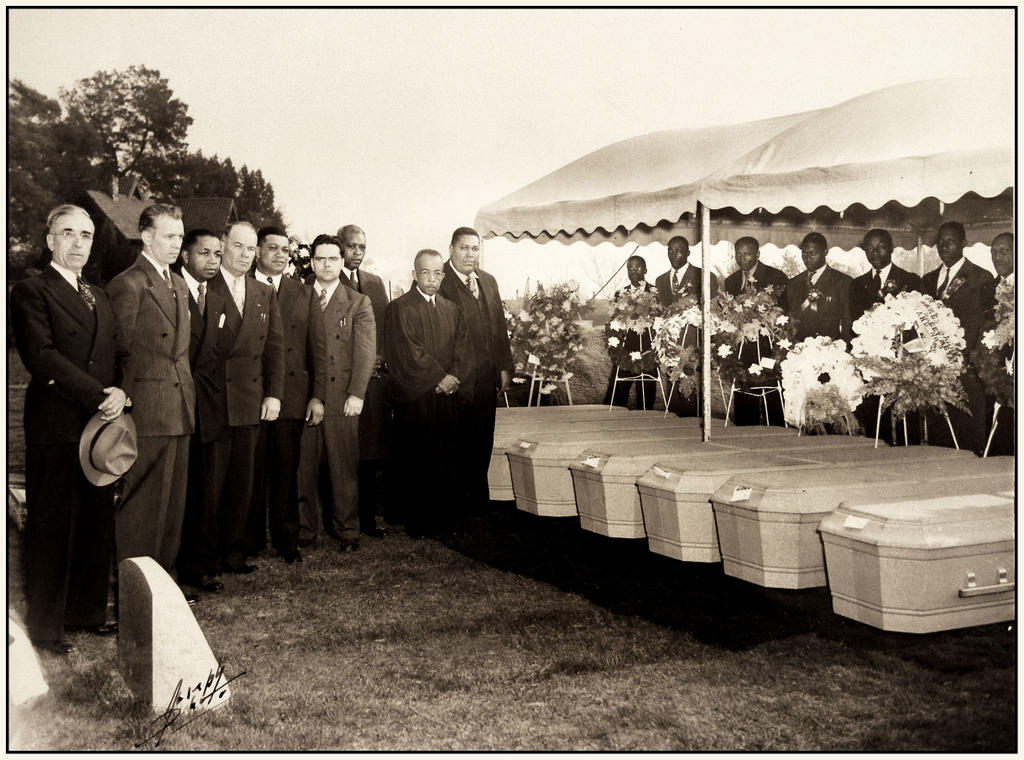
Saturday, July 31, 2004

For the first time since I started blogging I find myself not writing

-- not because I'm either too busy -- or, that I've nothing pressing to share, but because so much is going on in my head that the opposite of writer's block is occurring. It's a deluge!

Started my new position with the National Park Service and immediately began to change my mindset from one where autonomy had guided my day-to-day worklife to one where I'm now a member of an interdependent team of workers. That's new and will take some shifts in attitude, I think. But it will work. I like the people I'm working with, and the context is relevant to all else in my life. To have the good fortune at this age to be working in a project that celebrates WWII -- the time of my youth -- is an unbelievable gift. The entire context calls upon my memory bank and freshens a part of my life long dormant.

Besides starting the week on the job, I received a call asking if I'd submit a 300-word piece for the Berkeley Daily Planet (due on Thursday). Being surrounded by so much material of the era made it easy to evoke what I needed. The subject was the horrific explosion in 1944 at the Concord Weapons station at Port Chicago, and my recollections of it. That site is now a NPS park site, so there is a connection. The article wrote itself in about ten minutes as I sat at my desk in my new cubicle in the reception center's temporary offices iin City Hall.

Received a copy of the piece today. It was originally intended to be a sidebar to a featured article on the anniversary of that event, but ended up as a guest column. (It can be accessed online at Berkeley Daily Planet then follow the titles on the right side of the website.)

Then there was the Democratic Convention and its marvelous speeches that held me there until late each night. It wasn't simply the convention itself, but I was responding to memories of having participated in Miami as a McGovern delegate for California back in the early 80s(?). I was aware -- not only of what was before me on the small screen -- but of so much that the public has no awareness of. We, the viewing public, witness perhaps half of what is actually happening at the conventions. It is the experience of lifetime, and -- if I had my druthers -- no delegate (except the VIPs) would be allowed to attend more than once. It should be shared by more of we ordinary Americans. There is nothing quite like it.

With all that was stirred up while watching, I found myself making a mental list of what I wanted to write about here, but as the four days evolved -- and as I became more and more caught up in the immediacy -- the memories began to slide away -- back into the past from whence they'd come.

Bill Clinton could not have been better. Despite my now-and-then anger at him for shifting to a Centrist position when I wanted more Left, or, at his crass behavior at the risk of his integrity and/or his presidency, I forgave him all. Having heard him in person as the guest speaker of the School of Journalism at U.C. Berkeley about two years ago, I was fully aware of his charisma. His animal magnetism draws his audience in as no one else in recent memory. His speech was full of good humor and strong support for Kerry. I loved him.

Barack Obama I've only recently become aware of, but what a rising star! I've never been able to warm to Colin Powell; had been exposed to Jesse Jackson up close and personal when acting as a Northern California co-chair for his first run at the presidency; held Al Sharpton in contempt until I saw and heard him speak as a presidential candidate at the California State Convention in Sacramento early in this campaign. His speech was a masterpiece this week in Boston. I'm sure that every black citizen in this country resonated to his words.

Obama brings newness without compromise to black leadership, and talk of his now being included in the presidential lineup next time around (Edwards-Obama, of Obama-Edwards) seems less related to his being African American than to the fact that we may have grown beyond racism to a place where his being bright and attractive and well-educated will have become more the issue. This exciting young man (33) also turns out to have been the first African American Head of the Harvard Law Review. His speech this week was bold, without rancor, and to the point. There is little doubt that he will become a member of the Senate in November. The Republicans seem to be unable to find anyone in Illinois to run against him.

There was so much to excite the work of electing Kerry. Teresa Heinz Kerry turned out to be at the heart of my enthusiasm for his campaign. This was my first exposure to her, and what a great person she turns out to be! Someone mentioned that she will be our first African American First Lady. What a thought! Turns the concept on its head, doesn't it? Means that we may have to de-colorize those labels! It seems ironic when we consider that Obama's father, an immigrant from Kenya, making him clearly African American as well. Old words, new meanings -- maybe a deepening of meaning, as well.

Sometime this weekend, I'll try to write about some of the things of interest that occurred at the Florida Convention. And our balloons and confetti DID come down as intended!

More later.

Photo: Kaiser Permanente union officials attending burial rites for the victims of the Port Chicago explosion. (1944)

Saturday, July 24, 2004

Yesterday I sat in on an all-day city-sponsored workshop ...

(charrette) on the Ford Peninsula development. It got its name from the amazing Ford Plant that is presently being restored and reconfigured to serve new purposes. It also sits smack in the middle of the new Rosie the Riveter Memorial National Park (of which I'm now a staffmember).

The event brought together in council chambers real estate developers, councilpersons, city staff, redevelopment agency staff, the Port Authority, environmentalists, and various industrial interests that are currently located in the target area. Judy Hart, the director of the park, was to make a presentation. The park is a major factor in the development of the proposed shoreline development. I was there to begin to absorb and gain a better understanding of the NPS' public position on related projects and potential areas of conflict.

It seemed quite clear to me that the proposed new developments (lots of residential) was not taking into account the fact that there is an existing community with its own unique culture and history into which new development must blend. At least that was true at the table where I was an observer during the breakout periods. They were busily putting ideas to paper (with transparencies) of what exists and what can be imagined. I asked at one point whether -- with all of the new residential properties being proposed -- would it not be smart to set aside a school site? Foolish me. A young staffer from Redevelopment told me that this would be housing for "empty nesters." Right. That would pretty well describe my condo complex, and most of the residential construction that I'm looking at both deep in the city and presently being erected at the outskirts. They look like rabbit warrens; more warehousing than housing. Hadn't thought much about that before, but it set off a train of thought that persists, even now... .

I've lived through a time when we've gone from senior neglect to what may well be an over-abundance of senior housing and services. It's been the easiest kind of construction to find funding for. HUD is there and ready to serve. We may need to re-think that approach. I'm sure that such an idea is unpopular and that voicing the thought might be unwise, but this is MY blog, and I get to say whatever pleases me.

While I surely appreciate all the added attention paid to my generation, it's also true that we are receiving more and contributing less to the whole than any other segment of the population. By that I mean that I'm way past the time of acquisition. I'm no longer feeding the consumer economy since I buy almost nothing these days. Am far past the need for home appliances. Have been the same clothing size for many years so buy almost no clothing. Last (used) car I purchased was 8 years old. Have received every kitchen gadget on the market as birthday or Christmas gifts over the years. I can access affordable senior housing when I decide to, or, can do a reverse mortgage in order to remain in my condo -- if that be my choice. Senior's lives are set in many ways. Would that my sons and the young families of their generation had the same advantages.

Along with many others, my greatest expense is using my financial resources to support the lives of my kids when necessary -- and at the end of life. They're the forgotten generation. Yet, they are the feeders of this consumer economy since it is those young families that buy those appliances, purchase homes and cars and toys and camping gear and gym memberships and all the rest that my generation is rarely in need of.

Empty Nesters as a class provide for the developers a fast turnaround on their investment. Take a look at Emeryville, just off the Interstate. Residential developers and the commercial developers of shopping centers have become the de facto city planners. Those who are young and childless seem more like transients, who will live among us until they become parents, then its off to the burbs to where the best schools are. Many live lives that are not necessarily rooted in the community since there is little need for civic involvement. At the end of the day they see the entire Bay Area as their playground and are more apt to spend their leisure dollars in nearby San Francisco, or the Napa or Monterey Valleys. There are exceptions, of course, since many of the city staff and officials live in Marina Bay, and continue to serve. But I'm speaking of those who will inhabit the hundreds of proposed new housing, and who will choose to live here because of the affordability and the scenic values while working and spending time and money elsewhere in the region.

Unless there is some attention paid to the need for blending family features into the new shoreline development, I see a invisible wall of separation evolving between the new and the old. Segregation based upon class may simply replace segregation based upon racial and ethnic differences. I see a red flag that needs to be noticed, but I have no idea how to deal with it; at least not yet.

I'm still struggling with identifying the differences between segregation and affinity groupings. I see as appropriate people gathering together and even choosing to live in close proximity to others like themselves. I've surely attended a lifetime of all-black social events, though in this period in my life there are fewer of them. Have also often been the exception in an all-white gathering, and that seemed okay, too. There are surely cultural differences -- and I find those fascinating. Just as there are cultural differences between fencers and bowlers, they are only that; cultural differences within the context of a common humanity.

Perhaps this can best be explained in this way:

I was once an active fan and occasional emcee for the Oakland Interfaith Gospel Choir. At its inception it was composed of primarily white singers who loved to sing black gospel music. The group had its beginnings at Jazz Camp one summer. The conductor was a brilliant young African American whose father was a noted jazz pianist whom I greatly admired, Ed Kelly. Over the years the choir attracted more and more black singers, though it remained primarily white. The music became more and more authentically "black." I remember having a conversation with one of the board members (I was a member of Rhythmic Concepts that was the choir's sponsoring body) that the experience really required an "affirmative action" audience in order for the music to become fully authentic. I knew that hearing the same music by the same choir was dramatically different depending upon whether it was being sung before black or white audiences.

I watched over the years, and -- in time -- more and more African Americans became devoted fans and the choir's voice became more and more real. When the time came that the audience held a critical mass of black folks, the "call and response" that is so much a part of the black gospel experience, came to life, and the experience was now -- not politely "white," but lustily "black!" Conductor, Terence Kelly, prodded that call and response into being by instructing the audience, but it eventually took root without prompting.


I'm not precisely sure what I'm trying to get at here, but I'll keep trying until I understand it better myself. I understand it in the context of music, but have difficulty getting to the gist of it beyond that. It's something about the fact that -- in the context of a white worship service -- the music is but one element in the liturgy. In the black church, the music IS the act of worship. Worshippers (read that audiences) respond, individually, and not collectively, to the pulpit(performance) Maybe you can help ... .

Something vital is lost when the cultural differences are not honored and/or appreciated for what they are.

There's something here about the importance I feel of the need to use arts and culture as the glue -- the binding -- in the blending of this community. And in using the Convention Center as the new image builder through what happens there. There's so much in this city to build upon. The important work was imposed upon the city in the WWII years. We're here now after much struggle, with that experience plus the Civil Rights years to inform our next period of social evolution. Embracing those differences may be the key to whatever comes next. In the witnessing of a kind of dizzying re-birth, we have the opportunity to do some marvelous things -- given the heart to not be led by the nose by those who have brought us the cookie-cutter homogeneity we're seeing all around us. Would that we could retain some of the unique diverse cultural environment that not nearly enough of us see as worth preserving.

Maybe working with the NPS will help me to re-live and pass along some of that history. Maybe I'll meet others of my generation who can help in that effort. Just maybe -- I'm precisely where I ought to be at this point in my personal journey. We'll see.
Settled in at last ...

This week brought some finalty to the state of indecision that has plagued me for several months. I've accepted the NPS position, as an emergency hire for the next 60 days, then we'll see. By that time I will either have bombed totally, or, they will find me especially suited to the work and will ask me to stay on.

Budget considerations prevents Mayor Anderson from replacing the Aides position until January. That would have been the better choice since it would have fulfilled my retirement requirements, but I really do need to be earning my living and the NPS offers new areas of learning and some financial security, though I will surely not find myself in the Fortune 500 on this salary.

My duties will mostly involve outreach to the city, the partners, our congressional rep, and state (Loni Hancock), plus some duties involving the creation and maintenance of an NPS library of studies, documents, and other materials that will support the work of this National Park and its staff. Do I know anything about setting up libraries? Nope. Can I learn? Most assuredly. Besides, there's a young Ranger (woman) who serves as the staff technie and who has an aunt and mother who were library specialists. You got it. I work for a while at Elizabeth's elbow and absorb by osmosis enough to do the job. Will spend the next sixty days developing the "pegs" in my head upon which I will begin to hang new knowledge.

The outreach and public relations portion of the job will be transferrable from past work history. Got lots of "pegs" to take care of that, and much of that history and experience was acquired over the past five years right here in this county -- so should serve me well.

So much to write about. So little time ... .

Here in Richmond, as in a growing number of cities, city council meetings are televised on the cable access channel. Tuesday night viewing has become a ritual. This was the way I kept up with the city's concerns and struggles over the years for the purpose of keeping abreast for my work. The county, school board, state assembly and senate, plus the CSPAN coverage of federal goings-on make for an informed electorate. I took advantage of every chance to hold my (virtual) seats in every one of these chambers over the years, and have found the opportunity invaluable. Having a chance to be a fly on the wall of congressional hearings that come to us without comment is the greatest gift to the democracy that one can imagine. I often wonder how many citizens take full advantage of this window into the machinations of law-making?

That is a prelude to something presented this past week before council that more than peaked my interest:

There is a program for the developmentally disabled that has been maintained by the city to the tune of $150,000/annually. Along with many other programs under the recreation department's supervision, it is facing termination in another month or so. The parents have been petitioning the council for several weeks, coming to the podium with their disabled youngsters in tow to speak haltingly on the mike and to the unseen public as well. It has been heart-rending to see.

This is a population that was one of my areas of responsibility when I worked for Loni. I attended many a meeting with the developmentally disabled community, the professionals who work with clients and families, and know them to be some of the most dedicated people on the planet. They work with a fierce dedication that is almost unequalled. I know because I'm one of them.

The director of NIAD (National Institute for Artists with Disabilities) was there at the mike presenting one possible answer to the city's dilemma. It was clear that there was not the heart to cut this program if any possibility remained to save it. Pat was proposing that the participants in the city's program be folded into NIAD, but what she would need would be that the city provide a van or bus for transportation, and enough subsidy to make their inclusion financially practical to NIAD. It was a generous offer.

Over the course of the evening's discussion, however, I learned that the city's program involved only 10 clients at the cost of $10,000/annually each. And, that many of those being served were not residents of the city. Plus, that there is a waiting list of 45 who cannot be served for lack of resources and space.

Thought about Dorian. And about NIAD. Something was amiss here... .

Dorrie's 5 hours-a-day 5 days-a-week NIAD involvement costs me not a cent. Her education and training that has involved several years at The Cedars in Marin County, later with 5 years at St. Vincents in Santa Barbara, and all of the years since with supportive living services at Clausen House in Oakland have come from her Lanterman Act entitlements. The State of California through Lanterman assumed financial responsibility for her as an individual since childhood. She has always been in preparation for life without me, and, my role has been to be her initial referral source -- always to guide her toward some external resource to satisfy her needs. It may be rough, but she'll survive without me one day. Her world has been made up of social workers, case managers, psychologists, job coaches, athletic coaches, and now painters and sculptors and textile workers and weavers, and her vocabulary has grown to accommodate all of it.

What was the difference?

I watched the worried parents on the screen -- knowing how desparately they needed the respite from caretaking. Saw the genuine concern on the faces of the city elected officials behind those desks -- finding it so difficult to hold to their budgetary restrictions (perhaps a deficit of $38,000,000)in the face of this human tragedy. Most of the community centers and afterschool programs serving "normal" kids have been closed. The library has seen unprecedented cutbacks in services and staff. Yes, they voted to find $75,000 "somewhere" to keep this program afloat until at least the first of the year. "We'll have to take the money from other programs, but we'll find it somewhere." So sad. (And again I find myself hating presidential policy that has caused so much death and destruction to so many lives and that continue to rob cities of the revenues needed to survive.)

Then I started to wonder why all of those being served by the city's program were not clients of the Regional Centers? Did those parents know of those entitlements? Could it be? Was the city providing services that were redundant? Did they realize that NIAD is a nonprofit that is supported by a clientele that is fully supported by the Lanterman Act through the Regional Centers?

It was at this point that I realized that I've had a life-long attitude that it was I who was helping the state to take care of my daughter, not the other way around. The state was not helping ME to take care of her. She had a citizen's rights as one hopelessly disabled. Devoting my efforts to teaching her how to exercise those rights was my role -- as I saw it. She has received Social Security and MediCal since childhood, as a disabled person. That's a huge liability lifted from the family. She is still developmentally disabled, but she has been maximized in every way possible, I believe.

Do I assume that other parents know about the Lanterman Act? Do the city officials? I dropped an email to Councilman Gary Bell the next morning, telling him to research that Act and the web site of the Regional Center of the East Bay. I sometimes feel reticent to nudge people this way, I really don't know the councilpersons all that well, personally, but in this case it felt like the right thing to do. There are two others I probably should approach before the discussion goes too much further, Councilpersons Tom Butt and Mindell Penn, that may take care of it.

I offered through Bell to meet with the parent group from the city program. The council voted to turn down the NIAD offer, by the way, in favor of continuing the status quo. I'd love to check to see if families are fully aware of the available state resources. I may be being foolish. They may be as aware as I am, but have chosen another way to deal with their situations. But it couldn't hurt to check it out, right?

Cuddn' hoit, right?

Sunday, July 18, 2004

Summer's back,

meaning long cold mornings, sun-filled warm afternoons, and cool as February evenings. This is June in the S.F. Bay Area. I love such days, though I sometimes miss the heat of the valley. On such days this time of year, there can be a 20 degree difference within a 15 mile radius. If we really want "summer" it's just a short trip away by car. Micro-climates are a feature of our area -- year round. In winter, we drive to the snow. Three hours and we're up to our bellies in the white stuff. "Going to the snow" is much like "going to Disneyland." We ski and loll around the hearth sipping cocoa for a day in a rented time-share then leave it all to return to what passes as winter for us with no streets to plow nor pipes to burst. Nature has treated us quite sensibly, I think. For that, a little June morning and evening fog is a reasonable trade-off. As my late Uncle Louis remarked on one of his two trips from New Orleans, "...(laughing crazily!) who ever heard of vendors selling hot soup at a baseball game!" He'd gone with friends to Candlestick Park to see the Giants play -- that was in June as I recall.

Dorian just called from the Mall. We're entertaining one of her friends from Clausen House this weekend. He is Chris Moore, a stocky 5'5" who is also mentally retarded, but who is literate. He is easily identified by his coke-bottle eyeglasses and protective white bicycle helmet -- worn at all times as a defense against the unpredictable seizures he suffers. He has a shunt in his head that drains off fluids that collect and effects his ability to function.

I sometimes forget how much harder life could be. Chris's mother died when he was just a baby. His father remarried but lives many miles away in a small town on the Mendecino Coast. Chris lives a lonely life in a small apartment shared with a blind roommate in an Oakland Lakeside District near to where Dorian lived. He is another client of Clausen House and the Regional Center of the East Bay. For a while they shared case managers.

Dorian and Chris have an interesting friendship. She is bossy and very maternal and here's a guy who needs mothering desparately. She has imagination and a flair for the dramatic, but has no way to record any of that since her brain damage lies mainly in the visual perceptual areas making her illiterate. You might describe her as Dyslexis-Extremis (if there were such a word). She is highly verbal with a surprisingly large vocabulary. Chris is almost mute with various grunts, but can express himself adequately when the need arises. He reads well, and has worked in the mailroom of Kaiser for many years despite serious narcolepsy. Their accommodation to their deficits? Dorian dictates her journal in a lovely cloth-covered binder while Chris faithfully records every word for her. It's a wonder to watch.

Every six weeks or so, Chris spends the weekend with us here. He's an easy guest since there's nothing more interesting to him than wandering through Hilltop Mall -- just a block or so away from our condo.

Yesterday was eventful.

First mistake: Not wanting to drive in to pick him up at his apartment in Oakland, we carefully gave him directions that would bring him to Richmond on the BART train. He makes an occasional 150 mile trip by bus to Willits (in Mendecino County to the north), to visit his father, so it didn't seem too outrageous. He called us as instructed as he was leaving home to walk to BART. We figured about 45 minutes for the walk (at his slow pace) and the boarding of the train and trip to our station. We left home at 3 o'clock in plenty of time to meet him. We waited until 9 trains has come and gone. No Chris. We asked several times for the booth attendant to page the other stations so that we could find out where he'd mistakenly landed. She became impatient and finally told us to move on. Could he have had a seizure?

We left the station and drove to two others, and found him not. Finally, at around 5:30 we returned home to find a phone message that he was "at the station and waiting for us." No station named. The answering machine timed the call at 4:11. Frustration!

After much driving around, again, we returned home (it's now after six) and he called again. This time he told me that he was standing near Walgreens, Burger King, and one other building that I could identify as an intersection near the Richmond BART station. "Walk to the corner of Marina Way and Macdonald Avenue (this was it!), Chris, and we'll pick you up in about ten minutes." Back into the car, to the center of old Richmond, no one standing at the intersection. Dorian happened to look at the front of Walgreen's in the nearby strip mall and there was Chris. His bicycle helmet, crammed backpack, and as always -- ski jacket making him easily identifiable among the people and cars. He'd not heard the pages since he'd left the BART station immediately upon arrival. We'd told him to stand at the ticket booth until Dorian arrived to claim him.

That was yesterday.

Today the two of them walked to the nearby Hilltop Mall. Not long after they'd left, Dorian called to say that Chris was lost again. He'd wandered away soon after they'd arrived at Sears and she couldn't find him. We spent the next two hours standing at the railing of the upstairs -- scanning the Sunday crowd for a sign of that damned bicycle helmet! When found (and it was Dorrie, again, who picked him out of the crowd), he was emerging from a cellular phone store with a new phone. It was all quite logical. He was aware that he was lost, couldn't find a phone anyway, and therefore went into the cellphone store and made a $252 contract deal for a way to find us.

Remembered then the irony that yesterday he'd found himself lost, but lacked the ability to know that calling Dorian on her cell would have reached us while leaving messages on the home phone would not (since we were out looking for him).

This is life with the retarded.

Upon reaching home, Dorian and I immediately helped Chris to pack his overstuffed backpack for the drive back to Oakland. He'd (we'd) spent the entire weekend being lost. That this was not extraordinary for him was obvious by the fact that at no time did he exhibit either fear or frustration. Being lost in the world was simply a part of "being." He'd tried to enlist the help of one of the security people at the Mall, because he was carrying our address and phone numbers. He couldn't make himself understood, obviously, so the purchase of the phone.

Being "lost in the world" is also common to most of us at some time or another, I suppose. It may simply be that we have the sophistication to mask such feelings. For poor Chris, it's a constant factor. He's learned to live with it. I do wish "the world" would deal with these fragile souls with more compassion, though. So much effort has to be expended into simply dealing with time and space ... .

Saturday, July 17, 2004

A long week with inconclusive endings ... .

Started out as an addition to the National Park Service staff. Am replacing a friend from the Arts Commission who has moved into the slot as Arts chief for the city (Parks and Recreation Dept.) Michelle will work with me one day a week during the transition period -- amd while I learn the routine. The work just doesn't feel challenging enough to demand that, but this may just be that I don't yet understand the process well enough to know. We'll see.

It's been years since I've done "reactive" rather then "creative" work, and -- for the time being -- it's relaxing. I'm doing some cataloging, data entry, bits and pieces of larger projects created by others. Feels not unlike those early-in-life jobs involving file cards and "Girl Friday" stuff. Not sure I can last too long at this, unless I can find some ways to work with policy. The "Bureaucratic Waltz" is of little interest to me, but, the calvary is on the way, it seems.

As luck would have it, the mayor's personal secretary announced her retirement just this week. This has come at a time when the city is in crisis and the demands on Mayor Irma Anderson are unprecedented. The National Park Service is located in city hall, so her office is not far down the hall from where I'm located. That means that we've met in the halls a time or two, and exchanged greetings. I've had many contacts with her in my capacity as Dion and Loni's rep, so there is some relationship to build upon.

"Hi, Irma! Heard about Bobbie's leaving. I know that this is a bad time and that you need help. Do you suppose I could be of assistance?"

The upshot of that is that it is quite possible that my work with the NPS will be short-lived, and that I'll be moving up the hallway to Irma's office. Details not worked out yet, but at least two city council members have recommended that this happen, and my attorney/broker is delirious! Motivation is the fact that the city is under the same retirement system as the state (PERS) and that I'll be able to complete those much-needed 3 months that I walked away from when I resigned impulsively "on principle!". As you may recall, I quit my job with a mere 90 days to go to qualify for my pension,fulfilling the 5 year requirement. Isn't this all just too co-incidental?

The 3-hour meeting with Ken Berrick (Seneca Centers) and Dion on Wednesday went terrifically. We're proceeding with the exploration of an innovative education program for high-risk poor youth. We're looking at several Bay Area cities and towns as possible sites. I like both the people and the concepts, and will continue to work with them, informally, while doing what I need to do to protect my financial stability by staying at City Hall for the present.

On another front, Jennifer and I continue to pursue the Arts & Culture element involving the convention center, but will need to wait until the new city manager is hired (interviews are presently in progress), before any decisions can be made on that front.

With the ongoing work in preparation for this fall's elections, I'm having to stay pretty much in the present so writing will be necesssarily sparse, I suppose. Besides the national campaign where every vote is needed in order to defeat the current office holders, there are the three local candidates that I'm hoping to help to seat. I'm personally committed to Joe Wallace, running for a second term on the Alameda County Transit (ACTransit) board where he is now president; Eddrick Osborne for Richmond city council, Gary Bell and Mindell Penn (incumbents) who are also running for their second terms. All of this requires a major committment to voter registration, so weekends will be intensely active for a while. Registering every eligible voter within spittin' range is the goal, and some beyond.

As luck would have it, at that Point Richmond fundraiser last week, I ran into a woman who has a copy of a draft manuscript of a book I started some years ago. "Did you ever publish your bio for small business owners," she asked? (Couldn't recall what she was referring to.) Then I remembered. She still has a copy and has promised to dig it out for me. As I recall, it is a terrific accounting of those years in the store (1978-1985 or there abouts), and undoubtedly contains lots of material that I've love to recover for this blog. It was written shortly after I left the store, so will be filled with those small but vital bits and pieces that were the lessons learned in that remarkable life experience.

So, maybe Cindy Howell may provide that framework upon which the next pages can be drawn -- which will give me the time to devote my time to the unfolding "next chapters."

The fall promises to be life-changing for us all. This year's election cycle is fearsome. For the first time in my life, I believe, I'm feeling victimized by the unknown. I've probably contributed more of my hard-earned and shrinking funds this year to political campaigns than ever before.

I've been a MoveOn activist since the beginning. Am watching George Soros, People for the American Way, the ACLU, for leads, and -- though always the political activist -- am feeling even more the need to effect change. I would love to see Kerry move to the Left. Am disturbed by his listening too closely to the Centrists -- a move I hated in Clinton. But he's all we've got, and that has to be enough. I keep harking back to the times when I watched him (Kerry) -- spellbound -- appearing before Congress as a peace activist with Veterans Against the Vietnam War. THAT Kerry, I loved. Inside that Lincolnesque craggy face and body lives that eloquent warrior, still, hopefully. I'm praying that the edges haven't been worn down to nothing, and that all those years in the congress haven't smoothed off those rough places. I'm trying to convince myself that the office, itself, will bring out those aspects of character, and that we and the world will be the better and the safer for it.

More later ... .

Saturday, July 10, 2004

Wonderful party.

Point Richmond is a very interesting little community. Its residents live on the Bay shore edge and literally in the shadow of the Chevron/Texaco refinery. It is separated only by the Interstate that forms the gateway to the Richmond-San Rafael bridge. It's a little village of historic Victorians on tiny lots, combined with an occasional modern architectural gem. This is where the arts community has settled, with many well-known architects, engineers (oil related), photographers, designers, chemists, and actors -- creating a vibrant place to work and play. There are former city council members, retired state legislators, and at least one former mayor of the city, a resident for 40 years. It's a stable community with some of the most dramatic scenic views in the entire Bay Area. Unlike many cities along the waterfront that have squandered their shorelines to industrialization, Richmond has retained much of its bayfront for future development. The reasons have less to do with wise planning than with the fact that much of the shoreline consists of brown-fields -- ground so heavily contaminated during the war years that -- only over the past few decades has the technology existed to return the land to safe redevelopment. We're in the beginnings of the upsurge of that development now, and it's an exciting place to be. Being in a position to help to shape of the changes is exciting to ponder.

It's also true that Point Richmond is largely white-owned, with a significant percentage of its residents being petroleum industry retirees.

Not more than two miles away, in the Iron Triangle section, exists the poorest section of the city. That area is composed of 90% of the 40% African American portion of the population. It has the highest crime rates in the city plus an (unsurprising) 40% unemployment rate. The contrasts are staggering. Nowhere are the social and economic differences more stark than here. However, I'm fascinated by the fact that the same demographics one finds in the welfare and food stamp lines are present on the country club golf course. This city, though racially separated residentially due to economic factors, it has reached a level of successful social and racial integration that is rarely seen elsewhere in my country.

The Summer Music Festival I attended last night (and fundraiser for Eddrick) featured the Dave Matthews Blues Band. The attendees as well as the performers were a blend of the African American, Euro-Americans, and Latinos that make up the lion's share of the city's population. However, there was a noticeable absence of the large Asian (Laotian) refugee folks who haven't yet acculturated into the mix. These are the boat people who arrived here about 25 years, and are still dazed by western culture, I believe. Their numbers are substantial, but their presence is rarely seen except in those instances where they've been specifically sought out. The language barrier is still too strong to allow for easy access into that world. Translators are still necessary for even the most elementary kinds of cross-cultural activities. I'm sure that this will change over the next 5 years as their young people now graduating from our educational institutions, begin to take their places in the larger world.

This is a fascinating city, but one that is a study in contradictions. Though less than four miles (by interstate) from Berkeley and within plain view of San Francisco, little of the political sophistication of those cities has reached Richmond. I've found here a unique and distinctive Richmond culture, stubbornly provincial on the one hand, and a repository for national history found nowhere else in California. The provincialism forms a kind of coating around the political life and is not easily whisked away, despite all efforts to the contrary.

Except for Point Richmond and the exclusive nearby Brickyard Cove (similar to Tiburon and Belvedere across the Bay), most of those who spend their days in the office parks and laboratories here actually live elsewhere. After five o'clock, the city is returned to the locals, with even the public safety personnel leaving to spend their money and time in surrounding cities and towns. I suspect that the same might be said for Oakland, which appears void of all life in the downtown areas after dark.

The inner core of many major cities may boast majority-minority representation in their civic governments, while being actually controlled by regional and corporate power beyond their city limits. There is the illusion of power, always. Those who work in this city but live beyond the borders don't have to live with the effects of policies influenced into place by outside players. It's a Catch 22, and a political anomaly that has thus far defied solution. To try to debate this openly could topple what fragile political structure there is, and might seriously threaten the stability of the institutions that govern our daily lives.

Nonetheless, I see opportunity everywhere I look, and innumerable chances to alter the dynamics in one way or another. I'm not nearly smart or powerful enough to actually effect such changes, but the mere possibility keeps me trying. So long as I continue to feel the "seduction of the possible," I will surely remain in the game.

The fact that I've progressed to the point where I can be satisfied to mentor potential new leadership and to see that as an important contribution, may prove that I'm still evolving. The next step will come when I'm willing to accept the possibility that others can be trusted with the 'changing of the world' -- as I step off the stage and into the wings of the next one... .

Friday, July 09, 2004

Busy time!

After explaining to Rick Smith (Park Ranger in charge of Interpretation) that I needed another week before committing to his offer, I did agree to come in for a few days as a volunteer -- to get a feel for the position. Yesterday was the beginning. The person that I'll be replacing leaves after today, to return one day a week during the transition period. My assignment is to work five days a week, on my own and one day (Fridays) with Michelle.

Yesterday being the day of her farewell lunch, I joined Judy Hart, project director; Rick Smith, and Michelle, for lunch in Point Richmond. Lovely relaxed introduction to primary staff.

Michelle is taking a position as Arts Manager for the Parks and Rec Department of the city, replacing someone who has just retired. It's a six month's position for a job that will be posted for the permanent replacement after that time.

"What will happen when you want your job back at the end of six months? (asks I)
"Don't know," says she.
"May not matter anyway, at my age, in six months I may not remember that I HAVE a job!" (laughter all around).

This city is truly in a meltdown. There are signs of it everywhere. It may be in the same state of entropy that I am in these years.

Today I spent the entire day learning more about the NPR job and its duties. (If I decide to accept it) I will be what Rick calls a Librarian Technician. That's a new area for me(!). Today I scrounged around amongst the cartons so carefully stored in locked cabinets for the many artifacts, photos, audio and videotapes of oral histories, all gathered from Rosie's across the country. Ford Motor Company awarded a substantial grant with which appeals for the material was solicited through all the major publications and on the Internet. A web site was established last year. There are also wonderful artifacts from the war -- fascinating stuff. There are transcripts and summaries to scan and catalog into a data base for retrieval by researchers who will come from far and wide to discover this historical material to further their personal projects or to fill in gaps in their family histories. This will be the primary feature of the Rosie The Riveter Memorial National Park.

The time flew by as I absorbed the newness! After I'd completed the logging and transferred my lists to the computer, it was time to pick up Dorian from NIAD. I could enjoy this. It appears that I will also be the person who interfaces between the National Park, the community, and related agencies. I will take the phone calls from former Rosies and/or their sons and daughters when they contact the office for information. I'll answer their letters and write acknowledgments for materials received; that kind of thing.

Really quite interesting... .

Now I have to leave this to attend a fundraiser for Eddrick Osborne, my city council candidate, and a music festival out at Point Richmond. Dorrie will spend the evening with the original Music Man DVD, so we're both well occupied for the next several hours.

More later.

Tuesday, July 06, 2004

Voice from the past ... .

Answered the telephone to the unfamiliar woman's voice on Saturday last. She announced herself hesitantly as "Emily Fox," and -- despite the 30 years between -- instantly came the image of a little 15-year old brunette -- wise beyond her years but still very much the girl child. Here was one of the teens who were participants in Project Community, Bill's research project at the university. How in the world had she found me, and what kind of bonding could there have been that would have brought her back into my life at this point? One can only guess. After all, I was just one of the many grownups who sat behind a desk and interacted informally with the kids from time to time. Can't recall that I actually participated as a leader in any of Emily's groups, yet here she was, out of the blue from across the years!

"I've been living in Boston for many years, working at one thing or another, but still return home to visit my aging parents from time to time. Could we meet for lunch while I'm here?"

"Yes!" And in answering I could instantly visualize her sitting in a group of 8-10 adolescents, deep in soul searching up on the second floor of that lovely old frat house on the edge of campus. I could close my eyes and bring back the intimate conversations I was privileged to view as a part of my work in the project. All sessions were videotaped, and I was in charge of culling specific information, trends, etc., from the hours and hours of tapes the project produced over its 5-year run. I LOVED (subject) Emily! She was so articulate and wise and so loving. But I only knew her as a subject on the videotapes. Of all the kids that I'd come to know in this somewhat distant way, she was probably the most clearly etched. And there was Jeff Raz, the dark-haired Adonis of a boy, Middle Eastern in appearance, who literally went off to join the circus. These two are still easily called up from memory. I've seen his name on many a playbill, including that of the Pickle Family Circus (precursor of Cirque de Soleil) and the renowned San Francisco Mime Troupe. Have always imagined Jeff as the strongman at the bottom of the pyramid holding up the rest. I've never seen him in performance, but have occasionally caught sight of him on the streets of Berkeley, brawny and bold and as handsome as could be.

We arranged to meet this very day in Berkeley. It wasn't until I was driving up Solano Avenue that the thought occurred to me that I had no idea what my young friend would look like after thirty years. Neither of us had thought to ask for signs of identity. Yet, as I pulled up in front of Walker's Pie Shop, there was grownup Emily -- after 30 years -- and a lifetime of changing, and immediately we both grinned. She had also wondered about changes I would have surely made in all that time. We needn't have worried. It was all so natural. The major change was that we met as peers this time.

We exchanged stories of where our lives had taken us. I was a little taken aback by the fact that we had really not met before, officially. Our lives at the Project were anything but similar. I was involved with the work of being one of the adult leaders (in the front office most of the time), and she -- a little girl subject of an important experiment. Later, when I was working as a co-leader in the school's programs, she was no longer involved. She was one of the participants at the Berkeley House while my work was eventually based at school sites in the Napa Valley and Mt. Diablo Unified School Districts.

"Project Community changed my life," says she.
"Where are the research results?"
"Have there been followup studies?"
"I've been home many times, but have never been able to interest anyone in re-uniting."


What a lovely lunch! I so enjoyed re-visiting that part of my life again after so many years, and having the feeling that Emily is proof enough that those years were well-spent. I, too, wondered about the fate of those studies, and just where that vital work had ended up. But I do know that I saw remnants of our work picked up and emulated in other drug prevention programs throughout the area. I still find bits and pieces bleeding through brochures and in the pages of scientific journals.

Project Community was the first truly innovative work of its kind, and seeing Emily today served as a reminder that there is still stored up in me training and practical experience of working with teens in growth-producing ways.

Emily Fox and Seneca Family Programs move into my life at a time when I'm getting ready to meet with Ken Berrick about new possibilities. They're coming together almost simultaneously has just a hint of that serendipitous quality that follows me through life, doesn't it? Like coming onto the Bay Bridge and moving seamlessly into someone's movie script ... .

Do these things happen to everyone? I find myself wondering ... .

Do I simply connect the dots differently?

Tomorrow Emily flies to Southern California to continue her coastal visit with family there, and then a return to Boston where she will go on with the many interesting bits and pieces of the life she's fashioning for herself. Hope she enjoyed our visit as much as I did.

Can't escape the feeling that today's lunch will inform the interview with Ken on Wednesday, July 14th.

See what I mean?

Friday, July 02, 2004

As luck would have it,

on Tuesday last I attended a party at the offices of my former boss, Assemblywoman Dion Aroner. She's now a powerful California State lobbyist with tastefully appointed offices in Berkeley's chic Fourth Street Avenue along the Bayfront.

Because of the difficulty of parking anywhere nearby, I left my car about a block away from the site. As I did so I noticed that the car that pulled in behind me was that of the executive director of a very effective and successful program for emotionally disturbed teens. Ken Berrick has been a longtime supporter of Dion's so we've met before on many occasions though not often been in contact recently. We chatted idly on the walk to the party -- and in the process he mentioned that he'd been considering an intensive psychological/educational program for the troubled teens of Richmond. The interest had been heightened by his discovery of a great program being conducted by someone in New York. "Geoffrey Canada," I asked? "Yes," answered Ken. I'd just seen (African American Harvard educated) Canada interviewed on the Charlie Rose show a week or so ago and had been intrigued as well. We chatted for a few minutes about this exciting work ... Ken was obviously excited. It was a conversation that held great promise but was quickly extinguished as we approached the party and someone snagged him as we neared the site -- and engaged him in another conversation as I continued on.

After a few canapes and a margarita and after re-connecting with many friends of long-standing, I left to meet Dorian for supper together before another evening of watching the Richmond city council meeting on cable, my Tuesday night ritual.

The thought of Ken and his thoughts along the path melted away in the rush of busyness, but returned in the night as I lay awake playing over the Canada study in my relentlessly busy brain.

Slip to two days later. I logged on and clicked my way into the Seneca Family Programs website, wrote a short email to Ken telling him that I was keenly interested in his idea about emulating some of the Canada program in Richmond. Told him in a paragraph about my frustration around the ill-fated Barbara Alexander Academy, my interest in Washington, D.C., SEED boarding school that had just graduated its first class of 21 poor black kids (after four years of heavy educating) -- all of whom have been accepted at colleges across the nation, including Stanford. These are not the highly motivated and exceptional kids, but children chosen by lottery from one of the poorest communities in the nation. I'd met with SEED's creators while working for Loni. One of the two innovators called about a week ago to tell me proudly about their graduating class, and to let me know that SEED will be adding two schools to their program over the next few years; one in Oakland in 2006 and another in Richmond in 2007. All the fascination with education and troubled kids surfaced for me again, and I wanted to encourage Ken to pursue the Richmond possibility.

Told him in my email about the NPS job offer, but that I really wanted to explore the possibilities of helping Seneca to move into Richmond before finalizing that. "After that, I have a date with Al Zheimers, a guy who's been waiting in the wings for some time now!" (grin) I figure a good two years more before I slow down enough for him to catch me.

Within an hour Ken returned my email message (but by phone). The old excitement that I'd heard in his voice as we walked to the party was still there. "I'm thinking of both Emeryville and of Richmond as possible sites. I agree that we need to sit down and talk, Betty. How about the afternoon of the 14th in Dion's Berkeley office -- from two o'clock until four, maybe?"


This morning:

Rick Smith from NPS just called to say that he is on his way to the regional office and wanted to confirm whether or not I'd actually accepted their job offer (to start on July 12th).

"Have another possible job offer, Rick, with an exploratory meeting just two days later on the 14th. Would you have any objection to waiting a bit before we tie things down?"

"Oops! We'll need to sweeten the pot, maybe?"

"No. Just need some time to hear what this means, and whether or not it's a better fit for my abilities."

"Sure, Betty, we can wait."

"Would it be allright if I come in for a couple of days next week to do some volunteer work -- just to get a feel for the work?"

"Of course. Take your time. We can wait."


So you'll just have to keep tuned. With only a couple of years left, I'd sure hate to find myself doing something uninteresting and where my years of such varied experience is not utilized fully. Time is precious now, and spending it wisely is more important than ever before.

Who says that options cease with age? Apparently not anyone we know.

Keep forgetting to mention the young African American man with whom I've been working for several years now. Mentoring Eddrick Osborne is a labor of love. (You might want to look up his campaign website.) He's bright and receptive and dedicated to the political process and to a continuing role in public service. He's running for the Richmond city council in November and is finding broad support throughout the community. Gave him a copy of now-retired Congressman Ron Dellums' autobiography to read. It's called "Lying down with the Lions" and traces Dellum's rise from the "Hood" of Oakland to national prominence in Congress. His seat is now occupied by Rep. Barbara Lee, a former member of his staff and one who is destined for greatness as well. I see Eddrick as having high potential for that kind of leadership. He's 35 with a lifetime ahead to make his mark. I'm loving the fact that there is the chance to influence just how that contribution will be made.

So much to do -- so little time ... .

Wednesday, June 30, 2004

Call came today to finalize my position with the NPS.

My answering machine spoke it's message as I came in from dropping Dorian off at NIAD for her art classes. "Betty, would you stop by some time today to drop off your resume? And, you'll need to include your academic stuff." Did so a little while ago, after editing it to include the last place of employment, "Office of Assemblywoman Loni Hancock of the 14th Assembly District, Field Representative." Since I met the NPS people while representing Loni, this one had to be a slam dunk, right? Nope. Not so.

Stopped by with neatly-typed resume in hand and presented it to the director of the Rosie project. "We're bringing you in as a park ranger (classification), Betty." That apparently has some criteria that my resume -- impressive though it may be -- just doesn't have. Rick Smith scanned the 4-pager with all its interesting accomplishments and achievements then asked for my academic credits. (Gulp!)

Since I married at 19 and spent the next 25 years raising a family of four kids, there had never been time for formal study.

My first job of any significance was with the University of California at Berkeley, where I was brought on by a friend who was hired as chief administrator for a research project. Though I had no "resume," I was not only hired immediately but was married to the Principal Investigator six months later! UC personnel figured that they simply didn't have the right boxes for me to fit into in the job application, but took a chance. Told Rick that I'd entered into a ten-year non-traditional doctoral study project by being married to Bill and being exposed to the world of the academy.

Since that time I've experienced more of life than most and learned from every new challenge. Told Rick that -- if they want to hire me -- he'd just have to convince his personnel department that I am a one-of-a-kind-talent-who-can't-be-quantified-or-measured-by-ordinary standards! Crazy? Sure, but that about sums it up. The poor man then asked for the name of my high school so that he can secure whatever records are still there. (Got those little boxes to fill in, donchaknow.) Weird? Right. Let's see, that would be about 62 years ago. How relevant would such records be? The bureaucracy is such a slave to those little boxes, isn't it? How could a grown man with advanced degrees allow himself to be influenced by anything so stupid? Judy Hart, the CEO and Head Ranger, holds her degrees in English Lit! She told me so today, laughing all the while.

He's apparently set aside the fact that he's been working with me for about three years, during which time we've sat together in meetings with historians, engineers, park rangers, architects, politicians, museum directors, etc., in planning operations for the new national park. The reason they offered to me, specifically, the position was because they'd obviously been impressed by the quality of my participation in their projects, right?. Otherwise..? Wassup?

It appears that they have to confer and get back to me after they've received my Castlemont High School transcript(!)

Meanwhile, I've had time to re-read my resume and find it a pretty good sketch of where my "professional life" has taken me, with or without advance degrees. Have never felt more ready for next steps in a new direction. Being a Park Ranger is a little far-fetched, but what the hay ...!

Monday, June 28, 2004

Life's adventures continue ...

Just about the time that I figure that my dzi beads have lost their power, that age has caught up with me at last, that the string has run out and that my rabbit foot is no longer operative; guess what? Not so. Cradled the phone a moment ago from a brief conversation with Rick Smith of the National Park Service. It was a job offer "starting immediately!" ...and I hadn't even applied. I'll become a staff member of the Rosie The Riveter Memorial National Park. Had been working with that team as a representative from my state office for several years, so have some familiarity with the assignment.

He said, "...we'd like for you to start ASAP. We can do a 60-day emergency hire, then the job will have to be posted and you'll need to submit your resume for consideration with others who might apply once this is posted. Oh, and the criteria includes a Bachelor's Degree" (which I do not have). I laughed and said, "...you'll have to accept the equivalent. Anything I'd have learned that far back would hardly be relevant to anything today. Math probably involved an Abacus, if I recall correctly. A bachelors degree from 60 years ago would be meaningless. Who's running this crazy government agency anyway?" Then it was HIS time to laugh! Two months is surely enough time to make myself invaluable,right?


On Saturday I met with my attorney/broker to finally complete my income tax forms, and to explore the possibility of refinancing that small commercial building I own in Berkeley (yes, finally reached that point). It was disheartening to find that home loans are attainable at very low interest rates, but that commercial property is very hard to refinance. My present mortgage carries an interest rate of 11.5%. That comes to $36.21 a day. Must DO something, says I (to which he agreed). But what?

Gave serious consideration to selling my condo and moving into senior housing nearby with Dorian. It would have meant deeding all of my assets into my Living Trust, or turning all over to my kids now in order to qualify for senior housing. Not an attractive alternative but perhaps sensible -- given my chances of continuing to be independent.

But now I'm called back to work and in a new field where there is lots to learn and much to do. And, it improves my financial position dramatically at a time when I'd begun to believe the next "incarnation" would not be happening.

So ...

Will start this new chapter in a day or so, and now I need to toss out these sack cloths and ashes and get back to work!

Sunday, June 20, 2004


Finally got that call from Bob.

Feeling more comfortable and have lost that sense of being in suspension around "I know not what."

Was reminded of a story I've been meaning to share when the immediate pressures from the awful overseas news slowed down a bit. The state of the war and the world have tended to keep me mired in the present with less inclination to be nostalgic. However, in a quiet moment recently when I ran across the script for a documentary I wrote and performed the music for. It was one of those moments in time that defies explanation but that simply is:


I'd experienced several episodes that were symtomatic of mental illness. It manifested in an inability to drive through tunnels or to cross bridges, even those not more than 100 feet. During that time I'd blacked out at the wheel of my car while driving through the long Broadway tunnel that separates Oakland/Berkeley from the Diablo Valley. Someone driving behind saw me slump slowly behind the wheel. She straddled the double line to keep anyone from trying to pass -- while following me closely out of the tunnel. Fortunately, I was close to the eastern end, on the Orinda side, and with my car still in gear but with no pressure on the gas pedal -- my car slowly rammed into the side of the hill at the exit. Woke up moments with a Highway patrolman at my window checking me out -- with kindness.

At another time I attempted to drive across the S.F./Oakland Bay Bridge only to find myself unable to make it all the way across -- suffered a panic attack halfway and wound up on Treasure Island. A Coast Guard escort eventually escorted me to the other side; embarrassing, and equally dangerous. My tendency as always was to grit my teeth, crash up against my fears and court disaster. I think that's called a suicide wish, but it certainly wasn't what I thought I was experiencing. Later in therapy I would discover that at least one obvious explanation was that both tunnels and bridges took one to definite destinations -- and once entered into or upon -- there was nothing to do but proceed through or over to the end. It was the divorce decision that I was simply unable to make.

We were still living in Walnut Creek, and all of the "good" surface things were present in my life -- a family that I loved, a kind husband who provided for our wants as well as our needs, a lovely home on a wooded acres bordered by a creek and 4 huge oaks, a swimming pool in the backyard, the wood-paneled station wagon and correct wardrobe for suburban life. It was all there. Why on earth would I want more? And, what on earth was that "more," anyway? Except that I had at least one troubled teen and a beautiful little 3 year-old who was hopelessly brain-damaged and a husband too resistant to accept the implications of that. I was pretty much alone with Dorian's disabilities at that point. My parents were telling me not to worry, that she was "... just a little slow and would eventually catch up".

The mental illness sharpened my already overactive intuitiveness and sensitivity. I'd begun to write music and produce wildly colorful abstract paintings, all in an attempt at traveling without leaving home. Pure survivalist escape.


While that was all going on, I performed with other artists singing a growing repertoire of original songs from time to time -- in concert or evenings among friends. One such evening there was a woman in the audience who turned out to be the wife of a filmmaker studying for his masters at S.F. State. She approached me at the close of the show with the words, "...you're singing my husband's footage! If you'd be interested, I'm sure that he'd love to meet you. He's just about ready to add the musical score to his work. It's his master's thesis."

How exciting! Exciting enough for me to -- in the days ahead -- meet Charles Petersen and agree to make the trip to San Francisco State's studios to tape two songs for his documentary, phobias be damned!

The subject matter was of interest since it was based on the fact that the beacon light on the Farallon Islands was to be deactivated soon and when that happened, the wildlife would be placed in jeopardy. His documentary would be presented to the Coast Guard and to the Audubon Society in hope of keeping the light in operation as a deterrent to boaters approaching too close to shore. Any seacraft passing close to the island would cause some birds to leave their nest and take flight and, in so doing, their eggs or nestlings would be devoured by the less-shy gulls who were fierce predators. An entire year's nestlings could be destroyed without casual passersby being aware of the peril they'd caused. An important message. This was enough reason to risk the drive across the bridge.

I'd learned from my therapist that what happened at such moments was that -- in my panic -- breathing would become increasingly shallow and that I would eventually hyperventilate, losing consciousness at some point (as in the tunnel). Devised a way to handle such a situation. It was logical and sensible. I would drive across the bridge in heavy traffic with the windows open and singing all the way! When I sing (with the radio) my breathing would be natural -- determined by regular phrasing of the lyrics -- and even -- predictable. I could not run out of breath. If it became shallow, I would be aware and pull over if possible. It worked. On the appointed day I drove all the way from Walnut Creek, through the tunnel to Oakland, then across the Bay (through another tunnel at Treasure Island) and onto the busy freeway to South San Francisco. Spent the few hours that it took to record the sound track then repeated the process on the trip home. The return trip was more of a challenge since I entered the horrendous afternoon commute traffic at that hour.


Now we skip to a few months later when we (Mel and I) were invited to the S.F. State Film Festival on the night that the winners were to be screened. Mel drove us there. Charles Petersen's "Farallon Light" had won the competition and was being shown last on the program, in "star" position. It was a 30 minute documentary designed for showing on the local PBS stations.

Just before the last film was to run, the second-to-the-last, second prize winner, came on screen. It was a shorter piece that opened with a dramatic helicopter shot picturing the western end of the Bay Bridge at commute time. The narrator was saying, "...in any given year _____drivers spend_____months on this heavily-traveled bridge. In any month____ hours, in a week____, in a day___. (He'd done the multiples.) Then he went on, "how is this time spent?" At that point the camera zoomed in on closeups of people shaking their fists at other drivers, swearing out the window, screaming 4-letter words, giving one-finger-salutes, changing tires while other drivers yelled their disapproval, and then... suddenly a yellow coupe is zoomed in on -- merging into the traffic easily, and -- with windows down, head and shoulders back, singing with all her soul is Betty! I'm looking for all the world like a carefree woman on her way to a cocktail party or to meet a lover! In addition, this was probably my first trip across the Bay in over a year -- in comparison to the many thousands of commuters who drive that route every day of their lives. Serendipity thy name is Betty.

Can anyone even guess the odds of that happening? There were literally thousands of drivers on that bridge approach. There was no way for anyone to sit and wait in that traffic for my car to appear. There was simply no way for me to "drive into his script." I sat there beside Charles Petersen and his wife that night knowing that no one knew that this was I up there on that screen. It was crazy! The image was just fuzzy enough so that I was not immediately or easily identifiable. Looked over at Mel but he obviously didn't recognize the image. I remembered, then, the day when a station wagon with its back portion covered with an old tarp drove alongside for a long while in the barely-moving commute traffic --- all the way to Treasure Island. I noticed it at the time and eventually closed my car window -- feeling strangely invaded, but not knowing why. Now I knew. The feeling was right on. The irony was that of all the people filmed, I was probably the most uptight, and not at all what was being depicted up on that screen. No one could know that. Only I knew the truth.

Charles Petersen's documentary (with my voice singing the score) went on to win prizes at the Atlanta Film Festival, in Toronto, and eventually in San Francisco that year. It was the film that has been regularly shown at the Lawrence Science Museum high in the Berkeley hills on the U.C. campus for some years. I discovered it there the day that I took my 6 year-old granddaughter, Kokee, to the Museum and -- as we walked down the hallway past the labs to the theater -- sounds of my own voice drifted out to us. I walked in with her just as the last song was being sung and the credits were running on the screen. "Music by Betty Reid." The theater was dark and empty. By this time I was remarried and living in Berkeley and far removed from my "poet" self. It was like listening to someone I barely knew. I again marveled at the secondary story that few would ever know. Now you do.

Have never been able to obtain a copy of the film or videotape, but still have the script with text, stills of the bird life, scenes of the island here in my files. There is also the memory of the trip to the Farallons on the day that the last Coast Guard light tender was removed from the island. The film was shown on board that day. The ultimate effect of the documentary was that the Audubon Society moved their staff onto the site, permanently, for the protection of the wildlife. The Farallons became a sanctuary and still is.

Nice to remember ... .

Photo: If you've ever wondered about what the effects of suburban racism, life with a troubled teen, a too-busy husband, plus a developmentally-disabled daughter might look like, click this thumbnail open. Were it not for the sanctuary provided by the artist Betty who emerged to take over, I'd never have survived. Of that I'm quite certain.

Tuesday, June 15, 2004

Beginning to worry about finances ...

maybe giving up my condo and moving into senior housing? That would feel strange to me, but maybe there is good reason to consider such an option. What I most dread is separating myself from other ages -- losing the sound of kids at play (the pool is near our apartment), and interacting with young families. Something important would be lost to me, I believe, were I to spend my life among seniors, only. An age "ghetto" suffers the same kind of isolation as any other in my mind, and that may be a notion I'm going to have to rid myself of. Probably need to begin to look at that more closely ... .

It surely has little to do with wanting to deny my age. According to the great blues singer, Bobby "Blue" Bland, "Age Ain't Nuthin' But a Numbah." Having never looked my age, anyway, I've spent most of my life seeing the mounting years as an asset. Having the examples of my great grandmother who raised 13 or her own children alone after being widowed, plus 6 or 7 of her grandkids, then living to be 102 despite all, effects me. Then there was my mother who died at 101, and Great Aunt Camille who reached 107, if we got the count right. (I believe she admitted to being only 105.) Aging has never been a problem. The women in our family are a formidable bunch!

Now that I'm beginning to look at the grim fact of diminishing financial assets, the alternatives are to either sell my condo and move (with Dorian) into a nearby affordable senior complex -- or, to remain where I am and gradually reduce my relatively small estate to nil as I become less productive. I will thereby leave nothing for my kids to build on. The fact that I've been able to delay this decision for so long is probably what I need to think about. I've been one of the lucky ones. Many people in my age group have long since retired and are spending these years RV-ing around the country clipping coupons. I'm still sitting in city council meetings, mentoring candidates, joining with decision-makers, etc., and all in the company of the next generation of world changers. Accepting the inevitable won't be easy. I seem to thrive on the dynamics of change.

Jennifer and I are still working hard to bring in the convention center management contract, but the city is in such disarray that getting any forward movement may come too late to keep us solvent. She is much younger, the age of my eldest son, so can afford the wait for stability to return to Richmond. Not so for me. I may have a year or two left in which to continue to be productive and during which to clone myself through mentoring my successors. And, I may be stretching even that too far for comfort.

As an aside:

About a year ago I suffered food poisoning at one of those many banquets I attended in relation to my work. The next day I found myself crawling along the floor reaching for the phone to call 911. I was in a semi-conscious state after suffering gastro-intestinal misery for hours. Finally, was picked up and carted off in an ambulance where (because of my age) an MRI was ordered to be sure that I hadn't suffered a stroke. Spent the greater part of the day on a gurney, felt just fine after a short time, but waited for the test results for hours. When the doctor finally arrived his comment was, '...lady, your chronological age may be in the lower eighties, but your brain is not a day over 35!" We all laughed, but that felt about right. For unexplained reasons, my body and mind have been spared the effects of aging pretty well. Except for those years of smoking (quit over 20 years ago), it's my guess that even these wrinkles would be less visible as well. I've learned that the "feathering" around one's lips is thought to be caused by tobacco use. I know that mother's skin did not ever become wrinkled, and she never smoked. She didn't have hormone replacement therapy, either. Except for a few years in the mid-seventies, nor have I. She was still making her every-Saturday-afternoon shopping trips downtown in 3 inch heels at 95, and on the city bus at that. I'm still battling the social and economic demons and still being fairly effective at it. And I'm still enjoying excellent health in every way.

"Age Ain't Nuthin' but a Numbah" may be more than a song title. Maybe. But I suspect that I'm about to enter a period where the disadvantages will begin to be more and more apparent with each day. Hope accepting these changes will come easily and that I can accept slowing down with more grace than seems available to me at the moment. Goin' down kickin' and screamin' comes to mind!


Meanwhile, I've found a club where I can get those tango lessons in San Francisco -- and will be enrolled as of next week. A friend of Jennifer's, Jose from Argentina, will arrange it.

Saturday, June 12, 2004

Having ODd' on memorializing of a leader of whom I find little to admire,

Ronald Reagan is not high on my list of national heroes. Tonight I'm off with friend, Ann, to Yoshi's, a great jazz venue in Oakland (dinner before) to hear Freddie Cole, brother of the late Nat. The distraction will serve me well.

Have had Bobby on my mind for a couple of weeks. Made several calls that give me a cheerful Bob voice from his answering machine, but with no response. I'm assuming that he's working some children's summer camp, or is preparing to leave soon to do so. It's that time of year. We get out of touch from time to time, and it's worrisome... .

This must be my week for chewing on the old, the unfinished, the unresolved. Am wakeful at night and listening for I know not what ... something not yet formed. An event waiting to happen? Not sure. There's just this sense of the impending ...

An evening of good music will help to nail some of that down, I believe.

It could simply be the effects of the constant drumbeat of death we've been exposed to all week. It was impossible to escape. In order to do so I found myself out on the highway more often and spending more time with Dorrie doing inconsequential errands.

Yesterday on one of our trips we happened upon a 13 acre grass fire that provided much excitement for an hour or so. Since it was only a block or so away from our home and accompanied by a stiff wind, there was the sense of danger. Had forgotten about the fury of nature and of how close to disaster we are much of the time. Coupled with the sounds of death and interment we'd left at home; eulogies and flyovers; this became more ominous than exciting after a while. Felt some relief when the police moved us on and closed off the streets.

Tomorrow we're adding another blog (link is listed) where photographs can bring the text to life. That is, when I figure out just how to upload photographs. Have never taken the time to really learn about the wonders here at my fingertips on any given day, but will explore some of that over the next few days.

Meanwhile, Dorian is out doing laps in the pool and I'm about to check out some fine jazz -- a treat I've not experienced for far too long.

More to come ... .

Tuesday, June 08, 2004


Interesting twist on political philosophies.

Learned long ago from a master, the late UU minister, Aron Gilmartin of the Mt. Diablo Unitarian-Universalist church, all that I needed in order to succeed as an organizer activist. "Three things must never be forgotten, (1) "always make others look good," (2) "great things can happen if you don't care who gets the credit, and, (3) the best leadership is when that leadership is invisible to those being led."

An article prominently displayed in today's West County Times served as a reminder of these important truisms. There is a photograph of my legislator announcing a request for a formal state audit of the city's finances. Granted, there's a horrendous budget deficit of a projected 28 Million dollars (or more), but I suspect that at closer observation we'll find less malfeasance than mismanagement. In a state that has projected an even larger deficit, this is hardly surprising. City and county treasuries have been raided to satisfy state needs for many years. As in the innocent early days of my little store's struggling recovery, it was clear that -- as long as there was sufficient money in the pipeline -- one could move it around to cover the gaping holes. When things grew tight, disaster reigned! The state and city seen in microcosm. Bigger budgets, bigger deficits.

Over the past years of observing from an official position, it's been clear that most people at these lower levels of government are doing their level best to be competent. Most are people of integrity, and are making the best decisions they can under their particular circumstances. On occasion this turns out to be unreliable as a measure of intent, but for the most part I've found it so.

Ours is a majority minority city council with an African American mayor. Few of us have generations in public service to fall back on. All those at higher governmental levels are white and years ahead of the game. Political sophistication comes with experience, a rare asset not easily come by until the last fifty years. That's but a brief moment in time when viewed from a historical perspective.


Spring circa 1979:

After the heady victory of the re-naming of Grove Street to Martin Luther King Way (a move later adopted by the city of Oakland by ordinance), I started to immediately plan for the redevelopment of the 3000 block of Sacramento Street. It would take learning the political process well enough to move boards and commissions. It would take hiring myself out to a city hall position with Councilman Don Jelinek. With the assistance of a city-hired contract consultant, I'd need to create a Housing Development Corporation so that it was not something that I was doing to but with the community. That meant learning just what a HDC was -- along with other novices from the neighborhood. Then I'd need to not place myself in a position of obvious leadership. It would be important to begin to create strength toward social change in the community and that could not be done if I simply tried to drag others along. It would be important to move from the ranks and not try to be a drum major. Gil's formula was not only workable, but proved to be critical to all of the successes that followed. It took hard work to be what I wanted to see in the community, but in time it became second nature.

After several years of hard work and despite the occasional setback, we were finally at the point where the site had been secured (Berkeley put 8.5 million dollars into the project plus additional tax credits from the state), the architect chosen, the plans drawn, fancy cardboard model created, and -- ego began to rear its ugly head. I'd done such a good job of deflecting credit that I was beginning to feel burnout from lack of appreciation. Weird!

Made a call to my old (now rarely visited) UU church in Walnut Creek for a chat with Gil. "I've done such a great job of subtle leadership that no one knows the tremendous thing I've accomplished. What do I do now? I'm feeling in need of a standing ovation, and I can't get one without destroying all I've worked so hard to create! I can't steal the credit now, but I need confirmation of my worth."

Gil and I decided that it would be safe for me to return to Walnut Creek (psychologically 1000 miles away from Berkeley) to do a Sunday service where I would share the story out of hearing range of South Berkeley. On that Sunday I borrowed the large artist's renderings of the site, the table model of our 41-unit development, and set up impressive wall and table displays at the front of the sanctuary. I stood in the pulpit and told the story of "Betty's 500' Project" to this collection of old friends and colleagues and got my standing ovation as promised.

A few weeks later Mayor Loni Hancock (yes, the same legislator for whom I most recently worked), joined by members of the Berkeley city council, and -- a number of my suburban friends drove in to join with the South Berkeley community for the ground-breaking. I learned that day that -- despite my really carefully managed "invisible" leadership, many knew and respected that invisibility but tempered it with secret shared smiles. I felt more than adequately rewarded without sacrificing anything. The momentary lapse into ego-gratification didn't last. In fact, the successes of having honestly faced it and found a remedy helped me to move on. I learned that the rewards were often silent but rarely unnoticed, and my confidence in my own abilities soared and strengthed future efforts. Those rewards were not dissipated by vanity, surprisingly enough.


Today, June 2004

The West County Times article announcing Loni's request for a state audit of the city's books flies in the face of everything I believe about political leadership. The audit promises to be embarrassing to her local constituents (quite possibly a politically costly move). If I've read the signs correctly over the years, the problems will prove to be the result of mismanagement with a smattering of corruption. It will undercut leadership in that many will see the failures (rampant in many cities and states at the moment) as race-related rather than the result of the continuing effects of state and federal budget cuts and the residual structural problems related to Prop. 13. There is a lot to be corrected and some painful steps to be taken before financial stability returns to Richmond, but it would strengthen our state and federal politicians were they to apply their considerable power to bolstering the efforts of local leaders to help themselves to help their people. At this point we're seeing little that would suggest that kind of sensitivity.

It's also true that "invisible" leadership is antithetical to political leadership when the level is beyond that of the community. Higher office -- especially given term limits -- demands so much involvement in the process to continue one's tenure in office. Upon election, one must begin to create the next pathway to continuing power. "Visibility" is mandatory for survival in the political arena. To think otherwise is naive,I'm sure. I suppose that any aspirations I may have had for seeking public office were made untenable because of the experience of having the Gilmartin paradigm in my book of strategies.

I'd have had it no other way... .

Photo: I'm at the far right with then Berkeley mayor, Loni Hancock and city councilwoman (white-haired) Maudelle Shirek next to her. The others are community residents who lived within my proverbial "500 Feet," called South Berkeley.

Monday, June 07, 2004

I've developed an informal style of writing ...

that allows me to skip back and forth in time fairly easily. Today I'm finding the present so compelling that moving back is less natural than before. Maybe some retracing of steps would help. Stopping to read back a few weeks may be in order. I've avoided doing that but choose to risk the possibility that I'm repeating myself on occasion by just plugging ahead. In the interest of continuing to simply stay with answering the dictates of my mind -- and going wherever memory takes me -- I'm hoping that I'm being coherent.

There are lots of feelings coming up around the weekend events. I'm sensing a burning undercurrent of anger, but have little sense of what it means. Of this much I'm sure, it rises from an "American" place and not from blackness. My outrage bears no color or age or race or gender. It simply IS. And now it's compounded by the knowledge that there is little I can contribute to change at this point in my life; a new feeling for me. Feeling disempowered is an unfamiliar state of being. Even when faced with the insurmountable, I don't recall feeling so helpless in times past. There was always the sense of unseen others sharing my concerns and acting in concert with my efforts. That seems to be diminishing. Feeling much more alone now. Stepping off the stage when I resigned from my state position has set new patterns that I'm not yet comfortable with. Haven't really identified the other cast members in this new production (smile).

The juxtaposition of the sight of those 10,000 markers of dead youngsters (18-22) sacrificed on the beaches of Normandy -- being threaded through with the barrage of coverage on the life, death, and times of former President Ronald Reagan brought things to the surface that I'd thought were safely buried. Within a few hours (as the archival footage became available), they were gradually crowded off the screen. The Reagan coverage was so disproportionate -- so overdone -- that my anger eventually forced me away from the television set and out into the sunlight of the day. Dorian and I drove down to the marina to watch the windsurfers -- always comforting.

Was reminded that the entire Reagan administration -- those still living -- are now back in the seats of power. This time with another empty suit sitting at the top of the pyramid. Why haven't we seen this and found ways to prevent it from happening? Cheney, Negriponte, Ashcroft, Rumsfeld, North, Powell, Wolfowitz, et al, who brought us the death squads of Guatemala and El Salvador, the takeover in Nicaragua, the revolutions in Haiti, the invasion of Graneda and the killing of over 5000 innocents in Panama while capturing our former CIA asset, Manuel Noriega, and ultimately, Iran-Contra and the dramatic return of hostages as act three in the Reagan inauguration ceremony! Have we really forgotten all that?

Listening and watching the re-writing of history all weekend while realizing that no one under 20 has any idea of all that went before. Knowing that the times have eliminated all semblance of a free press and that we're being fed propaganda that can only be diluted if we have access to the Internet and through it the world press. And, that many who will vote in November still have no access to this wealth of information for economic reasons over which they have no control. And for those who do have access and control but have been dumbed down by a failing system of public education, so can't analyze the information that they do get. Such a complex set of issues ... .

Reagan's death came, mercifully for the administration, at a time when leadership has great need for deflecting the public's attention from the mounting problems in Iraq, several critical criminal investigations, charges of graft and corporate malfeasance, shouts of (what I suspect are inflated)tremendous job creation numbers, resignations in the C.I.A. top echelon, rebellion among moderate Republicans, queries about the disclosing of the identity of a member of the CIA leading right to the doors of the vice-president, and poll numbers that would (with all things being equal) predict disaster for a second term of office. We're going to be buried under Reagan nostalgia in every waking hour for as long as the corporate media can prolong it.

The dissenting voices are beginning to be heard today and that sound may grow in days ahead. This may provide balance, and herald the re-birth of the opposition. Maybe it will lend some strength to the effort to take back the airways by rescuing the FCC from Chairman Michael Powell et al, and the break the stranglehold that the pharmaceutical companies have on the FDA. Just maybe. The rape of Social Security and Medicare systems are now a fait accompli.

Meanwhile, I'm off to pick up my artist daughter from NIAD. She's working on a new 4'x 8' canvas that is so lovely! All brightly-painted butterflies and rainbows ... I'll shut down these background (samsara) voices until later. Really want to talk more about the merchant years, when I can quiet these voices enough to think more clearly.

Sunday, June 06, 2004

Another strange day ...

Yesterday I drove out to the Richmond shoreline to participate in the grand opening of the Rosie National Park Interim Reception Center. It was a glorious day. I'd watched the early morning MSNBC D-Day 60th Anniversary coverage for a while before leaving home. Actually, quite by accident saw the interview, and "that Betty" making a few comments that had been edited well from the larger piece and that conveyed an honest account of my feelings. Hadn't thought to tape it, but I'm guessing that the NPS has recorded it and will pass along a copy if requested.

When I arrived at the scene of the celebration, I found myself unable to sit in the seats of honor that were obviously set aside for the Rosies. Stood apart, though not consciously rejecting the party -- there was a residual sense of not having been "invited." And surely not to THIS party, but to the original effort many years before. How crazy is that?

There were surely a number of African Americans in that mix of women of the homefront wars, and some most surely bore the names of those little cards I filed in the "auxiliary" union hall day after boring day. They were here being celebrated deservedly, but for some reason I still felt no part of that. Still couldn't accept a role in the proceedings, and this despite the fact that I'd just seen myself on national television as a spokesperson only a hour before! Surely, I had "overcome."

I watched Mary "Peace" Head, an African American who'd been among the shipbuilders of the time, as she was being interviewed live for the nation by MSNBC's James Hattori (same James). She was dressed in overalls topped by a bright bandana and sequin-trimmed accessories. It was she who eventually made the trip to Washington, D.C., two weeks ago to the reception at the White House. She received a bouquet from Mayor Irma Anderson this morning in honor of having represented Richmond at that event. Mary is much-loved in this community and it was right that she be chosen for the honor. Me? I felt nothing. James had his arms around her and she was speaking halting words of pride. What on earth made me hold myself apart from all of this? Why am I still angry?

Maybe I come closer to representing the unfinished agenda -- around the continuing scourge of racism and the need for our nation addressing that. I will settle for no less. I'm still unable to utter the words "..with freedom and justice for all" when reciting the Pledge of Allegiance. Nor can I say, " ...under God." I continue to expect full justice under the law as promised by our founding documents. I cringe when I hear a repeat of those damning words, "...with all deliberate speed" in reference to the Supreme Court decision that granted Brown vs. the Board of Education, bringing a never-fully realized equity in education. The only time the court's decision was not made an immediate mandate was in that instance; and even the conversations around such things has now been stifled while we're asked, again, to fight and die for the purpose of exporting our imperfect "democracy" abroad.

Two incidents of note from the celebration: A uniformed National Park Service staffer came up and introduced himself with, "...you're Betty Reid, aren't you? You may not remember me, but I was a part of the student group who worked with you to change the name of Grove Street in Berkeley many years ago." And the other: "My name is Tucker. I knew you from the Mt. Diablo Unitarian Church years ago when Aron Gilmartin was the pastor. This (NPS ranger) is my daughter who now is working here with the Rosie project." Two Betty Reids from two different lives, and neither was the one standing here "not" celebrating the Good War.

Today I've been watching the incredible (over-used word that fits this time) coverage of the Anniversary of Normandy. Sat spellbound for hours. Interwoven were pieces on President Reagan's death and observances happening all over the country. It all felt terribly far away. I'm learning so much that I'd not known about the war. Must have sleepwalked through much of it, or, was too young and apolitical at the time to know how to feel. Now I'm seeing the drama in some new ways, but also seeing how we've glorified this horrific failure in the settling of conflicts among men (and I do believe it's a male thing). The heroism cannot be denied, and the selflessness of those young people is almost more than one can comprehend. The sight of those 10,000 white marble crosses brings tears, but the waste in human life brings rage to those tears and they burn my cheeks as they fall unresisted.

The drama of the national flags waving from the tall backdrops as planes flew overhead spewing colored smoke as they passed -- while the allied armed forces marched below against the blue seas of the Normandy coast -- bigger than Spielberg! All very stirring, but also very European. This did not represent todays world, nor did it echo today's conflicts. Europeans remain the generic people and all others remain exotic. Few black faces among the veterans. Since the armed forces were not yet integrated, most black soldiers and seaman were in the Quartermasters and Messmen's Corps, supplying arms and rations to those at the front. There were notable exceptions, certainly, 11th Tank Battallion and the heroic Tuskeegee Airmen being a case in point, but their's were segregated units that fought as exceptions to the rule, and as in the nation's prior wars, were often led by white commanding officers. My maternal greatgrandfather, Sgt. George Allen, fought for the Colored Troops of Louisiana in the Civil War. He was a cook behind the lines. On the other hand, a (white) paternal ancestor, a Charbonnet also from Louisiana, was a general on the side of the confederacy in that war to end slavery. Small wonder that my memory bank is scrambled. It could hardly be otherwise. The internal war still rages unabated.

The MiddleEast doesn't exist this day of celebration. Iraq has dropped from the headlines while we glorify the victory of the last war that we believe was victorious. None have been that decisive since. All thought of the world's active resistance to our current occupation of another land is set aside, at least for today.

The idealist that I continue to be demands that our nation be more than our current adventurism would suggest that we've become. Guess I'll never really be a Rosie, if being so means giving up of the right to demand honorable leadership and respect for the rights of other nations to follow their own pathways to freedom as they define it.

Pretty arrogant words, those, but as true as I can utter them. They're merely words. The feelings are something else. My heart aches for all those lost on foreign shores and for my contemporaries who've had to live with the awful memories of the hell that visited those bloody beaches 60 years ago. Such valor can only be imagined. It's beyond my ability to fully grasp the depth of survivor's guilt they've suffered all these years.

But -- this is all made the more awful if there is doubt that the ultimate sacrifice asked of young people was/is based upon false information; for personal or corporate financial gain; is without reference to the value of life in the abstract, or because of religious beliefs that may or may not be universally shared.

Kept wondering as I watched if it was possible for our president to sit in the shadow of those thousands of grave markers under which lie the young people of another era -- between the ages of 18 and 22 -- and not have some notion of the tragedy his war has heaped upon a new generation of kids? Could he not have been moved? Is it cynical to suspect that he may have compartmentalized the entire scene and walked away untouched? Or, will today's experience effect change in how he views the losses in human life that this adventure in Empire building is costing us all?

Salvation thy name is diversity!

So many questions...

So little time...

So close to the edge of existence... .