Thursday, October 27, 2005

Another resurrection day ...

Had forgotten for a moment that death comes in threes -- and Dorothy Pete, Lucretia Edwards, and Mary Otani obviously formed the triad. Can put that kind of introspection aside until the next cycle unfolds. I can stay in that place just so long before natural exuberance takes over and I'm again feeling the zest for living -- pressing against the edges of consciousness -- and back in the swim doing a reasonable breast stroke while pushing the river.

Despite what feels like the starter version of a cold, all sorts of wonderful mind games are going on in my head. Some were stirred by something I wrote a few days ago about those "...visions of a lifetime now being realized, finally," and about how exciting that can be.

Like inner cities across the country -- abandoned and left to rust and ruin as habitat for those who can afford to live nowhere else, Richmond suffers its urban core. In our city that part of the old downtown is situated between 3 railroad tracks, in "The Iron Triangle." The district is infamous in many ways. The crime stats match the level of need and is predictable by the lack of recreational resources for its young and mostly African American kids.

Prominent as a presence and a major negative influence on the lower end of the main street is a Rescue Mission that serves as a place for the depositing of troubled souls who struggle against drug addiction, alcohol abuse, and parollee status. It's safe to say that few other communities would accept such an enterprise, and that the county allows for little opportunity for objections. Add to these the homeless of all races who drift in and out as pressures wax and wane. Poverty and the aura of failure are the common denominators in this environment. In such a social climate, the pall of potential danger hangs over everything. The drug trade is highly visible and ever-present on street corners and in the park where dealers work with impunity and relatively little interference from the police.

I remember in the late Sixties when our little store -- in a similar area in Berkeley -- was being broken into so often that my young husband started spending his nights sleeping in a back office with a loaded rifle beside his cot. He could no longer afford to come home to suburban Walnut Creek at night -- the 28-mile drive made him vulnerable to break-ins and his desperation and paranoia effected our life together and contributed to our eventual divorce.

At one point he drove to the police department to demand better surveillance but was told by the officer on the desk "... it's convenient to have an area like this. When something happens in other parts of Berkeley -- we know where we can most likely pick up the culprit." The city was practicing an informal policy of crime containment -- and our building was right in the middle of their catchment area. Of course. I recall that the county methadone clinic was established within two blocks of our corner -- putting the addicts right in the middle of the "candy store," and no one saw that as inappropriate either for those being served or for the youngsters in the community and their families. At that time there were 11 halfway houses located in the city, 9 had been placed in our very low-income community. The cynicism is inescapable.

Richmond's historic downtown stands less than two miles from the National Park's interim reception center and -- should be set aside for historic preservation and restoration. Market forces and the redevelopment agency may deem otherwise. I don't know. If we follow the lead of many like communities, city government may well opt for one more unimaginative generic shopping district. What a pity that would be! What a missed opportunity. There is little recognition that this part of the city will be living in the midst of a national park soon, and that there are implications for related economic development that can help to redefine a civic identity that has suffered for years from poor image and disastrous crime rates.

One of my dreams is to find a way to help to create in the Iron Triangle an African American Arts & Entertainment District. The city still has a 40% black population mostly concentrated in the Iron Triangle, with the legacy of the Home Front WWII history. We need a memorial to those workers and to the artists who -- through their music -- enriched a time of persistent painful racial struggles for these hastily transplanted hard-working black folks.

That history involves a rich legacy of black music; both blues and jazz. During the war years Tappers Inn, Minnie Lou's, and the Savoy in North Richmond hosted the likes of Jimmy McCracklin, Bobby Blue Gland, Lightnin'' Hopkins, PeeWee Crayton, Wynonie Harris, Joe Liggins, T-Bone Walker, Big Mama Thornton, Johnny Otis and Little Esther, Howlin' Wolf, etc.  Richmond was the West Coast mecca for traditional blues that arrived with the great migration of African Americans who came from Texas, Arkansas, Louisiana, Mississippi, and Oklahoma to work in the Kaiser shipyards -- and had little "home" to return to.  How did I know?  Because we opened Reid Records in South Berkeley on June 1st of 1945 to satisfy that demand for the expressions of black culture that arrived with them.

Many of the bluesmen and women stayed on at war's end to earn their way as chauffers, waiters, porters, red caps, maids, during the day and to make their music at night for little or nothing in the small storefront clubs that sprang up along the coast over the years. Their music, their techniques, their aura, didn't. That traveled overseas over the next 3 decades to find a home in Liverpool, London's East End, Paris, Amsterdam, and Sweden until the music later re-entered our country through the artistry of Eric Clapton, The Beatles, Keith Richards, etc., and swept the world to great acclaim and created great fortunes for those artists. Janet Joplin, Elvis Presley, and later, Bonnie Raitt, adopted the music and relayed it back to audiences who'd refused to accept it from the original black artists, but couldn't resist its power when expressed by whites. Of those musicians, Raitt, Clapton, and Richards have been foremost in crediting those who inspired their music and created their careers. To their credit, all three have tried consistently to honor the debt.

Somewhere in the world there needs to be a marker for the art form. Richmond is the natural center for the establishment of a Blues Hall of Fame. Here's our complement to the new national park; a world destination. It needs to be a place where the entire African Diaspora can be celebrated in a museum, rehearsal and performance spaces, workshops for set-building and costume-making, art galleries, cafes, small shops for souvenirs, clubs and restaurants that feature the great variety of African and African American arts and cuisine from Gullah to Cajun-Creole, Ethiopian, Ghanian, Brazilian, Cuban, South African, Caribbean, etc. Were I a child you'd have to beat me off with a stick!

We need to make it a place where we can celebrate our heritage and where non-blacks can come to learn. We need to have a place to grow new young black artists so that the music will not continue to be delivered by derivatives. We all (not only African Americans) need our children to know of this legacy and to be enriched by it. We need the arts passed on by those black masters still living among us before it's too late, and there are many such scattered around the West Coast and looking for somewhere to land. (Are you listenin' E.B. Wainwright and Johnny Tolbert?)

A friend once described to me a plan whereby artists from all of the disciplines were given partially subsidized live/work spaces in a district like ours -- this, in exchange for the sharing of their gifts with children in the local schools. Since most dancers, painters, sculptors, potters, weavers, musicians, etc., who live by their art have such a difficult time making ends meet, subsidies are essential for survival, but what they have to barter is priceless. When I think of a time when a critical mass of such creative people become a part of this community by living among us and sharing their talent with our young, I'm ecstatic!

The Iron Triangle can be transformed. We can replace degradation with creativity and new life. We can begin to stop watching our backs because our children might also have their eyes on the prize of new possibilities. African/American "Have-Littles" would again have a sense of place and might stop waiting around not-so-passively for gentrification to sweep them off into some other place where no one else wants to be now that they've lost those "jobs that nobody else wants to do." We can claim dignity by restoring the pride that now exists mainly in our places of worship, but that should move out from Sunday to enhance our weekday lives. The best jazz in the world now comes from the choir loft and has for years -- but only the most hip are aware of it.

And best of all, our children can learn to identify the artist within themselves.

Yes!

If Dorian has the capacity -- given her mental deficits -- what about all those youngsters who are fully functioning but deprived of that spark of life and direction and hope?

It could happen ... but I'll need to strike a Faustian bargain with the devil for another 20 years!

Or not ... .

Photo: My younger son, David Allen Reid, current proprietor of Reid's, here seen at age 14 listening raptly to his teacher, Jim Stein, playing the blues in classtime at Pinél, a small private school named for the great French psychologist/educator. Both Dorian and David attended this Summerhill-inspired school in the Alhambra Valley near Martinez, California.

Wednesday, October 26, 2005


Tossed between too many options ... .

All I need is a good 45 hour day. Fitting my life into the current time frame just isn't working. No matter how I arrange my days, each midnight I fall into bed leaving behind huge pieces of work incomplete or barely begun. Maybe that's true for everyone. I don't really know. It's either that, or it's that I'm spread too thin at a period in life when there's simply not enough of me left to go around.

Work goes well. The sense of urgency grows with each day and is accellerated with each death of one of my contemporaries. Among the most recent losses were Lucretia Edwards, credited with leading the struggle for public access to the Richmond shoreline, and Mary Otani, whose path through life connected with my own in political activism. We were both active among the Unitarian-Universalists and with Consumer Co-op members in Berkeley years ago. Most recently Mary and I were founding members in the very effective collaborative, Vision-2000, which successfully worked toward a living wage for all city contracts and is currently working hard on the issue of just-cause evictions. Both these activists will be sorely missed by the communities so enriched by their dedication to guaranteeing the quality of life for us all.

Mortality is now palpable -- a constant fact of life. But it's not particularly morbid for some reason, just more demanding now than before. I'm less concerned with when or how the end will come, but with an occasional fleeting hope for an easy exit. Maybe this sensitivity to the relentless passage of time will lessen as days go by. But meanwhile, there's work to do and it doesn't appear that my replacement has turned up yet ... at least I haven't yet noticed her lurking anywhere in the background.

Talked briefly with son, Bob, last week and said to him in passing that I was (as usual) doing too much and that I seem to have reached a place in life where so many of my wildest visions are now being realized ... and that I've finally accumulated the skills and the contacts and the experience to make real things I'd only dreamed of over a long lifetime. I'm being entrapped by the seduction of the possible. I said to him, "...there is so much happening that I feel sometime that I'll simply explode into the next dimension at some point -- from the sheer excitement of that realization!"

His answer was, "...but, Mom, what a way to go!"

Yes!

Photo: These three seeds were sent to me years ago by our friend, Lama Wangdor, in a note from Rewalser high in the Himalayas on the occasion of our marriage. They've always held a mystery for me. Have never known what would grow from them. They've served as a metaphor for all of life -- complete in their being. They represent both the beginning and the end of life -- as we all do. As fragile and as delicate as they appear to be, they as we -- are star stuff.

Sunday, October 23, 2005


Another homegoing ...

If one lives long enough the number of deaths begin to overtake the number of births -- and funerals begin to overtake wedding events. It's the life cycle, and has been so since the beginning of time. This month brought the final days of Dorothy Marion (Reid) Pete whose 90th birthday we celebrated last year -- followed in only a few days by the arrival of Jessica's firstborn; a little boy. Those are the everyday miracles experienced in all of our lives. The story of Harlem is not:

During the beautiful memorial service for Dorothy, her son, Geoffrey, shared this touching and extraordinary little story of the deep relationship between his mother and her little cocker spaniel, "Harlem."

Dorothy was in her 91st year-- after a long and dedicated life -- and had been failing rapidly over the past several months. She was being lovingly cared for at home by her three sons, Geoffrey, Gregory, and Dennis. Gregory had taken over the role of primary caretaker in her final days.

Harlem had been her constant companion for years. During the memorial service a soft knowing giggle ran through the congregation when Geoffrey reminded us how -- whenever any one of her friends picked her up for an errand or churchgoing -- room in the car had to made for Harlem. He lived in and as Dorothy's shadow.

As she became more frail in her final days, Harlem was leashed so that he wouldn't be in the way of the increasing medical and personal attention that she now needed. Gregory et al were there to give her a soft landing into whatever afterlife her faith provided, and there wouldn't any longer be room for Harlem, obviously.

On the day of her death and cremation, Harlem was finally allowed off leash where he'd been kept near the kitchen -- tied up and isolated. Geoffrey thought it right to allow him to roam free for a bit after such an unaccustomed confinement. After a time Geoffrey looked out and called. No Harlem. A few hours later he'd still not returned. As the night wore on more time passed and still no Harlem. There was cause now for real concern. The little dog was not accustomed to the streets and could be in jeopardy.

In the morning the telephone rang and it was the voice of a kind stranger who had found and identified him by the phone number on the identification tag on his collar. Harlem had been found miles away from home wandering in the vicinity of the Chapel of the Chimes, the crematorium where Dorothy's remains ... .

Some things defy logic, and rightly so and are the stuff of legends.

This one was true -- and the cause for a deep silence that followed the telling of the story against the bank of flowers (mostly red roses) that framed the teller of the story.

Dorothy would have loved it.

Photo: Dorothy as she looked when I first knew her in the late 1930's. She was the sister of my husband, Mel's, father. She was the first African American secretary hired by the YWCA's main branch in downtown Oakland, California. She was also the first African American administrative aide to successive pastors of Lakeshore Avenue Baptist Church. Dorothy's ancestors arrived in California during the Civil War and have contributed significantly to the building of the West. To learn more about them click on California Black Pioneers under my photo on the top left.

Tuesday, October 18, 2005


Andrés' response to my last entry ... another reality spoken for ...

Received this email from my friend. I've received his permission to share this note with you.
_________________________________________________________

Betty:
I have certainly also thought about the issues you raise in your comments and I would have to say I try to not think nationalistically. First of all I am convinced we are one species, the human species. Race is an artificial social construct just like religion and nationalism. I also, as a person of Mexican ancestry, am a product of colonial "racial mixing." The Mexican nationality is wrapped up in an idealization this "mestizaje", or racial mix, that is the contemporary Mexican. At the same time the "Indian" heritage is revered and yet still they remain at the bottom of the social and political ladder.

Every country in Latin America and in North America is still grappling with the continuance and legacy of the injusticies of the colonial systems. Racialization is one of these issues because it becomes a proxy for economic segregation. The varieties of "racial admixtures" will become rare remnants. In the meantime, economic issues will be argued in terms of these artificial constructs whose only reality occurs when people buy into them.


In Brazil, which has more "African Americans" than the US, more Japanese than any country outside of Japan, the largest Arabic population in the Americas and various ethnic European population groups, Afro-Brazilian people identify the opposite of the US. It is not the degree of blackness that defines one, but the degree of whiteness. This is a result of Brazil's own experience with these same forces, which include even a higher degree of "miscegenation" for a longer period of time. A survey was done by a university in Brazil in the 1990's and they asked several thousand Brazilians to define themselves racially. They received over 250 self descriptions.


The book, The Brazil Reader," has that essay. Also, Nicholas Vaca's book "Presumed Alliance" about African American/Latino political conflict in the US lay out important issues to initiate just the dialogue you suggest.


Food for thought ... .


Paz,
Andrés
_________________________________________________________________________________

Indeed it is, Andrés. Realized as I wrestled with the issue that I've lived most of my life within a 30 mile radius. With a family that has been on this soil since the late 1700's, I have no real connection with any other land - except theoretically and politically. Were I dropped off somewhere on the West Coast of Africa I'd undoubtedly feel as alien as I sometimes feel here at home, despite a fairly sophisticated grasp of the issues. There's a cost to being "everything." You have flashes of being nothing. Maybe I envy your strong cultural identity at a time when mine is being diminished day by day. It may be as simple as that.

Andrés speaks from a far deeper place in himself that resonates with a homeland and home culture that is at least a psychological "back door" in the event that retreat is ever necessary. Perhaps that explains why I cling to nationalism while he speaks authoritatively from an international perspective. Maybe. Reading his response made me feel embarrassingly provincial, but the feelings of justification for those feelings remain despite all.

Maybe it's irrational. Purely emotional; but just maybe those are feelings shared widely enough with other African Americans that they need to be taken into account. There is an emotional component that may be buried in that place in me that waits for recognition of wrongs done in times past to those who preceded me on the planet and whose genes I'm ferrying through this life, and to wrongs I've had to live through without recourse. A legacy from slavery? Is there some invisible x mark on my forehead or buried in my DNA?

But even more important is the frustration that I feel when confronted with the need to distinguish between the displacement of black service workers and immigrant's rights. The discussion invariably falls into the subject of race rather than hold to the economic considerations. I can readily agree that race is an "artificial social construct." Whether or not we "buy into the concept" is not an option, but a factor of our existence. That simply doesn't get me beyond the fact that the service worker industry has changed complexion now and that race was a critical factor in this dramatic transformation -- to the advantage of immigrant workers and to the detriment of African Americans. What makes it even more insidious is the fact that one reason we can't get a handle on the problem may not be because it's a race thing at all, but is actually based in the superficiality of skin color, alone. And maybe the irrationality is not in me at all, but in the European colonialist psyche.

I'm just glad that my feelings about the racial aspect of it are enough in check that they don't spill over into personal relationships. I know that the fault lies elsewhere and not with other people of color. I simply don't know what to do with them except to express them with candor, with hope for understanding, and enough companions without that mark of unresolved pain to help by bearing some of the pain of my growth.


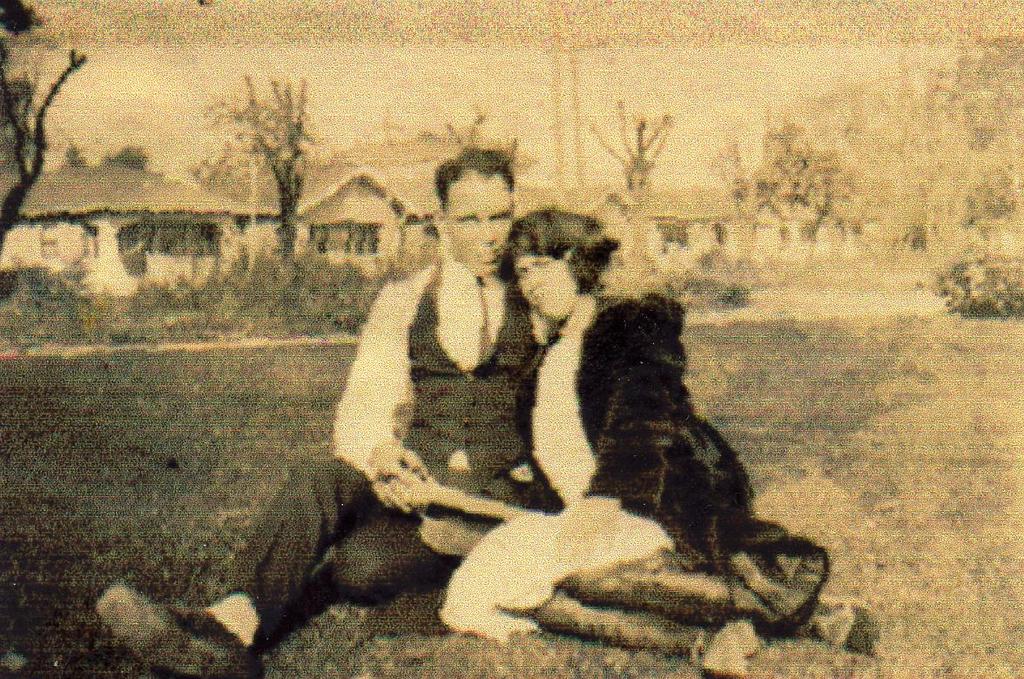
Left photo: Mother's eldest brother, Herman Allen and wife, Marie Gaudet Allen sitting in the large expanse of meadow where the Mueller's dairy cows were often pastured (Circa 1917). When I was a little girl in the 20's and 30's the iron foundries moved in and replaced these greenlands. I'm glad that I knew them as the staging area for my childhood.

Right Photo: Aunt Marie seen here near Papa George's little bungalow on 75th Avenue in East Oakland -- in the shadow of what is now the Oakland Coliseum. This Creole woman could as easily have been the aunt of Andrés. She surely reinforces his arguments about the nature of the artificial social construct. (Click the little photo open to enlarge.) (Circa 1918)

Sunday, October 16, 2005

Million More March ... was about ...

one of the cleverest ploys ever inflicted on a people. And it wasn't at the hands of Minister Louis Farrakahn, but can be traced back to those who came together more than ten years ago to reconfigure the way the census would be designed. Crazy? Maybe not. Inspired, depending upon the goals.

Under the new set of criteria -- black people would no longer be counted under the old "one drop" rule, but starting with the census of 1990, would be able to check multiple boxes for racial identity. I knew at the time that something truly revolutionary had occurred. I wrote about it for my boss. No longer would I need to claim my "Negro" or "African American" designation, but could now legally become other, or any number of exotic racial combinations. This could be a field day for those of us whose race was fast-becoming no more than a political choice due to generations of miscegination. This is surely true for my grandchildren and my nieces and nephews who -- over the past generation of growing up in the relatively enlightened S.F. Bay Area -- brought Asian genes into our already exotic blend of racial and cultural genetic jambalaya.

But there's a darker side to this change in racial identification. Within a few weeks after the census results were analyzed we learned that (Aha!) African Americans would soon no longer be the largest racial minority, but were fast being overtaken by Latinos. Stories about the need to pay attention to the Latino vote grew, and politicians gradually began to cast their eyes toward the barrios instead of the projects in order to increase their political power among the "unwashed". It was during those years that we began to see a lessening of attention paid to illegal immigration and noticeable changes in hiring policies that now saw a major displacement of the country's black service workers.

Black hotel maids, janitors, day laborers, porters, nurses aides, gardeners, etc., all were now replaced by immigrant labor. They were now doing those "jobs nobody else wanted" but that had supported black families for generations and built a bridge into the middle class for many, including mine. Where did the black service workers go? Some improved their lot through education and increased opportunity, but many dropped into the underground economy fueled by the illegal drug trade. Given the new time restrictions on welfare and little education and/or training that might move them out of poverty, the outcomes were highly predictable. People will feed their children in whatever ways necessary. The streets got meaner over time, and the continuing violence that naturally feeds on desparation and hopelessness is now cutting down our young in frightening numbers. There is the growing concern that our young have internalized the race-hatred and have become suicidal -- and that homicide is but one manifestation of that truth.

Blacks had lost political power through the simple act of taking advantage of the opportunity to identify as "other." We lost significant political power by reducing our numbers through the census analysis. The truth is that -- under the old one drop rule -- there are actually more of us now than ever before in history! The Latino population, despite growing numbers, cannot begin to overtake the numbers of us who are mastiso, creole, and every other black blend love can create and has over many generations. We tend to forget that where schools, housing, and workplaces have been resistant to racial integration, we've had integrated bedrooms since before the days of Thomas Jefferson and Sally Hemmings! And not exclusively through sexual exploitation, but through at least some courageous people crossing those lines of separation for the sake of love.

It's a game of semantics that has proven devastating to our ability to bring together our people toward the unification needed in order to truly overcome. With help of the census designers, we hardly know who our people are! We've been successfully splintered into a thousand racial bits and atomized into a meaningless blob no one needs pay attention to, politically. With each generation that blends into the whole, we lose potential leadership, energy, and the sense of belonging to something beyond ourselves that we must have in order to give substance to the kind of demonstration attempted on the Mall in Washington yesterday. I would predict that by the twentieth anniversary of the Million Man March, we'll have all but disappeared into some multicultural-multiracial gumbo! And it will have all started with a seemingly simple change in statistical language.

This is surely not to say that Latinos have entered this country in great numbers to purposely steal away the work of African Americans. To the contrary. Everyone of us is trying desparately to make life better for our children than it has been for ourselves, especially those from below the border. But it is to say that Latinos are the benificiaries of white racism by default with little reason to be aware of or any incentive to resist the rewards it brings to an equally needful people.

One day as we all progress inexorably toward a more just society, we'll have those critical conversations and black and brown Americans will begin to recognize the ways in which we're competing for space on the bottom rung of the economic ladder and will unite toward change -- together -- change that will begin to move all of our children out of poverty and into economic viability. That is when the demographics of our prisons will no longer reflect the inadequacies of our seriously flawed systems of education and governance. But first we need to begin to control the language that controls us -- by recognizing the manipulation and challenging the distortions when they threaten our mutual well-being.

Since when was "75% minority" not the majority?

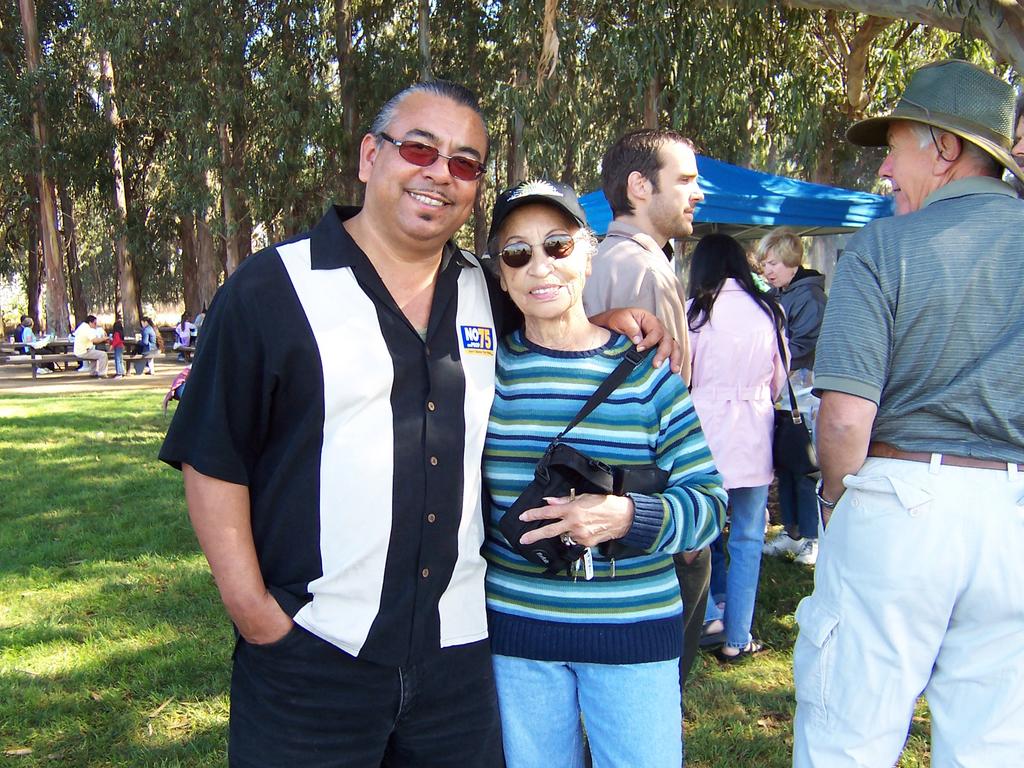
Photo: Andrés Soto of the Richmond Progressive Alliance shown here at an event to save Breuner's Marsh, a wetlands adjacent to the East Bay Regional Park's Point Pinole. It is currently under threat by private development that will limit public access and destroy habitat for endangered species.

Friday, October 14, 2005


Such a strange night ...

It's been playing in the background all week -- the drama in a Martinez courtroom being played out in all of its brutality and shame. I've not wanted to write about it, but it begins to look like I need to get it behind me in order to move on.

Turned on NBC tonight and as I clicked the remote past Prime Time I saw her face for just an instant. I clicked back. She'd appeared on MSNBC a few nights before and I'd quickly clicked her away -- not wanting to deal with it. It has been 3 years since I learned of my friend, Felix Polk's murder. The woman on camera was Susan Polk, a woman I never knew. Her sensational murder trial bleeds into my life despite all efforts to silence her.

The late Dr. Felix Polk was a member of my husband's (Project Community) research staff at the university when we first met. He was a fine psychologist with whom I was paired in our work on the campus at Concord High School. We worked together with adolescents for about a year in the early Seventies. He was bright and gentle and always seemed a bit shy.

At that time he was married to Sharon Polk, a brilliant concert pianist who was the more outgoing and witty of the two. They had two great kids, their adolescent son was studying acting with the American Conservatory Theater in San Francisco under Director William Ball. Felix was very proud of his family. I found both the Polks interesting to be around, and Felix a great mentor and good (though always reserved and respectful) friend. After some years I learned of their divorce. It was only mildly surprising since divorce was not a rare event in the lives of the those who peopled my life at that time.

I watched the hourlong interview tonight with Susan -- explaining how she'd stabbed her "violent and abusive" husband to death (26 times), and I was horrified. I believed that she must have entered his life long after his marriage to Sharon had ended since those years were now long ago. Not so. I watched her face as she disclosed "the scandalous event in my life." She said that their affair had begun while she was his 15 year-old patient -- in the year 1972!" A year during which Felix "...had hypnotized her so that she has no recollection of what occurred in her therapy sessions". She was 25 when they married. The years of her "seduction" would have been clearly the years when he and I were working together in the schools and when I knew him and his family fairly well. This was surreal ... I could not turn away but sat transfixed before the small screen unable to move.

In watching the program I felt shock each time the camera did flashbacks and -- instead of the greyhaired Felix whom I didn't know -- the 40 year-old darkhaired psychologist Felix whom I did know well would emerge and my own flashbacks would take over.

The camera roamed around their spacious and beautiful Orinda home for the entire hour. They showed 3 young sons born to his second marriage to Susan -- and who were strangers to me. Only one appeared on camera, and in support of his mother. Only Felix's neighbor friend's description of events and of his relationship with Felix and of conversations they'd had in the days leading up to the murder made sense to me. It appeared that this man and I knew the same Felix Polk. That physically and mentally abusive mad man in no way resembled the murdered man described by Susan Polk.

I remembered then a day when I'd written a report on our group session for him. In it I'd described my impressions of each youngster of the dozen or so students in our group -- and given my perception of small changes I'd observed over weeks since the previous evaluation. In a very untypical moment of closeness he stopped by my desk to return the paper with the words. "I want you to know, Betty, that I couldn't have written that." It was the highest compliment and the more meaningful since it came from one who rarely entered into casual talk. It meant much to me since I was the only member of Bill's staff who held no degrees. The others were all either graduate students, Ph.D candidates, or full-fledged psychologists. That was the day that Felix welcomed me into "the Club." I was no longer simply the wife of the principal investigator to be merely tolerated, but a valued member of the research team. I felt validated in the academy by a professional whom I deeply respected.

Susan Polk murdered him "...because he was trying to kill me!"

What was it that I missed.....?

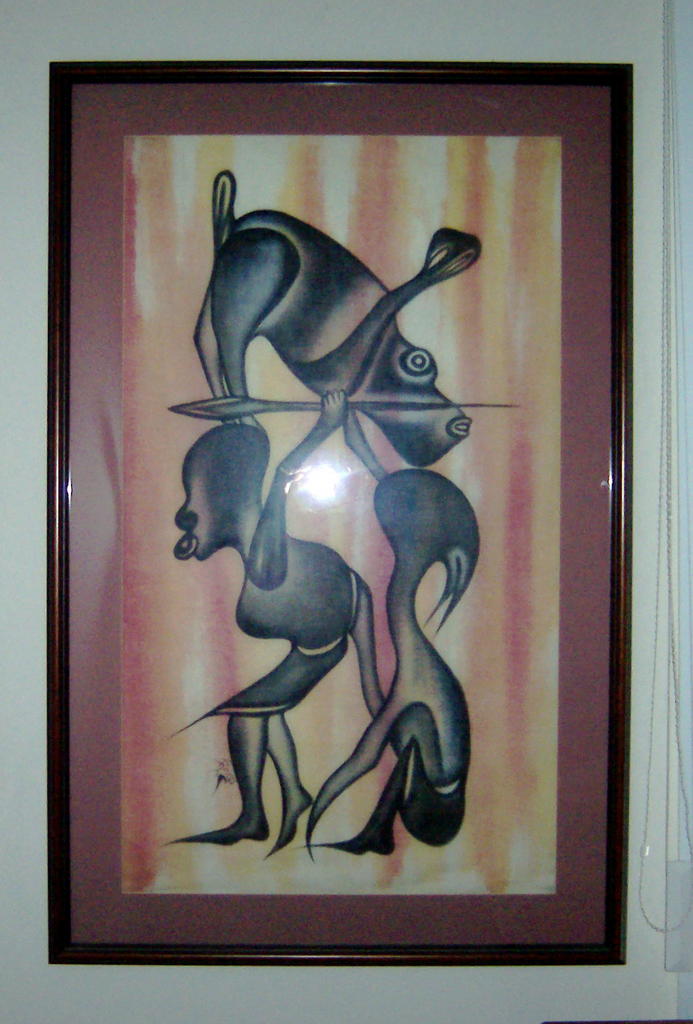
Photo: This framed batik hangs on my bedroom wall. It is by an anonymous African artist.


Monday, October 10, 2005

Such a quiet day ...

Spent this holiday foraging through storage boxes and discovering everything except those things that I know were saved -- but that have disappeared into that place where the "other sock" usually ends up. You know that you have them, but where?

Someplace there is a cassette tape of a concert that I saved for years -- the audio portion of a 30-minute concert I performed for KQED years ago. It was the only record of one of the countless Betty-lives lived over the decades. Without that tape, I'm not even sure that she existed anywhere except in my imagination. Impossible, of course. The lyrics are all here in my files and now in my blog, and the songs are singing themselves softly as I type.

It's a little like the copy of the scenario and the stills from "Farallon Light" safely stored in my files -- I can hold the browning sheets in my hands and remember the filming and the scoring ... but can't locate a copy of the 16 mm film anywhere on the planet. That's not quite true, though, since a friend did locate one at the University of Southern California film department recently. I emailed that source only to learn that their copy is "...too scratchy to be of any use." I'm in a kind of summation period in this life and needing to gather together evidence of my tenure on the planet -- and that film is terribly important to me now. My friend -- who heads the media department at Vista College here suggests that I should request it anyway, and that new techniques may make it possible to restore it. Will do.

But the cassette ... .

If I can't find it ... .


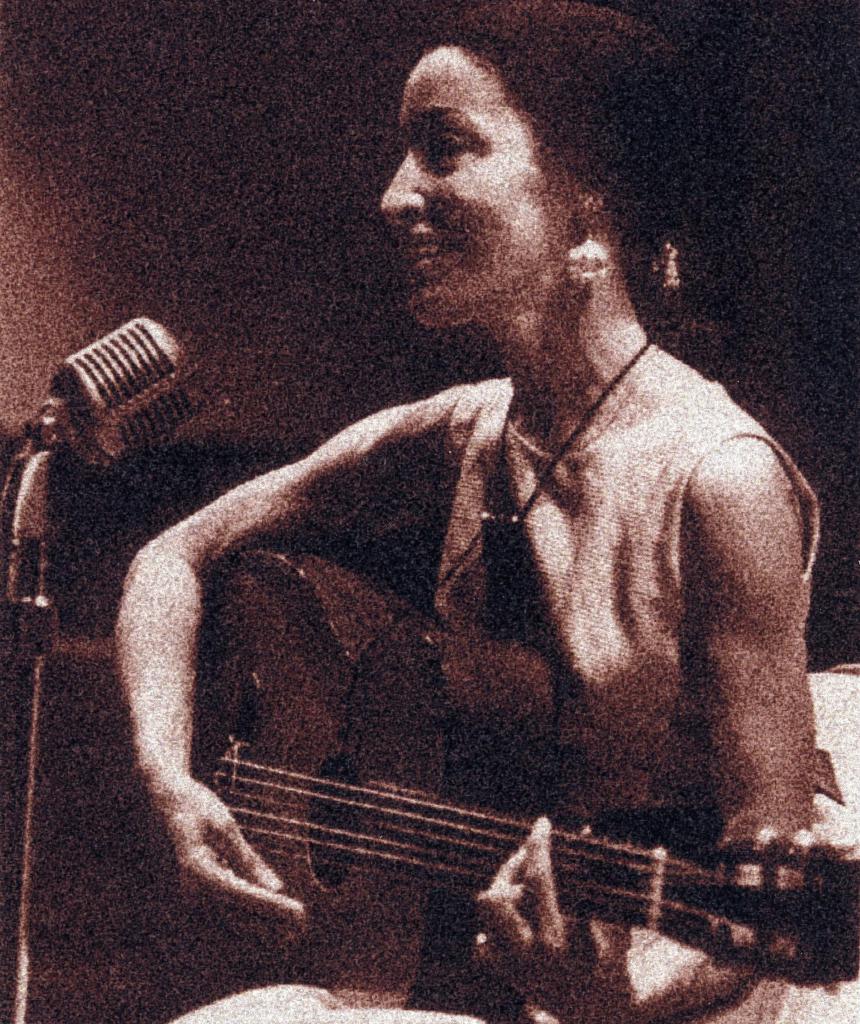
Photo: Photo taken at a concert of the Unitarian-Universalist General Assembly in Cleveland in the late 60's.

Saturday, October 08, 2005

Women's History Conference ...

Women's Conference at Mills College in Oakland was great. I really must maintain these connections. For reasons I can't quite explain -- much of my time is spent at home or at work and rarely in the company of other women for the pure enjoyment of the experience. There is so much happening in this world of women -- so many fascinating women from the arts (writers), education, historians, the California president of NOW, political activists, a young African American army officer and poet; so many with so much to give and so willing to give it. Wish I hadn't waited until today to participate in the conference. This was the last day and my role was to serve as one of many panelists. I believe that it went well, but I never am a judge of that.

Lots of photos were taken and will post them when and if someone forwards them as promised. I brought along my digital camera but was too reticent to take it out of the car. Preferred to pretend that this wasn't terribly important in order to control the panic. It was. Would love to have one that was taken with Aileen Hernandez, one of my all-time idols.

My ad lib remarks were well-received. The words felt good leaving my tongue -- as truth always does. Discovered just how long 15 minutes can be -- and have no idea how close to time I was -- but the audience was listening closely and -- I recognized the end when it arrived. That's the most important thing, I suppose, particularly when there are six panelists.

Didn't hang around for the final workshops, closing reception, and evaluations. Felt pretty well used up, emotionally, and a call on my cell phone from Dorian -- wanting to talk about her Special Olympics soccer game earlier in the day gave a natural reason to head for home. Since she's moved into a group home, I find myself not willing to give up those times when she reaches out to share her life and small victories.

Remembered then just why it is that I've spent so little personal time with friends. Raising a handicapped daughter safely into adulthood is/was all-consuming. I was repeating as always - in these moments after my talk -- the pattern that I've held to all these years. Time is my own only so long as Dorian doesn't claim it.

Will spend some of the evening going over the cards that were slipped into my hand as I was leaving -- will check out some web sites -- learn more about the incredible women of history whose names I learned only today.

We've done far more than simply hold up our half of the sky, I think.

Photo: Dorian with Mom, at age 11, taken in 1968.

Saturday, October 01, 2005


I'm developing such a backlog of unwritten events and thoughts ... with little time to "download" ...

But I need to spend a part of this weekend thinking about what I'll say next weekend at the Mills College Women's History Conference -- this will be a good place to begin, I think.

On Thursday evening there will be a Holly Near concert and casual gathering where there will be a chance to schmooze, I suppose. Never was very good at that. When people approach me to chit chat -- and ask silly questions for the sake of the ritual -- I tend to give real answers and then feel embarrassed that this was not a part of the game. Hate schmoozin'!

On Friday there will be a ceremony in the morning where Justice Sandra Day O'Connor will be honored followed by a great variety of workshops that will go on throughout that day and the next.

On Saturday I'm scheduled to represent the Rosie the Riveter/Home Front Historical National Park on a panel that will be dealing with monuments and tributes to the nation's women. Not really sure what that means and will take the time here to work through some of that. It may save some embarrassment next Saturday by keeping my remarks relevant.

What I've been thinking about (and what's confusing the issue for me in many ways) is the fact that different people have lived such differing realities. My experience doesn't reflect that of the Rosie's who are the heroines of the Home Front war effort at all. We lived those years in a racially segregated society. Yet, one of the reasons that I'm of any value at all to the NPS is precisely because I represent the untold stories of the period. Those lost or never-held conversations are critical to the establishing of a baseline against which to measure social progress made over the years that followed. Only by looking closely and honestly at those times that radically altered basic social patterns -- can we begin to understand the turbulence of the last 60 years and continue on a corrective course. The federal response to those who suffered such shameful abuse and neglect from Katrina in the heavily black Gulf states suggests that we still have miles to go before we sleep.

To have lived long enough to be acutely aware of the continuum of change and to still be connected enough to express it may justify my participation on that panel. I need to hold to my truth and not get caught up in what is often a glorified version of women's role in the war effort. I must stay with my own reality; and that of women like me.

Recently read a book on African American Women in the West (not exact title but will look it up later) and noticed something that had escaped my notice until recently. It's important, I think:

Though there are 21 pages in a chapter entitled "World War II," not once did the words "Japanese," "Nazis," "The Axis," "Bataan or Midway," receive mention. It suddenly struck me as I completed the chapter that the war had never been a major factor in my life, either. I'd never known why that was, or that anyone else experienced it similarly.

Obviously, for African Americans, the epic was not the War, but escape from a hostile South. The War simply served as background to this greater drama. This chapter in a fine book on the experiences of the African American woman spoke of customs, practices, relationships, philanthropy, work ethics, racial prejudice as transported to the west by white southerners, church and civic involvement, recreation, job opportunities or the lack thereof; everything but "The Great War." Interesting?

That chapter would have been written very differently had the author been a white female participant on the home front war effort. It would have talked about climbing in and out of the noses of warplanes or learning to rivet or weld against the resistance of male workers, etc. It would be a story of great pride in overcoming gender biases and prevailing against the odds. And it is those stories that are being collected and treasured as Rosie's long-neglected history is being honored by the establishment of a national park in her name. The story of Rosie is a white woman's story, and a worthy one at that. But it isn't my story, nor the story of the many women like me who were shamefully wasted human potential in sea of inequity.

The time of retrieving those lost conversations has finally arrived. The National Park Service is not only listening, but is facilitating the untold stories under a new program called "Civic Engagement." There is a growing audience of willing listeners -- those who are eager to hear. The Lion's share of the work may be in getting African Americans to relive the pain of those years by putting it into words -- those who are still alive and willing. Their children and grandchildren continue to suffer from the effects of the hopelessness and sense of rejection that's worked their way into the DNA of a people without any longer remembering the why of it ... .

A tremendous opportunity is before us through the work of the National Park Service. By setting aside and restoring places and structures of our shared history, we can be the catalyst for our own transformation into what our founding documents tried to provide for us -- that framework for freedom for all people. Even in their ambivalence around just who "the people" were, they provided the template for what a democracy can be, if each generation in turn accepts the responsibility for re-creation and dedication to the principles therein.

I suppose these are the underlying reasons that I've lived much of my life as a political being, ever hopeful of positive change.

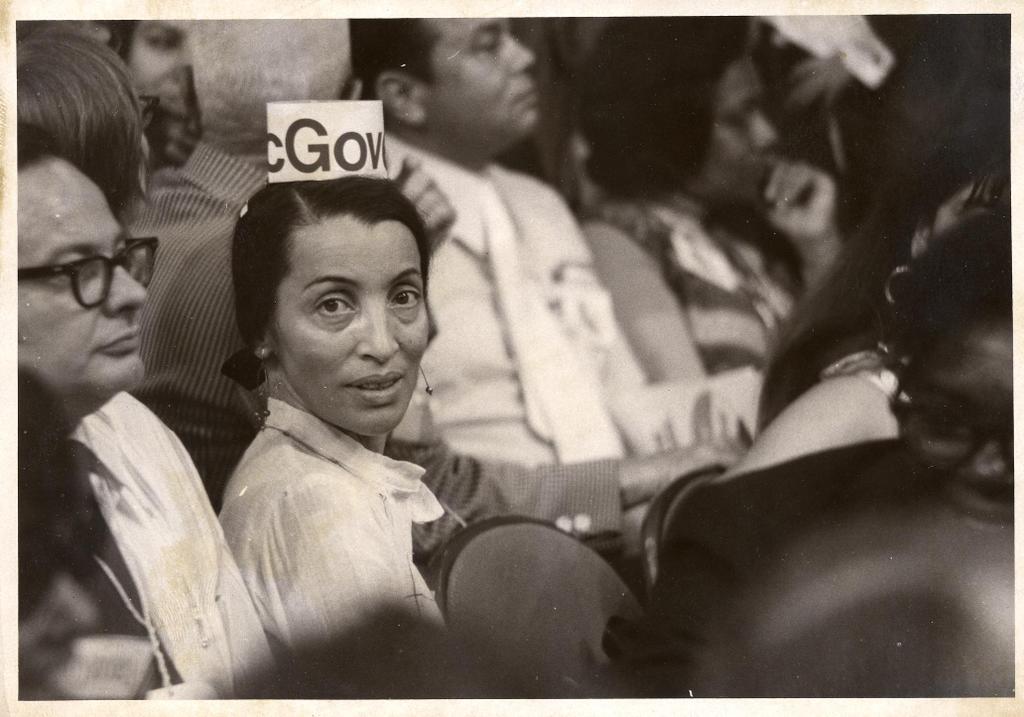
Wonder, sometimes, how different it might have been had Mr. McGovern won the nomination and the presidency?

Photo: Served as a McGovern delegate with the California delegation (in 1972) led by then Speaker of the House, the Honorable Willie Brown. The irony is that I was chosen by the same congressional district that fiercely challenged my right to live among them some 20 years before.

Thursday, September 29, 2005


Charbonnet cousins found!

The following article in The Advocate was forwarded from a new friend who lives in Miami. One of the miracles of communication born of these magical times. What a gift!


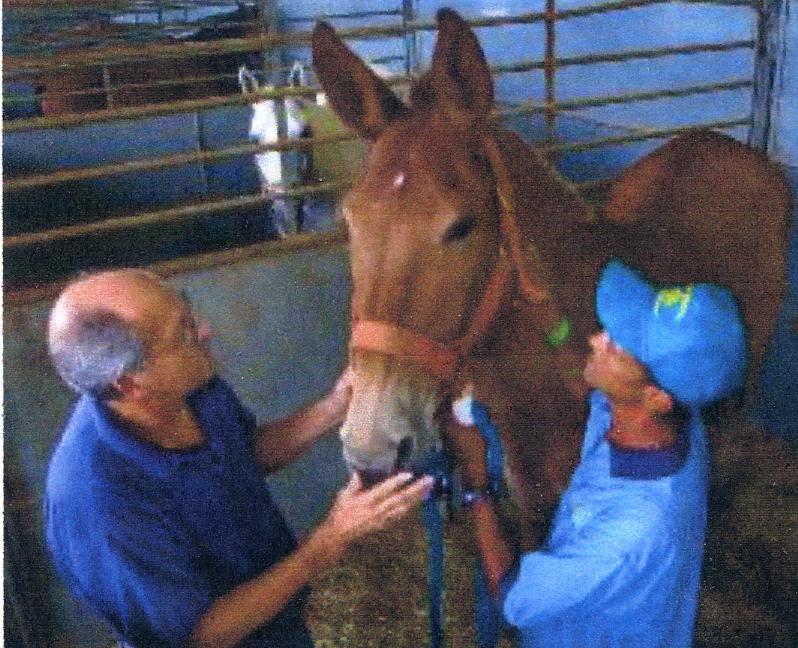
Louis Charbonnet knelt during Mass six days after Hurricane Katrina wreaked havoc in New Orleans and prayed, "Lord, I really need to get my animals out. Please help me."

Charbonnet, who owns Mid-City Carriages -- the largest mule- and horse-drawn carriage business in New Orleans -- prayed for a way to rescue an employee and 23 horses and mules still trapped near their flooded barn at North Robertson and Lafitte streets in New Orleans.

"As soon as my prayer was over, I felt my cell phone ring," said Charbonnet. "It was the state veterinarian telling me to get my trucks and trailers ready; they were going to let me go in and get them.

"I couldn't believe it," Charbonnet said.

For 15 years, Charbonnet, his wife, Simone, and daughter, Kim, have owned the carriage business -- providing tourists mule-drawn carriage tours of the French Quarter, transporting brides in horse-drawn carriages to weddings or caskets bearing bodies to their final resting places.

The horses and mules are a staple, a part of New Orleans lore. Before Katrina they were seen with colorful flowers attached to their manes or straw hats cocked over their long loopy ears trotting down Bourbon Street pulling a carriage of tourists absorbing the sights, sounds, and smells of the Big Easy. Sometime the mules and horses were lined up in front of St. Peter's Square, a back hoof cocked while drinking out of the equine community water trough waiting for their next group of tourists.

But on the Saturday before Katrina pummelled New Orleans, parades and tourists were far from Charbonnet's mind. Instead, he was thinking of his 48 mules and horses.

"Since there's no place for me to take the animals, we usually ride the storms out," Charbonnet said. "But I went home Saturday night and about midnight I saw the weather report and realized this storm was going to be worse than usual and decided to get them out."

By early the next morning, Charbonnet brought his trucks, trailers and borrowed a few more, but still there was room for only 25 mules.

"We were headed towards Hattisburg, (Miss.) but after we started I found out there was no room for them there, so I headed towards Baton Rouge," Charbonnet said. "My brother has some property on Pecue Lane and he told me I could put them there."

Because so many people fled the storm on the last day, it took 12 hours for Charbonnet's caravan to reach Baton Rouge.

Riding out the storm with Mid-City's remaining 23 mules and horses at the barn on the outskirts of the French Quarter were long-time employees Lucien Mitchell Jr., Darnell Stewart and Fabian Redmon.

"We made it pretty well through the hurricane," Mitchell said. "But on Tuesday, when the levees broke,the water started coming up fast in the barn and I knew we had a problem."

There was Miss Pierre, a brown mule; Gorilla, a large sorrel Belgian horse that behaves best when he's with Bear, a Percheron. There were Baby and Sugar, two other Belgians that work as a pair. Mr. Big, Howard, and Winston, were among the horses and mules left with Mitchell.

"There's a little park with playground equipment called Leimann's Park near the barn," Mitchell said. "It's on high ground, but we had to swim with the horses and mules to get there because the water came up so fast.."

By twos and threes, Mitchell, Redmon and Stewart swam with the horses and mules to high ground. They all made it.

By the second day, Redmon was evacuated. On the third day Stewart hurt his foot and was flown to Texas for treatment. That left Mitchell with 23 horses and mules.

"Our cell phones didn't work, so I knew the boss would come to get us. I just didn't know when," Mitchell said.

Each day, Charbonnet tried to get clearance to get back to the city.

"But each day I was told it was too dangerous, too many shootings and I was told I couldn't go in,," Charbonnet said.

For Mitchell, it was difficult handling all those horses and mules by himself.

"I love these animals and I wasn't going to leave them. But sometimes they would try to drink that filthy water, or they'd get loose and run off," he said. "I was dragged through the water by one of them, but I finally got him calmed down and brought back."

Each day, Mitchell rode Fidel, an Arabian horse, to get feed stored in the barn's loft, and clean water for the herd.

"I carried the water on my shoulders," he said. "By the third day, I ran out of food and water for me."

Mitchell met eight other people stranded by the storm living under a makeshift tent. They helped him with the animals and offered him food.

"It was sad," he said. "But still I had to keep the others alive."

Meanwhile, after six anxious days, Charbonnet finally received the clearance to go in, only to be stopped once more.

"They told me I needed an escort and there wasn't anyone available," said Charbonnet, a former state representative. "This was my neighborhood. I knew where I was going and they finally let me leave."

Charbonnet, with trucks and trailers, arrived at the Orleans Avenue exit on Interstate 10 on September 4.

"I spotted them and I thought, 'Hallelujah," Mitchell said. "I was so happy."

Charbonnet began backing down the ramp.

"I used one of the larger trucks to drive through the water to the park that was like an island now and there they were. After eight trips, I got all of them out and loaded onto trailers," Charbonnet said.

When they finally arrived at the Lamar-Dixon fairgrounds in Gonzales and opened the trailers, Charbonnet found that one of the horses, Mr. Big, had died. And shortly after unloading them, Winston, another horse, died.

"Howard and Mr. Big were a team,' Mitchell said. "Howard just keeps his head down and stays facing the corner of a stall. I know he misses Mr. Big."

But even with the deaths of his animals, Charbonnet considers himself lucky.

In the next few days, he plans to finish sending the mules and horses to a farm in Tennessee.

"And don't worry," Charbonnet said. "We'll be back. You'll see the carriages again. I just know it.


Note: I've since tried to place call to Mid City Carriage in New Orleans -- have left messages but have not yet made contact. But this story -- plus my still vibrant memories of the New Orleans that was -- surely must justify bringing back all those who can begin the process of reconstructing what once was. There's a precious legacy here. I pray we don't sacrifice that to some Stepford-type generic future.

(Thanks, Marvin.)


Sunday, September 25, 2005


It's another beautiful Sunday morning -- and how guilty I feel for being able to say that at all ...

at a time when so many are returning home to chaos through streets strewn with fallen trees to homes that may not even exist anymore. So sad ... .

The devastation of the Gulf States seems biblical in scope and surely is calling up cries of inescapable doom for all of mankind. Don't dare turn on the church channels. Despite a deep humanism, I can still be shaken by the ranters that scream of hell and damnation.

For reasons that are unclear at this point, woke this morning thinking of Aunt Vivian (Allen-Jernigan), mother's younger sister. Both are now gone. How different they were. Mother with her quiet envy of Vivian's hedonism. Vivian the pied piper. The prankster. One who could deflate any prig who had the audacity to try to derail her natural zest for life. She was so like her devilish father, Papa George, whom mother never quite forgave for being a neglectful parent. And, of course, he was that. I often think that I enjoyed the friendship and parental love with him that she was denied as a child.

Her own mother was only 14 when she was born. Julia LaRose was her name, though she was referred to by Mom as "Minette." Julia's father was Jack LaRose. She was dead by the time mother reached her 7th month. Mom was raised by Mammá while George tootled off and married Vivian's mother, Desireé Hernandez, soon thereafter and fathered four more kids. He never returned for Mom until some years later when Desireé also died. It was only then that Vivian and Mom lived in the same house -- but it was Vivian who was "... allowed to stay up a little longer than the others to secretly bring Mammá's little pipe and tobacco to her from behind the loose brick by the fireplace at the end of a long day in the fields...", at least according to Vivian's oft told story. Their rivalry must have been keen since childhood.

All of them shared that little cabin in a place called "Welcome Post Office" beside the levee in St. James. There was the widow, Leontine Breaux Allen, her own many children; her son, Louie and wife, Mariá, plus their large brood -- now plus Papa George's five offspring. Poor Mom surely got lost in the pack. Together the family farmed the land and raised the crops for market and fed themselves somehow. Mammá's pension as a widow of a veteran of the Louisiana Colored Troops who fought in the Civil War amounted to $49/month, according to the papers retrieved from the government.

I so loved hearing the stories of St. James and childhood in that little cabin where so many of the next generation achieved so much in such a short time. Great Aunt Alice who became a teacher by means I never have managed to figure out, created the first school for black children in St. James -- and later became its principal. Uncle George Allen became president of Southern University over time -- and a close friend of Thurgood Marshall. Cousin Gertrude (daughter of Great Uncle Sam) was a teacher in New Orleans as was her sister, another Vivian. Great Aunt Emily married Great Uncle Raleigh Coker, a physician and lived in New Orleans where she "fostered" many of the younger members of the family through their college years and beyond as they moved away from St. James out into the city, to attend Xavier.

All shared the humble beginnings of planting and bringing in the sugar cane, the vegetables and fruit that sustained them all, and the love of a very special Mammá, the matriarch former slave Leontine Breaux Allen, who was not the least bit daunted by her times but outdistanced them by far.


Photo: Transplanted Creoles; my mother's eldest brother Herman Allen; then Jones, the handsome beau of Aunt Vivian's at the time and whose last name I never knew, then someone I can't place, followed by Billie Gaudet, sister to Herman's wife, Marie Gaudet Allen, don't know Elsie's last name, but that's my wonderful sassy Aunt Vivian on Elsie's left followed by Frank Churchill. Aunt Vivian's practice of writing all over her photographs used to drive me wild -- but I've learned to appreciate the hint of her "presence" when I look at the scrawls. Picture taken in 1926 in Oakland, California.


Saturday, September 24, 2005


Time for crowing ...

I've been wandering around in the past for the last few weeks -- started with Katrina and with my concern about the possible loss of kinfolk and a culture that I should have forgotten long ago but haven't. Those ties of family and culture are obviously unbreakable as long as one's memories withstand the ravages of time.

But that's all in the background of my life. It's the foreground that is so commanding these days. The 60-day emergency hire under which the National Park Service brought me in will expire on September 30. But in the interim, a new park superintendent has been brought in, a new phase of the work of park development has commenced, and the work of liaison between the park and the community has moved into sharper focus. They've found funding to keep me into some indefinite future. It's open-ended, but then so am I, right? I'll be hired as a full-fledged national park staffer when my contract ends. Maybe my classification will be "Living Artifact." Maybe folks will be required to wear those little museum white gloves in order to shake my hand. Don't know. But it feels good.

The prior 7-8 years of my work life involved facets that are at this point of great value to a developing park. Having been a field representative for two members of the State Assembly -- I've become a valuable asset (albeit of some vintage), with experience that is not only relevant but not easy to duplicate in younger careerists.

Age brought with it a new confidence that continues to amaze even me. It's only since I reached 80 that I'm able to say with assurance, "I know!" No longer do I wait around for some Avatar to deliver me or those who trust me for answers that I no longer expect to find, or that don't exist, or are unattainable over the course of any single lifetime. I not only know, but I'm willing to act on the knowing. This doesn't imply, however, that I'm necessarily correct in what I know -- just that I've become quite comfortable with conflicting truths and can live nicely with ambiguity.

The past 4 years have been more exciting than any that came before -- except maybe for the exultation of becoming a parent. Delivering my firstborn, Robert Thomas Reid, still stands out as tops -- absolutely the best. That sense of participating in the creation of life is equalled by no other experience. The thrill of David's birth followed by Dorian's is as keen today as on the days they came into the world.

What's so exciting? Well, this week I worked on several projects that should lead to greater involvement with the host community of Greater Richmond. I have a co-worker whom I adore -- who is enthusastic and appreciative of my efforts -- and who knows all that technical stuff that remains mysterious and thrilling to me -- like Googling into space and back at the flick of the finger. I just leave all that stuff up to the genie.

Yesterday I narrated into a magical little machine -- the size of a matchbox -- a 450-word piece on Black History of World War II that will underlay a slide show of photos of untold stories of the period. Spent the earlier part of the week producing that -- and am satisfied with what developed. It will carry a soundtrack of music appropriate for the time (probably instrumental jazz/blues kind of stuff), and will be used to stir the disclosure of other untold stories by those homefront workers who might be still around.

On October 7th and 8th I'll be representing the park by participating on a panel about Women of World War II in a Women's History Conference at Mills College in Oakland. For November and again in January we're working on two Leadership Guided Tours of the Rosie the Riveter World War II Homefront Historic National Park (henceforth abbreviated to HNP). Will then begin to develop a script for tour guides that can be translated into several of the many languages represented in Greater Richmond -- so that Laotian, Latino, etc., groups can provide their own tours from their own centers.

As an indication of some of the lost conversations and untold stories:

Did you know that there were ships names for 17 African Americans? Three of those were built in the Kaiser Shipyards in Richmond, California; the SS Robert S. Abbott; the SS George Washington Carver, and the SS Harriet Tubman. In addition there were several ships named for historically black colleges; Fisk, Talledega, Xavier, and Lane. But by far the most interesting to me was the launching of the SS Ethiopia and the SS Toussaint L'Overteur -- both in the year 1944. This, at a time when racial segregation was at its height and the Klan still riding high not only in the South, but was now transplanted to the streets of Richmond by those who came west to work in the war plants. How I'd love to gain access to the papers of the deliberations that led to the decision to so honor the "Black Napoleon," the former slave who defeated Napoleon in the Battle for Haiti at the end of the 18th Century.

Richmond is oddly enough, a city with little sense of or appreciation for its history. Easy to understand when one realizes that it was a sleepy little company town (Standard Oil) of around 20,000 until it ballooned overnight in 1942 when 110,000 made their way west to help to build the ships in the 5 Kaiser shipyards that lined the shoreline. Almost everyone was new. Most were from Oklahoma, Arkansas, Louisiana, and Texas. Those folks (black and white) weren't yet sharing drinking fountains or cemetaries or hospital wards. They wouldn't for another 20 years. They brought "the South" with them.

The archives and the library just outside my cubicle hold theses, photographs, artifacts, slides, posters of the period, oral histories, recently-written books by historians who are only now discovering the period. After all, 60 years isn't a great enough timespan to invite much scholarly investigation as history. Those 60 years, however, represent the Lion's share of my life -- but apparently not the most productive years.

These may be the most productive yet.

Ain't that a hoot?

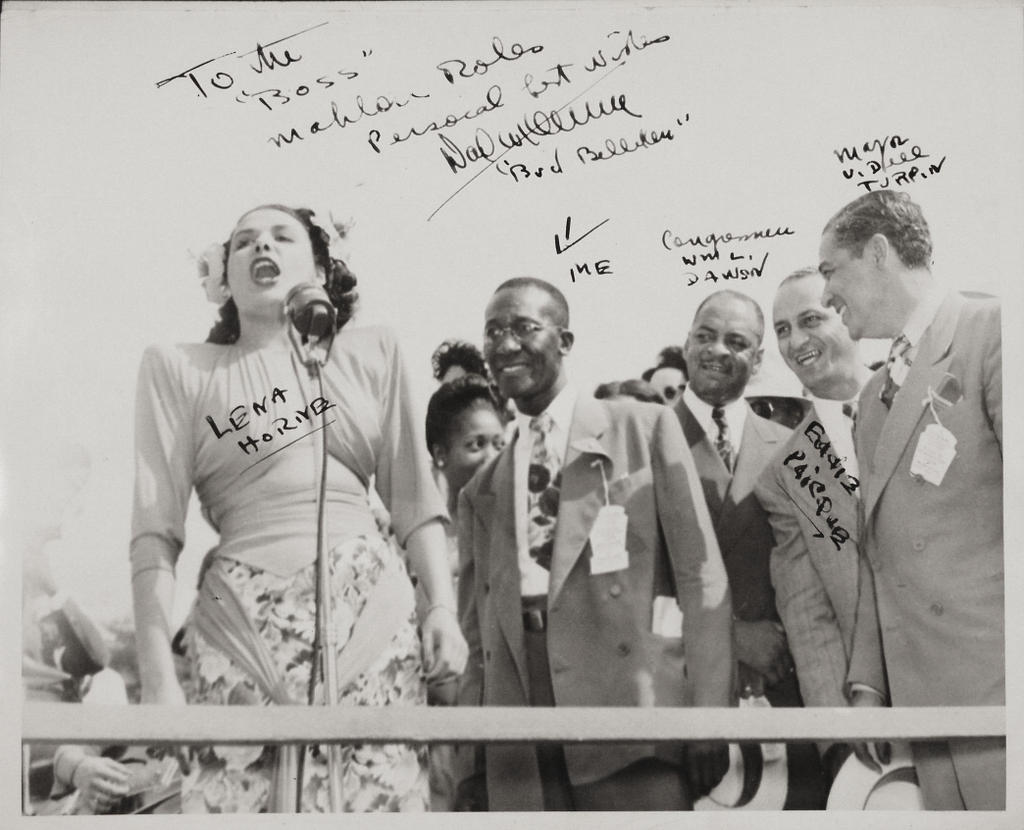
Photo: A very young Lena Horne singing at the launching of the SS George Washington Carver at Kaiser Shipyard #3 in 1944.

"Busier than a one-armed paper-hanger" is more than just a saying ...

Work continues to be fascinating and engrossing. The idea of being a part of a developing national park is pretty awesome; and that's what's going on right now.

Been thinking about the last post (Sept. 19th) and of the photo that led the story -- thinking that there may be other Creoles reading this who could benefit if I added some names to those faces, just in case you're a researcher.

It's frustrating to have women's names changed by marriage -- and am grateful that younger women of my granddaughter's generation have changed that pattern after far too long. Given the instability of the institution of marriage, it gets awfully complicated to try to trace one's lineage.

In the photo above you'll find many of the daughters and daughters-in-law of the women's in yesterday's post. The shot above was taken in the mid-forties when we were just about the same age as our mothers were at the time of their summer picnic.

front row: Margaret Wright, (can't recall), Elaine Allen Wilson, Juanita Ribbs Reid. Second row, Angelina Lopez, Evalina Donnelly, Annette Starr(?), Gloria Towns Wilson, Ruth Warnie Romine Strange, Blanche Smith (Mrs. Rudy), Moi. Back row: Muriel Reid Kranston, Juanita Smith, (can't recall), Maybelle Reid Allen, Mary Towns Bagby, and Dorothy Watkins.


As you may have discovered already, these are thumbnails and can be blown up by clicking. If there's someone here you're interested in, or, if you recognize someone I've not identified, email me.

Now that I've learned to add photos, I'll return to the archives and add any that seem appropriate to the entries. Will try to identify each as my memory coughs them up!

Having celebrated my 84th birthday on Thursday, and with this deep sense of the need to "download" everything that's pent up in the old brain while I can, I plan to spend more time going through old albums and correspondence so that all that good stuff won't disappear from the earth when I do. Though -- unless I get struck by a comet or some errant hurricane bent up hunting down Creoles ...

There's still work to do.

Monday, September 19, 2005


Thinking today about just what it means to be "poor."


Funny, that might be the least relevant term to use when referring to Creole people or culture. That's simply not an accurate measure of worth for us. I'm certain that -- were I using the values of the European acquisitive and materialistic society that now forms the adopted values of my life -- that word might be fitting. But in the context of New Orleans and all that flowed therefrom, economic worth is fairly irrelevant.

I surely remember being young and crowded into a bedroom that housed all three of us (my sisters and me) in the small 2 bedroom cottage in East Oakland where we grew up. I remember my mother and her bridge clubmembers traveling across town on the bus carrying folding chairs and maybe even a card table to the home of the hostess for the week. I know about Mom getting up early on Thursday mornings to be among the first to "Sally Ann's" (Salvation Army store) for the best pickin's because that was the day that the truck delivered new old stuff to the local store. I know about "red beans and rice on Mondays" and sleeping under blankets monogrammed with SP in the corners (Southern Pacific Railroad). I spent many a day at the free clinic getting shots and some pretty rugged dental care. I remember watching my mother and her friends gathering together to chop, mince, and stir the fixin's for the hoghead cheese with its garlicky aroma and gelatinous texture that we got to taste with salted crackers the next day after it had all been divied up and slipped into cheesecloth packages for sharing. I know how grateful my mother and aunts were when the husbands who traveled the rails as porters came home with brown bags of file (pronounced fee-lay) for gumbo that couldn't be found anywhere in this new West Coast territory we Creoles now called home. I know about collecting bottles to return for a few cents each in order to see the Saturday matinee. I'm aware of all that -- but I scarcely have any memory at all of being "poor."

Makes me wonder what was different about that? Wondering if "poor" is a relative term that has little meaning if everyone in your world is at the same status? How on earth would we have known what "rich" meant, except in a kind of mythic sense of those we saw on the silver screen -- and everybody knew that was make believe, right? After all, I grew up during the depression years.

Maybe poor is a word that is always imposed externally. rarely recognized from inside. But then maybe -- since television was not a part of our world -- we had little need to deal with comparisons. I suppose I must have had some sense of where we were on the economic scale by the time we were adolescents, but I'm not sure it was true even then. By that time we'd created our own criteria and it included the uniqueness that comes with a Creole heritage. We were a proud people with standards that were considerably higher than many that we lived among. We were just one more second generation ethnic group, transplanted complete with the patois (at least among our elders) superstitions, folklore, songs, music, a cuisine, and dimming memories of "home."

I figure that those who now describe those "poor" folk from the Ninth Ward have only a part of the story. So much of the culture has been retained in the DNA of even the "poorest." I felt it watching the "Live From Lincoln Center" presentation for the benefit of New Orleans musicians effected by the floods. When those men marched in with their rhythmic beat -- "humph!," -- the off-count toss of the head in unison -- and the staccato hand clap that I'm certain few white folks that I know could have mastered no matter how hip they believed themselves to be. I felt the presence of my father over my shoulder -- with his hand-painted baby blue leaky cornet and uncle Louis' raggedy bent up drums -- and Dick Dewson's tinny piano -- on any Saturday night of crawfish caught in the creeks in Niles Canyon boiled scarlet and served on spread out newspaper with home brew (if it hadn't exploded in the process of becoming!) at 1322 83rd Avenue in Oakland, California. How they would have resonated to Wynton Marsalis' music!

We'd all have become second liners with kazoos, pots and pans with wooden spoons, combs and tissue paper!

Poor?

Hell no! And envied by many for the gifts of jazz and good times that Creole's have brought to the world.

Rich beyond measure.

Photo #1: Mother's Creole social club on a picnic at Leona Heights near East Oakland. (front row) Alberta Cashin (wife of George), can't recall second face but the third is Ethel Aubert (married to Gene), Mabel Allen (husband Ellis), Marie Gaudet Allen (wife of Herman), Ruth Smith, unknown, little girls Arlene Cashin and Josephine Aubert with my younger sister, baby Lottie Charbonnet (now Fields) with back to camera in the far right corner. Back row -- the first 3 women on the left I can't identify but Lucille Towns (wife of Roy) and Marjorie Ledford (wife of Claude) with my uncle Lloyd Allen horning in on the party at the far right.

Photo #2: Papa George's Model T adorned by his family. Lower row my sister, Marjorie (Charbonnet-Brooms), me (Betty), Aunt Audrey Kingsbury Allen (wife of Fred), Second row, youngest sister, Lottie (Charbonnet Balugo Fields) in the arms of Teen-dah (friend of my grandmother's) with Papa's sister, Isabel Allen LeBeouf Warnie. Seated on the running-board is my mother, Lottie (Allen Charbonnet), who looks traumatized - having just arrived in California from the hurricane-flooded New Orleans with Sarah LeBeouf (wife of Melville) and Papa's third wife, Louise Breaux Allen. Uncle Herman Allen (husband of Marie Gaudet Allen) towering over all.

Wednesday, September 14, 2005


So many fronts ... so little time ... how does one cope?

Having come from such a long lineage, and having only accounted for one branch of this huge family -- what on earth comes next?

I can imagine how hard it must be for all those who have been displaced by Katrina to figure out next moves. Looked around my apartment after slipping out of my shoes before stepping onto the white carpeting I spent the weekend cleaning. Felt the dry sobs that rise in my throat so often these days. Such a contrast with those who are returning home to filthy water rising to the ceiling. Looked around and wondered what I would save -- if the water were rising fast? What would I do if all I had left at the end of the day were the clothes on my back and the ring on my finger? Suppose there was nothing left to prove my existence at all? And, most important, how could I reach those kinfolk who live far beyond the waters -- about whom I know little, but who might be in a position to help ... .

I'm in that position. I wait for I know not whom -- a phone call from some relative who doesn't know of my concerns, or of my willingness to share my life. I haunt the lists online not knowing whether the names I see are those for whom I'm looking. The women have changed names through marriage, maybe more than once. Do I adhere to the known family names (Allen, Breaux, Charbonnet) and forget about all else? Been doing that, but coming up empty, except for rumors.

I'm hating the fact that we're so scattered, so out of touch. Would love to be able to knit us all back into some kind of whole -- and if possible -- I'd never allow that kind of separation to ever happen again. I worry so about the children ... .

Find myself worrying even about those from whom I've been alienated for a variety of reasons over many years ... Wondering what could have been important enough to make for such deep cleavages in our lives ... and how can the healing begin?

..and will there be enough time?


Photo: Grandfather Louis Charbonnet's business card that I've treasured for all these years. Also have notebooks in which he computed his worker's pay and estimates of construction. His leatherbound engineering books sit on my bookshelf in the hallway. How comforting to know that they're dry and not lost to the waters of Katrina ... .

Monday, September 12, 2005


Countin' noses ...

My father had three sisters and seven brothers. Over the years, many had relocated out of New Orleans into other parts of the country. Several families settled in Southern California, others came to the Bay Area. Through cousins I've now located all of the William Charbonnet family (or at least have received word that they're safe and evacuated out of Louisiana). Some have joined with sons and daughters in Maryland, Atlanta, Texas, etc., and two live nearby in Oakland. I suspect that many will return home over time. But for the moment, there's nothing to return to.

I've learned that a number of kinfolk are in Baton Rouge. The Louis Charbonnet III family has settled there after losing the Charbonnet-Labat Funeral Home that was last seen in a NY Times photo under six feet of water! All families have lost everything. Families like ours has created and carried so much of the culture through a long Louisiana history, since before the Louisiana Purchase in 1805. I cannot imagine what will happen when that historic city has been gentrified out of existence by white folks who have no idea of what's being lost.

Do you suppose that anyone is aware that Senator Mary Landrieu and Lt. General Russell Honore are both Creoles -- just like me? She is the daughter of former New Orleans mayor, Moon Landrieu. Or that the bombastic "John Wayne" character who is credited with having provided whatever real leadership that emerged in that fiasco that ruined Michael Brown of FEMA, comes from a large Creole farming family in Northern Louisiana. At another time both would be identified as "black," but now that we've entered this weird hard-to-nail-down racial identity window -- the "one drop rule" has been scrapped. We're left in a kind of racial limbo -- at least some of us have been. Others (like me) insist upon our black identity and challenge anyone to argue otherwise. We all carry the genes of some tribe or other in West Africa.

New Orleans was the city where -- for generations -- those relationships have been worked through fairly successfully. Creole/Cajun culture clung faithfully to its differences and proudly held its uniqueness over at least 300 years. I have no idea whether that figure of "70% African American" that's given out so often these days on the newscasts counts all the rich racial mixtures (Caribbean, African, Haitian, French (Cajun-Creole), Spanish (Islenos), Choctaw, etc, that have created this new race of charming, seductive, artistic, talented, clever, colorful people who remain New Orleanians no matter how far from home we travel over time. It still feels like home to me and I've been in California since 1927!

I cannot imagine that one day (if those who've been displaced aren't allowed back to reclaim their culture) we'll see the emergence of some generic southern equivalent of plastic and neon Las Vegas. How sad that would be! And the unknowing developers will have no idea of what has been lost -- not one whit.

We who are only peripherally involved may have a role to play. In any way that we can, we must work to see that New Orleans is not erased from the cultural mix that makes up this nation. That cannot be duplicated. Louisiana was a cosmopolitan territory under the French, the Spanish, etc., long before the 13 colonies declared separation from England and created the nation that we are now, and that may be in great jeopardy in our time.


Photo: Charbonnet sisters, daughters of William and Estelle Holland Charbonnet - taken in 1978 in New Orleans.

Thursday, September 08, 2005

No one in the world can ever convince me that what we've seen in the federal response to the Gulf Coast hurricane had nothing to do with racism.

It was blatant. It was criminal neglect. Katrina exposed what we all knew but what only the honest among us will admit. We're still a deeply divided country -- first by economics and ultimately by race. In the deep south, the two are most clearly connected. For the most part -- the poorest among us are African American. In New Orleans, particularly, a lot of those who were "apparently" white suffered along with their darker-skinned relatives without being recognized as "black" by viewers who watched their misery and tried to share their pain. This is not to say that there weren't poor whites and a few not-so-poor mixed in with the hordes of displaced citizens. Of course there were. All suffered similar fates -- all horrific!

The awful stories that will come from those who lived that horror will work their way through the country over the next months, and they will equal those images and stories that drove the Civil Rights Revolution of the Sixties. And well they should. The pictures of people screaming for help and being ignored equal those of fire hoses and dogs and police out of control at Selma years ago.

After days of worrying and wondering about family members who were caught up in the tragedy I had a moment of triumph last night. Was listening to the African American chief of police in a CNN interview. He was lauding those officers who had held tight and remained on duty despite the awfulness of their personal situations and concern for the fate of their own families. In a moment that flashed by he mentioned the name, " Officer William Charbonnet," who had defended him in a moment of stark danger. This had to be one of my young cousins. I didn't even know we had anyone on the police force, yet here he was -- and one of the heroes, at that. It felt so good to know learn about him in this way. It didn't matter that I wouldn't have recognized him if he'd been shown on camera. No problem. This was a Charbonnet. And I knew where at least one was in that corner of Hell and maybe before the week ends, I'll learn of others.

Oddly enough, my daily work at the National Park Service is going extremely well despite the day-to-day dives into depression. Keeping life in balance may be the greatest challenge. The highs are so high and crashes into the lows each night when I watch the days happenings in the wake of Katrina are so hard to manage. It's dizzying ... .

Despite all I'm feeling hopeful. Others are seeing and feeling and reacting to the same reports and images that I'm seeing and feeling and reacting to. We are not alone. It's possible that the reaction of reawakened news teams and a stiffening of the spines of Democratic leadership in Washington is taking place. Maybe this is where the country turns around and hits an upward spiral. Maybe this is the place where we've hit absolute bottom and can kick-start ourselves up into the next phases of positive change.

Noticed something else: Because of the disgraceful and life-destroying conduct of FEMA and the failure of traditional institutions to function -- ordinary human beings stubbornly moved in and by-passed where they could. We finally got sick of having our human responses acted out through privatized corporate systems and went back to taking care of our brothers and sisters ourselves by any means necessary. Each time I heard one of their heroic stories -- like that 18 year old kid who stole a bus and drove a full load of survivors to Houston -- and got arrested upon his arrival -- I feel pride and victorious for us all. Or the many who headed directly into Hell from wherever they were to ferry people out or bring food and water in -- despite prohibitions that threatened their own freedom and safety. There were probably more heroes than we'll ever know.

Surely a new day of freedom will grow from such deeds.

I cannot believe otherwise and remain sane.

Monday, September 05, 2005


It may be only symbolic, but historic St. Louis Cathedral came through without harm ...

Bourbon Street and the Old French Quarter withstood all that Katrina could hurl. That may mean that the Convent, too, withstood the rising waters. But that may be asking too much. It was miles away from the higher ground of downtown or Canal Street.

I find myself recalling that my parents talked about Uptown (the wealthier district), Downtown (Creole section) and BackaTown, the district of the poorest of the poor. I suspect that it was BackaTown that suffered the greatest losses. Having said that, I can't remember enough about those dinner table conversations to speak with any authority. Touro (not sure of the spelling) is the place of the home that I can vaguely remember as being our last before coming West; a small bungalow on an unpaved street. I know that what passed as sidewalks -- over the length of a city block -- were actually two long wooden planks set side by side and end to end to walk on every summer to avoid the mud from the daily summer rains. Those boards were dragged in by the neighbors and chopped up and burned in wood stoves for heating and cooking in winter, then replaced by the city the following summer. Sounds an awful lot like BackaTown to me, right? But then my proud Creole folks always referred to their neighborhood as Downtown.

I can remember (from my visit to N.O. as a teenager) that cigarettes were sold to anyone (children included) at a penny-a-piece from broken-sealed packages, and that anyone could purchase a drink who could stand at a bar. I remember seeing my Aunt send one of the kids to the store with a pitcher to buy a bright red drink called, "Jumbo" to go with the shrimp jambalaya. Sounds an awful lot like BackaTown to me.

Can remember when the Good Friday hurricane of 1927 struck, and resulted in my parents picking up what little they could salvage and joining my grandfather in Oakland, California. Mother arrived with 3 little girls and little else on a Southern Pacific train with Dad following a couple of months later to join us. We lived with my maternal grandfather, Papa George, Aunt Vivian, Uncle Lloyd, Aunt Louise, and Uncle Frederick, in a tiny 3 bedroom home surrounded by open fields in East Oakland until my father could find work and rent a small cottage nearby.

Small wonder that Katrina has reached her tentacles out to find me even this far away on the Pacific Coast. The tears flow as if it all happened yesterday. My need to fulfill my role as family savior in the way that Papa George did is driving me into a frenzy! I'm really less moved by the plight of my extended family members who are now most likely comfortably listed among the power elite than of those who are far more like me (at the time). My own experience as a "refugee" -- folk from BackaTown whom we've seen desparately cutting their way through rooftops and suffering family separations and dislocations in unknown places -- without Papa Georges and Aunt Vivians to step up to provide aid and sustenance.

Many of my relatives lived closer to the French Quarter on paved streets -- in wooden homes that all appeared flush against the sidewalks with two or three steps to climb to reach gates that led to inner courtyard gardens. The Charbonnet-Labat Funeral Home was located on such a street -- but that area had lately been bi-sected by a major highway that cut into that community -- Claiborne Street, maybe? Most now live Uptown and quite possibly evacuated early in their SUVs along with the rest of the "haves." After all, that's the position we've all been striving to achieve in the world, and few can be faulted for having earned the right to the good life by hard work and due diligence. The Charbonnet would surely have done that.

Our extended family is now scattered all over the South; Texas, Florida, St. Louis, with a number evacuated safely to Baton Rouge. Many of us had already settled over many years in both Northern and Southern California. I've reached no one directly, but have learned from local relatives who have received word from some survivors, that most are accounted for.

I'm left with this emotional connection to those who've been left behind. I'm left with memories of little girl Betty now resurfacing fullblown -- of lying in a small bed on sodden clammy warm blankets -- raised high on orange crates in a small bedroom by frightened young parents -- with water lapping all around. Of shrieking winds and deafening thunder. Of wondering why God was punishing everybody on this Good Friday? Who had sinned so badly? I have these firmly-etched images of my father (the builder) hammering together a flimsy plywood boat with which to ferry people around town to what higher ground there was -- and my sister, Marjorie, being allowed to sit in the back of the uncaulked boat bailing out the water with a pot as it rose around their feet. I was too young to help much, but did get to bail when needed and no one else was around. Even at that age I can remember feeling the importance of being small -- because we took up less space and more people could be saved because we were. I suppose this may have been the first time that I felt the awesome power of one human being to effect lives, even the power of one very little girl.

Went to bed last night in my comfortable apartment -- alone -- with all those square feet lying empty when they might be serving the greatest need of all by being made available to others. Was reluctant to list my empty rooms on Craig's List indiscriminately to strangers when it might be needed for my own displaced kinfolk. That brought on a sense of guilt since it's quite possible that I won't be able to locate anyone ... and... . Perhaps there needs be a limit placed on just how long one should wait before acting on behalf of anyone needing to be housed.

I'm receiving calls from caring friends with offers of blankets, personal items, diapers, money, they'd like to give -- but want to wait until families have been brought into the Bay Area and are within reach. No one wants to burden a broken Red Cross system with gifts that their volunteers can't process and therefore would become lost to those who need the help so desparately.

It's impossible not to wonder whether or not many of those floating bodies are less fortunate members of my own family -- there are so many of us to account for... .

Even more important -- they may be all of us -- surrogates whose only sin was that they were too poor, too young, too old, too sick, or too black and therefore relegated again to "the back of life's bus!"

There but for the grace of God ...

But then I'm an atheist, remember?


(Photo: Dorian Reid's "Lion with Rainbow")