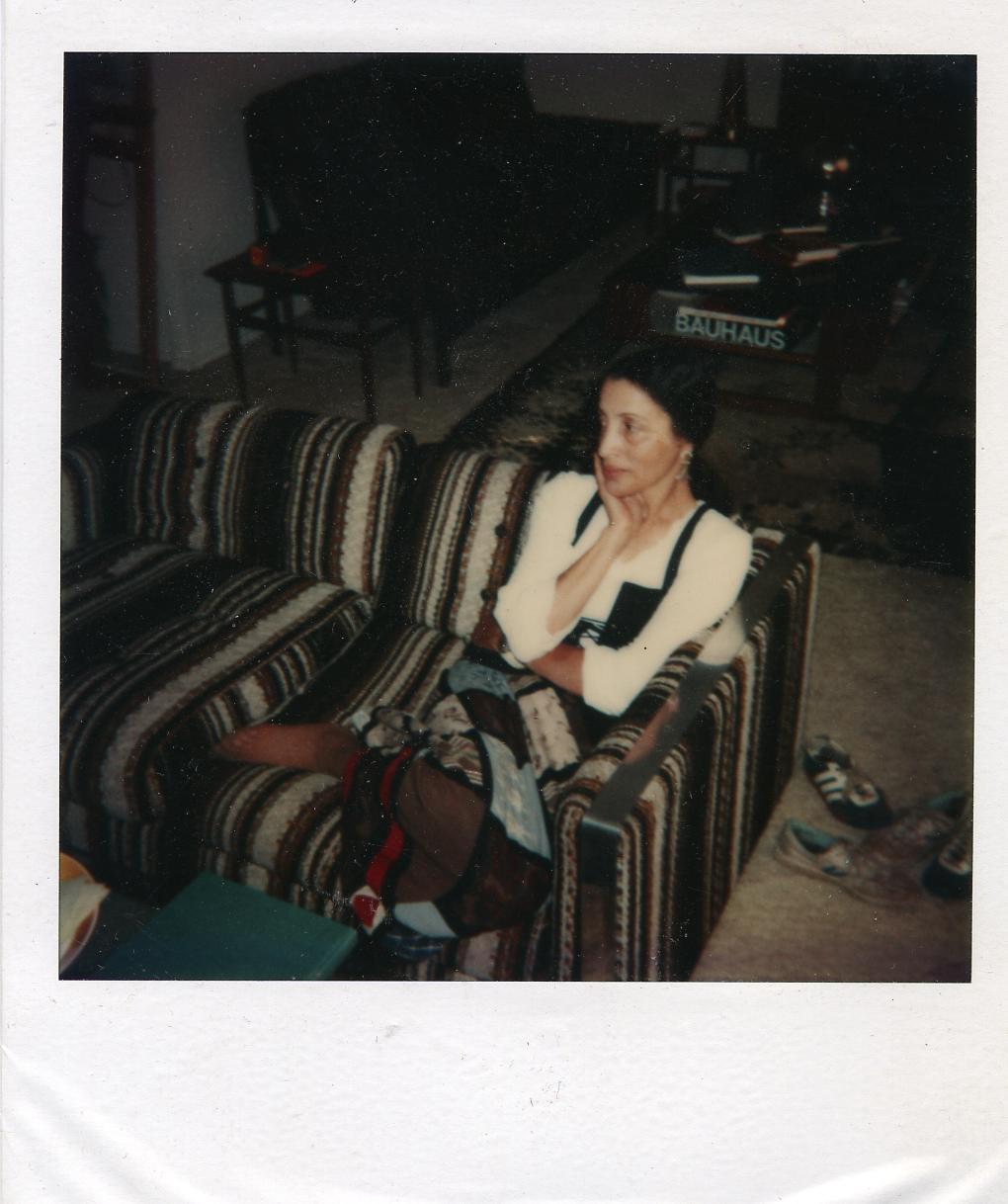
Wednesday, November 22, 2017

My father, Dorson Louis Charbonnet,
as a young man
I believe I've found the missing piece to the puzzle ... .

... the links between my grandfather, my father, and myself.

It took the long look back through these historic photographs and musing about connections; common denominators; genetic underpinnings ... and ... what holds together this entire saga of Charbonnet is that we were -- and had to be -- self-affirming.

Affirmation was withheld from both these men throughout their lives, despite their great accomplishments and years of public service.  It was true for their generation, but also for all those who preceded them.

I must have -- over a lifetime -- drawn together from family stories, an understanding of what was mis-named Creole pride, but there is something in the word that hints of over-confidence, of ego-centrism.  There is something far more powerful at work here, and I believe it has by now become a part of who we are as a family,  as Creoles, but also as African American people.   I'm not certain that our survival as a people didn't rest upon our having developed the capacity to see beyond the unmitigated brutality of slavery, Jim Crow,  and, subsequently, continuing societal rejection, to a place deep inside ourselves that sang its own songs of freedom and justice.

Self-affirmation is clearly evident in my writings.  Upon maturing, I've rarely needed validation from outside myself.  I do not believe that my proud grandfather could have accomplished the greatness that he achieved had he waited for that to be bestowed from beyond himself.  It mattered not whose names were painted on the signs under which he built his projects.  That he built them was apparently all that mattered.   He knew!

Is it really that simple?

Probably not, but for tonight, I'll take it.


I suppose this blog is not the place for exhibiting these old photos ...

... but last night while waiting for sleep to descend and the "letting go" of the day to kick in, it dawned on me that having my grandfather's achievements finally recognized and celebrated was a possibility.  That this treasure trove of family history should rise to consciousness at this moment in time may not be accidental.  I suspect that somewhere deep inside is the awareness that this unexpected celebrity status that I'm experiencing may be useful in unanticipated ways.

Now that I have uncounted numbers of folks listening, what is it that I would want to say?

Not certain what this building would become ...
I think I'd like to retroactively honor my grandfather, and all those artisans, tradesmen and crafts-persons who built this nation without proper recognition.  To cast light on his contributions and those of others who, like him, were skipped over by history.

Interior of rice mill construction.  Millwright,  L.Charbonnet
My grandfather is in the foreground

There were so very many men of color in his day, who were the teachers and leaders of the times, but who went unrecognized and unknown.


I'm hoping that this explains just why it is that so few families of color have amassed great fortunes, or even accumulated personal wealth over the past century.  This should provide at least one explanation.  Perhaps readers of color will find this a way of understanding how this has happened, and give up blaming themselves as having failed in some way.  The system was simply stacked against that happening.  And by now there are few who are even aware of the story behind what appears to be deficits we've never overcome, or a lack of training, ambition, or ability.

Louis Charbonnet was a genius, and here is the evidence in plain view, and he was only one of many who've gone unsung.

Monday, November 20, 2017

Here's my grandfather's Crescent Star baseball stadium in New Orleans, photo taken by the noted black photographer, A. Bedou, in 1921 ... .

It was built with a dance hall under the bleachers with a separate street entrance on the other side.  It took up an entire city block in the Treme´.

Of course, this was a blacks-only sports stadium.  This facility would have existed before racial integration was allowed or tolerated.

Makes one wonder -- when you see those crowds of fans attracted by the sport -- whether Branch Rickey did us any favors by signing Jackie Robinson et al into the Big Leagues.  It was then that we lost our own colorful players to the general pool of athletes -- which continues to this day.  Just maybe ... had we known the cost ... .
click to enlarge, it's impressive.
1867-1924
They've been stashed in an old canvas travel bag in the back of closets for nearly a century ...

... more than 2 dozen of these fading photographs of various inventions and constructions of my grandfather, Louis Charbonnet.  As I've moved from one house to another over 9 decades, they found new stash sites in each, but rarely were they brought into the light to be viewed and appreciated. Instead, they'd been consigned to history.  So it had been with my father, Dorson, who had served as apprentice to his father, as did his 6 brothers. Dad had moved them from place-to-place over as many decades in his time before they came to me,  there being no one else standing by to receive them.  They're mine by default rather than intent.
.


A few weeks ago, I turned them over to a friend, John Nutt,  a fine film editor, for enhancement and transference to a more contemporary format to be shared with other members of the Charbonnet family.  Upon completion, he and Ann put them on a thumb drive, and in the process, I've held the originals in hand for remembering and wondering ... and you would not believe how many memories have been recaptured and reclaimed.

I can almost feel his presence ...

Over recent days I've been posting some of them on Facebook to share with family and friends, and realized for perhaps the first time, how important his contributions were to the African American narrative, and to the life and technology of this nation.  The fact that his great works were never attributed to his talent and skills, but had to be done under the licenses and permits of white contractors or not be done at all, must be shared.  In his time a black man could not apply for nor be assigned a patent for his creations. Because this is not the story of my grandfather, alone, but was/is the fate of many who lived through those dark times.

Find myself wondering if we haven't lived into a time when the national deficits are less attributable to the poor education of blacks than to the mis-education of whites? We've lived into a time when we've produced a generation, many of whom truly believe that it was they, alone, who created the nation, and all that it contains or has achieved, (except maybe for jazz and gumbo).  At a time when the talents and contributions of all others remain hidden because credit was withheld through racism and bigotry.

The man in the window lends scale to this structure
My grandfather was educated through correspondence courses from Tuskegee University in Alabama.  Among my most treasured possessions are the dozen or so textbooks that he studied from.  They sit on a small bookshelf in the hallway of my condo,  just below the portrait seen above ... collecting dust... .

He was a millwright and architect with many constructions and inventions in New Orleans and elsewhere.  A millwright takes a function and creates a machine with which to perform it.  Among his would be this banana conveyor that was created on the dock at Mobile, Alabama, to move the fruit from ships to the dock.  That would have been in the teens of the 20th Century.


Fortunately, Elise Mattison's research turned up this photo of a  successor conveyor.  It is credited to the US Army Corps of Engineers.   The year of this photo is 1938,  and was taken on the same Mobile, Alabama, wharf.  The date of my grandfather's construction was 1906. That it is an updated version of my grandfather's work is clearly evident.


I once owned the blueprints to this invention, but over the years they were lost in the confusion of moving from one place to another.  Wish I had them still, though I'm not certain it would be possible to establish a claim to their origin in my grandfather's name at this point.  A white man named Edelson held the patent under which the conveyor was registered, and the contractor under which the work was done was another named Woodward.  These photographs are the only remaining record of his major contribution to the industry.


There are many photos of other constructions, which includes a rice mill; a huge baseball stadium for games played by the traveling Black leagues, Corpus Christi High School, St. John deBertrand's Convent for the Holy Family Sisters -- the first Order of black nuns in this country; Corpus Christi Catholic Church in the Treme; bridges and barges, and various buildings; the decorative iron works on the mansions throughout the Garden District and Upper St. Charles Avenue, etc., in old New Orleans.

I'm scheduled to travel to Washington, D.C. in spring, and am planning to deliver this collection to the new and wondrous National Museum of African American History and Culture, after giving family members enough time to download it into their own collections.  We now number in the hundreds, I'm sure, and our young members deserve to own it.

I feel strangely relieved after posting this, maybe because I feel connected to true greatness, for a man for whom recognition was not a part of his bargain with life.  He saw service to his nation as an obligatory requirement of citizenship; which, by now, is deeply embedded in our family's DNA.


Sunday, November 19, 2017

After my Tuesday program this week, Kaiser Permanente's archivist, Lincoln Cushing ...

and his team of 3 (himself, a cameraman, and 2 journalists) came to the Visitor Center to create the second in his planned series of PodCasts on the Kaiser WWII Home Front story.  We met in our classroom where they were already set up and ready for the shoot as I ended my talk in our little theater just across the hall.

About a month ago I'd received a short list of questions that would be asked, and as usual, I'd totally forgotten I've ever seen them, and would just respond in the moment.  That seems to be the only way I can handle such interviews.  It's truly beyond my power to do otherwise.

Lincoln is doing great work in documenting the history of Henry J. Kaiser, and has been so helpful to me over years when sources for my work were, contrarily, deeply hidden in time yet far too recent to have been recorded by today's historians in most cases.  I've relied on my own memory, plus access to the work of the University of California's Bancroft Library, the repository of much that has yet to be processed into written material for those entrusted with the passing along of those stories to a succession of current and future educators.   I've unwittingly become one of those educators, though not by the traditional route.  I'm an outlier in the system, but my work is now included in that body of study, to my continuing surprise.

One of his questions had to do with an historic appearance by the late great and highly controversial baritone, Paul Robeson, at a noon hour singing of the National Anthem at Moore Dry Dock in Oakland.  I'm familiar with a photo of that event, having run across it some years ago among the many photographs in the E.F. Joseph collection.  He was appearing before thousands of workers, though I had no personal memory of the historic event at the time, nor was I aware of any newspaper accounts of it having happened at all.

I do, however, have memories of that great man who was a known Communist, of course, and more importantly, a friend of a family friend, Berkeley's Matt Crawford.  This would have been at a time when Communism meant little more than any other political party (Democrat, Republican, Socialist, Marxist, Libertarian, Green, Tea Party, etc.) and -- at a time when I'm a mere teenager -- and a fairly unsophisticated one at that.  To say that I was politically naive would have been an understatement.

Robeson was in town for a concert appearance somewhere in the Bay Area, and was taking the time to gather together friends and supporters to meet under the marquee of Oakland's Paramount theater to picket Walt Disney's animated racist film, "Song of the South."  And, of course, I was among the recruits, and spent the afternoon marching in my very first picket line in a procession of other young friends and elders, led by Robeson and Crawford.

I'm somewhere in this picket line, but can't locate me ...
Afterwards the young people in the group were invited to Matt's home for a lemonade party and a game of "Spin the Bottle," an innocent kissing game played in a circle on the living room floor while the elders gathered around the kitchen table for more serious talk. It was during the game that the spinning bottle stopped in front of me at one point -- which meant a light kiss on the cheek by Mr. Robeson who was in the circle for a few moments.

Wish I  could say that it was thrilling, but I can only recall that -- this would have been at a time before his fame would have been established, or, that his reputation for stands against the Democracy as practiced at that time would have been so sullied.  At a later time, he would be brought up on charges; he would appear before the United Nations with Attorney Bill Patterson, and charge "Genocide!" in the name of African Americans; at a time before his passport would be confiscated by the State Department; or his travels abroad as an artist disallowed.

I don't remember the year, but it was well before WWII, so had no relevance in the PodCast, but I found myself wishing that it did, for Lincoln's sake ... it would have made that history far more compelling, would it not?

I do remember Robeson as a powerful and articulate man who provided me with my first experience of political activism, and that probably set the pattern for later times in my own history when I fully expected myself to be held accountable for always working toward forming that "more perfect Union." That accountability was not only an obligation in living a meaningful life, but was the genesis of an ever-deepening sense that I had a moral responsibility to be just that as an American citizen.

When I think about him at all, I suspect that Robeson's objective was closer to my own innocent moral code than anything else.  History may yet exonerate this great leader, and raise him to be the deserving icon for our young that have been so starved for heroes at a time when to dare was/is life-threatening.  To risk stepping out (or kneeling for just cause) is to cause permanent discrediting of the darer.

I'm not certain what the PodCast will show, but Lincoln seemed satisfied with the results, despite the lack of connecting to a more dramatic Robeson story.

Saturday, November 18, 2017

Another splash of cold reality kicks in ...


... when by pre-arrangement I met with Attorney Peter Lippett yesterday -- with my Durable Power of Attorney tucked neatly into a large re-cyced manila envelope for this morning's going over of the instructions for those End of Life issues that  are so difficult to think about ... whether and if I wanted to be resuscitated, and under what conditions?  Who would be in charge of those decisions so that my instructions would be followed precisely (which Peter assured me of)?

Whatever remained in the air of strangeness was dissipated when Peter asked if I wanted to donate any organs, and I became aware of a giggle forming somewhere at the bottom of my throat as I tried to imagined why anyone would queue up to receive 96 year-old body parts or organs, anyway?  I realized in that exchange that this would not be your typical set of instructions, right? I stifled the giggle and silently reminded myself that this was serious stuff that required at least a modest amount of dignity. Besides, if these final years continue to be as productive as the first 96, there won't be anything left to bury or burn. My plan is to be all used up with no leftovers!

Peter is an estate planner, and my Will and Trust had not been emended for over ten years, and there were changes to be made now that Rick was gone, and then there were three ... .

I'm living with such contradictions these days, into a time when such planning is required in order to assure that my end may be more auspicious than (perhaps) my beginnings had been, which might indicate some generational progress.  In a way I'm so pleased that I've arrived at 96 with my independence fairly intact.  I've somehow managed to remain at the head of my family without becoming dependent upon them.  If for no other reason, that has become a point of pride at a time when my life continues to be propelled by circumstances into an unknown future where I'm still having first-time experiences, and continuing to live a contemporary life in an exciting present.

Ceremony at Mills College last spring
Peter Lippett comes highly recommended by a friend of long-standing, so -- despite the fact that we've only met socially, and fairly recently -- it was possible to transfer enough of that "Roger" friendship and trust to Peter so that there was no ice to break, or, strangeness to overcome.  From the first moments in his office I was at home with a sense of continuity.  Peter and JoEllen will now become family, as are Roger and Jean; friends of many years.

We spent a couple of hours together, ending with lunch in a seafood restaurant near his office in Lafayette, after which he drove me back along the scenic San Pablo Dam road to Richmond.  I'm almost all legally "estate-planned" and ready to go -- leaving behind no loose ends to be disputed.  I'm not at all sure I enjoyed the experience, though.  These are difficult things to contemplate.  I find myself wondering if it would be easier if I were a believer?  I suspect not, especially in these times when believing has become suspect by virtue of how far the nation and the world have strayed from the values embedded in religious orthodoxy. The somewhat formal lawyer/client conversation yesterday with Peter -- hinted at the fact that I've met another benevolent cynic -- and that is somehow comforting.

Now that those End of Life issues have been faced squarely; looked at without flinching; I'm now ready to re-start the Resuming of Life issues, and to begin still another chapter in the ongoing life of Being Betty.

This afternoon at two o'clock I will meet another inquiring group of friendly strangers in our little theater at the Visitor Center, and experience still another hour of magical Truth-Telling, and I will feel useful and worthy again -- as if this is my calling -- as well it might be ...  should there be such a thing.

Sunday, November 12, 2017

And ... our editor at Hay House emailed the Foreword by Tavis Smiley ...


... and I am now beyond speechless ...

Maybe now I'll muster enough courage to read the book, too, which is something I've not yet done -- at least not more than in fits and starts -- since none of it is new to me, and boredom sets in after a few paragraphs.

Sign my name to freedom is the combined words of many hours of oral history done years ago by the University of California's Bancroft Library, those interviews added to with selected short essays taken from this blog by Editor Jesse Douglas Allen-Taylor.   The oral histories were conducted over many hours at differing times, about 12 hours in all.

Were I to attempt to try to pull a book out of those combined writings, I'm not certain that the book would be quite this one, but, since these posts have been accumulating since the year 2003, it's quite possible that there are several books embedded among them.  This, then, is one such.  But for me it would be like trying to turn long-cooled ashes into live embers again, and the aliveness in the words died long ago for me, and trying to re-read for corrections and edits wasn't as easily done as might be expected.  The temptation to just scrap the whole thing and start over would be almost irresistible.  This is probably why my songs were never published nor released for public scrutiny.  I was always into the next "Now!", and living into the next round of changes.  Problem is that were I to write from the same subject base today, it might be quite different since I've lived more of life now, and arrived at a different place in some instances ... . Crazy!

Does the book freeze me into a particular point in Time?  I truly don't know the answer to that, but Tavis Smiley's Foreword written after reviewing the book appears to skirt that possibility.  Even if one accepts the fact that what he captured in that 2-segment video interview is in any way what I most consistently am ... I'll take it, thank you, even if only as aspirational:

I had heard all about Betty Reid Soskin before we actually met on the set of my television show.
And, yet, all that I had read and heard about her prior to, still did not adequately prepare me for the conversation I was about to have with this phenomenal woman. 
It’s rare that I sit for a conversation I find so enchanting that we end up taping two shows instead of one. But it didn’t take long into night one to realize that I would need a second night to have any chance at doing justice to the remarkable life this woman has lived.
I love talking to guests who are chronologically gifted, shall we say, because they have the best stories, courtesy of lives well-lived.  I could talk to Carl Reiner, Tony Bennett, Harry Belafonte, Norman Lear, Sidney Poitier, and Dick Van Dyke, night in and night out.
Betty Soskin reminds me of another Betty ... Betty White, who's also been alive well into her 90s.  With this group, it's not just their groundbreaking past, but indeed their dynamic present that I find so arresting.  I'm intrigued by the ways in which they  have gone about leading lives of meaning and purpose even at an advanced age.                                                       
In particular, Betty’s life and legacy astounds me, given where she started. I don’t want to get ahead of the story you’re about to read, but there’s something about people who turn little into much that resonates with me. Especially folk of Betty’s generation. It says something about their constitution even when the Constitution counted them out, didn’t consider their humanity, hopes, and dreams.
After two nights of talking to Betty on national television, I set out to learn more about her. The more I learned, the more I wanted to know. The more I discovered, the more questions I had. I even traveled to Northern California to sit and listen to the standing-room-only lecture Betty gives as a park ranger about her story of growing up in America.
As I listened to her powerful presentation, it occurred to me that, in a very real way, folk like Betty have learned to love America in spite of, not because of. Especially when you consider what they did to her father. (But I won’t get ahead of the story . . . ) Staring at her, I wondered, given the way America maltreated and maligned generations of black fellow citizens, how it is that people like Betty could live lives of such dedicated service to an, at times, ungrateful nation?
After her talk that day, I went to lunch with her and peppered her with more questions. And, again, the more she shared, the more curious I became. I eventually said to her, “Betty, you have to write a book.”
Well, after much coaxing, she took my suggestion seriously, and here I am writing the foreword for Sign My Name to Freedom. Go figure.
I couldn’t be more honored, but the real gift is yours, for on the pages that follow, you are going to read the arresting story of why and how Betty came to sign her name to freedom.
Freedom, by any other definition, is truth. One isn’t truly free if one cannot speak the truth and stand on it. Betty’s life has been, and remains, a search for truth.
Truth is in rare supply these days, and when the truth gets scarce, our freedoms and civil liberties are in jeopardy.
Freedom ain’t free, it has a cost. A high cost. Betty has paid her toll, and she’s lived long enough to tell the story.
We would do well to listen, and heed her wise counsel. In so doing, we might one day achieve an America that is as good as its promise.

                                                                             Tavis Smiley


Friday, November 10, 2017

Past days have found me speechless ... 

... so awed by what is happening in my life, and unsure about just how to handle it without completely disintegrating into a tornadic cloud of confusion!

At a time when the nation is so divided -- so contentious, so uncivil and uncertain of what the future holds for us all -- my personal life has exploded with contradictions so huge that almost at any moment I burst into irrepressible grins that defy logic.

I'm meeting with my attorney frequently now, he who is handling all those End of Life issues for me, updating my Will, my Durable Power of Attorney, Dorian's Trust so that her future can be sustained after my death, sustained independent of her brothers.

Meanwhile there are these remarkable pieces that must be shoe-horned into place while all that's going on, all related to my soon-to-released book, Sign my name to freedom, (February 6, 2018) by Hay House NY:

After reviewing an advance copy of my book -- this unbelievable acknowledgement was submitted by Ken Burns, the noted and much-celebrated historian, for the book cover:


"Betty Reid Soskin is a revelation; her story, a window 
 into a more complicated, heroic, inclusive 20th century; 
her life a testament to affirmation in the face of adversity.  
That she might also--amidst a set of astonishing careers--become
a protector and interpreter of our National Parks only makes 
her story that much more astonishing."

Ken Burns 


Can you imagine?

I've not known how to share these new truths, or, what such recognition portends over coming months (years?), and how on Earth do I ever live up to these new and unanticipated expectations? 

In the immortal words of Frank Baum's Dorothy, "I don't think we're in Kansas anymore, Toto!"

Maybe I should just take the day off and shop for a bigger hat!

Monday, October 16, 2017

Transitioning again ... ?

Having outlived most of my peers, and living into a period sans models to go by, it can be dizzying.   Feels as though I'm out here in uncharted waters, alone, and without  map or compass ... .

What changes will I be facing when "Sign my name to freedom" is published in February?  How on earth will I blend multiple roles -- that of author of a first book with a dance card fast-filling for book-signings; as the subject of two films, with my current role of "historian without port folio" or degrees, but with a growing following of those hungry for a true accounting of WWII Home Front history?

Photos by Carl Bidleman
Over time, I've grown into that role, and with it, have found fulfillment and honor.

With the film releases sometime next year, audiences will discover another Betty, the artist whose compositions will form the sound track for one of the films.  What effect will that have on these final years?

This week I will be meeting with Marcus Shelby, a great musician/arranger who directs an important youth program locally, a music program that I'll have the chance to introduce my songs to -- and who may, under the directions of the filmmaker and music director --- do the actual arranging and create the accompaniment of said soundtrack.  How exciting is that?

This week I will listen to songs rediscovered and digitized by Bryan Gibel, filmmaker, for the first time in forty years with the music director, as the listening-to is being filmed.  Can hardly imagine how that will go, or what will happen when old Betty is re-introduced to young Betty via audio tapes from 40-50 years ago ... .

Meanwhile, on Tuesday I will become the subject of a PodCast created by a Kaiser archivist, a brilliant professional with whom a close professional relationship has developed, an amazing and supportive National Park Service superintendent, and a host of others that have blended lives with one aging woman long after she passed her "sell by" date!

My wish for an ending of life that means simply disappearing into the art of others, may be more real than not.

What a way to go!

But not yet.

There's still work to do.


Sunday, October 15, 2017

It's one of those lazy Sundays, and going out into the smoky air is not recommended for elders ...

...so I'm trapped with memories of the recent past; memories to escape into ...

This beautiful little evening bag bearing a Paris label was an anniversary gift from Uncle Raleigh Koker to his wife, Aunt Emily.  Emily (affectionately known as "Nanny" within the family) was great-grandmother, Leontine Breaux Allen's eldest daughter, and the childless daughter whose home had always been welcoming to each Allen son or daughter as they left St. James Parish for school in the City of New Orleans.

Aunt Emily gave the beautiful silk beaded bag to my mother's younger sister, Vivian, at graduation from Xavier. Vivian lived with the Kokers throughout her college years.  Much later, Aunt Vivian passed the little bag along to me as a gift.  I then gifted my eldest granddaughter with it on her eighteenth birthday.

At the national tree-lighting ceremony in Washington, D.C. two years ago, I was clutching it in my left hand while holding the script in my right as I introduced President Barack Obama to the country on national television.  In it was the precious coin bearing the presidential seal that President Obama had slipped into my hand when we were introduced moments before.
Aunt Emily Allen Koker

My granddaughters, Alyana and Tamaya, who accompanied me on that trip, had decided that it would be an important element to add to this event, and, just before we left our hotel room for the ceremony, Alyana silently slipped it into my hand.  Obviously, they'd gotten the message of the importance of legacy.

The pearls were a gift from my husband, Mel, given on the day of our wedding in 1942.  I'd given them to Alyana when she turned 18 with a letter explaining their history, that in a former life, they'd been loaned to (white) Susan Sanford, the daughter of a friend, and a college student member of SNCC, to wear under her T-shirts as she taught black children in a Freedom School in Canton, Mississippi, in Freedom Summer '94.  This was a simple way for me to have "presence" in that history.  Susan returned the necklace when she returned, and I could imagine that they'd kept her safe through that perilous Civil Rights struggle in which those 3 SNCC members were killed by the KKK.

The girls brought the little necklace along tucked into their luggage to Washington, and the pearls were inside the little beaded bag in which the presidential coin would be placed.

All of this fell into place seamlessly without prior planning or a warning ...

All that history, all those generations, all that love ... .

Wednesday, October 04, 2017

Rose at the ungodly hour of five-thirty this morning ... for the Atlantic interview ... .

Of course it was scheduled for eleven o'clock on the East Coast, but my appearance would be by WebEx online, and I would be sitting before my computer being piped into a meeting room somewhere in New York.  (Will wonders never cease?)

As luck would have it -- due to a glitch -- it all came to naught.  The gremlins (should I update that to trolls?) rose to the occasion, and for reasons unknown, we just didn't ever arrive in that room in any form whatever after a brief non-appearance.  My participation never rose above the level of eavesdropping.

It all began weeks ago when the call came from the magazine inviting me to come to New York to participate in the second annual "New Old Age" conference."  Since this was not NPS-related, I would fly as my private citizen self for a few minutes appearance, then return to work jet-lagged for days.

Jessie Li, the Atlantic's representative and I chose to have me interviewed, instead electronically, which was easier on their budget as well as the old bod.

Yesterday we did a rehearsal, kinda, as their techie, Jessie, and son, Bob, and I did a practice session where Bob experimented with lighting and downloading the program that would enable my participation.  Maybe mastering this program would mean fewer trips in the future, and that could be an advantage

This morning I logged into the meeting successfully (Bob flew off go Seattle for a concert last night).  Magically I found myself in an empty room somewhere in New York, with an occasional passerby crossing in front of the cameras, but little activity otherwise.

I was welcomed and instructed to listen to the audio of the panel that would precede my being patched in, and my interviewer would introduce me promptly at 8:00 a.m. (PDT).  So far so good.

As I listened a strange thing began to happen.  I started to feel more and more irrelevant.  The women in the discussion must have been the ages of my children ( 50s & 60s), and the issues being discussed were things I'd not thought about for decades (to color or not, to be rid of white hair, for one).  As I listened, I became keenly aware of the fact I'm living a life that is so far out of context that the issues being discussed seemed alien.

Fortunately, or unfortunately, as it turned out -- when my introduction was announced, through some failure on either their end or mine -- I was disconnected.  A few minutes later -- after a long silence announced the disconnection -- Jessie Li phoned with an embarrassed apology.

I felt oddly relieved, but also strangely rejected through no fault of my own.

In a way, my "New Old Age," was not represented in this forum.  It really sounded like the same old questions being asked by a new generation, but maybe that impression would have changed had I listened through to Norman Lear, who was the panelist who would bring the conference to a close in the afternoon session. I absolutely adore Norman Lear.

Heard just a bit of chat about the ever-fascinating Helen Mirren from the panelist from Allure magazine, but the audio faded out before completion, and there were only bits and pieces to hear.

Oh well ... .


Sunday, October 01, 2017

Teach-in held some surprises ... 

... not the least of which was that over 60% of the University of San Francisco's student body is made up of women.  The audience for this seventh annual Teach-in on Diversity was largely female, and I sensed an atmospheric difference.  May have been my imagination, but it was clearly evident, at least to me.  Wonder if college campuses across the country now reflect this change?


I'd been invited to participate as a member of this year's panel of amazing young leaders, with me living out of context, again, as "the oldest park ranger in the National Park Service"  I now freely admit that I'm growing tired of that label, largely because it reminds me of those occasions in the Fifties and Sixties when I was introduced in suburbans settings as an African American woman to audiences who might not recognize me as such -- when, then, as now, that may have been the least important fact about me.  But I do admit that it IS a fact.


Isabella Borgeson: National slam poet and spoken word artist, community organizer, teaching artist
Carlos Menchaca: NYC Council District 38 representative and USF alumnus. New York State's first Mexican-American elected official and Brooklyn's first openly gay office holder.
Leroy Moore: Poet, founder of Krip-Hop Nation, co-founder of Sins Invalid, and member of the National Black Disability Coalition
Betty Reid Soskin: The nation's oldest National Park Ranger and long-time activist
What an exciting event this was!  

Isabella is a feisty lovely young Filipina poet with a passionate delivery of the spoken word and an irresistible story to tell.  Would have loved to see her sharing her poetry among other poets in an evening when the context was other than prescribed through sociology, but where art defined the show. She had stashed her papers at the end of the long table we shared, which placed them within reach as she stood at the microphone ... and the urge to rifle through them for more was so tempting, but this was not the time ... .

Carlos is a handsome young Latino elected official, and it was impossible to not view the future with hope after listening to his brief talk.  Will watch his rise, as surely this is a young man with a bright future ahead.

Leroy Moore is an unapologetic disabled writer/poet/activist living on SSI whose stories of worldwide travel seeking greater support and opportunities for others are both touching and profound.  He is speaking for those whose lives have been made the more difficult by physical limitations.  Leroy has suffered from cerebral palsy, but has surely lived a lifetime of purpose and achievement despite all.  It was impossible to not think of my Dorian as he spoke, and of my hope that his voice is helping to give shape to her future.

Moore was seated next to me and whispered that he'd been in my audiences on at least 3 occasions in the past, and I was reminded of how much I've allowed "audiences" to become less than personalized -- and vowed to change that if at all possible.  Maybe that's the price we pay for celebrity. It has been so hard to think of myself as such, but maybe it's inevitable, and there is need in the future to adjust to this new reality.  Maybe in the past he was buried in the audience where I would have not have met him.  Surely he is now among the unforgettable.

What an honor it was to again find myself among young leaders -- and to be accepted without hesitation -- as if age were merely a number ... .    

Monday, September 25, 2017

Being in the connecting-of-the-dots period in life ... .

...brought together people and thoughts that became bookends this weekend:

One late summer evening a disheveled unshaven man appeared at the doorway of our Grizzly Peak home.  Bill was down the hill attending a seminar at Padma Ling where he was doggedly pursuing his studies of Tibetan Bhuddism after seeing patients all day.  The man asked for Bill, and not for Dr. Soskin, so -- despite his appearance -- I assumed he was a friend from the university and feared him not.  Explaining that Bill was "down the hill" and was expected to return within the hour, led him down to the library to wait among the books and returned to whatever I'd been doing before the interruption.

I was later to learn that I'd welcomed Dr. Lawrence Kohlberg, the eminent Harvard social scientist and that he was seeking Bill's counsel at a troubled period in his life.  This would be the first of several extended visits from his campus home in Boston to our guest room in the Berkeley hills, and the beginning of a period of inquiry that has fascinated me throughout life.  It is the Kohlberg theory of the Six Stages of Social Development.  There were memorable conversations over the breakfast table where 3 long time friends, Len Duhl,  Bill's best friend (and the best man at our marriage), psychiatrist and at that time serving as head of UC Berkeley's Department of Public Health, Bill, and the man I would come to know as Larry Kohlberg would stretch my always open and inquiring mind to its limits and beyond.

Why does this come to mind now?

I was reminded by what was happening throughout the country as the result of our president's controversial response to the social protests of athletes, coaches, and owners of football franchises nationwide.

Level 1 (Pre-Conventional)
1. Obedience and punishment orientation
(How can I avoid punishment?)
2. Self-interest orientation
(What's in it for me?)
(Paying for a benefit)
Level 2 (Conventional)
3. Interpersonal accord and conformity
(Social norms)
(The good boy/girl attitude)
4. Authority and social-order maintaining orientation
(Law and order morality)
Level 3 (Post-Conventional)
5. Social contract orientation
6. Universal ethical principles

Number 6 refers to the act of Civil Disobedience, the concept that describes one's willingness to act on principle without reference to existing laws or regulations, but willingly accepting whatever penalties one incurs in the process.

Under Kohlberg's theory, Number 6 is the highest order of social development.


Maybe reading more about Kohlberg's theories -- which were built upon Piaget's earlier work -- might help us to understand what happened over the weekend, and the extent to which the capacity for each side of the debate to hear beyond that of the other may be nearly  impossible.

Funny how such things remain with us over a lifetime, isn't it?  Spent hours last night on the Internet pouring over Larry Kohlberg's teachings and found them still instructive and clarifying.  

Kohlberg's life ended tragically a few years later, but I've never forgotten that initial encounter at a time of self-discovery and change.