Friday, December 09, 2005

Thursday, December 8th, another day to remember -- the anniversary of the death of John Lennon, the day after the anniversary of Pearl Harbor, and ...

the completion of a park project that Naomi (my co-worker) and I have been working on for weeks. We conducted the first of two planned Leadership Tours of the identified structures that form the widely-spread Rosie the Riveter/Homefront National Historical Park. It was a total success that brought together a cross-section of community leaders and townspeople in a spirited 4-hour adventure that -- as it should have -- taught us more than we've previously known before about this city and its people history. Our goal was to begin to increase the awareness that this is a host city and that its people will soon be living in an urban national park. Richmond is in the process of becoming the place where the nation and the world will come to learn of and reflect upon World War II, a seminal event in world history.

We'd leased a 28-passenger tour bus, filled it with local folk who knew every building on our route but who may have never put them together into what is now identified and congressionally designated an urban national park. We started out with coffee and bagels at city hall, then an exhibit of the artifacts collection; proceeded to the marvelous woman-designed Rosie the Riveter Memorial, then headed out to view many structures: The supermarket of the day, the Greyhound bus terminal, Galileo Hall, the Park Florist, Winters Building, Carquinez Hotel, Old Post Office, Mechanics Bank Building, Old Main Library now housing the Richmond History Museum, the Whirley Crane and SS Red Oak Victory Ship at Shipyard 3, Atchison and Nystrom Villages, The Maritime Child Development Center, the Kaiser Permanente Field Hospital (now a Mosque), and finally the beautiful newly restored Albert Kahn Ford Assembly Plant that will eventually house the Rosie the Riveter Park's reception center. We left the bus for an inside inspection guided by a representative of the developer. The tour wound up at the Harbormaster Office building on the shoreline for lunch and a discussion about what we'd visited and to elicit their suggestion for further tours.

I saw "the Park" quite literally forming before us. These were the oldtimers, some nonprofit reps; the education specialist from the East Bay Center for the Performing Arts, the project manager of the Macdonald Avenue corridor from the Redevelopment Agency staff; a woman from Point Richmond Neighborhood Council, an officer from the Police Athletic League; the president of the Main Street Initiative board and his wife, a pioneer dress shop owner; a community Activist from the Iron Triangle among others; plus our entire Park staff including interns and volunteers.

What surfaced was an almost fierce pride in their city as these structures began to evolve in their minds into the park. Naomi stood next the bus driver narrating what we were seeing and inviting comments -- a process that quickly evaporated as our busload of veterans of those historic times and long time residents began to takeover the telling. It was terrific! It was as if they were suddenly realizing what congress had given to us; that the mission of the National Park Service -- which is to tell the stories of the nation's history through the preservation of structures -- held great meaning now. That they were a critical element in that telling, and that we (our staff) would be the instrument through which that will happen.

As my job description suggests -- Community Liaison -- next steps were suddenly as bright as day. Can you imagine a series of bus tours that each carried a member of the district school board, a member of city government, two public school teachers, and the rest of the bus split evenly between elders and teens? Rather than a few outside experts boning up on the history of World War II and then conducting traveling lectures for the locals; we would put together 80-year olds with young people -- take them on the same tour -- and simply allow history to be transmitted live! by those who lived it. We don't have much time to take advantage of their presence -- but can you imagine the richness of such an experience? We might tape or film these events against the day -- and quite soon -- when we will no longer have access to that living history. I cannot imagine that funding could not be found for such a venture after yesterday's resounding success.

However, that was only Thursday from 8:30 to noon. By 12:30 I was off to join the vigil at San Quentin through two o'clock, then back to check email at my cubicle, and catch some impressions from the rest of staff on our morning bus tour. It was all enthusiastic.

Left for home around 3:00 to shower and get ready to be a guest at the Kaiser Permanente 60th anniversary celebration where -- with other survivors -- I was to be again "honored at" as a Rosie the Riveter. This would mean another celebratory coffee cup this time with "Thrive!" painted thereupon, a Rosie dogtag, a little plastic 60th Anniversary bracelet, a photograph with dignitaries, and then home by 8:00 and a final check-in to see what had happened in Sacramento and how the wind might be blowing in the clemency matters.

Today I'm at home -- to listen for word from the governor -- to rest up from yesterday's marathon - to absorb as much as possible from reflecting on events that are moving me much too fast through time ... and to get ready to drive out into the valley to a sanctuary with Tom who drove down yesterday for the weekend -- then to return to San Quentin for a sunset vigil -- if there has been no word from Sacramento on Stan's fate. I'll drive Paul Sawyer to the Oakland Airport for the red eye late in the evening since -- after a week of living out of his car at the prison gates -- he fly across the country for a ministerial conference in Boston before returning to Pasadena. He and the others will return to the prison gates in February, in time for the next scheduled execution -- and a month later, another.

But ... I must tell you about a woman whom I've met at the prison who is an Evangelical Christian against the death penalty. She came here on November 30th from Camp Casey in Crawford, Texas. She lives in Colorado. She's not left the prison vigil -- but has been at the gates -- day and night since that date. She has college age children and is spirited and dedicated to her cause. She told me yesterday that prison people (I'm assuming spouses of employees) have wandered down to talk with her from time to time, offering her a chance to take showers and to bring fruit and water. She's been offered sleeping space on a boat harbored nearby as well. People do respond to dedication of others, even when we disagree. She told of stories of how many prison people stay away on nights when executions are scheduled, out of their own discomfort. I loved meeting her and will see her again tonight. Yesterday most protesters had gone to Sacramento for a demonstration on the steps of the capitol -- and only she and Paul Sawyer were still at hand holding the vigil.

My small world continues to be well-peopled, despite all.

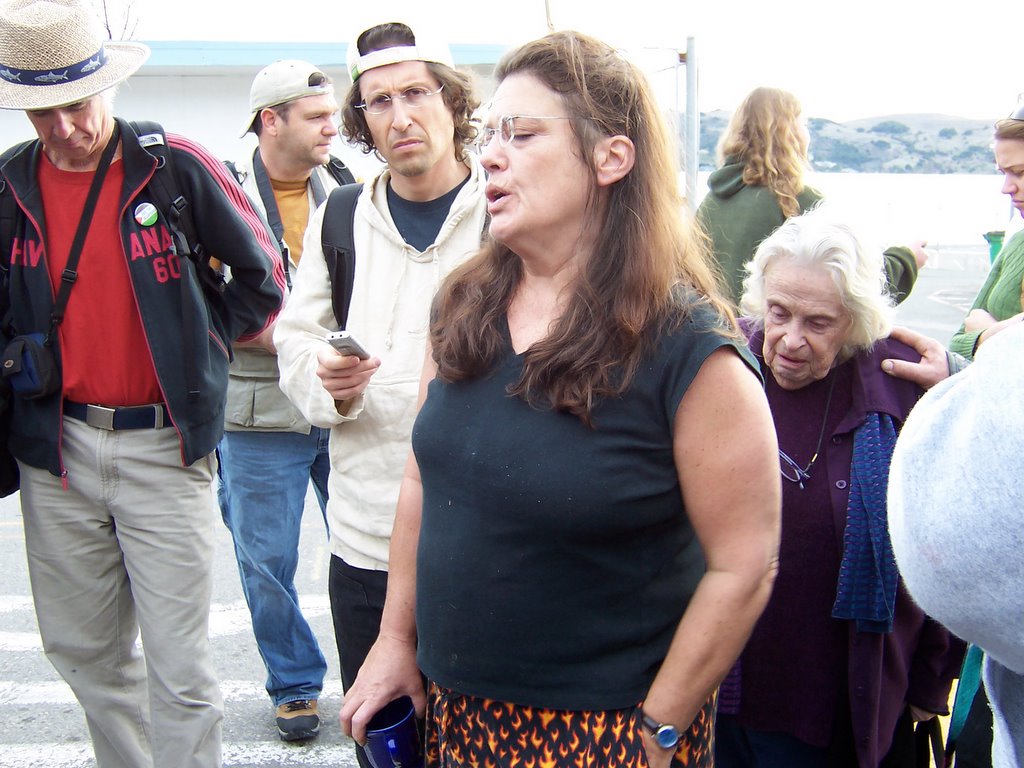
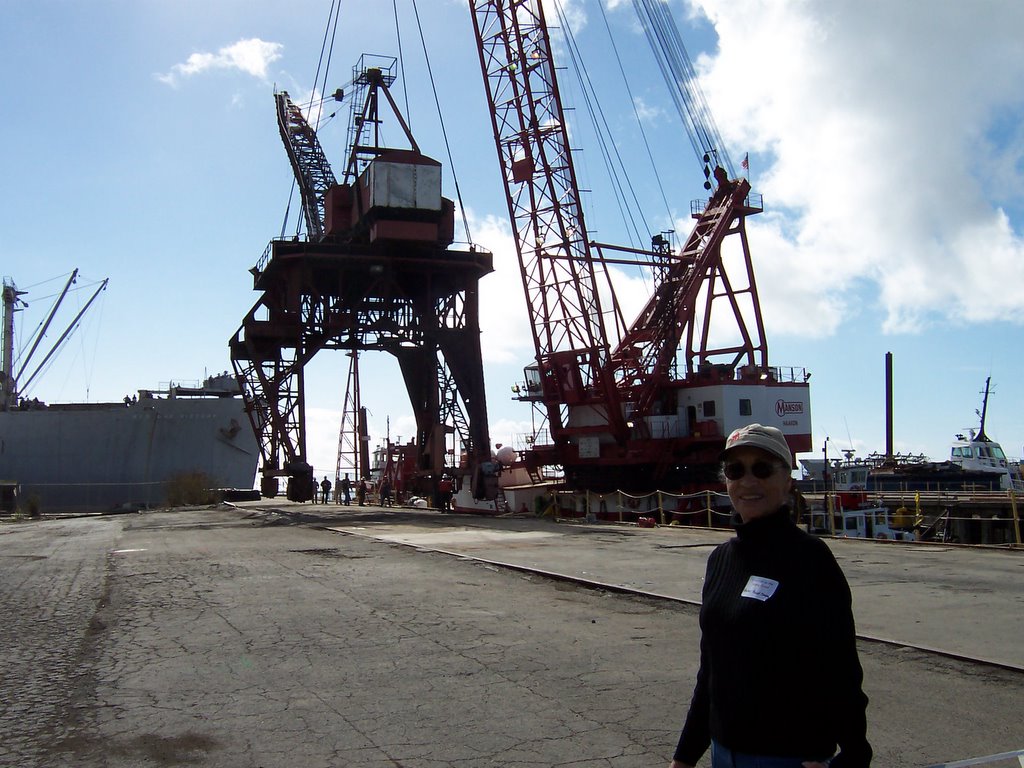
Photo: My newfound friend, Barbara Barker -- from Colorado and Camp Casey where she stood with Cindy Sheehan until the camp disbanded for the move to Washington. She's one of the heroes of the movement to abolish the death penalty.

Wednesday, December 07, 2005

Wavy Gravy as "Sanity Clause" and other clowns I've loved ... .

Yesterday dawned like springtime -- except for the warning of an early morning chill that strongly suggested layering for the trip to the prison gates. Today's version starts with panty hose under blue jeans; great solution. Now to find ways to dress properly for a morning of ordinary daily job stuff and also to be ready for a quick noontime drive over the Richmond San Rafael bridge to meet the others. Today would be Wavy Gravy Day and from past history, it would surely hold some surprises.

As I parked and walked up the road toward the gate I could see a small group gathered around the prison post office entrance -- with several members of the media hovering nearby - waiting for some good footage they were sure they'd catch today.

Today there were fewer protestors, but those few who have formed the Alliance Against the Death Penalty to which Paul Sawyer has belonged since it was reinstated in the mid-nineties. But there he was -- Wavy Gravy now renamed "Sanity Clause" dressed in a tie-dyed rainbow-colored santa suit with an awful synthetic beard that he kept having to shift in order to clear his mouth for speaking. A bit later in the proceedings he renamed himself again, this time it was "Escape Clause." He was holding a bag filled with lifesavers, packages of Twinkies in which files had been placed very visibly, and Paul was out looking for a life preserver that Wavy would announce as a gift to be offered (on camera) to the governor. It was Wavy nonsense at its best.

He is a serious clown who runs a clown school, Camp Winnarainbow, in the Santa Cruz mountains, where the clown tradition is faithfully taught and practiced. He is in the Emmett Kelly mold -- but with a social conscience. He is one of the Pranksters from the Ken Kesey crowd. Paul, Wavy, and I lightly touched lives many years ago. In my copy of Kesey's "Sometimes a Great Notion" is a small bunch of dried wildflowers gathered on the beach at Asilomar in Pacific Grove by Ken and presented to me on a day when he was wandering around the dunes with a piece of adhesive tape over his mouth bearing the word, "hello." We were attending a UU Conference where he was the keynoter. He found me sitting on the dunes between workshops, playing my guitar, and silently motioned me to sing a song. I did. He listened quietly and when it ended -- he jumped up and -- like a small boy -- ran to the nearest cluster of wildflowers and gathered up a bunch then -- very formally -- presented them to me with a flourish. It was a delightful moment that I'll never forget. Those little dried blossoms are still with me. Ken died a few years ago. I thought of him and of his Merry Pranksters, and of Wavy and Paul and me, still here and still caring about humanity and willing to do whatever it takes, including dressing up in a clown suit, tucking his now white hair into a Santa's cap, and demonstrating at the gates of a prison to stop state murder in our names. There's just a bit of whimsy about it -- even under these oppressive circumstances. Wavy is sensitive to just how far to push the limits and the ways to maintain the necessary serious note to balance the nonsense.

It's the way of the clown, I suppose.

But that was yesterday. Today my workday didn't allow for a visit to the vigil. Tonight I came home to a message from Paul on my answering machine -- saying that Barbara Becnel, Lynne Whitfield (who played Barbara in Redemption,) and Snoop Dog had visited the prison. He told me that 25 demonstrators had engaged in acts of civil disobedience, had been arrested, and that they were mostly women. He asked that I call two members of the clergy that he hoped would join the vigil tomorrow, but he didn't have their phone numbers ... would I call? He sounded a little forlorn. The weather has been wet and cold with darkness falling early. They're sleeping in their cars and have been since Sunday. I felt guilty. Tomorrow I'll try to bring hot coffee, but most of all -- another witness -- myself.

Tomorrow I have an impossible schedule but there's a hole in the middle of the day that I will use to again visit the vigil and lend moral support. He flies out tomorrow night on the red eye to return to southern California. Others will carry on at the gates until either there is executive clemency, or, the unthinkable takes place on December 13th.

I lack the heart to wait it out at the prison. I cannot. But I will return on Saturday and Sunday. Not sure I'll try to make the march from the Palace of the Legion of Honor to the prison. Let's hope that the governor makes his decision before Sunday at eleven so that we can transform that march into a victory party!

... I cannot spend that last night at the prison gates. I just don't have the heart for that. This would be the first time that I will see the life of one I've come to know -- destroyed by lethal injection -- in my name and that of every Californian.

I can't think of a single thing to do now, except hope ... .

Sunday, December 04, 2005


Hope for the future embodied in a lovely young girl named Yaminah ...

At a point late in the proceedings today, a woman stepped out of the crowd to tug ever so lightly on my sleeve. "I'm Mira. We met recently at Flossie's family memorial service at Geoffrey's." Flossie was the Florence Reid Lewis whose life we celebrated only two weeks ago. The young woman continued, "...Yaminah remembered you (she's standing over there). She's Flossie's granddaughter. I'm Yaminah's mother."

And here she stood. The personification of "Youth on Crusade." Except for Michael Franti's little boy, Yaminah was the youngest demonstrator in sight. But she was here after much thought, obviously, since -- deep into the proceedings after many had testified -- she asked to speak. She was articulate, clear and dedicated to a strong belief in the democratic principles of justice and fairness. She spoke as only a young person can of the predictable effects we can anticipate should clemency be denied and Tookie's life taken. She was Betty at 15-16, and it's hard to express how much her presence meant to me seeing her there. On the drive home across the Richmond-San Rafael bridge, Sondheim's "Children Will Listen" imagined itself into my head and played softly behind our conversation.

Later Yaminah's mother told me of a march for clemency and a moratorium being planned for next week that will start at the San Francisco Palace of the Legion of Honor, cross the Golden Gate Bridge, and end up at San Quentin. "She would like to participate, and we'd love to have you join us."

We exchanged email addresses after I learned from Mira (Yaminah's mother) that this beautiful young cousin had read our family history website (California Black Pioneers) ... and maybe this journal....?

I do hope I can do this ... if work allows ... and if the aging body holds out under new and crushing demands. If not, it's just possible that the young woman replacement I've been waiting for these past years may now be in the wings preparing for an entrance when the time is right ... .

Photo: Yaminah Abdur-Rahim making her statement -- perhaps her first public stand but certainly not her last. Mira is standing just behind and to Yaminah's left -- head down with face showing just above the eyebrows.

Home again, and the tension has broken ...

In all of the days leading up to this one, I've not known just what to expect of our San Quentin Prison gate protest.

The Stanley Tookie Williams case has shadowed my life for about five years, ever since meeting Barbara Becnel and through her, moving closer to the prison and judicial systems than I could ever have anticipated. In the abstract, capital punishment was indefensible to me -- but after meeting Stan -- it was no longer an abstraction, but had living breathing corporeal reality -- all leading up to this day.

I've wondered over the years how it would feel when someone I'd come to know was facing the death penalty? Wondered how Barbara would fare in the aftermath -- when the cause of saving this life had dominated her own over the past ten years? She is stronger than anyone I know. A statuesque black woman of unique beauty and brilliance. But would she be strong enough for what this week may bring?

Today I'd committed myself to silence. There were lots of people who might be anxious to be on camera and to make statements. I mentioned to my friend, Marilyn, that I would not risk my position by being too visible here at the prison. I insisted (when she protested) that there would surely be no pressure brought against me for stands I may take on my own time, but that I wanted to be sensitive to public image in light of my work and the doors that were just now opening up to so many dreams I've held for so long.

I listened for a while -- sure that anything I might have said would surely be expressed by others and that it wouldn't be necessary for me to be more than one more supportive smiling face in the crowd. But it didn't happen. I hadn't counted on the fact that I would be the only person in that crowd with the distinction of having actually met Stanley Williams, and could speak firsthand of what that might mean in this context.

I asked for the mike and all of those cameras suddenly turned toward me. It was not intimidating. It was as though all I could see were the faces beyond them. I don't remembers my exact words, but whatever it was must have been effective since those faces smiled and heads nodded in agreement and it all felt right.

Country Joe Macdonald sang, Paul read from Walt Whitman and Franklin Delano Roosevelt and Justice Brennan. But we were from the old revolution for social change. Beautiful young dreadlocked Michael Franti appeared from the edge of the crowd with his lovely little boy, bare feet despite chill and the hard pebbles underfoot, guitar slung carelessly over his shoulder, and I knew that the baton has been passed and that our revolution continues toward changing this recalcitrant world! His music was all the more inspiring in his presence. I've only heard his voice on the air. Joe and I exchanged knowing glances and relayed them to Paul. The revolution is in good hands.

I was glad to have thrown caution to the winds and said my piece. I won't watch the newscasts tonight. Whatever words I spoke did their job and to try to edit myself at this point would serve no purpose. I just don't want to know.

It was a good day.

I'm hopeful.

Photo: Singer Michael Franti whose songs were the highlight of the experience for me. His lyrics were chosen for relevance and were a strong reminder of the period in history when Paul Sawyer, Joe Macdonald, and tomorrow's vigil participant, Wavy Gravy, held the same magic and power for change that is emanating today trom a new generation. Was reminded that I, too, was one of them.

Saturday, December 03, 2005


After site visits of over 7,900 since 9/2003, the very first reader comment arrived in my mailbox yesterday ...

From: Anonymous
To: cbreaux@earthlink.net
Subject: [CBreaux Speaks] 12/02/2005 04:29:40 PM
Date: Fri, 2 Dec 2005 16:29:41 -0800 (PST)
X-ELNK-AV: 0

Let the bastard die.........

--
Posted by Anonymous to CBreaux Speaks at 12/02/2005 04:29:40 PM
Disheartening.

Even more so as I watched the weekly PBS show, This Week in Northern California, last night and was dismayed to hear one of the long time S.F. Chronicle reporters make the comment that, "...after all, he has never displayed remorse for his crimes!" Another reporter reminded her that Stanley Williams has claimed innocence since his arrest 25 years ago so would hardly be expressing remorse for crimes he claims not to have committed.

After receiving this disturbing anonymous email I checked with the homepage of Barry Schect's Innocence Project and learned that -- as of December 3rd (today), 163 Death Row prisoners, nationwide, have been exonerated after investigations proved them totally innocent of the crimes for which they were convicted and imprisoned. There are over 600 now awaiting execution at San Quentin. The simple law of averages would surely argue against further state killings until we've reduced the risk of destroying another life for lack of a closer look.

Don Perata is right.

State Assemblyman Mark Leno of San Francisco has already submitted a bill for a moratorium that will be heard on the floor of the legislature in the January session. Why on earth would anyone set an execution date for less than a few weeks before that bill is heard? Does this not suggest that there are some negative biases built into the system, and that need to be investigated and corrected? Who made such a decision, and why is no one questioning it in the media? Does it not cause you to wonder, too? Since everyone in Sacramento has been aware of the pending legislation for months and still set a December execution date ... might the reason be that Williams is being punished for allowing himself to become the international symbol against the death penalty? Is there another logical explanation that I'm missing?

All of this must be weighed by the governor on Thursday, December 8th when he meets with the attorneys for both sides and begins deliberations on the decision to grant clemency, or not. There's time to send off a message to him. Information is posted at SaveTookie.org where you have access to the Petition for Clemency that was submitted to the governor, learn more about the case, and still have time to make your voice heard.

Will post photos tomorrow after the San Quentin demonstration ... .

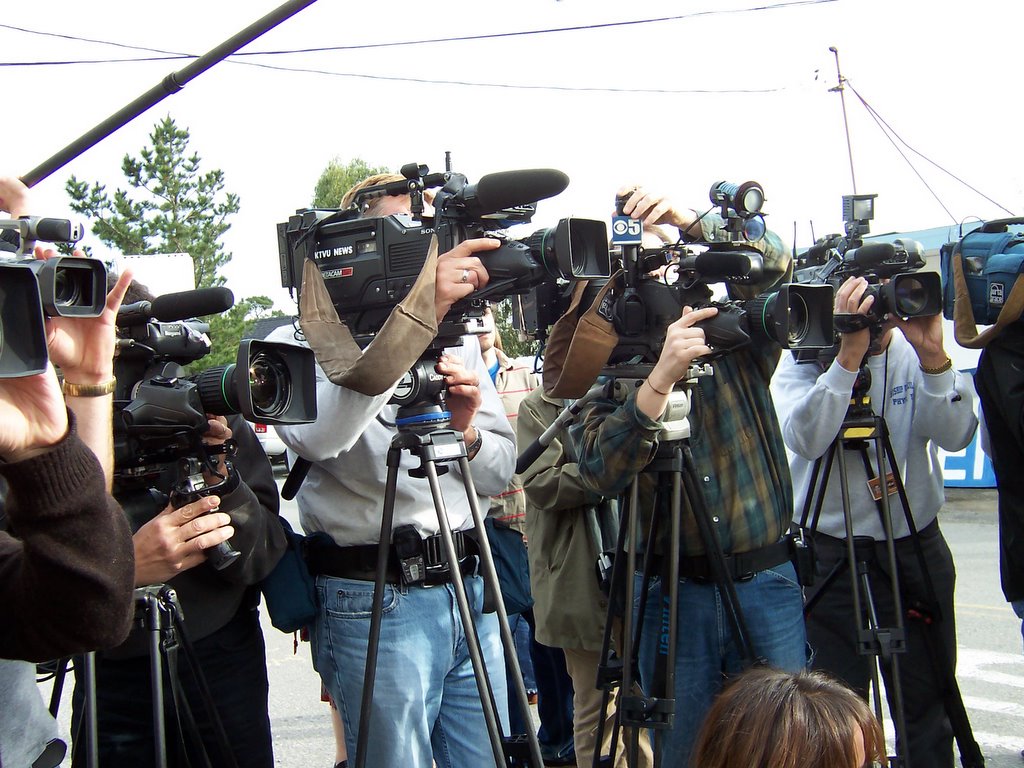
Photo: News coverage was overwhelming. The public interest in this pending execution appears to be unprecedented. The camera crews and reporters were everywhere. They've come from Greece, Paris, Spain, London -- plus all of the national news services. The eyes of the world are surely fixed on this issue.

Friday, December 02, 2005


FYI ...

-----Original Message-----
From: Senator Perata
Sent: Wednesday, November 30, 2005 1:34 PM
Subject: Stanley Williams

Dear Friends:

I want to share with you the text of the letter I am sending to Governor Schwarzenegger asking him to grant clemency to condemned inmate Stanley Williams. I do not excuse Mr. Williams for his deplorable crimes, nor do I find his recent atonement adequate justification for clemency. However, the substantial and growing body of evidence of biased and unjust application of the death penalty in California and throughout the nation compels me to support clemency in this, and in every, capital case. As I write in the letter below, we must not accept any substitute for guaranteeing the fair and equal application of the law, particularly when a person's life is at stake.


November 28, 2005

The Honorable Arnold Schwarzenegger
Governor
State of California
State Capitol
Sacramento, CA 95814

Dear Governor Schwarzenegger:

I am writing to respectfully request that you grant clemency to prevent the execution of Stanley Williams.

I make this request despite the horrific crimes Mr. Williams has committed. Human decency dictates that the murder of four innocent people cannot be pardoned or excused. And by his own admission, Mr. Williams once helped foster the culture of death that plagues too many California neighborhoods.

Nor am I persuaded that Mr. Williams’ recent good conduct in and of itself constitute grounds for clemency. A lifetime of atonement – while noteworthy – strikes me as insufficient when compared to the offenses of which Mr. Williams stands convicted.

Rather, I ask clemency in this case because I have lost confidence in California’s death penalty as an instrument of justice.

There’s clear and compelling evidence of racial bias in the application of this statute. A third of death-row inmates are African Americans, who make up less than 7 percent of our state population. A Santa Clara Law Review study found that defendants who kill white victims are far more likely to be sentenced to death that those whose victims are from other ethnic groups.

Moreover, the large proportion of poor and uneducated death-row prisoners strongly suggests that our state imposes greater punishments upon low-income defendants than those of greater means. In fact, this disparity is so pervasive that it has prompted the author of California’s death penalty statute to call for its repeal.

No doubt many believe death is a fitting punishment in this case. But satisfying the public mood is no substitute for guaranteeing the fair and equal application of the law. Until our system meets this strict standard, we should refrain from using its awesome power to take human life.

A system of justice that effectively reserves its harshest penalties for the poor – and for those who victimize people of a particular color of skin – is instead the very antithesis of justice. This is a cruel irony that we can prevent – now.

Sincerely,

Don Perata

Photo: At the gates of San Quentin, an unidentified nun from the Dominican Sisters of San Rafael. She read an eloquent statement from her order asking for clemency and an end to capital punishment in the State.

The day of the Stanley Tookie Williams execution moves ever so close ... and I can think of little else ...

The experience of having had that visit some years ago to Death Row -- having sat at a table across from one convicted of having committed crimes worthy of capital punishment without feelings of utter revulsion -- has staggering consequences. His eyes met mine with clarity and openness. He was probably more at ease than anyone in our group, and I wondered about it at the time.

He'd lived in a 9'x5' cell for over a quarter of a century -- 7 or those years in The Hole in solitary confinement -- writing his books for children on small scraps of paper while seated on a mattress piled up in a corner. Barbara brought those bits and pieces out of the prison at each visit and -- over years -- edited them into readable form and published them There were nine in all -- with more in preparation, each intended for and achieving the turning around of young lives from the awesome fate he is now facing.

The transformation experienced over those years of solitude produced a giant of a man -- someone whose inner self eventually grew larger than the over-developed muscular monster who had existed in this body before redemption was experienced in some mystical way in The Hole. I heard him speak of it yesterday in a from-prison interview with Amy Goodman on Democracy Now.

I came away from that encounter having witnessed serenity personified. I'm not sure that I've ever met anyone else who reflected that -- despite years of exposure to Bill's world of Tibetan Buddhism and the hours, days, weeks, of striving to achieve that kind of affect through the practice of meditation. The busyness of my mind could never be stilled enough for the techniques to take effect, yet I could see the peace in Stan, in this unlikely place, under these incredible circumstances. My own fears that day in the noisy prison visitor's center were cutting off the ability to fully take in the experience despite the attempt to capture it all -- to imprint every sight and sound because it would never be repeated -- ever in life. I can close my eyes and bring it all back in full color -- even now as I write these words.

It was on that day that I knew beyond words that guilt or innocence was less relevant than the taking of lives as vengeance for crimes committed, though I strongly believe in his innocence. I knew that I wanted no part of ending the existence of any human being in my name. That the death penalty was far too contaminated by decisions made for political gain. That those who were most likely to receive it are often doomed from their first appearance in our courts by the color of their skins, the economic status of their families, inadequate legal representation; by lives too often scarred by racial inequality; by lack of opportunity; and (as in the case of Stanley Williams) condemned by an all-white jury unable to identify with or ferret out the truth filtered through lifetimes of racial biases of a system of justice that reflected their own fears and prejudices, and all on purely circumstantial evidence.

Yesterday's published letter from the Senator Don Perata, Pro Tem of the California State Legislature, written to the governor recommended a moratorium on the death penalty. Despite an unwillingness to stay the execution, the Ninth Court of Appeals also made an unprecedented recommendation for executive clemency to the governor at the time of the denial. Senator Perata's letter was eloquent in its plea and a welcomed development to those of us working toward the same goal for our state and nation. It is a powerful statement from one surely more objective than I, and without a belief in Stan's innocence of the crimes for which he was convicted.
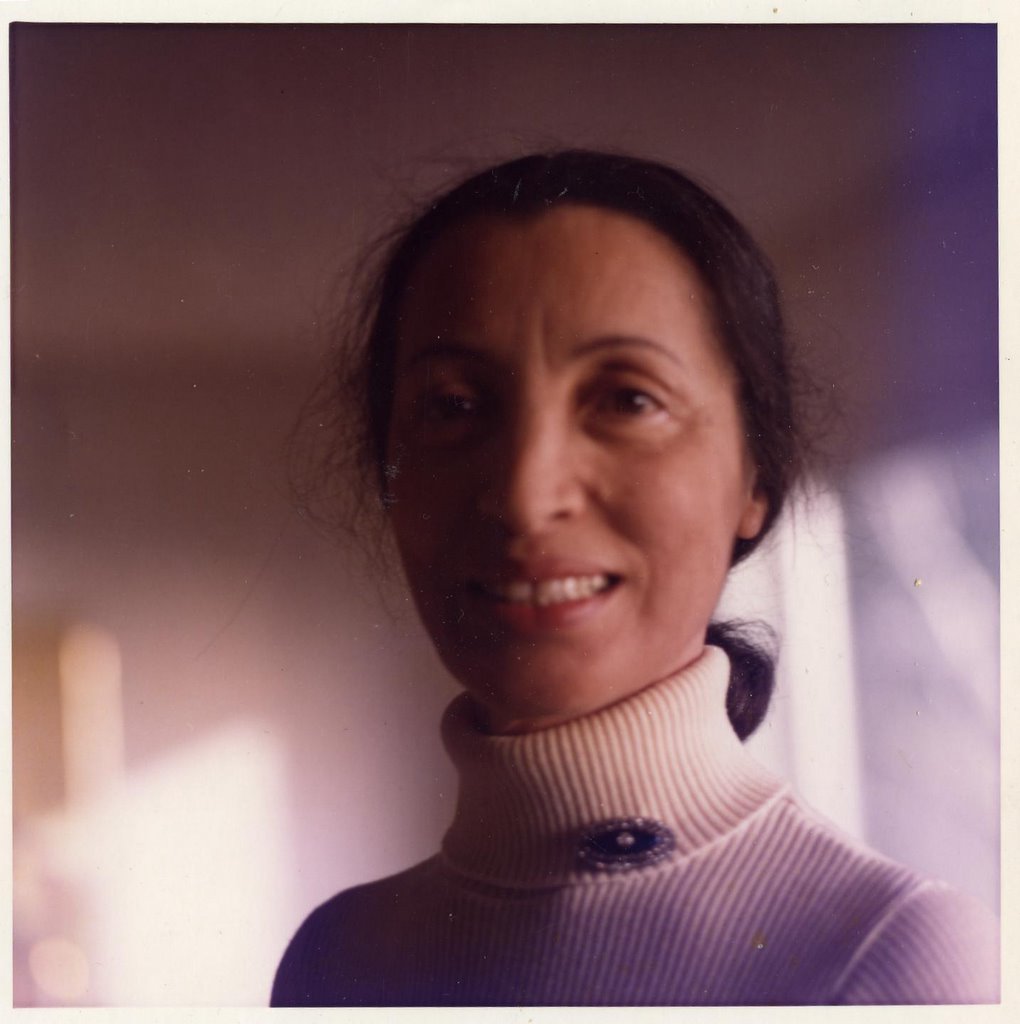
Five nominations for the Nobel Peace prize and a sixth for the prize in literature, speak volumes about the power of Stan's work with the world's children at risk through his writing from Death Row.

On Sunday afternoon (from 2:00-4:00 o'clock) I'll join others at the San Quentin prison gates in a peaceful demonstration. It's anticipated that many will arrived from Southern California in buses and that they will be joined by members of the clergy, by former gang members, by those opposed to capital punishment from activist groups from across the state and the nation, and we'll initiate a vigil that will begin on Monday morning and will go around-the-clock until either the governor announces his granting of executive clemency, or, until the 1-minute-after-midnight execution on the December 13th.

What about the families of the victims, you ask?

They will be spared the regret of certain realization at some point in their lives -- that nothing has changed for them. That there is neither closure nor relief from the pain of loss. That the taking of another life has gained nothing of consequence except the possibility of the lifting of the weight of hatred they've experienced as the result, except that the hate may not end with the death of another.

I carry with me the hope that I will never have to live the life of a survivor of such a horrific loss. I'm certain that I would seek the same vengeance were the victim one of my own. In time, I might be grateful for the fact that society has removed the possibility of my acting out my rage by setting limits on my response or my ability to carry it out against the perpetrator while the hurt is unbearable, I might be spared then, the diminishing of my own quality of life that would significantly reduce my own capacity for compassion and humanity. All of this might be more possible if my vengeance was not supported by law. I would know that the offender would live a lifetime separated from society without the possibility of ever enjoying freedom or the ability to re-offend. And at some point I might move beyond the unspeakable pain of my sorrow.

These truths were learned from members of a national organization called Families of Victims - Against the Death Penalty. Met them at a banquet in San Francisco hosted by actor Mike Farrell where the governor of Illinois (who had just freed up everyone on death row in his state after 14 had been found innocent) was the keynote speaker. It was an evening I've never forgotten, and that gives me hope this day.

Now -- there's work to do toward the creation of a more just and equitable system of justice while time continues to run out and the chance to confront ourselves is again lost in a world of everyday insurmountable human loss. Iraq, Darfur, Afghanistan, for me are unreachable. San Quentin is only minutes away .

This in concert with others, I can do.

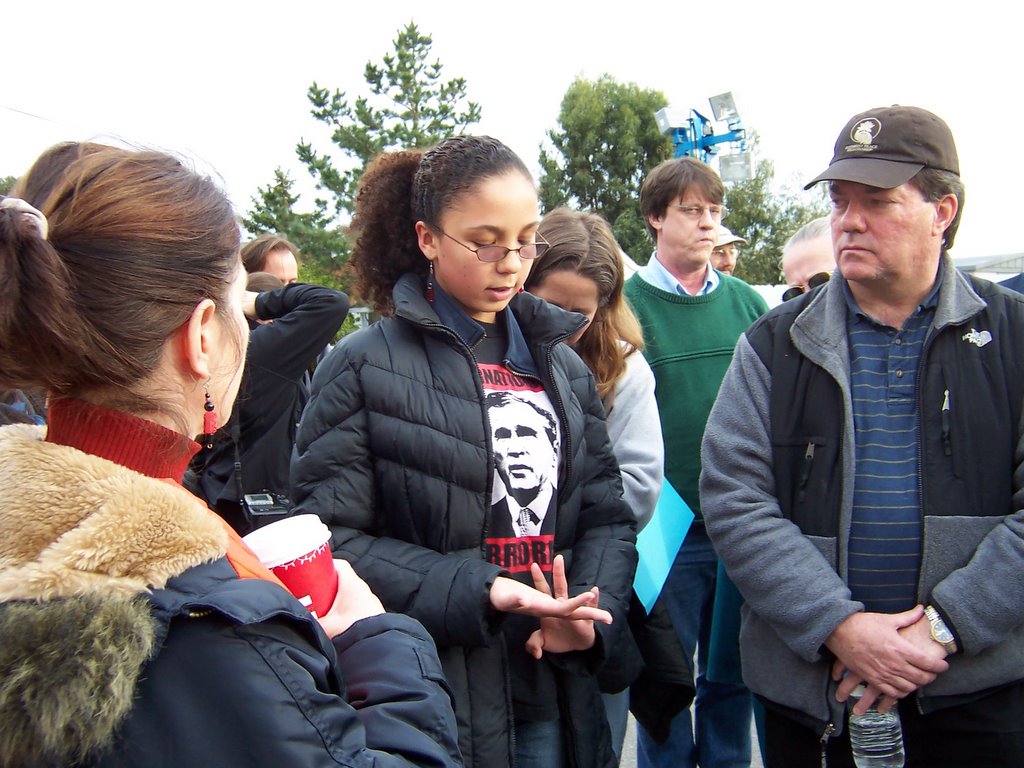
Photo: A woman from the San Quentin community who walked down from her home near the gate to join us. She made an eloquent statement of support for Stan Williams "...because the State should not be in the business of killing."

Right photo: An unidentified man, UU Minister Paul Sawyer of Pasadena, and me.

Wednesday, November 30, 2005

November 23, 2005

Barbara Cottman Becnel
Neighborhood House of North Richmond

Dear Barbara:

You surely won't read this until sometime after this crucible has been dealt with -- but this morning I woke with a strong feeling that Stan's life will continue and that you will have become what I predicted years ago, the Rosa Parks of the Anti-Death Penalty Movement. I cannot believe otherwise.

Can't imagine the pressure cooker you're living in -- or how you continue to "do the work" of all you've brought into motion over the years. But it's all reaching the predictable apex now, and all of the years and the love and the caring and impossible hard work you've done will culminate in whatever fate has ordained. I truly believe that the governor will grant clemency. You're done your work too well. Stan has functioned at the center of this vortex in extraordinary ways -- to become the most worthy recipient of the world's caring and to bring the end of capital punishment. The two of you have created the irresistible force that will change us all forever.

I will join Paul Sawyer and the others in the vigils between December 8th and whenever the governor reacts to the petition -- hopefully before the 13th. I cannot imagine that -- if he is going to act favorably -- he will allow the tension to build much longer than necessary.

My best to Stan.

Betty

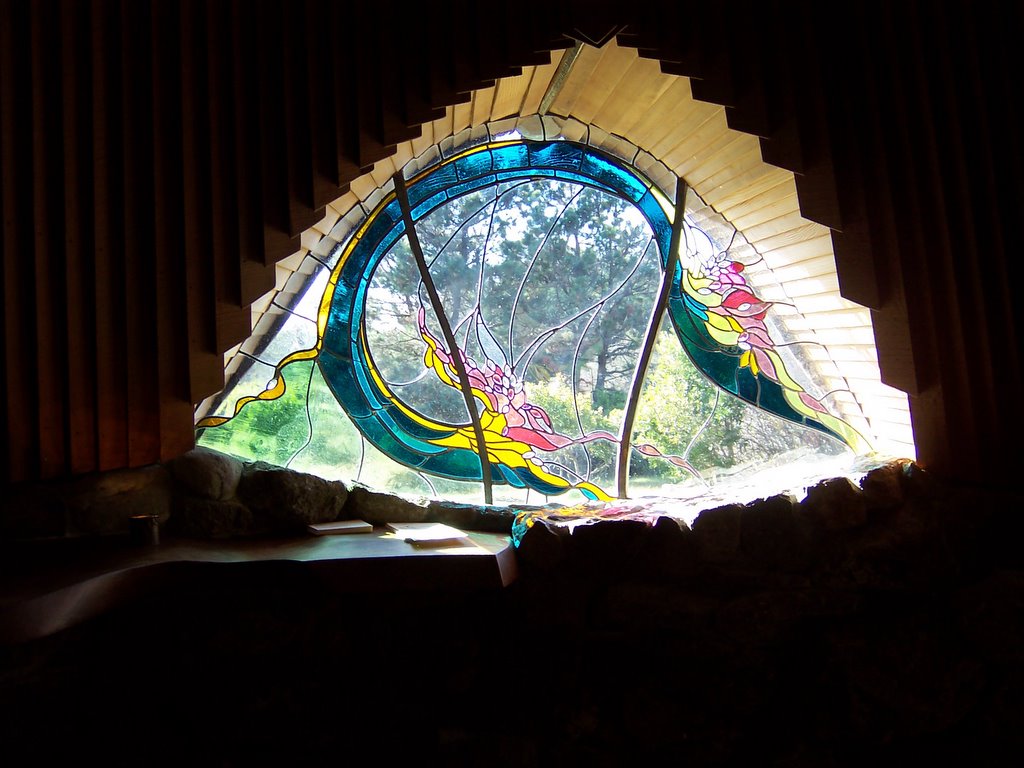
Photo: Another of the stained glass windows of the Chapel at Sea Ranch. I used it here because I thought of Barbara and Stanley Tookie Williams and of the tension of these past weeks as I looked at the light shining through -- and hoped ... .

Tuesday, November 29, 2005


The gem that is the Chapel at Sea Ranch, Gualala, California ...

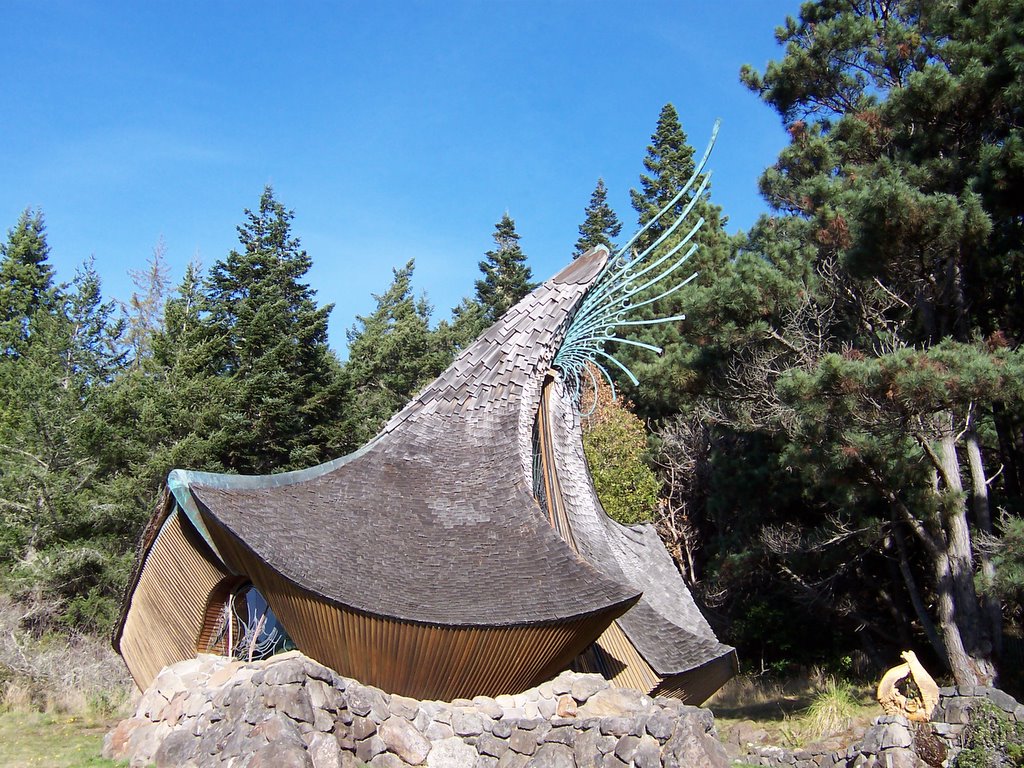
The Thanksgiving holiday ended with a 3-day trip to Mendocino with a side trip to visit this magnificent tiny chapel beside Coast Highway 1 just a mile or so south of Gualala. It was created by James Hubbell - a San Diego architect and his son, another artist. It is designed for meditation and personal reflection -- holding no more than two or three people at a time, but probably best experienced alone. It is less like a building than a people-sized walk-in sculpture. Everywhere one looks there is an exquisite work of art for the eye to feast on; beautiful mosaics inset underfoot, stain-glass windows, hand-carved highly-polished small wooden benches, a bench lovingly covered in needlepoint to kneel upon, a wrought-iron chandelier overhead that is stunningly right for the space. It is an amazing experience that brought the kinds of feelings I would expect to have when standing under the ceiling with eyes upcast from the floor of the Sistine Chapel. I can imagine visitors 100 years into the future approaching this beauty with the same reverence. It was constructed in 1985 and is not yet well known, but it will be.

Having been a guest at Odiyan, the Tibetan Nyingma Monastery, years ago, with its cutglass library windows and mosaic temple floors, with its colorful gardens for meditation and fine art everywhere to invite contemplation -- one would wonder if Sonoma and Mendocino counties haven't cornered at least two of the important religious sites in the state. Odiyan is just a bit further south, inland from Marshall near Fort Ross, above the Russian River . Though I've visited a number of the California missions, I can't recall ever feeling the reverence there as I've experienced in either of these contemporary places of worship.

The Sea Ranch Chapel is non-denominational, intended for personal contemplation. Odiyan is Tibetan Buddhist. On the hour-and-a-half drive back to Mendocino I found myself silently wondering why such sites draw me inside so deeply without shaking my atheism? What about such places touch my spiritual places so profoundly? What is the nature of the God within me? Can it simply be my response to great art rather then to religion?

We visited St. Marys Catholic Church at Gualala, another small jewel of an architectural triumph. It, too, brought a feeling of deep reverence. It was Sunday afternoon, and there were no worshippers around. It occurred to me that the next time I'm in Mendocino for a weekend, I want to visit this church. But I know that I want to visit when it's filled with worshippers. I want to see it alive and functioning as intended. I want to sit among believers. And I knew that I needn't be a believer to want that experience. I realized that my spirituality was not dependent upon dogma or a belief system -- that it can be tapped into and brought to the surface with or without a creed to adhere to or a god figure to worship. The beauty of design, a combination of art disciplines, witness to the brilliant creativity of any artist capable of conceiving such wondrous spaces, the roar of the ocean and the vastness of the sky and the towering of the redwoods just outside the doors -- all create for me the wonder that feeds what some would call my soul.

I cannot imagine ever entertaining the idea of marrying again, but if I did ... .

Photo: Exterior view of Sea Ranch Chapel on the left. On the right Is a stained glass window viewed from the interior that faces the carved teak door at the entry. Click on these thumbnails for a full picture of this magical place.

Thursday, November 24, 2005


Thanksgiving - "over the river and through the traffic" ...

Holidays no longer hold the same power as they once did for me. In these days of far more funerals than christenings, awareness of who is not at the table becomes painfully sharp. There's no longer a need for a children's table. Our youngest are now old enough to sit with the grownups -- it's been several years since we've needed a highchair. The next wave of babies is not yet here. We're all aging ... .

Noticing the competitiveness of everything around me today. ESPN is bringing football from every quarter of the country into our living room while on other channels are featured re-runs of the new genre of reality shows that are the epitome of "you're out" television. We've turned everything into competitions for favor, for money, for careers, for oil and stocks and bonds and elective office, for a place in the chorus line, 24-hour slot machines, for cosmetic surgery, for a spot on the catwalk, and finally, for King of the World!

Remembering the day that I sat high up in the bleachers at Edwards Field, University of California at Berkeley -- overhearing a conversation between two men who coached Special Olympic athletes who at that moment stood far below at the starting line -- in their blocks and ready for the 100 yard dash. "Working with the retarded is difficult," says one, "... you have to teach them to look down as they run. If they catch a glimpse of runners in the next lanes -- they will simply run alongside." Maybe this is a more natural way of performing -- at least before we're taught to compete."

Remember laughing some time later as I watched the San Francisco Bay To Breakers marathon with all of its craziness and color. Here were thousands of people of every size, shape, sexual orientation, skin color, wild costume, running alongside and loving it. The real runners ran far up ahead (the Kenyans, of course) seriously competing for fame and fortune. But it was the nutty ordinary folks who walked, ran at any pace, laughed and joked until they reached Footstock in Golden Gate Park and the great party that followed.

Dorian and her equally handicapped friend, Chris, are in the livingroom watching the Thanksgiving Day parade while I do the chopping and mixing in the kitchen. They're talking about their up-and-coming Special Olympics bowling tournament where they'll be lucky to break 75 out of a possible 300 but will come home bedecked with ribbons and tee shirts emblazoned with the Special Olympics logo. And every other athlete will do the same as they've done for many years.

I'm aware of the number of email pleas for contributions to organizations I respect and admire -- created by political allies whom I trust -- and am aware of the ultimate competition for power those pleas represent. If I answer them all appropriate to my trust and sense of rightness, I'll need another job or a far higher salary. I'm helpless to respond, except in a token way and with the hope that there are enough small fish like me doing what they can to support this nation in what may prove to be the final competition before we collapse into non-relevance and another more worthy national competitor moves forward to take our place in the world arena.

Is there nothing for which we are not willing to write a rule book and offer prizes?

Dance Sport as an olympic event?

Have we lost our collective First World minds?

Photo: Special Olympics swim meet. Dorian is third line in this March of the Athletes, 2005.

Monday, November 21, 2005


Worked through something of importance this weekend ... .

Beethoven's Fidelio experienced in juxtaposition with brilliant jazz violinist, Tarika Lewis, and the renown John Handy on saxophone dueled to a neat finish this weekend. What a convergence of arts and culture this was for me! I'd never have dreamed ... .

The opera was a combination of sounds and spectacle and craziness of a kind that sent me into giggles -- alone in bed late on Saturday night. The music was wonderful -- once I allowed myself to shut out the 275 pound mezzo contralto playing a "lad" in duet with a lovely delicate and svelt young blond ingenue whose father was an African American baritone in a blond/grey wig and all singing in German!

Following the libretto provided on screens on either side of the great opera house stage proved pure folly since opera is apparently not about libretto at all but about music. And casting is not about obesity but about purity of tone, stage presence, and projection. And once I stopped trying to force it to make sense -- closed my eyes and rode the waves of Beethovian music -- it all worked. But I had to work at it. There's an inescapable intellectual component that doesn't quiet easily. A major cultural difference.

This evening there was another family memorial service. This was the younger sister of Dorothy Reid Pete who died recently at the age of 90. Florence was 88. Her only daughter, Joan Tarika Lewis is a brilliant violinist -- a jazz violinist. She's toured the nation and the far east with the famous saxophonist, John Handy, who played for us this evening. It was a memorial service like no other. Tarika is active in African drumming and dance circles so the evening was filled with both as her friends joined in the celebration of her mother, Florence's, life. They were in colorful African costumes. There was a traditional Libation ceremony that reminded us all of that which binds us together across the ages.

The discovery for me was that here in this room the experience of music was purely emotional. Visceral. No thinking here. Just feeling and letting it wash over me. I could anticipate the notes before they were played. I know this. Here were both the notes and the music!

For the greater part of the evening (it was held at Geoffrey's, a smart supper club in downtown Oakland), 15 mm films from the family's archives were shown on a large screen -- while the musicians improvised.

There were scenes from their early marriage and when Tarika and her late brother were very young. Florence's husband and Tarika's father, the never-defeated light-heavyweight champion of the world, John Henry Lewis, was shown in one of his historic bouts. He died in 1974. This was truly the end of an era for their family. This is the family of Mel Reid, my late first husband and the father of our children. I'm still a celebrant when the occasion demands. This is my tribe, too.

As an aside, I can't recall the source of the saying, but it may have been Atlas who claimed that he could lift the world high in his bare hands if he only had a place to stand.

On the drive home I realized that this is what African-Creole history and culture are for me. They're my place to stand. All else flows from that.

This I know.

Photo: Don't recall the year, probably in the late Sixties. I'm in the lower right with guitar -- back to camera. The other musician is visiting from the Caribbean. Cultures blended nicely that night. These were Unitarian-Universalist friends of the Mt. Diablo Church. These were the best years just before my return to Berkeley in the early 70s.


Thank you, Donna. A reminder of how it was ... .

A dear friend and important historian dropped by for a meeting today and in the process dropped this news clipping into my hand. She'd been rumaging around in the Berkeley Main Library and run across this article. It was archived from the now extinct Berkeley Daily Gazette and is dated March 28, 1985. The words of the writer evoke such memories. The article is a reminder of life as I was living it at the time -- and rings quite true -- even in hindsight.

(This is a thumbnail. Click on it to open.)

Saturday, November 19, 2005


Contrasts can be dizzying if one thinks about it too much ...

Woke this morning to the sound of Scott Simon's voice on NPR introducing a piece on New Orleans by one of the staff whose home was/is there. It was a fine piece with appropriate sounds in the background and the proper mix of humor, irony, and pathos for what exists no more. The images from my architect friend, Tom Butt's (not my special friend, Tom) report on his recent professional visit to Louisiana and the many photos of desolation that he included blew open memories that I thought had dimmed out long ago. Hadn't realized how touched I was by those images.

The replay of the hurricane of my childhood -- the one that uprooted my family and deposited us in Oakland, California, in 1927 has come into sharp focus again. I was six -- old enough to have the trauma renewed but more in feelings than in fact. Each time I read of the plight of those dispersed out into strange environments (like Creoles in Utah) something stirs deep inside that I can't quite get at ... .

Comments by this morning's reporter continue to resonate -- "... in a city that was only recently 80% black, that percentage has been reversed. Everywhere I look there are white people." And, "...the hotels and inns that remain are no longer filled with the visitors who used to come to share our culture, but with FEMA personnel and workers and agents." Though the voice was that of a white woman, there was obviously pain in it for what once was -- and hope that somehow it will all be restored. She sounded both nostalgic and resigned to the unknown future of her/our city.

My family never returned except for occasional visits to see Mammá, yet much of the culture is still embedded in my psyche -- at least through my own generation. Sadly, little if any of that was transmitted to our children. My parents mourned the loss, and it was in the mourning that their love of New Orleans and the music and the food and the superstitions and zest for life was given to us. It was fragile. I didn't know. Should have taken better care of it.

When looking through old fading family photos since Katrina, I'm discovering a freshening of memories. Something beyond nostalgia ... a kinship with today's scattered souls who may never return -- but who may not find today's world any more kindly than it was when my parents left. In many cases (especially since we witnessed the lack of caring over those endless days when corpses rotted away in gutters) there's strong evidence that our fate -- even in a time of brutal segregation -- we were luckier than those now dispersed into unknown futures. It is yet to be acknowledged that at least 5000 people are still unaccounted for. There has been no final count announced. I suspect that there will never be.

I also think of all those little Bettys caught in the aftermath of Katrina -- warehoused in strange cities -- lost to the vagaries of ghetto life, uprooted from poor schools in the south and tossed into poorer ones in the north -- with resources withheld or skimmed off by corruption in a system not yet free of the blindness of racism -- damned by low expectations and consigned to the least of all there is. Such thoughts demand that I participate in the saving of the children -- all children -- and in the saving -- save myself.

But as it was with my own life -- change will come. That it will be as profound a change as I've lived cannot be seen at this point. Change is irresistable; controlling the shape of it is unfortunately a collective thing -- demanding implementation by us all. Individuals have little power over the form it takes or the speed by which it moves. Yet, that little girl who arrived with hurricane-devastated parents in 1927 survived. There are remnants of a culture still influencing my life. The Catholicism and the French patois were casualities, but the jazz and the deep pride of being and the gumbo and jambalaya and the joie de vivre lives on, and for that I'm grateful. Perhaps that's why I cling to the uniqueness of my Creole (black) ancestry -- it's always given more than it took away. And I'm still adding to it -- though often despite a strong resistance to the constant threat of expropriation by the dominant culture.

Tonight we'll have dinner at Tadich's in San Francisco's financial district -- then on to the San Francisco Opera. The performance will be Ludwig van Beethoven's "Fidelio." Though not hard-wired for either symphony or opera, I find myself more and more open to listening keenly in the hope of making connections to the store of music of a kind that I feel rather than hear. I'm discovering that -- from time to time -- some universal is tapped into -- and that spiritual knowing kicks in ... and the music and the fine arts and the dance strikes some universal something and I'm on the inside -- with the composer or the artist or the dancer -- and there's the feeling of home. The feeling is rare -- but having felt it at all and at times emulating it -- the possibility keeps me ever searching in galleries and on concert stages and dance pavillions ... but mostly in the music of Duke Ellington, Miles Davis, Billie Holiday, and Shirley Horn, still. But at times now, also in the strains of Sibelius, Borodin, or Mozart or a Quaker choir singing "Tis a gift to be simple ...". Maybe the connection has to be made with something already within me, and after so many years -- what's in me grows richer and more complex with each day.

What's in me -- the starting place -- was/is my black Creole history and culture.

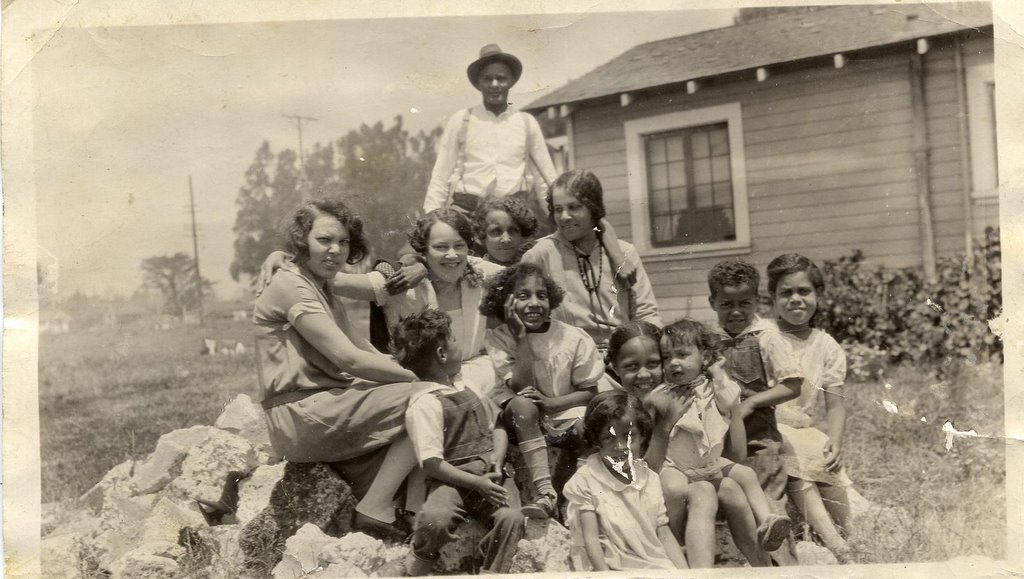
Photo: Papa George (Allen) standing beside his little shotgun bungalow that housed us in 1927. In the row just below him are Aunt Vivian Allen (Jernigan), Cousin Annabelle LeBeouf (Therence), my mother, Lottie Allen Charbonnet; Papa's sister, Great Aunt IsoBel Allen LeBeouf Warnie, Cousin Vernon Therence, Jr., Cousin Ruth Warnie (Strange), my sister Marjorie Charbonnet (Brooms) holding my younger sister, Lottie Charbonnet (Fields), Cousin Dick Therence, Cousin Josie Warnie (Duncan), and in the front row with scratches all over face, me.


Tuesday, November 15, 2005

Thinking of how stubbornly I cling to my black identity in a changing world ...

Read back through that last entry and could easily see how irrational it must read to others. And, it probably is. I've over-simplified wildly, but it felt good leaving my fingers ... and maybe that's all I needed -- to feed the words off the ends of my fingers just for the hell of it!

Thought earlier this evening about yesterday's Youth Symphony concert at Allen Temple Baptist Church. It was an afternoon performance of young classical musicians combined with the 100 voice Oakland Symphony Chorus. Loved every minute of it, most of all the Borodin.

At first I felt resistance to the music -- as though I needed to hold out against this European art form - but I couldn't. Beauty is not confined by such boundaries; and it was beautiful!

The concert was held in the 5000-member Baptist church in East Oakland in a cluster of buildings that takes up an entire city block. I remember Allen Temple from my childhood -- it was born in a small converted private home a block away from this site and pastored by Reverend Marion Wilde for many years. The grammar school that I attended is right across the street from this church. The home where I grew up is three blocks away. These are the streets of my childhood. It is now a crime-ridden very low income primarily African American ghetto. When I was a student at Highland elementary -- the community was largely second generation Portuguese and immigrant Irish. At that time there were probably only 20 or so black families living east of Lake Merritt -- and we were scattered throughout the greater area.

The Del Monte cannery hired most of the women in our community, and later National Biscuit Company. The men were employed by the huge Chevrolet Plant on 73rd Avenue and Foothill Boulevard. The biggest day of the year was Holy Ghost Day celebrated at the Portuguese hall on 71st Avenue with its colorful parades and banquets that involved us all, regardless of race or color. We were big on St. Patrick's Day, as well. We knew nothing of Kwaanza. This was long before Martin Luther King or Rosa Parks. It would be years before I'd know of Harriet Tubman, James Weldon Johnson, or Sojourner Truth. I was introduced to Langston Hughes in the school auditorium of Elmhurst Junior High on 98th Avenue when he read his poetry in an assembly. All of this ran through my mind as I listened to the Borodin symphony -- a strange juxtaposition of cultures and memories. How the world has changed.

On this day in Oakland, this auditorium held an audience made up of 75% non-blacks. The huge symphony chorus was all white with a single exception. The youth orchestra was led by conductor Michael Morgan (African American) of the East Bay Symphony. The young people were European-American and Asian with one or two African American kids n the mix. I wondered about that, and why more of our children were not into this music?

Oakland is reputed to be the most racially-integrated city in the nation. That this many white people (there was standing room, only) would attend such a concert in the heart of the black community to listen to symphonic music for an afternoon might be a rarity in middle America, but in Oakland it all works. We truly do celebrate racial diversity -- and we've been at it enough years so that it's now effortless and unself-conscious.

So why then am I still so defiant and insistent upon defining myself racially?

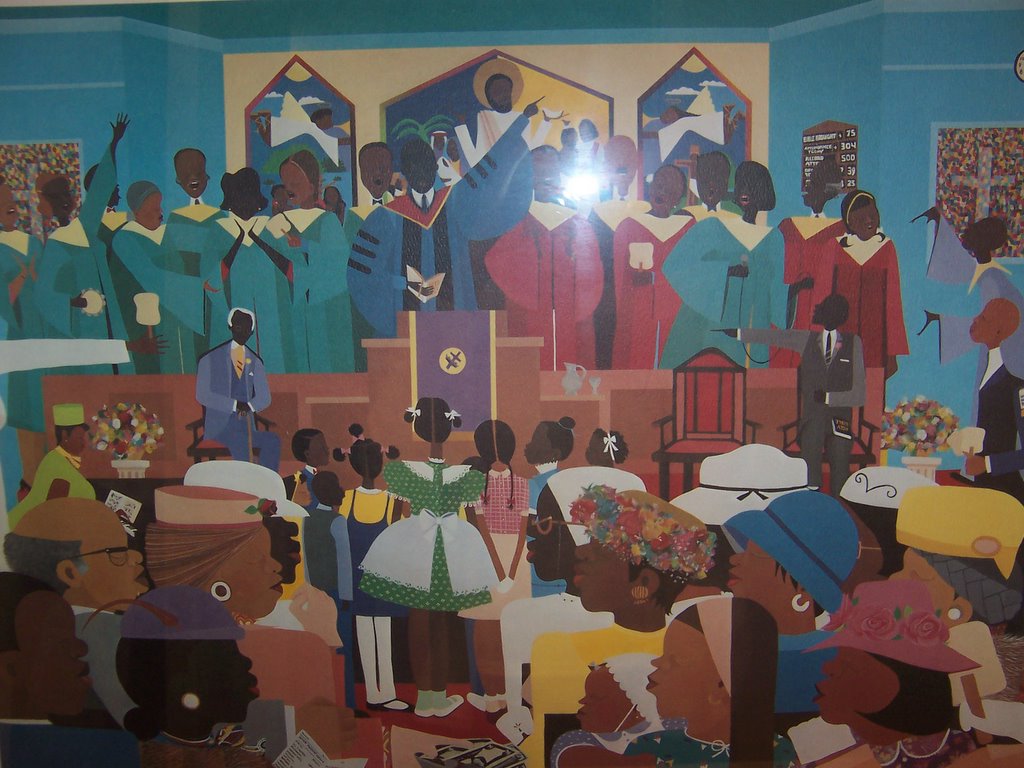
Photo: "Jesus Loves Me" painting by Varnette Honeywood (1983). A gift received long ago from my son, Rick, 1945-1997.
Been thinking about those Nubians ...

It seems highly unlikely that the truth would be so simplistic, but could it be? Is the reason that there is such reluctance to credit black people with having created written language, mathematics, water systems, etc., simply coming from the earliest examples of racial bias? Is it so hard to imagine the greatness of the earliest of scholars coming out of one of civilization's earliest universities at Timbuktu and spreading throughout the known world from the great continent of Africa? Admittedly, the greatest advances came from the African continent from people of color -- but in a scholarly way were discounted because "...those people were not black."

I can hear him now. Bill. Insisting that it was the Egyptians, the Greeks, the Romans, who brought us the beginnings of civilization as we know it (all assumed to be other than black). But what about the contemporaneous social and technological development taking place across the world in the Americas? What about the Inca, the Olmec, and the Maya? And what about Asia; what was going on in China eons ago? Isn't it quite possible that human beings were achieving similar advances in farflung parts of the world simultaneously?

Just because Europeans were the eventual victors in the great human struggles -- and created systems and processes for measuring human progress -- does that necessarily mean that they were right in all instances? The simple naming and creating of categories as a means of understanding human evolution -- isn't it possible -- that those systems and processes simply don't hold up against rapidly advancing humanity?

Having grown up in the "One Drop Rule" world, it is almost impossible for me to not know that everyone who is swarthy of complexion is partly African. It seems so easy for me to understand that those who settled farthest north (Denmark, Sweden, Finland, etc.) are blondest, fairest of skin, with downy covering over their bodies for warmth in the extreme cold of the polar regions. Or that people who settled in the Mediterranean coastal areas and around the Indian Ocean -- were darker-skinned than those farther north in European areas (Germany, England, Slavic regions). All one needs is a color wheel to watch the shadings as they naturally occur from the deep southern hemisphere to the northern polar regions.

How can one accept the reality of Lucy being the "Eve," the first known ancestor of humanity -- excavated from deep in the earth of Kenya -- and not be able to see that civilization sprang from that region as well, and that all human progress evolved through populations of black peoples over the millenia?

The radical changes wrought by populations on the move from the slave trades have done much to change the natural order but it's all there to see. Present-day mobility is completing the cycle of change. People like me and mine may be the beginning of the end of racial designations, I suppose. Race is becoming little more than a political choice. I have no idea what that will mean in terms of how we'll reorganize the world.

By the simple naming of racial groups Europeans have believed it possible to define us -- but always in relation to themselves. The black Sadu of India, the black-skinned Aborigine of Australia, Fiji Islanders, many Middle Easterners, Egyptians, Nubians (yes!), are all described as other than black African in circles we moved in during the university years. That left us with the Ubangis, the Bushmen, the Zulu, etc., who were inevitably depicted in loin cloths carrying spears -- as uncivilized (according to new world standards) and cannibalistic, primitive, taught to say "Bwama" in the presence of the white colonial powers. Having removed all others from the pantheon of the enlightened -- it was assumed that nothing but ill came from those of darker skin.

Great pharaohs of Egypt -- the thousand year dynasties -- great mathematicians and scholars and, yes, scribes were people of blackness but now reclassified under new rules written by the victors, as history has always been documented. (One day I'll have this conversation with Howard Zinn -- "A People's History of the World".)

Not sure this sheds much light on a very complicated age-old problem, but at least it's helped to organize my thoughts for another bout with Tom over the issue. I suppose that his doctorate will cut through my arguments like a machete through warm butter -- but I'll feel better when I've taken a shot at it -- again... .

Photo: oil on canvas painting by an artist (whose name I can't decipher) from Zimbabwe in southern Africa. It hangs on my livingroom wall near the fireplace.

Saturday, November 12, 2005


The New deYoung Museum is stunning!

We drove to San Francisco yesterday afternoon to get a first glimpse of this spectacular new fine arts museum in Golden Gate Park. The reviews are in and consensus is that this is an architectural triumph and worthy of its place among the world's finest. The crowds are still large, but it's so spacious that it's not a problem.

The main exhibit (until February 15, 2006) is the collection of "Hatshepsut; From Queen to Pharaoh" and is wonderful. The gold objects, travertine (Egyptian alabaster) bowls and cosmetic containers, breast plates, necklaces (one made of 1400 tiny gold beads!), lifesized sandstone figures recovered from tombs where they were stowed centuries ago for the millenium and all magically brought together from many parts of the arts world for us to see.

Now this is context. When one can get this timeless ageless glimpse of humanity across a timeline of literally thousands of years, perspective is unalterably changed. Even the wars of our times are diminished. And it's quite obvious that much of human nature has remained unchanged. We were seeking the path to eternity lo those many eons ago -- and settling on answers strikingly similar to those found today in many parts of the nation and the world. The belief that one could "take it all with them into the next world" dominated how life was lived. It occurred to me that we've codified the practice into statutes that enable us to -- if not take it all along -- at least to pass it along to our heirs. Instead of the alabaster jars, jeweled collars, golden sandles and finger guards and toe covers, we do it with real property and family heirlooms, and best of all -- estates that guarantee status for those we leave behind while we tune our harps and test our wings before the throne of The Almighty.

An awful lot of us still believe firmly in our ability to transcend this life and guarantee ourselves spaces in some faraway Heaven overseen by a God created in our own image and who respects our biases enough to see to it that we're not troubled with having to deal in the hereafter with those unlike ourselves. Or so it would seem from that life-changing visit to Corpus Christi Catholic Church in New Orleans as an impressionable teen. I've never really forgiven the fact that seating was segregated in a church built by my grandfather. This was one of the earliest memories of the feeling of being the only grownup in the room; a feeling I would recognize many years later as I sat in that school auditorium in the front row while the principal and faculty performed a minstrel show in blackface on the stage before me. I was the mother of the only black child in the school -- and he was only eight.

I was particularly interested in the Nubian scribes who were prominent in the Hatshepsut exhibit. There were a number of these learned and highly respected men shown in paintings and at least one huge sandstone sculpture of such a scribe. My friend again tried to explain to me that -- despite the ebony skincolor -- Nubians were not black; an ongoing dispute. I remember having such arguments with Bill years ago when I would insist that those in North Africa -- including the Egyptians were more closely related to me, racially, than they were to the caucasian world. How on earth could they not be? Anwar Sadat might have been my Uncle Henry if I had an Uncle Henry! (White folks foolishness!) This was the continent of Africa, after all. And here it was again, Tom is a gentle man who would rather not enter into such a debate with me -- but who looks resolute and unconvinced -- smiling tolerantly and benevolently but clearly adamant in holding to his own learned opinion. Because it was such a beautiful exhibit in such a beautiful place -- I continued to hold my ground but did so wordlessly. We were at an impasse. We'll hash this one out one day in front of his fireplace with the rain sounding lightly on the copper roof at his home in Mendocino. I've not given up -- only temporarily silenced.

Meanwhile, the fine arts are many faceted and my favorite artist these days is one Dorian Leon Reid of the National Institute for Artists with Disabilities (NIAD). Dorrie will love this Exhibit. We'll visit soon, and I may learn something from the way she incorporates the experience into her own work. She's fixed on cats and there is little more arresting than the Egyptian graceful and mystical depiction of the cat. These are her Speedy on steroids!

But today I'll attend the memorial service for dearly departed lovingly remembered Lucretia Edwards, a woman adored by all who knew her; another reminder of the passage of time and of lives.

Photo: "Apples" by Dorian, painted last year. It hangs on the wall of my kitchen and brightens both the room and my life each time I catch a glimpse of it when I flick the light switch on.

Friday, November 11, 2005

A collective honor... ?

Of course. This amazing honor is being awarded on my watch, but was earned by all of the family women -- my enslaved greatgreatgrandmother Celestine of No Last Name, her enslaved daughter, Leontine Breaux Allen (our beloved Mammá); my own mother, Lottie Allen Charbonnet; Aunt Alice Allen Hymel, St. James Parish educator; the trickster, Aunt Vivian Allen Jernigan, of all of the women of the preceding generations ... good thought. I can say proudly, "look how far we've come!" And just maybe it will provide some guidance for the younger family women I'll leave behind when my time is spent. The years of researching family history and rebuilding the lines of connection bring with them a heightened sense of context. Thought of in that way, any false pride drops away and in its place comes a rare feeling of entitlement. Now I can write that bio. The "favorite photo" I've chosen is one taken when I was in the process of beginning the second half -- somewhat past fifty. That Betty was still in possession of a full head of hair and with eyebrows not yet descending over eyelids! The molting process was still years away.

When making the choice from an array of old photographs, I found myself wondering if this indicated that I saw fifty as the point at which life crested? Nope. It was only a fleeting thought. I'm keenly aware that the trajectory is still being defined, and that I've never felt quite completed -- still in the process of becoming. But my physical self as viewed objectively was probably at its peak at that point in time. This picture was taken on the day that Bill and l were married in the early 70's. I felt loved and whole and real and feisty and the camera caught every bit of it.

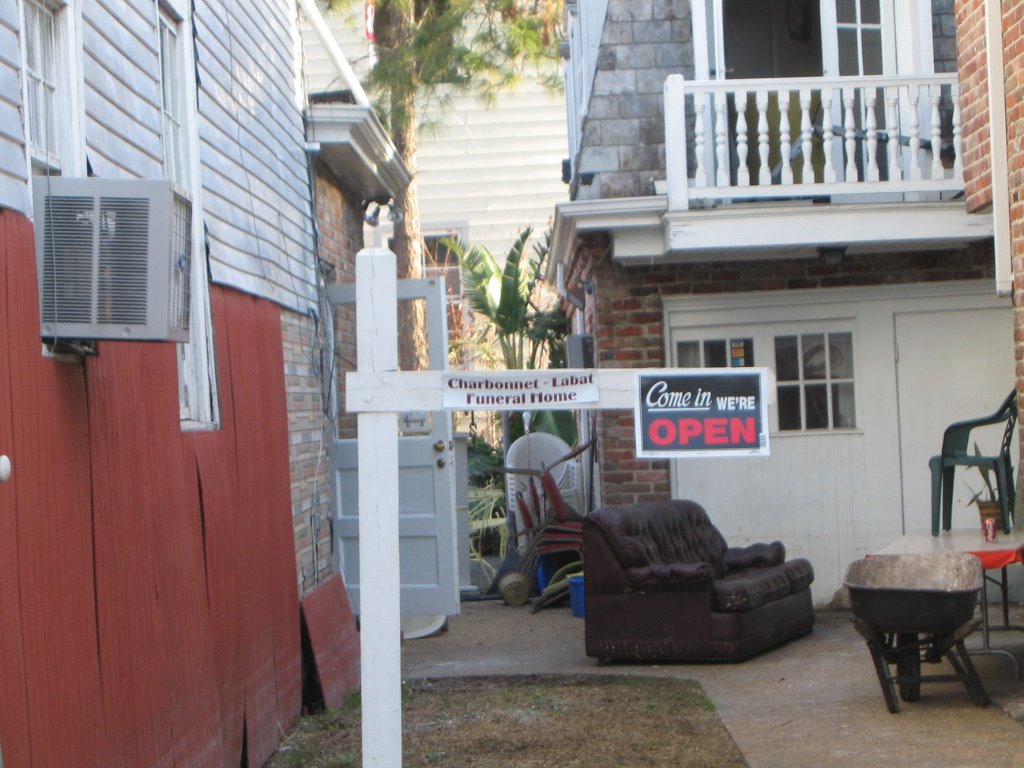
And speaking of such, word came this morning from a friend; a member of Richmond's city council and a noted architect who is in New Orleans as a part of a team of experts investigating the mold and structural problems left by Katrina. When Tom announced his assignment, I asked if he'd look into the fate of a couple of the buildings my father and grandfather erected many years ago. This morning it came -- the Phoenix is rising (see photo)! Charbonnet-Labat Funeral Home has survived 4 feet of floodwater and is again operating. One day before too long, those jazz funerals will be wending their way to and from burials at St. Louis Cemetery as they have for the past century.

I've still not made meaningful contact with scattered family members, but at least I know that life is continuing, and that the legacy of Charbonnet is still a strong part of the identity of that city and its culture. Am hopeful that as things begin to slowly return to whatever form normal will take in the coming months and years, there will be a coming together of now dispersed family members.

That reminds me -- I must try again to reach cousin Louis Charbonnet and his family through the Mid-City Carriage Company. Have kept up (online) with continuing coverage on the fate of his heroic workers who saved the horses and mules -- and know that those animals that survived are stabled out of state awaiting restoration of their New Orleans home. The French Quarter will surely see those horsedrawn carriages again along Bourbon Street before too long -- a symbol of life as it once was lived in one of the most interesting and oldest cities in the nation.

I know that because the culture is in my DNA. Time and the distance have done little to diminish it.

Photo: Sent by Tom Butt as evidence of the survival of Charbonnet-Labat Funeral Home.
Photo on the right is explained in body of this entry.

Thursday, November 10, 2005

Work grows more intense with each day ...

...but maybe that's not what's happening at all. Maybe it's the sense of urgency about running out of the power to actualize all that's collecting in my mind -- that never-ending "to do" list may collapse into itself at some point like some black hole ...

Something else is beginning to color my days; it's the sense of some new quality of 'listening' to my words by others that wasn't there before -- and that I'm beginning to place demands on myself that words not be squandered into nonsense but that they be worthy of the attention given. Crazy? Does that mean that I'm in danger of becoming stilted? Pompous? Perhaps, but it goes along with the fact that I'm beginning to amass honors of a kind that make me want to peek behind myself to see if some more worthy soul is standing there waiting ... and that I'm blocking the view ... .

Perhaps my world is trying to say to me that it's time to leave the stage and make room for some unannounced successor. On the other hand, the excitement of feeling relevant still, and with the ability to join with others to bring the forces of change together in meetings and receptions and on picket lines and at demonstrations and civic meetings is heady and makes retirement still some faint goal for some distant future.

I'm still feeling effective and stirred by contemporary issues as if time has ceased to exist and that I'm caught in some undetermined age group -- somewhere between 35 and 70, surely not 80 or beyond. All of the Bettys are operative still, each rising to the forefront as the occasion demands. Now and then I catch sight of myself in a mirror or a reflection in a storefront window and my mother looks back. It can be jarring. This is surely the reason that some women opt for cosmetic surgery; to bring the inner and the outer selves into some reasonable alignment. I'm beginning to understand that.

My personal appearance has been relatively youthful for such a long time that the temptation to tamper with it has never been an issue. But now I'm beginning to notice that everything is beginning to fall, that my eyebrows have dropped closer to my eyelids and the feathering over my top lip .... What used to be freckles are now fullblown age spots that defy all attempts at coverage -- (don't believe the hype). And the hair! I will not succumb to wig-wearing -- but the hair-count is miserably scant -- and each time I draw the comb through my brush and toss away those collected in the bristles I know that there will be no replacements. Hair follicles are finite -- one of life's fundamental truths!

I worry now that my wardrobe is no longer reflecting my age. Am I dressing too young? Having no detectable changes in body shape over a lifetime, there has been little reason to buy clothing. I'm now past the age of acquisition so my wardrobe is perhaps 20-30 years old now -- except for the purchase of a new sweater or Levis now and again. Maybe I'll look around for the modern day version of that little black dress that was always the mainstay of my wardrobe with my long-dormant string of pearls ... that should reflect agelessness, right?

If this all reads like trivia, know that it has to do with my inability to put into words here how humble I'm feeling at having been announced as one of the honorees for the year 2006 by the National Women's History Project (NWHP). Having participated in the Mills College Conference on "Women of the West" a month or so ago, I have some sense of just how prestigious an honor this is. When I visited their website a moment ago and read through the list of women previously honored I could scarcely breathe!

The announcement of the year 2006 honorees is scheduled for November so I'm late. I need to return this form as a followup to the letter of acceptance I sent two weeks ago when notification came. Instead I'm sitting here stunned into silence and so awed by the honor that all I can think of are all of the stupid ways that I'm unworthy, like sagging eyebrows and terminal molting!

I came to my computer this morning to begin to put together the bio they've requested and to select a "favorite photograph" to accompany that -- and instead find myself sitting here feeling tearful, filled with humility, and totally unprepared for what this means. I'm so intimated by all of it that I'm having an extremely hard time following through. Does one ever feel worthy of such honors?

Maybe a trip to Nordstrom's for a new hat will take care of the qualms ... .

Or not.

(Stephen Sondheim -- Elaine Stritch, where are you?)

Photo: Another unbelievable day. This one in 1995, being presented with "Woman of the Year" plaque by Ms. Gail Wilson, wife of Governor Pete Wilson, before the California State Legislature. I didn't tell my family but drove the 78 miles to and from the Capitol alone and unheralded by those I love. Spent the day in that strange world being feted with no witnesses to share the experience with. Why? Maybe this year I'll change that. Maybe I've already overcome the reticence by posting it here.

Monday, November 07, 2005

To: Betty Reid Soskin
From: Steve Hurst
Subject: Quote from you for Richmond Chamber of Commerce Magazine/Directory
Date: Sat, 5 Nov 2005 11:17:58 -0800
X-ELNK-AV: 0

Hi Betty

Looking around my cluttered office today, I had one of those "Ah ha!" moments. I found your card.

I am designing and producing the next magazine/directory for the chamber. I suggested that we include quotations from individuals along with their portrait to show the diversity of the community.

I would like for you to tell me in a couple of paragraphs (I know you have volumes to speak) what it is you like about Richmond.

The purpose of the magazine, aside from raising revenue for the chamber, is to cast a positive image of Richmond to the business and residential community, as well as promote the image of the city to businesses and individuals considering a move here.

I'll search through my archives for a nice shot I've taken of you, but I may request taking a few newer shots for the image I want to project.

Thanks

Check out my websites


STEVE HURST
www.stevenart.com – Graphics, Photography, Paintings, Websites
stevehurstclocks.com
_________________________________________________________________________________

Will this do? Gave it lots of thought, and it feels right.


"Having lived a long lifetime in several areas of the East Bay I've experienced the distinctively differing cultures that these adjoining communities represent. After living for extended periods in Oakland, Berkeley, Walnut Creek, El Cerrito, then Berkeley again, I've found Richmond the most challenging, the most interesting, with more opportunities to help to effect change than in any place that I've ever lived. As a political and social activist with a restless need to join with others in giving shape to the future, this matters greatly to me.

Despite the contradictions -- at times Richmond is totally provincial and "set in her ways"; treating newcomers much like Cape Cod treats its summer people -- and at other times she feels so open -- malleable -- yielding to the forces of change in ways that threaten her ability to form and maintain a civic identity. She feels like a city ever in the process of becoming -- never quite there -- so there's still time to help in the shaping. That's a completely different environment than one might find in San Francisco, Berkeley, or Oakland; all cities fully formed. Here, I see opportunity everywhere I look. The hope to join with others in re-creating the world we want to see seems more likely to be realized here than in any other place that I've known."

Betty

Photo: Taken last Friday at the ceremonial relocating of the old World War II Whirley Crane that served in the building of the victory ships at the Kaiser Shipyards. It was an event of historic significance that moved one more piece of history onto the site of the Rosie The Riveter/Home Front National Park. 11/4/2005

Sunday, November 06, 2005

Epiphany.....!


Was startled out of sleep this morning. It was another of those moments of knowing; and it was suddenly all-of-a-piece; the last several seemingly unrelated entries plus some bits and pieces lived off-screen and away from this keyboard -- pieces that fell into place in a mosaic of clarity:
  • Life in South Berkeley as a full-fledged struggling black merchant,
  • The years of being radicalized by the contrasts inposed by my double life as female merchant while simultaneously living as an empowered faculty wife at the university.
  • Being privileged by having my life in the cauldron of the innercity balanced by the ability to return every evening to a lovely home at the topmost ridge of Berkeley, above the university and on the edge of the pastoral wilderness of Tilden Park ...
  • while those I faced from behind the counter remained each night to be impacted by the sounds of gunshots, fear, police sirens, poverty and crime, in daily lives lived against impossible odds.
  • New talk of a curfew for youth in Richmond, and
  • The pending execution of Stanley "Tookie" Williams.
Crazy melange? You're right. I'm not even sure I can get it unsnarled in a few words ... .

Yesterday I was about to drive out to meet Tom in Walnut Creek when I discovered that my wallet was missing. Recalled that it was probably left on my desk at work on Friday and detoured from the Hilltop area through downtown to pick it up. The drive took me down Macdonald Avenue past Fourth Street park with its usual number of mostly scruffy-looking men "chinnin'" as Papa George would say. Grinned to myself in realizing that -- were I driving past Pete's Coffee or Starbucks in a white neighborhood I'd have seen men socializing. Here, I saw men loitering. I drew to the stop sign at the corner of Fourth and Nevin and noted that the men on two of the corners leaning against the store windows were clearly younger and far more animated; playful. But my CNN-conditioned mind easily translated the scene into one of drug-dealing. An easy trap. Was reminded of South Berkeley in the Seventies, and of how differently my mind read such scenes then -- when looking from inside the belly of the beast and not as an outside observer. Here, I was not a member of the community of the Iron Triangle. These were not youngsters whom I knew or cared about except in the abstract. What else was different? The element of fear. I'd grown past that in those life-changing years in South Berkeley. As that thought surfaced my hand automatically reached toward the door lock.

On the drive to Walnut Creek -- out San Pablo Dam Road past the reservoir -- through the brilliant red, gold, deep greens riot of colors of autumn, my mind locked on the contrasts almost as automatically as my fingers had on the lock button only moments before. Wasn't I only minutes away from upscale Orinda where my friend, Felix Polk's, life had been smothered out by Susan (also a child of privilege), and where that wealthy 16-year-old Goth had savagely murdered the attorney's wife in a fit of fury? Why had the fear not followed me here? Was it because here those awful crimes were seen as an anomaly; against logic. Why was that? Was it because as a society we've set up the conditions in both places that predicted outcomes. If so, the solutions to the problems should be as predictable, shouldn't they? Why were they not?

That handsome 16 year-old enjoyed a disproportionate share of resources, an SUV, the best schools, a room of his own, every gadget technology can offer, books, travel, summer camps, parents with the strong educational backgrounds, professional achievement. They had the time, the energy, and the financial resources to satisfy not only their children's needs but wants as well. Where on earth could that reservoir of disembodied rage have found a place from which to grow? How could this be? We have every right to wonder. Even though he was clearly a juvenile, his name was released to the press but there was no mention of his family connections. Protective attorneys? On the very first report of his arrest the newcaster mentioned that "his sister had been tragically killed not too long ago," as if to explain his actions and give him an excuse for unspeakably tragic outburst of rage. Only later was his mother identified and implicated but only because she'd been arrested for aiding and abetting in her effort to protect her child. This is clearly a child of privilege. There were the usual explanations from neighbors and friends of "...this is such a peaceful community. How could this possibly have happened here?" And in a way they're right. It's a complete mystery.

On the other hand, we have an African American youngster from whom health care, parental guidance; recreational resources, school counseling; from streets that crackle with potential violence; with halfway houses and methodone clinics to pass on the way to and from school; with drug dealers to sidle past; and, often without enough food, or money, or attention; and too much responsibility for younger siblings; and often without anyone at home who understands the demands placed on you by teachers who haven't a clue about what your life is like on the outside or how relevant are the teachings you're expected to absorb ... and besides, he or she looks nothing like you and speaks another language. And one day you graduate from highschool against all odds and enter college. How could this be? Conventional wisdom would surely have predicted prison, right? The fact that many of your friends didn't make it to adulthood but as often as not died in a hail of bullets within a few feet on these same streets is a factor in how you see the future. To climb past the low expectations of those who dominate your life colors your own expectations of yourself and cripples ambition and smothers dreams ... .

How much are kids born to their fate? White privilege would surely have cast the lot of our young Goth differently. What was the missing ingredient that produced the monster? What inner strengths brought this innercity youngster past the chaos of life around him or her and into the mainstream?

In a way, Stanley "Tookie" Williams is living out the norm for black males. The supreme court, the attorney general and the governor are expected to fulfill societal expectations by denying clemency. This would be another norm. The expected outcome for troublesome black youth.

His execution will solve nothing because there is no understanding of or solution for the problems that sent him to prison as a young man. How much wiser to hold him in a life sentence without the possibility of parole where we might plumb his mind for answers to the cul de sac we've created for ourselves in our inability to understand or address the problems of youngsters from his world. He has proven his ability to grow beyond the confines of prison into greater understanding of the problems that sent him there. We have not.

Little has changed in South Central, except that Williams has quieted much of the gang violence through his quiet work from Death Row. The work that brought him to the attention of the Nobel Prize committee will surely die by lethal injection with him and we'll be the poorer for it.

The expectations for our children -- depending upon whether they reside in the Iron Triangle, South Central, Orinda or Columbine -- or any of the white communities where school shootings have taken lives -- are profoundly different. We're capable of producing monsters anywhere -- as anomalies. Have we yet learned the lessons of Columbine?

Can we allow ourselves to continue to use our innercities as a catchment areas for the breeding of violence? Must poor youngsters be forced to continue to swim against the tide of fortune when -- by shifting the lens ever so slightly -- we might see new solutions and begin to build hope for a new future? Will we one day learn that cultural and emotional deprivation are the hidden causes of much of the violence in the world of our young of whatever racial background or economic class? Will our children eventually spring out of the adult-imposed pathology, as they did in the Flower Child era of the Haight-Ashbury days -- seize the world and make it their own again?

After having picked at this through for much of this day, I find myself wondering -- not about how many violent gangs have been produced in the Iron Triangle to boost the kill rate for this year -- but at the miracle of the many who have managed to overcome the environment of destruction to which we as a society continue to confine their young lives.

Our children may have to wrest their world from us in order to save it.

At the moment, we're leaving little upon which they can build.

Maybe they've seen the future and are in dispair of what they see ... .

Photo: The work of CAA/ICU student, George Scott Braley © 1998. Co-Directors Mat Schwarzman and Juana Alicia at Urban Arts in Oakland, California.