Today started badly.
First call (just after eight o'clock) came from my mortgage company informing me that my last check had been returned. Scary. Even with everything working at top speed, our proposal for the Convention Center management won't be acted upon until mid-June, probably. The fiscal year will begin on July 1st, and it will take time for our contract to be acted upon.
As of today I will begin to live on my credit cards, something I've never done before -- nor has it been required of me. Fortunately, my credit is fine and -- having lived past the age of acquisition -- I have all of the creature comforts needed to survive fairly well without too much difficulty. My wants are modest and lifestyle easy to maintain. Wisely, I've invested in mutual funds that were intended for my retirement (if ever that happens), so all is not lost. My safety net is a modestly constructed, but if and when I feel the need, I can liquidate. It was not always that way. There is a familiarity to this feeling of financial insecurity. I've certainly lived it before, but not for a very long time.
Back to the Seventies:
It was a quiet day at Project Community. By now I was married to Bill and living the new and fascinating life of a faculty wife at the university. The old world had melted away. Walnut Creek had faded into the past, and adjusting to the intellectual richness presented by this new environment was all-consuming. It was soon destined to change irrevokably, but of that I was unaware. I'd had enough time to feel some regret about having dropped out of the lives of most of my family and friends -- two tiers, both those of my childhood, and those of the most recent quarter century of suburban life, but there was little time to give that too much thought, until this day:
It was Rick on the phone. "Mom, Dad is lying on the floor in the back office (of the store) unconscious. I can't rouse him! Please come!" Dropping everything, including the phone, I dashed for the parking lot and drove recklessly to our South Berkeley store. I'd instructed Rick to call an ambulance immediately, so I knew that Mel was being cared for. It was my son who drew me to where he was. I knew that Rick was fragile, and an alcoholic. Of course I was wrong. He'd ridden in the ambulance with his father, and I arrived distraught and frustrated to a place I'd not seen for years. The street and this once quiet blue-collar neighborhood had changed dramatically. Our store reflected the downward spiral that had occurred in the six or seven block area that made up the black community.
I walked around the shop for a few minutes, trying to re-orient myself to this business Mel and I had founded many years before finding little to connect with.
But this was surely not the time for remembering. I needed to go to the hospital to fulfill whatever role it was that former wives fulfill at such times, when you're caught up in the need to respond to a parental role -- one abandoned long ago. For Rick and my other sons, I instinctively knew that my current marital status would have to be set aside. It was "family" time. Dad was critically ill. Wherever the fault lay for the disintegration of our clan, family is what we had to be now; and we were.
Upon arriving at Herrick Hospital, I learned that Mel was in a diabetic coma (I knew nothing of his diabetes) and that he would have to have his left leg amputed at the knee in order to save his life. He'd apparently ignored his condition for years, had continued managing the business -- with Rick's help -- despite failing eyesight and no medical attention.
It was even more dire than this. He'd also been suffering a major mental depression for ages with no one aware of it. His need to fight the street had taken its toll. The streets were filled with those plying the drug trade. Prostitution was not only visible but blatant with little police control. When he'd complained at city hall that little was being done to protect the community he'd been told by the department, "...when things happen in other parts of town, we usually know where to pick up the perpetrators." This community was being used as a containment basin for the rest of the city.
This was 1978, and the year prior, 25% of the homicides that occurred in the city happened within the block upon which our building stood. According to Rick, the store had been broken into on a 3-month regular schedule. Mel by that time no longer lived away from the store, but had been sleeping on an old mattress in a back office with a rifle within easy reach. His life and business reflected the life on the streets. He'd become a lost soul. This good man who'd given his all for me and the kids in the early years was gone. In his place was this desparate soul who was no more than a shadow of the man I'd married long ago.
The discoveries of that morning changed my life for all time, and started a new cycle that came with its own set of learnings, values, and demands, some in direct conflict with the sophisticated and erudite life of the university culture. That morning ushered in life of a dramatically different kind, a life that introduced me to the underbelly of urban existence at a time when I was wonderfully prepared for what I was to find. I was psychologically ready to take full advantage of it, and did.
It was that evening that my husband Bill and I stood at Mel's hospital bed in ICU waiting for him to recover to find his left leg missing. This was to be their first meeting. Bill was at his professional best. He'd brought all of his psychologist self to the forefront while setting aside his Betty's husband self. It was a delicate moment for us all, but we survived it. It was good to have our sons witness this coming together beyond boundaries. It opened the door for the re-establishment of the friendship I'd shared with Mel, and in the days that followed to take him for his medical appointments, see to his care as we moved him into a retirement home after surgery, arrange for services and even handle his day-to-day shopping for most of the rest of his life.
The next step was dealing with the state of the business we'd created so long ago, and of discovering the depths of the disintegration of the assets we'd worked so hard to create for our children.
That would have to wait until tomorrow ... .
Friday, May 14, 2004
Thursday, May 13, 2004
It's been days since I last wrote ...
So much time has elapsed that I hardly know where to begin... .
Perhaps we'll just pick up with today:
Proposal for management of the Richmond Convention Center is moving even more quickly than I'd ever imagined. We're finding enthusiasm everywhere we turn, and offers of assistance are plentiful. The auditorium is in great shape, seats about 3500 in theater arrangements on the main floor, with six side conference rooms to work with as well. It's a gem of a public facility that has been terribly under-utilized for years.
Jennifer and I did a complete tour of the facility two days ago and today took some events promoters in to see it. They were enthusiastic about the place and it appears that we may have a buy-in. Lots of agreements to negotiate, and scenarios to explore, but I'm optimistic about the directions we seem to be headed in.
Our next meeting with the city manager is scheduled for next Monday at which time we'll refine the plans and continue to build the budget. So much for business.
Am continually close to being nauseated (actually) at the state of the world and the awfulness coming out of Iraq. Though there is a part of me that simply can't understand how anyone could expect that WAR has the capacity to be anything other than inhumane. Expecting there to be rules of engagement that make killing fair and compassionate in one case and animalistic and insane in another bears no logic for me. I suspect that this might be a fundamental male/female difference, but I'm no longer sure of that. It all points to a level of insanity that is frightening to consider even for an instant. If I allow my mind to go there, the nausea begins and I become lost and distraught.
Have been reading some of the conspiracy theories on the Internet and doing something I've rarely done before; I'm passing things along in the hope that -- whether believable or not to me -- they may cast more doubt upon the intentions of our administration and help to bring down the presidency. It's beginning to feel less important to me to get them to respond to my(our) petitions and pleas than to make an attempt to chip away at those who believe in the rightness of their purpose. Bush's polling has dropped below 50% now, and that is the first sign of hope in a long time. That means that his base may be crumbling. If we can't effect him(them!) perhaps we can effect that base of true believers. William Kristol sounded far less supportive this week, and some of the other pundits have begun to admit that the wheels are coming off the wagon. It's too early to tell, but just maybe... .
Meanwhile, I'll keep searching out powerfully-written columns online and sending them to my more conservative friends. Preaching to the choir accomplishes little.
Dorian is doing well. Other than having her bicycle sitting in front of the fireplace right in the middle of the livingroom, the rest is falling into place. We've staked out private parts of our small condo, and that works out pretty well. I'm fighting hard to allow her to be independent, but must admit to slipping into my mother place more often than I'd like. We may never really live apart again, though that is the intention. I really must admit that knowing that she's safe in these dreadful times is a comfort. In an emergency I'd be frantic, and we're living in a time of a constant need for vigilance. Falling to sleep at night knowing that she's safe on the blue futon on the livingroom floor with her two cats gives me a sense of peace. The disadvantages are less easily defined these days, and are beginning to be far outweighed by something I'd almost forgotten still lives in me. Being protective of my child is a parental mandate that continues to operate and took little to re-energize.
Thursday, May 06, 2004
Am experiencing a growing concern ...
about my growing inability to cope with the day-to-day headlines and growing hysteria around the Middle East. I tend to use this journal as an escape from the fear that is beginning to make my breathing shallow and my attention span determined by how quickly I can flip the remote between horrors.
A few minutes ago I sat here to begin to catch up with myself and to try to recapture some of the biographical themes that I found in that Bancroft Library video. It is not to be.
Phone rang and it was a long distance call from Rev. Paul Sawyer, UU minister of long acquaintance and with whom I've worked on many occasions. He's been pastoring the UU church in Pasadena, I believe, for the past 15 or so years, having been associated before that time with the Fellowship of Unitarian-Universalists in Berkeley. It was through Paul that I met and associated with, if only peripherally, with author Ken Kesey et al many years ago. We shared the experience at Asilomar that Tom Wolfe wrote about in the Electric Acid Koolaid Test. Paul is seeking a post at Starr King School for the Ministry (of the Graduate Theological Union) and called to ask for a letter of reference. Glad to oblige.
That call started a train of thought that has blocked out all else over the past hour.
Me: "What are you doing these dreadful days, Paul?"
Paul: "Trying to pull together some kind of response to the happenings in Iraq, but such outrage really demands more than the usual actions such as letters to the ... signing petitions ... etc., but it may well be time to take to the streets (again!)."
Me: "Isn't it wonderful, what MoveOn is accomplishing by way of unifying the voices of the electorate?"
Paul: "Yes, but it isn't enough."
Me: "But, of course I know that. But it's a beginning place, isn't it?"
Paul: "Of course it is, but with Kerry doing the predictable campaign waltz of shifting to the Center when he should be solidifying his base on the Left is tragic and may just lose the momentum he gathered during the primaries."
Me: "But what do we do...?"
And that's where I've been since we cradled the phones.
We probably need a controlled and peaceful revolution like that of the Sixties. That brought us Civil Rights as well as a withdrawal from Vietnam and brought down a corrupt presidency. Why should we be hesitant to use the streets now? The threat to our existence on the planet is greater than in all of history. The total destruction of the world may be at hand. Orwell's 1984 was an accurate predicter of the present -- with the signs leading up to his "future" well-marked. Whatever are we waiting for? The rest of the world is now under the empirical control of our nation -- for good or evil. Should the current trends prevail, we may be doomed -- taking everyone else with us. That means your children, my children, and theirs. How can we not act? Why do I feel this paralysis? What savior are we non-believers waiting for?
I've now lived long enough to have seen the rate of change accellerate from generations measured in half-century cycles to today when they're measured by five years or less. That increases the sensitivity factor so much that -- as with MoveOn -- the effects are almost instantly measurable. We have new organizing tools and a new generation of thinkers and activists to use them. This world is not the one I thought we were creating, but somewhere in the mix that world must still exist. Paul Sawyer, Aron Gilmartin, and millions of others -- together -- bending in the direction of constructive change helped to give that world life. The counteracting forces have all but obliterated the humane governance we worked hard to produce. It may not be too late to salvage something of worth from those efforts.
Paul has a boat moored at the Berkeley Marina and will be coming north in July with his Susan. If the world is still whole, we'll spend time together and try to blow on the embers of the past in hope of finding some new pathways for the future. We've lots of friends in common and some are still around, probably as frightened and immobilized as we. Wonder what would happen if we came together to provide some moral guidance to those new to social action as we knew it? We may have passed the torch, but was it well lit?
Kesey died a year or so ago. Would love to have had the chance to sit with those two again. I've met a number of original thinkers over my lifetime, and these two may top that list. It will be great to see Paul again.
Now back to the Great Escape known as Fleshing Out The Proposal for the Convention Center. Meeting Jennifer for a two hour session this afternoon and I'm late. The world will just have to take care of itself until I get back. And, yes, I realize that I'm avoiding the radio or television and have been for days. Have lost my status as a news junkie, a sure symptom of my paralyzing and growing fear of knowing. The feeling of helplessness grows in direct proportion to the exposure to the media.
November can't come too soon!

Monday, May 03, 2004
Jennifer and I met with City Manager Leveron Bryant this morning ...
to discuss the possibility of our taking over the management of the Convention Center in the downtown civic center. For a long time I've been wanting to find my place in the world of arts & culture in a really productive way. The need it great and the opportunity presented by this budget crisis is unprecedented.
Like many inner cities throughout the nation, Richmond has an abandoned core of historic buildings that have been empty and rotting away for 30 years. They're owned by the Redevelopment Agency and border on the most poverty-stricken area of the city. It is also probably 80-90% African-American with a Latino in-migration creeping into view.
The area is not unlike Port Washington where a crime and drug-infested area has been razed and reconfigured as an Arts & Entertainment district with the arts used as an economic engine for positive change. There is significant interest among funders in the area to work with us to create our own version of that model.
Wrote a paper describing the vision that I've been carrying around in my head for the past several years and passed it along to targeted movers and shakers in the city -- so much so that I'm now hearing pieces of it pop up from the mouths of others who have no idea of the genesis, but have bought into the dream. That's exciting!
Both Jennifer and I are members of the Arts Commission and she's also now a member of the Contra Costa County Arts Commission as well. We've been lobbying and schmoozin' with anyone we thought we could light a fire under and it's finally blossomed into reality after more than year of priming the pump.
I believe that my best and most convincing argument has been this, "...can you imagine what it has cost this city to allow this entire district of historic buildings to lie fallow for all these years? Has anyone taken the time to total up the losses in taxes and fear and poor image? If we could put a dollar figure on that, I can't imagine how the city can afford NOT to do what I'm asking."
Thirty years ago the redevelopment agency saw fit to leave the center of the city (civic center, etc.) and build a brand new shopping mall on the absolute edge of the border that abuts the city of Pinole. In so doing, it left behind only tiny marginal businesses and a few county and federal buildings. The downtown therefore dies at five o'clock and weekends, leaving the community with little life. Meanwhile, Pinole developed ITS shopping center just across the freeway on the same border leaving Richmond's mall to slowly die, robbing the general fund of sales taxes with which to fund city services.
My interest in this and and my work with the new national park are related. That shoreline park is a mere two miles from the historic (and abandoned) downtown. To now begin the process of developing that area as an Arts & Entertainment district will allow the city to draw tourists into the heart of the city from the shoreline, bringing their sales tax change with them.
I see art galleries, jazz clubs, blues houses, shops, cafes, restaurants, etc., with the Convention Center as the beginning piece. There is in this district the 38 year-old East Bay Center for the Performing Arts (on whose board I've served for years), the marvelous full service Richmond Arts Center (ceramic, painting, jewelry, textile studios plus exhibit spaces), plus NIAD -- the National Institute for Artists with Disabilities. Those are the building blocks upon which we will begin to flesh out the vision. The Richmond civic television station is also located in the convention center, and there is a huge public square (lawned) in front of those buildings upon which outdoor festivals and artist vendors can exhibit and sell their wares.
The Rosie Memorial National Park is a 10-year project. Ours will take at least that long, so all I can do is lay down the initial tiles in this mosaic and leave the full development to Jennifer and whoever we can train to pick up the reins later on. I'm probably good for another year or two, but that's enough time to pass the torch and see that it's properly lit.
Our meeting with the city manager was wonderful! We have the go-ahead to proceed with the final plans. Jennifer and I will be working over the next few weeks to flesh out the proposal that we presented to him and to pull together a realistic budget for the city council to pass on. However, we have the original buy-in from the manager and will work now on the PowerPoint presentation for the Council's budget workshop in about 30-45 days from now -- with his total support.
Incidentally, Jennifer and I are now partners in a consulting firm called, "About Face Consulting." She's phenomenal. We have complementary skills. She's closer to the age of my late eldest son than to me, and that's wonderful. I get lots of energy from her incredibly facile mind and she is able and more than willing to absorb what she can from my years of experience. We're one strong team, and I'm looking forward to the next two or three years of learning. Our primary love is the performing arts and she's had lots of experience to draw from.
Life keeps unfolding ...
Wish me luck!
Saturday, May 01, 2004
Followup letter from United State Department of Interior...,
National Park Service, with additional information on the Ken Burns documentary:
"...After searching through our files, we selected you for an interview with a PBS film company that has contact us because you live near one of the communities that this film company hopes to focus upon in this exciting documentary called "The War".
This documentary will be five part series about American life during the war -- focusing on four communities and the lives of ordinary people. The film will be completed and will air on PBS in 2006.
As we discussed and as you agreed to, your name, phone number and story were given to the producer, Lynn Novick of Florentine Films (A Ken Burns Film Company), however, there is no guarantee that you will receive a call from her. The communities that were originallly requested by the film company included: Waterbury, CT, Luverne, MN; Mobile, AL; and Sacramento, CA. We insisted that Richmond should be included."
So -- I'm not even sure that I'll be around to see this epic -- and, if I am, that it will matter a hell of a lot! But once committed ... .
Completed Dorian's move and closed down her Oakland apartment today. It's been a real challenge and we seem to have simply transferred the clutter from her place to mine. My apartment -- a place of pride for me -- is now crowded with far more than the space can accommodate comfortably. I'm already feeling pinched! Must be careful to mask such feelings. She's extremely perceptive and picks up subtle signals, especially negative ones. When she begins to get testy and irritable I've learned to look to myself for clues. That suggests that a high level of sensitivity must be maintained at all times. Nothing is more exhausting!
Wednesday, April 28, 2004

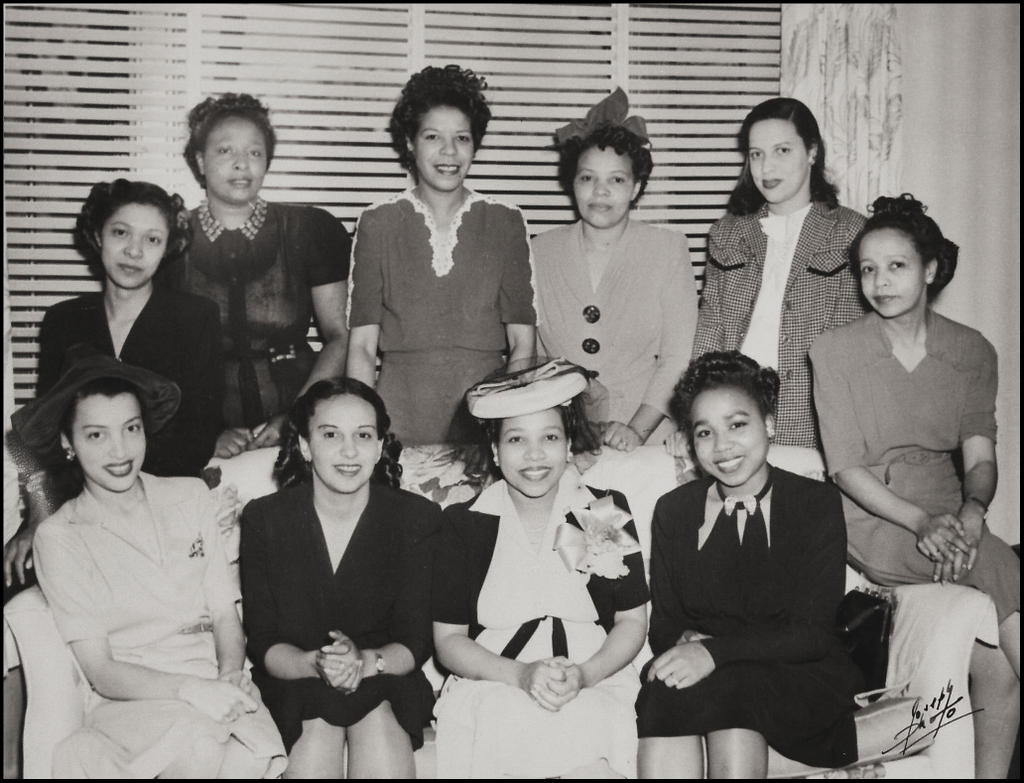
Am beginning to feel a bit uncomfortable ...
about the attention that I'm receiving these days. Like a bit of a fraud. It's not that I'm particularly humble or coy, but that the outcome appears to be aimed at moving me onto the sidelines of national life while I'm still in the middle of mine! Well, if not the middle -- at least the top quarter.
This morning -- only a few days after that invitation to the White House -- comes a consolation prize of sorts; "...PBS' Ken Burns is working on a television special on Rosies of World War II -- and we'd like to have you as one of those interviewed. She continued, "...they've asked for some women from the Sacramento area, actually, but we've told them that Richmond is the center of Rosie-dom, so we're compiling a list of interviewees for them and it must be in today's mail. Please say yes!"
Saying no to the White House carried with it a feeling of a bit of daring (waiting for a better class of tenant), but I love Ken Burns documentaries and will be delighted to be a part of it -- even for a few minutes. Loved "Jazz" and "Baseball" and "The Civil War" is a masterpiece. This also gives me a real reason to start watching that oral history video from the Bancroft Library. What they need may be accessible without actually going through another interview. Somewhere on that tape may be precisely what they need.
My reluctance to become a central figure in the tales of Rosie comes back to the fact that my role was a bit less than glorious. If I'd ever worn a hardhat or wielded a welding torch, I might feel better about being front and center in these retrospectives. In my little file clerk's role in that Jim Crow union office -- out of the sight of either the ships or the shipyards -- it feels less than legimate. I surely didn't feel any particularly strong feelings of patriotism or that I was saving the world. Those women who were actually on board those merchant ships, crawling into those unreachable nooks and crannies to do their work surely must have a very different response to the accumulating honors we're beginning to experience now. The fact that we're again at war (have we ever not been?), the patriotism is heightened for many.
My guess is that I'm being called because I'm one of the women in my age group who is not either on life supports or suffering from Alzheimers! If only people realized just how many of us are still out there -- still in the trenches -- plowing the fields of life. The fact that I'm African American probably fills another gap in their coverage. That I'm fairly articulate and still productive helps ... but whatever reason ... I don't feel anymore legitimate as an honoree as I believe the current occupant of the White House is in his assumed role as president. The difference seems to be that I know it, and his arrogance may prevent him from seeing the truth.
There may be enough reason to say yes to being a part of that history -- if I can deal with it within the context of the times; honestly. That bright and capable young black women were prevented from full employment even under union sponsorship was a fact of life. That all African Americans who worked out of those Jim Crow union halls were designated as "trainees." That word was on every file card -- after each name. This insured that no black person would ever reach journeyman status and would not be in competition for jobs at war's end. This was the Forties. Change would not come for another two decades. This, after all, may be a very important part of the history that we must not re-live.
Maybe this Ken Burns piece -- if I can bring honesty to my few minutes of it -- can be a vehicle for another look at the period and reinforce the changes that must be held to if we are to continue to survive as a nation. A chance to re-visit yesterday's ethos with the accumulated lessons of the Civil Rights movement that followed ... And -- before we continue to export our conditional "democracy" to other places on the planet.
Yes.
C'mon Ken Burns!
Photo: The office staff at the time that I was employed as a clerk in Boilermakers A-36. I'm on the far left, front row. The occasion was a baby shower for the Marguerite Roles, wife of Mahlon Roles, Secretary-Treasurer of our auxiliary. Zola Adams, Christine White; that's my late sister, Marjorie Charbonnet Brooms far right, back row. The others I can no longer can identify. (Circa 1943-44)
Sunday, April 25, 2004
Received a large official-looking package in the mails yesterday ...
from The Bancroft Library of the university. Hadn't gathered in the mail until late this (Sunday) morning. In the large manila mailing packet was a thick transcript -- about one-and-a-half inches thick -- fastened together by a huge black metal clip. There was also a videotape with a label that read:
Betty Reid Soskin
Interviewed November 7 & 11, 2002 by Nadine Wilmot
Regional Oral History Office
The Bancroft Library
NARRATOR COPY
Recalled then that this was a part of the project the university was conducting for their own purposes and that I'd rather enjoyed the process at the time. Meanwhile -- given my lifestyle -- a lot of life has been lived since two years ago and I'd completely forgotten about it. This was one of several such interviews I've participated in over the past few years. In fact, I didn't realize at the time that they would send a transcript to me at some point. The accompanying letter asked if I would read it and make minor corrections (things that were deemed inaudible or obvious misspellings) but:
"...The transcript is intended to be a reasonable record of the conversations, and for this reason, urge our interviewees not to formalize the transcript as if it were a written autobiography. A few fumbled words, an aside, a lapse in memory--all these serve to remind the reader that this was an informal interview. The informality adds to the readability and liveliness of the transcripts and presents a more human picture of the interviewee than a more formal written document would.
The transcript will be the draft on which we base our final version. If you have any changes, we ask that you notify us within one month of the receipt of this letter. If we do not hear from you by then, we will prepare the final print and web transcript from our draft. We cannot make minor or aesthetic changes to the video, though we could remove sections should you decide they should not be made public."
Final copies of the transcript and video will be deposited in The Bancroft Library, the Richmond Public Library and with the National Park Service...".
Spent the last few hours scanning the transcript and doing the three-hole-punch duties so that the entire document could be placed in a binder for easier access. Can just imagine what a tragedy it would be if I dropped that mess of papers? For some reason they're not numbered.
All-in-all, considering how much life I've lived since "November 7th & 11th of 2002," the entire event had fled from memory. It read well though there were glaring misspellings of names and places. Felt some embarrassment at just how many times I said "yeah" instead of "yes" and made a solemn vow to correct that immediately!
The best thing was that -- though I've yet to watch the video from which the transcript is taken -- I liked that woman. Felt no embarrassment. What a nice surprise, though it shouldn't have been. Learned a long time ago the trick of watching myself being myself and being fairly forgiving in the process. Perfection has never been a goal. Truth, now, is another matter -- and principle -- ad nauseum, as you can see by the events in my recent past.
Decided to spend the next several days resisting the temptation to retype the whole thing (wiping out all those "yeahs"), but will follow the instructions and forego that urge. Will do the corrections they've asked for on their original draft and return it to the Bancroft for the completion of their project.
Also, I'll wait a few days before viewing the video -- for a time when Dorian is away at NIAD and I have the apartment to myself. Not sure just why, but that may be a more penetrating experience. There are about two hours of taping to view -- and that's a huge amount of "Betty" to sit through. May watch it in small pieces over time.
Just recalled that -- at a recent NPS planning session -- a number of historians from the Bancroft were present. I know now why I was greeted in the way that I was, with real deference and warmth. These men were familiar with the contents of this work. They knew all about me before I walked into that room. At the time, I'd totally forgotten about these interviews.
Oh, just remembered that my father's videotaped interviews are tucked away somewhere in my apartment. I have about four hours of his life--done in the early 80s by the Public Health Department at U.C. Berkeley, too. Future genealogists in the family will have a treasure trove of archival material to work with. As one of several family history researchers, I see this as such a gift!
 Decided against taking part in the great Women's march in San Francisco today.
Dorian seems worn out from participation in yesterday's Special Olympics Basketball Tournament at Cal. She played in just two games (losing both). That involved a very long day of crowd activities. That's always stressful for her. Her day started at 6:30 yesterday morning -- she went full steam all day. I picked up a teary mess of an athlete at 5:15 in the evening. Her team had placed fourth and had therefore not received a medal. Having been participating from childhood in these games -- when there was a medal for everybody simply for participating -- to a time when the awarding is governed by whether or not one wins, she just isn't prepared. We "normal" folks just don't get it, do we?
Puts me in mind of our very Special Olympics when she was a resident at The Cedars in Marin County. What a time that was for us both. The participants were about equally divided between the handicapped (both mental and physical) and volunteers and supporters (mostly teens wearing special tee shirts) who stood at the starting and finishing lines urging the athletes on. It was a completely loving and supportive environment.
Saw a miracle that day that forever colored my attitudes about competitive sports, but before I tell you about that -- let me tell you about one little girl -- maybe ten or eleven. She looked tired and teary. I walked over and asked a volunteer if I could help. The answer was a kindly but firm, "no, thank you." She then explained to me that the child had somehow run and won first place in the wrong race only a short time before -- she was not the right age -- and therefore her win could not be counted. The staff was asking that she run again, this time with the proper age group. This time, being tired from the first run, she could not possibly win. The rule book won out over common sense. Were I in the position of having a voice, I would have simply had her time transferred to the proper race. These athletes would never have known the difference, and it was no one else's business, after all.
The miracle I speak of was an example of heroism worthy of mention in the history book of sports.
There was a 50-Yard Dash about to be run. I was sitting in the stands at the high school. In the row above me sat Trevor Thomas of KQED-TV, the local PBS channel. He had a camera crew on the field and was connected to them by remote. I assumed (later) that he'd surely seen what I'd witnessed. It was that extraordinary, to me.
There were three young teen volunteers below at the starting line with three athletes. There was a little girl about ten or eleven -- tall and rangy for her age, another slightly rounded little girl about the same age -- short and stocky and a bit lumbersome in her movements. The third child was a little boy of maybe 7-8. All three were obviously mentally-retarded with Downs syndrome clearly present in the little boy. The rest is hard to describe since it all happened almost simultaneously:
The three young volunteers send their charges off with a loving shove and shouts of "Go!"The starting gun sounds!
The three children dash off -- each at a different pace.
The tallest little girl is far ahead of the others -- quite obviously the winner, but...
Little boy falls and screams out, less in pain than in frustration ...
He's pounding the ground with his little fists!
Tall little girl stops still in her tracks as she hears his cry, inches from the tape ...
There is a loud gasp in the stands as we "normal" people saw her -- only a few feet from victory --
stop dead!
She turns to run back ...
picks up the little boy and brushes him off...
totally ignoring the roar of the crowd ...
She'd done the human thing.
She'd answered a human cry of pain.
In the stands there was confusion and the buzz of conversation ... as we adjusted.
She'd lost.
I drove home to Walnut Creek feeling that I'd witnessed something terribly important. I felt elated. Upon reaching the house I immediately called everyone I could reach to tell them to watch "NewsRoom" that night to see my "miracle." I just knew that Trevor Thomas had seen the same event and that his cameramen on the field surely must have picked it up. But he hadn't. It was missing from the news that night. There was coverage of the games, but that coverage consisted of children standing on a set of graduated boxes receiving medals from grownup volunteers. The Special Olympics was quite new and newsworthy. They were the local dignitaries awarding the "winners" with ribbons -- for 1st place, 2nd place, 3rd place. Everyone was a winner, except that lovely little girl who'd gone back to pick up a fallen competitor. She was missing.

Wonder to this day how often we award those ribbons for the wrong things?
The next year, with this experience under my belt, I attended the Special Olympics Track & Field Statewide games at Cal. There were two volunteer coaches sitting nearby in the stands. I listened as they chatted about the special challenges of working with this population. At the time we were watching the lineup for the 100-Yard Dash below. "You have to teach them to watch the lines on their lane when they're running. If they catch sight of the runners on either side, they begin to run alongside." Here it was again. It is simply unnatural to compete below a certain intellectual level, I suppose. Have no idea if this is supported by the research, but I would guess that it might well be. For this population, running alongside was sufficient reason to participate. Originally, ribbons were awarded to everyone simply for pariticipating. This is apparently no longer true -- as we elevate the Special Olympics Game competitors to more "normal" status.
Years later, while watching the San Francisco Bay to Breakers marathon on the tube, I found myself laughing at all those "normal" folks having the time of their lives "running alongside," and in weird and wonderful costumes at that! How lovely it was to see those thousands of runners in Boston and in New York doing the same thing every spring.
Met the mother of that little boy of the Marin track meet some years later. She was in an audience when I was singing. I was telling the story (as I often did between songs) about that life-changing event when I heard someone laugh. She identified herself to me when the concert was over. She, too, had the same reaction that I'd had and also felt very much alone until now. She, too, had watched Trevor Thomas on NewsRoom that evening -- believing that he'd witnessed what she'd seen. Though it was years after the fact, we were both close to tears as we embraced as old friends ... so grateful to be confirmed in this shared miracle. It was so wonderful to discover that someone else had noticed. We were not alone.
Dorian is quieter today. She talks basketball talk these days and understands free throws and penalties and double-dribbling and fouls and interference -- and has been moved over many years to some familiarity with the rules of the game. In taking on the values of the field, the arena, the court, I wonder what she's given up? And, what we've all given up on the way to becoming more "normally" competitive"?
Friday, April 23, 2004
Looks like these dzi beads are working their magic, maybe ...

Yesterday brought an official invitation from the National Park Service to attend a White House reception honoring Rosie's of World War II. What an honor that would have been! It seems that each of the representatives who sponsored the legislation that created the national park is inviting one woman from his/her congressional district. I would be the guest of Rep. George Miller. However -- after the initial feeling of euphoria at being chosen -- the cold water of principle washed over and I heard myself saying, "No, thank you." No hesitancy. You may find this foolish (and perhaps it is), but seeing the present occupant ousted consumes much of my time these days. The hypocrisy would be more than I can live with. Baking cookies for a MoveOn bake sale to help to send him back to Crawford, Texas, one day and appearing shaking hands with him a month later is a bit much.
Felt the same way a few months ago when the call came inviting me to participate with others in a press conference with V-President's wife, Lynne Cheney. It was a photo op and I would have been used to provide local color. She was here on her book tour. I knew that there would be many women who would be thrilled at the chance to greet her. I would hardly be missed. It was easy to simply say "no, thank you," and move on.
This is different. It turned into just one more reason to feel furious at Mr. Bush. I've never forgiven him and his minions for the Florida debacle, and see him as an interloper in "our" White House. His face on my television screen is enough to send me probing between the sofa cushions for the remote! Now his occupancy robs this relatively ordinary citizen of her one chance at a White House visit, and as a honoree, at that!
I surely won't be missed. Few even know that I exist in the world. It isn't as though I wielded a welding torch in The Good War, because my role was that of a lowly clerk in a Jim Crow union hall. How ironic is that? Simply by chance, history has proven that my status of the time was a tragic social wrong. Just another example of low expectations that's still crippling African Americans in the work place. How ironic that my status in the world -- driven by a lifetime of serendipity -- would have resulted in being an invited guest of the White House! That may have been enough to justify an exceptance, but would have required a greater sense of humor than I can muster up in these horrendous days of war and the threatened total destruction of the world.
Despite some fairly significant contributions to the body politic -- at a lowly level, of course -- being so honored in that setting might have been about as appropriate as George Bush's appointment to be "First Tenant!"
There has to be some Republican Bush-ian Rosie who would be thrilled beyond all reason to be so honored. Now she'll have the opportunity to go to the party. If only they'd waited until after Inauguration Day in January so that I could have done it without compromising principle!
This, of course, is that rare thrill to be lived only once. But I've said that so many times in my life. Somehow life keeps topping itself despite all ... who knows? Maybe I'll be asked to accompany President Aristide on his return to Haiti, or, ... whatever. I'll just keep some blank lines on my dance card and see what happens.
Meanwhile, I'll give my dzi beads an extra caress and get back to the work at hand, moving Dorian and getting prepared to gather with other women at Dolores Park in San Francisco tomorrow. This is, after all, the time of (hopefully) huge demonstrations for the womens' movement, nationally. See you at the barricades!
Saturday, April 17, 2004
Big Saturday.
Dorian and I are in the last throes of moving her junk (quite literally!) out of her apartment in Oakland. She's been living with me now for several weeks, but I've extended her tenancy long enough for us to have her supervise the taking-down of her living space of 16 years. She's done much of the packing and crating on her days away from NIAD, with my help and that of her once-a-week teacher. Psychologically, it's important that she dismantle her old place and not feel as if she's been completely taken over by others. To the extent possible, she needs to feel that this is a voluntary move. Not easy to accomplish, but possible, I believe. Today we have the help of a handyman with a truck. The end is almost at hand, phew!
Needed to stop long enough to say that the long-awaited Ed Bradley 60 Minutes piece on Stanley Williams should air tomorrow night. That is -- if some big story doesn't push it off the radar again. The last word Barbara received was that April 18th is the new date. We'll see.
Reactions are still coming in on Redemption -- and it's almost 99% positive. This may be the impetus needed to put forth that bill in the California legislature for a moratorium. Let's hope.
Yesterday's Rosie workshop was interesting. Am finding that my day-too-day interactions around important issues has barely diminished with my leaving my official position. My connections were apparently as much personally-driven as they were related to the state assembly and my role as a field rep. Were I younger, I'd try to convert this reflected power into a lobbying role for myself. Instead, I'm finding it just as interesting to continue connecting people to power in a more natural way. There was more juice there than I'd imagined, I suppose, and that's a pleasant surprise.
After two days of bathing in the past through this planning process with the NPS, I found myself last night pouring over boxes of accumulated "stuff" from long ago and dredged up a document that authorized my father to be a block warden during WWII, a publicity photo of myself and two cousins taken from a newspaper article showing us as beauty contestants in a Treasure Island World's Fair event, and assorted relics from the war. I was seventeen. What memories... these. Decided to donate to the Rosie collection a silver fox fur jacket ("chubby") that I've had hanging in my closet for lo these many years. It will go to the Rosie exhibition. Never owned any of those poor little animals that we strung together around our shoulders, but I'm sure some will turn up as donations. Glad we're enlightened enough to have grown past the need to wear animal skins as totem. Will drop off that fur jacket early next week, and continue to scrounge for other items. Hope those of you who are of my vintage will check out the Rosie the Riveter web site, tell your stories (or your mother's), and contribute items that may still be in old trunks in the attic. We need them all.
Now, off to join Dorian for an entirely different kind of scrounging... .
Betty
Friday, April 16, 2004
Back to the present:
There are a couple of loose ends that need gathering up.
About "Redemption," if you've been paying attention, you'll know that it was aired last Sunday night on the FX cable channel and repeated last night (twice). Great news! According to Barbara (my friend who acted as co-producer), the channel would have been content with a market share of 2. That would have been extremely good for a cable channel, especially in the same time slot as the "Sopranos" in some places in the country. Instead, they received the highest market share in the history of the channel. Some samplings around the country, Atlanta - 7, Memphis-8, Florida - 6, and we don't have the numbers for last night when the word-of-mouth would have probably boosted them even higher. Barbara is receiving calls from all over the country and those are voices supporting a moratorium on the death penalty. In the week prior to the airing, she was bombarded with enough emails and calls from victim's rights organizations to have made her pretty apprehensive about what she had wrought. "I may have hastened Stan's march to the death chamber by my work, Betty." The communications since the airing have been heart-warming, and she's been vindicated in her own mind, at least. Next stop, Cannes! Hope you've had a chance to watch the film.
Issue two: Tibetan Dzi Beads.
Recently I wrote about my longtime association with Lama Wangdor of Rewalser in the Himalayas. It had never occurred to me to learn more about those "Zee" stones he'd sent to me years ago. But then there wasn't access to the Internet at that time, and I was surrounded by dreamers who believed that all things Tibetan were magical by definition. All I knew about them was that they were rumored to have magic powers of some sort. There were six of them. The fact that Lama had smuggled them out of Tibet in 1987, sewn into the lining of his clothing should have suggested their value to me, but I simply took the little homemade leather pouch that contained them and tucked them away for the moment. Intended to have them made into a necklace at some point -- when there was time to think about it. Only about six months ago I did just that. A friend combined the six beads with other antique pieces and created a lovely necklace. Having read the explanations of these ancient beads, I'm wondering now if I've done them justice? Wondering too if it makes sense to wear them as casually as I have -- their only real value to me was the tawny colorings and how they did or did not blend with whatever I was wearing. Today something changed. I wore them to my meeting, but this time under my sweater -- against my skin. They're definitely not to be taken for casual jewelry anymore than a rosary or a St. Christopher's medal might have been.
As you may recall from an earlier entry, at one point in our long friendship (not student-teacher but as pen pals), he'd sent to me his mother's traditional apron-type brightly-colored garment, some well-worn silk brocade garments, two prayer rugs and a larger one with two beautiful tigers against a yellow background (it sits on the floor at my front door even as we speak).
My attitude about all things Tibetan was highly colored by those larger than life days at the university -- and by my determination to stand apart from what I felt was the seduction of Buddhism. I surely didn't feel that way about Bill's obvious dedication to his newfound faith or to his religious practices; this was something I felt a little envious of actually, but I couldn't embrace what I had so little understanding of. And the unique friendship with my Lama friend was enough for me. My pen pal certainly didn't demand anything more of me. Our friendship -- at first by mail and later in person when he visited the West -- stood apart from all that, and was always approached as equals. His letters from Rewalser were translated by Lena Ford (American), and his gifts I'd originally felt were at least partly in appreciation for Bill's financial support -- but eventually -- his allegiance was to me, personally. He was a lovely man. That he may also have been a powerful religious iconic figure was incidental. Funny, isn't it?
Last night -- for the first time -- I went on line to look up "Zee stones." This was how he referred to them in his letters to me. Learned in my Google search that this was Lena's error in translation and that they were actually "Dzi beads." What a gift! Take a look for yourself. Put "Tibetan Dzi Beads" into your search engine and boggle your mind!
I'm off this morning to the second day of a two-day seminar sponsored by the National Park Service. We're continuing the master-planning of the Reception Center for the Rosie the Riveter Memorial National Park on the Richmond shoreline. But under my sweater I'm wearing a necklace made of the six dzi beads received long ago , and I fully expect miracles! There may be reasons why I've led such a charmed life for all these years, and I'm only partly joking. Fascinating stuff! Should have paid attention to this gift long ago, but now that I have the time and with my curiosity still active and alive ...
Perhaps I'll stop by Padma Ling and become re-acquainted with the past ... .
Now I'm off to catch up with the present ... .
"Rosie"
Wednesday, April 14, 2004
Still leap-frogging back through time ...
Learned a lot in the academic community that made my next important life transition far simpler. It's true that I met a few lifetime friends, people with whom I'd never have ever met under ordinary circumstances. That had been somewhat true of my years in Walnut Creek, since that life was as different from the environments of my childhood or even my early years as a young married in Berkeley. But the life of being a university wife as well as worker, stood light years away from anything that had gone before and demanded some unprecedented stretching.
The years in the suburbs produced its own rhythms, deep involvement in an emerging community, car-pooling, exchanging cuttings for the garden, taking ballroom dancing classes at the country club, training Jr. League types for fund-raising fashion shows (I'd modeled and trained models in S.F. at one time); all of the stereotypes I'd lived. Drove a series of wood-paneled station wagons, traded swimming pool serviceman with others. Did the den mother things with Cub Scouts -- until I realized that all the boys really wanted was the uniform. By the time it was David's turn to join, I just went down to Sears and bought the regalia -- skipped the awards part entirely (for shame!). Spent the first summer with walnut-dyed hands from not knowing that to remove the outer husk without rubber gloves was a disaster only time could correct. (You could tell the new folks to the community by our black fingernails and the fact that we wore glove under all weather conditions.)
But the rituals of the university were just as clearly drawn. Case in point:
A lovely practice turned up in the earliest weeks of our relationship. We'd rise on Sunday morning, Bill would often prepare breakfast -- we ordinarily grabbed a bite on the run or eat in the small coffee shops around campus. Sundays were different. This was the time when we'd brunch after a long morning of reading the Sunday paper and working the crossword puzzles, sheer luxury after the breakneck schedule of the work that taxed us both. The experiment was being conducted on five different high school campuses in two counties, Napa and Contra Costa. The stresses were horrendous just to do the work, but in addition, there was the managing of the several grants that funded us -- including a large federal grant from NIDA. U.C. Berkeley was our fiscal agent, but that meant additional reporting obligations to meet. Various parts of Project Community were funded by private foundations, and there was always one about to expire and needing continuation justification. a tall order.
But Sundays were a thing apart. This was the time that Bill did his intellectual stretching. I soon recognized the signs that new hypotheses were being born. He would first try them out on me. My role was to listen attentively, raise questions on occasion (but only with real questions), but to have the sensitivity to not interrupt the flow. I got pretty good after awhile. Since I was learning so fast and much of it was in areas about which I knew little, it wasn't hard. These periods could go on for hours. This piece gradually began to fit into another more general piece, one that appeared to be a ritual played out in sunny breakfast rooms across Berkeley. Other wives, other places... .
The larger one was the occasional intimate dinner party (well-dressed women, good conversation, wines-complete-with-New-Yorker-Cartoon-evaluations). There were the clever toasts, and (for me) movie dialogue that would have better suited Peter Ustinov and Katherine Hepburn than me. The only thing missed would have been the men retiring to the library for a good cigar while the women removed the shine from their noses! The first such dinner was almost my last.
We were invited to the Orinda home of a University of Michigan psychologist-futurist friend of Bill's. Don and his wife were here at the university for a sabbatical and a first exposure to the West Coast trend-setting Human Potential Movement. We were seated in candlelight at a lovely old oak table -- one that looked to have been lovingly handed down for generations -- in a carefully chosen arrangement for conversational or political advantage. Learned early that not a lot was spontaneous in these circles but very carefully planned.
There would be toasts and what I soon perceived to be "scripted" conversations. I imagined that each of these wives was aware of her husband's latest hypotheses and that the game was to try to direct the conversation to HIS field of expertise; to cleverly dove-tail his work into that of others -- but always to his advantage - and always with an element of challenge. It was not unlike a good game of bridge. Highly competitive -- and one that I detested from the outset! It seemed that this was womens' only role, and how well we accomplished the desired result was a measure of our social skills. There were rarely female scholars in these groups, though I eventually met many.
It took only a few minutes into the evening to discover the ritual being played out here, and how cleverly Bill's Sunday morning "tutorials" fit into this. Over the course of the evening I began to hear what had been scientific Sunday morning speculations being delivered in declarative statements. Bill was stating them as fact. These thoughts were really highly intellectual and the surely worthy of the raised eyebrows around the table, but I'd been in on their development. As a non-academic and very atypical university wife, it was amusing for the first hour or so, but then it all began to feel silly! Found myself wondering if this was true all around that table, and that the theories in this community were only that; theories delivered as truth? Was I being overly impressed by this world of the scholars? Besides, maybe I just wasn't clever enough to re-direct the conversation very effectively. The other wives had years of experience and were adept at the game. I felt new and clumsy, ineffectual. Poor Bill was forced to fend for himself.
On the drive home from that first dinner I could hardly wait to tell him what I'd learned, and in no uncertain terms declared that I'd never take part in such a charade again! Wrong. I did, repeatedly. And, I learned that this was often the way new scientific thought emerged -- usually in reaction to new hypotheses by others. And that it was a highly competitive game that these men (and they were all men), thoroughly enjoyed as surely as they would have a good game of handball. This was their process. Many new papers were probably produced in just this way. I may have been the only person in the room who didn't know that. I'm sure that my sense of inadequacy played an important role in my reaction. A casualty though, was that I became disillusioned and started to develop a healthy skepticism about much of the new "truths" in my new world, and in the books and papers I'd been reading.
We both compromised without ever allowing the words to surface. Bill became my ally. I'd learn in time that when faced with an indefensible situation, he could and would yield to reason. Our Sunday morning brunch conversations gradually transformed into exciting tutorials for me. My challenges became more daring and my questions more probing, both at home and in public. And, fortunately, those practices in campus life were already beginning to yield to new social pressures introduced by the fast-emerging feminist revolution.
Sunday, April 11, 2004
After that last entry ...,
I found myself peeling back layers of life throughout the day. The house was still. Dorian off painting her birds at NIAD in preparation for an exhibit at Piedmont High School next month -- in connection with their annual and quite famous bird-calling contest. Returned home hours later and rewrote much of it with additions -- more depth made possible by what I re-read this evening. That's new for me. Maybe Bill was right after all with his "...polishing and editing and selecting just the proper word ..." Have tended to re-read for typos from time to time, but rarely to make major changes in what I've written. This journal is quite like those songs I "made up", spontaneous and not subject to change. Something is beginning to happen -- the writing is becoming more serious. I'm also becoming more aware of the eyes of readers other than the intended audience of my sons' and an occasional friend who cruises by out of curiosity. Not sure what that counter means when I look at the breakdown of how many visits, how long each spent reading, etc., and am careful to not pay too much attention to it lest self-consciousness make the writing more difficult. Less honest. Now and then I glance ever so casually -- as if it really doesn't matter -- all the while wondering who's following this journal and what you're thinking? Makes me wonder about other lives and how alike are the elements in your lives compared to mine?
Having more time to re-live the past is quite wonderful, but with that comes a sense of living in a period of summation, the re-cap, suggests endings and slowing down, and those are thoughts that I don't particularly enjoy. I like to think that this is how it feels to be on the threshold of a new chapter of experiences not yet lived.
Maybe I'm simply responding to Good Friday.
Matters not how far from Catholicism I've grown, the childhood dread of the stories of the Passion of Christ, the Cruxifiction, is renewed. (Must look up the spelling of Cruxi ...) Images of statues of saints enshrouded for the Lenten season flash through my head. I'm not sure that I ever really thought my way out of my religion so much as I simply failed at it. I often think (secretly) that -- had I been successful -- I would surely have become a nun.
That thought reminds me that I often lay quietly as Bill left our bed each morning at five to meditate on his royal blue zafu in the quiet of the dawn. Was always careful to not officially "waken" until I could catch the scent of coffee brewing from the kitchen. As a devout Catholic child, (Billy) he and I shared stories about nuns and catechism classes, and shaky confessions, etc., but while I was drawn to Atheism and Unitarian Universalist as a young adult, Bill found himself an alien faith as different from the church of his youth as possible; Tibetan Buddhism. But was it really? He'd been a serious student for many years, dating from his first (guided) LSD experience in Bethesda, Maryland, as a subject of the Stan Grof experiments. This was true of a number of our friends from the East Coast. At that time, such experiments were legal and highly sought after by professionals in the mind sciences.
I often wondered if Bill's Buddhism would eventually become as disappointing to him as I imagined my father's Catholicism did? When the old Latin mass was discontinued to be replaced by English translations under Vatican II, and Dad understood fully the ordinary words he'd chanted so long in that romantic dead language -- the magic of the rituals evaporated. He was outraged to see his young priest, Father Paul, pull up to our house in white tennis shorts -- on his bicycle! Or, a nun in plain clothes playing a guitar at the altar rail and singing folk songs as a part of the mass. This was a long way from his historic parish church in New Orleans.
I often wondered if Bill and his illustrious scientific friends were to suddenly discover that "Om" translated to "Oi" or some other really mundane word, and all those magical chants were translated into the equivalent of "Kum ba Ya," would they still find enchantment? I suspect that it was irreverent thoughts like these that kept me from joining the flight to Himalayan Heaven. It might have been different had I shared in the mind altering adventures that others in my new world could speak of with such awe. Made me feel naive, unknowing, out on the fringe, but too fearful to cross the fragile lines that separated me from madness. I'd been just close enough to those edges to respect my mental well-being.
On the other hand, there were surely enough inexplicable phenomena in Bill's belief system than I'd ever experienced in my own religious life. And, there was just enough respect to keep me humble and in awe. Between what I observed in my life with Bill, Tarthang Tulku, and later with Lama Wangdor, combined with the anomalies in my own life, my spiritual life has become a jumble of weirdness. I'd never been able to separate my personal spiritual anomalies from my ordinary everyday life. I resisted the temptation to assign them religious significance. Times of super-sensitivity, those times when I'd experience communicating across space that would distort my sense of discontinuity; place me out of synch with time. Jean Neighbor (psychiatrist) had convinced me long before that this was a primitive, universal, and often unnoticed human ability that was civilized out of most of us, and that for reasons unknown, I'd retained the awareness of the phenomenon and yielded to it easily. That it was in response to this strange lapse into some other dimension that humans created religions. Made sense to me, and required little proof to be viable and rational... .
Good Friday is nearly over.
Resurrection is only hours away... .
Friday, April 09, 2004

There is a greater magic than what was experienced ...
during the life-changing decades of the late 60s, 70s and 80s. Those years represent an example of the extraordinary challenges and events of one ordinary woman's life. When left free to roam, my mind is very selective in what it nudges back into consciousness. On closer look, I'm aware of the many-layered existence I was living in those years. The mother in me continued to be active and the aware of just where each of my children was in time and space. That was always bubbling just beneath the surface. There were frequent visits to The Cedars to visit with Dorian, even during those high times in Academia. There was a very deliberate letting go of my boys -- very much a conscious effort -- and sometimes costly, emotionally. Feeling the guilt of finding happiness without them, even while I yearned for the life we'd shared in those early years. Constant worry about Rick, my "trouble child." Wonderings about the sensitive poet, Bob, who was so much my child, and wondering whether his wanderlust would ever be satisfied enough for him to embrace adulthood? All the while hoping that he would keep enough of the child-poet alive and productive. And would he find the balances between those poles?
And all the while -- for all of those years -- I needed to keep enough of the faithful daughter alive to assume the care of my aging parents. My father spent his last ten years blind and bedridden -- died at 95 in 1987 after a productive life. Mother lived to be 101, passing on in 1995 after Bill and I were no longer married and I'd gone through yet another metamorphosis and into a life of single independent woman. Through assuming the running of two households with the help of Lou (a wonderful practical nurse and caretaker who loved them almost as much as I), I managed to do it all. But the real challenges were yet to unfold.
My marriage to Bill lasted ten years, and ended with his continuing personal journey into Tibetan Buddhism. We'd divorced as agreed, but the reasons were not nearly as clean and imaginative as we'd planned. The demands upon my time by family obligations had eaten into our times together. He was involved in world travel that I could never be free enough to participate in. The carryover obligations -- his to two older sisters (who were appalled at his having married a woman of color!) -- and mine to my parents and kids -- took their toll. The research project eventually ended and evaluation completed. Our lives together rachetted down to a more normal level, and I became less and less enamored with university life. But not before we'd had years of rich cultural and social lives that embraced the changing world whole-heartedly. I'd crowded a quarter-century into a single decade of existence. I'd had a decade of being both a wife and "only child" to a man some 6 years older than I, and who'd never been a father.
My life in the suburbs had ended abuptly as I became increasingly captivated by my new life of the university. I became increasingly political and less and less involved in my music and writings. Those intellectual giants I'd come to know so well turned out to be not unlike all the "regullah" people I knew. They were the worried parents of many of those young rebels wandering the Haight-Ashbury in tie-dyed garments and floral wreathes. There was alcoholism and drug abuse -- often well-hidden. There were as many troubled wives and philandering husbands as I'd known elsewhere in life. There were petty jealousies that I've never have imagined possible in anyone who'd reached that level of academic achievement. That world was peopled by the same kinds of folks I'd always known. There was far less variation despite social, economic, and educational levels. The differences seemed to be that in the world of the Academy, there were many more people who knew a great deal about a highly specialized area of life, and otherwise -- were as human as the rest of us. It was more of a learning experience than I might have imagined, and prepared me well for the next decade when I would find myself having to adjust to the world of a welfare community -- primarily African-American -- where our store was located -- and where I would soon find myself living most of my daytime life as a "Black Merchant Social Activist."
Once there, and armed by the campus experience, I was able to see youngsters deep in the drug trade -- not as "King Pins," but as Mother Johnson's grandson, and Mrs. Brown's nephew. Seeing the humanity in campus life as apart from the life roles we chose for ourselves, enabled me to see those who lived near our store outside their roles, as well. and to quickly find my way into that world.
Maybe the beginning of that was having learned to separate Billy Sosinski from the impressive persona that Dr. William F Soskin had created for himself. I loved them both. Unfortunately, Bill never did. He spent a lifetime over-achieving -- in the effort to prove himself. He provided a prism through which I could see almost as much as the insights he claimed through his spiritual practices. Or at least that's how it seemed. I learned never to let on that I could see his Billy self, but he was there behind that huge shadow cast by his alter ego, always.
Wrote my last song early in my relationship with Bill:
He was busy in the downstairs library -- writing furiously on a new continuation grant application. I was upstairs in our bedroom filling in the time with my guitar. Stumbled on a musical phrase and entered the familiar altered state out of which would come new music. There was always that feeling of ecstasy -- of opening up -- then the words and music would come -- all of a piece. The newest song was always the most beautiful! As usual, in about 15 minutes it was completed. The process was less like composing, than of simply moving something out of one level of consciousness to another. Years before when this first started to happen to me, my psychiatrist describe it to me as very natural. I'd seen it as a symptom of mental illness, and feared each new event. He convinced me that it was anything but that. "Those who create provide the road that others will follow. You do not follow maps, you create them. I would prefer that you not tamper with your process with lessons and rules. Create!" It took a while, but I eventually believed him. The music continued to come. Once created, without ever being written down -- a song would remain precisely as created. Not a note or a word would change. At some later point I would tape it. I can close my eyes today and bring each song back -- whole.
On that evening -- for the first time since we met -- I was writing again. In the excitement of having produced one more "most beautiful song in the world," I picked up my guitar and ran quickly downstairs to interrupt Bill's work to be audience to this new piece.
He dutifully turned from his typewriter and gave full attention. I strummed a few chords and sang my simple song. He listened attentively then said, "that's quite lovely, dear. But when you get it polished a bit more -- I'm sure it will please you even more." I was crushed. He didn't understand at all why I was so obviously confused and disappointed. He followed up with, "...I'll call the university music department tomorrow. I'm sure that we can arrange to have you enter as a special student, if you'd like. Think of how much more satisfying it will be when you can have the pleasure of polishing and editing and working toward just the precise word required to express your thoughts...".
"But it's all there!" That's what I mean, Bill. I don't want to "polish and edit and work toward just the precise word" at all. If I tried to do that, it would turn into something else! That is what I meant in the moment this was written. The next moment will include this moment, and that would produce something quite different." I was talking nonsense, and could now see his confusion. We were ships passing in the night. He was talking about music composition. I was talking about making up songs. This I could do at the age of 8. This was the little girl who -- at about 14 read Edna St. Vincent Millay's Renascence for the first time and immediately went out to the backyard to sing it. It needed singing!
I never wrote again during our years together. But, somewhere deep inside I firmly believed that those composers in the university's music department were striving to do precisely what I seem to have been born to do. And that, maybe living inside my poet, Bobby, who listens to his Muse and refuses to be distracted -- living out that side of ME -- he's paying for it in ways I can't quite comprehend, even now. But then, maybe that's a selfish read on something that has little to do with me. Maybe -- once thrust into the world -- those genetic markings have created their own being -- offspring who make of them what they will, as stimulated by their own life processes.
There are days when I find it hard to separate myself from Bob. He carries as much of my genetic makeup as David does of Mel's. David has Mel's original steadfastness, dependability and sense of purpose. He's fatherly, even in the face of two failed marriages. Is a single father with full custody of four youngsters under his wing and a family business to run. Rick's biological mother was Irish and pre-read law books for a publishing firm in the MidWest (learned this from her bio furnished by the adoption agency). Have always suspected that he spent a lifetime battling fetal alcoholism, that his analytical mind came from this woman he'd never known. Looking at it that way, that Bob should be strumming his way through life, working with Young Audiences, working with music composition with school children fits the mold. That such a life is as complex and unpredictable is a truth I know well. It has a very different set of rewards and challenges -- unspeakable highs and devastating lows.
I remember those years of exploration with Dr. Neighbor; of the touching down into the hell of mental confusion only to spring into exultation a few hours later. One day we'll talk about all that, but neither of us has ever seemed quite ready for that conversation -- but one day we will be ... I'm sure of it. For me -- this was the road not taken. Maybe he can tell me what it's been like. I've been quietly envious of his kind of world-changing, and of his pride in the doing of it. But I've been saddened by his down places, the losses he's had to survive. And terribly proud of his accomplishments.
Photo: Son, Robert Thomas Reid, taken in my late father's tuxedo. He very thoughtfully chose to wear it to Dad's funeral rites and later gave this photo to me as a gift. Circa 1989.
Thursday, April 08, 2004
There was a strange but exciting phenomenon ...
happening in the Greater Bay Area during those years of the late Sixties, Seventies, and early Eighties. Like a giant magnet, or vortex of some powerful force -- we were caught up in unpredictable times of great social change, and most of it was being born right here in the eye of the hurricane. This great liberal-progressive social climate came into being -- not because this was our reality, 'til that time we in the Bay Area were a pretty ordinary polyglot of human beings living a fairly ordinary lifestyle with all of the limitations of middle America. But because liberal-progressives from around the world perceived it as the Progressive Capital of the World they brought it into being as a self-fulfilling prophecy simply by settling here.
In a few short years, that heady world of the Academy was impacted by that in-migration of intellectuals from every field of study. We were the home of the development of the A-Bomb at UCB and its sister facility, Los Alamos, the original birthplace of the United Nations, the Stanford Accelerator, more Nobelists than any other area on the planet, the original site of the school desegration experiment (Berkeley's busing program), the Free Speech Movement and the point of origin for the Mississippi Freedom Summer. It was the birthplace of Werner Erhardt's EST, and much of the Human Potential Movement grew out of the work at Esalan under Fritz Perls et al, the Zen Center in Green Gulch, and Tassajara. Living on the edge of the continent, an emerging and fragile peace movement, at the cutting edge of a social revolution that would change the world, the excitement was almost palpable. There was electricity in the air -- and positive change on everybody's agenda.
Since all of this was happening in my very own backyard so-to-speak, there was a circus-like atmosphere to it. It was all larger than life, and it wouldn't have surprised me one bit if I'd awakened one morning to find all of the circus tents gone! Bill and his world were a large part of that. I loved it all with a passion and fully participated but with a healthy skepticism that kept me aware that -- like the Flower Children in the Haight -- this was only partly real and partly pageantry of a kind I'd never experienced. There's a lot of that left in me. The full test came later, and despite the phantasmagorical(!) addition of the Tibetan Buddhism siddhis into my vocabulary -- I never did become a convert.
Bill was one of the more liberal contributors to the Tibetan Refugee Project, for instance. He sent funds freqently to Dharmsala in India and visited that settlement twice during our marriage. On one such visit he chose for me as a penpal Lama Wangdor who had escaped the Chinese invasion in 1987, bringing with him only his mother's colorful "apron garment," two silk brocade shirts, several "Z" stones sewn into his garments, and a scroll. When he reached Rewalser in the Himalayas, he climbed a mountain and lived out the rest of his life in meditation in a barren cave. He lived there, alone, for 14 years. Over time, pilgrims made their way to his cave for religious instructions, and eventually built a temple at the bottom of the mountain as they became converts for his teachings. Lama Wangdor was a gift from Bill. I resisted, however, becoming his student.
I knew no Tibetan, Lama Wangdor, no english. I wrote him nonsensical letters about everyday events in Berkeley -- and occasionally would send a gift package of some sort. Recall at one time that I sent six copies of Arizona Highways(!) just because the photographs were so beautiful. Through an interpreter, Lena Ford (from New York via San Francisco), he wrote wonderful letters to me, some containing unbelievable accounts of events that required the need to either suspend judgement or censor them out entirely. Life changes were coming so fast, that there were no ways to deal with them short of developing some new "pegs" to hang things on (in my head).
One day I received a package from Rewalser. In it were the "apron garment," two silk brocade shirts (exquisitely soft from years of wear), and six "z" stones sewn into the garments. In addition there was a beautiful prayer rug featuring a tiger on a yellow background, and two pairs of brightly knitted vari-colored socks of yak's wool -- in precisely my size. Since there is very little give to yak's wool, the size would have to be perfect. We'd never met. How on earth did anyone know? Yet someone obviously did.
Bill and I enjoyed the company of a longhaired yellow adult cat named Peanut Butter. She'd come with the house. We loved her. After a long time of living together, one day she was killed in traffic and we were devastated! That evening I wrote a letter to Lama Wangdor. By this time it mattered little that he knew no English, he had quite magically become a friend. I was seeking no great Tibetan truths nor great religious instructions. Ours was a friendship that wasn't dependent upon any of that. I spilled out my sense of loss, and felt better.
A few months later there was a call from New Delhi from Lena Ford. She had just taken a bus (two day trip) from Rewalser to New Delhi with a 6 month-old Lhasa Apso and placed him on a jet for San Francisco. Lama had presented me with Peanut Butter's replacement, a puppy from a recent litter from the pack that guarded his temple at the bottom of the moutain. They work with the giant mastiffs that guard the exterior. Lhasas are bred to tell friend from foe, and work on the inside of the temple.
On schedule, I drove to S.F. International airport and right to the baggage depot to retrieve my small white closely-clipped new friend who was housed in a homemade wooden travel crate with Tibetan flags attached. It was love at first sight! His Tibetan name translated to "Lion's Child." Sang Sang was the name we used. We spent 15 years together, he and I, day and night, at home, work, and at play.
It was clear that this little friend had come to the US with very special instructions to take care of me, and that he did.
An example: Some time later I left the university to take over our store due to a changing circumstances. I hired a man to work for me who seemed perfectly normal. My little canine friend hated my new employee and went into a frenzy of barking and growling whenever Sam entered the store. I had to close him up in a back room each day in order to keep him from attacking Sam. Everyone else -- including the occasional customer who wandered in -- could come and go at will. Not so with Sam. It was hard to understand. Sam lasted about a month. It took me that long to discover that he was stealing from the cash register and making off with merchandise. Sang Sang knew. I learned.
Sang Sang would ride everywhere with me. As long as I was in the car, he would be alert and active. In returning to the car at the end of some errand, I could not see him, always lying down -- as if asleep -- on the floor of the front seat. It was as if he would come alive only when I was present, unless some threat was sensed. Not even Bill could approach me unless I was obviously welcoming of his attention. I was told that -- when I left the house on those rare occasions when I couldn't take him along -- he would climb into my closet and sleep on my shoes until I returned, no matter how late the hour.
We shared life for 15 years, until his death. I bought a female Lhasa as Sang Sang grew older and more feeble, so that I could have a puppy to survive him. It proved to be impossible to breed. Sang Sang was one of a kind. He'd entered this country on a mission, and fulfilled it faithfully, but he was not to be cloned.
In the years before Bill's leaving for his extended period of study, Lama Wangdor visited us here in Berkeley. After 15 years, Sang Sang knew him, though he was a very young puppy when sent to the States.
There was much that I never understood in those years, but always believed that my truths would unfold in time. Sang Sang was a part of that. Lama was another. When I apologized to him when we met, "...I just don't understand why I'm so resistant to following these practices as Bill and everyone else does ...," he told me not to fret. "You'll know." "You'll know." It's been many years now, but I'm still questioning. I clearly do not yet know... .
happening in the Greater Bay Area during those years of the late Sixties, Seventies, and early Eighties. Like a giant magnet, or vortex of some powerful force -- we were caught up in unpredictable times of great social change, and most of it was being born right here in the eye of the hurricane. This great liberal-progressive social climate came into being -- not because this was our reality, 'til that time we in the Bay Area were a pretty ordinary polyglot of human beings living a fairly ordinary lifestyle with all of the limitations of middle America. But because liberal-progressives from around the world perceived it as the Progressive Capital of the World they brought it into being as a self-fulfilling prophecy simply by settling here.
 |
| Tuptin and Sang Sang - gifts fom Tarthang Tulku |
Since all of this was happening in my very own backyard so-to-speak, there was a circus-like atmosphere to it. It was all larger than life, and it wouldn't have surprised me one bit if I'd awakened one morning to find all of the circus tents gone! Bill and his world were a large part of that. I loved it all with a passion and fully participated but with a healthy skepticism that kept me aware that -- like the Flower Children in the Haight -- this was only partly real and partly pageantry of a kind I'd never experienced. There's a lot of that left in me. The full test came later, and despite the phantasmagorical(!) addition of the Tibetan Buddhism siddhis into my vocabulary -- I never did become a convert.
Bill was one of the more liberal contributors to the Tibetan Refugee Project, for instance. He sent funds freqently to Dharmsala in India and visited that settlement twice during our marriage. On one such visit he chose for me as a penpal Lama Wangdor who had escaped the Chinese invasion in 1987, bringing with him only his mother's colorful "apron garment," two silk brocade shirts, several "Z" stones sewn into his garments, and a scroll. When he reached Rewalser in the Himalayas, he climbed a mountain and lived out the rest of his life in meditation in a barren cave. He lived there, alone, for 14 years. Over time, pilgrims made their way to his cave for religious instructions, and eventually built a temple at the bottom of the mountain as they became converts for his teachings. Lama Wangdor was a gift from Bill. I resisted, however, becoming his student.
I knew no Tibetan, Lama Wangdor, no english. I wrote him nonsensical letters about everyday events in Berkeley -- and occasionally would send a gift package of some sort. Recall at one time that I sent six copies of Arizona Highways(!) just because the photographs were so beautiful. Through an interpreter, Lena Ford (from New York via San Francisco), he wrote wonderful letters to me, some containing unbelievable accounts of events that required the need to either suspend judgement or censor them out entirely. Life changes were coming so fast, that there were no ways to deal with them short of developing some new "pegs" to hang things on (in my head).
One day I received a package from Rewalser. In it were the "apron garment," two silk brocade shirts (exquisitely soft from years of wear), and six "z" stones sewn into the garments. In addition there was a beautiful prayer rug featuring a tiger on a yellow background, and two pairs of brightly knitted vari-colored socks of yak's wool -- in precisely my size. Since there is very little give to yak's wool, the size would have to be perfect. We'd never met. How on earth did anyone know? Yet someone obviously did.
Bill and I enjoyed the company of a longhaired yellow adult cat named Peanut Butter. She'd come with the house. We loved her. After a long time of living together, one day she was killed in traffic and we were devastated! That evening I wrote a letter to Lama Wangdor. By this time it mattered little that he knew no English, he had quite magically become a friend. I was seeking no great Tibetan truths nor great religious instructions. Ours was a friendship that wasn't dependent upon any of that. I spilled out my sense of loss, and felt better.
A few months later there was a call from New Delhi from Lena Ford. She had just taken a bus (two day trip) from Rewalser to New Delhi with a 6 month-old Lhasa Apso and placed him on a jet for San Francisco. Lama had presented me with Peanut Butter's replacement, a puppy from a recent litter from the pack that guarded his temple at the bottom of the moutain. They work with the giant mastiffs that guard the exterior. Lhasas are bred to tell friend from foe, and work on the inside of the temple.
On schedule, I drove to S.F. International airport and right to the baggage depot to retrieve my small white closely-clipped new friend who was housed in a homemade wooden travel crate with Tibetan flags attached. It was love at first sight! His Tibetan name translated to "Lion's Child." Sang Sang was the name we used. We spent 15 years together, he and I, day and night, at home, work, and at play.
It was clear that this little friend had come to the US with very special instructions to take care of me, and that he did.
An example: Some time later I left the university to take over our store due to a changing circumstances. I hired a man to work for me who seemed perfectly normal. My little canine friend hated my new employee and went into a frenzy of barking and growling whenever Sam entered the store. I had to close him up in a back room each day in order to keep him from attacking Sam. Everyone else -- including the occasional customer who wandered in -- could come and go at will. Not so with Sam. It was hard to understand. Sam lasted about a month. It took me that long to discover that he was stealing from the cash register and making off with merchandise. Sang Sang knew. I learned.
Sang Sang would ride everywhere with me. As long as I was in the car, he would be alert and active. In returning to the car at the end of some errand, I could not see him, always lying down -- as if asleep -- on the floor of the front seat. It was as if he would come alive only when I was present, unless some threat was sensed. Not even Bill could approach me unless I was obviously welcoming of his attention. I was told that -- when I left the house on those rare occasions when I couldn't take him along -- he would climb into my closet and sleep on my shoes until I returned, no matter how late the hour.
We shared life for 15 years, until his death. I bought a female Lhasa as Sang Sang grew older and more feeble, so that I could have a puppy to survive him. It proved to be impossible to breed. Sang Sang was one of a kind. He'd entered this country on a mission, and fulfilled it faithfully, but he was not to be cloned.
In the years before Bill's leaving for his extended period of study, Lama Wangdor visited us here in Berkeley. After 15 years, Sang Sang knew him, though he was a very young puppy when sent to the States.
There was much that I never understood in those years, but always believed that my truths would unfold in time. Sang Sang was a part of that. Lama was another. When I apologized to him when we met, "...I just don't understand why I'm so resistant to following these practices as Bill and everyone else does ...," he told me not to fret. "You'll know." "You'll know." It's been many years now, but I'm still questioning. I clearly do not yet know... .
Wednesday, April 07, 2004
About William F Soskin, Ph.D.:
 Born Billy Sosinski, in Michigan, son of Polish immigrants Peter and Mary Sosinski, brother of older sisters -- Claire and Dorothy. There was a deep sadness about Bill, the reason for which took many months to unfold. The family lived in Grosse Pointe, but the kids grew up in this very wealthy suburb of Detroit as the children of the school janitor and town drunk. When Dorothy, the eldest, left for college -- she immediately changed her name to Soskin in order to escape the perceived stigma of her Polish ancestry. Claire skipped college and took off for Chicago where she eventually became the chief buyer for womens' wear in the Hudsons Department Store. Bill attended the university and -- at Dorothy's suggestion -- also changed his name to Soskin. That neither was aware that they'd taken on a Jewish name I found really interesting. Bill and I were on countless Jewish mailing lists during our time at the university. So much for name-changing as a way to fold into the mainstream and escape prejudices.
I suspect that meeting Bill at the height of the Black Revolution -- at a time of my own identity crisis -- and the boldness with which I embraced my blackness played a part in our courtship. I was feisty and defiant, insistant upon my right to BE without reservation. It was interesting to me that someone of white skin could have suffered the same kind of racial identity crisis for an entirely different set of reasons; not the least of which was escape from a life of poverty and shame. This learned man, this accomplished intellectual and I were not so different after all, though the path to overcoming the past may have been less difficult for him, or was it? There comes the point where he could escape being Polish and poor and relax into simply being "white" and affluent.
 When we met, Bill's world was made up of the leaders of the worlds of psychology, physics, the innovators of the Human Potential Movement that was emerging from Esalan, Stanford, and UC Berkeley. He (and many others) were serious converts to Tibetan Buddhism that they saw as the convergence of physics and spirituality. Timothy Leary lived just down the hill, authors Isaac Asimov and Fritjov Capra, John and Toni Lilly (Dolphin Research) were friends, as were futurists Don Michaels of the University of Michigan and Gay Luce, founder of SAGE, Charlotte Selvers, Sam and Jan Keene of Psychology Today. Their spiritual leader was Tarthang Tulku, Rinpoche, of the nearby Padma Ling, the Tibetan Institute on the border of the campus and across the street from the building that housed our research project.
Bill was consultant to the Episcopal Diocese of Northern California where we both served with then Bishop J. Kilmer (Kim) Myer and Archdeacon John Weaver, on the Vallombrosa Conference planning committee. This was the think tank for the Diocese where, annually, papers were presented on the critical themes of the day. I got to hear Paul Erhlich give his "Population Zero" work that grew into his book; heard the arguments for and against the highly-contested Peripheral Canal, Economist Hazel Henderson predict the economic outlook for the next decade; John and Toni Lilly introduce their dolphin research that had barely begun in Southern California at that time. A parade of the leaders of the time marched through my life in growing numbers.
After years of making oatmeal, wiping noses, kissing boo-boos for four growing kids, I now found myself as curious as a 12 year-old cast into the world of doctoral candidates and professors -- with a thirst for knowing that I was only dimly aware of until that time. Our livingroom was the meeting place for new thought and novelty, and I held a front seat in the theater of the future!
I never felt patronized by either Bill or his brilliant friends. My openness and obvious curiosity about everything must have invited them in. I was never afraid to question and challenge, and Bill's obvious pride in my willingness to participate guilelessly fed my confidence. He was so enabling! My head was spinning with new information, and my curiosity sharpened with each day. Imagine having this world-renowned university literally at my finger tips day after exciting day!
In a matter of months I was brought out from behind the desk in the front office and introduced to co-leading groups of adolescents at the school test sites -- co-leading with doctoral candidates from the university. I was working closely with future psychologists in every phase of the experiment, including reviewing, editing and evaluating reels and reels of videotapes of the work. Eventually able to critique the work with my husband, and listened to as well. Helped to shape grant applications and to write missions statements and budget justifications. Can you imagine? Weekends were spent in seminars at Padma Ling, and Salons in livingrooms in private homes around the university -- with the newsmakers of the day. It as like having a ten year private tutorial toward a non-traditional doctorate.
After several months, Bill came to my desk to ask if I would take a long lunch. He wanted me to see a house he was thinking of purchasing high above Berkeley on Grizzly Peak Boulevard -- overlooking one of the most beautiful vistas on the coast. When we reached the modest home with an overgrown garden, we stood for a minute looking at the view and he said, (our home in Walnut Creek was actually far lovelier, with much more space) "don't want to rush you, Hon, but I'm wondering if you would move into Berkeley and share this home with me? It's just a place where we can get to know one another -- just to see if it would work ...".
We sat for a while looking out over the hills -- and he followed with, "...you know that I'm studying Buddhism. I don't know at what point it will be, but when the time comes I will be required to enter the monastery and be in total isolation for 3 years. That has been my ambition for many years. I must complete my studies. You must understand that."
I asked for time to consider how that might effect my life, and after much thought -- a few days later told him that I was in a place of decision-making. Told him that my marriage was over, that my home was being seized by the IRS -- that I had no idea whether I would coming to live with him because I loved him, or whether I was simply escaping from an unknown and very uncertain future. In addition to everything else, I was suffering from empty nest syndrone and not nearly ready to face this final separation from my children. His answer a day later was to deposit $5000 in the local bank -- hand me the bank book with my name at the top. Enclosed was a note, "...these funds will always be here. It is your security, to be used if and when appropriate. You can feel free to move on at any time. You'll know now whether you're here because you want to be. Meanwhile, will you marry me?"
Then we agreed that at such time that he felt the need to enter the part of his training that required that period of isolation, we would divorce. Since neither us could be sure just who would return from such an experience -- and since neither of us felt that I should be confined to living in my own version of isolation because of the demands of his religious practice -- we would come together and renegotiate our relationship. And, we would do all of that legally, so that he could feel free to move on -- deeper into his religious experience -- if that's where life led, or that I would continue my own life without him -- or with someone else. We would spend the year before his departure working out the legal plans and consulting with a good therapist. And, we did all of that.
How Berkeley can one get?
Photo: William F. Soskin, Ph.D., Research Psychologist, University of California, Berkeley. His major work was with Project Community, a drug prevention program for teens that grew out of the phenomenon of the Haight-Ashbury Lovefests occurring in San Francisco in the Sixties and Seventies. He served as consultant to the Episcopal Diocese of Northern California, as a member of the Vallombrosa Conference, was a candidate for the Club of Rome (Advisory to the Vatican), a devout Tibetan Buddhist, and my second husband . The small pic shows him in retreat at Odiyan, Nyingma Monastary in Sonoma County, California.
Tuesday, April 06, 2004
Interesting how life continues to be all-of-a-piece ..,
even over what seems eons of time. There's a crazy kind of predictable rationality operating that defies logic.
Yesterday Jennifer and I attended a luncheon at the San Francisco Foundation offices with a group of arts funders from around the Bay. It was my first such meeting as a private citizen, and it took some time for me to resist the urge to identify myself as "field representative for ...". Going to miss that power base, for sure. Not sure just who I am without those business cards. My power no longer emanates from the State of California, and that's significant. In a way it's reminiscent of those days of wondering just who I was without the men in my life to define me, the replaying of an old theme.
After a delicious vegetarian lunch and some exciting informal presentations by program reps and a number of nonprofit execs, it began to feel more comfortable. The problem was that I knew why we were here (locating the source of funds for our ventures in Richmond), but was totally dependent upon Jennifer's expertise to identify the relevance to our goals. Kept trying to generalize from the specific; to figure out just which persons around that huge conference table held the key to our goals, and just which of my personal resources to bring to bear upon that. This would occupy me for the next two hours. Itched to enter the conversations for a bit, but eventually decided that this may be the time to simply listen and learn.
Then it began to dawn on me that those personal resources were made up of being the parent of Bob Reid, Music Resource for the Santa Cruz Schools and Young Audiences (their chief exec was sitting at the other end of the long table), Dorian Reid, National Institute for Artists with Disabilities (NIAD) artist, and as a five year member of the board of directors of the East Bay Center for the Performing Arts. This was my frame of reference. When I mentioned Bob there was a smile of recognition from the Santa Cruz team, and that felt good. Finally, felt myself settle into the room comfortably, and content to listen without the urge to speak. That's when I know I'm totally there.
Bob's appearances with the UN Children's Choir at the United Nations in New York, his work with Pete Seeger's Hudson River tours and with the National Triplet's Conventions for several years running, his current work with music composition with school children of all ages, as well as his solo performances around the Monterey Bay communities -- in this board room -- became the foundation now for my own work. We've come full circle. The torch has been passed. It felt so right. I am now "Bob Reid's Mother!" In Berkeley, I've already become "David Reid's Mother," since he is now fully identified as owner-proprietor of our family business, "Reid's of Berkeley." It really did work out. Those arrows soared in an arc then fell just precisely where time and life might have predicted.
And...that makes me miss Rick all the more -- to be reminded of my Dorian who will live her life like the bird with the broken wing ... designed to fly, but unable to fulfill the promise for reasons far beyond her control, or mine.
But it's Bob who is with me this morning ... in my imagination ... .
Will call him later.
Subscribe to:
Posts (Atom)