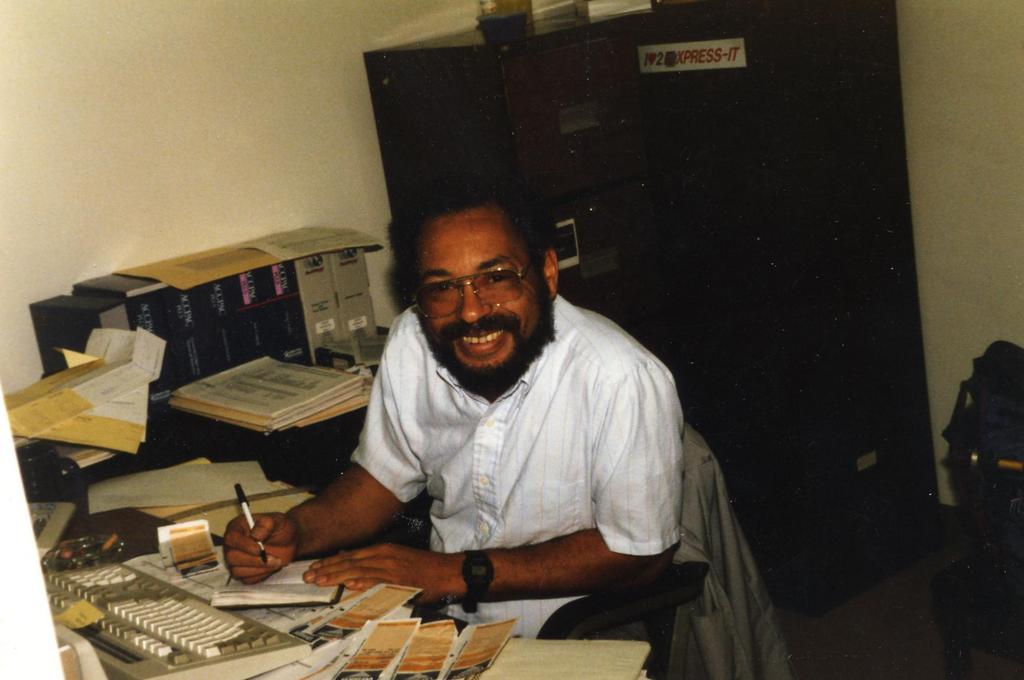
Tuesday, November 09, 2004

Have written a couple of blogs only to have them go "pouff!"

into cyberspace as I hit the Publish Post button. Didn't have the heart to try to rewrite. The words only make sense when they flow naturally. Guess that's why I'd never have been able to do any serious writing. The re-write would have lost meaning for me; another metaphor from my "music" self; ashes and embers ... .

I remember one evening long ago when Bill was downstairs in the library working on a grant proposal. I was alone upstairs -- sitting with my guitar before a crackling fire in the grate -- strumming and feeling warm and cozy and pleasantly idle. In the flickering half-light from the fireplace that kind of meditative mindset forms and a song started to shape under my fingers and in my head. In a few moments I was singing the "newest most beautiful song in the world" and it had to be shared. It was always this way.

As the last notes sounded and I knew it was saying "truth," I picked myself up -- almost tripped over Sang-Sang (one of our two Lhasa Apsos) and invaded the library. "Hold that thought and listen," I called out to Bill on the way down the stairs. He smiled. I jumped onto the back of the sofa, bare feet tucked into the pillows, and got ready to sing. Bill gave the platen on the typewriter a gentle thrust at the end of the line and, obediently answered the call.

It was a song about us. It was lovely. He listened intently (or with feigned interest, I wasn't sure) and as I struck the last chord and sang the last note he clapped with delight. His next words I've never forgotten:

"That is so lovely, dear, and think of how wonderful it will be when it's finished!" I was crushed. It was finished. There was nothing more to say. The little song was my truth for the moment. I could add nothing. He could see my obvious disappointment but understood little, so continued. "I'm been meaning to tell you, Hon, that I'd like to request that the university allow you to enter the music department as a special student. It will be so wonderful for you to learn to go deeper -- to fashion just the right word or phrase -- to have the joy of composition that is so enriching to real composers -- the polishing and refining of words and phrases in a lyric... ."

I fell silent. He was puzzled. How could I explain to him that my song was what it was. Complete and unchanging. If I tried to alter a word it would become something else. He would never understand that these were momentary little explosions of "truth," ephemeral and mercurial and always only related to now. The next moment would include this moment, with the resulting subtle but important shades of difference. I could say that now, but at that time I lacked the confidence to hold my own in the company of one with advanced degrees in the academy.

I believe that this was the last song I ever wrote. Unlike the legendary composers to whom Bill must have been referring -- I'd never thought of myself as anything more than quite simply a "song maker-upper." I'd done it all my life, I suppose, with none of the self-consciousness of "composing." It had been my way of taking the rich material from inside and moving it outside where I might better understand it -- whatever it was. "Making up songs" had never required any more from me. It was truly a gift. Hearing the music in my head and having the ability to translate it through my instrument and voice to better tell others what it meant to be me, I suppose, was enough.

And you know what? I've always suspected that those "legendary composers" with whom Bill would have placed me were probably less free than I, and though I knew next to nothing about the rules of harmony, I was nonetheless applying them or it would not have produced music. Strange; but quite awe-inspiring when you think about it.


In the wake of the disastrous election results and the fears they've generated, why on earth am I thinking such thoughts now? Don't really know. Though it all probably fits with the ease with which I slipped into thoughts weeks ago about music and refreshing my technique on the guitar and clipping my nails (as if to get ready for what?) and the trip to Tupper & Reed for a new music book...do you suppose?

Is it that "using information before it arrives" phenomenon?

Haven't my creative urges generally come in times of trouble?

Does this mean truly difficult times ahead?

Or, am I simply looking for a way of escape; some exit strategy?

Maybe it's just time to make music ... .

Photo: Tuptin and SangSang were a beautiful pair of Lhasa Apsos; a gift from Tarthang Tulku, Rinpoche, Bill's guru at Padma Ling Tibetan Center in Berkeley. The first week they arrived the chewed up the entire bottom shelf of books in the downstairs library! We loved 'em anyway.

Wednesday, November 03, 2004

My darkest fears have been realized ... .

A few moments ago the "every first Wednesday at eleven o'clock warning sirens from the refinery" just sounded. Four long blasts that ring out over the city -- with that insistent coloring of everything with a sense of impending doom.

I've not turned on any outside news source today. Resisting the urge to check out Google News. I want no concession nor victory speeches this day.

Maybe I'll catch BART and join with other at a Peace demonstration at Justin Herman Plaza this afternoon at five o'clock (San Francisco). That seems hollow, though. My fears may simply be amplified by joining with others who are just as afraid and disappointed as I.

If only Kerry had leaned Left instead of Right in these last days. Instead, he followed Clinton's course and moved toward a middle ground that is so far off center that it did no more than make him Bush Lite. If only he'd told us that if we elected him he would bring our troops home in 3 months, and end the occupation of Iraq. If only, ... .

But it's too late for all that now.

The future is whatever it is, and that middleclass voter that Kerry made his appeal to was planning to vote for Bush all the time, then they'd just go back to watching Survivor and Fear Factor, and hope to someday sit around that table with The Donald.

Think I'll go burn a few candles or find a star to wish on -- or something ...

Monday, November 01, 2004


Tomorrow is election day.

I'm swinging wildly between the fantasy that the unspeakable will happen -- that there will be a landslide victory for Kerry. All this is based on the fact that no one has polled me -- and all the other me's across the country and that we'll fill the voting booths tomorrow and change the current devastating course of history. In my fantasy, the pollsters and the pundits didn't have a clue about us; the youth, the elders, the disenchanted, the daring, those still believing in the innocent dream of justice, righteousness, the fulfillment of the dream of democracy. Plus all those others who have discontinued their lan phone service and can only be reached by cell -- therefore beyond the reach of the pollsters. Do you suppose we're enough to turn the tide? Let us hold that thought!

On Saturday I gave my lecture before a small group gathered at the California Genealogical Society office in downtown Oakland. It felt strange in some respects, reminding me of the effects performing my music always had on me. The magic was always in the writing of it, rarely in the performance. It was like the comparison between ashes and embers. I suppose that's why I was content to just let them go once composed -- and those "ashes" now lie around in my files on scraps of paper and on long-ago-extinct audiotapes that have probably decayed into little more than screeches and howls at this point -- if they can be heard at all, that is.
the only remains are those fading sheets of lyrics and the music that still plays in my head -- never a changed note after all those years.

Some of the tapes are from the era of reel-to-reel while others are on cassettes, but only a few. Those generations of technology were long ago abandoned and the hardware to play my music is no longer available. Nothing makes one feel more irrelevant, I suppose. I feel like an old phonograph needle (remember those?) if I think of it at all.

It was to some extent like that on Saturday. The real pleasure had been in the work of discovery; the research, the Internet connections with other researchers who were working the same surnames and discovering me in the process -- and emailing their work to me for comparison. It was the reaching across the generations and bloodlines and continents that provided the magic. It was the record of 26 generations of the Breaux family sent by Clarence Breaux in Louisiana and the scholarly family tree (that included mine) in the published work done by Prof. Robert Brault of Canada who claims me as "cousin." It was the unknown staffers of the Library of Congress (National Park Service) who sent me a three inch thick stack of the war records of my Civil War ancestor and lit up my soul for days! (And all for a mere ten dollar fee.) Then there was Ken Nelson at the university at Baton Rouge who discovered my father's lineage while searching for his wife's ancestors; the Charbonnets. He took me through a 40 year period that I couldn't account for, and gave me the breakthrough to complete my work. I've met none of these wonderful people, but we've exchanged photographs and artifacts and provided grounding for one another in this polyglot we call family history. What I've collected in my precious binders is simply the evidence of those real life encounters and like the "ashes and embers" metaphor of my music, they are the embers. On Saturday it all seemed bland and gray and mere echoes of the real life experiences that are only possible through present-day technology.

There may be something important here. Can it be that this is why there's always been a contemporary quality in how I've lived my life? Always in this moment. Rarely in the past? Always ready to break new frontiers. Always questioning. Waiting to see what comes next in the midst of every sequence of events ... .

Apparently most of this was happening in my head during my presentation. The group seemed appreciative of my work, and the Q&A went well. There were about 5 African Americans, all women, and beginning researchers in the room and it was to them that I felt most closely related.

The CGS is obviously wanting to open their considerable research resources and facilities to a more representative constituency. Bringing me in as a lecturer was their first attempt at doing this. It's an honorable and wise endeavor since the city of Oakland has a large black population and one that has before now not been reached. It will be interesting to see if this effort pays off.

The challenge of working with black genealology is that the slave curtain comes down and the work is frustrated by the lack of continuity in following the trail of names so critical to discovery. In the case of my great great grandmother, Celestine, is listed as "Celestine of no last name" on her marriage certificate. Celestine is the "C" in my username (cbreaux). I'm fascinated by the fact that this obviously independent woman must have refused to take the name of her owner or plantation, but preferred to have no name at all. The hint of defiance fills me with awe and pride and encourages those qualities in my own personality. A dear friend (white) once said to me, "...Betty, it's hard to feel superior to one who refuses to be inferior." She said it with a giggle, but the thought stayed with me. The words held the ring of truth and echoes of Celestine.

New ways of breaking through are slowly being found -- through working with wills (you'll remember that we were inherited property) and the Freedmen's Land Bank. There are also DNA tracings possible that can now link African Americans to tribal connections overseas.

So much to learn. So little time. And, so little enthusiasm for this researcher as interest waxes and wanes in light of what is happening in the here and now. Striking that balance is an art I've yet to perfect.

I'll hardly live long enough to connect all of the dots in my own life, much less follow the trail back through time, of all those ordinary and heroic souls who contributed to my being on the earth.

It's all so wondrous, isn't it?

and, overwhelming ... .

Photo: Greatgrandmother Leontine Breaux Allen, widow of Civil War veteran, George Allen who was originally from Ohio. She lived from 1846-1948 and died at 102 when I was 27. She was 19 when the Emancipation Proclamation was signed and freedom came; a freedom that is still to be realized by many.

Thursday, October 28, 2004

Wow!

It's all connected ...that outburst yesterday over the state of the nation's psyche -- the wild charges of national madness ... .

Woke in the night and lay still while the dots connected behind my eyes in the dark.

It's the old Saints/Sinners Syndrome.

I know that we (human animals) are capable of good and evil as witnessed by those periods in history when we gathered in a carnival atmosphere to watch young "witches" of Salem being burned at the stake. Those black periods when families picnicked in the shadows of great trees in the town plazas of the south while black men were tortured and castrated before being torched alive!

I remember the stories told by my grandfather, Papa George, about how black men would be chased down, forced to kneel, head to ground, then hog-tied -- wrists to ankles -- and Klansmen jumping on their backs until the ribs were crushed -- and then tossing their near dead bodies into rivers to (mercifully) drown in the rapids.

There were many stories recited absently while this very young granddaughter weeded beside him in the vegetable garden or gathered in the melons or stringbeans for the table. Papa often sang fragments of field songs as we worked together in the warm sun. I'm not sure that he ever intended to share these horrific tales, but in his memory bank was the picture of his younger brother, Leonard, who escaped to Kansas City never to return. It was after a Klansman was shot and killed under circumstances my child's mind either never understood, or, wasn't prepared to receive in detail. He often droned on with happy tales -- always with the wicked wink of an eye. There was the usual chaw of tobaccco being rolled around the words -- then the p'tooey! Every now and then his voice would lower indicating some truth-telling -- and remembered wrenching pain that I was not yet ready to receive or comprehend, but that nonetheless became a part of my being along with Edna St. Vincent Millay and James Whitcomb Riley. Only I was always aware of the specialness of those stories and tucked them away until they erupted in full color during the Sixties and spilled from my music fullblown.

None of it was lost. All of those times shared with Papa laid the groundwork for the restless and socially responsible adult that I was to become. Wish he could have known how much of his life and times crept into my being -- to fortify me against the cruelties that lay many years ahead. During those troubling days of transition in the suburbs of the Fifties and Sixties, I was often angry. Hurt. Outraged. But, blessedly, rarely was I surprised.

I did finger my way through old files last night before climbing into bed -- and re-discovered a song that I can't remember ever performing. It was too disturbing. A kind of "Strange Fruit." Also noted that it bears the stamp of Malvina Reynolds' Schroeder Music Publishing Co. Forgot about that friendship so long ago.

The short song was written all-of-a-piece during the search for the three Mississippi civil rights workers during Freedom Summer, 1964. The search had gone on for weeks. Their riddled bodies were eventually found buried in a landfill; two young Jews and an African American. Students who gave their lives in the cause of freedom.

I thought of them as the "Black Logs" of Papa George's horror stories. That may have been the first time I'd realized that those weren't simply folk tales I'd been given, but evidence of the criminal brutality we were capable of as a people. After all, Papa was the son of a slave and witness to that awful history:

Black Log

Black log driftin' down de bayou in de mawnin'
limbs a'draggin' 'gainst duh willow
Black log floatin' down de bayou in de mawnin'
now it's sun-up Owl must leave you
time to fin' his mossy pillow.
Bullfrog croakin' out his grievin' from dis strange lily-pad
...
three-fingered, twisted, lily pad.

Noontime, comes de rivah 'roun the levee ...
Boy heah fishin' fo his suppah time
Caught one! ...no... 'tain't nuthin' but a black log.

Black log rushin' down de rivah in de evenin'
Log cain't see de evenin'
Caught...now free, log and me -- in de rivah, no retrievin'

Comes de sea now...
here's de open sea now ...

Freedom!

Too late ...

(copyright 1965)


In the night I realized that the deep fear and near hysteria I've been gripped by was aggravated by what I was seeing on television. The America that is cheerleading this low-level sex and violence-driven reality genre we're seeing is capable of the most evil realities of our history; right from the tales of this country's youth. Have you seen D.W. Griffiths' "Birth of a Nation"? Rent a copy if only out of morbid curiosity. But I would hope that it was more than that; a need to know in order to not have to re-live.

It's as if we've been primed to accept the grossest kinds of assaults on the heart and soul; been de-sensitized to cruelty and debased by the media over decades to a level where even Abu Graib and the abandonment of the Geneva Accords is tacitly agreed to by a public no longer in control of its moral compass. Have we become the "good Germans" to the rest of the world?

My fear that we've lost our way and that THIS de-sensitized public is capable of choosing as its leader one who exemplifies the least of what we are. THIS degraded and dumbed-down public is capable of extending the reign of this regime into another term of office during which time all branches of governance will be downgraded and disempowered. The courts are already effected and the promise of further degradation is perhaps less than a week away as at least one justice steps down. The Constitution and the Bill of Rights are being shredded day-by-day by policies that the Congress is rarely allowed to weigh in on. Most power is being wielded by an Executive Branch out of control.

Small wonder that I'm relatively sleepless these days and nights...

Would love to slip out of town and hide until it's all over ...

And, yes, I do believe that THIS America is capable of returning these people to power despite the towering national debt, the horrors being wrought in our names overseas, and an unprecendented transfer of wealth that threatens the social order.

Or, will the balancing part of the electorate rise to prevent the mounting chaos? Will the pendulum begin its swing in time to save us from ourselves? This has been the magic of our system -- this cyclical swinging from Left to Right, Liberal to Conservative, Good to Evil, and back. Maybe we've run out of the energy needed to empower the loyal opposition. Maybe not.

I truly don't know... .

Wednesday, October 27, 2004

Had a strange thought as I flipped the remote ...

across the teevee offerings last night while waiting for it to be late enough for Jon Stewart's Daily Show... .

Is there anyone else out there who believes that what we're showing on the tube is pathological? Can anyone truly believe the "Extreme Makeover" shows are real? That one can actually deal with all of the permits and zoning requirements in any given municipality -- plus line up the elements needed to pull off a brand new home in 8 days? Do we really believe that it's sensible for a troubled young family to allow the embarrassing exposure of the most intimate details of their lives to national audiences to pruriently mull over (Dr. Phil)? Do we really and truly savor the experience of seeing the humiliation of rejection offered up to us by "The Donald" week after week as young hopefuls gather around in his boardroom conniving for a place on the career ladder? Sitting in my room watching otherwise credible elder pundits shouting and interrupting one another in the worse show of adolescent rudeness on most of the panel news and opinion shows -- and upon which we are expected to make our political choices? Has anyone managed to sit through the awfulness of Tyra Banks's "Top Model" and seen what beautiful young women are subjected to in the quest for a career on the catwalk? How about the awful "Survivor" series, and worse yet, the young men and women who are chosen to prance before us in competitions to enter into the "holiest of contracts," -- marriage -- and we frown on gay marriages as an abomination? I cannot imagine that I had to click my remote before gagging -- to avoid seeing a young woman swallow a handfull of worms! It was hard enough to gradually get used to watching animals copulate on camera!

Am I the only person on the planet who finds no fascination in watching surgical procedures? Are we being led to believe that plastic surgery answers all our prayers and that inner beauty is no longer a consideration? Should we be concerned about the fact that South Korea has become the plastic surgery capital of the world -- with a great majority of its women opting for rounder eyes and more western noses? Or that lives are being lost by women in India through mercury poisoning from skin bleaching to better navigate a world dominated by western culture?

Am I wrong to want to wish all of this self-deception away?

Nothing makes me feel older than to watch couples sharing a bed as a part of the dating scene in almost any second act offering on most prime time dramas. Small wonder that the Miss American Pageant got tossed. It had become an anchronism in these days of Victoria's Secret models parading in angel wings and bikinis on the catwalk in a display of soft porn for the mainstream.

Oh god! I need to get back to work again. I'm fast-becoming a crotchety old woman who lacks the will to simply clip her fingernails to the quick and get about the business of growing the necessary callouses on my left hand ... . The state of my nails has never been a concern. I've had many more pedicures than manicures over the years, to feed my need for nurturance and decadence(?). Nothing makes one feel more pampered. The Wes Montgomery Songbook #2 lies unopened, awaiting my developing the will to pick it up and get to work. There's much to write songs about. Wonder if the muse can be re-awakened? Wonder if fear that that part of my psyche has atrophied and that I'm too frightened to face that possibility after such a long time?

Would a digging through old papers for some original song lyrics I may have forgotten help me to reconnect with my inner self? I'll try that later today. Running through old files often jars loose some "soul" that I've misplaced.

I'll let you know what happens ... .

Meanwhile, I'll distance myself from the damned remote and shut down cable until I regain some sense of balance. Have always believed firmly that each of us creates our own reality -- right now mine is in serious jeopardy! Obviously my depression today has to do with what I'm choosing to allow into myself -- a problem that my normally socially involved daily life never allowed.

Problem diagnosed. Now for some solutions ... .

Monday, October 25, 2004

Took care of the series.

Registered my complaints with the managing editor and she agreed to pull the rest of it. It's a shame. I really thought it was a good piece of writing and -- if the essays did what was intended -- would have raised the curtain on our centennial year with style.

When I re-read the second part (the one that was so drastically edited), it was good, was submitted as a draft which invited cutting -- but would have been better served by a re-write. Wish we'd handled it that way instead of aborting the series. Maybe next time ... .


Spent Saturday evening at a seminar at the university. It was a five-hour presentation of ROHO (Regional Oral History Project) followed by a reception in the Morrison Library of the Doe Library. There were three presentations by researchers who'd conducted oral histories of the "Rosie the Riveter and the Richmond Homefront in WWII," plus the "Disability & Independent Living Movement." Both the Rosie project and the Disability portions were of interest to me so I braved the rainy afternoon -- pulled on my hooded windbreaker, and trudged through the campus under dripping trees and fast-filling creekbeds.

This was the first time in ages that I'd been in such a setting with academics. The audience was largely over 60, though there were a few student types sprinkled through. We sat in comfortable dark and rich leather couches under the mellow lamplighting common to libraries. The sense of stability and strength of the ages surrounds you in that setting. The mahogany tables and wainscoting mixed discreetly with the computers that were barely in sight on the half-level above the room. It was as though the technology tried to be understated for fear of destroying the ambiance. Beside the uniform softly-lit parchment tortoise-shell lampshades they looked hard and garish.

The Rosie stuff was old hat, of course, since I'd been working with much of the material for some time. The Disability section was of far more interest to me. Though the area is far more oriented toward physical rather than mental disabilities -- another culture completely. With Berkeley being one of the centers from which the movement sprung in the early seventies, much of what was discussed had a familiar ring for me. I'd spent some of those years as an aide to a member of the Berkeley city council, and knew some of the players well. I'd also been responsible for these issues more recently as a field rep for Loni Hancock.

Discovered something important while sitting there, mostly apart from the others. That world is less interesting to me than my current reality. There's a preciousness about the academic life that I remembered with some discomfort as I looked around that beautiful room. I think that I'd forgotten that. It mattered not the color of one's skin so much as whether or not one held proof of credentials -- no matter its relevance. The distance between the African American professional academic class and the everyday working class African Americans who make up my life in Richmond seemed as great as those between black and whites. I realized that I much prefer the grittiness of life in Richmond than this. Not sure just why that is.

It might have something to do with the fact that -- despite the fact that the university is at the cutting edge of change because of the role played in the research community -- at the human social level, that tends to get lost in the paper chase. At the social level, the waters get muddied somehow, and there is a loss of relevance to what I witness on the streets and agency waiting rooms of life, and I'm not sure why that is.

I do know that the experience of being a business person in a marginal "micro" business in South Berkeley changed my relationship to the black world. Having the experience of making a difference through hard work and determination created something that continues to be the driving force in my life. It moved me from the theoretical hypothetical to activism and I've never looked back. It opened my eyes to opportunity and closed them to indifference and privilege.

I also know that this is not a criticism of black academics. We need African Americans at all levels involved in all aspects of life -- from top to bottom. Even the Thomas Sowells, Frank McWhorters, and Ward Connerlys have their place, I suppose, if only to help me to define my own path in opposition to theirs. Can't take this as far as Condi Rice and Clarence Thomas, but they're nicely balanced off by Elinor Holmes Norton, Barack Obama, John Conyers, et al, and help me to define the issues.

When the world gets too complicated and I begin to feel overwhelmed, pulling back to my 500 feet realm of influence works to renew my sense of power. There is an opportunity to influence the shape of the next city council in my city by helping to get out the vote. I'll do that. This week will re-awaken that wonderful sense that I, too, can lean in the direction of change with those who share my hopes for the country, and -- this old atheist may just say a few prayers for deliverance from the goings-on under the present administration.

I must have faith that all over the nation others are leaning with me ... .

Let us pray!

Thursday, October 21, 2004

I'm angry and disappointed.

Just picked up a copy of this week's Globe and found myself seething as I drove home from the library! Wanted to go back and pick up every copy and put them into the trash barrel! Should have asked to see the copy once edited, but felt that the first segment had fared fairly well and it was alright to assume that the rest of the series would do likewise. It's a disaster.

What started out to be a column on the tragedy of withheld respect of a people turned out to be an attack upon Henry J. Kaiser. The intent of the article was lost by the editor's need to fit copy to available space, I'm guessing. Had I thought this might happen, I'd have asked that the column be held back a week. There was no reason to run it at all if 50% had to be "cut to fit." That's about what happened. The entire meaning was eviscerated and what was left made a statement that was not intended. Now I know how real writers feel about their work.

Will talk with the editor later today and ask that the balance of the pieces be pulled unless I have the right to see the edits before publication. There are two more to go. I submitted them all at the same time (error #2).

I'm aware that I've begun to withdraw into myself in anticipation of the upcoming national election. I'm afraid... .

Always in the past I could feel the adrenalin coursing through my veins and by now I'd have my windows rich with signs and my datebook blocked out with polling data and phone banking appointments. Not so this time. I'm quietly in dispair -- and have no idea how to deal with it. I tune in less often to the news -- except for CSPAN -- and worry that, though I've probably contributed more of my meager funds to political campaigns this year than ever before in my life (again to MoveOn.org this morning), I fear that it simply won't be enough to balance off the stampede of the Bush supporters to the polls.

Maybe old age is finally settling in, though I doubt it. Lack of interest in all things political? No. I continue to believe that this is the best country in the world and that we are all essential elements in its greatness. I firmly believe in the democratic process, but this time there are the obvious signs of facism embedded in the mix with its many faces hidden within the climate of greed that has always been evident in our system of capitalism.

I long ago lost faith in organized religions and there seems less and less reason to re-think that position. The current administration's craven use of the faith community to bolster its claim to the black vote is maddening. Watching the simplistic appeal to simplistic religionists while complexity goes unaddressed is frightening. Our lives may well depend upon more than 10 Hail Marys and 5 Our Fathers intoned while fingering a rosary. It will take more than prostrations -- a bow to the East at dawn, or the sprinkling of holy water to get the homeless off the grates of the country or unwanted children out of questionable foster homes and juvenile halls across the land. It will take much more than the burning of a few ceremonial candles to find the cures for HIV-AIDS and/or the one-in-four children now suffering from childhood asthsma and diabetes. And, it will take more than George Bush's "Now I Lay Me Down To Sleep" while on his knees in the Lincoln bedroom to get the guns off the streets of the ghettos and barrios, yes, and from suburban school lockers. It will take more than gregorian chants, the burning of incense, or the lusty rhythmic singing of gospel songs to protect our ports and harbors from a suitcase dirty bomb or anthrax attack.

I guess my deep fear is that -- our leader is clueless about the complexities of life as it is lived in most of the world. I suspect that his measure of an acceptible level of existence is limited to everything within five miles of his ranch in Crawford, Texas!

About Kerry?

The most important things about this man may be that he has a handle on what he doesn't know and an impeccable sense of where he might find some of the answers. I suspect that he is highly intuitive. My guess is that he has enough humility to see himself as only one part of the whole, and that he will seek proper counsel in order to match the challenge of the office of the presidency. That is - if this country has the collective wisdom to elect him to our highest office.

Maybe that's all I demand of this man. The rest is buried in media-speak; gets garbled in "style" and "delivery" and "spin." But I'm gambling on the fact that what we need is there ... to be slowly unearthed in the years to come as he and his cabinet strive to recover a country that we have all but lost to those who would sacrifice this wondrous experiment in governance to greed and an insatiable lust for power.

Too strong? Perhaps. But it's precisely how I'm feeling this morning. I feel better for having choked it up, and maybe now I can get out the tape and hang my signs, and join a phone-banking team tonight. After all, I have a city council member to help to get elected ... .

Wednesday, October 20, 2004

Two new commitments loom large over the next few weeks; both will require at least some minimal preparation. Though I'm finding that as long as I'm not having to deal with acquired knowledge -- but am simply drawing on past experience, I'm okay.

On October 30th I'm scheduled to do a presentation before the California Geneaological Society (in Oakland). That should be fairly easy -- just tuck my binders and vintage photographs under my arm and wing it for an hour or so.

The second is a re-run of the day spent with those young teachers from the charter school that I believe I wrote about. The director called yesterday to say that they've received funding for the purpose of re-creating the experience for 40 teachers who will visit the Rosie The Riveter/Home Front Historical National Park (too long!) on November 11th. They will come from all over the nation by invitation, I believe. They will visit the Rosie Memorial, the Archives, and spend a couple of hours with me in a Q&A -- as we did a couple of months ago. I did enjoy them, so it will be pleasant and interesting, I'm sure.

It's odd that they've chosen a national holiday, which means that special arrangements will have to be made with the National Park Service as well as the city -- since the NPS offices are in city hall. The council chambers will have to be opened up on a holiday which means extra custodial costs, I suppose. But it may well be that this will be a part of the Veterans Day observance.

Am being treated more and more like a "relic" these days! Don't feel like one, though, and I guess that's all that really matters.

Lunched yesterday with a university historian half my age. She brought along some reprints of relevant history she was sure would interest me. These were pages reprinted from an old publication that had photos of the old union hall I'd worked in during WWII, with pictures of my co-workers. I wasn't among them. It was also sobering to note that everyone viewed was now deceased. Then it occurred to me that at the time I might have been the youngest member of the staff, and of so little importance that I would probably have been skipped over at picture taking time.


I need to get back to work! Living in the past is a deadly occupation -- and for one who has remained contemporary over a long lifetime -- this could become the beginning of the slide into non-relevance ... and death. One cannot make a career of past lives -- even if they WERE lived simultaneously. I'm far more wedded to NOW! THEN has never appealed to me.


Tuesday, October 19, 2004

Articles on the African American experience on the Homefront in WWII started last week. Have had almost no feedback from readers and I'm not sure how to read that ... did I miss the mark? Was it simply of no consequense in a world sated with dramatic headlines and war news? Did it get overlooked due to the impending national election? Is it too soon to judge how it was received by the public? Or, will interest build as the rest of the 4-part series unfolds?

Spent the last few days studying the ballot in preparation for installing my ballot window at our Berkeley store. For years I've filled my front windows with newsprint upon which I write in indelible markers, "This is how I will vote this time." What follows is a replica of the state, county, and city candidates, measures, and inititatives boldly scrawled -- with my signature at the bottom.

My theory is that I have no wish to tell others how to use the franchise, but if the California ballot is as confusing to the rest of the community as it is to me, we can use all the help we can get! I figure that I probably give more attention to the measures and initiatives than most, and when I'm in doubt -- I say so. There is always at least one initiative that I leave with a question mark so that folks will know that I'm not all that sure about everything, but that's no reason not to vote, right? Also (by design) I show at least one change of mind by having a "yes" crossed out and replaced by a "no." I'm hoping that shows deliberation. Guess we might call that a "Betty spin."

Over many years the community around our little store has become used to my window ballots, and it is not uncommon to see people lining up in front at the curb -- marking their sample ballots accordingly.

It's all complete (phew!) and ready to post. I'll drive in to Berkeley with my rolled up giant ballot and tape and do the honors. There ought to be some ceremony, but I'm not sure how to initiate that.

The goal has never been to presume to be all-knowing, and to gain a following (though that has happened from time to time), but to encourage the vote. It matters less whether I've influenced the outcomes than that I've increased the numbers of those going to the polls each year in that community. That's the point. That feels good.


The approaching election promises to be a cliff hanger, though for the life of me I can't imagine why that should be. The present administration is so blatantly bad that I'm mystified at the numbers of citizens who continue to support it. What does that say about us as a people? And in light of a world that has judged us as increasingly cruel and oblivious to the pain of others (i.e., Abu Graib).

Last night Al Gore gave the speech of his life (CSPAN), at a MoveOn.Org event on the east coast. I felt the fear building as I listened to the litany of abuses and errors in judgement of this sitting president that he spelled out to that audience and the country. Might we be on the threshold of civil unrest unlike anything we've seen before -- should the election be as tumultuous as signs indicate?

I watched a video of Arandahti Roi for a while this morning and again marveled at the wisdom of this feminist leader, and wondered if the disconnect between East and West in these awful times is exemplified by the intellectual and moral gulf that lies between this inarticulate president and the incisive wit and wisdom of this beautiful woman?

The posting of my Betty Ballot pales beside the desperate need for positive leadership that our times demand.

But it's all I have this morning ... .

Friday, October 15, 2004

Advantages of growing older; one leaves the age of acquisition behind.

While checking out eBay this morning (the first steps at de-mystifying the process) I found myself momentarily caught up in click-shopping. Had no idea there were so many things in the world that I know longer want or need. Somehow over the past few years, I reached a place where there was simply nothing left to want that's buyable, that is. Except for the occasional purchase of something to feed my soul, like a piece of art or some cut flowers -- tickets to a play or dance concert, or the upgrading of my Mac from time to time -- having money holds little meaning now.

Then why on earth do I continue to have this need to be employed? Why is it so difficult to simply call myself retired and get on with it? Why do I equate independence with an adequate bank account? Of course, I do need to provide for Dorian as well as myself -- but that shouldn't take much - and I surely would hate to have to begin to think about senior housing, or, "assisted" living. I'm still far too capable and healthy and involved in life to want to separate myself off into that kind of isolation until it's absolutely necessary.

It may have to do with a wish to continue to be the bank of last resort for my kids. There's little else that I can provide for them now. And, given the state of the economy, they'll never have the advantages that Mel and I enjoyed as young parents. The total economy is skewed in favor of the elderly -- with little provided for the generation that follows. Poor planning, that.

I wonder why my generation functions as though it's the last? I wonder if it's related in any way to religious beliefs that have predicted Armegeddon since I was a child? How short-sighted. How else do we read current denial of global warming? How else are we to understand the abandonment of international treaties? It is as though my generation has every intention of using up all the remaining resources -- leaving every man, woman, and child a national indebtedness of $25,000 each. What with "The Rapture" about to arrive, who'll need to pay it anyway? How did it come to this?

There must be others who've also grown past the "age of acquisition," and who are as frightened at the state of this nation as I... If this new awareness is, indeed, a natural part of the aging process, then I cannot be alone. It suggests that the prevailing attitude as exhibited by the current administration is an aberration that rises not from my generation, but from the one that followed.

Since the engine that pulls capitalism is fed primarily by the acquisitiveness of young families (first homes, appliances, vacations, education, children's needs, cars and sports equipment), would it not be smart to see to those needs first and foremost?

Perhaps -- if I were an economist -- I'd better understand that I'm being simplistic. However, most truths that have withstood time for me have proven to be elegantly simple. There may be just the seed of such a truth here. I'm a bit too wise to believe that I've solved the problem (smile).

Now it's time to work on those fingertip callouses a bit. Nope, haven't clipped those nails yet. It may take a few more days to know whether I'm committed to the Muse. But I did make a trip to Tupper & Reed Music store in downtown Berkeley yesterday to pick up a jazz guitar book that looks promising. Even recognizing that there isn't enough time for mastery, I just might reach a reasonable level of mediocrity on my instrument. When I got to the counter to pay for my purchase the young woman asked if I wanted the teacher's discount(?). I said, "no." She obviously couldn't imagine that I was buying this for myself(!).

Just blasted another stereotype!

Tuesday, October 12, 2004

Received a quickie invitation (Sunday morning)

to have dinner with friends at the home of a woman who is slowly growing into the inner circle of my life of good friends. She's coordinating the city's arts programming. We became acquainted during the brief period when I served on the Arts Commission.

Jennifer called early in the day to say that Michelle had invited us to share an impromptu supper with her family, and that a few other friends might be there as well.

It was a do nothing evening with only Dorian to commune with, and she was busily working on a new bedspread. Her crocheted coverlets are piling up now, with each new and colorful piece begging for distribution. I've about decided to let her sell them on eBay, as soon as I can figure out just how one does that. I need to photograph them (beautiful!), and advertise online -- to see where that goes. I have the label created, "Global Warming" by Dorian Leon Reid. How's that?

We attended a reception in the rotunda of the Oakland City Hall last night. Dorian has a painting on exhibit that was getting some notice. She's now sold four pieces at NIAD over the past few months (okay, one was to her mother), with one of her large quilt-sized collages currently under consideration by a potential buyer.

But let's get back to Sunday evening:

It was very casual with the small group gathered randomly, some with wine or a dish to share, and all with warmth and "life!" There was music from somewhere, and I saw a young man enter with a guitar in hand and knew that there would be more than food and fellowship shared. There was.

When it seems right -- when the mood struck -- he brought it out and began to play his original compositions. Started with a blues and followed with art songs that sounded free-flowing, free-form, and possibly improvised on the spot. Fun!

For the first time in years, I asked to have turn, to recite the lyrics of a song written long ago, and did so while he strummed in the background. It woke the artist, and felt right. The words still rang true, and the emotions expressed still current. It was a moment I'll treasure.

Yesterday, before sitting down at my computer, I poked my old Martin out from its hiding place in the back of the closet; remembered seeing a packet of new strings somewhere ... found them in the bottom of a drawer, and went about the business of changing the much-corroded ones for new and resonant ones. Fingers quickly remembered the process -- stored in muscle memory, I'm sure. This was step one.

Fingernails on my left hand must be clipped close (what a sacrifice, since they are such a nice length and I've been nursing them along with diet supplements of collagen) and new callouses need to build up on my fingertips in order to press the chords ... it I take this detour... .

Still, I tuned up and gingerly started to send the signals from mind to fingers and the strings responded accordingly, and -- before tucking my beloved guitar away in its old hidingplace, I held it for awhile just remembering the times we'd shared. Ask any musician -- one's instrument becomes imbued with human attributes along the way, and ties between you are binding for life. And, by no stretch of the imagination would I consider myself a "musician." An artist, surely, but in an ill-defined way. A lyricist, a writer, a poet, maybe. A guitarist, never, but I've always sensed the potential -- if ever I applied myself to the effort to de-mystify the symbols and learn to stop being dependent upon a supersensitive "ear" that dictates where fingers need to be placed instead of the notes and chord symbols on the sheet. There was never a problem replicating the sounds in my head with the instrument in my arms. It made for great freedom in creating songs, but completely destroyed any ability to master the instrument.

My oh so sensitive therapist told me years ago -- when I wondered about the source of the songs that poured so effortlessly out of somewhere within -- "forget the lessons. Go with what your heart says. Those who create do so to make the map for others to follow. You must not limit the scope of the creative process by adherence to rules." Made sense of a sort, but said nothing about the frustration one experiences when the muse can't be evoked, and there is not the box of "tools" into which to dive at such moments. That may have worked for the likes of Jackson Pollock, but I'd have much preferred to emulate the artistry of a YoYo Ma who has such mastery that he can throw away "the book" and improvise with total freedom. Too late for that. Not enough time for "mastery," but the music may still be in my head and heart, and may still be accessible if... .

That was yesterday. Today I've toyed with the idea of clipping my nails. It's only a short step before the beginning of the building of the callouses on fingertips of left hand, an hour or so at a time - while those voices are being re-awakened ... .

Maybe the source of the music is still hidden somewhere behind my eyes. After that brief trip back in time on Sunday, sitting with other creative artists listening to their young souls, I may be ready to unwrap my own. Maybe a few more evenings with others with active muses will do the trick. Good reasons for creating some Sunday Salons where that can happen -- house-to-house? At the library? Community centers?

Maybe... .

And wouldn't you know that the "community organizer" part of my brain would enter just about now? Just in time to get in the way of the creative process, too (grin!)

Saturday, October 09, 2004

Completed the 4-piece series ...

on African-Americans in the Second World War and the Richmond Centennial Year, to begin running next week in the Post Newspapers and The Globe. Most of it was posted here -- and then allowed to grow into whatever it wanted to be. I believe it was fairly informative yet uncompromising, though I suppose the readers will make that judgement.

A kind of soft quiet has set in now that I've acknowledged Rick's death and (again) made my peace with it. Usually I begin to feel his recurring presence in late August and September. This time the insistent awareness waited until October to reappear. Either I've begun to let him go, or, the hyper-sensitivity to his persistent presence in my life has been replaced with something different. Perhaps it is he who has let me go. For whatever reason, life is settling down again, and sleep comes more easily.

Strange that my parents and the others whom I've loved and lost have left no such searing sense of desolation. It just may be that with Mel and Bill and my parents I had no sense of guilt, or, the sense that in some way I'd contributed to the loss of this interrupted life. Maybe that's it. Perhaps that's what's being worked through ... maybe.

But to return to my articles:

You've read most of my notes here. I'll combine those notes with materials upon which the articles are based, and deliver one each to the director of the Richmond Art Center, one to the head of the Richmond Main Street Initiative, and will drop a binder off at the History Museum in old downtown. I'm hoping to engender some excitement around the Centennial in each of these places so that the ideas will begin to grow organically from several places simultaneously so that they will soon begin to move out into mainstream thought without any feeling of where it all started or who is responsible. Learned long ago that -- if you don't care about who gets the credit, much can be accomplished.

Sent an email to the National Park Service office last night, so that -- should there be any discomfort over my writings -- they're prepared. I could write more freely as a private citizen than if I'd stayed on after my 60 day stint. Though I'm not particularly concerned that I've crossed any lines of propriety. My views were always direct and clearly stated while I was under contract to them. There are no surprises in the essays.

Besides, the writing helped me to work through much of the leftover pain of those times, and allowed it to be transformed into something usable. I can only hope that in doing so, I will have stirred the ashes of longheld frustrations of others and cleared the way for peace.

There has been little response from the managing editor, but since the essays were written with the understanding that they would be carried locally in The Globe, and that I've since learned that they will be carried in three Post Newspapers (Berkeley, Oakland, and Richmond) as the front page feature over the next few weeks, it's pretty exciting. These papers are distributed principally to an African-American readership.

I seem to be slipping into a kind of summation period. Signs of the aging process? Maybe that's how it will be in this decade. In the next (if I'm still around) I'll probably be writing recommendations!

Spare us, O Lord... . (grin)

Thursday, October 07, 2004

One more piece to this strange journey:

Subject: Re: Conclusions
Date: Wed, Oct. 19, 2000 8:41 AM
From: Cbreaux
Message-id: <200001019114101.23228.0000>

After those last posts made before sleep last night, I lay in bed for a long time thinking about having shared what must seem like some pretty extreme views, and wondered how I'd feel this morning. I feel just fine. No regrets. That seems to rise from the fact that I'm convinced that there was nothing unusual about the experience and that others have had similar events in their lives -- by whatever name.

The medical report confirmed that there was nothing physical going on to account for what was being lived in those hours. Except for a rather steep drop in blood pressure prior to arrival at the hospital and in the immediate period following, there was not a single contributing factor present anywhere in the medical record to explain events.

It also became clear that this was something primitive (in the good sense of that word) that has -- for reasons unknown -- simply not been either civilized out of nor layered over in me. I'm convinced that the kind of primal connection I experienced in those hours with Rick is the stuff out of which all of the cultures of the world have fashioned religions and philosophies as a means of explaining the inexplicable. It rises out of our very humaness, and pre-dates the institutionalization of it. The ability to leap across all barriers -- time, space, age, -- is universal and not specific to any person, culture or faith. I suspect that many of the world religions have layered over such powers with ritual and ceremony to the extent that most have lost touch with what is the most human about us. I also think that in those religious practices such as meditation -- where we peel back layers to a void -- there is the greatest potential to tap into it. Adversely, the most homogenized and ritualized forms of religions may have placed it far outside the reach of many of the civilized.

I'm also beginning to believe that there is but one life -- and that we are all sharing in it. That this life force is like a great river with all drawing from it -- entering and leaving it at ramdom.

At least that's what appears true for me this morning. But that may change -- as of course it will. What will not change is the fact that the unfolding will continue until I close my eyes for the last time. But right now, in this space, in this time, I feel at one with everyone and at peace with Rick's leaving. I also am quite certain that there will be other times and other places where -- without warning -- I will find myself using information that I don't yet have, and drawing upon powers that I can barely understand but which I know with deep conviction are embedded within me.

Betty
Subject: Re: Those conclusions ...

Date: Wed, Oct. 18, 2000 4:55 PM
From: Cbreaux

No need for negotiations. Even their destination is a product of
knowing. We "higher level beings" have named that instinct in order to handle it.

I thought of the trout in their upstream odyssey to the waters of their own birth to spawn -- traversing thousands of miles across rivers and streams. They know. It's built into
the system.

I suspect that this
"whatever it is" is something like that. The ability to leap across time and space in moments of crisis or deep trauma must be programmed into us as part of the human condition. If it is so with all other forms of animal life, why not with us? That isn't much of a stretch for me. It feels like the most natural ability in the world. Why do we fear it enough to try to erase such experiences from consciousness or to speak of them only in whispers in protected, settings, most often from a therapist's couch where anonimity is guaranteed?

My spiritual belief system needs no confirmation by a Pope, Priest, or Priestess, Rabbi, Imam, Medicine Man, Shaman, or anyone else to be true for me. I seek no congregation to affirm the powers that are mine by definition. But it is comforting to be aware of the other pilgrims who are fashioning their own philosophies too, and who might also be as awestruck by a world that produces sufficient "God-ness" without the help of pre-ordained concepts. Such prescribed religions are often far less magical and wondrous than what is at work within our own beings.

I'm guessing that this is merely a plateau created by Rick's death. In the weeks, months, and years to come I'll surely be less sure at times, but I truly believe the next time I hit this place on the upward spiral of life, it will be at a higher level than before.

Thanks to those of you who've shared like experiences. It's meant much to know that others also
"know" and are willing to own the knowing.

Betty
Posted online in Seniornet:

Subject: Re: The report
Date: Tue, Oct. 17, 2000 22:50 p.m.
From: Cbreaux
Message-id: <20001018025018.10043.00000@ng-cg1.aol.com>

First let me describe the experience as I remember it:

I recall that I was in a kind of strange darkness the entire time. But I was also in a state of super-alertness at the same time, and alive to everything around me. I can recall what was said and felt at any moment. I clearly remember the placement of the IV in the ambulance and the difficulty the medic had inserting it into the back of my hand. I couldn't hold my eyes open for more than a few seconds at a time -- throughout the entire ordeal of all those painful hours. I remember the almost unbearable pain in my lower abdomen that wouldn't abate and how hard it was to lie on the gurney when I wanted to double over and couldn't ... I remember asking for something for the pain and being told that the doctor would order something soon ... recall being asked (when I first arrived in emergency what I'd eaten and answering, "I think a green peach." I did have a very hard peach with yogurt early in the evening, long before bedtime.


Now for the information on the Physician's Record form recently picked up from the hospital:

Date: 8/17/00

Vital signs: B/P 140/0, HR 68, RR 12 (handwriting unclear) and I don't know what RR stands for -- felt well yesterday. No fever, chills - mild ...(can't read - under physical examination there are several sentences that are illegible), what follows is: "color good, bp upon arrival 147/56, temp. 97.2)
Under a number of boxes all marked non-contributory (cardiac, respiratory, skin signs (dry/warm), pain (abdomen), GI - nausea, GU non-contributory. Musc/Skel - non contributory, Psych, non-contributory, Neuro "alert/age appropriate, motor - (15 in a circle). "There are no obvious abnormal soft tissue masses or calcifications identified. No evidence of free intraperitoneal air is noted. Chest appears unremarkable." (So much for test results.) On one page are the words "After eating heavy spicy meal at 10 pm became ill at midnight." Felt well yesterday. Later entry, "assigned to rm - c2 via AMR ambulance - abd pain after eating fruit."

Much of this is mumbo-jumbo to you, as it is to me. There are some anomalies that defy explanation:

1. I never eat spicy foods, especially at night. I did not that night. I remember clearly what I ate and what I said to the doctors in emergency. (Could it be what Rick ate at ten o'clock? But that's too bizarre to even consider.) How did his diagnosis turn up on my hospital record?

2. I couldn't keep my eyes open and remained in a kind of trance state for the entire time. I remember that I was seated in a chair in the reception room of the emergency section for a very long time, once the tests had been completed -- where I received an injection in my upper arm -- but that was many hours after I'd arrived at the hospital. I see by the report that it was "0645 Demoral - 50 mg and 0645 (this may be the same) Phenergan - 50 mg.

3. The nurses called a taxi at some point and I was sent home. I remember the middle eastern (Sikh?) driver and his companion. I remember that it was still dark. I remember distinctly entering the house to get the money to pay the $14.00 cab far and returning with a ten dollar bill and the rest in quarters taken from a bowl in my kitchen. I remember climbing into bed while it is still dark (I thought it was about 5:30 am or so).

Second anomaly: According to this report it was not 5:30 am, but 12:50 pm when the last entry is made in the record. It was broad daylight. The "darkness" was internal. I simply had never opened my eyes, apparently. I can explain it no other way. There is no error in this since there are ten separate entries by almost as many people -- each in different handwritings and done at different times during the long night.

There was/is nothing physically wrong with me. No explanation for the physical attack that I can understand. The trance-like state lasted at least twelve hours and wore off completely after folding into the opiates I'd been given and that put me to sleep until 8:00 on Friday moring, the 18th - leaving no trace of the "illness."


Conclusions? Lots of thoughts about this in the days since I woke up knowing precisely when Rick died. Still processing the experience but some things are clear to me. It's late now and I'm needing to get to bed soon. Will let you know more tomorrow. And, yes, it is appropriate for this Atheist/Agnostic folder since those conclusions have strong spiritual implications. Though my atheism remains intact, the sense of my "religious" underpinnings has been deepened. And, no, I see no inconsistency in that statement. It just may be another example of the conflicting truths that rule my life. There are few simple answers to complex questions. It's all in the living of it, I think.

Maybe we can talk about that ... .

Betty

Wednesday, October 06, 2004


This is a letter written to a dear Unitarian-Universalist minister friend,

and is followed by a description of events that ensued in the days that followed Rick's death. His body had been found in his apartment where it had lain for an estimated 3 weeks.

I've gathered the letters and posts made to my Seniornet online community of virtual "best friends" with whom I'd developed a intimate relationship over several years. I placed my notes along with their responses in my "Rick's Memorial Album" to keep me in touch with a period unlike any other in my long life. It speaks to the phenomenon given to us by the information age, and may well be the answer to world peace. This kind of caring knows no international boundaries, and may have become the greatest Super Power on the planet. The millions who marched for peace at the onset of the Iraqi invasion was not an accidental happening. In some bizarre way, it may be another piece of this new human awakening:


Subject: Letter to Yielbonzie
Date: Tue, Oct. 17, 2000
From: Cbreaux
Message-ID: 200000917233845.19591

Dear Friend:

It came to me during sleep last night.

On Wednesday, August 16th - or during the night of August 17th I suffered an attack that woke me from a sound sleep with the next several hours spent sitting before the toilet vomitting in a kind of semi-conscious state. At some point I got up and made my way to the telephone to call 911 for help. An ambulance came a few minutes later and took me to Kaiser emergency in Richmond. That must have been around 3:00 a.m. I spent the next several hours with extreme stomach pain and a continuing state of not-quite-consciousness.

I remember being wheeled into x-ray where several exposures were taken of my mid-section. The pain continued unabated. It was awful! At around 5:30 I was released to climb into a taxi that had been called by a nurse, after being injected with a strong painkiller of some sort. Taxi brought me home where I climbed into bed and didn't awaken until Friday morning, the 18th, a full 24 hours later.

I'd slept through without stirring for a full day and night, having missed the Gore closing speech before the Democratic Convention. It was this that marked the date for me so clearly.

I rose from bed on Friday feeling perfectly normal. Climbed into my car and drove to my office and then the 90 miles to Sacramento to take a mandatory training session that was on my schedule. Got back home mid-afternoon and gave no further thought to what had occurred. I spoke of it to Gail (my niece) but made no mention of it to my co-workers.

Last night in my sleep I suddenly knew. That image of myself on my bathroom floor, wracked with pain and heaving until dry - the semi-consciousness of those many hours -- that was the mirror image of Rick on his bathroom floor dying of chirrhosis! He died on Wednesday, August 17th. I am as sure of this as I am that I did not. I woke 24 hours later. He did not. He had not been seen for three weeks on September 3rd.
That would have been 3 weeks to the day of my strange malady. It's clear to me that he drew me into his death ... .

I've lived with these inexplicable periods when I seem to be using information that I do not yet have. There is a kind of strange hypersensitivy -- a knowingness. Never has it been more evident than in this instance.

I wondered if he knew that I was there? I didn't know it until it all unfolded in the night -- last night. It's almost as if it couldn't surface until I was capable of receiving it.

I've never tried to document these incidents before. They get lost because they're so hard to live with or to be validated by others. In this case, I did share the events with my niece, Gail. I called her on that Saturday -- when my work week was over and the quiet of the weekend had arrived. I said to her, "...will you be around the house today?" She asked if there was something wrong and if I needed her to come to my place. I said, "no, there is just this strangeness ...". "I just need to know where you are today." I told her then of my trip to the hospital and the rest. I then put it away until it exploded me out of a deep sleep last night.

Today I'll go to Kaiser and get the medical records of that night. I need to know that it was real and that somehow I knew and was with him.

Fondly,

Betty

(Hospital report follows, but not until my fingers settle down and typing is less erratic.)

Photo: Dale Richard Reid (nee Galvin).
The anniversary of the death of my eldest son, ...

Rick, passed with little notice this time -- well almost. He died in August of 2000, and each year at about that time, I experience some gentle vibration ... something just beneath a conscious level ... it's quietly demanding of my attention at around that time ... at least until I notice and release it by so doing. This year it was easier, but the sense of loss never really leaves.

All children gradually move out of the center of one's life into their own, some more than others, and with varying distances between. David moved deeper into his own, with his children now filling all available space -- and that's as it should be. It was surely so with mine. There were periods when they were very young when I rarely even thought of my own parents, except in a distant way. The time of child-rearing is all-consuming, and leaves little room for anyone else, at least for a time.

Bob's choices took him geographically farther away as he approached adulthood, and his own growth as an artist and as a man seems to have required a different lifestyle than the one he'd lived in childhood. He's matured far more like the young people he grew up with, and tends to reflect a large part of my own rarely expressed self, the artist that I managed to hide beneath that purposeful, political, productive woman-self. In many respects, Bobby feels to me like the Betty who ran away from home to join the circus! Though I suspect that he's not been spared the pain and the suffering common to the lives of reflective people, and that he's developed the ability to transform that into his music. I hear it when I hear him sing ... .

Dorian, despite the very best attempts to achieve the best for her, will never really cut away into her own person and life. Her mental deficits make that impossible. She's surely the reason that I'll not ever really be able to climb out of my mother role and back into the woman. It may simply be my imagination, but I always felt that Bill's gift to me was that -- at fifty -- my "woman" replaced the "mother" at least for some years. Dorian was away at St. Vincent's Academy in Santa Barbara during those years, and the boys had moved into their own lives for the most part. That's all changed now. Bill died years ago, and Dorian is back at home, and Betty has regressed back into "Mom."

But it's the losing of a son that I need to talk about. To outlive one's children -- even when its predictable -- is life-altering. Nothing puts one more in touch with her own mortality; even the death of parents. It gives a warning of the randomness of the life process, and breaks faith with the belief that death is sequential, fairly. I recall my father's disbelief upon learning of the death of his dearly-loved younger brother. I can still hear his tormented cry when the call came, "It should have been ME!"

How does one, as an atheist, live through the trauma of such a loss? At least my father had his strong belief in the power of his Catholic faith. I'd honed out a personal spiritual one-of-a-kind seat-of-the-pants belief system that had to stand the test of Rick's death. It did.

But I need to catch my breath ...

Sunday, September 26, 2004

Since learning of the launching ...

of the Liberty Ship, the SS Toussaint L'Ouverture on April 4, 1944 here at the Richmond Shipyards, my mind has been racing back and re-discovering the excitement felt as a young mother lost in books when the kids were small and demanding and when escape into novels meant survival ... One of the books that held me spellbound was Kenneth Lewis Roberts' "Lydia Bailey." This served as my introduction to the Haitian Revolution. Later Roberts would draw me into his "Northwest Passage" and a lifelong fascination with the Lewis and Clarke Expedition and Sacajewea of the Shoshone (and a possible ancestor, incidentally).

But the Haitian Revolution spoke to me in a way that other wars failed to. Roberts used the times as background to his love story, but for me, at least, the background WAS the story.

It told of a Haiti ruled by Blacks and led by L'Ouverture:


The Slave Who Defeated Napoleon
by Jennifer Brainard

"...Napoleon was one of the greatest generals who ever lived. But at the end of the 18th century a self-educated slave with no military training drove Napoleon out of Haiti and led his country to independence. The remarkable leader of this slave revolt was Toussaint Breda (later called Toussaint L'Ouverture, and sometimes the “black Napoleon”). Slave revolts from this time normally ended in executions and failure – this story is the exception...."


The secondary tale was of the growing population of the Creoles (mulattos) who were the mixed-blood sons of French officers and women of color. Practice was that sons were sent at an early age to France to be educated. They were generally incorporated into the homes of their father's original French family. They returned to Haiti years later as the new elite; bright, accomplished, and sophisticated young men who eventually became numerous enough to topple the existing government. They were a challenge to Haitian-born L'Ouverture, the son of an African slave once free, and brought on the Revolution that ended his reign and his life in the dungeon of a French prison.

Daughters born of such unions were the paramours -- the equivalent of the beautiful and exotic quadroons and octoroons of the French Quarter in New Orleans, a social pattern replicated in the New World when Louisiana was a territory -- before the country was established. They were the "Geishas" of their time. Remember, we're talking here of the time of Napoleon Bonaparte's conquest of the New World in the name of France. These women were the accepted conjugal substitutions for lonely and adventurous French soldiers of fortune. This, then, is the social paradigm that describes much of early Louisiana, the new world, and my own Creole-Cajun family among many others.

If we are to accept Roberts' thesis, then the French-Haitian Revolution may actually have been far more complex than history suggests. The remnants of that Revolution persist to this day, and can be seen in our government's need to continue to challenge Black rule except when said rulers will yield to our control as in the case of the cruel and infamous Papa Doc Duvallier and his equally despotic son, Baby Doc. Interesting? Haiti has never recovered from the loss of the flamboyant and heroic leader, Toussaint L'Ouverture. He must still loom large in the history of that small and impoverished nation, and is surely an inspiration to now-deposed President Jean Bertrande Aristide and his followers if only as a reminder of those long ago heroic victories against their invaders.

How strange that a ship built in this country would be named in his honor? And, wouldn't you love to know how that came to be?

There must be some records somewhere ... .

In tracing my own family history, for instance, in the late 1700s, my father's ancestor, (French officer) Louis Charbonnet -- and family -- lived in Santo Domingo (then a part of Haiti) where he fought for the French, and returned to Louisiana as refugees in 1812. (My father, by the way -- born in 1894, bore the name, Dorson Louis Charbonnet.) My all consuming interest in Haiti is easily understood.

Even more intriguing is the biography of John James Audubon, the naturalist, and another of the names listed in the log of ship launchings. I learned some years ago that he was born in the West Indies;


(Taken from the Aubudon website.)


John James Audubon 1785-1851
The American Woodsman: Our Namesake and Inspiration

John James Audubon (1785-1851) was not the first person to attempt to paint and describe all the birds of America (Alexander Wilson has that distinction), but for half a century he was the young country’s dominant wildlife artist. His seminal Birds of America, a collection of 435 life-size prints, quickly eclipsed Wilson’s work and is still a standard against which 20th and 21st century bird artists, such as Roger Tory Peterson and David Sibley, are measured.

Although Audubon had no role in the organization that bears his name, there is a connection: George Bird Grinnell, one of the founders of the early Audubon Society in the late 1800s, was tutored by Lucy Audubon, John James’s widow. Knowing Audubon’s reputation, Grinnell chose his name as the inspiration for the organization’s earliest work to protect birds and their habitats. Today, the name Audubon remains synonymous with birds and bird conservation the world over.

Audubon was born in Santo Domingo (now Haiti), the illegitimate son of a French sea captain and plantation owner and his French mistress. Early on, he was raised by his stepmother, Mrs. Audubon, in Nantes, France, and took a lively interest in birds, nature, drawing, and music. In 1803, at the age of 18, he was sent to America, in part to escape conscription into the Emperor Napoleon’s army. He lived on the family-owned estate at Mill Grove, near Philadelphia, where he hunted, studied and drew birds, and met his wife, Lucy Bakewell. While there, he conducted the first known bird-banding experiment in North America, tying strings around the legs of Eastern Phoebes; he learned that the birds returned to the very same nesting sites each year.


Note: One might wonder about the bloodlines of his "French" mistress, given the context. The rest surely fits into Ken Roberts' scenario. Audubon's physical appearance, according to pictures I've seen, is about as ambiguous as my father's. Among my Sixties activist friends from Philadelphia, he was claimed as one of us; a "brotha". Perhaps he was ahead of his time, much like my own exquisitely-blended grandchildren for whom racial identity is not much more than a political choice.

Since the SS John James Audubon was built in Richmond -- keel laid on August 28th and launched on October 8, of 1942 -- do you suppose we can make a case for adding his name to our list? Doesn't it make you wonder how many other untold stories are out there?
In the event that some may be interested

in just which WWII ships were named in honor of African Americans of note. It may be important to tell you that the information comes from a paper by Steve Gilford, printed in a publication called "On This Day in KP History." I'm assuming that KP means Kaiser Permanente:


"...One reason "it was different here" was that there was a growing understanding in Washington and among more progressive employers such as Henry Kaiser, that the contributions of African Americans had become an important part of the war effort. Such realizations led to a government decision to provide a series of Liberty Ships named after prominent black Americans. Seventeen such ships were authorized. Contracts seem to have been carefully spread over the country in order to maximize their impact. The African Americans honored were:

Robert S. Abbott -- Robert J. Banks -- John Merrick -- George Washington Carver -- William Cox -- John H. Murphy -- Frederick Douglass -- Paul Laurence Dunbar -- Edward A. Savoy -- John Hope -- James Weldon Johnson -- Harriet Tubman -- Robert L. Vann -- James K. Walker -- Booker T. Washington -- Bert Williams -- George A. Lawson."


Unfortunately, many are unknown figures of history to me, so I suspect that the list was arrived at without a lot of black input. Either than, or at the time I was pretty far out of the loop.

I know that Robert S. Abbott was the publisher of the Chicago Defender, and George Washington Carver, Frederick Douglass, Paul Laurence Dunbar and James Weldon Johnson and Booker T. Washington were well known to me, but the rest I must admit ignorance of. Except for the great comedian, Bert Williams, that is. I'm also aware that it was Robert Abbott who was instrumental in bringing down controversial black historical figure, Marcus Garvey. So many stories, so little time ... .

If anyone reading this can shed some light on the rest of these names I would consider it a gift. I believe that John Hope was a well known educator.

Were I making such a list at the time it surely would have included Crispus Attucks; black soldier who died in battle at the beginning of the Revolutionary War, and Sojourner Truth. The rest of those I'd honor came into prominence during a later point in history.

I'm remembering now that there were some strong Marcus Garvey followers among my relatives, and sermons a-plenty on the Garvey Plan to return us all to Africa! Papa George (my grandfather) Allen and his every-Saturday-night-penny-ante partner, (great uncle) Daddy Joe Warnie were rabid on the subject, though they tended to be more mouth than action and never did get around to the recruitment office, as I recall. They'd have had to miss the black barnstormers next baseball season, and that'd nevah do! (One shudders to think of what might have happened to us all had Garvey recruited Satchel Paige!)

Thoughts of those two old rascals and their passion for Garvey brings to mind how Daddy Joe -- on one of his great days of black passion -- got out all of his two young daughter's (Ruth and Josie) blond and blue-eyed dolls and painted them dark brown! The girls were outraged! But were those tattered dolls to be re-discovered today in some old trunk -- they'd be valuable "artifacts" -- silent testimony to the fact that -- 20 years before the emergence of Malcolm X, there was Marcus Garvey, and that much was borrowed from his ill-fated movement toward racial pride, self-determination, and full racial equality. African-Americans had been lurching forward and falling back for decades before "Black is Beautiful" was fully embraced by young blacks, this writer among them.

Over the past year, under a grant awarded by the Ford Motor Company, a national campaign has brought a steady stream of artifacts and stories to the Park reception center -- there to be archived and stored for the purposes of future study. The stories have come from over 10,000 Rosies who worked in many capacities in many places. There are oral histories and letters, photographs and union cards, all being gathered to tell the story of the Home Front war effort. But theirs was a very different reality from the one we lived.

The National Park Service was created by our government to tell of the country's story through its structures -- and through the memories of its people. Nowhere in the nation was there a more fitting place through which to tell the story of WWII. But most of the structures that would have told our stories are no longer standing. We're far more dependent upon our story-telling and photo-albums; but those things we can provide for the sake of history.

*And, because in the process of doing the work of creating a defense system that saved the world from Fascism, there was a powerful subplot -- one that may have led to the eventual rise of the Civil Rights Movement two decades later. That, too, may well have started here in Richmond, moved out to the campus in Berkeley, then to the nation. We African Americans hold the key to the telling of those stories, and the Centennial presents the opportunity to gather and archive our "artifacts" and oral histories -- stories that will provide the links between generations that we may have neglected for far too long, and that just might shorten the distance between our children, our grandchildren, and ourselves, and provide them with a bridge to their own history.

Let the church say "Amen"!


(Note: *In writing this, I'm greatly influenced by the fact that I've been asked to do a 3-part series for a local newspaper having to do with the upcoming Centennial year (due Monday morning). The thought occurred to me that I'd already written it -- here, as a blog -- and that with a little editing... . If it sounds as if I'm writing to a selected audience of readers, that seems to have evolved in my attempt to do that editing. If I could just stop this deluge of memories...)

Saturday, September 25, 2004

R-E-S-P-E-C-T!

and the upcoming Centennial ...

My work with the National Park Service (NPS) ended yesterday. After completing my 60-day assignment, it ended appropriately enough at a luncheon at the newly revived Port of Richmond where the AutoWarehousers (from Korea) entertained Bay Area officials and members of the industry -- along with Park personnel. The elaborate luncheon for about 200 dignitaries was simulcast to the home port in Spokane, and video-conferenced to other sites. Huge social event, and the introduction of this new industrial enterprise to the world.

The reactivated port is now the home of the 4400 brand new imported autos at any one time and that arrive on ships about 4 times each month. They're warehoused here at the port where they're prepped for shipment by rail, water, or truck throughout the country. They've brought a significant number of jobs to a city that needs them. It's an exciting operation.

Under an agreement with the National Park Service, this actively-working port co-exists with the emerging national park. Kaiser Shipyard #3 holds many of the historic landmarked park structures (the huge machine shop recently restored to historical landmarked criteria, the supply storage facility, and the slips where the 743 victory ships were launched). There is a brand new roadway that allows tourists and other park visitors to drive through to see those structures and renew the sense of the frantic 24-hour-a-day shipbuilding operations that brought women into the workforce for the first time and that contributed critically to the winning of the war against Fascism.

In addition to the restored port and waterfront, there is the continuation of the 400-mile long Bay Trail that -- when completed -- will encircle the bay for hikers, cyclers, and kayakers. The Bay Trail is incorporated into the new national park. This piece is a critical part of Richmond's 32 mile scenic shoreline, and brings us closer to completion of our part of the trail; connecting us to Alameda, Solano, and Marin county trails.

I learned so much while "running barefoot" through those studies and articles and ...

Spent lots of time being quietly enraged to discover that -- though credited with advancing racial integration by many years through his hiring policies at the shipyards -- it is also true that Henry J. brought racial segregation to the West Coast in all of its ugliness. Though by bringing the races together in Richmond's shipyards -- Kaiser may well have accellerated the move toward racial equality by a good many years -- if only as an unintended consequence of those policies.

Discovered that -- though the shipyards introduced the concept of 24-hour daycare for his workers (which enabled Rosies to enter the workforce), it is also true that those facilities were not open to African American families, who may have introduced the world to the latch-key child. And, though the federal government (HUD) hastily constructed housing on marshlands where none had been before, that housing was racially segregated, with structures built to house African Americans destroyed within 3 weeks of war's end. This in the hope that black sharecroppers would return to the south from whence they'd come. The only war housing still standing within the park boundaries are those built for white workers (Atchison and Nystrom Villages).

Being a Librarian-Technician allowed the time to spend hours reading studies produced by many historians. The collected stories and artifacts that came as a response to a national media campaign by the Ford Motor Company -- paint a fascinating picture of life in that era. I'm grateful for having had the chance to explore that. Among the lessons learned over the past 60 days:


There was some recognition by the government of the need to reward the African American workers in some significant ways. By that time the Tuskeegee Airmen; the Pearl Harbor naval hero, Dorie Miller; and the heroic tank division that fought so valiantly in Southern Europe, had earned an indisputable place in the lore of the country. In response, there were 17 victory ships named for famous black citizens. Three that were built and launched to great celebrations here in Richmond were the SS George Washington Carver, the SS Robert S. Abbott (Publisher of the Chicago Defender), and the SS John Hope (black educator). In addition there were three victory ships named for historically black colleges; the SS Fisk, the SS Xavier, and the SS Talledega.

By far the most intriguing find in the log of ships launched in Richmond in March and April of 1944, the SS Ethiopia and the SS Touissaint L'Ouverture (the latter named for the great black revolutionary leader who led Haitians against the French. What I wouldn't give to be able to unearth records of the discussions that led to these choices! When we recall that these honors were conferred at a time when segregation was still full-blown and when the country was still locked in the grip of Jim Crow, it seems miraculous that -- even then -- there were those who were trying desparately to "get it right." And, there still are.

This suggests an important rationale for the teaching of Black History to African American children. Embedded in such teachings is the invisible pride-builder of self-respect. "We, too, have heroes and I, too, can be one" comes from knowing what's gone before. I learned as a small business owner in Berkeley -- in a very low-income community -- that people learn to respect only by being respected, and that it is rarely otherwise.


Richmond was incorporated in August of 1905. This will be our Centennial year. That year begins in little more than 3 months -- and I see little preparation for what should be a monumental opportunity to share some of this history -- and to re-visit the era of the re-birth of Richmond when it grew -- almost overnight -- from a sleepy little industrial town of 20,000 to 108,000 at the beginning 1942.

Coming together in the back of my brain are some seemingly unrelated but surely connected events:

A few weeks ago we reeled from the senseless killing of a 17 year-old African American honor student, Terrance Kelly. He was only 2 days away from escaping a questionable future in a crime-ridden corner of the community. He'd received an athletic scholarship and was leaving for Oregon to enter college. The 16 year-old youngster who wielded the gun that ended Terrance's life's only defense was that he'd been "Dissed." (i.e., disrespected.) I'm not sure that any of us is aware of just how important that word has become in communities where -- since slavery, Jim Crow, (yes) and the struggles for equality in this city following WWII -- there has been so little respect to draw upon.

Due to inadequate education from revisionist textbooks that left out all references to meaningful black history until recent years and despite the efforts of a few enlightened teachers ... with little opportunity to understand the why of it, the lack thereof may have become lethal in some frightening way. "Dissing" is the word used by youth, but the feeling expressed by the word is universally recognizable ... a feeling that crosses the generations and robs us all of some immutable something that we can rarely define, that by now is buried deep in the DNA of our children, that bleeds out of our pores, restricts our vision, and profoundly limits opportunities to gain and live a lifestyle worthy of achieving it.

My work with the National Park Service has ended far too soon. I was just getting into the rhythm of it. Now I'm seriously considering ways to get this city to engage me to oversee a yearlong centennial celebration. Far fetched? Of course it is. They have no idea that they even need one, or that they need me to give it life. As has been true many times in the past, I'm running around with answers to questions that nobody is asking!