Sunday, March 01, 2015

Black History Month has now faded into the past, and it's on to Women's History ...

... but before we do that there's March 3rd, Naturalization Day, to get through, and at the invitation of the Department of Homeland Security, I'm to give the address welcoming new citizens and their families and friends on Tuesday in the Craneway Pavilion of the historic Ford Assembly Plant.  This important national event is co-sponsored by the National Park Service, and is staged at many national parks throughout the nation.

It's an honor to have been asked to do so again this year.  I gave the speech two years ago, and those upturned faces -- so filled with emotion -- as I looked down from the platform ... I wonder if anyone remembers a word of it?

I know that the feelings in me as I delivered my words were almost overwhelming.

I'd spent days before trying to justify being the deliverer of those words of welcome.  How could I possibly be asked to give assurance to these new arrivals that the land they were entering would live up to their hopes and expectations?  Especially since my personal history contained generations of pain and anguish of those enslaved in a political system still struggling to overcome its violent past. To have survived into the present under decades of Jim Crow and broken promises offered little comfort.  Could I do this without yielding to hypocrisy and denial?  Was this what my great-grandmother, Leontine Breaux Allen, would have wished were she alive today? Would she have preferred retribution?  Could I do this while remaining true to myself?

The answers arrived at two years ago came about after many hours of tossing and turning, doubts, and sometimes tentative and temporary affirmations.  Those few words that found their way to the paper were arrived at after days of slash and burn editing and tears of frustration. I'd assumed that this would be a one time experience, and that, ultimately, the act of thinking through my position on such an important subject could serve to reinforce a commitment to my work as a federal employee operating inside the circle.

In the end, the speech evolved into a simple but honest statement of my beliefs and a believable declaration of my patriotism.  My sincerity had been sorely tested.

Several weeks ago -- when the request came to be the keynoter for this year's program, my immediate response was, "oh NO!"  I could not go through that again.  No one should ask that of me.

... then it dawned that this would be a totally different audience of new Americans, and that the agonizing is now in the past.  I'd lived through this test of my patriotism; no one was asking that of me.  I remembered that I'd posted that speech on my blog at the time, and that all that was needed now would be to copy and paste it into readable (double-spaced text), and we were good to go!

(Go to the search bar -- top of the left side of the screen, above my picture and the banner, enter Naturalization Day and the speech will pop up after scrolling down.)

Thursday, February 26, 2015

A day with the Richmond Police Force turned out to be a day of confusion that ended magnificently!

I'd heard nothing from our Chief Magnus.  He's not turned up at any of my programs over the weeks since he'd presented his invitation for me to participate in his staff training, despite my insistence.

I'd checked with our superintendent to see whether anyone from our NPS staff would be sharing the experience with me, and that he'd had a follow-up conversations to confirm the Chief's invitation.  He'd assured me that they'd had a phone conversation, and that everything was in place.

On the day before, on February 24th as I was watching the six o'clock local news, I heard a segment referring to a "Day of training in the City of Richmond that featured Dr. Lori Fridell and which had police chiefs from nearby cities ...", and suddenly I panicked.  Had I not written the right date on my calendar?  Was the workshop on Tuesday instead of Wednesday -- the 25th?  Had I missed the commitment altogether by some error?

After an almost sleepless night I woke to face the day that might be an embarrassment for me and for our park.  What on earth could have happened ... ?

By nine o'clock I was at my desk hoping to solve the mystery -- but the answers were not forthcoming.  Sent out emails to my supervisors and to our superintendent, who knew as little as I did.  Nothing would clarify the situation short of driving to the Richmond Police Department for a talk with Chief Magnus.  That would mean facing the fact of my embarrassment at being a no-show for yesterday's training.  Met with a staff person who could answer my questions, but he seemed unsure of the needed answer that would solve my problem.

"Chief Magnus is in Southern California today, and is not available."  Something had come up and He'd apparently delegated the entire event to someone else, and there was no follow-up on the original arrangements.  I envisioned that, once he'd left town, his officers told themselves, "we don't need no history lessons; I was born and raised in Richmond, no one can tell me about this town!"  My heart sank as I waited for the day to unfold.

And, no, I hadn't made an error in listing the date.  The workshop had been broken into a two-day experience, and Dr. Fridell had done her training on Tuesday.  And, yes, my workshop (on Richmond's history) was scheduled for Wednesday, and, no it would not be happening in the cavernous Craneway of the Ford Building, but 24 sergeants would be arriving at the Visitor Education Center of our park at 2:15 today (Wednesday).

Of course, no one had thought to update us about the changes as they occurred, and it was necessary to immediately go to the Visitor Center to confirm that it was available for the training to occur at the time they planned to arrive.

Promptly at 2:15 they arrived in plain clothes (for which I was grateful), and -- together with several members of the public -- I gave my usual three-times-a-week theater program complete with Q&A.

It was magical!

They were rapt, engaged, and eager for the history and clearly open to the experience.

I'm looking forward to their return in the near future, with friends and relatives in tow, to share the exciting Visitor Center experience.

... and I think I've figured out just why our presentations seem to be so well-received.  I believe that the fact that most professional trainers in racial tolerance tend to deal with the subject behaviorally while we use the material in a causative way.  This is a new thought and I'm not sure how to better explain it at this point, but over time I'll better understand the concept and will let you know where it takes me.

It's challenging but also exciting whenever I have this feeling of breaking new ground in the understanding of my world ... .


Sunday, February 22, 2015

I'm finding myself experiencing doubt and uncertainty at a time when the audiences are engaged and open ...

... wondering if my message of hope isn't misguided and overly optimistic?

As I recall, this also happened as the result of last fall's trip to Tuskegee and Selma; a time when I was just becoming aware that my talks were shifting toward insisting on the inclusion of black history into mainstream American history, and moving away from separating our stories from the great American narrative.  That trip into the deep South awakened in me something that my western upbringing hadn't prepared me for -- how different is the Black psyche and just why that is.

Last night before going to sleep I read an astonishing speech by U.S. District Judge Carlton Reeves, one of just two African Americans to  ever serve as federal judges in Mississippi:

Excerpts from National Public Radio:  "He read it to three young white men before sentencing them for the death of a 48 year-old black man named James Craig Anderson in a parking lot in Jackson, Mississippi, one night in 2011.  They were part of a group that beat Anderson and then killed him by running over his body with a truck, yelling "white power" as they drove off."


The speech is far too long to try to incorporate here, and deserves that you look it up and read in its entirety.

Several things stood out and made sleep impossible for painful hours of tossing and turning in the night.

In Without Sanctuary,  historian Leon Litwack writes that between 1882 and 1968 an estimated 4,742 blacks met their deaths at the hands of lynch mobs.  The impact this campaign of terror had on black families is impossible to explain so many years later.  That number contrasts with the 1,401 prisoners who have been executed in the United States since 1976.  In modern terms, that number represents more than those killed in Operation Iraqi Freedom and more than twice the number of American casualties in Operation Enduring Freedom -- the Afghanistan conflict. Turning to home this number also represents 1,700 more than those killed on Sept. 11. Those who died at the hands of mobs, Litwack notes, some were the victims of "legal" lynchings -- having been accused of a crime, subjected to a "speedy" trial and an even speedier execution.  Some were victims of private white violence and some were merely the victims of "nigger hunts" -- murdered by a variety of means in isolated rural sections and dumped into rivers and creeks.  "Back in those days, according to black Mississippians describing the violence of the 1930s, "to kill a Negro wasn't nothing.  It was like killing a chicken or a snake."

Public lynching in Omaha, Nebraska
I'm reminded that -- when the Congress attempted to pass a bill against lynching in recent times -- 20 members voted against it and prevented passage.  That we have never enacted that bill remains true to this day.


WASHINGTON -- The Senate officially apologized Monday for something it didn't do -- take a stand against the lynching of thousands of black people. By a voice vote, the Senate approved an apology for failing to enact anti-lynching legislation. At least 80 senators signed on as co-sponsors.  Between 1890 and 1952 seven presidents urged Congress to end lynching. Nearly 200 anti-lynching bills were introduced over that period.  But the Senate, with Southern conservatives wielding their filibuster powers, refused to act. With the enactment of civil rights laws in the 1960s and changes in national attitudes, the issue faded away.

(Washington Post - June 15, 2005)
This most recent lynching took place only a few years ago, and the attitudes that still under-gird such hate crimes is still present in the culture.

I suppose that -- as a woman of color -- I see little difference between the horrific burning alive of a Jordanian man by ISIS in this latest atrocity, and those devastating photographs of charred castrated black male bodies hanging from the limbs of trees in this country as the carnival-like crowds of onlookers, including young children, grin with pleasure below.

This, folks, is who we were not so long ago, surely in my lifetime.  For us to react in shock and horror at the inhumanity of our Middle-eastern brothers in today's horrenduos conflicts may be ludicrous.

We must go back in time and own our own violent past in order to learn to forgive ourselves and, eventually, others who emulate such terrorism.  Only in that way can we influence the world -- by example -- toward positive change.  To pretend that we are not a part of a human race capable or such horrors is destructive to our need to move forward, together, into a more compassionate future. 


Friday, February 20, 2015

We're now deep into Black History Month events ... 
Dr. Lori Fridell


... and the upcoming week holds some challenging assignments:  On Wednesday, February 25th I'll be participating as a presenter for Richmond's Police Department in the Craneway Pavilion at the invitation of Chief Chris Magnus.

Since posting about this recently I've learned that I'm responsible for 90 minutes of a workshop on the city's  history as it was lived during WWII.  The time limit on this portion of the history is mine since this is the period that is relevant to my work with the National Park Service, and before that time there are good records of the times of the city's founding in 1905 up through 1941 in the Richmond Museum of History.  It was during that time that the city's population rose from 23,000 to 130,000 over the course of the war.  This means, of course, if one counts the city's birth as 1942 --the City is at least 20 years younger than I am!  The current population figure is 107,000.  The social changes embedded in those figures are staggering!

The reason for the workshop lies in the fact that Chief Magnus (in these days of "All lives matter") is wanting to have his force further sensitized in race relations; though -- under his leadership -- they're one of the most sophisticated in community policing strategies in the entire country.

That's one part of the workshop; the other is another 90-minute segment on race relations that will be led by a specialist in the field.  After learning her name I went to the website that listed her bio, and found myself with many questions ... may be foolishness, but nonetheless I find myself wondering ... .

Dr. Fridell is an attractive blonde who holds a doctorate in her field.  She comes from the world of law enforcement, so is part of that establishment, and probably has broad experience dealing with that population.   I have none.  However, I find my interest heightened as I try to imagine how a white professional in the field of diversity deals with questions around race before a force that is made of up a significant number of men and women of color.  Does she approach the subject from the point of white privilege?  That surely is the angle that successfully guides the work of one of my heroes, the brilliant and wry lecturer, Tim Wise of World Trust.  If not, then how do you suppose she handles the subject?  How will her presentation be received by such an audience?

As a black woman, my own work is so subjective, so personal, and so embedded in my treatment of that WWII history, that I'm wondering how on earth those two 90-minute periods will blend, if they do at all?

When Chief Magnus invited me to participate in this first of its kind workshop in this city, I clearly asked that he try to sit in on one of my talks so that there would be no surprises.  He agreed, but has not turned up thus far.  I suspect that the invitation came as the result of positive hearsay, and that he has no idea of the content of my talks, or of their effect upon audiences, or how they will interface with the other presenter.

I'm effective as a speaker, and my audiences are clearly moved by those presentations, but will they fit into this format?  I'm planning to simply do my Tuesday, Thursday, and Saturday programs before this larger audience combining with the 15-minute film on Richmond's WWII history called "Home Front Heroes," then do my usual commentary and call for a Q&A.

I'm wondering if I shouldn't contact Dr. Fridell with a friendly warning so that she won't be unpleasantly surprised ... .

But then maybe I just worry too much.

... and then maybe I'm simply concerned that a presenter who comes from outside my world of color may deal with the race question not experientially, but in the abstract, and just how does that work in this context?  Maybe I need someone to convince me that this is possible -- without losing something of importance to the predetermined goal of establishing a greater understanding between the races.   Could it be that she will be really addressing the white officers, and that the officers of color will find little of relevance despite the good intentions of everyone involved?

One would think that -- at this advanced age I'd not be still developing questions, wouldn't you?  But the learning continues, and the answers remain just beyond reach ... as always.


Sunday, February 01, 2015

Trying to stand back to get a better view of the present landscape ...
with students from the HAAS School of Business, University of California, Berkeley


... and finding that the busyness is clouding my vision, and causing at least some confusion.

Over these past years -- as my dance card became hopelessly crowded with names spilling into the margins --  the feeling of disbelief grew right along with it.  Try as I might to re-direct the attention to other members of staff, it has become painfully clear that this just hasn't worked as well as one might hope, and that I've managed to attract far more eyes and ears than one small elderly woman might be able to easily manage:

... but January, February, and March, are the months when my services are in greatest demand (Dr. King's birthday month, Black History Month, followed by Women's History Month) and this year is no exception.  I will do events for the Alameda County Transit Authority; the Department of Agriculture; an invitation from the Department of Homeland Security and the National Park Service to be the keynoter for this year's Naturalization Day for brand new Americans; an "honoring" by the local branch of the national organization of 100 Black Women at the Fairmont Hotel in San Francisco; a talk for the Labor Archives in San Francisco; the training in race relations for the Richmond Police Department; plus my regularly-scheduled 3 times-weekly one-hour talks in the Visitor Education Center and two 2-and-a-half hour interpreted public bus tours each of those 3 months!

I've never thought to put my work into such a list, and I'm almost sorry to have done so here.  It seems foolhardy to even think of carrying such a load of activities at my age, doesn't it?

When I experience it incrementally, one day-at-a-time, it has been manageable.  In retrospect, it looks and is impossible.

I'm certainly being given every opportunity to cut back to something more manageable, but I'm reluctant to say no because I'm being driven by the realization that this might well be my last year of service as a primary source.  My generation is fast drawing to a close.  The deaths of my contemporaries are a constant drumming in my ears and a drain on my emotions, and my sense of urgency grows with each day.  Another of those stalwarts was memorialized a week ago, and it was held on a day when I was too busy to attend ... .

Fortunately, since I don't work from a script so have no need to prepare in any way -- except to just show up with memory intact -- it's fairly easy to just drift from activity to activity without too much stress.  My keynote speech for the Naturalization Day event (the only speech I've ever written since joining the staff of National Park Service) was created two years ago (it's available here in my blog by using the search bar above the banner on the left side of the screen -- scroll down to entry for March 5, 2013).  Since this will be a new audience, I'm guessing that this speech may still serve the need without revision.

... otherwise, I'll just go on showing up and taking my chances with the hope that the words will do likewise!

Sunday, January 25, 2015

Introductions are in order!  Meet my first great-grandchild, Patrick Kayden Hebert!


... weighing in at 8 lbs 13 ounces,  and from this photo, the resemblance to his late great-grandfather, Mel, and his grandfather, David, is clearly evident. 

It's at a precious moment like this -- within the first 12 hours of his birth to my eldest granddaughter, Kokee Amanda Reid -- "Ms. Hermione Ginglehopper",  and her partner, Patrick, that I find myself wondering if we've prepared a proper place in the world for this brand new little American -- another young black male -- at a time when we're still sorting out whether or not there is room in our world for new males of his race and generation, and whether or not our justice system -- so riddled with imperfections -- will be better able to accommodate them than we've been willing to do over the past century?

On February 25th I've been invited by our truly remarkable Police Chief Chris Magnus to conduct a 90-minute workshop on race relations for his department.  This, as a followup to the continuing street protests occurring across the nation related to Ferguson and New York questionable police shootings. In my acceptance of this great honor, the not yet born Patrick played a major role.  Just maybe -- in this fast-changing young West Coast Bay Area (re-awakening?) city it still may be possible to play a small part in the making of those critical changes to our justice system that may effect little Patrick's destiny over the next decade.    Now that would be a significant legacy, would it not?

There are ways in which I feel totally inadequate to what is being asked of me.  I'm clearly not a trained "trainer" in race relations any more than I am a historian, but a private person sharing an oral history with a public that seems eager and ready to go back with me in time to own the truth as it was lived, apologize for any wrongs as may be appropriate, and then to move forward, together, into a more caring and humane future.  The content of my 90 minute presentation will be simply a re-application of the program offered in our little theater at the Visitor Education Center -- but maybe that's quite enough.  It's what I know.  But if love and hope are firmly embedded in that work, perhaps it's the best I (or anyone else for that matter) can offer in a persistently troubled  nation and world.

If we each contribute what we can to this latest pulsation in the on-going struggle against racial-profiling, undeserved and often unjustified incarceration; and for fairness in the distribution of resources; etc., than could be offered to young black and brown males before now -- then I can't afford to underestimate the importance of any opportunity to effect how we move forward into this future that now holds my great-grandson, Patrick.

Patrick's birth cannot be allowed to be seen as that of a perpetrator!  He is entering life as a much-loved little citizen who is carrying the hopes and dreams of a family who needs the support of society in order to gradually unfold the gifts that he may have brought with him into our  deeply troubled world.

Patrick Kayden Hebert's life matters!


Monday, January 19, 2015

For weeks now I've been saving up my pennies toward the purchase of an IPhone 6 ... .


... a luxury, surely, when I have a perfectly adequate flip phone and -- these days -- except for calls from Dorian -- I'm rarely taking calls except at my office.   In a related case, after being frugal for weeks I've accumulated nearly enough to get myself down to the MAC store after being convinced that I owe myself this one luxury.  (Stupid, since next month I'll not owe myself anything.  The debt will be to my credit card company!)

However, on Friday I woke with the vaguely familiar tightening of the throat and a raspy voice and all signs of the onset of a fresh cold.  Called my physician who suggested that this may be just a common cold, but that -- since this is flu season and -- (despite the fact that I had dutifully gotten my flu shot in October), at my age we need to err on the side of caution.  "Come in and let me check you out and order up an anti-viral."

In a few hours, with prescription in hand I found myself before a pharmacist who informed me that the hospital was totally out of the drug, but that he would make some calls around to see where I could pick it up.  No luck.  Walked back down the hall to my doctor's office who then wrote out a prescription and told me to take it to my local outside pharmacy.  Returned to the hospital pharmacy to release them of the need to continue to try to locate a supply.  The manager took my doctor-written prescription and replaced it with a blue card saying, "you're going to be charged an arm and a leg, but since we can't fill this until another shipment arrives on Monday morning (there's a 48-hour window in which to act before it becomes ineffective against this year's flu bug) you need to present this card at Walgreens and then we can reimburse you the difference between the Kaiser price and that of an outside pharmacy."

Twenty-four hours later (after driving around for what seems an endless search) a supply was located at a pharmacy in the next town of El Cerrito.

Picked up the prescription yesterday, handed my credit card to the clerk, then stood in shock as I signed for the transaction,  $196.83 for ten 30 milligram tiny pills taken twice daily for a 5-day regimen.

My IPhone 6 would have cost $199.

For a few minutes there I considered whether I wouldn't just prefer to suffer the flu for a few days and drive down to Emeryville to pick up my new phone.  I opted to be sensible, but for a while there it was a toss-up.

What ridiculous choices we're called upon to make these days.

Sunday, January 11, 2015

I can't remember a time when I've felt more conflicted ... .

... hardly sleeping since the cruel murder of those 12 satirists of Charlie Hebdo in Paris, and the others who were so tragically and needlessly sacrificed to ideological differences. 

As a native-born American deeply embedded in Western culture, the concept of Freedom of Speech is solidly ingrained in my DNA.  My evening ritual is to watch Jon Stewart defame all that we hold sacred on his show.  Along with many I, too, can claim to viewing much of my news through that Daily Show prism, and am grateful for the chance to do so by right of our Constitution and Bill of Rights.   I'm not sure I could live through some of the headlines we're subjected to without having that response shaped through Stewart and his troupe of "correspondents" pointing out the inconsistencies and foolishness in the behaviors of some of our leaders.  They make some of the blatant insults tolerable because it's obvious that others see them, too, and I'm not alone.  That's unarguable.

So what's the big problem?

The suspicion that somewhere along the line under those "rights," it's possible to drift across the line into hate speech.  After viewing online some of the drawings that were seen by some to be offensive enough to warrant being addressed by gunfire, I found myself wondering what would have happened had those offended been (as I am) African American, a people subjected to unspeakable cruelty and injustice over centuries -- would I have been able to tolerate the disrespect of my religious figures as an expression of someone else's right of free speech?  I'm not all that sure.   I find myself, (timidly) identifying with those offended.

Under that same writ -- I have the right to confront my offenders and/or find redress for grievances  and without paying a penalty for doing so.  It took a long time for social evolution to make that possible even in this country, though we've been moving toward that goal for many years.  That right is respected subjectively, and is still available only to those with enough courage and the resources to demand it.  In the Islamic world, many are not yet aware of or capable of adopting such a concept, and have little reason to do so without risking the destruction of their world as they know it. 

I suspect that the other side is weighted by an opposing factor, that of White (Western) Privilege.  I doubt if any of those satirists at Charlie Hebdo were from the Muslim community. Were that not so, some sensitivity may have been introduced long ago, and the carnage might never have happened. People rarely exploit friends or their belief systems where caring relationships exist.  One would never ridicule Great Aunt Harriet for falling to her knees and lighting a candle before her home altar in the hope of the blessings needed to face her uncertain tomorrows.

I fear that this case was tainted by western privilege, and a monumental lack of sensitivity, or it could simply not have happened.

Stewart is just as apt to hold up his own Jewish culture for derision, but in a loving way.   Aasif Mandvi is often found in an Arab-based skit that's delivered with both substance and wit.   And we're just as apt to laugh along with both in those instances.  The amusement is present when we're experiencing the satire from inside the circle and no one is having to feel laughed at.   Or, when the subject is able to see him- or herself satirized and learn from the piece something of value.  I've seen even our presidents join the laughter when appropriate, and later incorporate new views of themselves into their presentations.   The Daily Show rarely is mean-spirited, though it goes for the big laugh in ways that bite! The best of satire is most effective when it holds up for ridicule the foibles that we can all recognize as human.

Maybe we need to debate the issues and try to determine just when satire and hate speech cross over into something unspeakably cruel and irrational.  Our future may depend upon our ability to do just that.

Of course, nothing could possibly justify taking lives for the sake of political or religious beliefs.

... but then, as a wise teacher once told me long ago,

Every culture has beliefs for which it is willing to kill or die, but by which it refuses to live.  We are no exception to this maxim.

Christian or Muslim, Jew or Gentile, Agnostic or Atheist, whatever one believes to be the fundamental Truth -- it is impossible to share the planet without the separation of church and State.  Theocracies lead us into No Man's Land, and work against the international unity we must continually re-create or risk international ruin.

An over-simplification?

Maybe, but it seems as I grow older that -- after due consideration -- truths are often elegantly simple, and as often as not -- are made more complicated by being over-thought.


Saturday, December 27, 2014

Blessings ...

This amazing work was produced by my daughter, Dorian.  Though developmentally disabled, she is confirmed in her sincere belief that her full identity is that of "artist."

This piece measures 22" x 29" and is in pen and ink, black and white.  The level of expertise developed over the years is evident here in the depth, shading, layering of images, and deserves framing and a place on the wall of my living-room beside the work of the professionals that I've managed to collect over those same years.  She found her soul through the self-esteem acquired from exposure to the outstanding artist instructors (ceramics, textile work, painting, drawing, etc.) who've devoted their lives and careers to working with "outsider" artists who share life at Richmond's National Institute for Artists and Disabilities (NIAD). 

I'm off to the art shop on Telegraph Avenue to have it matted and framed  for posterity!

Were it not for such balancing features to life on earth, I don't believe I'd want to wake up tomorrow morning ... but with such blessings to be searched out and treasured ... we'll settle for at least a few more eternities!

Monday, December 22, 2014

Does aging give one the power to see the patterns of the past ... to connect the dots?

 ... or am I simply suffering from one of the delusions of the onset of dementia?  It all seems so clear to me.

In this most recent resurgence of yet another pulsation in the centuries-old struggle for human rights   being witnessed on our streets, am I the only one making the connection between our never-ending military adventures across the world and what is happening between law enforcement and a disproportionate number of young black men in our country?

Is it because we're not looking deeply enough at those connections?

Can we not see that for decades now -- ever since WWII -- we've been engaged in small and large wars across the world, and that we've systematically been turning our youth into killers?

And, upon their return to civilian life we've been giving our war veterans preferential hiring into our law enforcement agencies in every city in every state.  They've been seen as prize catches since they've been seen as pre-trained to the keeping of the peace in our cities, protecting privileged Americans from the perceived enemy -- young black males who've never been fully integrated into the greater society.  Many of whom have criminal records before they've reached their 21st birthday due to drug convictions or unfair conditions that limit opportunities for a good life.

In recent years we've been arming our veterans with more and more surplus military equipment, super-vehicles, uniforms, armaments, and turning them loose with many still suffering from PTSD or  perhaps insufficient retraining for civilian life due to a failing mental health systems.   

Given the systemic racial biases that have never been mitigated -- remember, we've never truly processed the Civil War -- which still dictates white privilege as the rule of the day, our streets in some communities have become war zones.  Our police forces have in a growing number of instances become executioners in relation to young black and brown males.

Deadly force is now the rule of the day.

... and has anyone noticed the irony in the fact that -- in this week's escalation of street violence those two young NYPD police officers died so tragically as victims of profiling?  Their humanity was overlooked by one too deranged to notice that these were fellow-human beings.  In his warped mind they were only dehumanized members of the hated uniforms so feared in black neighborhoods.

Is it possible to prevail as a self-appointed police force to the world by turning our children into killers and not risk what we're seeing now -- a frightened army of law enforcement young men and women who see their role as that of protecting the privileged from those they seem to see as the unwashed?

... and can we do that under a democracy that continues to be unclear about the concept of what constitutes torture?

All this at a time when American arrogance wastefully defends the use of our precious Right of Free Speech in a vicious racist depiction of the violent execution of the ruler of another country!  A comedic right?  I'm not amused.  And. yes, I do understand and appreciate the need to protect our freedoms to even insult the leader of another country -- but decry the insensitivity when doing so creates bitter resentment at a time of international instability.  Is common sense no longer an essential element in our troubled lives? And at a time when the Internet is rife with undeserving disrespect for our president and his family; for the office of the presidency itself,  and led by some members of Congress and the rich and powerful of this nation.  This risk is taken despite the fact that we're sending our youth off to fight for democratic principles that we're willing to allow them to die for but by which we stubbornly refuse to live!

There is hope in the fact that we're beginning to see real conversations occurring in our boardrooms, our educational institutions, and most importantly on the Internet between opposing factions.  That we're seeing people of all ages, races, genders, dealing with the hard questions, marching together on the streets of America -- wondering aloud about the direction of our future ... .

Maybe the only thing good about these troubling days is that dim glimmer of hope in an otherwise frightening world that clouds our reality with scenes of horror -- and wakes me from deeply troubled sleep.

Is the one prevailing hope that world peace must be at the top of our concerns if we are to cease turning our children into killers of other people's children, whether within our own borders or beyond?  The world cannot possibly be sustained in its current state which pits the use of conscienceless sophisticated drones against marauding bands of brutal men who commit primitive be-headings in an operatic exercise of testosterone-driven unspeakable cruelty!

Can we really expect to solve the civil disturbances within our borders if we don't actively take on the establishing of ...

Peace on earth and good will toward all?"


Wednesday, December 03, 2014

She was a tiny sparrow of a woman -- maybe 4'9" and surely not more than 85 pounds ...

She came to the Visitor Education Center with her granddaughter for my two o'clock presentation,  arriving early enough to introduce themselves.  The grandmother was visiting from Israel and knew only a few words in English which were used up within the first greeting.  Her granddaughter wanted me to know that she'd brought her at the older woman's request -- but she wanted my permission to translate during my talk and didn't want to seem rude.  I have no idea how this elder had learned about me or my work, and probably never will, given the language barrier.

I assured her that this would not be a problem, and quickly forgot about it and immediately walked away to greet the day's audience.

It wasn't until the end of the talk -- in the usual exchange of greetings and comments that normally follows -- that I noticed them again lingering at the rear of the theater.

The grandmother was smiling broadly, and the younger woman told me that after the first few moments there was a tug at her arm and finger to lips in the universal gesture of "be still!"  She did not want or need translation, but apparently simply wanted to experience the room and whatever it was that was being said and felt.  She was obviously pleased, and warm hugs were exchanged before their taking leave.

That was a week ago.

Yesterday as folks gathered for the two o'clock ranger talk, both turned up again, this time with  another relative in tow.  This woman described herself as an historian, but with what institution of learning she might be associated with never became clear.  There was no the time to delve any deeper.

"My grandmother is returning to Israel in two days and wanted to return to hear you again before leaving."

What in the world this 90 year-old  -- whose only language was Yiddish -- could gain from a repeat performance is a mystery.

Tomorrow she will board her plane for the long flight home, and I'll never learn anything more about her.

... that is -- unless her granddaughter stops in again at some future time and there will be some answer that might shed some light ... .


I've spoken about that magical thing that happens during these presentations, and I'm reminded that I've never quite found the answer to just what that is; and whether it's related to what I do, or, what I am?  Whatever it is is surely not dependent upon language.  Interesting?


Tuesday, November 25, 2014

I am devastated by events in Ferguson ... and any attempt to write about them seems futile ...

Everything seems so obvious ... the pattern so clearly established by repetition ...

What's to be said?

Tonight I watched a high-level representative from the Ferguson police force; all decked out in riot gear standing beside a heavily armored military vehicle with more weaponry hanging on various straps and belts on his person than should be allowed in a civilized society.  With so much personal protective gear, why are they so in fear of our young black males?  In light of events, his words were incongruous!  In the background were the still-smoldering embers of some family's version of the American Dream. 

"This violence must not be allowed to continue!" shouts he ...

... with little recognition that those words are precisely those used by the rightfully angry mobs in the streets seeking retribution and change through questionable acts borne of the original violence.  Why can no one see that it has become circular and predictive, and that it will take all of us to break out of this tragically destructive cycle?

... and the young mother who -- when interviewed on camera stated ironically;  tearfully, 


"... they can't tell me how to be oppressed!"

Maybe the operative word in his sentence is "This", because the original violence occurred in the lives of black families as they've had to face the brutality of a justice system gone mad and the tragic loss of a young son, unarmed and vulnerable.  Shades of Trayvon Martin and Oscar Grant and a growing list of other young black men who were sacrificed to fear and ignorance in these times.

Maybe the only positive thing we can take away from the insanity is the fact that the protesters across the country are of every religion, age, race, and ethnicity.  Maybe that counts for something, but it's of little comfort in dark times like these.  These are not out-of-control black folks creating senseless havoc on these streets .  The outrage is shared by people of conscience across the barriers of their differences.   


... and then came the news of the police killing of that 12 year-old youngster with the toy gun in a city park... . 

... and it isn't over yet.  Just watched the video clip of the young African American minister  (Rev. Carleton Lee) reporting the fact that, his Flood Christan Church was burned down last night, a church to which Michael Brown's family belonged, and that stood on the other side of town from the rioting.  This, after receiving threats from White Supremicists who were offended by his standing up publicly for the Brown family in their hour of need.

Depression, thy name is Betty.

I'm feeling particularly old tonight, and old is more than just a stage in later life.

... maybe old is another name for unmitigated sadness ... .


(Note:  For donations:  http://www.thefloodchurch.org//#!giving/cd48 - to see his NBC interview go to his video - http://www.nbcnews.com/storyline/michael-brown-shooting/michael-brown-sr-s-church-burned-ferguson-n255961)
 

Sunday, November 23, 2014

Photo by Tom Debley
Maybe being validated by an eminent Kaiser Permanente historian will suffice ...

As my bi-monthly public bus "tourists" gathered at the entrance to the Visitor Education Center on Tuesday I noticed that recently-retired Kaiser historian Tom Debley and his companion were among them.  That was noticeable because they had both been along on our last tour only two weeks before.

I remembered that this had, at least momentarily, caused a few seconds of concern -- as I wondered briefly if my remembrances of the era of WWII would  stand up under his professional scrutiny of the period over the many years that he headed the Kaiser Heritage Department.  After all, I've come lately to the field, and -- though I don't pretend to be a formal "historian," I do speak with authority -- but only after using existing studies from scholars (Quivik, Litvak, Archibald, etc.)  who have published doctoral papers and masters theses -- combined with my own memory of those dramatic times.

I need not have worried.  Within the first half-mile of my interpretation, once we boarded, I'd completely lost the fleeting discomfort and was well into my presentation without losing the rhythm or my confidence.

The tour takes roughly two-and-a-half hours to cover the many scattered sites that bear the history of  the Kaiser home front story with a running commentary that places me in context of the experience.

It ends with a return to the Visitor Center for a viewing of the 15-minute video that specifically tells the history of Richmond during those years.  It's entitled "Home Front Heroes," and fills in any gaps that may have been overlooked on our tour.  This is followed by a 15-minute commentary as I place my personal story in context and bring us into the present.

By this time I've forgotten that Tom and his companion were among the guests, and that this was his second tour in two weeks!  Had I thought of that the "willies" would have surely returned.

As my talk ended and the Q&A invited, Tom was the first to speak:

"Has anyone yet videotaped your talk, Betty?"
I allowed myself to fully appreciate the implications of his comment.  I savored his words. He was expressing his approval, and an appreciation of the fact that I am doing good work.

... and at 93 I'm still developing new edges to grow from!

Who knew?

Sunday, November 02, 2014

What is there about the aging process that brings earlier thinking into such sharp focus ... ?

I'm aware that there's the danger of over simplification to consider, but something else previously unaccounted for appears to be present.

Maybe it's that I'm working so much in full public view these days; finding myself doing some deep analyzing while giving my presentations before audiences in our little theater as the "Ranger on call," every Tuesday, Thursday, and Saturday.  Hearing my thoughts being uttered without previously chewing them over and giving them proper form.  A risky way to work, surely, but I find the risk may provide an aliveness that wouldn't be present otherwise.  Each new audience freshens my presentation, oddly enough, while I might have expected the opposite to be true.  The trick is to have the house lights turned up high so that I can see the eyes and faces as I speak.  The new revelations often arrive without prior warning, except for what happens here in these musings ... .

Blogging provides the way to shaping that which rises to the surface as I speak.  That, and paying attention to what happens behind my eyes just before falling asleep at night ... .

Now and then they're freshened by an insight so startling, and so (seemingly) profound that -- as I hear myself delivering the re-shaped element I find myself wondering where those words are coming from -- and with such confidence in their veracity?

Case in point:

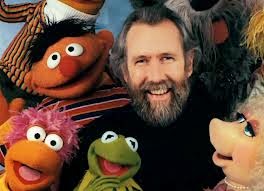
I've begun to mention the fact that Jim Henson and his Children's Television Workshop and Mr. Rogers are members of my pantheon of civil rights heroes, right along with Dr. King, Rosa Parks, and Fanny Lou Hamer et al.  That they humanized many generations of America's children now grown up and sitting in corporate boardrooms all over the nation; staffing the State Department and all agencies of government; while having effected the social fabric of our country irrevocably.  I truly believe that.

Yesterday I came close to bursting into song with the line from Stephen Sondheim's Into the Woods, "Children will listen ...".  It would have startled my audience. The brief line from those lyrics came so close to leaving my lips in making my point.  The temptation was so strong that I lost my train of thought and experienced a long silence as I tried to move on.  Maybe in the days ahead ... .

Found myself delving deeper into the meaning, and realized that at the base of this new discovery there was a new idea forming that may be important.

If and when we ever find world peace it will not be through mathematics nor the hard sciences, it will be through the Arts.  It is through the Arts that we learn empathy.  The fact that our nation has moved further and further away from the funding of Arts and Culture (with the virtual de-funding of the NEA) that I'm certain of a relationship between the fact that we're in an age of unrelenting violence with mass shootings and endless wars.  These faceless and demented young males whose suicidal acts of unspeakable gun violence surely attest to their being bereft of empathy -- the ability to identify positively or to see themselves in others.

Let's compare the budgets of other nations with ours:  Germany spends roughly $20/per capita on Arts and Culture to our 41 cents!  Canada supports its Arts to the tune of $841 per citizen, and spends double on the performing arts than on sporting events.  Neither of those countries has experienced the numerous acts of mass violence that the US has over the recent past.  

How long ago was it that we began to drop or reduce arts programming in America's systems of public education?  How does that correlate with the mass killings in our schools and other gathering places?


Can such a simple answer be relevant to such a profound problem? If so, why hasn't it occurred to anyone in high places -- someone with the power to walk us back through to this simple explanation?

I recalled --  --just before falling asleep last night that there was a time -- when I was married to Bill Soskin (Dr. William F. Soskin) brilliant research psychologist at the University of California at Berkeley -- that I would sit cross-legged on a zafu in our living-room high atop the hills behind the campus and look around at those eminent leaders of their various academic fields who would gather some Sunday mornings to exchange their latest breakthroughs over coffee and bagels ... and think to myself, "... if I know that, think of what they must know?"  I was so in awe of those great minds.  They tolerated my questions with respect and good humor, and at times seemed really taken with some of my speculations on their theories.

... now I find myself wondering if these "Betty" theories aren't over-simplifications at all, but truths that are deceptively elegant, but not yet given the attention they deserve?

Maybe, had he lived longer, Bill would have ordered up a research study with hypotheses and justifications and cohorts and graphs and outcomes -- and would find it to be true.

I suppose I won't be around, either, to know.  Meanwhile, I'll just keep delving and sharing and maybe there will be someone in my audiences one day who will pursue the answer and save us from ourselves.

Friday, October 24, 2014

Awesome thoughts in the middle of the night ...

I woke suddenly somewhere around one o'clock in the morning with one of those flashes of insight that occurs when least expected.

Maybe it was noticing the picture of my great-grandmother, Leontine Breaux Allen, which hangs in my hallway -- as I was setting into place a beautiful plaque awarded to me by members of the California State Legislature at the recent Central Labor Councl of the AFL-CIO.  It would be hung next to her photograph and just above that of an Allen/Breaux reunion photo taken some years ago.

Whatever it was, somewhere in the night she "visited" through a dream and I was awakened to a state of aliveness that rattled my psyche!

In my talks I always end with my personal timeline which starts with my great-grandmother's birth into slavery in 1846; travels through her gaining of freedom at 19 by the Emancipation Proclamation and living until her death in 1948 at 102; proceeds to my mother's birth in 1894 and death in 1995 at 101; then to my birth in 1921 through to the present.  The story ends when I was 27 years-old and the mother of two children at the time of my slave ancestor's passing.  When I describe the sequence to my audiences -- I can see their near-disbelief in realizing (as do I) how quickly those years passed -- how fast time flies!  The story of three women who lived from the years of slavery through to the Mars probe -- and were adults together at one time.

Suddenly found myself imagining that sequencing of our combined lives into a template, moving that template forward by 100 years -- starting in 1946 and moving into the present.  The chilling mind picture that formed was disturbing of any further sleep.

Those warnings of climate change, global warming, rising sea levels now undeniably happening as we speak, were suddenly italicized!

It is the current generation -- by those things we either do or fail to do -- that will determine whether our grandchildren will inherit a livable world.

My work suddenly took on a new urgency, and a rightness previously unseen by me,  and surely not fully understood.

There must be others who share this sense of immediacy -- this feeling of helplessness and frustration in a world too caught up in the quest for personal wealth, political power, and the need to control others  -- and without the will to collaborate and cooperate in a common effort to save ourselves and the planet Earth.


... but tonight I'll attend a San Francisco State banquet in San Francisco as a guest of my friend, Careth Bomar Reid, with whom I work on Fridays on the E.F. Joseph photo collection -- and try to convince myself that those street corner evangelists of my childhood -- with the sandwich boards shrieking of the "Signs of the End of the World" were not right, and that  --whether or not we come to terms with the need to end our dependence on fossil fuels -- was not related to his warnings ... .
  

Sunday, October 19, 2014

Wondering about so many things ...

not the least of which is the nagging suspicion that my feelings about black identity need upgrading in light of a changing nation and world.

I mentioned after returning from the trip to Atlanta and Tuskegee in August, whether I didn't need to reconsider something that had begun to creep into my theater presentations of late; the feeling that African Americans may be settling for less than we should when we actively promote Black history over encouraging the inclusion of our story into mainstream American history.

The trip south weakened my resolve upon the re-discovery of the richness of Black History while visiting the beautiful red brick campus at Tuskegee University; walking through the George Washington Carver exhibits; through Booker T. Washington's gracious home; riding through the magnificent greenery of the historic 54 mile drive from Montgomery to Selma; standing on Pettus Bridge; etc.  It was so much more powerful than I'd ever imagined.  On returning home I began to wonder just how much power might be lost if our collective truth were to be de-emphasized in any way.

I'm no closer to an answer, but something came up in the course of the tumultuous political campaigns in our city -- of the two candidates in the mayoral race one is white, and the other black.  The white candidate is loosely associated with the Progressive wing of the community, and the black candidate is running a brutal campaign with unlimited corporate financial backing.  The black candidate expresses conservative views on just about anything that comes before the city council, of which both are currently members.  The white candidate might best be described as a political moderate with a good and years-long record of public service. The rough and tumble shape of the election cycle is predictable with few surprises.

However, none of this is the issue that's giving me cause for concern; it's this:

The base out of which the Black candidate emerges is an organization called B.A.P.A.C (Black Americans Political Action Committee).  One day last week as I held a scathing flyer distributed  online by that group in an attempt to detract from the white candidate's reputation,  I found myself wondering what might happen should the white candidate have a base called " W.A.P.A.C. (White Americans Political Action Committee")?

Setting the obvious aside for a moment, I need to say that not that long ago 40% of Richmond's population was African American.  At this point however, according to the last census, 40% of this city is now Latino, with African American families having moved on deeper into the small towns of the upper San Joaquin Valley and Solano County.  The black demographic has been reduced dramatically. There was a time when there would have been a  significant black constituency to try to attract in order to garner political power, but now -- in a non-majority State -- where no one holds the edge, "Black" labeling may be fast-becoming outdated, and will soon no longer be viable as a magnetic force for change.


Were I a member of the large European,  Laotian, East Indian, Asian/American, or Latino subgroups who share this community I'm not certain that I would be quick to align myself with a group so labeled.  It may not be through any sense of disrespect, but given the label Black American Political Action Committee, I just might wonder if its concerns would be broad enough; that its membership would have the capacity to care about my culturally-specific issues.

In a nation on the verge of becoming a non-majority society, coalition-building must become the rule of the day, right?  This is uncharted territory, and I'm only beginning to see the implications through this election cycle. My brain is engaged in some editing, upgrading, changing, and the concept that involves including black history into mainstream American history may be a natural progression, but at this point it's unclear. I may not have time on the planet to see this through to its conclusion, but meanwhile I'll keep gnawing at it.

... maybe that's why I'm attracted to the Richmond Progressive Alliance wing of local politics at this point; an organization less "moderate" than I, surely, but that reflects the wish of what used to be called "Liberals" to act together on those things upon which they can agree (across racial lines) as they cast aside for further discussion those things seen differently; and all in mutual respect. 

I suggest that B.A.P.A.C may want to come into the 21st Century and begin to build anew its political base -- this time with inclusion. The organization may want to re-design its mission, re-think its direction toward something that better reflects the multiracial, multicultural society we're evolving into as a city and as a Nation, instead they appear to be rebuilding the racial barrier earlier generations gave up so much to overcome. This is hardly worthy of their well-meaning organization. The only thing being accomplished by current attitudes (which excludes all others except for black males), brings divisiveness into the unity some have struggled to gain over time.

... and make no mistakes, I see continuing need for African Americans to come together socially and culturally in order to strengthen the ties that bind us as a people. What I'm beginning to wonder about is just how far we can take the Black designation into politics and prevail in a time when it will become more and more necessary to coalesce with others for mutual gain. Maybe we can't stand alone any longer in a fast-changing nation without losing something very precious to the continuing development of the Democracy that we are all trying so hard to bring about.

New thoughts.

Old doubts ... .

Saturday, October 18, 2014

Photo by Shirley Butt
Balancing my career self (with the limitations imposed by the Hatch Act ) ... .

... and my very political private citizen self has been challenging over past weeks.

This election cycle has been so volatile in my city (Richmond, California) since the passage of the Supreme Court ruling in the case of Citizens United which grants corporations unlimited opportunities to participate in -- not only national and state -- but in city elections as well with obscene amounts of money.  Here in our city corporate largesse is overwhelming our local candidates.  We're reeling from the effects of that ruling, and I've been diligent in respecting those limitations, but adamant in expressing my rights to participate in the electoral process as a private citizen.

I've agreed not to ever appear at a political event in uniform (a requirement), and to try to avoid ever being identified in my official role as an employee of the federal government.   The local press has been very cooperative and I've been able to enjoy relative freedom to express myself and my political interests with the consent of those to whom I'm responsible.

All that being said, I'd say that I've done pretty well, all things are considered, and -- being photographed with the dynamic Senator Bernie Sanders and two of this year's candidates was accomplished without identifying me at all.  Senator Sanders is a brilliant man, and a great speaker.  His strident advocacy for our shared goals is heartening.

I suspect that I'm firmly enough identified by the amazing amount of public exposure I've had over the past months so that labels would not serve any purpose anyway.

It's a wild ride to November 4th!


Thursday, October 02, 2014

(welders tool is embedded within)
Just every now and then I begin to feel overwhelmed by an increasing amount of public attention ... .

... the past several weeks have been just such a time.  Everything seems larger than life as I'm been living it over the past decades, and waaaaaay beyond the edges that used to hold that life.

I tend to withdraw a bit, do some reassessment of the landscape, and (if possible) gradually move back into the foreground.

A few months ago I received word by a phone call that the Central Labor Council of the AFL-CIO was holding their annual banquet in the Craneway Pavilion -- a vast cathedral-like venue in the Ford Assembly Plant which abuts our Visitors Education Center here in Richmond.  The reason for the call was to get me to hold the date of September 19th since I would  be one of this year's 3 honorees that evening.  Rep. George Miller would receive the Life Achievement Award, and the Legacy Award would be given to me.

The evening arrived and every standing or sitting public official from State, County, City, and from the Labor Movement itself was present in that cavernous room.  Every declared candidate for any political office in this election cycle was also present and accounted for.  It was a grand evening!

The drama of the evening, for me, was not the "Who's who" in that grand space, but that this handmade crystal 15 inch (lighted from within!) beautiful one-of-a-kind trophy was presented by a group of of today's Boilermakers Unionists who stood with me on the platform to make the presentation.

Rep. George Miller and me
The bronze plaque gives, after many decades, status to the little Jim Crow segregated Union, Boilermakers Auxiliary #36, created under the flawed social system of the early forties -- the time of the greatest mobilization of workers since the building of the pyramids or the Great Wall of China. 
By their action (through me) that powerful Union legitimized our participation by closing the circle (finally) with all of us enclosed within.  Rev. Willie B. Smith, Secretary Mahlon Roles and his wife Marguerite, Spencer Jordan, Zola Adams, Christine White, Martha Ford Montgomery, plus thousands of black shipyard workers who gave their all without fairness of opportunity or recognition, and I,  are now counted  as legitimate contributors to President Franklin Delano Roosevelt's Great Arsenal of Democracy after more than 70 years.  The little temporary office building that held us was unceremoniously torn down immediately at the end of the war, so that past has been obliterated as most or all of those other lives passed into eternity over time.  I believe that I may well be the last one standing ... .

This tribute may have come in my name, but it is really a tribute to today's International Brotherhood of Boilermakers who went back into their past to own that blighted history; to forgive themselves; and then continue to open the way to greater unity.  I'm told that today's Boilermakers is the most racially diverse division among all of today's Unions.

The plaque reads:

MMXIV
    Betty Reid Soskin
         Boilermakers Auxiliary Local #36
in honor of your Home Front service
and your dedication to preserving
a transformative chapter in U.S. history
for women and people of color


(signed by the international president of
the Brotherhood of Boilermakers Iron Shipbuilders
Blacksmith Forgers and Helpers)


In all of our names, I am so grateful for this recognition.

Sunday, September 07, 2014

Busy back at work so haven't followed up on my report on the trip to Atlanta and Tuskegee ... .

Photo taken at Tuskegee Airfield after Women's Equality Day Address
... but I was trying to wait for my colleague to provide her photos so that I could share them, but she is also back at her desk and hasn't gotten around to making the CD yet.  I brought along my camera but, unfortunately, I simply forget to take photos even when it's right there in my hand.  I guess I just don't want anything to stand between me and an experience.  We'll just have to wait for Sue's pics.

It occurred to me that the one thing I haven't yet reported on is the event that brought us to Tuskegee in the first place, the address for Women's Equality Day at the Airfield.  The truth is that I was so deeply moved by all that surrounded it, that I'm not sure that I could tell you what I said in that speech.  It faded into the background as the other experiences took over every cell in my body.

Moten Airfield is a scant 4 miles from the university campus, and is also a National Park System site, one that has been faithfully restored with impressive exhibits, both of the ghost buildings and those that could be restored. Those no longer standing are represented by skeletal metal footprints in the exact measurements of those now missing.  I've never seen that done before, and it does the job quite well.

In addition, the hangars have been restored and are rich with blow-ups of the Airmen, including everyone who served in any capacity (pilots, mechanics, instructors, etc.) now being considered "Tuskegee Airmen."   This was no surprise since our park considers anyone working on the Home
Front in any capacity as a "Rosie."  I was told that one woman who is seen in one of the giant photos huddling under the wing of a plane with pilots -- a mechanic -- is still living in the area but was too frail to attend the event.

The audience was made up of NPS staff, volunteers, and at least two elected officials, one who with his spouse, had driven all the way from Mobile (a 3-hour drive) to attend.


We visited the historic hangars, followed by a sumptuous lunch in the Sky Club where young  officers had gathered for recreation -- with a jukebox of the times playing music of that era.  We would then take off for the drive along the historic Selma to Montgomery Trail and Pettus Bridge where another stunning NPS visitor center has been established in a rehabilitated bank building.  What had escaped notice by virtue of the tragic and dramatic events of Bloody Sunday was the serene beauty of the Alabama river that meanders lazily below in silent testimony to those long ago horrific scenes.  The nation responded with shock and shame, and those images on our television sets changed the fate of what had been a seemingly failed social revolution up to that point.

The town of Selma appears to have changed little over the years; and could be well-used as a movie set of that painful era.  One would hope that the same would not be said of those still living there.


... and I just noticed that the report on my talk has gotten itself buried again.  Maybe I'll just have to let it all simmer until it's ready.  Maybe by the time Sue gets back to work from her backpacking trip at Yosemite and can transfer the photos from her camera to a CD.  Maybe then I can recapture the part  that I played in last week's journey ... maybe.  But when put in context, my contribution was probably the least important aspect of a memorable trip back in time.