Saturday, November 08, 2003

This was not one of my finest of weeks.

Found myself so out of sync with the mission of my job that I actually gave notice of my intention to leave on Thursday. Yes, it was that fundamental. Important thing is that within 24 hours I'd reconsidered and rescinded my pronouncement -- at least for the time being. The second important thing is that, even at this age, there are options. It doesn't necessarily mean that I'll retire -- can't imagine doing that -- but it does mean that I'm considering the possibility of a career change, and that may make sense. But I'm committed to hang in for a little while longer, at least long enough to complete some work that interests me, and to give my co-workers a chance to find my replacement without straining the system too much. We'll see. Not knowing what to "blog" kept me from writing anything at all over the past two days. Things were too volatile and needed some settling down time.

So, it's again Saturday, and I've just returned from taking Dorian on our weekly trip to the supermarket for groceries. After some months of being clinically depressed, she's on some new meds that are working their magic and it was comforting to see her in good spirits. I'm sure that a part of my own angst is related to the fact that -- after a couple of years of fine work by a dear therapist/friend -- Dorrie's funding agency (Regional Center of the East Bay) must discontinue some of her services, including this one. I am aware that some of my ability to cope with the vagaries that plague the developmentally disabled, has been due to my reliance upon this fine professional. These cutbacks won't just effect Dorian, but her mother as well.

I cannot imagine how families cope when there are other children to consider, and when jobs have been lost. Not sure what happens to people when the cost of living has spiraled out of control and both parents must work outside the home in order to put food on the table, and one of their youngsters is disabled. What does it mean -- that 627% rise in Autism since 1987? At least I have no other dependents to consider.

I wonder how those who are supporting families on the prevailing wage of $8.89/hour (current pay for those working with the disabled in groups homes, etc.) ... how on earth are they managing in this new "recovering" economy? That is what is currently being paid to those who serve our most vulnerable citizens and even that may be cut back under the state budget passed last fall. The Department of Rehabilitation will now combine with the Regional Centers, as I understand it, an already overloaded system. The cuts are many and most have not yet kicked in, so we have no idea what the effects will be. The advocacy groups are gearing up for shaping their response on behalf of the disabled.

It was around some of these questions that I found myself unable to properly do my job this week. Found myself unable to be a field representative in a situation where I was really an angry constituent! The constituent won the battle and I blew up! I was in a situation where it was required that I represent my legislator on a panel before the Disabilities Council, along with other knowledgable legislative representatives. It's a 9:00 'til noon very important meeting -- the subject of which is "Assuring the Civil Rights of the Developmentally Disabled." It would have been necessary for me to explain if not defend the budget cuts (to the extent that they are defensible, of course), to some of the most sophisticated professionals on the planet. These are the specialists on the Lanterman Act, and who know the statistics and their implications better than I do.

It was an impossible assignment. I was ready to quit my job over it. I did. Fortunately for us all, 24 hours of involvement with some environmental issues intervened, and it was possible to back away from the edge enough for staff to modify the assignment enough so that I'll not have to be a panelist after all. How well this will satisfy the "angry constituent Betty" is yet to be seen, but the dynamics have changed enough so that peace has returned.

...and we haven't yet seen the changes anticipated by Governor Terminator. My only hope is based on the fact that it was Eunice Kennedy Shriver, Founder of the Special Olympics who is the mother-in-law of this man, and this may have some effects on future budget negotiations. Let us pray... .

Wednesday, November 05, 2003

My calendar has become cluttered ...

with short-term events that nonetheless demand complete attention. Assemblywoman Loni Hancock is here in the district since the legislature is in recess, though Governor Terminator has called them back on the 18th for a week of extraordinary session. That means more staff meetings, usually, and additional occasions to accompany her to one place or another.

Visited a huge plastics recycling firm on Monday that was pretty impressive. It was one of the many California firms that is considering relocating to China in order to remain competitive by taking advantage of dramatically lower wages. It's hard to argue with this practice that's so devastating our economy - not when you sit across the conference table from these CEOs and listen to their woes (i.e., rising Workmens' Comp, costs of energy, competition from the many corporations that have already moved offshore). It's grim. Can't imagine where it will all end, but the shifting elements in this huge movement seems equal to that of the Industrial Revolution that occurred early in the last century.

Find myself watching for a matching rise in worldwide unionization to take place, some attempt at bringing foreign and domestic workers into alignment so that ordinary folks can begin to benefit by globalization. That will be cause a monumental upheaval, I'm certain, and it hasn't yet begun to take shape in any meaningful way, though there are signs ... .

Today I visit two high school classes for a look at some small attempts at raising the awareness of teens to the environmental hazards waiting in the wings.

It's far easier on some days to get to and from my various involvements in my car than it is to move my brain from one era to another -- especially when it requires leaping years and decades -- back and forth. That takes some down time, and this week has offered little.

I'm off now to attend a meeting of the Federal Task Force on North Richmond, a coalition of nonprofits and agencies working to rehabilitate one of the more needful areas of the city. We've been at it for about four years, and only recently has it been possible to measure some real progress.

More later ...

Oh! In the rush I've neglected to tell you that I'll not be doing the Rosie piece on national television on Veterans Day after all. Will be involved in some public service announcements about the new website and the Rosie Memorial, but they're going with a real Rosie who actually held a welding torch and wore a hard hat, I believe. I spent the war as a clerk in a Jim Crow union office (Boilermakers A-36) far from the shipyards, so I represent something of an anomaly. That feels a little less than completely "authentic," to the media so that won't happen. Getting up at 3 in the morning to go to San Francisco to satisfy the east coast schedule wasn't something to look forward to anyway. Stardom will have to wait.

However, there is now a web site (Put in Rosie The Riveter or go the Ford Company web site for the link) so that you can see what they're planning. I'll be involved in the interview portion with lots of media at the old Ford Plant building on November 11th, but that will be at the reasonable hour of eleven o'clock.

Gotta go... .

Monday, November 03, 2003

Event-filled Saturday...

Every legislator produces several Select Hearings a year in the home district. These are ordinarily 9:00-12:00 workshops with a panel consisting of authorities in a specific area of concern. The goal is to look closely into some issue in the hope of exposing weaknesses in current law or finding ways of enhancing existing processes. Yesterday the hearing centered on the achievement gap as related to the new federal legislation known as "No Child Left Behind." A federal mandate, you must remember that has been imposed on the states without federal funding. The panelists included another member of the Assembly (from Southern California), principals, members of a local Board of Education, a specialist from the State Department of Education, etc. Attending as well were representative from other legislative offices, both State and Federal. It was well-attended with lots of audience participation.

The central theme turned out to be standardized testing, as usual, and appropriately so. It's clear that teachers are leaving the profession from overwork and underpay as well as their resentment at the excessive paperwork connected to the new federal mandates and of being forced to respond to the needs of test preparation instead of individualized teaching according to the needs of children.

These experiences, while they always turn out to be learning experiences for me, also have their down side. Before joining the staffs of a series of elected officials, I usually was an outspoken critic of and participant in matters of social significance. Yesterday I had many questions that -- in the past -- would have pulled me to the floor mike, but it would have been inappropriate as a staff member to do so. So, I sit in my seat and chew the insides of my cheeks, instead.

Case in point: After learning last week on one of my field trips to a local high school to observe two science classes, that in the State of California 48% of African American and Latino youngsters have dropped out of school by the tenth grade. Now there's an achievement gap! And that's a statewide figure. I can only guess that in the low income parts of my county the percentage would be higher still.

The high school I visited two weeks ago has a student population that is 65% Latino. Because of the huge drop out rate among AA kids, the black percentage (though in a community that has a 40% black population) is probably less than 25%. In the two science classes I visited, in one there were 3 AA kids. In the second (an AP -- Advanced Placement Class) there was only one young girl. When I asked the teacher why this was her answer was, "it's tracking. In middle school, the Black kids are all steered toward something called Health Sciences." This aborts all hope of college prep and results from low expectation of black students, I'm sure. I was also told that were I to visit the Special Ed classes, I would have found them to be 98% African American. Stunning!

It is also true that at the first school I spoke of, there are only 3 African American teachers on the faculty. Those few who have worked their way into teaching positions have only done so over the recent past so were "last hired." That means that, in compliance with union mandates, under succeeding budget cuts, they've been swept out for reasons of seniority. Non-white kids have little reason to see that education leads to anything in terms of life careers. There are too few role models in the field of education, the central and most influential part of their lives for their entire childhood provides no guideposts for their future.

A beginning teacher is lucky to receive $22,000/annually -- this after completing college plus advanced studies in many cases. Under the new federal mandates of "No Child Left Behind," he or she must invest in continuing education courses in order hold his or her position. A beginning prison guard with no more than a high school diploma receives a starting salary of $45,000. What's wrong with this picture? Some teachers who testified yesterday reported that -- though they've been in their classrooms for 9-10 years, under the new mandates, they are assumed to be insufficiently educated and are no longer qualified to teach. It appears that the dismantling of the entire system of public education is nearing completion. It is so sad, because I heard testimony from some dedicated and passionate educators yesterday, who are being ground up in the machinery of a hostile bureaucracy.

It's hard -- with my long view of history -- not to see a glaring connections between Brown vs. The Board of Education decision that attempted to dismantle segregation in the schools and what's happening today. It's taken over 50 years, but the Southern response to busing of children and forcing white schools has defeated the best intentions of Justice Thurgood Marshall and the Supreme Court. What started out in the deep south as the pulling back of support for public schools in favor of a movement that created "academies" for white kids (private) is now nationwide in scope. It has created the re-segregation of the schools. It's what vouchers are about, and the Faith Based Initiative that allows parents to collect resources from the State with which to set up "charter" schools (read that "academies"), and parochial schools, all draining the resources that used to underwrite public education.

How on earth can we have standardized testing without standardized resources? Children in the suburbs have textbooks to take home while kids in urban schools have few to use, even in class. Teachers report that they have to print out individual pages from a master copy in order to supply kids with a few pages at a time. Some textbooks in these schools were printed in 1975. In some, we have yet to land on the moon! And -- just as the pharmaceutical companies have been allowed to profiteers disgracefully on the backs of the poor and the aged, the book publishers are charging from $75/and up for a single textbook! Can anyone tell me why I can purchase a best-selling book on the web for under $30 and the purchase of textbooks for school systems that buy in huge volumes cannot be discounted? But of course, that's another powerful lobby, and, under term limits, the lobbyists have become the "Third House."

It's days like yesterday that cause a restlessness in me and an impatience with what I see as the failure of Capitalism -- based upon sheer greed. We're living at a time and under an administration that emphasizes the dark underside of our economic system. The same system that produces some unprecedented philanthropists like George Soros and, yes, Bill Gates, et al -- has given us Enron and Tom DeLay and the energy gougers and the stock market thieves, and yes, Ashcroft and his minions. Under a system of governance that supports the freedoms we so enjoy, vigilance must be constantly practiced in order to preserve the promises of our founding documents. There is always the threat of losing them, and never before in my long lifetime has that possibility seemed more immanent.

But even as I type the words, I'm buoyed by the knowledge that there is MoveOn.com and the millions of voters who have begun to participate in the electoral process through the presidential campaigns. By our successes with the turning back (at least for the moment) of the FCC's attempts to further monopolization of the media. California's recent recall of a governor in favor of another Hollywood icon scares me a little, but I'll keep looking for positive "embers" to blow on and will let y'all know when I see them on the horizon.

Meanwhile, have a happy Sunday.

Sunday, November 02, 2003

Home again from an afternoon of Arts & Culture ...

Really pretty boring, actually, and not nearly as interesting as the story that's been doing a "crawl" (a la CNN) just under the surface of my brain.

Thinking that my father was the world in microcosm. His racist attitudes were not unlike those of Ariel Sharon, a Jew who survived the holocaust but who has forgotten, as did many of the Israeli leaders who preceded him. To have been so cruelly victimized by the Nazis only to brutalize another race of people -- for whatever reason. The examples are plentiful throughout history and into the present. Find myself wondering if it's a male thing?

The major difference was that Dad was a mild and loving man of little power to act out his prejudices. I'm sure that he exemplified the attitude of his peers. He was far from alone. Those blind spots caused by racial differences know no limits. Mother suffered from the same malady, but was less adamant about it. Because I cared deeply about my parents, I learned at an early age to see the world -- not in black and white -- but to ever-so-carefully pick my way through the many shades of grey.

I had help. Several teachers opened doors that I walked through, alone. In fifth grade it was a motherly pear-shaped music enthusiast who introduced me to the masters. It was in her class that I learned to sing (badly) the works of Giuseppe Verdi (Miserere and the other great oratorios), and Sibelius' Finlandia, and simple Quaker hymns ("Tis a gift to be simple..."). Fifth grade glee club opened an entire world of great music to me, and those pieces are recognizable to me to this day -- upon hearing the first two bars.

It was a sensitive tall and reed-thin Miss Cunningham who first led me to Edna St. Vincent Millay and the Ruth Fielding stories. She presented me with a copy of Jane Eyre for reasons I can't recall, and probably accounts for my passion for the poets.

Castlemont High's Mr. McLaughlin, a devilish public speaking teacher who gave me the confidence to stand on my feet and debate the best of them. I can still see him standing against the blackboard at the back of the classroom -- grinning and goading me on to make my point. He was proud of me, and I knew it. My parents never knew.

There was John W. Hughes, a 7th grade teacher who'd returned to teaching after years as a social worker. He was a close friend to principal, George Axtell of Lockwood Junion High, who left the west coast some years later to become the president of CUNY. Hughes remained a dear mentor and confidant into my young adulthood. In the summer of my 16th birthday, he was chosen the Alameda County Chair of the Olson for Governor campaign. With the support of Aunt Vivian (who took me downtown and outfitted me in secretary clothes), I got my first lessons in electoral politics. I worked at the campaign headquarters all summer, have been politically active since that time, without messing a beat. When I was 18, Mr. Hughes went to live in Japan for a few years where he created the Nara Foundation that would address the plight of mixed-race children left behind by the armed forces of WWII. I was the secretary of his foundation, by long distance. Hughes was Canadian, but I really knew little else about his personal life. He had a wife somewhere in the Bay Area (also a teacher), a son and a daughter, but I scarcely knew them. He came to my home to meet with my parents from time to time (that I didn't particularly like, as I recall), nor did they.

There was a definite split between my home and school lives. My parents asked few questions. I fulfilled my obligation to them simply by attending classes. I rarely did homework. Was barely challenged, either by school or home. Wasted an obvious potential to do big things. But no one in our family had been to college and, though I did have friends who were on local campuses, by my 18th birthday I was consumed by the thought of leaving home. That would only be possible if I married, and I did. The man I married was attending the University of San Francisco on a football scholarship. It was the man who needed the education, right? I was content to do his homework and shine in reflected academic glory. John Hughes was clearly disappointed. His was the only voice that encouraged me to prepare for college. I began to see him as a hindrance to my hopes for leaving home just as soon as I could do so, and in this my parents seemed to agree. They did not welcome his interference.

Mother advised me to learn Spanish (I wanted French) so that I could get a good job. It was her hope that I might pass, and since I was just a bit darker than my sisters, being Latino would offer the greatest chance for crossing the color line. She believed that the only option for a colored girl -- other than maid's work -- would be to do so in order to work in an office.

I'd done well in high school. Hughes had broadened my cultural base and given me some skills for moving about in the world of commerce. My ambitions didn't include further study. It was time to marry and raise a family.

I went straight from being my father's daughter to being Mel's wife. None of this allowed for the "woman" to emerge. I didn't meet her until my children were almost grown. And even then, not a fully independent woman until after 1987 when the men in my life passed on.

If we could only have a chance for a rehearsal, right?

The curtain will fall and I'll never get to read the reviews ... .

If "The Human Stain"

stirs as much introspection in others as it does in me, maybe it was well worth seeing. Had a hard time dropping off to sleep after writing last night. There was so much missing, as if we've just not found the right conversation yet. We're stuck with one that just doesn't address the problem. That conversation is almost addressed by Ward Connerly, but he misses, too, but he's close. It's one of the cases of trying to deal with conflicting truths. I'm unconditionally in favor of Affirmative Action. Maybe I'll figure it out at some point. It's illusive.

In his way, my father was as much of victim of racism and a racist as was fictional Coleman Silk. There was as much racial bigotry in the home I grew up in as there was in those of my bigoted suburban neighbors many years later. Maybe that was why I felt so inadequate to deal with it (but I learned, in time).

I adored my father, but he spoke of African Americans (other than N.O. Creoles) as "
"Americans Negroes." He spoke nostalgically of life in New Orleans, "before the Americans came," always a puzzling thing to me. He dealt with dark-skinned people as underlings, and with no apology. His concern (and mother's) that their daughters would "marry black" exposed a virulent racism that eventually pulled us apart as I grew into adolescence and developed my own sense of ethics. I was growing up in a world so different from the one they knew, one with very different values. My kids grew up in the one Mel and I provided for them, one that was still a cauldron of hatred and ambiguity, while relatively privileged. I wonder that they survived the "disconnects."

It must have been extremely hard to come from a place of privilege, though limited, but where name meant something. We were Charbonnets, after all, and early on I developed a kind of Anastasia Romanov view of the world. There was that sense that -- in some mythical place in the world we'd been "somebody," though we were as poor as the proverbial church mice, this was always a temporary state. Someday mother wouldn't have to leave early on Thursday morning to be first in line at "Sally Ann's" (code name for the Salvation Army Store) to get the best pickin's. That was the day that the truck came around with new old stuff. And we wouldn't have to spend hours on end in the waiting room at the free County Clinic on Grove Street or be dragged, terrified, into the dentist's chair at the miserable dental clinic. We were Charbonnets and someday things would be different. But these were the Depression years, and our lives were not unlike those around us.

With three pretty daughters to marry off (before they got pregnant, hopefully) the bar was set prit-tee low. There was no thought of college. No such talk. Getting us through high school was the goal, but with no home involvement. I can't remember ever bringing home a report card, nor of having my parents attend a school event, nor a conference with a teacher. We were pretty and as it was with being Creole, that was enough. Marriage was the only way girls could leave home. Marjorie and I each married at 19, Lottie at 17, I believe, and all to men approved of by our parents (light-skinned and handsome). Mother used to look at our less attractive girl friends and say, "...they better educate that girl, she'll never get a husband!" Evidence of another wrong conversation.

I'll never forget the evening when (as a sought-after late teen) I was dressed for an "after the game" dance at the International House on the U.C. Berkeley campus. It was the annual U.C.L.A/Cal game, a big one in our social set. My escort was a gridiron hero. When he arrived in his tuxedo with gardenia corsage in hand -- when I opened the door to greet him, my dad came out from the kitchen (he'd been peeking to see). The look of horror on his face was enough to ruin my evening, but I braved it out. My date was the renowned but very dark-skinned Jackie Robinson, one of the nicest men I'd met. There was no relationship. He was engaged to the woman he later married, Rachel, but was in town only for the game. But this was the beginning of my rebellion around the questions of race, and the cause of alienation from my parents -- until I married Mel, which pleased them immensely.

But before this there was the trip back to New Orleans as a 15 year-old -- the disillusionment -- and a growing list of teacher influences that deepened the separation from my homelife and increased my loneliness ...

But now I'm off to the County Arts Commission to make presentations of Certificates of Recognition to five artists. This is one of those forays back into Walnut Creek. This time in a far different role -- but still unsure of who I am in that context ... and still aware of residual pain.

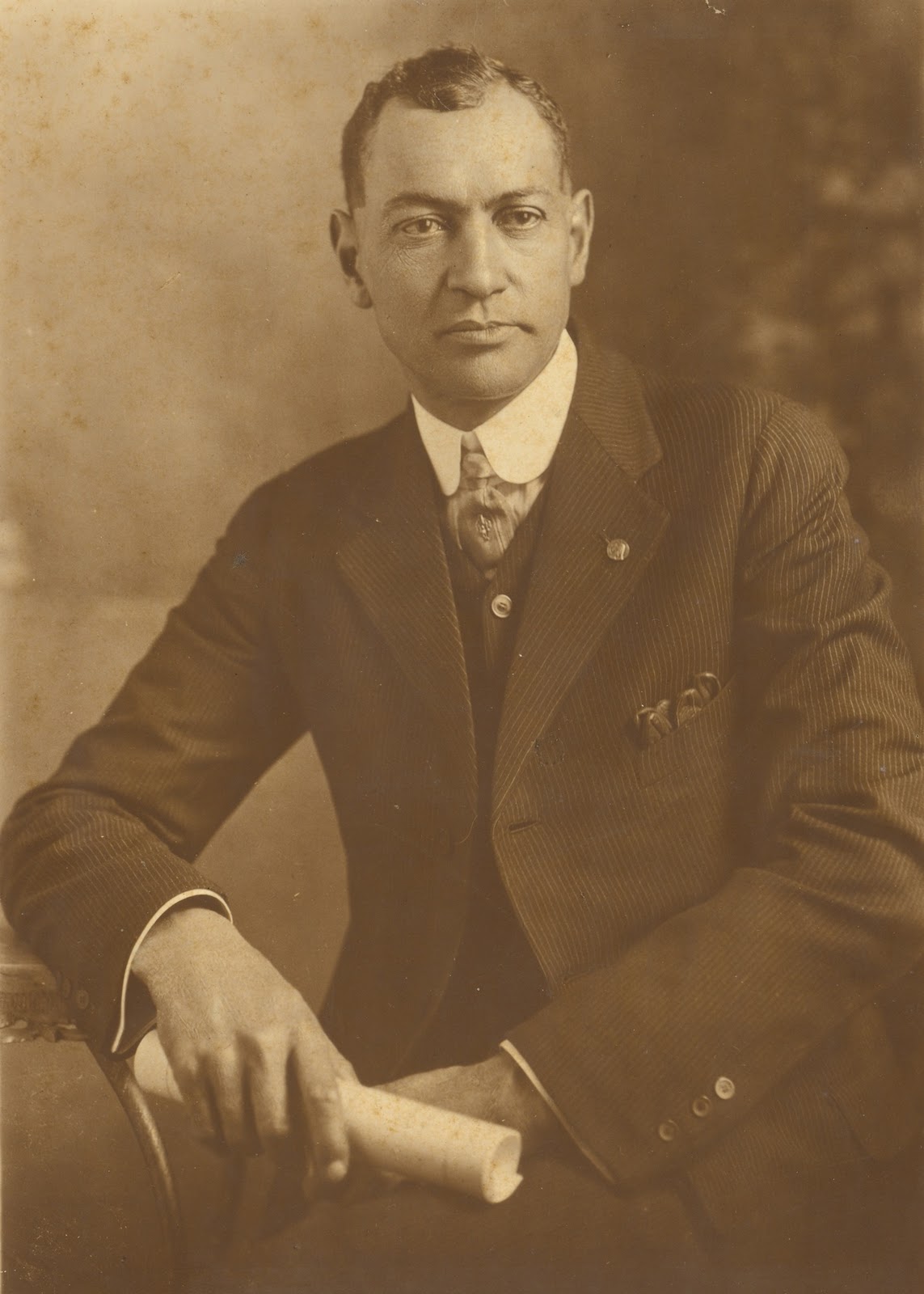
Photo: Dorson Louis Charbonnet (1894-1989).

Saturday, November 01, 2003


Imitiation of What?

Lordy ... Philip Roth has done a retread on "Imitation of Life," complete with Anthony Hopkins playing Peola. Guess "The Human Stain" was more than that, but not a hell of a lot more. Nicole Kidman was superb in her role as aristocratic trailer trash (truly). The cast was marvelous. The editing faulty, or, the story sensationalized something that to this mixed-race woman is pretty ordinary. That American writers are still caught up in the drama of passing for white came as a surprise to me, and to find this the dynamic dark secret upon which a feature length film is based seems hardly worthy. The Roth book may be more compelling than the movie, but Louise Beavers and Nina May McKinney (I believe), and later Lana Turner did at least as well by the theme, I think. One has only to walk through downtown Berkeley to see every possible combination of racial mixtures. But then maybe it's still big news in Montana or Indiana.

But it does lead into telling you a bit about Dad:

Dorson Louis Charbonnet, 1894-1987, son of Louis Charbonnet (French Creole) and Victoria Morales Charbonnet (Islenos), was the third of 13 children (7 boys and 6 girls). He was blond and hazel-eyed as a child, fair-skinned and as handsome as Paul Newman (whom he closely resembled in his later years). He was third from the eldest of the brothers. His father was a noted engineer and millwright who designed and erected the huge cranes that loaded and unloaded cargo from South and Central America (bananas and coffee, chiefly) on the Gulf ports at Memphis and New Orleans. The sons were all craftsmen and builders of one kind or another. As with my Mother, I don't recall ever hearing my dad speak of school, though he was obviously educated.

Here on my bookshelves is a library of about 2 dozen very old leather-bound books that belonged to my grandfather. They are what is left of his engineering texts. There are old fading photographs of him on a number of jobs, one or another with dad or his brothers standing in the background. Among the projects is a huge New Orleans baseball stadium, Corpus Christi Catholic Church, The convent of the Holy Family Sisters (first black order of Catholic nuns in the US), all places still standing. The Charbonnets were a proud and accomplished family.

It was usual in those times for young people to complete the 8th grade and to then either continue to college (Xavier or Dillard universities, historically black) for a career in medicine or education, or, to enter an apprenticeship. Dad picked up his slide rule and trained under his father until the end of the 1st World War when he moved to Detroit for work in the auto industry.

Like my grandfather, he was a perfectionist. Dad was a very proud and formal man who was not easy to know, but was someone I knew as a man of real integrity who set a very high standard, but of a very special kind. He was a Creole. In New Orleans, that was enough to be.

Skip now to the Great Depression:

Dad had a few years in Detroit before news came of his father's death. Upon returning home to care for his mother, he joined his brothers in a rice mill that was a family enterprise. When that was destroyed by the great hurricane that sent us to California, he was temporarily employed at the Chevrolet Plant in East Oakland.

A huge piece of machinery that held the conveyor belts had dropped from the ceiling, taking a workman's life, I believe, and dad was hired to design and install the replacement. When the job was completed he was immediately fired. Someone had reported to the supervisor that Dorson Charbonnet was a negro. He'd not passed for white, as far as I know (or at least he never included such an admission in telling the story), but one would never have guessed by his physical appearance. That would never have given him away.

There were simply no jobs at the time, not for anybody. For a while, Papa George got him hired as a waiter at the Oakland Athletic Club. Dad in a white apron, I can hardly imagine it. But it was to get worse. Mother's brothers, Lloyd, Fred, and Herman -- were all working for the Southern Pacific Railroad as Red Caps and dining-car waiters. At their urging, Dad went to the hiring hall in hope of getting a job on the railroad, but they wouldn't hire him at first because he wasn't dark enough. After convincing personnel that this was, indeed, their negro brother-in-law, he was hired as an attendant on the lunch car and traveled for years as such. My proud talented capable engineer/millwright father was now "Boy!"

It wasn't until the mid-forties that he was allowed to join the carpenter's union. I suspect that he by that time was crossing the color line for the purpose of employment. He later returned to work as a millwright and was in charge of rebuilding the machinery at Albers Mill after a huge fire. Then to Grosjean's Rice Mill, also on the San Francisco waterfront, where he designed the process and machinery that coated rice with B-vitamins. He again came into his own in his field of expertise, but it had taken a lifetime, years of humiliation, and a second World War.


But then, in looking back, I'm not sure I did either. My kids and I are still improvising our way through life -- only I now feel a little less responsible for outcomes, but that's a fairly recent development.

In tonight's film there was a brief sequence about (Hopkins character) Coleman Silk's father. It made my skin crawl as a shiver ran through my body. It depicted a proud light-skinned black man waiting tables in a dining car -- being called "Boy" by a white passenger. I'm not sure I'd ever really appreciated the depth of anguish and humiliation that must have caused my proud father. My reaction was visceral -- the feeling is still with me as I write.

We became closer as he grew older.

I loved him.

On the night that he died, I was lying at the foot of his hospital bed listening for his last breath -- and when it came, I recognized it instantly -- long, steady, and ... final.

Photo: Dad's funeral. He lived to be 95. I loved him.

Written from inside "The Human Stain" ...

Last post, written almost an hour ago has not yet posted. Started to write a piece about Dad, but in the meantime the phone at my elbow rang and it was Jackie. "Wanna go to a movie?" "Sure," says I (untypically). Heard Terry Gross interviewing author Phillip Roth on "Fresh Air" yesterday and was intrigued by the story, "The Human Stain." As it happens, so did Jackie -- so, having showered and wrapped myself in Saturday sweats -- am off to Berkeley to see Anthony add yet another brilliant portrayal to his long list of improbable characters.

Jackie and I are both African/American/"Immigrant"/Californians/who arrived right behind Sir Francis Drake, and I'm sure that both have had family members cross the color line over the years so the premise is one of deep interest. Our hero (Hopkins) plays a man who left his black identity behind years before the period shown, and surely will be revealed sometime during the film's 148 minutes. That's more than we can say for our relatives, so maybe we can spend a few hours imagining their lives over the years since they disappeared across chasm of the racial divide.

It's tantalizing to think about. Something we don't usually do, since I've rarely if ever seen anyone being judgmental about such decisions made by others. They just drop away into their own lives, and little is heard from them again. A kind of psychological curtain drops, and life goes on. I'm sure that Roth has drawn something pretty melodramatic from such situations, otherwise why a book at all? But, the drama of racial politics continues to hold us its powerful grip as does little else.

So, I'm off now to pick her up and -- if I get home early enough -- will write about Dad tonight. Either that or he'll surely pop up in dreams to remind me of the omission.

(It's perking away in the background, and I'm enjoying the memories.)

Photo: My favorite Aunt, Vivian Allen Jernigan at 19. This photograph was taken at her graduation from Xavier in New Orleans, before she joined my grandfather to live the rest of her life in Oakland, California. She attended U.C. Berkeley for three years where she played basketball. Then came the Great Depression and she left to work in San Francisco. Vivian would have laughed anyone out of the room had she been assumed to be anything but Creole (Colored). I suppose she was my model. For both, being a proud Creole was enough to be. Crossing the color line was/is unthinkable.
Dedication of the Lucretia Edwards Shoreline Park ...

went marvelously well with all of the leaders -- city, county, and me (State) gathered together under a great tent raised there along the water, especially for the occasion. Lucretia was lovely in a deep turquoise pants suit and enough joy to fill up the tent and then some. Her kids and grandkids were sprinkled through the crowd, all beaming! These are such treasured times. I don't think that we share enough of them. But then, maybe it's just that I've grown old enough to see those being honored -- my contemporaries -- who've lived long enough to have their contributions plentiful enough to be noted for posterity. This is 180 degrees from seeing the likes of Brittany Spears et al writing memoirs! But maybe the candle burns more quickly these days, and the rate of change (now measured in generational cycles of five years) no longer allows for "vintage" to happen as readily as it did when the world was spinning with less urgency. I use the word "urgency" advisedly here. Over the past few years we seem to have drifted back into the "...before the bomb drops" mode again after several decades of ignoring the Dooms Day Clock... .

Later met with the Richmond city manager re Prop. 40 funding possibilities (Parks and Recreation) -- but we quickly moved on to other issues -- my concerns about the Barbara Alexander Academy and its regaining charter school status, and, the possibility of the city council reclaiming the rotting, crime-ridden, and abandoned urban core for the new civic center (a move I'm opposing). We sparred for a bit, but found soon enough that we were actually on the same side of both issues. He's a hard-working and dedicated public servant whom I've grown to respect greatly, though we have occasional good-natured sparring matches, but always ending up in agreement. Either that, or he's mastered the art of keeping me in a persistent state of hopefulness without really committing to anything of substance. I waver between extremes here, but over time have learned to not let it deter me from my goals.

Life is a balancing act, always, but lately it seems to have become even more so. Perfected the art of keeping enough balls in the air at any one time to insure myself a reasonable number of sure successes to measure against the certain flops. But you need at least a few of those, or you'll find yourself never taking those growth-producing risks. Even the duds yield lessons of some sort, if only to point up the pitfalls to avoid next time. Having a sense of humor helps in those cases, plus the certain knowledge that little in life is more than transitory, even misery and/or excruciating embarrassment. "This, too, shall pass" is more than a simple mantra.

And what does that bring up?

A stellar evening in San Francisco. We were at the Curran Theater on Geary Street for a performance of something or other that I was desperate to see and now can't remember. The show had just ended and we were wending our way down the staircase with a mob of theatergoers. The heel of my chic black suede strap-backed pumps caught on the carpeting and I fell forward into the crowd. However, as I was falling, I reached out instinctively for something to take hold of -- found it! I landed at the bottom after bumping into a number of folks -- but holding tightly to a mink jacket that had obviously been on the arm of some woman above me on the landing! I sat there red-faced waiting for an embarrassed Bill to find me and for that woman to call for security! My plight must have been obvious because in the moments that followed, the ridiculous situation hit me with full force. As the crowd on the stairs that had parted while all this was going on slowed to see what on earth...? Bill popped up with great concern written all over his face -- a smartly-dressed extremely outraged blond woman right behind him -- and me, unhurt, laughing so hysterically that I could hardly speak! She began to laugh, too. I returned her fur (unharmed), but -- except for that momentary sense of having been seen if only for an instant as thief, then victim, then nutty lady, little was lost.

One of life's many pitfalls; one of the lesser ones. There has been the occasional abyss or two to climb out of, but as the song says, "I'm still here!"

Thursday, October 30, 2003

I want to tell you about my father, Dorson Louis Charbonnet ... .

He's been deep in the background of this story until now. He popped up in a dream last night, almost as if to nudge himself into my consciousness ... but this is a day filled with events that will take me out of myself and into civic life ... so we'll wait. Maybe tomorrow... .

Attending a ground-breaking ceremony for the newly developed Lucretia Edwards Park at the Marina Bay Shoreline. Lucretia is a lovely fragile tiny doll of an elder who has spent her lifetime living in Pt. Richmond in the shadow of what was once the Standard Oil Refinery but now flies the flag of Chevron-Texaco. She is being honored for having fought successfully over many years to keep public access to that magnificent shoreline.

Then to Oakland, later in the day, to attend a fundraiser for someone we're endorsing for public office.

In between I'll do some writing and prepare for prepping Loni for participation on a panel before the Disabilities Council -- (developmental and autism) on November 12th. Will do some followup on some environmental issues we're following, and then home again.

Now that I've consumed all of the "Hersheys Variety Pack" that I'd picked up for Halloween, I need to do something about replacing it. Bought it too early, again, and I really ought to be ashamed. I'm not, but I swear that my trousers are just a skosh tighter this morning. I do believe that I read something about the benefits of chocolate just a day or so ago, but in order to receive those one has to never bite down. Just let it melt on your tongue... .It was a simple experiment. Honest.

Wednesday, October 29, 2003


Surely fall has come ...

This morning there was the unmistakable scent of decaying leaves in the air, surely not as heavily sweet as it will be after the first rain, but evident nonetheless. The changing of the seasons -- even when as subtle as it is here on the west coast -- still signals the time of abbreviated days and lengthening periods of darkness. I love autumn.

Last night the moon was the thinnest of slivers against a sky of deep velvet blackness. Here on the edge of the Pacific, a blanket of fog often separates us from moon and stars, and makes the sky appear very close to Earth. At times, that separation disappears completely, and it feels as if the world has collapsed in upon itself, and I feel claustrophobic. At other times (especially when I'm walking) I enjoy seeing the world in the shapshots that magnifies subjects in the foreground by separating even a single leafless tree to stand alone -- stark... black ... framed against the all-enveloping mist. But that only happens on days when I'm at peace with myself.

Then I remember that one October, years ago, when I experienced my first New England "Color!" Driving from Hartford to New York ... seeing the brilliance caught in our headlights as we wended our way down the turnpike ... even at eleven o'clock at night ... magical! And beyond the roadside color display, stars! Millions and millions of stars! I recall wondering just how long it had been since I'd noticed the stars....?

I was in Hartford to spend two weeks working with music director Paul Neves, a fine Boston jazz pianist, in preparation to auditioning for Max Gordon at the Village Vanguard. But that was another Betty, and it was sometime during the late 70's when the I was flirting with fame, before I closed that door for all time... .And, no, that decision wasn't nearly as painful as one might imagine. Other doors opened as if on cue. The time had come to slip into the next "Betty," and I did.

Today, I turned on my car radio -- listening to the horrors being lived out this day in Southern California. Fire! Homes gone! People dying. Nature unleashed, and at its most destructive. All of those human beings now without places to lay their heads tonight, and exposed to elements in ways too frightening to dwell on for more than a few minutes at a time...

This is "Fall color" of a most frightening kind. Seeing the stars because there was no longer a roof over you to shut them out ... I can't imagine what that must be like. My heart goes out to families who are blessed by the numbness that descends -- when one needs protection against an unacceptable reality. I've never experienced that -- at least not all in an instant. It does seem, though, that there have been periods in my life when hints of horror and the possibility of death came in shards of agony, ragged edges, torn places, but never actual.

Like the period in 1987 when the three leading men in my life, my first husband, Mel, and the father of our children; Bill, the man I chose to share life with as a fully mature women; and my father, Dorson, who had become very dear to me over the last quarter of his life. All three died over a brief three month period in 1987. I was devastated. Up to that time I'd been defined by the men in my life. Had no idea who I was or could be without them.

One morning a few months later I woke as if coming out of a fog. Right behind the grief was emancipation! How could I have known? Here I was moving into another period of becoming at a time when I might least have expected it... .

So I became, yet another time, and another -- and another -- and ...

Mother's Obituary ...

      Lottie Allen Charbonnet
       1894 - 1995
You will be remembered as a single bright feather aimed heavenward-- on a pink silk hat ...
three-inch heels on moire sandals with small red rose on toes
as a single fragile butterfly in a windswept world of those too caught up to notice
your need for touching and loving and caring -- and most of all --
for seeing your beauty.


Bereft of world views, books unread, causes unserved,
your time on earth was spent in simple ways --
ways suited to a temperament shaped by your motherless
beginnings that brought no models for your own mothering
but instilled a deep appreciation for family in its broadest sense.
The legacy of that love-filled cabin in St. James and your own dear Mama
who nurtured her brood with enough intensity to last a lifetime.
It is that larger family that will most miss your presence on this earth --
family and friends of all ages -- many of whom stayed with you through a long life as a replacement for those lost ...
until the end came ...


I will miss you deeply.
as we came full circle during your long lifetime ...
reversing roles until -- near the end when reality had become shadowed,
you quite seriously introduced me to others as "mother."
Perhaps I became the mother you couldn't remember, "Minette," returned.
You invariably made the correction,
but I sensed that no error had been made.
In those final days you may have re-created her through me.


I honor you in death as I loved you in life.

Betty


Photo: Mother at the age of 95 participating in a luau in Hawaii. She lived to be 101.

Tuesday, October 28, 2003

For reasons unknown,

the changing from daylight-savings-time back to standard plays havoc with my being. I get caught up twixt time and tide and phases of the moon and I'm lost for a time, at least until inner and outer synchronize again, and I return to "phase." Silly? Maybe, but I don't believe so. There is something so basic in the concept of time, the dimension is so fundamental to existence ... I'm just never quite ready, whether spring or fall. It's the change that's the problem. Makes me wonder if I'm alone in this, or if others notice?

I'm just a little tentative in everything; not quite able to make firm decisions. Miss appointments and have a feeling of suspension that makes planning difficult at best. It will all settle down in time, but meanwhile, I've learned to not expect too much of myself, and to spend more time on the balls of my feet -- ready to pivot in whatever direction is called for by circumstances. Disquieting.

Some of the tension can probably be traced to the recent Recall election that unseated the governor. There are so many unknowns, and the sense that the entire rational underpinnings of governance -- at all levels -- is disintegrating. Wonder how much of that can be attributed to the downside of aging?

There's something to be said for what it does to the psyche when all of the judges, the physicians, the governors, those who rule the world, are younger by far than you are. It's a little like realizing at a very young age that you are out-thinking your parents, and how frightening that can be ... Who will protect you, then? The world becomes a pretty fearful place.

I couldn't have been more than six when I learned that there were many things that my parents could not help me to understand. I can't recall my mother ever mentioning school. It's quite possible that she never attended, but was taught at home by young aunts and uncles. She was born when her mother was only 14. Her mother died when she was but 7 months old. She grew up in St. James Parish, raised by a grandmother in a home shared by several families.

I can't say that she didn't love me. She quite obviously did, but loving and understanding are very different concepts, and she was probably as lost to deal with me as I was to understand her. This may explain my closeness to Papa George, and the loneliness I remember in those early years.

Mother's need for love and attention was insatiable, and in her last years (she died at 101), our roles had become reversed. Maybe they always had been, at least from a lot earlier in life than either of us realized.

Monday, October 27, 2003

Funny, after all these years ...

-- I'm still aware when I'm not going to church. Had intended doing so yesterday, but at the last minute opted for a walk along the Bay Trail, instead. The stretch along the Marina Bay yacht harbor is so lovely. It looks out to Brooks Island in the foreground, the Golden Gate and S.F./Oakland bridges to the south and the Richmond/San Rafael bridge to the north. Angel Island and the San Francisco skyline -- Mt. Tamalpais, so beautiful! Richmond has 32 miles of uninterrupted shoreline, a treasure that many are only now beginning to discover. This was to serve as this morning's "church."

Walking along I found myself wondering when I'd become an atheist, and if so, why am I so aware of Sunday mornings - in that special way? "The Sabbath" is to be honored, even in the "not keeping" of it. It's in my DNA.

Remembered that my earliest memory was of being terrified (two years old, maybe) and clinging to my mother when the great rumbling sound swept the sanctuary -- the scent of incense, the color (stained glass windows?). Can recall at some point of being fearful of looking directly at the man on the cross with blood coming from his hands and feet -- the spikes... .

It was sometime later that little girl Betty became aware that the thunderous sound that filled the sanctuary to the vaulted ceiling was the congregational response to the chants of the priests as they made the Stations of the Cross. That must have been in New Orleans at Corpus Christi,  the church that my grandfather, Louis Charbonnet, designed and built long before.  This was our parish church before coming to California.

Preparation for Holy Communion came when I was seven, but the fear from those early years was still playing in the background, nuns in black habits and the thought of an all-seeing God the Father gave little comfort, but were ever the silent threat of eternal damnation. I can remember as a child going to Confession several times without receiving communion. Didn't feel cleansed enough. Remember, it is possible to "think" venial sins, and I did, especially about my sisters.

Much later in life, right after leaving home as a young bride (at 19), I simply stopped attending mass. Guess I figured that was okay since my parents -- though in their own way devout -- had stopped going to mass except for weddings and funerals many years before. They were practicing birth control and couldn't receive the sacraments. So now I was married and -- for the same reasons -- church was no longer mandatory.

When my mother questioned this, I told her that Mel and I didn't want a family immediately, therefore ... But her answer was, "...you just go. Some things are simply none of the priest's business!" She simply couldn't own her own rejection of the Catholic faith, nor could she handle mine.

This morning on my walk, I thought about all that. Wondered if I had ever intellectually outgrown my faith, or if it didn't really go way back to that terrified 2 year-old and the timid 7 year-old who had simply "failed" at organized religion? The rest, the readings of the Jesuits, de Chardin, the Transcendentalists, conversations with the more rebellious activist priests of my middle years -- the Berrigans, of the exposure to Unitarian-Universalist "saints," Thoreau, Emerson, et al, may have allowed me to give words to those very early fears -- present in me long before I had the language to express it? I think, at times, that -- had I truly believed -- I would surely have ended up a Carmelite nun. My inner romantic might have drawn me to the contemplative life. Instead, my very rational mind led elsewhere, and for that I'm grateful.

I am an Atheist, but one still aware of something deep inside myself that defies logic and reaches far beyond the known. Orthodox religion in all of its forms seems to me to have become -- over the centuries -- the way humankind has explained that phenomenon of spirituality. I have no expectation of understanding it fully during my lifetime. But something in me (in everyone, I suppose) is ageless, timeless, genderless, and limitless, and whatever that essence of Betty may be, it came into the world with me, will leave behind bits of that stardust in my progeny, but upon my death I will again become one with all of matter. There will only be one of me, ever. The gift of my tenure upon the earth is a random accident of Nature. To deserve the privilege of life is enough reason for being.

I drove home feeling renewed.

And now it's the beginning of a new week, and I'm late for work.

Amen!

Photo:  Put Corpus Chrisi Church into my search engine and this image came up -- at the same address on St. Bernard in New Orleans -- but by now the original church of my grandfather's may have long since been torn down and another built to replace it.  Just don't know ... it's been such a long time.   I know that the school that adjoins it is still standing

Sunday, October 26, 2003

Which reminds me of another such time:

Bill and I were lying in bed. He'd dropped off to sleep and I was still very much awake with a mind that wouldn't shut down -- except in its own good time.

At some point I nudged him awake and asked, "...Bill, was it you who told me that -- there are two simplicities; one that comes before and one that comes after -- complexity?" He (generously) woke enough to give it some thought and said, "No. I didn't, Hon, but that's an impressive statement. Wish I'd thought of it."

Still troubled, I worried it for a bit longer than dropped off to sleep.

About two weeks later I was spending an overnight in Big Sur country, visiting with son, Bob and his lady-of-the-moment and her very young baby daughter, Gretel. I was sitting -- comfortably tucked into a blanket as I was left to listen for the sleeping baby while they drove in to pick up dinner in the village. Picked up a magazine that was lying on the low table. While absently leafing through, my breath was stopped for an instant when I read one of those tiny inserts that sometimes appears in the middle of the page of a magazine -- it said, "In life there are two simplicities, one that comes before and one that comes after complexity." It was credited to the Monk, Reindl-Nast, of Canada.

Dialed Bill in Berkeley and read it to him.

It's that thing that happens, the inexplicable. The sense of being out of sync with time. It's like knowing the date of Rick's death when his body wasn't discovered for three weeks... .

One day I'll tell you about that, but not yet.
"Come Sunday."

(It's playing on my favorite jazz station as I write...)

That brilliant and very moving composition of Duke Ellington's nudged one of those anomaly's that's has haunted my life; and one that should be shared.

A year or so ago (maybe two?) I was invited to speak on a Sunday morning at a church just outside of Santa Rosa, in a very rural area in a redwood forest (enchanting place!). My friend, Jewel, is a very active member of her congregation, had issued the invitation. Years before we'd moved out of the Diablo Valley, our families had been early members of the Mt. Diablo Unitarian-Universalist church in Walnut Creek. I'd moved back into Berkeley in the Seventies and Jewel and her family moved north where they built their beautiful country home in the forest. We've remained in contact, but only rarely these days do we have physical contact.

Tennyrate, she'd given me no particular topic to speak on, but trusted that I would have something to say of interest. For me, it was a chance to get away for an overnight with my friends, and the rest was just the cost of that opportunity. I'd think of something.

I'd decided to talk about aging, I believe, but -- except for a few minutes after dinner, spent little time thinking about my talk. Had decided to just talk about "life" and the aging process, I think, but it was of so little importance that I can't recall for the life of me just what I shared that day; except for this:

Jewel let me look through her music collection the night before, to choose whatever might be appropriate for my "service." It was easy. Among the tapes and cd's there was a copy of Duke Ellington's "Come Sunday." It was one of my very favorite pieces of all time, and would set the mood for me as nothing else could.

Next morning we got out of bed, dressed for church, climbed into the cars (as I recall, Don drove separately). Arrived at church to find people already filing in. Met members of the board, Jewel and Don's friends, hugged and kissed her daughters. Took a few minutes to step away from the people -- to breathe in some calm before we gathered in the sanctuary. It was then that I noticed that we'd left home without the music. "Come Sunday" was missing. The drive was too far and we were just ten minutes away from the beginning of the service. I signaled to Jewel -- told her that we'd have to improvise something, or ... .

Nothing. I'd have to go it without. Felt a little naked, but would do my best anyway.

I held an Order of Service in my hand. Those moments of panic were just beginning to shorten my breathing, but they always provided the edge that I needed in order to get into the "performance" space. There was a rustling sound and that of chairs sliding as about a dozen people were suddenly moving to the front of the sanctuary (obviously not on my program). They took their places in what was obviously "choir" formation. Nothing in my program accounted for their presence. (Good. I'd try to find clues in their hymn to use as a lead-in.)

The choir director raised his arms; the choir burst into the first chords of

"Come Sunday!"

It was the last thing I might have expected. After all, this was a White congregation with an all-white choir (naturally), the last place I'd have expected to hear this composition. It was another of those serendipitous moments that occurs without warning -- throughout my long life. Their choice of song was in no way related to me or to my subject since not even I had any idea what the content of my talk would be.

It went well. I felt grounded.

They couldn't have known, yet ... .

Saturday, October 25, 2003

Saturdays have become writing days, but this one got away from me.

Spent the earlier part of the day not going to San Francisco. Watched the Peace Gathering in Washington, D.C., it seemed so sparsely attended. A surprise given the times and the current headlines. Found hope in the fact that it seemed youth driven, with most of the usual suspects, but predominantly made up of young people. Hoped they didn't feel abandoned by older activists (like me). Determined to get myself onto BART this afternoon and across the Bay to join what I hoped would be a great march and demonstration, but couldn't work up the enery to do so.

Having disappointed myself, it was impossible to use the time for anything else. Silly, of course. But it's now 4:38 p.m. and I'm just now getting to my computer. Did penance, instead, I suppose.

These monologues I get into are not very fulfilling, but when my PALM went off a little earlier, at 2:00 o'clock, and I looked to see just what it was that I was scheduled for and had completely forgotten -- and discovered that I was supposed to attend the memorial service for an old friend who died over a month ago ... the guilt piled on and there was nothing left to do but pull the plug on this day and begin again tomorrow.

The planets are obviously out of alignment.

Dorrie just called in tears -- "Mom, I was in the restroom at Sears -- put my cell phone down on the sink and two girls ran away with it!" Her cell phone is one of her tickets to independence. It's our high tech umbilical cord that reaches beyond all obstacles and connects us when necessary. I rarely call her, but leave it to her to initiate contact, always. It works beautifully. However, having it stolen is traumatic since I'm always on the other end of the line, waiting to be summoned (as she perceives it). Someone stole her mom! How on earth could they know what they'd done? Distraught, she apparently had been calling her own number and they've been laughingly hanging up on her, sending her into hysteria; so sad.

Kept her on another line so she could overhear my conversation (by now from her apartment) while arranging for the service to be suspended and another cell phone FedEx'd to her -- it will arrive on Wednesday. She was calmed, but has called six times in the past 25 minutes (while I've been writing this). Maybe she's simply testing.

I've worked so hard to make her independent, but it may be an illusion. I do hope not. Despite all, I'm sure that I'm the center of her universe, and that little can be done about that. But I suspect we've done better than most in overcoming the obstacles of her mental disabilities that must be met and dealt with. All-in-all she's doing well, but she will surely outlive me, and the thought of that causes my palms to sweat and to wake in the night with jaws aching from clenched teeth ... . When the simple incident of a stolen cell phone can be this disruptive, I'm reminded of the fragility of our situation.


But I found the poem and realized that, like the others, the work is dated. Rhyming is obsolete. Free verse is far more interesting, isn't it? But remember that these were written years ago, and I'm resisting the temptation to update them or edit in any way. They are what they are.

Most were written at a time when I desperately needed a way to travel outside myself and my circumstances while Dorian held onto my skirt. The only escape was to go inside. To rummage around and explore my own mind helped to keep me sane in a world that I often found anything but. I painted and sang and wrote hour after hour. The artist in me saved my sanity, but make no mistake, it was nip and tuck in those early years. And there was a two year period when only the sensitive care of a very fine Jungian psychiatrist enabled me to survive strong suicidal tendencies. But -- those were probably the most creative years of my entire life. I've pretty well reigned my artist in now, but she's the survivor -- and I suspect informs the politician who's pretty well carried the past several decades pretty successfully.

But Dorian's mother seems to be the toughest role of all, and keeping that woman in check and suppressed enough to allow Dorrie to grow away and into her own world is the most difficult of all to accomplish. Mother lived to be 101. I'll need at least that much time to accomplish the separation, I'm sure.

But may be this just isn't the best of Saturdays. And -- it will be the longest one of the year, too ... .
Poem I wrote for the celebration of United Nations Day long ago ... .

I wonder.... .


I wonder if the children 'roun' the world are much like me?
I know their words are different, but is what they think and see?
Is what we feel and what we do about the same each day...
laugh and cry, tease and jump and run and shout at play?


Do they watch the 'blow-y" cloud shapes and wonder at the stars?
love rain upon their faces and catch wee things in jars?
Do they bump their knee, and though I know our skins don't look the same ...
does the underneath hurt just as much -- whatever is their name?


Do their Daddy's smile 'n say "let's be big" no matter how it smarts?
And do their mommys (dressed quite differently) hold them to their hearts?
And when they're all tucked in at night -- on rug or straw or bed ...
do they wonder what it's like to be someone else instead?


I wonder.....?


Wrote this for the children of Mt. Diablo Unitarian Universalist church when my children were Sunday School age. It has appeared in worship services for children elsewhere since that time, but has never been published (til now?).

Friday, October 24, 2003

Came home with memories bubbling away

but knowing that I'm off to staff Loni at an anniversary banquet in Emeryville, and gotta go home and overdress! In these casual times, office hours are blue jeans and sandals and -- at times -- pants suits and low boots. Several times a month there is need to gussy up and do the fancy-schmancy, which includes hauling out the family jewels, etc. This is one of those evenings. Last Saturday (The Autism Foundation's event) was another. Actually, I rather enjoy dressing up -- when it's appropriate. Makes me feel womanly.

I'm not particularly good at small talk, so usually find a potted palm to stand behind, or, place myself close to the band and feign "intent listening" so that no one can engage me in talk. I'm convinced that this is one of those talents one is born with, and that time won't do much to enhance. I'm still apt to give "real" answers to polite questions that no one wants to hear, and that are really only place holders in a conversation while the "other" looks over your shoulder for someone more influential or more beautiful, or maybe younger? These days that's called networking. I hate networking as much as Lou Grant hated "spunk!" No matter how aware I try to be about the rules of the game, I still find myself giving "real" answers ... .

Am I sounding cynical? Maybe. But -- if I'm lucky -- I'll find myself drawn to some empathetic soul who suffers from the same malady. And I usually do.

There's a poem (not lyrics this time) that I wrote for UN Day long ago, I believe it was for a group of children in a class I was teaching (Sunday School, if you will). It fits in here somewhere. Will leaf through more files this evening and print it out before I climb into bed.

Guess what? Didn't run out of week prematurely this time. It's Friday and I've still got juice enough to last through another day. Feels good.

Later ... .

Wednesday, October 22, 2003

Let's see...

last report the Charbonnets (Mother, Marjorie, Betty and baby Lottie) had just arrived at the Oakland 16th Street railroad station and piled into Papa George's Model T for the trip to our new home. It actually turned out not to be ours, at all, but his and Aunt Vivian's, and Uncle Lloyd's, and Papa's third wife , Louise's. As I recall, it was really a tiny house set in a huge expanse of meadow and had only 3 small bedrooms, so I'm not sure how we all managed, but not unlike the way that other immigrants to the Golden State handled that, I suppose.

There was Papa's vegetable garden taking up some of the space, and -- about a block away (with nothing in between) was very German Mr. Mueller's dairy farm where he kept a large herd of black and white cows that were pastured just outside our house. Papa bartered vegetables for milk with the Muellers. Sometimes I got to help carry the zucchini and corn and string beans, and whatever else was ready, and watch Mrs. Mueller at the churn.

To the west there were two railroad tracks, Southern and Western Pacific, separated by wetlands and endless miles of cattails and willows. The swamplands ran uninterrupted for miles ending at the Bay. At the end of the wetlands, across a two-lane highway were the two hangars of the just developing Oakland Airport. There was one hangar and a flight school, I believe.

On the land where Papa George's little house stood there is now a huge Iron Foundry. Across the road there is a network of highways that interface at just that point and then divide and go to the Oakland International Airport, the highly developed Hegenberger Road commercial and office park developments, and the Oakland Coliseum, home of the Oakland Raiders. Not sure just what Mr. Mueller's dairy disappeared under, but there are few signs that it ever existed.

There is an effort by local environmentalists to reinstate the wetlands in some of that area, and I've had a recent opportunity to stand on the deck of the Martin Luther King Ecology Center that overlooks the new nature sanctuary that joins the Oakland estuary -- right there on the lands where I caught frogs and butterflies lo those many years ago. Where we "smoked" cattails and where salamanders, dragonflies, and all sorts of crawly creatures were collected and brought home in jelly jars to satisfy my curiosity, insatiable even then. Where we so often saw hobos with their worldly possessions tied on a stick carried across their shoulders, following the tracks to wherever they would take them. It was the depression era, and we didn't look on these men as sinister, only interesting, and to be invited home to sit on the back porch to share whatever might be left over from the night before. Mother was never fearful of them, as I recall. We loved the stories from those willing to share. It was a different time, surely.

This may come from the time when baby sister, Lottie, about 4-years old and her little friend, David, from across the road wandered off and got lost out in the wetlands. The entire neighborhood had been mobilized and spent hours in the search. I remember -- just about sundown -- a lone figure of a ragged man with Lottie asleep on his shoulder and her little friend, walking at his side. The jubilation! The gratefulness to this stranger who'd found them and was proceeding down the tracks until someone claimed them, I suppose. I don't seem to remember seeing policemen. I guess communities took care of their own. Don't know... .I do recall that David's father belonged to something called the House Of David, and wore a long beard. That day there were other bearded men out searching. Not sure I'd ever seen beards except on Santa Claus 'til then.

We must have been very poor. And, in some strange way, that is not what I remember. My world was nicely peopled with extended family. I weeded the garden with Papa George and got to choose the dinner vegetables that one of the female grownups prepared each day on the huge old wood stove that served to both feed and keep us warm. I don't recall chopping the wood, but the job of stacking the box in the kitchen fell to us children. We also got to earn 25 cents for giving Papa his rare hair cuts (he was bald with only a few wisps to trim), and it was always an honor to be chosen. Here, as in Ma-Mair's house in New Orleans, in California there was the kerosene stove that sat in the middle of the room in winter.

The best of times were those after holiday parties had been staged at the Oakland Athletic Club where Papa was a waiter. We'd be allowed to wait up for him to come home, no matter how late, and he would arrived like some jolly Santa with pockets bulging with whistles and horns, and balloons, paper hats and party foods for days!

And the times when our uncles Herman, Lloyd, and Frederick would depart on their railroad run, and the grownups would walk with us out to the wetlands to stand beside the Southern Pacific tracks to wait for their train to go by. They'd stand on the platform at the end of the train and toss out ice cream, packages of butter wrapped in towels and sheets (an occasional gray blanket), or meats from the diner. It was a little like catching items from the floats at Mardi Gras, I suppose, and certainly not seen as a bad thing. Since the conductor (white) was often seen standing beside our "tosser," and obviously approving, it was sheer delight! But that's a child's memory, of course. Maybe these were my earliest recollections of corporate power vs. the proletariat.

At some later time -- after Dad joined us on the West Coast -- the five of us Charbonnets left Papa George's and rented a tiny house just behind his, on the next street, where we lived until I was about ten, I believe. Over those years we watched from a distance as the airport slowly added hangars; watched the Bay fill in until what the grownups called "Depression Beach" that was a strip of sandy shore near the hangars -- began to disappear. I wonder how we all survived those days when I remember that raw sewage was being pumped into the Bay at that time, probably untreated. The odors on some days were almost unbearable. I suppose it had to do with the protective antibodies we'd built up over time, the kind that insure against all but the toughest bacteria! That may be why I've been so remarkably healthy all these years (smile). It really does cause one to wonder... .

My best friend grandfather, Papa George, whose best friend was his brother-in-law, Daddy Joe. These two old friends played Penny-Ante and Pinochle every Saturday night of their lives and went to watch the Negro baseball teams every Sunday during the season. I did both with Papa, riding with him in the stalwart Model T. that was durable but failing in the later years. I sat beside him -- ever ready to slide into the driver's seat when she'd die at the stop signs and have to be cranked. He would remove his coat -- jump out with the crank, I would sit and push the spark ( a little lever attached to the steering column) when signaled, stop and start all the way across town from 75th Avenue to 29th Street or then to San Pablo Park in Berkeley for the games. We were a pretty good team, actually, and always managed to get there and even in those early years I developed a sense of being capable, much-needed, and useful. Papa always treated me as an equal -- and I was, at least in handling our transportation problems. Don't recall ever being either embarrassed or impatient at such times, but the stalled times were simply part of the adventure and Papa's constant patter and sometimes ribald stories were such fun. Not sure that my mother would have approved, had she known, but these were private conversations that I knew were to be kept so.

Aunt Vivian (mother's younger sister) and Papa George were the first to recognize the emerging young woman, Betty, I think. Certainly long before my parents did. It occurs to me that one of the irreplaceable advantages of being in closely-woven extended families is that they allow the complexity of a child's personality to unfold in a more balanced kind of way. Children being separated into "markets" and "peer communities" robs them of something that those of us born at an earlier time more fully enjoyed. Maybe gangs are just another form of surrogate families, created by young people to fill the void.

Maybe there's a clue here to that disillusioned and disaffected world of the isolated young who are dying on our streets even as I write ... hadn't thought of this before. Maybe a clue. I'm painfully aware of how fearful adults are of even their own adolescents, these days, and of how lonely that must be ...

Tuesday, October 21, 2003

It's official.

Received instructions from the NPS (National Park Service) that I'm to be in San Francisco at 5 a.m. on the morning of November 11th. "The interview will be from 5:00 to 8:00 a.m., since the networks work on east coast time." (There must be someone I can complain to about this!) There will be one other "Rosie" veteran of the home front workforce being interviewed as well, and the project manager of the newly-designated Rosie the Riveter Memorial in Marina Bay Park in Richmond. She's not been identified to me, but I'm sure that her name will arrive with the promised "further instructions."

Sounds a little like CSPAN, doesn't it? Can't imagine any of the network shows covering that kind of time allotment. Maybe the first hour is prep time (makeup?) and, perhaps there will be call-ins as well. Sounds intriguing, doesn't it?

Under ordinary circumstances, I'm in the middle of my dream re-runs at that hour of the morning. That means rising at somewhere around 3:00 or 3:30 and driving to pick up the others for the drive across the bridge -- and arriving at the studio (which one?) at five. Maybe I'll just not go to bed on the night before ... .

And so saying, I'm calling it a day with a promise to write something (hopefully) significant tomorrow. This was a dull day in comparison to most. Maybe that's because our panel was canceled and I've got all that Ashcroft Patriot Act garbage loaded without the capacity to discharge it! (Thought of a far more colorful way to say that, but decided to be nice. But you should see the grin on my face. It's positively demonic!)