Saturday, January 21, 2006


Time to re-direct ...

and AlterNet provided the perfect means to do just that.

This morning they're running a fascinating article about biologist Rupert Sheldrake, originally of Australia but now living in London. His was the controversial theory of morphic resonance,

"-- a complicated framework of ideas proposing that nature relies upon its own set of memories, which are transmitted through time and space via "morphic fields". The theory holds that these fields, which operate much like electrical or magnetic fields, shape our entire world. A panda bear is a panda bear because it naturally tunes into morphic fields containing storehouses of information that define and govern panda bears. The same with pigeons, platinum atoms, and the oak trees on Hampstead Heath, not to mention human beings. This theory, if widely accepted, would turn our understanding of the universe inside out -- which is why Sheldrake has so often felt the wrath of orthodox scientists.

For the past 20 years, he has pursued further research on morphic fields even though no university or scientific institute would dare hire him. Much of his empirical explorations focus on unsolved phenomenon such as how pigeons and other animals find their way home from great distances, why people experience feelings in amputated limbs, why some people and animals can sense that someone is staring at them. He believes morphic resonance may offer answers to these questions."


the most memorable was the "100 Monkey's theory" so widely discussed during the period of the Human Potential Movement of the 80's. Sheldrake posited that -- in an experiment conducted in the south pacific involving a tipping point where, when a particular number of monkeys on separated islands were introduced to a process of a kind -- the monkeys on the neighboring island adopted it as well -- without contact of any kind, once a critical number had been reached (i.e. the hundredth monkey).

Sheldrake was one of the "heretic" scientists associated with John Lilly and his dolphin studies and others who were intrigued by Zen and Tibetan Buddhism. There was a coming together of physicists, biologists, Buddhists, psychologists, writers like Isaac Asimov and Fritjof Capra and Loren Eisley -- through astronaut Ed Mitchell's Noetic Institute at Stanford and the Nyingma Institute in Berkeley. It was a world I drifted around the edges of while married to the university and to Bill who was deeply involved in all things esoteric and edgy (in its time).

Reading today's article (more to be found at www.sheldrake.org) served as a reminder of a life I tend to forget about in the dailyness of the past 20-30 years. It all feels very far away now -- like a fine film I once watched, with players so much larger than life. It was a period that lasted only ten years of my marriage -- until Bill's death -- and it changed the direction of my life for all time.

That Betty would hardly be squashed by little things like hayfever; not knowing how to deal with a pilot light on the furnace that blew out when she tried to change the filter; finding herself again chained to a child-woman who has returned home needing tending and chauffering and patience (oh the patience!) after being seduced into believing that the time of caretaking was ending ... and that life might finally be all interesting work, art galleries, time to muse, concerts, fine dining, and feeling womanly again. At least a few of yesterday's tears were certainly related to disappointment, a dash of self-pity, and at least a wee bit of guilt at feeling so.

That's what I need; a new infusion of thought by those wonderful daring dreamers -- or today's counterparts -- who knew no limits and who believed in themselves and in all the rest of us as well. Those learned men (and they tended to be all male at that time) saw wonder in everything around them. They were the antithesis of today's scientific leaders who are all bound by the bottom line instead of the upper limits of the universe of the mind.

Today I'll read some Rupert Sheldrake and try to recapture some of that dreamdust.

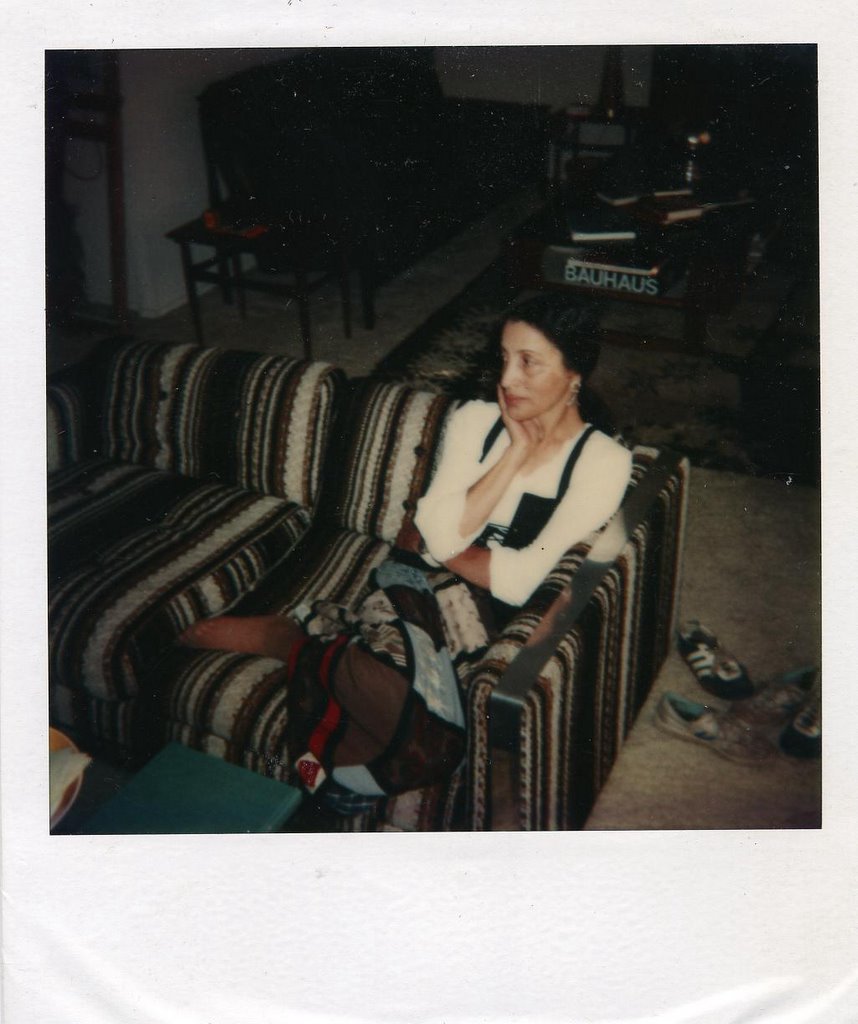
Photo: Taken in the livingroom of Deacon John Weaver of the Northern California Episcopal Diocese -- listening to a discussion in preparation for the Vallombrosa Conference at Stanford (circa 1976).

Friday, January 20, 2006


Where is my brownskinned heart to hurry?

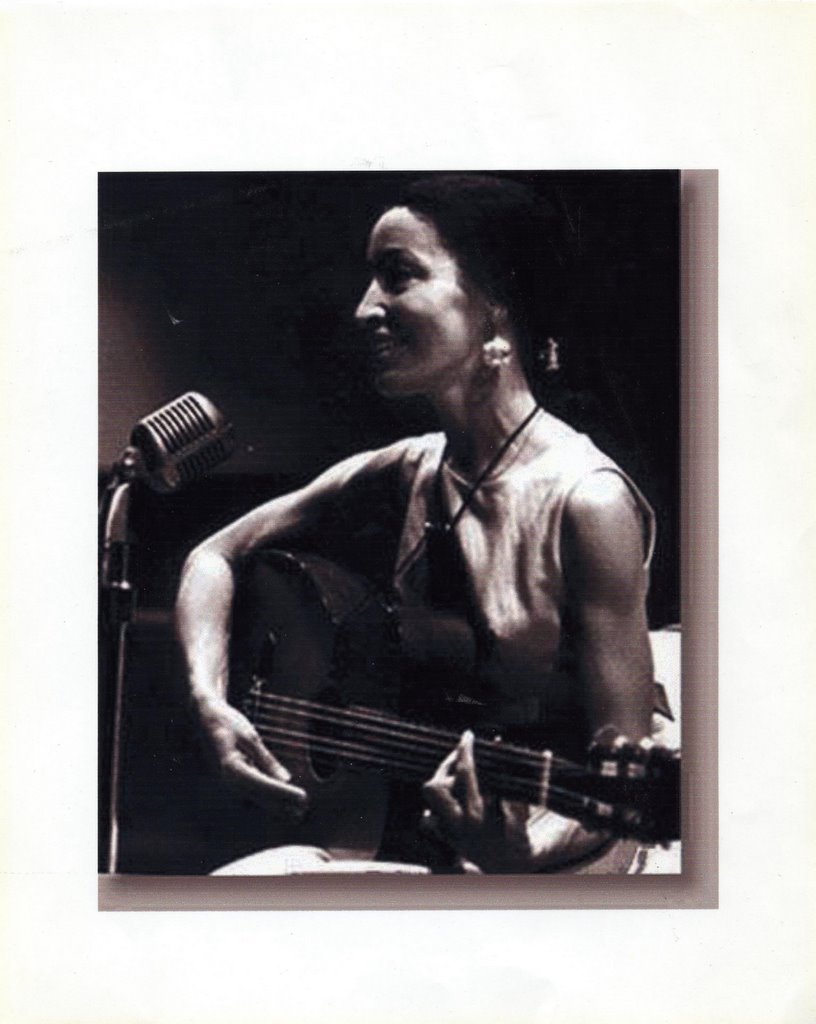
The title of a song written long ago ... and that has been playing in the back of my mind since yesterday. This morning I woke sobbing into my pillow. Why on earth ...? No meaning came -- only the music -- as if coming from another voice -- as if in a dream ... but muffled so that Dorian wouldn't wake and find me distressed. I could never have explained to her dimmed mind the cause of the tears -- I couldn't even explain them to myself. Last night I went to bed so elated! But I had spent much of the past two weeks swinging wildly between highs and lows -- the executions at San Quentin, the Martin Luther King celebration, and the honors being bestowed soon by the NWHP. Was this then what it means to be manic-depressive? Surely not, since these were all larger than life events and my feelings appropriate to each. I'd surely never had such a diagnosis, but could this be? More sobs. I lay still for a long time quieting myself in preparation for climbing out of bed and into my clothes for work. Surely this would pass soon. But I'm still here ... .

It was in those few moments of quiet that the lyrics began to come together with the music -- and the ephiphany!


I was late twenty-something and living in Walnut Creek. The racial hostility was at its worst and one of my little boys had been stoned by some teens shouting "nigger!" from a passing car as he was returning on our country road from Sam's market -- across the creek and a few blocks away. He wasn't badly hurt and came to me looking puzzled and frightened to ask why? There was no answer. He was so young. I couldn't tell him that I just didn't know. The feeling of helplessness is one that I recognize as being always there playing softly in the background of my life as mother -- over all the years -- freshening unexpectedly from time to time. Maybe that's true for every parent, but perhaps not quite to this extent.

Later that day, after hours of torment and doubt, I wrote this:

Where is my brownskinned heart to hurry?
Where will I find my song?
Why must my mind be just for worry?
To whom does my dream belong?

What are my hands to hold this morning?
Where is my place in the sun?
With what shall I fill this time of longing?
Whose will shall be done?

The fruit of my labor will tumble in soon
in search of my love and my lead
Gave all I had when they left this mornin'
Why can't they know how little souls bleed?

Where is my brownskinned heart to hurry?
To whom does my dream belong?
Why must my mind be just for worry?
Who will hear ...
my ...
song ......?


I recognized that same feeling of helplessness on the day, years later, when my now grownup son, Rick, asked tearfully why his partner, Gordon, was lying dead on a slab at the county morgue because his northeastern family would neither claim his body nor release it to us for burial? Gordon was white and Rick was not. They were a committed gay couple who'd been together for 18 years. We lived with that gruesome reality for the 30 days required by law before we could claim Gordon's remains and memorialize him. Rick was dead a little more than a year later.

All of that rushed into my mind this morning -- replacing the giddiness I'd experienced last night as I dropped off to blissful sleep with the honors front row and center.

The sobbing that wracked my body this morning suggests that I may finally be willing to give up my self-assigned role of being "...the only grownup in the room." That I cannot possibly change the basic wrongs of the world no matter how hard I try. That I never could. That no one of us can and that it may be time now to set the world back down on its axis and allow it to find its own way toward redemption.

But you know what?

There is unspeakable relief in knowing that someone may have finally heard my song! The recognition being bestowed in March will symbolize this for me. Makes me wonder about the journeys taken by the other women with whom this honor will be shared. I so look forward to learning more about each of them.

Perhaps the tears were some indication of the power of releasing all that unspent pain.

Maybe I've finally exhaled.


Wednesday, January 18, 2006

Another execution has been held ... with several more slated in the coming months ...

But I cannot live my life weighted down with this issue. It's all consuming and begins to block out the sun after awhile. Dues have been paid -- and I'll table it now until Paul Sawyer trumpets the call again in a few weeks -- to confront the issue for another round of protests at the prison gates. The issue of a moratorium is gaining ground nationwide, and may find some support when the several bills now in one or another committee finally makes their way to the floor of the state senate and/or assembly.

I sense that we're beginning to wake to the death and destruction that this generation is cursed with, and to react to the chaos. Change is in the offing. I can almost feel and hear the brakes being applied to the administration's ugly power surge as the constitutional questions begin to be asked, and impeachment begins to be a serious and grim possibility.

But in the meantime, I'm still wearing my paper hat from the King Birthday Celebration on Sunday. That, coupled with the news from the National Women's History Project this week has me humming to myself and generally having a difficult time getting my hat on at all! They've asked for more information to include with my bio. Our images are featured on a lovely poster being distributed by the organization. The letter announced the dates and times of the presentation of the honorees at an event to be held on March 19th at Griffiths Park in Southern California. I will fly down and will meet the other women at that time. For more information you may want to check out their website. I cannot-- in my wildest dreams -- imagine being mentioned in the same breath with such remarkable women.

Am back at work with a schedule of activities that could threaten a woman half my age, I suppose. Every new project that I take on now carries a time clock with it -- an acute sensitivity to the fact that all this energy could end at any moment -- and that the work is important and must go on with or without me. It adds a note of urgency (but also preciousness) to everything, and makes me feel breathless at times.

I'm beginning to think of all the things I've wanted to do, to complete, to begin, to re-activate, and to feel a frustration that I haven't found the cassette tapes of my songs yet and they may indeed by lost for all time; that I haven't re-framed all those great pictures that lost their glass in storage; re-written some of those fragments of essays I've found from years ago in my files, and that still have a freshness of viewpoint and insight that bears what I'm now beginning to recognize as my own particular form of genius (and do I dare use such a word?). Yes. The National Women's History Project has granted permission by anointing me one of their honored "Community Builders of Communities and Dreams!" (Immodesty feels pretty good, y'all, enjoyed in moderation, of course.)

So much to do -- with diminishing time in which to fit it all in. Maybe soon. But for now there is the work of helping to create a new national park with a team of such capable and dedicated young men and women. What an awesome assignment is that, right?

I suppose that I'm still being deeply effected by the so recent deaths of the four Reid women; Dorothy, Linda, Flossie, and Maybelle, and beginning to face -- ever so gently -- my own mortality.

But not yet. There's good work still to be done.

Illustration: This year's NWHP poster taken from the website. My photo is tucked in at the far right very top - under the "N" in "women." There were 10 chosen, nationwide. What an honor! Maybe I'll buy enough to send out as greeting cards next year. Not sure that I've earned it, but on balance -- whatever is left owing I plan to make up before leaving the planet -- or have my progeny repay after I'm gone. And they'll do so in the name of the ancestors!

Monday, January 16, 2006


Garbage in, garbage out and other nightmares ... and then ...

This has been a dreadful week, but all is not lost. Until ... until being reunited with someone I've long admired from afar but lost track of years ago into the busyness of too many days of more trivial pursuits. We've been marching in different parades, with his being the more majestic. Less stressful, of that I know. More than likely it's a question of scale. While I've spent a lifetime of activism within a scant 30-mile radius -- he has served on a world stage; from social worker community organizer and later Berkeley City Councilman -- to Chairman of the powerful Congressional Armed Services Committee as 8-term Representative Ronald V. Dellums, man of peace and representing one of the most diverse congressional districts in the nation. In that role he worked to engineer the end of apartheid in South Africa and greatly influenced the freeing of Nelson Mandela and led to this legend's ascendance to the presidency of his country.


Untypically, the past week has combined forces to send me straight to the dumpster. Ordinarily I would have prevailed against all but the most impossible odds. This week exposed some vulnerabilities I'd failed to notice.

a. Dorian has returned home (temporarily) after months of sharing an apartment with another mentally-handicapped young woman under a program that specializes in providing supportive services. For the most part it has been successful until Zena suffered a psychotic break that brought a broken window, tossed chair, a kick through the sheetrock of a bedroom wall -- and risk that forced a quick decision to close the apartment and move Dorrie home again, or at least until a suitable alternative can be provided. There's a HUD 1-bedroom apartment available to her that's awaiting cleanup and painting, so all is not lost. Meanwhile, she is chafing at having to give up her independence again and yield to the (no matter how subtle) controls of an over-anxious mother (moi).

b. A miserable attack of hayfever brought on by excessive rains followed by a couple of warm days and the resulting early advent of offending pollens. That meant missing work for days while hemmed in (with Dorian) with no escape from hour-after-hour CSPAN coverage of the Judiciary Committee hearings. A recipe for disaster!


A growing depression was further worsened by the spaciness of a low-grade fever that tended to make visible the glaring idiocy of events. It was like a parody of government. How about a committee of old white guys (the Senate Boy's Club) sitting in judgement about another white guy's having once belonged to C.A.P., an organization (like their own) that looked with disdain upon women and minorities? How about a Senate Committee composed of old white males (with the exception of Senator Feinstein) placing so much emphasis on this one white guy's attitude about Roe vs. Wade -- white men who haven't a uterus between the bunch of them -- and none of whom has ever been pregnant. What happened to the idea of critical judgements from a "jury of one's peers"? How did it ever come to this? Who said that intelligence and good judgement is embedded in one gender only, and that men have some special capacity to be wise and empathic enough to rule on a woman's right to choose?

Cases have been overturned by the fact that a black defendant's guilt or innocence has been determined by a jury from which all but white jurists have been purged. Would this not be true where gender is a predictive factor in the determination of a case involving abortion? Can we not see the critical importance of having women weigh in on any such matter? Are men truly capable of the kind of objectivity that would take the issues above the level of simply enforcing the subordination of women?


Then word came down that the California Supreme Court had ruled against clemency for Clarence Ray Allen, compounded later by the governor's denial. The execution will take place tonight of one more human being -- even while the moratorium is being considered by the legislature. How can this be? Were you aware that only a months or so ago this man suffered a massive heart attack -- was hospitalized where he slipped away for a time and then was resuscitated with his execution date scheduled for tonight -- on his 77th birthday? Can anyone imagine a greater irony? Why could they not have simply allowed him to die? Who would have been harmed? Were I the doctor in that ER the choice would have been clear.

Hal, a protester who is organizing the vigil activity, called late Saturday afternoon with a reminder that the group will be gathering for several hours at the prison gates that night for a press conference, and would I join them? Rain is threatened. I could not go. It all felt so useless. I've not yet recovered from the very recent execution of Stanley Williams. This was just too much. And I was beginning to feel that pollen was not my problem as much as the feeling of powerlessness now overwhelming me since that death. But I believe that this is where I touched bottom and the rebound was begun ... .


Always there is that pendulum frantically swinging to bring balance. It was already beginning to sway to the opposite pole -- taking me with it despite all.


Weeks ago I'd received a call from Stacy Hoffman asking if there was some way that I could help her organization (Rhythmic Concepts) get former Rep. Ron Dellums as the keynoter for this year's annual Martin Luther King Birthday Concert; a truly important event. It was an easy matter that called on little more than providing a phone number or two that produced the desired result. He accepted. Last night I enjoyed a front row seat (as a grateful Stacy's guest) before an array of hugely talented Oakland musical groups (Linda Tillery and her Cultural Heritage Choir; The Oakland Children's Choir; Madeline Eastman and Faye Carroll, jazz singers; ending with the incredible Oakland Interfaith Gospel Choir led by Terence Kelly). They performed in a format that was interspersed with snippets of Dr. King's powerful speeches played upon a large screen to a reverent audience. You would not believe that evening! It was impossible to maintain the gloom that had clung so stubbornly to my being as I'd walked into that auditorium earlier.

The elegant and eloquent former Congressman Dellums (I'd forgotten) rose to speak before this audience of passionate listeners -- oh how magnificently he's aging! -- he was electrifying! He appeared proudly Lincolnesque with that angular face, shock of white hair, and signature beard. He'd announced his intention of entering the race for mayor of this city only a few months ago. More than anyone in public office today, his presence sends a message of peace and stability to those around him. He is charismatic beyond measure. I dared to allow myself to see him as "presidential," to my own surprise. For a quick minute I felt myself comparing him to the current occupant of the White House and felt a silent giggle form in my throat. This is the model that young, fast-rising, and inspirational Senator Barack Obama may well aspire to emulate. He could hardly do better. The word "statesman" fits few in today's political world. The word comes immediately to mind when in the presence of this iconic figure.

I listened raptly as he drew from the wisdom of Dr. King with great skill and confidence. He breathed new life into the words that have become so familiar over the 30 or more years since first uttered -- and that have begun to be emptily recited by rote by generations who "weren't there." It was an evening I'll not forget any time soon.

For the first time in a very long time, today I no longer feel alone ... .

I will volunteer to work in this campaign in that hope that his leadership will become regional -- will reach beyond Oakland's boundaries into my city of Richmond. Ron Dellums is the only person that I can see on the horizon with the potential to draw the like-minded Progressive community together across political and racial boundaries toward positive social and political change. As goes the Bay Area goes the State of California. As goes the State of California, eventually, goes the nation.

Maybe this is where it all begins ... the first steps toward hope and the dramatic changes necessary to rescue this nation for the next generations. Yes, it's that huge and I'm that fearful of a future as predicted by the everyday de-construction of our country's institutions and way of life ... and before so many of us have been able to benefit by the promises of the first or to achieve the second by divine right of citizenship.

There is so much still to be won.

Photo: Found this photo of Ron on his website. This picture appears younger than the man we reconnected with last night. The older (70 maybe?) Ron has whiter hair and heavier beard but with the athletic (6'4") body of a 40 year-old. Wish I'd thought to take my camera along. Will try to update this photo at the first chance to do so. Do explore his website for more information on this exceptional man.


Wednesday, January 11, 2006


Oh to be young again! Rarely have I experienced this particular regret ... yet ...

In listening to the hearings of the Judiciary I'm finding myself chewing the draperies and licking the wallpaper!

Unfortunately, in the middle of the testimonies I received an email that was blasted by Rev. Paul Sawyer to a broad list of Unitarian-Universalists across the country. It sounded so "reasonable;" didn't fit my rebellious mood one bit. I wanted more outrage! Couldn't resist the temptation to respond from the place of anger that has been eating at me here where there is little distraction given the fact that I'm home from work with Dorian suffering from a severe upper respiratory infection. Dorrie is developmentally-disabled so that the level of conversation is somewhat wanting. I was in no mood for "reasonable!"

So-saying, I sent off a flippant reply -- blasting it to the entire mailing list -- and felt better for a few minutes there.

In no time at all came a cautionary reply from a former president of the UUA, with more than a hint of annoyance and a curt bid for patience and fortitude on my part; inciting more resistance and defiance from a little ole lady who's earned her stripes and isn't ready to back off one iota.

How on earth can he or anyone know that I'm speaking from a body of experience that does little to encourage a rational response to an irrational world?

1. I was born an African-American woman to a world that appreciates neither.
2. Was 27 years-old when my slave ancestor died at 102 (whom I knew), so slavery is no abstraction but a living-breathing continuing factor of my being.
3. Lived through a young adulthood scarred by Jim Crow and blatant racial segregation after a childhood of relative acceptance (WWII migration into California),
4. Lived for 20 years as the mother of a young black family in an (all-white) California suburb where fighting for rights was both personal and collective, and sometimes perilous.
5. Raised an openly gay son to adulthood only to lose him to his inability to survive that world of physical abuse, social rejection, and alcoholism into a thinly-veiled suicide.
6. Spent 10 years as a university faculty spouse of a European professor -- and learned new levels of discrimination.
7. ...then another ten or so years as a social activist and black merchant in a welfare community followed by another ten living and working in the belly of the beast ...
8. ...as a field representative to one then another of two powerful members of the California State Assembly.
9. I'm still working fulltime with racial discrimination a continuing factor in my everyday existence. I'm working with the National Park Service in a newly-created park that enshrines Rosie the Riveter/Home Front of WWII, another era of overwhelming racial segregation. The sensitivity with what such enterprises must be approached is critical to our not supporting that which we have outlived, painfully, as a nation. I'm fine-tuned in ways that most are not, I'm sure, but have a sense of being quite able to work with those elements in ways that serve the greater cause of unity with a team of people who are sensitive to the needs and make every day worth rising for.

Having said all that; it felt right to express my impatience with the charade that I'm seeing on CSPAN this day. Those who are clearly challenging this appointment and demanding direct answers to direct questions are comforting to witness. The patronizing drooling cheek-patting Alito supporters on the Judiciary are infuriating and give me that familiar old feeling of being the only grownup in the room. I want to shake these powerful men until their teeth rattle and their wigs fall off!

Maybe demanding that room be made for those of us who've lived differing realities is not "reasonable." But, to be an aging grandmother who will leave behind progeny who will inherit this awfulness does little to encourage a rational response. I've given much and sacrificed much pride in the interest of social progress. Now age has brought a sense of urgency that will not be denied. There's no time to do it over. There isn't the time to try to convince those not already on the path -- so -- as it was during the Black Revolution of the Sixties -- I'll trust my anger to those with whom it may have some effect. The silent promise of our nation's founding documents plus those of a denomination where much of the work has already been done is seductive, indeed, and tempts me to continue to prod and poke ever in the hope that -- just a little nudge here or there ... (we've come so close at times in the past).

But patience wears thin, and voices become harsh and rasping as years go by and ... .

and ... time will not permit hesitation if my grandchildren and yours are to inherit the benefits of the just society we've worked and fought so hard to achieve, and for which so many are continuing to die.

Photo: Mel and Betty Reid (moi) photographed in front of the Oaks Baseball field in Emeryville. At that time he was playing for the Oakland Giants professional football club (circa 1943).

Tuesday, January 10, 2006


Discrimination in the labor unions interview (KPFA) ...

Appeared at Pacifica's flagship station late on Sunday afternoon for the agreed-upon interview. The interviewer was held up elsewhere and I found myself with an hour's delay before we could begin the work. Maybe it was during that time that I lost the intensity I needed in order to fulfill my self-expectations.

It was interesting to find myself here -- with others waiting to tell their stories. I didn't know quite what to expect, but to find myself taken to an upper studio to be not only audiotaped but in front of a camera for videotaping was something I wasn't prepared for. I'd not worn makeup (except for a little darkening of eyebrows that have mysteriously begun to disappear(!), and a little blush on cheeks. Womanly vanity would have dictated some thought be given to the shape of my neckline or earrings, or something ... .

The interviewer asked reasonable questions but I couldn't find resonance within myself so the words felt dead leaving my lips. It's all beginning to feel warmed-over now -- too-oft-repeated, and I felt a little embarrassed to be here at all. Not sure why that is. The truth is surely worth expressing and the history lived by those in our age group is fast-disappearing into a past that was tumultous at times -- and surely worth making note of. We are the carriers, the grios of our personal histories and those histories express universals -- we're not as different as our egos might suggest so -- in a way -- my story is one related to all stories of these decades.

Maybe it's the differences between written and spoken words that best explain my reactions to the experience at the studio. It was the last entry here about the Bancroft Library interview in this journal that made me aware of those differences. Is this the way this will sound -- that will go out over the airwaves next Monday to casual listeners? Will the words spill over themselves in a torrent of meaningless noise? Am I not far more comfortable here writing in a proper sequence where these symbols of meaning can't get lost in the utterance of them?

Maybe I'd far rather write ... yet there is an awareness that there is some arresting quality that I sense in the audience when I speak the words. Wish I better understood ... . What is the "x" factor that I'm missing?

There is the memorable experience of speaking before the audience at the National Women's History Project conference at Mills College last summer. It effected me profoundly -- and apparently did the same for those listening.

Maybe it is truth that has a life of its own -- and that the carrier is only incidental to that. I truly don't know... .

Photo: Speaking at a Starr King School for the Ministry commencement at the Oakland UU Church while serving as a member of the Board of Trustees.

Sunday, January 08, 2006

The Bancroft Library Oral History interviews ...

After writing that last post I spent much of the afternoon reading back through the binder that holds the oral history done in October of 2002. I found the affirmation I was looking for -- some place in the re-telling of my life story that confirms a high place. I noticed immediately the huge difference between the written and spoken word. There is little coherence -- the words spill over themselves in the telling. Interesting:

2-00:1506:
Wilmot (interviewer)

So when you were in high school, do you have any memories of teachers who especially influenced you? You told me that at one time you were reading a lot, I'm wondering ---

Soskin:
This one teacher would light up. I could see his face light up when we'd meet in the hall and he would ask me challenging questions. And to this day, I can remember a long exciting debate in his public speaking class -- about euthanasia -- and I remember that the kids went off -- as people do -- into that fine line between euthanasia, murder -- the risk of people being intentionally eliminated. I remember raising my hand and waving it wildly to get his attention and having him ignore me for a
long time and knowing that he knew that I knew but that it wasn't time yet to let my comment into the room. And I was aware, even as -- I guess I was a sophomore at the time -- I can remember being -- having a sense of being on the same level with this teacher -- because somehow we both knew that I knew. Also that I was cooperating with his game about not saying it yet, and finally toward the end of the debate of having him--or maybe it wasn't a debate but rather a discussion -- and having him point to me so that I could say, "...but you're no longer talking about euthanasia. You're talking about murder," and having him grin and say (finally!) "Ah-ha!" And having this sense for the first time of being at an adult's intellectual level and how freeing that was for a kid. I looked for these moments in time with my own kids; those moments when they hit something that we could relate to as equals; that were new for me and breakthroughs for them. I wonder sometimes -- in teaching -- how often people are aware of how great that is when you hit it? Mr. McLaughlin was probably the only high school teacher besides my drama teacher that I remember now. I'd know him today were I to meet him in the hallway. I remember her because she was too fearful of criticism from parents if she allowed me to play Maria in Maxwell Anderson's Winterset with a white male student playing the lead. She kept me in after the bell rang to apologize for her lack of courage but lauded my reading of the scene.


Found myself grinning silently as I read this today -- realizing that my face had softened and that somewhere inside that little girl still has a sense of knowing ... and that most of that comes through intuition -- a kind of sixth sense that came into the world with me. The confirmation for even the most seemingly outrageous and risky civil actions comes from that place inside. The only time I feel lost is when the world crowds out the sounds of my own heartbeat... the drumbeat to which I've always marched .. even when I can't see those who march with me.


Thursday, January 05, 2006


Since it begins to appear that there are some other logical folks out there helping to hold up the sky -- I'm off to visit the San Francisco Museum of Modern Art with Tom for an afternoon of soul-restoring ...

Will report on my state of mind and heart later this evening. Have other ideas for just how I might do that. It came to me just before sleep. There are times when the only answers are inside, but can usually be accessed through some outside stimulus. Walking through the art galleries ordinarily takes care of part of it, but I think I'll spend the latter part of the day reading back through the transcripts of the oral history the university's Bancroft Library sent to me some time ago. I just may find some fragments of self therein that will re-direct me from this depression before it becomes too firmly-rooted to dispel without some hard work.

What is needed here is another Betty to bring forth -- to help to herd the rest of them into line toward some kind of inner peace. Reading through the transcript may turn up some parts of me that I've begun to lose touch with ... or I wouldn't be feeling such a sense of loss.

Do you think...?

Photo: This comes from somewhere in the late 80's, I think. This seems to have been a time of similar concern, doesn't it? Makes me wince to look into this face; a stark reminder of another place and time when the pain burst through to threaten my existence (see June 20, 2004 in the archives).


This arrived in today's mailbox ... just maybe ...

CALL TO ACTION
from the OFFICES OF OAKLAND CITY COUNCILMEMBER DESLEY BROOKS


Oakland Councilmember Brooks BACKS two-YEAR Moratorium on State Executions

- CITIZENS URGED to TAKE ACTION -

(Oakland, CA - January 4, 2006) The Oakland City Council voted unanimously to support Assembly Bill 1121 (AB-1121) which would impose a moratorium on carrying out any executions in the State of California until certain criteria are met, or, failing that, until January 1, 2009. The bill also stipulates that the state legislature consider all recommendations of the California Commission on the Fair Administration of Justice. The resolution was brought before the Council by Councilperson Desley Brooks.

One-hundred-twenty-two (122) people nationwide have been released from death row after being able to establish their factual innocence, six were Californians. Brooks said, “A civilized society should seek to ensure that no innocent person is ever executed, and should the state seek to impose the death penalty we should be absolutely certain that it is not done in an unjust or arbitrary manner.”

Over the last few years, serious concerns have been raised that the death penalty is not being applied fairly or accurately across the board to all death penalty eligible defendants. Many of these concerns have been prompted by revelations that innocent people in California have been convicted of crimes they did not commit, as demonstrated by new DNA technology, by documented racial and geographic disparities in the implementation of capital punishment in California, by erroneous eyewitness and false testimony, by prosecutorial and police misconduct, and by pervasive complaints about ineffectiveness of counsel in death penalty cases.

In late 2004, the California Senate established the bi-partisan California Commission on the Fair Administration of Justice (“Commission”) to study and determine the extent to which California’s criminal justice system has failed in the past and why innocent people are being convicted, and sometimes executed, in this state. The Commission is required to make findings and recommendations for reform to the Legislature by no later than December 31, 2007.

Currently, there are 648 inmates on death row in California, more than any other state in the country. AB-1121 was authored by Assemblyman Paul Koretz (D-LA) and co-authored by Assemblymembers Sally Lieber and Mervyn Dymally.

The State Legislature is scheduled to vote on this matter early in the 2006 legislative session.

Councilmember Brooks also requests fellow elected officials to bring a support resolution before their respective jurisdictions, and that faith-based leaders forward letters of support to the state legislature.

Putting executions on hold can only happen with your help. Support the "California Moratorium on Executions Act" (AB 1121) by visiting www.aclunc.org, where you can easily and quickly submit a note to Governor Schwarzenegger and your state representatives. You can also stay in the loop by signing up to receive upcoming alerts on this issue.

Tuesday, January 03, 2006


Back to the prison gates and a growing sense of hopelessness ...

I'm not sure when it happened, but I found myself in a new place today ... perhaps heralded by the awful news of those trapped miners far below the earth; maybe by images on the news of nearby families suffering the storm-driven rising waters of the Russian and Napa rivers; continuing pictures of the devastation of New Orleans and of the many newly homeless newly deserted black families still wandering rootlessly in the wake of bureaucratic abuse of astounding proportions. For whatever reason, I found myself speechless today as the cameras and the microphones moved about as unobtrusively as possible during the vigil.

Paul Sawyer, Michael Delacorte, Joe Macdonald, and the others -- some whom I've met here before -- arrived at the agreed-upon hour, formed our prayer circle in the chill of a newly-gathering storm. Added to the mix was Fred Jackson, an old friend from North Richmond and a man who visited with Stan "Tookie" Williams in his last hours. He would speak of that at one point. It was cold. Raindrops pelted my face as I walked from my car on the narrow road to the prison gates. The sky was dark and grey and my spirits reflected the mood of the weather. There was little wind, only the occasional gust that was bone-chilling as it invaded every exposed part of my body that was unprotected against this untypical typical California winter series of storms. Even with the cameras watching, I found myself wiping my nose on the sleeve of my trenchcoat more than once. I didn't care. Our seasons are like our political and social climates; unpredictable -- ever-changing. Tomorrow could as well bring a springlike day with little hint that today ever happened. But today the weather was threatening and set the mood for an hour's worth of feelings I'd rather not have experienced.

The ritual was as always; about 18 stalwart protesters against the death penalty with assorted media people creeping around with their microphones and cameras. Two of the major television channels were present but there were no familiar faces among them.

A San Francisco poet who had been a part of the political Left (now "Progressive") Berkeley/San Francisco group to which both Paul Sawyer and perennial Berkeley city council candidate, Michael Delacorte, belonged had joined with us. He had come to read from the published writings of Clarence Ray Allen, the next candidate for execution. The works had been published in Italy and were read in both English and Italian. It was impressive poetry. I'm not at all sure what I expected, but surely not this lyrical and quite beautiful work. Ray Allen is otherwise known as "Running Bear." He is reported to be Native American, I believe, though didn't appear so in photos I've seen.

A Quaker woman in our circle spoke of "...the God in each of us that must be protected at all costs," and of how "... this redemptive spirit can be accessed by each ...". Her words sounded naive; out of step with the severity of the moment. I thought of Stan Williams and found myself wondering if, Allen, this legally blind and disabled man had found the same redemption in his prison life? Wondered if he, too, had experienced the isolation of solitary confinement and if his poetry was a reflection of the experience? I don't even know what he did to have been convicted -- a fact that had escaped me until that moment. Strange. I still don't know. Only the fact of capital punishment done in my name is of consequence, and the fact that I know that we are all diminished as we allow it to go on.

We must separate out for all time those who would do us harm. Life without the possibility of parole. That I know. That killing in order to deter killing simply makes no sense to me. That I protest against, and it is that which brought me to stand in the cold gray harshness of San Quentin this day.

But as I listened to each -- after Paul Sawyer opened the proceedings in his eloquent pulpit style -- and after Joe had sung his song taken from something he'd found having to do with chain gangs -- only when those around the circle began to testify did I discover that I'd lost something along the way. Normally I would have been listening with a part of myself while pulling together the words that I might share. I usually waited until many have spoken so that I would speak only if my thoughts had not been expressed by someone else. Today it was different. I listened intently. I felt no urge to speak. It was as though I were coming from another place and that I'd lost the sense of relevance. Was it the experience of Stan's execution so recently lived through? What had that done to my resolve?

I said nothing. Absolutely nothing. Was this coming from a sense of hopelessness? Will I spring out of this into some new level of understanding? Had I finally given up? Have I finally lost my sense of relevance? Is this then what getting old feels like?

The drive home was uneventful except for a continuing sense of nothingness ... a deadness.

Then it hit me as I descended from the Richmond-San Rafael bridge -- and drove alongside the huge Chevron refinery on Richmond's shoreline. It was that my frame of reference was so long -- attenuated by the years -- that I see that monstrosity of a prison as having every prisoner of every cell on death row predetermined into the system. I see the places where the Ship of State might have been turned around from this path of self-destruction now buried so far into the past -- that we can no longer see those relationships that might have made us sensitive to the little tributaries, the coves, the safe harbors that would have permitted the space and time to make the adjustments -- the fine-tuning in our course -- that would have allowed us to save ourselves as a nation, and as the hope of the world.

Just as I see Oliver North and the other Iran-Contra co-conspirators as the co-creators of the Crips and the Bloods, I see the inevitability of our young men of color having to become a part of a leaderless revolution misnamed "crime in the streets" for their own survival. I see an entire industry born of the drug wars and the dependency of so many professionals in law enforcement now thoroughly enmeshed in the trials, convictions, and warehousing of those now caught in an underground drug economy that cannot be denied. The profits are too great.

It felt today as if we were dealing with symptoms and that those entrapped in this death ritual will never escape because there is no logic to appeal to.

Today it feels as if we've lost this battle, or, that the outcome will have to be achieved by others. I no longer have any sense of control over a system gone mad -- it was an illusion that I ever could have effected change. I knew that, of course, but knowing didn't prevent the need to act as one of the responsibilities of being human.


There was a familiarity about the feelings. I felt this dispair at least once before -- standing beside the road leading to the Port Chicago Weapons Station. I'd joined the small band of Quakers who were protesting the loading of ammunition being shipped to the Vietnam war front. I knew no one on that line. Had decided the night before to join them after reading of their protest in the local newspaper.

It was a horrifying experience! As otherwise ordinary white suburban families drove by us in their station wagons, grinning parents jabbing middle fingers toward us while driving as close to the protesters as possible -- without actually hitting us. They'd yell obscenities and laugh as they taunted us, and all to the delight of their laughing children. I was terrified! I firmly believed in the constitutional right to protest and/or to engage in civil disobedience -- always expecting to pay the consequences of my actions. This, I was to later learn, was the highest form of ethical behavior according to the Kohlberg Harvard study. In those moments I was acting on conscience, only, and learning where my limits were.

At one point I saw an African American youth -- standing just a few feet behind the lines and obviously as much a stranger to the (all white) Quakers as I. I seriously doubted that he would have known their tenet of pacifism. I saw him slowly draw a knife from under his shirt. I figured that he was preparing himself to defend us -- and I knew that I, alone, had seen the knife. The reason being that -- unlike the others -- I'd not held my ground on the road as the cars shaved dangerously past us -- but had stepped back in fear -- so only I saw his defensive act. I'd not been armed by the godliness of the Quaker belief system so was as defenseless as this boy.

A few minutes later the huge munitions trucks began to arrive. The sign carriers held their ground. I couldn't, but turned and ran as fast as I could to climb into my car and tearfully drive away from the scene in disgrace! I'd never felt so much a failure. I couldn't find the "right" in the picture; couldn't make sense of what I was seeing. I knew that I wanted to help to end the war, but since I'd never had to live through one, I truly didn't know what a war was. I did know what a truck with an evil-grinning driver was. I feared trucks! I could feel the searing hatred in the faces and the voices of those families -- and I couldn't escape the feeling that in some strange way it was I who was causing the rage and the contempt that was all around me. The love and patriotism of the Friends were over-ridden by the hatred their acts of dedication to principle inspired.

There was something of that experience in what I saw today. What? Was I again yielding my place at the roadside in the face of fear? I'm not yet sure, and I may not get to figure this out in my lifetime; not with what lifetime I have left. But I do know that when the logic disappears, hope is diminished. Those to whom the appeals must be made are far away where the logic in our simple acts of protest and defiance cannot be seen or heard. These peaceful logical voices will be silenced by the cacophony of sound bytes and the kaleidoscope of other atrocities in faraway places where life has been so cheapened that our precious war dead are now being shipped home as freight!

Has our nation lost its soul ... ?

And today I'm feeling some unaccustomed dispair, while hoping against hope that others will maintain while I try to pick up the pieces ... .

Photo: Country Joe MacDonald. We met in 1965, before he wrote "We're all gonna die rag!" and Woodstock happened. We shared songs as we wrote them some afternoons in my home in Walnut Creek. He'd just returned from a tour of duty in the navy.

Saturday, December 31, 2005

New connections ... newly discovered writers, poets, singers, and activists among those who will follow ...

Young Zena and Yaminah have recently entered from stage left to take their places on that continuum of Reid, Allen, Charbonnet, Parker, Galt, and Moody, "woman lives". The succession goes on as the matriarchs yield the life force to a new generation. Find myself wondering if Mammá or great aunt Alice or great great grandmother Celestine thought about such things in their final years? Did their Catholicism continue to answer all of their questions or were they, too, left with "dead is dead" as it has been for both writer Joan Didion ... and for me? Is this, then, the kind of awareness that develops as time begins to wind down? Am I alone in this?

Maybe Zena Allen's singing and composing ability and Yaminah's budding political activism feel just a bit like extensions of my own life -- and therefore provide a sense of ... what? I knew neither of them until the past few weeks -- so there surely could not have been any influences imposed on their social development -- at least not from me. But I will try harder now to find old tapes of my songs and will offer them to Zena to add to her repertoire. Perhaps that is the "why" of my music, after all. The songs were written for some purpose, though that seemed only serendipitous until now.

We met at her grandmother, Maybelle's, memorial service. She grew up on the east coast, the daughter of Prof. Ernest Allen of Amherst and a mother whom I've never met. Another of the Allen-Reid connections of which there were four such for these large families. Wonder how these bloodlines will play out over the next generations?


Last night brought a phone call from UU minister, Paul Sawyer, who has returned from his meetings at Cambridge -- that jarred me out of the lethargy of holidays and back into the awareness of the pending execution of the oldest prisoner on death row. It's scheduled to take place very soon now. The clock is moving steadily toward another confrontation with the governor's office with another deathwatch to live through. Maybe clemency will be granted this time, and maybe the re-examination of the efficacy of the death penalty as a prelude to the hearing of Assemblymember Mark Leno's bill will gain support. This man's age, poor physical condition, blindness, and the fact that he will be brought to the death chamber in his wheelchair should make a statement about the ritual of death that we'll again have to live through. There could hardly be a more bizarre case upon which to hang this awesome penalty.

This man has become a published poet while serving time. Some of his work will be on hand to be read by those of us who will gather for this new vigil. I'll meet Paul and Country Joe MacDonald and others at the prison gates on Tuesday at noon where there will be yet another press conference and the beginning of a new action in the hope of stopping state executions until we've had a hearing on the Leno bill in the new legislative session sometime in January.

Last Friday, December 29th, would have been the 52nd birthday of Stanley Tookie Williams, had he lived. Barbara Becnel and those who continue to work to clear his name met that day on the steps of the capitol in Sacramento to declare this date evermore as "Redemption Day" and have vowed to meet to memorialize his life annually as they work to bring an end to capital punishment to this state and, hopefully, to the nation. This, done in Stan's name, will have given meaning to his troubled life and senseless death.

It has been a troubling year in many ways, has it not?

...with any luck, the rains may cease ... .

Photo: Newly discovered young cousin, Zena Allen, singer songwriter born on the east coast but currently seeking a career in music in Los Angeles. Her father is Prof. Ernest Allen of Amherst in Massachusetts.

Tuesday, December 27, 2005

Displaced New Orleans Creoles -- newly "placed" ...

Finding myself wondering -- each time I see a newscast that includes an update on those made homeless by Katrina -- whether they know that life will go on. That, in time, the world will stabilize and some sense of order will be restored. It was so with those of us made homeless in the great hurricane in New Orleans in 1927.

Though only a child of six with little sense of the trauma being experienced by my parents, I am dimly aware still of throbbing, palpable, change that occurred as our new lives began in a strange place called Oakland with little to remind us of "home."

However, New Orleans was gradually replaced by a place where lagniappe and soft-shelled crabs and oyster loaves and coffee with the distinctive aroma of chicory, and french bread as light as air, and lost bread, and cream cheese floating in rich sweet cream in little cartons, and early morning improvised songs of street vendors hawking watermelons, persimmons, and blackberries from pushcarts ... all too soon forgotten by the children. The gumbo and jambalaya and head cheese came with us with little brown-paper packages of filé following in suitcases of travelers who made it back home over time; mostly porters who "ran on the road". There was little else for African Americans (Creole or no) to do in the West. We provided the service workers -- or no jobs at all. It was, after all, the preliminary to the Great Depression years. It was the mid-to-late Twenties.

It was a big night when Papa George came home from the Oakland Athletic Club where he waited tables for (white) VIPs at big parties. We little ones would be allowed to get out of bed -- late though it might be -- to share in the paper party hats, tiny sandwiches, balloons, and sweets that would arrive with him wrapped carefully in dishtowels and hidden under his overcoat. It doesn't take much to make a celebrant of a child. New Orleans had none of this.

Our parents met at novenas at parish churches, or, in mother's social club, "The 500," Mom's social club named for the whist-like card game they played frequently in a round-robin of hostessing.

I look at those years now in retrospect as if I, too, had experienced them as an adult. What rises for me are the kaleidoscopic events that brought such profound social change to my own life, and to the lives of those around me in subsequent years.

My parents died years ago, taking with them all of the pain of the resettlement. I cannot speak to that. But it feels ironic to me that I'm now working with the National Park Service in the process of enshrining a period in history (World War II) that was also marked by racial segregation and that, despite all of the intervening years, Katrina's shocking exposure of the wounds; the scars, the degradation of racism that has revived the fears and the shame of sins long thought forgiven and atoned for.

It's the scabbing over then re-infecting of the awful period of the Civil War and Reconstruction -- never quite resolved ... only dormant for periods ... ever to be revived then matastacize; to go into temporary remission in an endless progression toward ever-freshening rejection until we stop still and take the time to speak the terrible words of hate aloud; do the incantations; burn the incense, bay at the full moon; meditate on our sins; make appropriate apologies; pray to whatever God deemed powerful enough to save us; deal with reparations; then to do whatever it takes to fully acknowledge the awfulness we've lived through in our always tragic and tainted shared unaddressed national history of shame!

It is quite impossible to not see a re-living of the separation of families now spread far and wide as creating yet another diaspora for black peoples. It takes very little imagination to not see a replay of my own ancestors being sold off the slave blocks -- husbands, wives, and children sold to landowners widely separated -- never to be reunited. Katrina aided by an uncaring bureaucracy has mirrored the nightmare, and each day of uncertainty for those still scattered throughout the states makes a mockery of our nation's quest for replicating this "Democracy" through the known world.


Maybe that's why a discovery this morning of mother's "500 Club" snapshot meant so much. It is a testimony to the determination of women to rebuild broken lives; to survive in the face of what appears to be irreplaceable losses.

Despite all, we have survived, and against great odds at times. My own life attests to that truth. Today's families will find ways to do likewise. I truly believe that. But one would have hoped that more progress would have been made after so many years of struggle. There is comfort in the possibility that the percentage of "the Enlightened" has grown exponentially, and that one day soon we'll hit a tipping point and be saved from ourselves. There was surely evidence in the numbers of people who responded with shock and horror at the callousness of the administration's first responders in the wake of the great tragedy of Katrina. We could see it in the faces of those who entered the inundated city as jaded journalists but who've since returned to deliver the updates as concerned citizens demanding change.

Maybe this time ... .

Photo: Back row; Albertine ?, Marie Gaudette Allen, Ruth Smith, Mabel Lashbrook Allen, Annabelle LeBeouf Therence; in front, Lucille Towns. Some of the members of the "500" social club.
Yet another Christmas ...

Dorian and I de-decorated the tree this morning; the earliest deconstruction on record. Its needles were already shedding badly when we brought it home on Christmas Eve. Probably left the forest about three months ago, and -- despite the fading green still visible in its needles -- it surely died soon after the cutting. It seemed fitting to remove the time-collected holiday fancies from its branches and lay it to rest.

Everyone was gathered around the hearth (except for Rick), but the pain of his early death has lessened now and feels more like a resolution to a life of torment than the tearing away of one I still miss, though the missing is less active than before. In place of the pain and guilt that invariably accompanies the loss of a son, I'm now experiencing a deeper appreciation for those still with me.

I worry about my 18-year-old grandson -- but know that he'll eventually survive a troubled adolescence into young adulthood because he is so loved by us all. "Ms. Hermione Ginglehopper" looks reasonably well-launched with a steady love and a brand new Yorky-Maltese puppy, Sophia. The two little ones, Alyana and Tamaya, are vibrant and consuming life in beautiful ways right now -- they're learning and growing and adoring ... I have such pride in them all.

Bob is quiet -- there was little time to catch up with his life, but I'm reading his thoughts and finding a new appreciation for his life on the horse ranch in San Juan Baptista now that he, too, is blogging. He brought me a very contemporary gift only possible through technology. It's an introduction to a philosopher he's discovered -- he'd taken the time to download several hours of a very special documentary produced by the BBC. It reminded me of the day long ago when he gave me a book he'd discovered saying, "...this book changed my life, Mom." It was something about "...a small planet" (can't recall the exact name but it had to do with his introduction to organic foods somewhere along the way in his travels, I believe." At any rate, I then introduced him to the "Adele Davis Cookbook," with the comment. "This is the book that changed my life." Now we'll exchange philosophers, and it feels good -- appropriate.

David and I will work together on getting Reid's (our store) online early in the new year, and that feels good. It's been something I've wanted to do with him for years but the pressure of running the family business while a single parent fathering four children always proved too consuming for new ventures. We may have finally reached the place where we can do that now.

Christmas seemed bittersweet this year. It surely is related to so many deaths over the past 3 months; some near, some distant -- but all traumatic and reminders of the fragility of life.

Enough of that:

Received the preliminary draft (ready for release) of the March 2006 recipients of those women being honored by the National Women's History Project, "Community Builders". I'm listed as "Betty Reid Soskin, Cultural Anthropologist" for want of a title, I suppose. Made me feel more important than I did yesterday -- and maybe that's okay. Not sure what I would have called myself had I been asked.

Also had a call from the "Labor Something Something of San Francisco" asking if I would agree to being interviewed for a radio (KPFA) show on racial discrimination in the labor movement, and -- while we were at it -- would I be willing to serve on a panel on the same subject next July? Next July??? Laughed and told him that I don't buy green bananas these days ... despite the fact that my bank has granted me another 30 years on the last refinance of my condo!

Didn't realize until that exchange that I really am beginning to have some doubt about longevity.

Maybe it is all those deaths ... .

Photo: David's daughters, Alyana and Tamaya.

Sunday, December 18, 2005


All things in their own time ...

Maybelle's memorial service was touchingly beautiful; but it was the living left in her wake who served to set my legs under me again -- full balance has returned -- and an appreciation of the rightness of the succession of life, in an odd way, brought peace. The children in that room were amazing.

Today I attended the 58th annual Charlie Reid's Christmas Party at Shields-Reid Community Center -- a center named in his honor years ago.

Charlie was my first husband's uncle, a man revered in Richmond by all who knew him. He was an icon who effected the lives of the children of North Richmond for many years. He is a legend who still walks these streets and is held up as the paragon of virtue, especially to non-white children. He was the playground director, disciplinarian, baseball, basketball, and football coach, grounds-keeper, benefactor for whatever children needed (including parenting). There is a touching videotape of Charlie and his work that is occasionally shown on the local cable channel. He has provided the model for Reid young men over the years, and is the source of great pride.

At a meeting I attended last week (the Main Street Initiative), it was interesting to see that in the draft of a mural that is in the planning stages for the intermodal train, BART, and AC Transit bus station, Charlie is featured prominently among the many scenes of Richmond life. It will be a 6'x30' montage that will immortalize this loving man who meant so much to so many. There will be lots of bits of civic life shown, but our family will see only Charlie.

Fifty-eight years ago Charles Reid gave the first Christmas party that featured a black Santa. He wanted African American children to experience the holiday love and giving within the context of their own lives and culture. He was far ahead of the black consciousness movements.

His family has continued the tradition now for all these years since his death several decades ago, and has formed a nonprofit that collects toys that are given away each year to over 3000 children of every age, color, or race. Gifts are distributed from one until four o'clock on an afternoon near Christmas to anyone who turns up. Today the lines were shorter since the weather was stormy, but they came as always, and the two Santas (one black and one white) were wonderful.

There was caroling and dancing and a cheer-leading exhibition by our prize-winning team. The kids who participate in the drill team marched to their own drumming. Proud parents took photos of gleeful kids, and Christmas was suddenly here in living color and palpable love!

...and just about in time, too. I needed to be lifted out of the awfulness of so much that has transpired over the past few weeks.

Tomorrow I'll go with Tom and his family to visit Union Square in San Francisco -- then to Japan Town -- and finally to Tadich's in the financial district for supper. San Francisco's skyscrapers are outlined in lights now, and there's nothing quite like Gump's windows to wake the spirit and turn on the internal holiday glow!

I still can't bear to share the most recent conversation with my devastated friend, Barbara Becnel. She is still facing what will be the equivalent of a state funeral for Stanley Tookie Williams in Los Angeles on Tuesday. I can hardly imagine the pain she must be having to live through. But she has a family in Southern California and won't be alone through it all ... .

As a final irony -- Did I think to tell you that -- Stanley Williams was executed on the birthday of Jamie Foxx -- the actor who played him in the film "Redemption," and who visited him in his final hours?

Photo: One of the dancers from the neighborhood. The second pic is self-explanatory, but do notice the racial diversity. There was an interpreter to be sure that the Latino families were brought along. This is how the world should look everywhere. (Click on the thumbnail for a full picture of the room. It's wonderful!)

Friday, December 16, 2005

This is the Stanley Tookie Williams whom I met and mourn ...

The Apology

Twenty-five years ago when I created the Crips youth gang with Raymond Lee Washington in South Central Los Angeles, I never imagined Crips membership would one day spread throughout California, would spread to much of the rest of the nation and to cities in South Africa, where Crips copycat gangs have formed. I also didn't expect the Crips to end up ruining the lives of so many young people, especially young black men who have hurt other young black men. Raymond was murdered in 1979. But if he were here, I believe he would be as troubled as I am by the Crips legacy.

So today I apologize to you all -- the children of America and South Africa -- who must cope every day with dangerous street gangs. I no longer participate in the so-called gangster lifestyle, and I deeply regret that I ever did.

As a contribution to the struggle to end child-on-child brutality and black-on-black brutality, I have written the Tookie Speaks Out Against Gang Violence children's book series. My goal is to reach as many young minds as possible to warn you about the perils of a gang lifestyle.

I am no longer "dys-educated" (disease educated). I am no longer part of the problem. Thanks to the Almighty, I am no longer sleepwalking through life.

I pray that one day my apology will be accepted. I also pray that your suffering, caused by gang violence, will soon come to an end as more gang members wake up and stop hurting themselves and others.

I vow to spend the rest of my life working toward solutions.

Amani (Peace),

Stanley "Tookie" Williams, Surviving Crips Co-Founder,
April 13, 1997


Note the date on this letter. It was written after a seven year period in solitary confinement, a period during which he educated himself in the silence and isolation of that experience and found personal redemption.

There is some need to recall the context in which the Crips were formed. Investigative reporter, Gary Webb, of the San Jose Mercury News wrote a sensational series on the deliberate flooding of the East L.A. and Compton -- as well as other innercity areas with cocaine that provided funds with which to finance the Contras in the not-so-secret wars in South and Central America. The Reagan administration's cabal with the players Ashcroft, North, Negroponte, Rumsfeld, et al, brought together the forces that co-created the Crips and the Bloods. A fact conveniently forgotten in subsequent recollections of the period.

Though most of the revelations brought forth in those dramatic pieces proved out, Webb was demonized, lost his position at the newspaper, and eventually 'committed suicide.' All of this runs hard and deep and has been and will continue to be largely ignored in the writing of the history of the times.

Read Tookie's apology again, and decide for yourself whether this was a man who would have submitted to the pressure to proclaim remorse for crimes that he did not commit -- even to influence the decision for clemency.

When I have the emotional stability to relate my first conversation with Barbara Becnel (yesterday) post- execution -- will do so. For the moment the feelings are simply too raw ... maybe tomorrow. It may be enough to say that the fight goes on; that she will clear his name; and that I won't accept her invitation to attend the huge memorial service being held in Los Angeles on Tuesday. Instead, I will continue to quietly work toward the goal of achieving the moratorium -- will join Paul Sawyer at the prison gates when he returns on January 10th to protest the next scheduled executions. I strongly suspect that there will be no more state killings, though 5 are scheduled over the next several months. A number of the bills now making their way through the legislative process will halt them all until we've had a closer look. Fewer of us now have the heart for this, I strongly believe, and that fact will continue to show up in the polls.

I will do this in his name.

Tuesday, December 13, 2005


I firmly believe that the state of California, in the name of us all, last night executed an innocent man ... .

My friend and Stanley Tookie Williams's stalwart supporter, Barbara Cottman Becnel, has vowed to spend the rest of her life proving his innocence. She was one of the five who witnessed his death by lethal injection. The process took 22 minutes. That, she will accomplish with the help of others who shared her (our) conviction of both his innocence and his redemption.

Yesterday, on his day of execution, after a long day of meetings connected with work, I was just about to leave for home -- heading for the elevator -- when a colleague followed us out to announce that, on a break, he'd learned from a radio report that the governor had ruled against clemency -- in a six-page letter. I was shocked and distraught -- and angry. Walked with another co-worker to the parking lot in silence, climbed into my car, and headed into the commute traffic of congested I-880.

I had another meeting scheduled at 5:30 to deliver a talk to the Main Street Initiative gathering, and had intended to drive over to San Quentin to join with others in awaiting the midnight execution despite my earlier misgivings. But, after detaching from the pain of the awful news for the drive back to Richmond -- holding it all in suspension through my talk before a group of community members -- my car headed for home with me at the wheel, passively, and made no attempt to enter the Richmond Parkway or head for the prison. I felt like an automaton -- alive but just barely.

Tried to reach Barbara on her cell, but got a message that her service was completely filled. I had no idea what I'd have said to her even if I'd gotten through ... surely she was devastated. She'd devoted the last ten years to saving this man and pressing for a moratorium on the death penalty -- and now it was over. The only chance left was the last minute appeal to the Supreme Court. News of that denial came within an hour after I reached home.

At around nine the telephone rang sharply through my empty apartment (couldn't bear to listen to radio or watch television) and there was my friend and vigil partner from the past week, Rev. Paul Sawyer, calling from Cambridge. It was only then that the tears came.

I told him that I was feeling guilty for not being with the thousands of others gathered at the gates, or, at least mentally standing with Barbara in the death chamber, but that I couldn't bear it! I only wanted the night to be over and some sanity to return. He was comforting, "...of course you couldn't. You've done enough. Truly. But we've only begun, Betty. I'll be back on January 10th to begin the next protest against the death penalty."

After a period of quiescence, with only 11 executions since the restoration of capital punishment in this state, three are scheduled over the next 2-and-a-half months. The Leno Assembly bill will be heard in January. How could this be? Wouldn't simple compassion suggest that these next two state-sponsored deaths be held off until the bill was heard? Should not the governor have been guided by that as well?

I will join Paul at the gates for the next -- then the next -- and for however many state killings it takes before a moratorium is granted and sanity returns. He will never know how much his call meant to me in those hours.

Why was I feeling such fear combined with the sorrow -- as though my world had suddenly become even more hostile than I'd sensed even yesterday? Suddenly this execution became an extension of all of the death and destruction in the world, and the governor an extension of those associated -- rightly or wrongly -- with natural disasters, and mad-made cruelties from Abu Graib and Guantanomo; to Iraq and Darfur. My world had become a terrifying place.

Stanley Tookie Williams will be exonerated posthumously. I'm certain of it.

May he rest in peace. By all reports, he left this life bravely and with forgiveness for those who failed to hear his pleas ... .

Amen.

Photo: Stanley Tookie Williams shown here in a photo that displays the post-transformation man of peace. The pictures used so widely in the media -- of the monstrous muscle-builder -- pictures were so fierce and fear-producing appeared to be deliberately distributed in order to support justification for his execution.

Monday, December 12, 2005


There are no words ...

only the pain of inexpressible sorrow.

Maybe tomorrow... .


Photo: Signs posted in the area where we gathered in protest to the execution of this innocent man. Barbara Barker is seen in the left picture - on Friday evening. She was packed for moving on, leaving others to man the barricades until the end. I've wondered about her ... in the hours after Stanley met his death, and whether she was alone when the news came ... .

Sunday, December 11, 2005

Trying terribly hard to not think about the governor's decision ...

and writing about those feelings only increases the tension. Such thoughts when combined with the emphasis on death these past days (the three Reid sisters, Richard Pryor, Eugene McCarthy, the anniversary of John Lennon's, etc.) bear heavily on my sense of vulnerability. But I'm sure that I'm not alone with such feelings, and that the weight of these days will transition into the holiday spirit at some point over the next few days -- unless the decision is the one dreaded... .

It's so hard to understand why -- when so little is being done to alter the downward spiral of so many lives of young black men in the innercities; when the conditions that created the monster whom even Stanley Tookie Williams denounces (his former self) continue to go unaddressed and unabated and cloning murderer-producing internalized self-hatred reflected from an admittedly racist society ... . not sure how to finish this sentence, or, even to unravel it in order to make more sense ... . These days are filled with incomplete sentences and limited understandings ... .

Maybe what I want to say is that this man who rose from the absolute bowels of rejection and dispair in the bleak aloneness of solitary confinement -- rehabilitating himself in the process-- if he can be allowed to continue his life and his work to help to save other lives -- maybe ... .

My mind is disorganized this morning. The words won't come. Won't organize themselves into coherence ...

Yesterday I attended the annual Sharing the Spirit event at the East Bay Center for the Performing Arts. It lifted my spirits for a few hours. Last night I dressed in my finest to join others at the annual Senior Ball held in the beautifully-decorated downtown Convention Center. Yet I was home and in my pajamas, in bed with a peanut butter and jelly sandwich and a (Kaiser Permanente) cup of hot cocoa by nine. Listened to my bedside radio for hours when sleep wouldn't come ...

It's mid-morning now, and I'm off to attend a chamber music concert with Tom this afternoon. That will eat up more hours. We'll have dinner someplace interesting, shrinking the waiting time by a few more.

If it's not too late, I may drive over to the prison tonight for a visit with those who continue to hold the vigil, but without Rev. Paul Sawyer and peace activist Barbara Barker -- it will be different. With the time drawing near, the tension will be almost unbearable. Been here before to protest the death penalty when I didn't feel any particular connection with the prisoner about to be executed. This is so different from those times. So intense ... .

But, however it goes, I will meet Paul and the others back at the prison gates on February 12th when the next man is scheduled to die. He is a diabetic confined to a wheelchair and is also a person of color, though not African American. The following execution is that of a Latino man, scheduled for some time in March. It feels somehow that it should be unimportant to mention race in connection with these pendings state deaths, but with such a large percentage of those on Death Row being from the poor and the non-white population, it's unavoidable -- a part of the sad story.

Tomorrow I will write again. The decision may have come in and this awful teeth-grinding worrisome pain of waiting will have ended.

Still holding that strong sense that this life will be spared and that the decision for a moratorium will be enacted come the January session of the legislature.

I do have this formidable sense of intuition that has served my life so well ...

It will be so.

Photo: Lovely crystal clock, a gift from my co-workers. It bears the inscription taken from a painting on my bedroom wall, "Against the ruin of the world there is only one defense, the creative act!" The painting is by Clarise Bois and often followed me to hang in my offices here and there. It's back home now and hangs behind my bed.