Time moves so swiftly ...
I've been joking about the fact that -- on the downhill side of the years past fifty -- Christmas comes every six weeks. Time does speed up as the years pile on. Feel breathless at times from the effects of the rate of change. The collapsing of time this weekend is having a strong effect on me, trying to remain contemporary while being asked to dip into years past, causes some shift in the fault lines of age -- and I'm feeling just a bit off balance... .
Tomorrow morning at ten o'clock the West County Times reporter will come to do a profile for release in Monday's edition. The photographer will come at around one to do his thing.
At 4:30 I'll attend a meeting with a group created by the Redevelopment Agency's Rosie project to go over ideas for signage for the areas leading to the new national park. At six we'll leave for San Jose and the Democratic Convention. The important evening event is the convening of the Black Caucus at seven-thirty. This will give me some idea of what issues will be involved in the creation of the platform. These discussions are rich and often contentious and never dull.
Have already decided to skip Saturday's agenda in favor of attending David Pierson's memorial service. That will plant me firmly in the past -- but it will help me to get into the space from whence the speech must come. However, the leap-frogging between such emotional levels is dizzying. I'm hopeful that this will enhance and not hurt my ability to deliver my thoughts at the Monday event. It is a tremendous opportunity to share that trajectory I've lived through, beginning with that naive young frightened mother, and ending with the return to Walnut Creek as a person of note. And I say that with more of a sense of wonder than of false pride. There's just not room in my life for that.
It took many good and not so good people all leaning together into the winds of constructive change to make that possible. Dr. King was surely one, but then so were a lot of ordinary black men, women, children, who were willing to lay their lives on the line for the right to vote and for the right to have the kinds of educations that would lift them out of poverty (didn't do so well with that one, did we?). African Americans throughout the country, and a lot of good "people-of-no-color" came together to bring about the change that I'm now enjoying. A lot of those folks are still living in the suburbs all over the nation, and some that I know are still working hard to break down the barriers that divide us. Meanwhile, I chose in the late Seventies to return to the inner city to do my work -- and all else has blossomed from that decision. I've never regretted it for a minute.
I'd give anything to be able to sit down with Dr. King, Justice Thurgood Marshall, and Fanny Lou Hamer, and yes, Malcolm X, to give a report and get their feedback. It is so humbling to recall the sacrifices those heroes made during those torturous years. I so regret not being able to let them know that little people like me listened and learned, and that forty years later -- we're still fighting the good fight -- with a bit more sophistication garnered from years of working behind those doors they opened for us to move through.
But their work and ours is far from finished. I'm sure that we all know that. Assessing that unfinished agenda and finding ways to address it will surely take up the balance of my life, and perhaps those of my children -- and maybe yours... .
But first there's a war to stop, an environment to save, and a country in political chaos to somehow re-orient. And maybe the problem is that we haven't the time or the capacity to achieve all that if we don't take them on simultaneously. I fear the fall into Fascism and Corporatism and away from the path toward world peace and racial harmony for which Dr. King gave his life. I'm far less hopeful that we will back away from the edge in time for me to witness this transformation, personally. Except that -- just maybe -- this awesome rate of change will work in our favor. Do you suppose?
(Maybe I just wrote the closing remarks for Monday's speech...)
Wednesday, January 14, 2004

Started out on Monday with a call from someone from the National Park Service asking if I'd be willing to participate in a press conference on Thursday (tomorrow) when Ms. Lynne Cheney would be presenting a check to the National Park Service for one of its programs. This, as a "Rosie", of course. Nope. Besides having a full schedule, there was this thing about having a photo op with Republican Ms. Cheney that would not be politically correct for me (being the field rep for a Democratic legislator) -- not too cool, I think. Didn't bother to ask our staff. But I know that I'm so firmly identified with my role as a representative that this would be seen in a political light. It becomes less and less possible to have a "personal" life.
I believe this was also her book tour for a newly-published young people's book about Rosie the Riveter.
Spent the day today sitting in at the California Arts Council's meeting in San Francisco and being awed by the huge circular arrangement of the judicial chambers where the meeting was held. The room reeked of power! The great seal of the judiciary on the back wall spoke volumes. It's impossible to not be impressed. It was an all-day session (10:00 'til 3:00) that featured speakers from the NEA from Washington as well as local and regional arts advocates and organizations. Just sitting in that room gave me a feeling of the weight of the office of the vice-presidency, and I found myself wondering why I'd said "no" so easily? I'd actually forgotten about the invitation until a moment in the presentations when the feeling of awe for the office, itself, washed over me.
Attended another meeting later today at 4:30, this time a collaborative of nonprofits, unionists, political activists, several church groups, etc., and was just as awed by this exercise in the democratic process -- one that's being so foolishly trampled on by those who are presently in national leadership. This group was hard at work on getting an ordinance passed for Just Cause Evictions, getting a parcel tax measure on the next ballot with which to finance the schools ... I was reminded why I'd refused. The distance between is just too great. We are really living in a haves and have nots period, aren't we?
Learned some shocking facts at the Arts Council meeting:
In the current state budget, we have designated 3 cents per person for the arts. In the nation that figure is $110/per person. Canada budgets $238/per person. California ranks 48th in the country in moneys allotted for the arts. Small wonder that we're losing the movie industry to Canada. This, the most populus State, is losing on the quality of life issues.
We have the greatest number of citizens imprisoned, and our most recent moves to eliminate affirmative action will guarantee that -- though we are the most racially diverse state in the union, we're making sure that leadership will remain white by limiting who can and cannot enter the university system. The controls lie in the fact that by raising the cost of tuition beyond the reach of all others, power remains with the white population.
Our school systems have all but eliminated vocational education and are dealing only with the college bound. All others are tracked out of the system in middle school. We are now seeing a 48% drop-out rate of Black and Brown students by tenth grade. It's appalling!
To demand standardized testing results without standardized resources is criminal! There is a case wending its way through our courts that will bring that issue into prominence at some point soon; hopefully.
Maybe my Martin Luther King birthday speech is beginning to write itself. At least the thoughts are beginning to form, and I'll spend all day Sunday moving it onto paper.
On Friday I'll be interviewed and photographed for the local papers. Friday evening we'll leave for the Democratic convention in San Jose (Black Caucus session is Friday night). Will skip the Saturday sessions to attend the memorial service from an old Walnut Creek friend who finally succumbed to Alzheimers. David Pierson was an artist whose oil paintings hang in my dining room and on my bedroom wall. He and his family figured strongly in my often misspent suburban days in the Fifties and Sixties. We struggled together with along with enlightened others through the Black Revolution -- across racial lines -- and, I believe, that ultimately we made a difference. I will miss him. But those stories are still ahead waiting to be told. I'm beginning to feel that there is need for that. Blogging is becoming important to me, finally. We each experience a life that is like no other. Mine has been extraordinary.
Would have been nice to have a photo in my album -- taken with the wife of the vice-president of the United States. If I live long enough, maybe I'll find one I'm more comfortable with... .

Saturday, January 10, 2004
Saturday's come again, ...
and time to let my mind wander back in time ... .
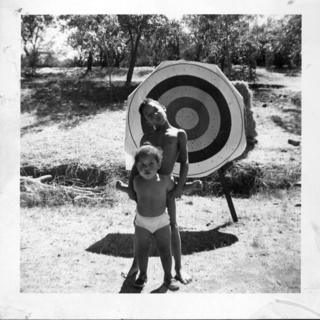 Thinking about one of those periods in time when there was just enough absurdity to keep life in perspective when all else was precarious and beyond personal control. It was a time when Bobby and David were still very young and when the neighborhood children had broken through the social barricades and were spending much of their time playing in our driveway. Their curiosity won out over whatever prohibitions had been placed on them by adults, and the sounds of play had echoed out of our yard all summer long.
I believe that David was not yet in kindergarten when Georgia Wiseman came to work for us. Despite her very Jewish name, Georgia was a tall energetic African American woman who served as both cleaning woman and great friend to this rather lonely young mother living in hostile country. Georgia came on Tuesdays and Thursday every week and handled the bunch of us like the "professional" that she was. She was with us not only through those critical years, but -- after my first marriage failed -- years later, she came back to work for us for several years in the Berkeley home shared with my second husband. My kids were all grown up by then, but Bill and I were both employed by the university. Ours was an enduring friendship.
I can feel my throat tighten when I remember the day that we learned that Dr. King had been killed. It happened on a day when Georgia was not due to work. I was devastated! I was alone in the house. There was a knock on the door around ten o'clock and there she was. "Thought I could catch up on some ironing," said she walking past me with tears flowing. She'd driven over 20 miles from East Oakland because she felt needed. This was Georgia Wiseman. She knew that I would be sad but also frightened.
 But that was also a time when a beautiful black Belgian Shepherd moved into our lives. He turned up one morning with a stone in his mouth. He greeted me when I opened the front door, front legs down, hips high and tail wagging. The signal was clear. I picked it up and threw it as far as I could. He dashed off and located it easily and brought it back for a re-toss; an endless game that went on for weeks. When I could toss no more, he'd lie down on the deck and wait for the boys to leave home to board the school bus down the road. He walked them to the bus -- and greeted them each to day to be escorted home. He'd adopted us. Had no idea where his owner was since there he was until late in the evening when Mel drove down the driveway to be escorted up the stairs into the house. I was careful not to feed him for fear that his (unknown) owner would think that I was trying to steal this lovely creature. It went on for weeks. He would arrive early each morning as if to his "job," staying until Mel checked in each night.
After some weeks, the mystery was solved. One of the neighbor children was overheard calling the dog by his name, "Nig!" It was Georgia. Of course, it was impossible for the owner to call him home. How on earth could he/she stand at the edge of our property calling out " Here Nigger!" It was preposterous. It was also very funny! It was also a problem.
Coincidentally, at the time there was a construction job underway in front of our house -- pipe-laying of some sort, in deep trenches -- with workmen from the utility company (both Black and White) spending much of the day digging and pounding with their machines. Here they were working in front of a fine home obviously owned by an African American family who owned a big black dog named "Nig." They could hear the childrens' voices calling out his name as they played. How could this be?
Georgia could hardly stand it. She finally insisted that we have the children use some other name. Only problem with that was that I couldn't find any sensible way to explain to my little ones the reason for doing so. Nig was simply the name of a creature they'd grown to love and at the time the word had no other meaning. Would he even respond to any other? My kids weren't familiar with it, and the other children were probably equally as innocent. These were really pretty young children. Georgia's embarrassment at being the housekeeper for such a family in plain view of the African American workmen was unbearable. She ceased to see the humor in the situation after a very short time.
After some weeks, I finally caught a glimpse a young woman across the road in front of a tiny rented cabin. Nig was standing beside her. Walked over and introduced myself. She moved quickly up her stairs as I arrived and was now standing behind a closed screen door. She was not unfriendly, but not very responsive, either. I told her that I was concerned that her dog was not being fed, that I'd not known where he'd come from or how to report our "find." Told her how much we loved him but wanted her to know that we were not trying to steal him. Made no mention of his name.
She told me that she'd recently moved from a ranch where there had been children for Nig to tend, and that, since moving here, she had accepted a job that kept her away from home much of the time. He was lonely for a family to tend. She was sorry if he'd been a burden to us ... but that she was planning to move soon.
We lost Nig. We never did manage to work out a solution, but we had one happy housekeeper when Nig moved away. Then we went back to laughing at the absurdity of it all!
It was then that we found a reliable breeder and bought Helsa, a German Shepherd pup, who quickly healed the pain of losing our cherished friend, something I'm not sure would have happened without the experience.
What's in a word? I'm not sure, but I suspect that some of the toxins may have been removed for my little ones -- if they can remember... .
Photo: Bob with Dorian under the big oak at our home in Walnut Creek.
and time to let my mind wander back in time ... .
 Thinking about one of those periods in time when there was just enough absurdity to keep life in perspective when all else was precarious and beyond personal control. It was a time when Bobby and David were still very young and when the neighborhood children had broken through the social barricades and were spending much of their time playing in our driveway. Their curiosity won out over whatever prohibitions had been placed on them by adults, and the sounds of play had echoed out of our yard all summer long.
I believe that David was not yet in kindergarten when Georgia Wiseman came to work for us. Despite her very Jewish name, Georgia was a tall energetic African American woman who served as both cleaning woman and great friend to this rather lonely young mother living in hostile country. Georgia came on Tuesdays and Thursday every week and handled the bunch of us like the "professional" that she was. She was with us not only through those critical years, but -- after my first marriage failed -- years later, she came back to work for us for several years in the Berkeley home shared with my second husband. My kids were all grown up by then, but Bill and I were both employed by the university. Ours was an enduring friendship.
I can feel my throat tighten when I remember the day that we learned that Dr. King had been killed. It happened on a day when Georgia was not due to work. I was devastated! I was alone in the house. There was a knock on the door around ten o'clock and there she was. "Thought I could catch up on some ironing," said she walking past me with tears flowing. She'd driven over 20 miles from East Oakland because she felt needed. This was Georgia Wiseman. She knew that I would be sad but also frightened.
 But that was also a time when a beautiful black Belgian Shepherd moved into our lives. He turned up one morning with a stone in his mouth. He greeted me when I opened the front door, front legs down, hips high and tail wagging. The signal was clear. I picked it up and threw it as far as I could. He dashed off and located it easily and brought it back for a re-toss; an endless game that went on for weeks. When I could toss no more, he'd lie down on the deck and wait for the boys to leave home to board the school bus down the road. He walked them to the bus -- and greeted them each to day to be escorted home. He'd adopted us. Had no idea where his owner was since there he was until late in the evening when Mel drove down the driveway to be escorted up the stairs into the house. I was careful not to feed him for fear that his (unknown) owner would think that I was trying to steal this lovely creature. It went on for weeks. He would arrive early each morning as if to his "job," staying until Mel checked in each night.
After some weeks, the mystery was solved. One of the neighbor children was overheard calling the dog by his name, "Nig!" It was Georgia. Of course, it was impossible for the owner to call him home. How on earth could he/she stand at the edge of our property calling out " Here Nigger!" It was preposterous. It was also very funny! It was also a problem.
Coincidentally, at the time there was a construction job underway in front of our house -- pipe-laying of some sort, in deep trenches -- with workmen from the utility company (both Black and White) spending much of the day digging and pounding with their machines. Here they were working in front of a fine home obviously owned by an African American family who owned a big black dog named "Nig." They could hear the childrens' voices calling out his name as they played. How could this be?
Georgia could hardly stand it. She finally insisted that we have the children use some other name. Only problem with that was that I couldn't find any sensible way to explain to my little ones the reason for doing so. Nig was simply the name of a creature they'd grown to love and at the time the word had no other meaning. Would he even respond to any other? My kids weren't familiar with it, and the other children were probably equally as innocent. These were really pretty young children. Georgia's embarrassment at being the housekeeper for such a family in plain view of the African American workmen was unbearable. She ceased to see the humor in the situation after a very short time.
After some weeks, I finally caught a glimpse a young woman across the road in front of a tiny rented cabin. Nig was standing beside her. Walked over and introduced myself. She moved quickly up her stairs as I arrived and was now standing behind a closed screen door. She was not unfriendly, but not very responsive, either. I told her that I was concerned that her dog was not being fed, that I'd not known where he'd come from or how to report our "find." Told her how much we loved him but wanted her to know that we were not trying to steal him. Made no mention of his name.
She told me that she'd recently moved from a ranch where there had been children for Nig to tend, and that, since moving here, she had accepted a job that kept her away from home much of the time. He was lonely for a family to tend. She was sorry if he'd been a burden to us ... but that she was planning to move soon.
We lost Nig. We never did manage to work out a solution, but we had one happy housekeeper when Nig moved away. Then we went back to laughing at the absurdity of it all!
It was then that we found a reliable breeder and bought Helsa, a German Shepherd pup, who quickly healed the pain of losing our cherished friend, something I'm not sure would have happened without the experience.
What's in a word? I'm not sure, but I suspect that some of the toxins may have been removed for my little ones -- if they can remember... .
Photo: Bob with Dorian under the big oak at our home in Walnut Creek.
Wednesday, January 07, 2004
Am back at work with a vengeance ...
 with few empty spaces on my dance card ... .
Am acting as an adviser to two candidates for city councils in two cities in our district. That's in addition to a quickening of action around Loni's re-election campaign for a second term in the State Assembly. She will be running virtually unopposed in the March Primary (two little known men have filed) but it still means fundraisers and public events to attend where our district crew of five will take turns staffing her. It's an exciting time, but also wearing.
Still haven't gotten into the writing of my speech (this weekend, I promise) for the King Day event. Learned a little more about the Henry J. Kaiser Oakland Museum Exhibition, though. Found that Loni will attend the opening on January 31st and I'm assigned to staff her on that evening. I haven't found a way to tell her that -- included in the exhibition -- is a 1-minute audio clip of yours truly accompanying a film clip taken from the U.C. oral history project. Have warned our chief of staff that this is happening, but Loni's been in the Sacramento Follies all week, and we've not seen her since before Christmas. Maybe I'll just let it happen. Would hate to appear to be trying to upstage a legislator. Maybe she won't notice. It will flit by quickly, I'm sure.
When the clarifying call came yesterday (I'd called to ask why the clip was being used at all -- and what possible relevance could it have to telling the Kaiser story?) -- I had mixed feelings:
"You were very eloquent in your description of the migration of those who came west to work in the shipyards...". Got to thinking that I also had made quite a point during that interview of the fact that my role had been pretty insignificant in the war effort and that, in fact, I was a lowly clerk in a Jim Crow union, an important point in the telling of that story. I fear that a 1-minute clip taken out of context will do just the opposite of what I feel is the important point of my personal war front history. My image will be used to show how wonderful was the Kaiser contribution to the making of America in a time of monumental social change. But then that little piece will be but one of many, I'm sure, all making up the mosaic of the time.
There will have to be other ways to tell my story -- when the university ever gets around to doing the editing needed to tell it in its entirety. But this is the way that history gets revised, and about how we acquiesce for the sake of ego or whatever else such an experience offers. Maybe just the fact of being a part of the Henry J. Kaiser exhibit will serve as a way to begin to open that history to the public, and my tiny piece will give significance to the later release -- if ever.. . I'll probably be long gone when that oral history project is open to public view. Two and a half days is a lot of taping. I suspect that its use will be simply for scholars seeking information about those war years or the western migration. They will have access to the materials from the archives. Maybe that's the only purpose for the collection of those personal stories. (The university has promised to see that I have copy a some point, though, so if you're reading this, Bob, remember to pick it up some decade in the future when you're working on the family story.)
As I've said before, I had no idea I'd live long enough to BE black history!

Am acting as an adviser to two candidates for city councils in two cities in our district. That's in addition to a quickening of action around Loni's re-election campaign for a second term in the State Assembly. She will be running virtually unopposed in the March Primary (two little known men have filed) but it still means fundraisers and public events to attend where our district crew of five will take turns staffing her. It's an exciting time, but also wearing.
Still haven't gotten into the writing of my speech (this weekend, I promise) for the King Day event. Learned a little more about the Henry J. Kaiser Oakland Museum Exhibition, though. Found that Loni will attend the opening on January 31st and I'm assigned to staff her on that evening. I haven't found a way to tell her that -- included in the exhibition -- is a 1-minute audio clip of yours truly accompanying a film clip taken from the U.C. oral history project. Have warned our chief of staff that this is happening, but Loni's been in the Sacramento Follies all week, and we've not seen her since before Christmas. Maybe I'll just let it happen. Would hate to appear to be trying to upstage a legislator. Maybe she won't notice. It will flit by quickly, I'm sure.
When the clarifying call came yesterday (I'd called to ask why the clip was being used at all -- and what possible relevance could it have to telling the Kaiser story?) -- I had mixed feelings:
"You were very eloquent in your description of the migration of those who came west to work in the shipyards...". Got to thinking that I also had made quite a point during that interview of the fact that my role had been pretty insignificant in the war effort and that, in fact, I was a lowly clerk in a Jim Crow union, an important point in the telling of that story. I fear that a 1-minute clip taken out of context will do just the opposite of what I feel is the important point of my personal war front history. My image will be used to show how wonderful was the Kaiser contribution to the making of America in a time of monumental social change. But then that little piece will be but one of many, I'm sure, all making up the mosaic of the time.
There will have to be other ways to tell my story -- when the university ever gets around to doing the editing needed to tell it in its entirety. But this is the way that history gets revised, and about how we acquiesce for the sake of ego or whatever else such an experience offers. Maybe just the fact of being a part of the Henry J. Kaiser exhibit will serve as a way to begin to open that history to the public, and my tiny piece will give significance to the later release -- if ever.. . I'll probably be long gone when that oral history project is open to public view. Two and a half days is a lot of taping. I suspect that its use will be simply for scholars seeking information about those war years or the western migration. They will have access to the materials from the archives. Maybe that's the only purpose for the collection of those personal stories. (The university has promised to see that I have copy a some point, though, so if you're reading this, Bob, remember to pick it up some decade in the future when you're working on the family story.)
As I've said before, I had no idea I'd live long enough to BE black history!
Sunday, January 04, 2004

all to avoid my main task -- that of getting a first draft done of my January 15th Martin Luther King speech in Walnut Creek. As it is with all such undertakings, the words are probably percolating in the back of my brain and will all fall into place sometime in the last few days before delivery. Maybe I'll just choose selected pieces of my blog and just read them to the audience. Nah. That won't do, surely. Needs to show some effort, at least, and carry some punch, I suppose. Meanwhile ... .
Noticed when reading my Sunday NY Times that the article on the Mars landing doesn't show up until page A17. Can you imagine? The front page was taken up with the Egyptian plane crash and a sad item on how the proposed budget cuts in the state budget will effect a young cerebral palsy patient. All very important, but surely not mind-boggling like the Martian probe, or am I not getting the point here? I plan to turn off Mac and spent much of the rest of the evening trying to see what the astronomers, the SETI people, and the big names in the world of space exploration have to say about all this. Should be a fascinating couple of months, almost as much so as when we first landed on the moon -- or when the Hubble telescope gave us that first glimpses into deep space.
There is the chance, surely, that the news from the Middle East is so frightening to me that I'm choosing to escape to a place above the ozone layer, at last for a little while. It does all seem so utterly hopeless.
 I believe, at times, that one of the primary gifts of the aging process has to do with the fact that -- in all those earlier years one could find solace in the fact that there were thousands of brilliant savants and scholars standing between you and the gaffs of ignorance. As I've entered my eighties, it's become painfully clear that there's an awful lot of ignorance out there masquerading as wisdom, and that my own common sense is emerging as a pretty good gauge of the scope of human intelligence. Being an octogenarian also has added the quality of candor that not only allows me to entertain such thoughts, but to voice them when it seems appropriate -- or not -- as the case may be. But there's little comfort in such thoughts since it then places the responsibility for acting in support or opposition squarely on one's own shoulders. As in the old hymn, "There's no hiding place down here."
Now, back to the Orange Alert... .

while ramming into the future by way of the Mars probe, completed so successfully last night. The magic of it all is staggering!
Here I was lying in my bed in a condo on the Pacific Coast of the USA watching -- not only the anxiously-waiting scientists at NASA headquarters -- but simultaneously connected with the anticipated arrival of the new Mars lander any second! Could hardly sleep as I marveled at just how far civilization has come in some respects -- just during my lifetime -- but at how horribly behind we are in others (brutal genocidal wars rage on!).
How can it be that this morning we're seeing this monumental scientific feat sharing equal sound bites with Brittany Spear's aborted marriage in Las Vegas, and a new baby-in-the-crocodile-pen abuse in Australia? Our sense of scale has been seriously distorted, right? Michael Jackson, Scott Peterson, Kobe Bryant, Martha Stewart, and a-flight-through-the-tail-of-a-meteor-while-being-expertly-photographed and a Mars landing with another planned for in three weeks -- all being given equal time CNN!
How on earth will my grandchildren ever be able to gain any sense of wonder with this kind of bombardment? How on earth will this grandmother ever be able to adjust to this rate of change and the anomalies it's producing? I have new respect for the experience of Papa George who was born before the automobile (1870's) made its appearance and died (at 96) after having flown by jet to visit his old home in New Orleans. This should be comforting in that it proves that the human animal is capable of absorbing such extremes without disintegrating. However, I'm not all that certain that Planet Earth has the same resilience. After all, there are those melting glaciers, horrific mudslides, wildfire, earthquakes, disappearing rain forests, holes in the ozone layer, and avalanches to consider ... .
Makes this Atheist long for some divine presence that might monitor this planetary dilemma. It's more and more apparent that the world has totally lost its way. There are too many developments on too many fronts for us mere mortals to keep up with. The voice of science -- bravely leading the way into the future -- is being drowned out by those of the arms manufacturers and corporate raiders, and it's terrifying!
Can't help but think that Albert Einstein, Steven Hawking, and Ray Bradbury were closer to the answers than Billy Graham or Pat Robertson ever were. Maybe the race for survival is between Ariel Sharon, George Dubya, Tony Blair and the world's scientists. Makes one feel very small, indeed.
Would that there really could be some Heavenly Auditor/Monitor up there somewhere with the power to pull us back from the edge in time ... but to wish for such answers is surely as foolish as the wishes and prayers of those who are filling the pews each Sunday waiting for the Rapture.
Maybe we've had just about as much free choice as we can deal with, Lord!
Go get the Evil Doers! (smile)
Saturday, January 03, 2004

I strongly suspect that how our little community eventually worked our way through the misery of the process of racial integration was as much due to humor and craziness as to any changing legislation or moral code adjustments.
Jean Martinez enters from stage left:
Still very much aware of being the primary source of the neighborhood's on-going entertainment, I was determined to be the best little brown Doris Day on the planet. In keeping with this role-playing, (I'm sure this was the Dorothy McGuire "Egg and I" stage in my social development), I'd bought myself new pedal pushers with matching tennis shoes and a color-coordinated multi-pocketed smock with places for trowels, bulb planters, hand pruners, ties for tendrils. One good nudge and my 100 pounds of pretty would have plopped over in a heap!
Also, had gone to the local nursery and spent almost $300 at a 1 cent sale (the sign said, "buy one get another for a penny" and who could resist that?). I'd bought ornamental trees, shrubs, bulbs, wisteria in cans, fruit trees, etc., all delivered to my driveway. This was to be my staging area. For several days I poured over Sunset's Gardening Book and tried to recall to the best of my ability those lessons learned long ago at the knee of Papa George in that little truck garden adjacent to his little overcrowded shotgun bungalow in East Oakland. But it seemed to me that all that yielded was how to tie string beans to poles and how to water tomatoes and dig potatoes. After all, I was only a child then and capable of little more. The only thing I could recall about trees was that the almond tree in our field could only bear fruit because there was a male tree on Mr. Mueller's acres. This was the extent of my horticultural expertise. So trees were sexed. Who knew?
 About a week after delivery, and after walking over the land and assessing the state of viability of each tree (they all looked very old and decrepit to me -- especially the apricots and pear trees). I distributed one gallon can of new tree next to each old one that I was sure would die off within the year, at least. Most of those old trees are probably still standing. This took several days during which time Jean Martinez (I would later learn that she lived up the road about a half mile) had driven past a number of times on her trips to and from Al's grocery store. Ours was a corner lot with the house sitting below street level in a kind of amphitheater-shaped site. There was full visibility to anyone driving from either direction.
On this particular morning, deep into the process, I sat on the warm ground with my well-thumbed copy of Sunset on the ground beside me. I had my steel tape measure (in one of my smock pockets, of course) and had very carefully measured the depth of the hole I'd dug with my brand new blue-handled shovel. I must have sat there examining that peach tree with the burlap wrap covering its roots, for over an hour. Jean could stand it no longer. She pulled around the corner in her little car and into my driveway. She then walked out to where I was still pouring over Sunset and introduced herself, "...I'm Jean Martinez and this is my daughter, Juanita." Juanita was about Bobby's age, and a darling little dark-haired girl. Our very deep and abiding friendship started with this exchange...
Jean: "You seem to be stuck. Can I be of help?"
Betty: "Well, I hope you can. "It says here (pointing to my fancy Gardening Book), that I must be sure to cover the ball of the tree, and I can't seem to find it."
Thursday, January 01, 2004
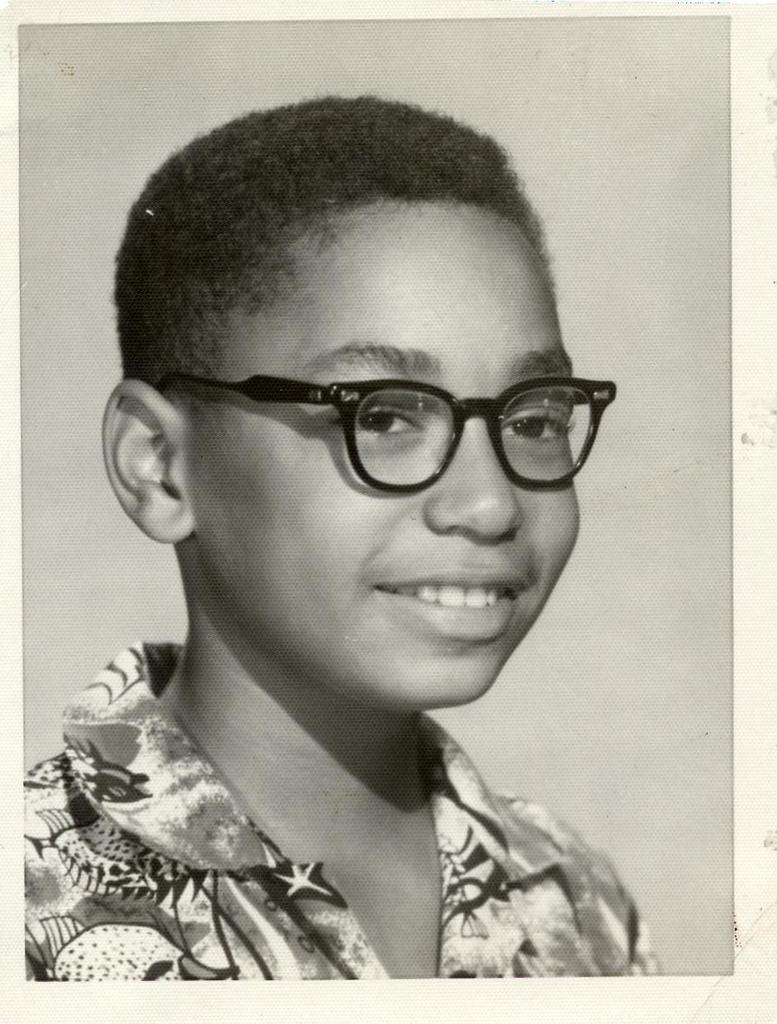
One of those early parental miscalculations ...
that will always haunt me was a decision I made during the construction of our home. The building period spanned from early spring to around November of that year. Rick was in third grade in a Berkeley elementary school where he was doing so well that there were suggestions from his teacher that we begin to think of having him skip the next grade and enter fourth grade on probation in the fall. I knew that we would be moving to the Walnut Creek school system in late fall so that had to be a consideration in just how the transition would be managed. In the new school he proved to be working at grade level. The differences in educational levels between the innercity and suburban schools surfaced immediately.
Mel and I (I, actually) decided that the least disruptive way to deal with the problem would be to register him at Parkmead Elementary in Walnut Creek for the fall semester and have him ride out each morning with his Dad while the house was being completed. Sensible solution, right? No. Disastrous as it turned out.
This 8 year-old was being dropped off each day into a hostile world of children who were expressing all of the venomous racism that was being freely expressed around their dinner tables each night -- ugliness that the adults in their lives were not honest enough to show publicly to Rick's parents. It must have been horrendous. Poor little guy never mentioned it, and I was too pregnant and pre-occupied with toddler Bobby and the house-building to even be aware of his pain. It had all seemed so logical, sans the race element. After all, the kids on our block had overcome their feelings of discomfort with us long before their parents had.
Sometime in the late fall I attended a parents night at school and was asked by the principal just why I'd enrolled my child in his school when I didn't live in the district? We'd moved into the new home that October, so the question held no relevance, but the principal's inability to meet my gaze suggested that his question was being asked due to pressure from other parents. Rick was the only black child in the school. We were only the second black family in the entire valley at that time. We were breaking new ground, reluctantly, but with a growing defiance and a feeling of entitlement -- but those strong feeling were not yet fully matured. There were still times when I wasn't all that sure that we were right ... .

Parkmead figured powerfully some time later when Marian Powelson, a sympathetic neighbor, mentioned that she'd picked up a flyer advertising a minstrel show fundraiser being staged at the school. We were both horrified at the thought, but didn't have a clue about how to deal with it. The image of white people in black-face, kinky wigs, with huge white painted lips was just too impossible to imagine. This could only happen in an all-white suburban community. This was a total anomaly in present day America. But I had children in that school (by this time I believe Bobby had entered kindergarten, but I'm not sure of the timing).
Just one day before the big show I drove to the school with no idea of what to do, except that I had to act. I walked into the principal's office and sat down to wait. He was off somewhere, but his costume was hanging over the doorway. He was in the show, as were all members of the faculty. The costume was black and white and bright red polks dots with baggy pants. I could feel my chest tighten ... This was terribly terribly wrong, but I still didn't know why I was so offended.
He walked in -- almost whipped around on his heels at the sight of me -- but turned back and continued into the room. "This is wrong," I said quietly. To his credit, he answered, "I guess you're right, but I didn't know that until I saw you there." "Our faculty loves colored people, and we're only depicting them as the happy people that they are -- with their songs and jokes -- and stuff ...". My answer, "...do I look happy?" "No," says he. "Let's think this out together," says I. "Minstrel shows were originally conceived as ridicule of Negroes, and were never a black thing. They are still that. We can't afford this kind of tradition to follow us through history to continue to heap insult and degradation upon a people, least of all at the hands of educators who, above all of others, should know better." "What would you have me do," asks this man who by now was flush-faced and miserable. I felt sorry for him in that moment. It was clear that he was in a learning place, and that it hurt. He was horribly embarrassed.
I told him that -- with tonight's dress rehearsal at hand and the show only 24 hours away -- I would not ask that they cancel. I did insist, however, that a portion of tonight's rehearsal time be devoted to sharing my concerns. Also served warning that -- tomorrow evening I would be sitting front and center (with the Bessie Gilbert) to see their show. And we did just that.
It was a dreadful evening. Little was gained, I think. The experience was miserable for me. There was as much anger and resentment stirred by my act as enlightenment. I'm certain of that. It did little for my own kids since I found it impossible to talk about most of these things -- never sure that by doing so I wouldn't simply further alienate them from others... .
Only a few weeks later, there was an Aunt Jemima Pancake Feed held by the local Chamber of Commerce at a downtown park.
And ... new friend and neighbor, (very blonde and deeply-tanned) Pat Ringwood, stopped by with the gift of a few cuttings from her garden -- to show me that her tan was now darker than mine!
We were getting there, slowly ;-)
Photo: Dale Richard "Rick" Reid as Parkmead elementary school student in Walnut Creek, California.
Wednesday, December 31, 2003

held unprecedented pain for our young family, it also brought humor that still makes me laugh out loud today when I think back.
One of the most delicious incidents I remember came during the early months after we'd completed the house and moved into the community, officially. It was a very warm midsummer day, one of those days when the smell of wisteria and lilacs sweeten the air and when one could hear the tiny but audible "pops" of seed pods exploding into the heat of the day. I drove the few blocks up to the local store where Al the grocer was the connecting link for much of the neighborhood. He'd always been very warm and helpful whenever I dropped in with my list, and I'm sure tried his best to allay the fears of my new neighbors. His grocery store was, necessarily, one of our first points of contact.
On this day, I was feeling particularly pretty (writes she immodestly), since I was still being very careful to look my very best when leaving the house. I was still striving to (silently) prove my acceptability. I was wearing white shorts against naturally bronzed bare legs and a clingy cotton knit top and leather sandals. I was very much aware of the stir I was causing by my 5'4" cafe au lait dark-haired Creole beauty, but my silence now included a growing confidence that I was blasting apart any stereotypes these glowering folks were entertaining. My physical appearance became a part of my weaponry. There was little else to call upon at the time.
As Al bagged my groceries, he asked with a twinkle in his eye if I'd be willing to drop off a six-pack to a house that was on my way ... "Of course." He or one of his sons often made deliveries so it wasn't unusual. I guessed that other neighbors did the same. But as I drove out of his parking lot, I was sure that Al was on the phone to say, "...she's on her way!" Stopped in front of a modest bungalow on Boulevard Way and before I could ring the doorbell a beer-bellied red-faced trucker-type (confirmed by the huge semi parked in the driveway) pushed open the door to receive the "delivery" from Al. I could hear a baseball game blaring from the television set and guessed that there were others watching from behind the screen door. I imagined that they'd risen for a better look at the "delivery girl." Passed the six-pack to this grinning man at the screen door and could feel the eyes following me back down the driveway to my car, grinningly enjoying every minute of it! Al had scored one for the good of the order. This may have been the day that the spirit of the improvement association began to lose steam. I was surely not their idea of what the much-feared Black Invasion looked like. Shallow times bring shallow victories. Al had enabled testosterone to take over the battlefront, and for the moment it seemed to work. But that introduced other dynamics.
Contrasts:
 With 7 year-old Rick and toddler Bobby and babe-in-arms David, I stopped at a little diner just across Mt. Diablo boulevard from the St. Marys Catholic Church that we attended fairly regularly at the time. It was not a serious return to the faith of my childhood but was one of the few places in our lives where it was possible to be anonymous, and I hungered for that feeling. Rick was involved in catechism classes in preparation for his First Holy Communion and I'd just picked him up. It was around five and the diner was filled with noisy customers. I struggled in with the kids and choose a booth near the back of the place, near the restrooms. After a very long time, the waitress came over -- I assumed to get our order -- but, no. It was not to be. She announced with a grin, "...you'll have to get out of here. We're closing." The rest of the customers had gone silent. Some were also obviously enjoying my misery. It was the dinner hour. The place could not be closing. What was happening to us was obvious, but it was hard to know how to deal with it with my children looking on, especially Rick who could surely understand. There was nothing to do but gather them up and -- with hot tears scalding my cheeks -- make my way back through the diner and to my car. I felt devastated! Helpless to explain to my children what had just happened, but could feel their fear as they held tightly to my skirt and walked close to my body as we retreated awkwardly. With my arms filled with baby David, it was impossible to hold their hands and give them the reassurance that I would have to pretend. Felt the humiliation of being impotent to defend our rights to be served in a public facility. These were first experiences for this little California girl with no history of the sting of such blatant bigotry. This was before the passage of the Civil Rights Acts and shared rest rooms and drinking fountains, but this was not Mississippi, but California. How could this be? This was my home over a lifetime, and that of my children.
Bessie Gilbert, my good Mormon friend -- also new to the community, saw me pull into the driveway sobbing. She quickly left her trailer and dashed over to be of comfort. "This is what you've chosen for yourself, Betty Reid." "They were wrong, but this is what life will be like if you don't get tough and deal with this sinfulness right now!" Bless Bessie. She sobbed right along with me at the unfairness of it all, but this good woman (she was much older than I and a good 6 feet of solidly-built "pioneer" woman from Utah) was ready to take on the world in support of the Reids from that day forward, and that she did.
I began to develop a thicker skin after a time, and a new sensitivity that would protect us from potential painful incidents. My antenna picked up earlier signals, and by so doing lent more protection. Having Bessie and Al Gilbert ready to rescue enabled me to develop a sense of stability and some confirmation of the rightness of our cause. Our families shared occasional meals. Ål traveled a good deal in his capacity as Manager of the National Newspaper Association with offices in San Francisco. Their children, Jimmy and Evelyn, became the close first friends to our three over time. Being homemakers with absent husbands in common gave our friendship particular meaning. That deeply-religious family served as a base-line against which to measure proper moral conduct. Without them, I'm not sure how I could have maintained any sense of my own worth and would surely have drowned in a sea of irrational hatred.
Little of what our daily life was like was shared between Mel and me. He was working hard in Berkeley to support our new lifestyle -- leaving very early mornings to make the rounds of suppliers -- and getting home exhausted near midnight, six days a week (Wednesdays off, when possible). In this we were not unlike other suburban households, with husbands and wives living very different kinds of lives. In time the callouses began to grow on my psyche, and with the help of the Dinkins and the Gilberts a new kind of growth began to emerge and the responsibility to carry on alone seemed the logical way of survival. The rightness of my position was continually reinforced by my few new friends. In time the neighborhood began to relax and the young Reid's as Threat to Humanity eventually subsided.
The Diablo Valley, while less than 15 miles from Berkeley and perhaps 30 miles from East Oakland where I'd grown up and where my family continued to live, was separated by what I thought of at the time as a row of hills covered by the "Eucalyptus Curtain," that protected white suburban Californians from the older more racially diverse cities I'd grown up in. That's still true. Little has changed despite a huge population growth and a continuing climb into upper economic status. The psychological distance eventually outran the physical distance, and in time it became impossible to exist on that bridge of connection. Years later it would become necessary to make the choice to not live a life of ambiguity. Conditional equality of that kind is far too costly to the soul, yet the riches garnered from having lived through the challenges can't be denied. I would not have missed a minute of it, and continue to draw upon those years as background to my work in the political arena in these tumultuous times. It will take more than Ahnold to push me off my center, much more.
Then there was the Parkmead Elementary School Minstrel Show... .
Next time ....
Tuesday, December 30, 2003

Back to yesterday ...
In those early years, Mel and I worked out a coping strategy that allowed for him to be free enough to hold down his job as playground director at San Pablo Park during the day -- where he'd follow in the footsteps of Red, his old athletic mentor. He worked on the swing shift at the shipyards as a "trainee" and spent weekends playing quarterback for the Oakland Giants, and -- eventually -- for the Honolulu Warriors of the Pacific Coast Football league that pre-dated the NFL-AFL (Raiders/Niners). He was just about ten years too early, but was headlining the sports pages regularly.
I was the stay at home wife and mother -- who worked long hours in our little music store. Don't remember resenting the arrangement since I was fulfilling "woman's role" as it was expected in those days, making life possible for my husband. It was what we did. Funny, I thought of it as his business at the time, and saw myself in a supporting role, never one of equality.
Rick spent his early years in a playpen next to the cash box and record racks and eventually became adept at working the turntable and making change. When he was about five I became pregnant for the first time with Bobby arriving on time and beautiful! It had been a long wait after years of hoping for such a miracle. Started to immediately plan for my next delivery -- David followed less than three years later. Now it was time to do some major planning for the next phase in our marriage. It was time to build that dream house and get on with the business of mothering.
The demands of parenting began to make necessary Mel's cutting back and taking over the reins of his store while I began to pour over House Beautiful and Sunset Magazines, to think about floor plans and building materials, and to consider hiring the architect and interior decorator to do the preliminary designs.
Around this time Mel's father had retired from Wonder Bread Bakeries, Inc., and his parents had purchased an acre in Danville where he could keep a horse or two and create a truck garden as he'd always dreamed. They had a recently-built attractive one-floor ranch home out in the great open spaces of the Diablo Valley. We'd grown to see this as the perfect setting in which to raise our own growing family. Visiting them meant driving past miles of open land and thinly-developed suburban countryside. Each Sunday was dream-time, and after many months, we found just the spot we would buy, a half-acre bordered by a major creek, with about five sturdy old oaks and many fruit trees. It also had an old abandoned swimming pool (quite large) in the center. This was the final deciding factor for Mel. I recall having misgivings at the time about just how I could live with a pool and two-and-a-third children to keep up with, but this was not negotiable for Mel. This was his land.
What we hadn't counted on was the fact that -- in the real estate world -- by tacit agreement, a "string" had been dropped around those areas of the city where blacks were going to be allowed to live. It was pretty much limited to where blacks were already living. That meant that -- though we had business accounts in both Wells Fargo and the Bank of America -- neither bank would grant us a home loan to make the purchase of the site in the Diablo Valley. In fact, even in Berkeley, we learned that we could not get loans to buy any property above Grove Street, a main thoroughfare that ran from Oakland to Berkeley. African/Americans could only purchase homes between Grove Street and the Bay, and not above Dwight Way to the north. (If you don't know the area this doesn't make sense, I'm sure). There were no large open sites in the city except in the hill areas where Blacks were not permitted to build. Blacks were consigned to what are now referred to as "The Flat Lands."
How on earth do you account then for a young wife and mother who had taken her cues from House Beautiful and Architectural Digest -- whose dream house could not be constructed anywhere that "Gentlemens Agreements" had decided she could buy? We were financially able to afford our dreams, and those dreams were not unlike those of any other young western couple.
The only way that we could make the purchase of the plot we chose was to get Dorothy Wilson, (white) wife of Oakland's (African-American) Mayor, Lionel Wilson (he was a judge of the Superior Court at that time) to buy it for us. Lionel and Mel played semi-pro baseball together and were longtime friends. Meanwhile, I chose a local (Lafayette) architect, Sewell Smith, who was a highly-principled Quaker and a total stranger to begin to draft plans for our new redwood home on that lovely wooded ground.
Rumors began to fly. Threatening letters began to arrive. The architect was challenged. I'm assuming that our Berkeley address had been given out by the permitting offices at the county seat. As soon as the lumber trucks began to deliver stacks of boards for framing, the real threats began to come. "We'll burn every goddamned piece of wood you bring here. Beware!" It was terrifying... .
My (builder) Dad acted as contractor while Mel and several hired workers handled the construction. Having third-grader Rick and not yet 3 year-old Bobby to deal with and David on the way pretty well limited my participation except for monitoring progress. The house was being constructed over late spring and early summer. The weather was extremely hot with many days over 100 degrees. that meant that I usually drove out to the site in the early evenings -- before sundown -- to see how things were going. For the first few months one would have thought that no one lived on the block. I was aware of unseen eyes behind curtains up and down the road, but only interacted with an occasional curious child.
Over the six or so months while the four-bedroom lovely home with the large sundeck was shaping up, just before dark, a car would slow on the road -- usually a woman behind the wheel -- would stop and say, "...I'm Mrs. So-and-so. You may find that people around here are not too friendly, but if ever you should need to -- I live just down the road at ...".My very obvious pregnancy must have softened a few hearts over time. Over the months, most had done as much. The hate they were capable of en masse they were obviously incapable of individually. Interesting. In time the furor died away, but the harm had been irrevokably done.
We learned that the local improvement association had been meeting in extended sessions trying to find a way to halt our construction, or to stem the tide of what was obviously the "Invasion of the Black People." After all, the suburbs were at that time undergoing a building boom for the many more successful warworkers who were caught up in "White Flight" from the inner cities -- and here we were bucking the trend. Mel and I were just a couple of Californians with a long history in the area (remember, Mel's family came during the Civil War), who were just as confused and disoriented by the social changes as anyone else and seeking the same kind of lifestyle for our children as they. How dare they! But dare they did.
A local artist whose property bordered ours on the east was the first to approach me shortly after we moved in. David was but a few months old by then. Edith Dinkin and her husband invited us to an occasional gathering in her studio, and occasionally during the day when the kids were napping, we set up our easels creekside and she would give me painting lessons. It was a brave act on her part.
We'd purposely chosen a site in an unincorporated area just outside the city limits where I'd expected to find more individuality and less group-think. The homes were large and small, architect-designed and owner-built as well. There was a converted chicken shack across the road, next door to an attractive ranch house with shake roof and stone patio, etc. There was a Mormon couple with two kids, Al and Bessie Gilbert, who lived on their site in a trailer while they built their new home one board at a time.
The year after we moved in Dr. Harvey Powelson, a psychiatrist with a wife and 5 young kids built a home about a block away. I later learned that the Powelsons had chosen that site precisely because we were there, and would give their kids some "diversity" in their lives and erase some of the homogeneity of the burbs. There were so many opposing dynamics to contend with. It was oppressive to have become "the Negro family" of a resistant neighborhood, in time we all survived.
Over that first year or so my only response had been one of silence. I was troubled and confused, and certainly not used to being rejected on such a scale. I was also alone with the problems. Once the house was completed, Mel had gone back to work in the store and to life in Berkeley. The day-to-day life of adjustments to this highly irrational situation took its toll. I'd said nothing to my family or city friends about what as happening to us since my pride just wouldn't allow it. I had to make this work.
I can recall the day it started to turn around and I found my voice. It was the day that a very high profile attorney, Bob Condon, and his wife (just around the bend in the road and across the creek) Eleanor (the ceramist, decided to hold a dinner for the community. "We can take care of all this anger if they just have a chance to meet you two," says Bob. (Ungrateful!) my response was, "...no one is going to hold a dinner in order to show this community that I'm acceptable. They have every right to not want me here. What they do not have is any control over my being here!" "It is not true that one of their rights is the right to deny me mine!" This was about six months into silently hoping that we wouldn't be burned alive in our beds. "How dare they!" Poor Bob didn't expect this outburst, but was smart enough to see that it was coming straight up from my shoes and after months of unspeakable fear. He was not insulted, but allowed me the pride of defending myself. I could not have the Condons guaranteeing my acceptability. No one had that right or obligation. Along with the Dinkins, the Condons and the Powelsons became my friends and supporters. I owe them much. They befriended me with a sense of equality and not one bit of condescension. It was a brave beginning, and there were many new friendships in the years to follow, some that persist to this day.
More to follow...
Photo: Taken on the occasion of Dorian Leon Reid's dedication service at the Mt. Diablo Unitarian-Universalist Fellowship in a small bungalow on Pine Street in Walnut Creek, CA.
Saturday, December 27, 2003
Just scanned the packet ...
for the Democratic Central Committee's session mid-January (I'm serving as a delegate from the 14th Assembly District) and discovered that the presidential candidates are not on the program. It will just be the work of creating the platform and debating the issues -- at least as they've surfaced here in Northern California. You'll want to remember that the two ends of this state are very different, politically. And the Greater Bay Area is light years away from the rest of Northern Cal where the rural areas reflect more conservative views. The best we can hope for is that maybe we'll neutralize Orange County. But then Orange County used to be the realm of ultra-conservative Bob Dornan and is now represented by two Latinas, the Sanchez sisters. The population has seen a dramatic demographic change. Maybe how California will lean has yet to be determined. Since we lost the governorship, all bets are off. Not sure what it will mean over time. Maybe Ahnold is just a hiccup on the body politic. Let us pray... .
I'm betting that -- whether they play official roles or not -- as many presidential candidates as can make it will be there. California is still the largest state in the union, and can't be ignored.
Have been wondering what the conversations around the various Kennedy dinner tables are like these days? Maria has tossed the family a curve, hasn't she? Her strong role in her husband's campaign and in the putting down of the harassment charges were key to his victory and she continues to be the plus factor in getting his programs across. That strange picture of the Shrivers and various and sundry Democrat relatives standing beside the Ahnold and Maria on election night still lingers in my head.
This should be a very interesting gathering. It will be interesting to see how the state leadership is handling the craziness.
Meanwhile ...
for the Democratic Central Committee's session mid-January (I'm serving as a delegate from the 14th Assembly District) and discovered that the presidential candidates are not on the program. It will just be the work of creating the platform and debating the issues -- at least as they've surfaced here in Northern California. You'll want to remember that the two ends of this state are very different, politically. And the Greater Bay Area is light years away from the rest of Northern Cal where the rural areas reflect more conservative views. The best we can hope for is that maybe we'll neutralize Orange County. But then Orange County used to be the realm of ultra-conservative Bob Dornan and is now represented by two Latinas, the Sanchez sisters. The population has seen a dramatic demographic change. Maybe how California will lean has yet to be determined. Since we lost the governorship, all bets are off. Not sure what it will mean over time. Maybe Ahnold is just a hiccup on the body politic. Let us pray... .
I'm betting that -- whether they play official roles or not -- as many presidential candidates as can make it will be there. California is still the largest state in the union, and can't be ignored.
Have been wondering what the conversations around the various Kennedy dinner tables are like these days? Maria has tossed the family a curve, hasn't she? Her strong role in her husband's campaign and in the putting down of the harassment charges were key to his victory and she continues to be the plus factor in getting his programs across. That strange picture of the Shrivers and various and sundry Democrat relatives standing beside the Ahnold and Maria on election night still lingers in my head.
This should be a very interesting gathering. It will be interesting to see how the state leadership is handling the craziness.
Meanwhile ...
Joy to the World -- and to us, too ... !
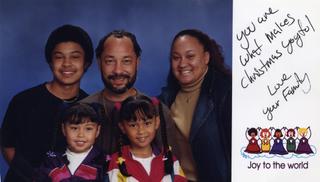
In a rare show of being overwhelmed, I must admit that this year I surely overtaxed my strengths. The Christmas holiday was wonderful with my three kids and theirs all sharing in the festivities. Dinner was great (thanks Jenny for the support). Alayana and Tamaya were resplendant in their new "grandma dresses" despite my feeling of having inflicted old values of traditional Scotch plaid dresses with black velvet collars and cuffs and tiny gold buttons in the age of Brittany Spears! David had warned me that if I bought clothing -- "the girls prefer items with logos on them(!)." I hate things with names on them, and see such items as the ultimate in consumer branding -- of consumers! All in all, it was a wonderful day.
Pacing myself as we approach the end of the year and the beginning of the next will be important. In that respect I may have over-committed myself, and that's surely the reason I'm feeling drained. Will have another few days off during which time I will write a 15-minute speech to be delivered on January 15th at the Walnut Creek Martin Luther King Birthday celebration. Will serve as a delegate to the State Central Committee of the Democratic Party Meeting at the San Jose Convention Center January 16-18. Pretty tight planning. All of the candidates will appear before us again. They were presented in July when we met in Sacramento. I suspect that some will drop out of the race after this appearance, and only the top 3-5 will continue on in the primaries. Important meetings that I'm looking forward to. There are a couple of platform issues I'm interested in.
Meanwhile, there is the on-going need to get ready for Loni's new campaign for the Assembly. It doesn't seem possible that she is already running for a second term. We've hardly gotten into stride in her first. She'll be challenged in the March primary by two other aspirants (both male), but neither seems like a serious contender. Nonetheless, it will mean a change in the rhythm of the work. In addition there are the new budget battles to be waged between the new governor and both houses of the legislature.
Not sure what you know from reading the press, but the governor satisfied his base by removing the Vehicle License Fees. That meant that funding that went to the cities for police and fire departments, and other city services evaporated quite suddenly, throwing the cities into chaos. The VLF, when adopted under Pete Wilson, was intended to be temporarily reduced because we were then living in the bubble created by the development of the technological age in California. There was an understanding that -- while the state was running a surplus -- it would do no harm to return some moneys to the taxpayers instead of holding it in the state treasury. The other stipulation was that -- if the state's financial situation was to drastically change downward -- the VLF would be restored. That part has been ignored.
The governor under his promise to not raise taxes, ran for office against Davis on the promise to return the VLF to its pre-bubble status and, in addition, he would "search out waste in the system, and make significant cuts in order to force the legislature to live within its limits as determined by revenues." Crazy stuff! He did the VLF thing, announced severe cuts in essential services to the handicapped and those living in poverty as a way of making up the difference, but this brought on such a roar at the capital that he quickly backed away from at least the threatened lawsuits from mayors thoughout the state. The developmentally disabled -- after learning that this entire segment of the society was being heavily defunded -- quickly organized and marched on Sacramento.
The cities have been temporarily spared the painful cuts of closing fire stations and libraries and reducing policing, but the 4 billion dollars the governor had restored to the treasury by the restoration of the VLF now has to be found elsewhere. Since he restored the funds to the cities by executive order only hours after the legislature had recessed for the holidays (as if he had somehow ridden in on a white horse and saved them from an emergency he, himself, had created), he is now faced with a Senate and Assembly that will have to okay his proposed budget cuts. It's hard to tell whether he is extremely clever or resoundingly stupid. I'm guessing that it's a bit of each.
Just thinking about getting my affairs in order for the upcoming year, looking at my in-basket at the office and the newsletter I'm being asked to begin to pull together as a quarterly distribution for our Assembly District, the continuing unfolding of the Barbara Alexander Academy drama, the many environmental projects I'm not responsible for -- but do monitor regularly, the Alameda County Disabilities Council activities that will surely become more strident and demanding as the budget cuts begin to effect services to this most vulnerable population (and this hits home because of Dorian).
It's becoming increasingly difficult to see how the times we're living in can be much worse. I'm terrified of the quality of leadership we're living under, at both state and national levels. The drum beat of negatives being vomited out into the world day after day is sickening. The effects of the FCCs failure to reign in the Rupert Murdocks and the other media moguls has resulted in a deepening reliance on the Internet for truth -- and "truth" comes in so many confusing forms that there are times when the feeling of being crushed under by things beyond personal control is terrifying.
I'm beginning to feel so de-sensitized of late that the "orange alert" didn't do a thing to me but give a sense of annoyance. "You may be hit by a flying airliner, but -- what the hey -- we'll see that you're safe. Just get out there and shop!" "Your friendly Homeland Security operators have everything in hand, guys." But now let me tell you about this Mad Cow thing ... and there's the flu (promises to be worse than usual this year and we're not sure we made the right vaccine) ... and then there are the earthquakes and mudslides. Have to keep reminding myself that most of these tragedies have been happening since the beginning of time -- in one form or another -- and that the only thing that's really changed is our inability to not know about each and every one of them, within seconds of their occurrence. Taking into account that -- given the tremendous growth in world population -- the number of such tragedies is hitting us like a tidal wave! And now that we have a media system bent upon distracting us from the things that really matter, these tragedies and threats will be drawn from anywhere on the planet to feed our fears and keep us from questioning too closely those who have chosen to lead us.
So much to ponder ...
Maybe this will be the year that I adjust my sails toward new directions, and head for calmer waters. It's a little like bull-riding, I guess. There are surely days when I'd like to just let go, but feel like the moment I do -- I'll lose control and be tossed! Then I may find that the calm was simply the eye of the hurricane, with more rough seas ahead... .
Enough mixed metaphors to last 'til New Years Day.
Photo: Rhico, David, Kokee, and below them, Tamaya and Alyana - Reid (descendants of Breaux-Allen-Charbonnet-Reid).

In a rare show of being overwhelmed, I must admit that this year I surely overtaxed my strengths. The Christmas holiday was wonderful with my three kids and theirs all sharing in the festivities. Dinner was great (thanks Jenny for the support). Alayana and Tamaya were resplendant in their new "grandma dresses" despite my feeling of having inflicted old values of traditional Scotch plaid dresses with black velvet collars and cuffs and tiny gold buttons in the age of Brittany Spears! David had warned me that if I bought clothing -- "the girls prefer items with logos on them(!)." I hate things with names on them, and see such items as the ultimate in consumer branding -- of consumers! All in all, it was a wonderful day.
Pacing myself as we approach the end of the year and the beginning of the next will be important. In that respect I may have over-committed myself, and that's surely the reason I'm feeling drained. Will have another few days off during which time I will write a 15-minute speech to be delivered on January 15th at the Walnut Creek Martin Luther King Birthday celebration. Will serve as a delegate to the State Central Committee of the Democratic Party Meeting at the San Jose Convention Center January 16-18. Pretty tight planning. All of the candidates will appear before us again. They were presented in July when we met in Sacramento. I suspect that some will drop out of the race after this appearance, and only the top 3-5 will continue on in the primaries. Important meetings that I'm looking forward to. There are a couple of platform issues I'm interested in.
Meanwhile, there is the on-going need to get ready for Loni's new campaign for the Assembly. It doesn't seem possible that she is already running for a second term. We've hardly gotten into stride in her first. She'll be challenged in the March primary by two other aspirants (both male), but neither seems like a serious contender. Nonetheless, it will mean a change in the rhythm of the work. In addition there are the new budget battles to be waged between the new governor and both houses of the legislature.
Not sure what you know from reading the press, but the governor satisfied his base by removing the Vehicle License Fees. That meant that funding that went to the cities for police and fire departments, and other city services evaporated quite suddenly, throwing the cities into chaos. The VLF, when adopted under Pete Wilson, was intended to be temporarily reduced because we were then living in the bubble created by the development of the technological age in California. There was an understanding that -- while the state was running a surplus -- it would do no harm to return some moneys to the taxpayers instead of holding it in the state treasury. The other stipulation was that -- if the state's financial situation was to drastically change downward -- the VLF would be restored. That part has been ignored.
The governor under his promise to not raise taxes, ran for office against Davis on the promise to return the VLF to its pre-bubble status and, in addition, he would "search out waste in the system, and make significant cuts in order to force the legislature to live within its limits as determined by revenues." Crazy stuff! He did the VLF thing, announced severe cuts in essential services to the handicapped and those living in poverty as a way of making up the difference, but this brought on such a roar at the capital that he quickly backed away from at least the threatened lawsuits from mayors thoughout the state. The developmentally disabled -- after learning that this entire segment of the society was being heavily defunded -- quickly organized and marched on Sacramento.
The cities have been temporarily spared the painful cuts of closing fire stations and libraries and reducing policing, but the 4 billion dollars the governor had restored to the treasury by the restoration of the VLF now has to be found elsewhere. Since he restored the funds to the cities by executive order only hours after the legislature had recessed for the holidays (as if he had somehow ridden in on a white horse and saved them from an emergency he, himself, had created), he is now faced with a Senate and Assembly that will have to okay his proposed budget cuts. It's hard to tell whether he is extremely clever or resoundingly stupid. I'm guessing that it's a bit of each.
Just thinking about getting my affairs in order for the upcoming year, looking at my in-basket at the office and the newsletter I'm being asked to begin to pull together as a quarterly distribution for our Assembly District, the continuing unfolding of the Barbara Alexander Academy drama, the many environmental projects I'm not responsible for -- but do monitor regularly, the Alameda County Disabilities Council activities that will surely become more strident and demanding as the budget cuts begin to effect services to this most vulnerable population (and this hits home because of Dorian).
It's becoming increasingly difficult to see how the times we're living in can be much worse. I'm terrified of the quality of leadership we're living under, at both state and national levels. The drum beat of negatives being vomited out into the world day after day is sickening. The effects of the FCCs failure to reign in the Rupert Murdocks and the other media moguls has resulted in a deepening reliance on the Internet for truth -- and "truth" comes in so many confusing forms that there are times when the feeling of being crushed under by things beyond personal control is terrifying.
I'm beginning to feel so de-sensitized of late that the "orange alert" didn't do a thing to me but give a sense of annoyance. "You may be hit by a flying airliner, but -- what the hey -- we'll see that you're safe. Just get out there and shop!" "Your friendly Homeland Security operators have everything in hand, guys." But now let me tell you about this Mad Cow thing ... and there's the flu (promises to be worse than usual this year and we're not sure we made the right vaccine) ... and then there are the earthquakes and mudslides. Have to keep reminding myself that most of these tragedies have been happening since the beginning of time -- in one form or another -- and that the only thing that's really changed is our inability to not know about each and every one of them, within seconds of their occurrence. Taking into account that -- given the tremendous growth in world population -- the number of such tragedies is hitting us like a tidal wave! And now that we have a media system bent upon distracting us from the things that really matter, these tragedies and threats will be drawn from anywhere on the planet to feed our fears and keep us from questioning too closely those who have chosen to lead us.
So much to ponder ...
Maybe this will be the year that I adjust my sails toward new directions, and head for calmer waters. It's a little like bull-riding, I guess. There are surely days when I'd like to just let go, but feel like the moment I do -- I'll lose control and be tossed! Then I may find that the calm was simply the eye of the hurricane, with more rough seas ahead... .
Enough mixed metaphors to last 'til New Years Day.
Photo: Rhico, David, Kokee, and below them, Tamaya and Alyana - Reid (descendants of Breaux-Allen-Charbonnet-Reid).
Sunday, December 21, 2003

a 6-footer, full, with that lovely pine scent that does more for ringing in the season that all of the fake Santa's in the world.
As it is with every holiday season, I thought today of Mel and the family Christmases of old, and of how much -- despite all -- we loved one another. Where we may have failed at marriage, we were loving parents and what there was to build upon was reinforced year after year by the parental love we shared. He was a doting though often absent father, but one whose life was spent in trying to grant the wishes of his kids and their mother. Whoever said that couples should not stay together for the sake of the children may not have had it right, after all. There were obvious sacrifices, but we drew enough love from being parents to hold us together for many years. That we would eventually separate as they began to spread their wings was predictable, but those were certainly not wasted years. I regret not one year of that experience. I remember him with love and longing that it might have ended differently ... .
We never really negotiated how we would spend our lives together, but gradually drifted into a kind of sibling relationship that was made up of all of the best qualities of friendship and a good deal of respect for one another. I learned to never question his fidelity -- to not expect too much -- and to enjoy those places where we were comfortable with one another, and ignore what couldn't be changed.
We wanted for nothing that money could buy. I can hardly remember a time when Mel didn't anticipate our needs and fulfill them to the best of his ability. He personified the "provider" that his father had modeled for all those years.
I must have been difficult for him, often remote and moody. Rick's homosexuality was clear from a very early age, and that certainly must have created deep anxiety for this very masculine father. We never did actually talk about Dorian's retardation. He provided me with all that I needed to care for her, but didn't seem to be able to face up to her disabilities. His busyness that grew over the years served to allow me the freedom to bring up our kids in total freedom. He rarely interfered with my decisions about the children, and in looking back, some of those were surely questionable.
It may seem strange to others, but our friendship outlived our marriage by at least ten years. In his final years, though I was remarried to another -- I drove him to his doctor's appointments and saw to it that he had food and care (he died living in poverty -- an amputee from the ravages of diabetes). My second husband, Bill, and I were at his hospital bedside when he returned from surgery. I didn't want him to awaken to a lost limb -- alone.
Though there was certainly loneliness and sorrow in that first marriage, I can't imagine having not lived it. I was lucky enough to have loved two men in my life. Both entered it at the right time. I learned much from life with Mel. He was a lovingly supportive father, to the best of his ability. There were failings on both our parts, but triumphs as well. The challenges were great, but for the most part we survived them. Maybe his was a trajectory that blazed high in the sky over a shorter period of life -- and then he was gone. Mine came much later, but the years I spent with him prepared me for the second half, I believe. It is an incredible second half -- that's still unfolding.
Saturday, December 20, 2003
It may be important to mention the circumstances of Rick's adoption ... .
In keeping with my "good girl" profile, and having fulfilled the strong wishes of my parents, I fully expected to bear my first child nine months and 24 hours after the wedding ceremony. Not so. My older sister, Marjorie, had been married for five years (she was 4 years older than I) but was pregnant with her second child -- and my youngest sister, Lottie, who was 4 years younger had married at 17 and was also expecting her first. I had been -- up to that point -- unable to conceive. In my early twenties, having two sisters pregnant and feeling barren, I started to explore adoption. Mel was less than enthusiastic. After all, he had plans to create his business and I would be the on site "employee," so this was an impediment to his ambitions.
He'd added another job to his schedule, that of working with Aldo Musso, the man from whom we'd bought our home. Musso owned a juke box route and hired Mel to service his locations with records and make the collections. The difficulty in finding the kind of music that the new Californians from the south wanted to hear suggested to Mel that this was a great opportunity to go into business for himself. With his benefactor's support, and a list of national suppliers with race music catalogues, he saw a profitable future ahead.
 But I'd waited impatiently for motherhood to begin, and saw his plans as further postponement of my own dreams. Catholic Social Services announced in January that a child would be available in a month or so, and in March of that year, a nine-day-old little boy was ours. It took only a few hours for Mel to bond with our baby. He was a loving father. My gratitude for his having yielded to my wishes gave me a feeling of indebtedness that hemmed me in and defined my life for many years. I dedicated myself to making real his dream of owning his own business. Thus, began a period of years of standing behind the counter wrestling with diapers (sloshing away in the back of the store in the washing machine), tending to the customers, keeping the books, ordering from catalogs, working with play lists, etc., that ended only after Bob was nearly three (when Rick was seven) and I was pregnant with David. It was then that we started construction on our house in the suburbs, after spending years pouring over House and Garden, Sunset magazine, and Architectural Digest. Little did we know how costly those dreams would be.
Marjorie's son, Lottie's daughter, and Rick all came into the world over a three month period. The Charbonnet girls had delivered on cue. Motherhood was deeply fulfilling. Being a wife was not. The seeds of discontent -- years of feeling overworked and under-loved began to erode my stability.
Mel (we) not only had founded a successful business that more than adequately supported the family, but he'd also enjoyed the freedom and acclaim of being a professional athlete. That life offered travel and freedom from the responsibilities that fell to me. I was the stabilizer. He played quarterback for the Oakland Giants, the Honolulu Warriors, and also continued to play semi-pro baseball. There were other women who invaded our marriage from time to time, that was hard. All the while I managed our little business and gave birth to one more child while raising the first. I both wanted and needed to be out of the store with the time to bring up the children -- away from having to know about Mel's indiscretions. My parents were unsympathetic. "All men have some faults," says mother, "as long as he takes care of you -- you shouldn't complain. That, and the fact that -- as a Catholic -- there was no exit possible. "Adjusting" to the situation was the only possibility open to me. Divorce was unheard of in my family, at least up to that time.
Besides, there was a kind of innocence about Mel. He was always contrite, and I'd become aware early in our marriage that this handsome Adonis was also functionally illiterate, a condition I would recognize much later as a severe case of dyslexia. He hid his problem well. Few knew. He'd compensated by becoming a fine athlete in both baseball and football -- which took him as an All-Star through high school, Sacramento State College, and finally to the University of San Francisco. During his last semester at the University of San Francisco, I'd read and briefed him on his assignments. I was just out of high school at the time. He was a football major with a minor in history. He needed me, and I needed to be needed. In time we grew apart, painfully and with little recognition of how it all happened. In time, I was starved, intellectually, but found that -- since he was actually more comfortable with my family than I was much of the time -- it was easy to see myself as the not-quite-normal one.
There is nothing more tragic than to find oneself at 40 living in a marriage with the quarterback chosen by an 18 year-old! At 40 Mel was still the quarterback but was now operating in a world that required an MBA, and that was eventually this good man's undoing. He surely did his best for us. He more than made up for his deficits by out-working everyone around him. For most of the years of our marriage, he left home in the early morning, and returned at midnight. All of the energy spent in being the best on the gridiron was now applied to his business, and he accomplished miracles, despite all.
I must have been very difficult for him. I was pretty and bright, but a constant reminder of his failings. I was smart enough but it took years to realize that being pretty was all that was required of me in this marriage. The rest was a liability. He slept with a little round flat microphone under his pillow, convinced by someone along the way that -- by using tapes while sleeping -- his brain would take in the lessons of grammar and he would eventually overcome the gaps that plagued him.
I suspect that I did little to support him over time, but lost myself in the world of the suburbs where I was forced to struggle without his emotional support. Mother was right. He did his best to provide well for his wife and children, financially. In time, it simply wasn't enough and we drifted apart. We eventually became strangers, both lost in space, without a clue to what was happening to us.
 Mel hit the heights as his business grew and prospered. For some years he'd been able to provide a few jobs to young people, and his confidence grew. He eventually became a prominent theatrical and concert promoter with clients like Marvin Gaye and Aretha Franklin. He was the original manager of the Edwin Hawkins Singers and traveled to Europe with that choir at the peak of their popularity. He'd given up the outside activities as he grew older and -- with a very capable uncle, Paul Reid, joined him in the business, together they became icons in the music industry. As long as enough money was coming in -- he could move it from place to place. In time, as he lost the exclusivity -- as other such shops began to come into being, more was demanded of him. We simply hadn't had enough generations in the marketplace, and the sophistication needed to hold on to his fortune was missing. Eventually all was lost, but not before our family had grown to include (mentally impaired) Dorian, and my life in Walnut Creek had become more complex and less needful of Mel's presence. I eventually learned to survive without him. There were huge gaps in each of our lives that neither was aware of, by the time we were -- it was simply too late.
Next: The move to Walnut Creek and the 180 degree turn into a new life of unknowns and unexpected growth in new directions ... .
Right photo: The late Dale Richard Reid (nee Galvin), adopted son and our eldest child. He was eleven when this picture as taken.
Left photo: Mel with Aretha Franklin. She's only sixteen here and in town with her father, Rev. C.L. Franklin who was brought to the Bay Area for one of Mel's giant gospel shows at the Oakland Auditorium Arena. Aretha was presented as simply one of the acts in the otherwise Rev. Franklin event.
In keeping with my "good girl" profile, and having fulfilled the strong wishes of my parents, I fully expected to bear my first child nine months and 24 hours after the wedding ceremony. Not so. My older sister, Marjorie, had been married for five years (she was 4 years older than I) but was pregnant with her second child -- and my youngest sister, Lottie, who was 4 years younger had married at 17 and was also expecting her first. I had been -- up to that point -- unable to conceive. In my early twenties, having two sisters pregnant and feeling barren, I started to explore adoption. Mel was less than enthusiastic. After all, he had plans to create his business and I would be the on site "employee," so this was an impediment to his ambitions.
He'd added another job to his schedule, that of working with Aldo Musso, the man from whom we'd bought our home. Musso owned a juke box route and hired Mel to service his locations with records and make the collections. The difficulty in finding the kind of music that the new Californians from the south wanted to hear suggested to Mel that this was a great opportunity to go into business for himself. With his benefactor's support, and a list of national suppliers with race music catalogues, he saw a profitable future ahead.
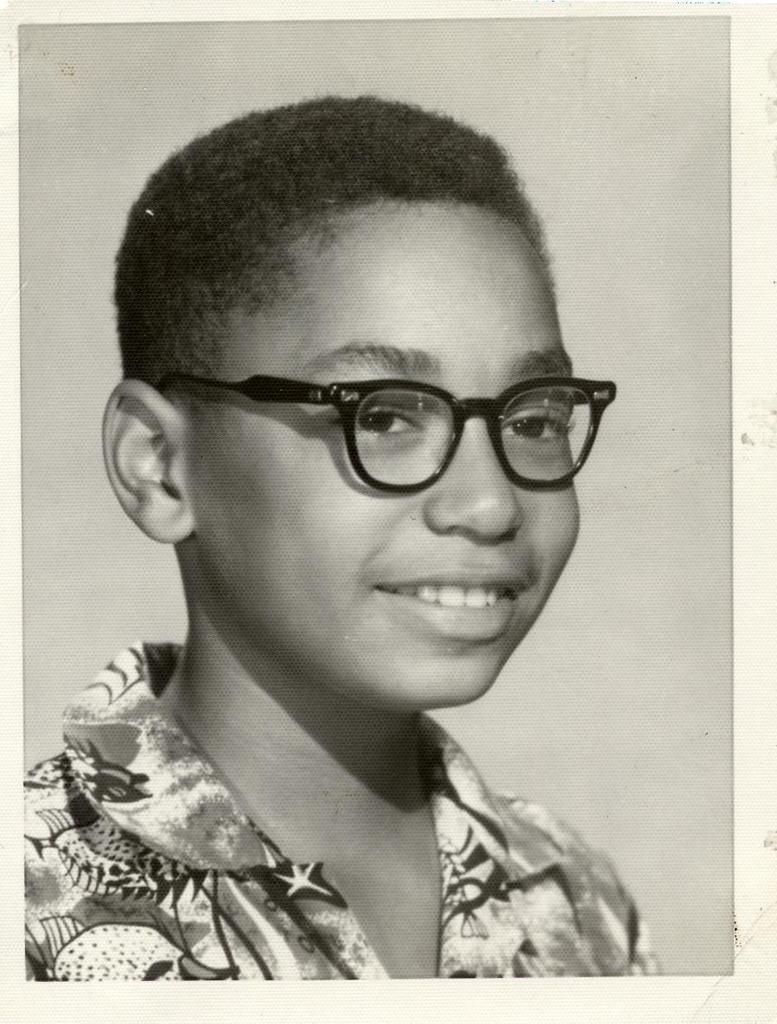 But I'd waited impatiently for motherhood to begin, and saw his plans as further postponement of my own dreams. Catholic Social Services announced in January that a child would be available in a month or so, and in March of that year, a nine-day-old little boy was ours. It took only a few hours for Mel to bond with our baby. He was a loving father. My gratitude for his having yielded to my wishes gave me a feeling of indebtedness that hemmed me in and defined my life for many years. I dedicated myself to making real his dream of owning his own business. Thus, began a period of years of standing behind the counter wrestling with diapers (sloshing away in the back of the store in the washing machine), tending to the customers, keeping the books, ordering from catalogs, working with play lists, etc., that ended only after Bob was nearly three (when Rick was seven) and I was pregnant with David. It was then that we started construction on our house in the suburbs, after spending years pouring over House and Garden, Sunset magazine, and Architectural Digest. Little did we know how costly those dreams would be.
Marjorie's son, Lottie's daughter, and Rick all came into the world over a three month period. The Charbonnet girls had delivered on cue. Motherhood was deeply fulfilling. Being a wife was not. The seeds of discontent -- years of feeling overworked and under-loved began to erode my stability.
Mel (we) not only had founded a successful business that more than adequately supported the family, but he'd also enjoyed the freedom and acclaim of being a professional athlete. That life offered travel and freedom from the responsibilities that fell to me. I was the stabilizer. He played quarterback for the Oakland Giants, the Honolulu Warriors, and also continued to play semi-pro baseball. There were other women who invaded our marriage from time to time, that was hard. All the while I managed our little business and gave birth to one more child while raising the first. I both wanted and needed to be out of the store with the time to bring up the children -- away from having to know about Mel's indiscretions. My parents were unsympathetic. "All men have some faults," says mother, "as long as he takes care of you -- you shouldn't complain. That, and the fact that -- as a Catholic -- there was no exit possible. "Adjusting" to the situation was the only possibility open to me. Divorce was unheard of in my family, at least up to that time.
Besides, there was a kind of innocence about Mel. He was always contrite, and I'd become aware early in our marriage that this handsome Adonis was also functionally illiterate, a condition I would recognize much later as a severe case of dyslexia. He hid his problem well. Few knew. He'd compensated by becoming a fine athlete in both baseball and football -- which took him as an All-Star through high school, Sacramento State College, and finally to the University of San Francisco. During his last semester at the University of San Francisco, I'd read and briefed him on his assignments. I was just out of high school at the time. He was a football major with a minor in history. He needed me, and I needed to be needed. In time we grew apart, painfully and with little recognition of how it all happened. In time, I was starved, intellectually, but found that -- since he was actually more comfortable with my family than I was much of the time -- it was easy to see myself as the not-quite-normal one.
There is nothing more tragic than to find oneself at 40 living in a marriage with the quarterback chosen by an 18 year-old! At 40 Mel was still the quarterback but was now operating in a world that required an MBA, and that was eventually this good man's undoing. He surely did his best for us. He more than made up for his deficits by out-working everyone around him. For most of the years of our marriage, he left home in the early morning, and returned at midnight. All of the energy spent in being the best on the gridiron was now applied to his business, and he accomplished miracles, despite all.
I must have been very difficult for him. I was pretty and bright, but a constant reminder of his failings. I was smart enough but it took years to realize that being pretty was all that was required of me in this marriage. The rest was a liability. He slept with a little round flat microphone under his pillow, convinced by someone along the way that -- by using tapes while sleeping -- his brain would take in the lessons of grammar and he would eventually overcome the gaps that plagued him.
I suspect that I did little to support him over time, but lost myself in the world of the suburbs where I was forced to struggle without his emotional support. Mother was right. He did his best to provide well for his wife and children, financially. In time, it simply wasn't enough and we drifted apart. We eventually became strangers, both lost in space, without a clue to what was happening to us.
 Mel hit the heights as his business grew and prospered. For some years he'd been able to provide a few jobs to young people, and his confidence grew. He eventually became a prominent theatrical and concert promoter with clients like Marvin Gaye and Aretha Franklin. He was the original manager of the Edwin Hawkins Singers and traveled to Europe with that choir at the peak of their popularity. He'd given up the outside activities as he grew older and -- with a very capable uncle, Paul Reid, joined him in the business, together they became icons in the music industry. As long as enough money was coming in -- he could move it from place to place. In time, as he lost the exclusivity -- as other such shops began to come into being, more was demanded of him. We simply hadn't had enough generations in the marketplace, and the sophistication needed to hold on to his fortune was missing. Eventually all was lost, but not before our family had grown to include (mentally impaired) Dorian, and my life in Walnut Creek had become more complex and less needful of Mel's presence. I eventually learned to survive without him. There were huge gaps in each of our lives that neither was aware of, by the time we were -- it was simply too late.
Next: The move to Walnut Creek and the 180 degree turn into a new life of unknowns and unexpected growth in new directions ... .
Right photo: The late Dale Richard Reid (nee Galvin), adopted son and our eldest child. He was eleven when this picture as taken.
Left photo: Mel with Aretha Franklin. She's only sixteen here and in town with her father, Rev. C.L. Franklin who was brought to the Bay Area for one of Mel's giant gospel shows at the Oakland Auditorium Arena. Aretha was presented as simply one of the acts in the otherwise Rev. Franklin event.
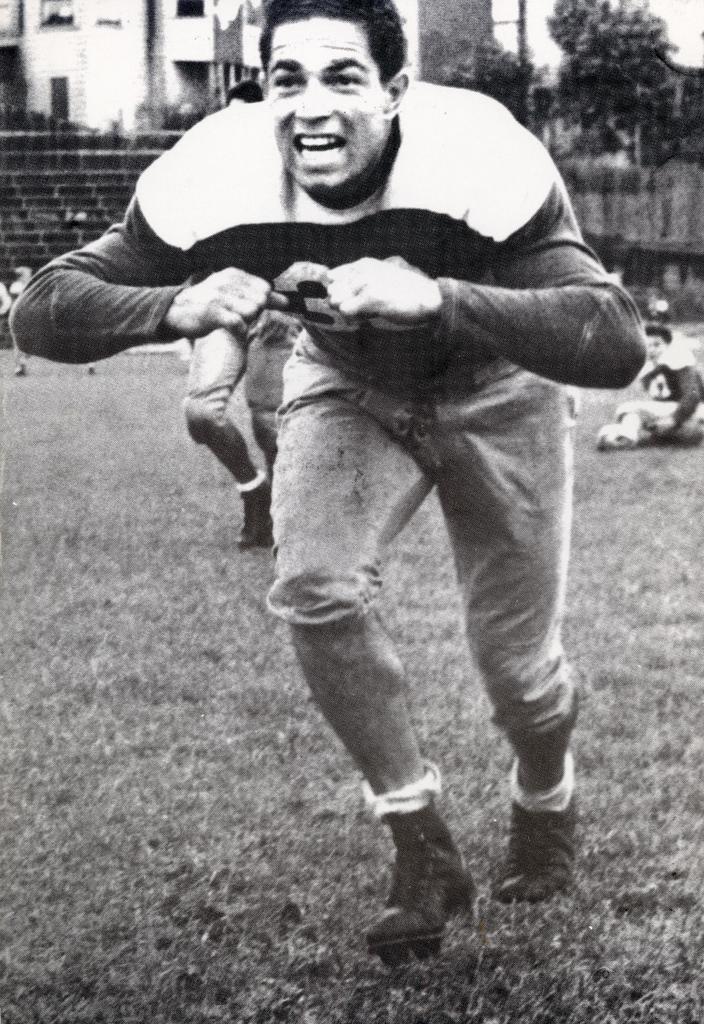
Back to the early years ...
Though Mel and I met in early adolescence, our paths didn't lead to a relationship until we neared young young adulthood (19 and 23). As an extremely handsome all-star quarterback -- in college on an athletic scholarship -- he had been engaged to the lovely daughter of a local dentist (pretty impressive stuff in our group). I'd had a succession of young boyfriends (one that was serious and that I was later to regret having abandoned). My parents adored Mel who showed all signs of being dependable and good husband material, and besides, he was handsome and fair-skinned (top assets among Creole parents). At a time when leaving home was solely dependent upon finding a husband, this was total fulfillment for my parents. There was no thought of education beyond highschool. It would be unfair to say that I was resentful, it was simply the way it was. Success for a girl was a proper marriage. Choice was an unheard of concept.
 At a formal ceremony at St. Bernard's Catholic church on May 24, 1942, we were married by Father Kelly (the second Father Kelly to figure in my life), and started life in Berkeley in a duplex that Mel had managed to save for while attending college (down payment of $750, as I recall). I understood that his former fiance's parents found him inadequate since their wish was that he become a physician (far beyond his capacities) while his ambition was to be a truck driver for Wonder Bread Bakeries (later Continental) where his father had spent his entire working life. Only problem was that -- he was unable to do so because the Teamsters would not accept a non-white in membership.
Which brings me to one of the ironies that later helped to shape my politics:
Thomas Reid, Jr. -- Mel's father -- was employed by Wonder Bread Bakery at the age of 14. He'd left school at that time. He was a shy and kindly hardworking brown-skinned man whom I barely knew. For all of the years -- from that age until he retired at sixty -- he'd worked nights and slept days. And, for all of those years he'd lifted 100 lb. sacks of flour from railroad cars to the dock without ever rising above that duty. I remember my silent fury the evening that we attended his retirement dinner at the huge wholesale bakery and a succession of white men extolled "Tommy" and spoke about how helpful he'd been over all of those years, how "faithful" he'd been, and how grateful they were to him for "helping to orient me to my duties when I entered the firm totally inexperienced -- green...". After all those years, he'd not risen to the status of having a last name. His son (and my young husband) could not become a bread delivery truck driver though everyone had known him from childhood -- attending the annual Christmas parties with his Dad -- and being awed and inspired by the world of the Plant. How sad!

That evening when they handed aging "Tommy" his gold watch, I felt the breath catch in my throat, though to have spoken out would have been unthinkable. I hated those men (and they were all men), with a passion, and added the experience to the many racist incidents that were coming in ugly waves into my life. This coincided with the events of the new "Colored" context that had arrived with the war effort, and with feeling set apart from the world I'd grown up in -- in the relatively racism-free Bay Area.
It was in this climate that Mel and I married and moved into our Berkeley duplex that was situated on a street where the Santa Fe railroad ran right in front of our doorway. We watched untold thousands of warworkers arrive throughout the day and night, hanging out of train windows for their first signs of the "Golden Streets of California." We lived no more than 15 minutes away from their point of arrival. It was as though the ground was visibly shifting beneath our feet with each thundering trainload.
"The South" was arriving under our noses, with white and black folks who -- at that point -- had never shared restrooms or drinking water fountains, or been buried in the same cemetaries, and were now bringing Jim Crow right into our living rooms, but all of that had been pushed to the background by the demands of the war effort. Few noticed that the Klan was burning crosses in the nearby hills, or that "separate but equal" facilities were cropping up in order to accommodate the biases of these white southerners from Louisiana, Oklahoma, Arkansas, and Texas. Home would never be the same.
Though Unitarian Minister Thomas Starr King, and some parts of the California State Militia (and some of our ancestors) had succeeded in keeping California out of the Civil War on the side of the South, it was unclear whether or not this 20th century "invasion" would hold the line. In much of the state -- even now -- I'm not at all sure that we did. It was in those years of my youth that it was not possible for Negroes and Whites to marry (or even those who appeared to be-- as was the case with a blond and blue-eyed cousin who had to leave the state for Nevada), or to teach in the schools, or to move up from loading 100 lb. sacks of flour from the dock ..., or to work in any job other than those in the service sector. This was new for our fast-disappearing "new immigrant" early colored settlers in the west. Our world was being buried under by change we were ill-prepared for.
Mel's heart-breaking experience in his brief encounter with the Navy and mine with the Air Force (then in the Jim Crow Auxiliary union), added up to our determination to never again work for anyone. In June of 1945 we tore out a wall in the street front garage of our little duplex, took out commercials on a local radio station, and went into business for ourselves. Reid's Records and the adoption of our first child happened within 3 months (Rick was born in March of 1945). We were instantly successful -- with a new attitude about our racial heritage -- no more ambiguity about what being "colored" meant, and the will to move with the culture, we became the headquarters for what was then known as "race" music (blues, black gospel, and jazz).
While Mel continued to work on the late shift at the Richmond shipyards and spend his days as playground director at San Pablo Park not too far from our Berkeley home, I spent my time playing merchant with the record stock piled in neatly-arranged orange crates, a cigar box for the money, Rick in a playpen on the concrete floor, and about as much knowledge of what it meant to be a retailer as my baby might have! But in a fast-changing world, it mattered not. Keeping up with the demand was enough to occupy my brain, motherhood was something I loved, and the novelty of the breath-taking social change were enough to keep me from losing my mind. I was far more curious and engaged than fearful, so survived. In time, my marriage did not. But that's for much later.
...and now it's time to take a deep breath and let it all go ... the tension of remembering.
Photo: Melvin Adelbert Reid, quarterback for the University of San Francisco Dons the year he was named All-State. He later joined the Oakland Giants, the professional team that preceded the establishment of the NFL.
Wednesday, December 17, 2003
There's much to be said for consistency, routine, and setting a rhythm to one's life...
Did pretty well with my writing -- at least until the routine was broken by the unexpected (bout of flu) then the spell was broken. Getting back into a pattern of writing a bit each day proved to be more fragile than I might have thought or wished.
The pace of my life is such that even a brief pause creates an impossible backlog. This was a first for me, at least for a period of the past several years. The advent of the age of email has wrought havoc! My desk computer turned into a monster that held my entire life hostage with my Palm Pilot adding to the confusion. My life is being dominated by machines, and it's all of my own making!
On the first day of my return (a week ago Monday), there was a four-hour session with a coalition of environmental groups who are working to save Breuners Marsh -- a beautiful stretch of shoreline along San Francisco Bay that's being threatened by both contamination by mercury and other vile chemicals on the one hand, and acquisition by Signature Properties for a huge housing development on the other. "Save the Marsh" is the rallying cry, and "The State" (moi) has a role in helping that to happen. I felt very small and pretty vulnerable after ten days of illness, but life does have a way of either engaging you or plowing you under!
Catching up with my calendar plus our Holiday office party, plus the annual Day at the Races at spectacular Golden Gate Fields in Albany; family birthday parties (another this evening), meetings re the Barbara Alexander Academy (still trying hard to help it to survive and regain its charter), staffing Assemblywoman Loni Hancock (yesterday) at the dedication of a newly day-lighted urban creek, and, and, and ...
 And surviving the loss of Fr. Bill O'Donnell, activist priest who lived through over 200 arrests in the causes of the United Farm Workers; the protests at the gates of the School for the Americans; long ago and current People's Park protests; and about any other Progressive cause one can imagine over the past several decades. Fr. Bill was memorialized on Sunday. It was a great loss to all of us who knew him and shared concerns in common. Each such loss brings a sense of awareness of one's mortality - the inevitability -- the inexorable passage of time ... .
 Have been asked to keynote the Martin Luther King celebration in the city of Walnut Creek (nearby suburb where we lived for many years) at the commemoration of his birthday in January. The Mt. Diablo Peace Center is hosting the event. Hesitated at first, but only for a few minutes. Writing a 15 minute speech for the occasion will give me a chance to re-assess where I am on the continuum of change in the areas of civil rights and civil liberties. The contrasts in my life (lives!) over the years will provide a broad canvas upon which to draw together my thoughts on the subject. Maybe the thinking is more important than the delivery of such a speech. Though it's not easy to be in both a period of active participation and retrospection simultaneously. We'll just have to see if I can manage it.
Maybe I can work that through here ... but it would surely help if you'd provide some feedback while I do so. Do you suppose?
Did pretty well with my writing -- at least until the routine was broken by the unexpected (bout of flu) then the spell was broken. Getting back into a pattern of writing a bit each day proved to be more fragile than I might have thought or wished.
The pace of my life is such that even a brief pause creates an impossible backlog. This was a first for me, at least for a period of the past several years. The advent of the age of email has wrought havoc! My desk computer turned into a monster that held my entire life hostage with my Palm Pilot adding to the confusion. My life is being dominated by machines, and it's all of my own making!
On the first day of my return (a week ago Monday), there was a four-hour session with a coalition of environmental groups who are working to save Breuners Marsh -- a beautiful stretch of shoreline along San Francisco Bay that's being threatened by both contamination by mercury and other vile chemicals on the one hand, and acquisition by Signature Properties for a huge housing development on the other. "Save the Marsh" is the rallying cry, and "The State" (moi) has a role in helping that to happen. I felt very small and pretty vulnerable after ten days of illness, but life does have a way of either engaging you or plowing you under!
Catching up with my calendar plus our Holiday office party, plus the annual Day at the Races at spectacular Golden Gate Fields in Albany; family birthday parties (another this evening), meetings re the Barbara Alexander Academy (still trying hard to help it to survive and regain its charter), staffing Assemblywoman Loni Hancock (yesterday) at the dedication of a newly day-lighted urban creek, and, and, and ...
 And surviving the loss of Fr. Bill O'Donnell, activist priest who lived through over 200 arrests in the causes of the United Farm Workers; the protests at the gates of the School for the Americans; long ago and current People's Park protests; and about any other Progressive cause one can imagine over the past several decades. Fr. Bill was memorialized on Sunday. It was a great loss to all of us who knew him and shared concerns in common. Each such loss brings a sense of awareness of one's mortality - the inevitability -- the inexorable passage of time ... .
 Have been asked to keynote the Martin Luther King celebration in the city of Walnut Creek (nearby suburb where we lived for many years) at the commemoration of his birthday in January. The Mt. Diablo Peace Center is hosting the event. Hesitated at first, but only for a few minutes. Writing a 15 minute speech for the occasion will give me a chance to re-assess where I am on the continuum of change in the areas of civil rights and civil liberties. The contrasts in my life (lives!) over the years will provide a broad canvas upon which to draw together my thoughts on the subject. Maybe the thinking is more important than the delivery of such a speech. Though it's not easy to be in both a period of active participation and retrospection simultaneously. We'll just have to see if I can manage it.
Maybe I can work that through here ... but it would surely help if you'd provide some feedback while I do so. Do you suppose?
Saturday, December 13, 2003

Okay, so I've been out on sick leave since the Thanksgiving holiday.
Miserable stuff, this flu. Get your shots, guys. This one doesn't fool around. And -- as an elder, I should have known better, but being invincible is my thing, and I figured I'd manage to dodge this bullet, too. Not so. Decked!
However, I've been back at work for the past week -- though my mailboxes both at my office and at home were filled to capacity with no way to catch up except to plow through one message at a time. The number of messages in my voice mail, alone, was enough to bring on a relapse. Don't now how on earth I ever kept up with the work load, but after this past week of separating "this is critical" from "next week will do," I have a new respect for myself and my ability to juggle!
Spent yesterday at our annual Day at the Races (Golden Gate Fields) with Assemblywoman Loni, Mayor of Berkeley Tom Bates (her husband), and both the capitol and district staffs. Great lunch and an exciting way to lose 18 bucks in two dollar increments. Horses were beautiful and the setting even more so, if possible. Sitting in the Turf Club watching the action on the track below was a reminder of the richness of this magnificant shoreline. Found myself happy to have been involved this past year in support of so many environmental projects.
Am glad to be back blogging, but this afternoon I'm still playing catchup. Alayana (8 as of last week) and Tamaya (six as of ten days ago) are dancing in a performance at the East Bay Center for the Performing Arts. It's the Christmas annual and I promised to be in my usual grandmother seat for the show.
Take care.
(So much is happening!)
Subscribe to:
Posts (Atom)